



How to Start a Ghost Kitchen Business
Opening a restaurant no longer automatically means leasing a dining room, buying tables, hiring front-of-house staff, and investing heavily in décor. A ghost kitchen allows entrepreneurs to focus primarily on preparing food for delivery and pickup, creating a leaner restaurant model built around digital ordering rather than traditional dine-in traffic.
Also known as a cloud kitchen, virtual kitchen, dark kitchen, or delivery-only restaurant, this business model can be operated from a dedicated commercial kitchen, shared commissary kitchen, or an existing restaurant kitchen where local rules allow. Customers typically discover the brand through delivery apps, search engines, social media, or the business’s own online ordering channels.
Lower front-of-house requirements can make the concept attractive, but a ghost kitchen is not automatically inexpensive or profitable. Kitchen rent, ingredients, packaging, labor, delivery-platform costs, advertising, technology, utilities, licenses, and food waste can quickly reduce margins if the business is poorly planned or relies entirely on discount-driven marketplace sales.
Learning how to start a ghost kitchen business therefore means treating it as a real restaurant operation rather than simply an online food listing. This guide explains how to research demand, choose a concept, calculate startup costs, build a delivery-friendly menu, select a kitchen, manage delivery, market your brand, and create a business capable of sustainable growth.
What Is a Ghost Kitchen?
A ghost kitchen is a professional food operation designed primarily to prepare meals for delivery or pickup instead of serving customers inside a traditional dining room. Orders are generally placed digitally, prepared inside a commercial kitchen, packaged for transport, and handed to delivery couriers or customers depending on the operating model.
Some ghost kitchens operate as completely independent food brands with dedicated kitchen facilities. Others rent space inside a shared commissary kitchen, while established restaurants may create separate virtual brands using their existing equipment, ingredients, and employees during available kitchen capacity. The exact structure depends on budget, demand, and local regulations.
One kitchen can sometimes produce food for multiple brands, allowing an operator to target different customer needs without opening several restaurants. For example, the same kitchen might support a burger concept, chicken brand, and late-night snack menu when ingredients, equipment, workflows, and branding can be managed efficiently.
The key difference from a normal restaurant is where the customer experience happens. Instead of judging the dining room, music, service staff, and physical atmosphere, ghost-kitchen customers evaluate menu photographs, descriptions, reviews, ordering convenience, delivery speed, packaging, food temperature, accuracy, and how well the meal survives the journey.
Is a Ghost Kitchen Still a Good Business Idea?
A ghost kitchen can be a practical business model when there is strong delivery demand and the concept is designed specifically for digital ordering. Removing a customer dining area may reduce certain property and staffing requirements, while a smaller operational footprint can allow entrepreneurs to test concepts without immediately building a conventional restaurant.
The model can also offer flexibility. You can launch a focused menu, study actual customer behavior, remove weak products, test new dishes, and adjust operating hours more easily than a large restaurant tied to a complex physical experience. Existing restaurant owners may also use virtual brands to generate additional revenue from underused kitchen capacity.
However, competition within food delivery has become intense. Customers can scroll through many restaurants in seconds, compare prices, read reviews, and switch brands with almost no effort. A generic menu with weak photography and no recognizable identity may struggle even when the actual food tastes excellent.
A successful ghost kitchen business model therefore requires more than low overhead. You need products customers actively want, strong unit economics, dependable kitchen operations, effective packaging, accurate delivery execution, competitive digital merchandising, and marketing channels that reduce excessive dependence on any single third-party platform.
Step 1: Research Local Food Delivery Demand
Begin by understanding what people in your intended delivery area already order. Explore popular cuisines, menu prices, delivery times, ratings, promotional offers, and customer reviews across major food delivery platforms available locally. The objective is to identify genuine demand rather than choosing a concept based entirely on personal taste.
Look for patterns within specific neighborhoods and dayparts. An office-heavy area might generate strong weekday lunch demand, while residential neighborhoods may produce larger evening and weekend orders. University districts, family suburbs, tourist areas, and nightlife zones can each behave differently, even when they are only a few miles apart.
Competitor reviews can reveal valuable opportunities. Customers may repeatedly complain about soggy fries, small portions, poor packaging, missing items, limited vegetarian options, inconsistent flavor, or slow delivery. These frustrations can help you design a delivery food business that solves an existing problem instead of becoming another identical listing.
Do not interpret heavy competition as automatic proof of demand. A category filled with restaurants may already be oversupplied, especially if operators continually discount to attract orders. Compare customer interest with competition, price expectations, achievable margins, and your ability to create a recognizable reason for people to choose your brand.
Step 2: Choose a Focused Ghost Kitchen Concept
Your concept should be simple enough for customers to understand while scrolling quickly through an ordering app. Burgers, rice bowls, wings, wraps, noodles, pizzas, sandwiches, desserts, meal boxes, healthy bowls, regional specialties, and other delivery-friendly formats can work when they match local customer demand and operational capabilities.
Think beyond cuisine and define the actual promise of the brand. Instead of creating another general burger restaurant, you could focus on smashed burgers, premium chicken sandwiches, affordable late-night meals, plant-based comfort food, family meal bundles, high-protein lunches, or another clear position relevant to your target audience.
A focused concept also makes kitchen operations easier. Fewer cooking methods and overlapping ingredients can simplify purchasing, preparation, training, storage, and inventory management. That can be particularly important inside a small cloud kitchen setup, where space and labor efficiency directly affect how many orders can be produced during peak periods.
Before committing, ask whether the concept could still make sense if delivery-app promotions disappeared tomorrow. Businesses built entirely around discounting may attract orders without developing genuine demand. Your food, convenience, value, brand identity, or distinctive experience should provide customers with a reason to return even at sustainable prices.
Step 3: Identify Your Target Customer
A ghost kitchen may not meet customers physically, but it still needs a clearly defined audience. Someone ordering a quick lunch during work has different priorities from a family ordering dinner, a student seeking affordable late-night food, or a fitness-focused customer buying a high-protein meal.
Define where your ideal customer lives or works, when they usually order, what they typically spend, which cuisines they enjoy, and what frustrates them about existing options. These insights help determine your delivery radius, menu structure, operating hours, portion sizes, prices, promotions, and marketing message.
Consider the occasion behind the order as well. Customers may be solving the problem of having no time to cook, planning a relaxed weekend meal, feeding several people, satisfying a late-night craving, or looking for a healthier lunch. Strong concepts connect naturally with specific purchasing situations.
Your ghost kitchen marketing strategy becomes much clearer when you know who you are trying to reach. Rather than advertising “great food delivered fast” to everyone, you can build specific products and messages that speak directly to customers whose needs your kitchen is particularly well positioned to satisfy.
Step 4: Write a Practical Ghost Kitchen Business Plan
A ghost kitchen does not require an unnecessarily complicated business plan, but it does require financial and operational planning. Your plan should explain the concept, target market, delivery area, competitive position, kitchen model, menu, expected prices, marketing strategy, startup costs, staffing needs, and revenue assumptions.
Estimate how orders will reach you. You may use third-party marketplaces, your own website, direct ordering software, social channels, telephone orders, catering relationships, or a combination of several channels. Each route can involve different customer acquisition expenses, payment processing, delivery costs, and operational requirements.
Build realistic sales assumptions instead of choosing an attractive revenue target first. Estimate expected orders by daypart, average order value, number of operating days, food costs, packaging, labor, kitchen rent, utilities, platform-related expenses, marketing, insurance, software, and other relevant overhead.
A useful ghost kitchen business plan should remain flexible after launch. Replace estimates with actual numbers as quickly as possible and review your performance regularly. The purpose of planning is not to predict every future event but to give yourself a structure for making better decisions as real data becomes available.
Step 5: Calculate Your Ghost Kitchen Startup Costs
The cost to start a ghost kitchen varies considerably depending on whether you rent a shared kitchen, build a dedicated facility, or operate a virtual brand from an existing licensed restaurant. The equipment required for pizza, fried chicken, baked products, sushi, and meal bowls can also be dramatically different.
List every initial expense before committing money. Common categories can include kitchen deposits, rent, cooking equipment, refrigeration, utensils, storage, ingredients, packaging, licenses, insurance, branding, photography, online ordering technology, point-of-sale systems, delivery-platform onboarding costs, and initial marketing.
Then calculate ongoing operating expenses separately. Rent, labor, ingredients, utilities, packaging, software subscriptions, merchant processing, delivery costs, cleaning, waste disposal, insurance, maintenance, advertising, and platform charges can continue regardless of how exciting the opening month feels.
Keep working capital available for the early stage of the business. Sales rarely arrive perfectly according to a spreadsheet, and unexpected equipment repairs, supplier changes, slow weeks, promotional costs, or ingredient price increases can create financial pressure. Adequate cash reserves give the operation time to learn and improve.
Step 6: Choose the Right Kitchen Model
One option is renting space inside a shared commercial or commissary kitchen. These facilities can provide licensed kitchen infrastructure and may reduce the need to build a complete restaurant kitchen from scratch. Rental arrangements may be hourly, monthly, dedicated, or shared depending on the operator and market.
A second option is leasing or building a dedicated ghost kitchen. This gives you more control over layout, equipment, storage, operating hours, and production capacity, but it can require substantially more capital and a longer commitment. The additional control only makes sense when expected sales can justify the fixed costs.
Existing restaurant owners have another possibility: running a virtual restaurant from their current kitchen where appropriate. The operation might use existing ingredients and equipment to create an additional delivery concept during quieter periods, allowing the business to test new demand without opening another physical restaurant.
Compare models using total cost rather than rent alone. Consider storage, preparation space, refrigeration, utilities, loading access, courier pickup areas, delivery radius, operating-hour restrictions, cleaning responsibilities, equipment availability, expansion capacity, and how efficiently your team can actually work inside the space.
Step 7: Understand Licenses and Food Safety Requirements
A ghost kitchen may lack a dining room, but it is still a food business. Depending on your jurisdiction and operating structure, you may need business registration, food-service approvals, health permits, food-handler training, tax registration, fire or safety compliance, insurance, and other licenses before legally beginning operations.
Requirements vary significantly by country, state, province, city, and even kitchen arrangement. Speak with the relevant local health and business authorities before signing a long-term agreement or purchasing expensive equipment. A shared kitchen’s existing approvals do not automatically mean every individual business operating there has fulfilled its own obligations.
Create written food-safety procedures covering supplier deliveries, ingredient storage, temperature control, refrigeration, cooking, cooling, reheating, cleaning, employee hygiene, cross-contamination prevention, allergens, pest control, waste, and other processes relevant to your menu. Delivery does not reduce the importance of safe food handling.
Keep allergen and ingredient information accurate across your internal recipes and ordering channels. When recipes change, digital menus and staff instructions may need updating as well. Building food safety compliance into the operation from day one is easier than trying to repair inconsistent processes after the kitchen becomes busy.
Step 8: Build a Menu Designed Specifically for Delivery
A common ghost kitchen mistake is creating dishes exactly as you would for dine-in customers. Delivery changes food. Steam accumulates inside containers, fried products lose crispness, sauces can leak, temperatures change, garnishes move, ice melts, and presentation can deteriorate during transportation.
Test every dish after realistic travel times. Prepare the order, package it exactly as a customer would receive it, leave it for the expected journey, and then evaluate temperature, texture, appearance, aroma, portion size, and packaging. If the meal performs poorly after delivery, modify it before launching.
Focus on dishes that can be produced efficiently during simultaneous orders. Complicated items with long preparation times, extensive customization, or completely different ingredient requirements can overwhelm a small kitchen during peak periods. Good ghost kitchen menu engineering balances customer appeal with operational simplicity.
Keep the initial menu focused. A smaller menu can simplify inventory, reduce waste, shorten staff training, and make digital ordering easier for customers. Once you understand which products generate repeat orders and healthy margins, you can introduce new dishes based on evidence rather than assumptions.
Step 9: Calculate the Real Cost of Every Menu Item
For each product, calculate the cost of ingredients using actual portion quantities rather than approximate guesses. Include proteins, vegetables, sauces, oils, seasonings, garnishes, sides, beverages, and anything else provided as part of the order. Small components become financially significant when multiplied across thousands of meals.
Packaging belongs in the calculation too. Containers, cups, lids, bags, cutlery, napkins, seals, labels, and condiment packets may individually seem inexpensive, but the combined packaging cost per transaction can materially affect the economics of a delivery-only operation.
Then consider platform charges, payment processing, promotions, refunds, labor, kitchen expenses, marketing, delivery costs, and other overhead. The money remaining after ingredients are deducted is not automatically profit. Understanding ghost kitchen profit margins requires looking at the entire cost structure surrounding each order.
Recalculate food costs whenever supplier pricing or recipes change. A menu item that was profitable six months ago may become weaker after ingredient inflation or packaging changes. Regular menu costing allows you to raise prices, adjust portions, renegotiate purchasing, or remove products before margins deteriorate significantly.
Step 10: Price Food for Sustainable Profit
Do not simply copy the prices of nearby restaurants. Competitors may have different kitchen rent, purchasing power, platform agreements, labor expenses, portion sizes, or financial objectives. Your menu prices need to support your own costs while remaining reasonable for the customer segment you are targeting.
Consider how customers perceive value when ordering delivery. They may evaluate the food price alongside delivery charges, service fees, taxes, minimum order requirements, and optional tips. Even when your menu price seems reasonable in isolation, the final checkout amount can influence whether the customer completes the purchase.
Bundles can help increase average order value when they provide genuine convenience. Meal combinations, family boxes, side-and-drink packages, dessert add-ons, or multi-person options may make ordering easier while allowing fixed preparation and packaging costs to be spread across larger transactions.
Avoid becoming dependent on permanent discounts. Promotions can introduce a new brand to customers, but buyers trained to order only when receiving large discounts may disappear as soon as normal pricing returns. Long-term profitability requires customers who believe the food provides reasonable value without constant subsidization.
Step 11: Choose Delivery Platforms Carefully
Third-party food delivery apps can provide access to customers who are already searching for something to eat. They can therefore be valuable discovery channels for a new ghost kitchen, particularly when the business does not yet have an established audience or direct-ordering customer base.
However, evaluate the complete commercial agreement before relying heavily on any platform. Costs, promotional programs, delivery arrangements, advertising options, payment terms, refund processes, data access, contractual requirements, and merchant responsibilities can vary between platforms and markets.
Your operational performance on the platform matters too. Incorrect orders, canceled items, excessive preparation times, poor packaging, unavailable products, and negative reviews can damage customer experience. Keep menus, hours, inventory availability, modifiers, pricing, photographs, and descriptions accurate across every channel.
Where commercially sensible, diversify rather than allowing one marketplace to become the entire business. A mix of marketplace discovery, direct ordering, catering, repeat customers, email or SMS marketing where permitted, and other owned channels can make your online food ordering business less vulnerable to changes on one platform.
Step 12: Build Your Own Direct Ordering Channel
Marketplace customers are valuable, but building a direct relationship with repeat buyers can strengthen your long-term business. A mobile-friendly website with clear menus, ordering functionality, delivery information, contact details, and brand storytelling gives customers somewhere to interact with you outside third-party marketplaces.
Direct ordering is not automatically cheaper or easier. You still need payment processing, reliable technology, customer service, delivery fulfillment, marketing, fraud management, and potentially ordering software. Compare the complete economics instead of assuming that removing one platform cost makes every direct order more profitable.
Give customers a real reason to order directly. Depending on your economics, you might offer exclusive menu items, loyalty benefits, easier repeat ordering, bundles, or other advantages that create value without destroying margins. Avoid making the direct experience complicated simply because you want to own the customer relationship.
The long-term objective is to build an owned customer base alongside marketplace visibility. Delivery apps can introduce your brand to people, while your website, email list, loyalty system, social community, and excellent customer experience can encourage satisfied buyers to remember your business specifically.
Step 13: Invest in Delivery-Friendly Packaging
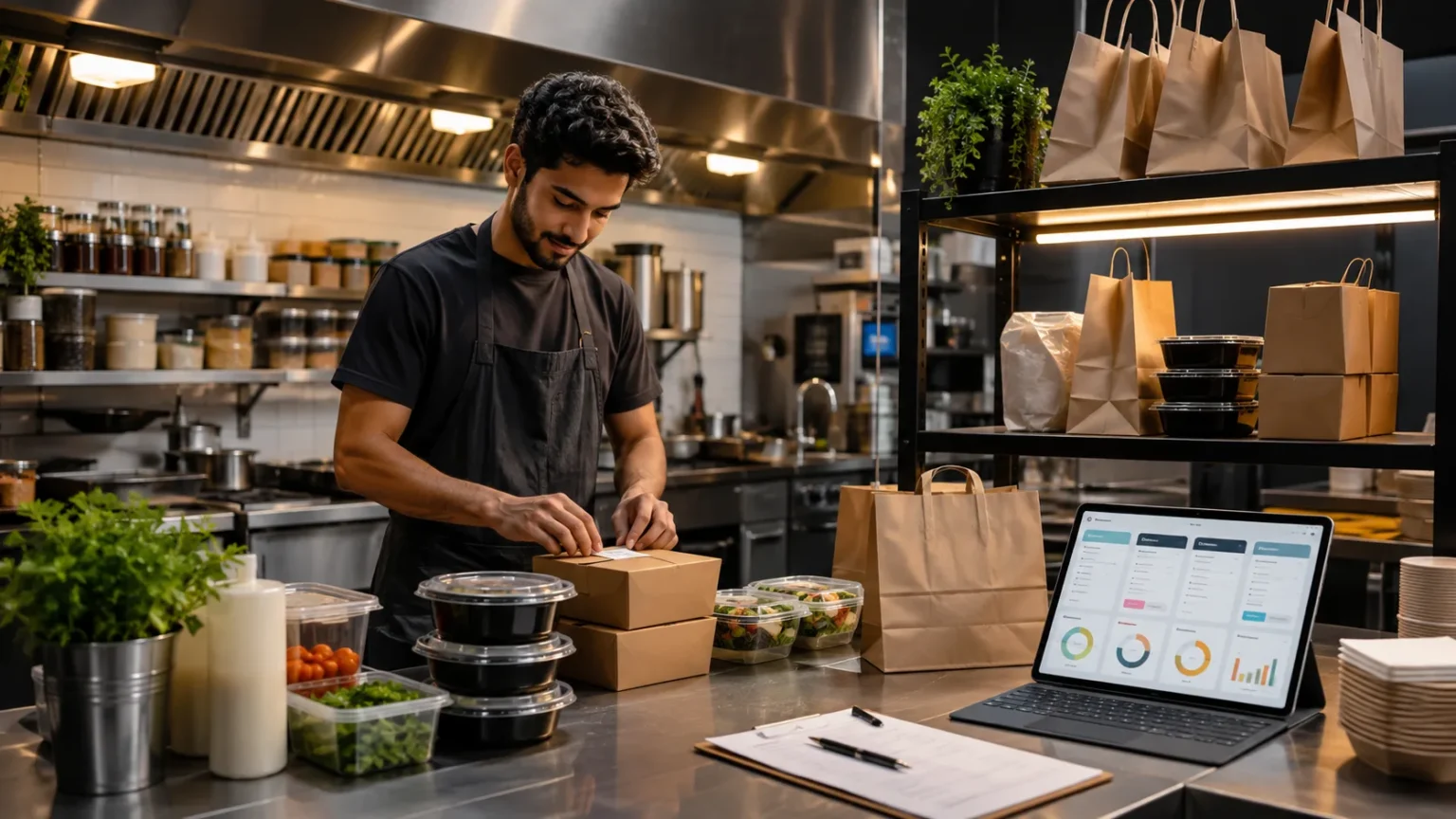
Packaging is effectively the dining room of a ghost kitchen. It affects how the meal looks, smells, travels, stays warm, remains separated, and arrives at the customer’s door. Cheap packaging that leaks or destroys texture can make excellent food feel disappointing.
Choose packaging based on the actual product rather than appearance alone. Foods that release steam may need different solutions from cold desserts, soups, fried dishes, beverages, or saucy meals. Test containers under realistic delivery conditions before placing large packaging orders.
Consider tamper-evident seals and secure bags where appropriate. Customers should receive an order that looks professionally packed and has survived courier handling without spilling or opening. Labels can also help staff and customers distinguish between similar items, particularly in large family or group orders.
Packaging can reinforce ghost kitchen branding as well. Branded stickers, bags, labels, or inserts can remind customers which restaurant prepared the meal after the delivery app disappears from their screen. Prioritize food protection and functionality first, then add brand elements that make economic sense.
Step 14: Create a Brand That Works on a Small Screen
Ghost kitchens live primarily in digital environments, so your brand must communicate quickly. Customers may see your restaurant name, thumbnail photograph, rating, delivery time, and a few menu items while simultaneously comparing dozens of alternatives on a smartphone.
Choose a name that is easy to recognize, pronounce, remember, and search. Avoid names that are so complicated or generic that customers cannot find the brand again later. Check relevant business registration, domain, social media, and trademark considerations before investing heavily in your identity.
Your visual presentation should communicate the type of food and experience you offer. Brand colors, food photography, packaging, menu language, and logo design should feel consistent. A budget-focused comfort-food brand will naturally communicate differently from a premium sushi or health-focused meal concept.
Remember that branding cannot compensate for disappointing food. The purpose of a strong virtual restaurant brand is to help customers recognize and remember an experience worth repeating. Product quality, accuracy, delivery consistency, value, and service ultimately determine whether that recognition becomes loyalty.
Step 15: Use Professional Food Photography
Customers ordering from a ghost kitchen cannot see food being prepared or glance at another table before choosing a dish. Photographs therefore carry enormous responsibility. Strong images can communicate portion size, ingredients, texture, presentation, and the overall character of the menu in seconds.
Photograph the actual products customers will receive rather than creating unrealistic dishes solely for advertising. Lighting and styling can make real food look appealing without completely transforming it. A customer who receives something significantly different from the photograph may feel misled even when the flavor is good.
Maintain consistency across the menu. Different backgrounds, lighting styles, portion sizes, and image quality can make a brand look fragmented. A coordinated set of food delivery menu photos creates a more professional storefront and makes comparison between dishes easier.
Test which images perform best when your ordering tools provide useful data. Sometimes a close-up showing texture works better than a complicated overhead composition, while meals with several components may benefit from a wider view. Photography should help customers understand and want the product, not simply look artistic.
Step 16: Write Menu Descriptions That Increase Orders
A menu description should answer the customer’s main questions without making them read a paragraph. Explain the dish clearly, mention important ingredients, highlight distinctive flavor or texture, and provide useful information about sides, quantity, or preparation when it affects the purchase decision.
Avoid descriptions filled with generic adjectives such as “amazing,” “delicious,” and “mouthwatering” without supporting detail. “Crispy chicken with spicy honey, pickles, and garlic mayo on a toasted bun” tells customers far more about the experience than “our incredibly delicious premium chicken burger.”
Use search-friendly language naturally when appropriate, especially on your own website. Product names, cuisine terms, ingredients, and location context can help people and search engines understand what you offer. Ghost kitchen SEO works best when useful information and search relevance support each other.
Keep descriptions accurate across every ordering platform. When ingredients, sizes, sides, or recipes change, update the digital menu promptly. Customers make purchasing decisions based on what the screen promises, so consistency between menu copy and delivered food plays an important role in trust.
Step 17: Create an Efficient Kitchen Workflow
Delivery demand can arrive in waves. A quiet kitchen can suddenly receive several orders simultaneously, each containing multiple dishes, modifiers, and delivery deadlines. Your layout and preparation system need to handle these peaks without creating chaos or sacrificing food quality.
Map the journey of an order from acceptance to courier handoff. Ingredients should move logically through storage, preparation, cooking, assembly, checking, packaging, and pickup. Staff should not repeatedly cross paths or walk unnecessary distances to obtain basic ingredients and equipment.
Prepare ingredients in advance where food-safety requirements and product quality allow. Standardized recipes, portion tools, labeling, preparation sheets, station assignments, and order-checking procedures can reduce mistakes while making training easier as the team grows.
Technology can also simplify operations when multiple ordering channels are involved. POS and kitchen-management integrations may help consolidate orders that would otherwise appear on separate devices. Choose technology because it reduces genuine operational friction, not because every restaurant software feature sounds impressive.
Step 18: Make Delivery Speed Part of Product Design
Customers care about delivery time, but simply cooking faster is not always the answer. The menu itself should support efficient preparation. If most dishes require entirely different cooking processes, ingredients, and equipment, your kitchen may struggle when several categories receive orders at once.
Separate preparation time from courier travel time when analyzing complaints. A meal might leave your kitchen promptly but arrive late because of courier availability, traffic, distance, or multi-order routing. Understanding where delays occur helps you focus improvements on problems you can actually influence.
Do not create an unnecessarily large delivery radius simply to reach more customers. Longer journeys can increase the risk of cold food, damaged presentation, late arrivals, and disappointed customers. Test how far each important menu category can travel while still delivering the experience your brand promises.
Your ideal ghost kitchen delivery radius balances potential demand with product quality and operational reliability. Expanding geographically can look attractive on a map, but reaching fewer customers with consistently better food may build a stronger business than generating widespread orders that arrive in poor condition.
Step 19: Market Your Ghost Kitchen Before Launch
A ghost kitchen has no storefront automatically attracting pedestrians, so awareness needs to be created deliberately. Begin building your digital presence before opening by sharing your concept, signature dishes, food photography, preparation process, delivery area, opening date, and reasons customers should care.
Create relevant social media accounts and a simple website or landing page where appropriate. Make sure people can understand the menu, location or service area, ordering process, and opening hours quickly. Consistent branding across search, social media, packaging, and ordering platforms makes the business easier to recognize.
Consider a controlled soft launch before spending heavily on promotion. A smaller opening allows you to test packaging, preparation times, order accuracy, technology, courier pickup procedures, and customer feedback without overwhelming an inexperienced kitchen with sudden demand.
Once operations are stable, use a combination of ghost kitchen marketing tactics such as delivery-platform promotions, local social advertising, influencer collaborations where appropriate, email marketing, referral incentives, search optimization, loyalty programs, and community partnerships based on measurable customer acquisition costs.
Step 20: Use Google and Local SEO Correctly
Delivery-only businesses still need to think about how customers search outside food apps. A well-built website can target relevant cuisine, menu, delivery, and location searches while explaining what makes the brand different. Local search visibility can introduce people who might otherwise never encounter your marketplace listing.
If you create a Google Business Profile, follow Google’s current eligibility requirements for virtual food brands rather than treating a ghost kitchen exactly like a walk-in restaurant. Requirements can differ depending on whether customers can pick up food, whether several brands share a location, and how the operation is represented.
Keep your business name, website, ordering information, opening hours, service area, menu, and contact details accurate. Do not invent a storefront or display an address to customers when your operation is not permitted or designed to receive them there.
Local SEO should support real customer experience rather than attempt to manipulate location signals. Create useful menu and delivery information, earn legitimate reviews, maintain consistent business details, and build genuine local awareness. Sustainable local SEO for ghost kitchens grows from a real brand serving real customers.
Step 21: Encourage Reviews and Repeat Orders
Acquiring a new delivery customer can require promotions, advertising, platform visibility, or other marketing expenses. Repeat customers are therefore particularly valuable because they already understand your product and may need less persuasion to order again if their first experience was excellent.
Start by delivering the basics consistently: correct orders, good food, secure packaging, realistic portions, dependable preparation, and responsive support when something goes wrong. Loyalty programs cannot compensate for a customer repeatedly receiving missing items or cold meals.
Encourage genuine feedback through the channels available to your business. Reviews can help new customers understand food quality, portion size, delivery experience, and value. They also reveal operational patterns that internal teams sometimes miss.
Create reasons for customers to remember the brand itself rather than only the delivery platform. Distinctive packaging, memorable products, consistent social content, direct-order options, loyalty benefits, and excellent problem resolution can gradually turn one-time marketplace buyers into a stronger base of repeat food delivery customers.
Step 22: Track the Metrics That Actually Matter
Do not judge success only by total sales. Revenue can rise while profitability falls if growth depends on large discounts, high advertising spending, expensive ingredients, excessive refunds, or unfavorable order economics. You need metrics that explain the quality of your revenue.
Track orders, average order value, food cost, packaging cost, labor, marketplace expenses, advertising cost, refunds, discounts, waste, repeat customer behavior, preparation time, cancellations, and contribution by menu item. The exact dashboard can vary, but every metric should support a useful business decision.
Analyze performance by channel as well. A direct website order, heavily discounted marketplace order, catering transaction, and organic repeat purchase may produce very different economics despite having the same checkout value. Understanding customer acquisition cost and contribution by channel prevents misleading conclusions.
Review trends over meaningful periods instead of reacting emotionally to every slow day. Weather, holidays, promotions, sporting events, seasonality, pay cycles, and local activity can temporarily affect demand. Strong operators combine short-term operational monitoring with longer-term financial patterns before making major decisions.
Step 23: Know When a Ghost Kitchen Is Profitable
Profitability begins with understanding your break-even point. Calculate how much contribution you generate from an average order after relevant variable costs, then determine approximately how many orders are required to cover rent, management, software, insurance, and other fixed business expenses.
Pay attention to owner labor too. A business is not truly attractive simply because it has money left after ingredients and rent if the owner works extremely long hours without appropriate compensation. Include realistic labor assumptions when evaluating whether your concept can eventually operate sustainably.
High order volume does not guarantee healthy ghost kitchen profitability. One hundred heavily discounted orders with weak margins may produce less value than fewer full-price transactions with larger baskets and stronger repeat rates. Optimize profitable customer relationships, not vanity metrics.
Once you understand your break-even volume, compare it with realistic kitchen capacity and demand. If the kitchen would need to operate beyond its physical capacity merely to cover expenses, the concept requires structural changes such as higher prices, lower costs, a different menu, greater average order value, or cheaper facilities.
Step 24: Reduce Food Waste and Control Inventory
Food waste quietly reduces margins because money is lost before the discarded ingredient ever becomes a customer order. A ghost kitchen can be particularly vulnerable when several menu items require separate ingredients or when demand forecasts are based on optimistic assumptions instead of sales history.
Design your menu around smart ingredient overlap where it does not compromise the concept. A sauce, protein, vegetable preparation, base, or garnish that works naturally across several dishes can simplify purchasing and reduce the amount of inventory that serves only one low-selling product.
Track usage and waste rather than relying on intuition. Record spoilage, overproduction, incorrect orders, cooking errors, excessive portioning, and other causes of loss. Comparing expected ingredient consumption with actual usage can reveal problems that may otherwise remain hidden inside monthly purchasing totals.
Use sales patterns to improve preparation forecasts over time. Fridays may behave differently from Mondays, and rainy evenings may create different demand from warm weekends depending on your market. Better restaurant inventory management turns historical data into purchasing decisions instead of simply ordering the same quantities every week.
Step 25: Consider Multiple Virtual Brands Carefully
One attraction of ghost kitchens is the possibility of operating several brands from the same facility. A kitchen already purchasing chicken, bread, sauces, and potatoes might appear capable of supporting multiple delivery concepts using overlapping inventory and staff.
Multiple brands can make sense when each serves a distinct customer need without dramatically increasing operational complexity. For example, one kitchen might use shared ingredients intelligently while presenting different menus for different dayparts or audiences. The additional revenue opportunity needs to justify the additional management burden.
Problems arise when operators create numerous nearly identical brands simply to occupy more digital shelf space. Each new concept requires menu management, photographs, packaging, reviews, customer support, advertising, operational accuracy, and potentially separate brand assets. More listings do not automatically create more profitable demand.
Build one strong concept before assuming five brands will be better. If the first kitchen cannot maintain accurate orders, healthy margins, strong ratings, and consistent preparation times, additional virtual restaurant brands can multiply the problems rather than solve them.
Common Ghost Kitchen Mistakes to Avoid
The first major mistake is assuming the absence of a dining room automatically creates strong profits. Front-of-house costs may be reduced, but delivery platforms, digital advertising, packaging, technology, kitchen rent, ingredients, and customer acquisition can create a different set of substantial expenses.
Another mistake is building a menu for photography rather than transportation. A beautiful dish that becomes soggy or cold after twenty minutes can generate disappointing reviews. Test every important product under actual delivery conditions instead of judging it immediately after it leaves the cooking station.
Overdependence on one platform is another risk. A third-party marketplace can generate valuable demand, but your entire customer relationship should not necessarily depend on a single external channel. Gradually build brand recognition and direct customer relationships where commercially and legally appropriate.
Finally, avoid launching too many concepts before understanding the first one. Successful cloud kitchen businesses are built on consistent food, efficient operations, careful cost control, customer retention, and disciplined experimentation. Complexity should be added only when the underlying operation is already working.
How to Scale a Ghost Kitchen Business
Do not scale simply because one month generated strong sales. First confirm that the operation produces reliable profits, recipes are standardized, preparation times are controlled, staff can be trained effectively, customers reorder, and the kitchen can handle peaks without service quality deteriorating.
Document important processes before adding another site. Recipes, supplier standards, portion sizes, packaging instructions, food-safety procedures, station layouts, customer service policies, opening checklists, closing routines, and inventory systems should not exist only inside the founder’s memory.
Expansion can take several forms. You might open another delivery hub closer to customers, expand the delivery area cautiously, launch catering, develop direct ordering, introduce packaged products, add a carefully tested virtual brand, or eventually open a physical restaurant if customer demand supports it.
Choose growth based on economics rather than excitement. The best ghost kitchen expansion strategy is one that maintains product quality while improving revenue and profitability. Repeating a proven system can create a scalable food business; repeating an unstable operation simply produces bigger and more expensive problems.
Final Thoughts on Starting a Ghost Kitchen
Learning how to start a ghost kitchen business begins with recognizing that the model is not a shortcut around the fundamentals of running a restaurant. You still need excellent food, safe preparation, accurate costing, dependable employees, reliable suppliers, satisfied customers, and enough revenue to cover every genuine operating expense.
What changes is how customers discover and experience your restaurant. Your menu photographs replace the storefront window, packaging replaces much of the physical presentation, delivery replaces table service, and digital reviews replace many face-to-face conversations. Every part of the business therefore needs to be designed for this delivery-first journey.
Start with one focused concept, validate local demand, build a menu that travels well, calculate every meaningful cost, and launch carefully enough to learn from early customers. Use data to improve pricing, preparation, marketing, delivery radius, product selection, and customer retention rather than making decisions purely from intuition.
A ghost kitchen can become a flexible and scalable food business when the numbers and customer experience work together. Focus less on launching as many virtual brands as possible and more on creating one brand people actively search for, reorder from, recommend to friends, and remember after the delivery bag is empty.
Frequently Asked Questions
How much does it cost to start a ghost kitchen?
Ghost kitchen startup costs vary widely based on location, kitchen type, equipment, permits, staff, technology, and menu requirements. Renting an equipped shared kitchen can require much less upfront capital than constructing a dedicated commercial facility.
Can I start a ghost kitchen from home?
That depends entirely on local food-business and zoning regulations and the type of food you plan to sell. Many jurisdictions require certain commercial food operations to use approved or licensed facilities, so check with local authorities before taking orders.
Do ghost kitchens make money?
Ghost kitchens can be profitable when menu prices, food costs, kitchen expenses, labor, packaging, delivery costs, and customer acquisition are carefully controlled. High sales alone do not guarantee profit, so unit economics should be tracked from the beginning.
What is the best food for a ghost kitchen?
The best products usually combine strong local demand, manageable preparation, attractive margins, and the ability to maintain quality during delivery. Bowls, burgers, sandwiches, pizza, chicken, wraps, noodles, desserts, and other portable foods can work when executed effectively.
What is the difference between a ghost kitchen and a virtual restaurant?
A ghost kitchen generally refers to the physical delivery-focused cooking facility, while a virtual restaurant is the customer-facing food brand operating from that kitchen. One ghost kitchen may sometimes support several separate virtual restaurant concepts.