




Bergen Travel Guide: Fjords, Food & Best Things to Do
Bergen is one of those destinations where the city and nature feel almost impossible to separate. Colorful wooden buildings line the historic waterfront, mountains rise directly behind residential streets, and boats leave the harbor for some of western Norway’s most memorable fjord landscapes. As Norway’s second-largest city, Bergen has enough museums, restaurants, neighborhoods, markets, and cultural attractions to justify several days on its own. Yet many travelers also use it as a gateway to the Norwegian fjords, combining city sightseeing with cruises, railway journeys, and mountain adventures. That combination makes Bergen particularly versatile. You can spend the morning exploring medieval trading history and finish the afternoon overlooking islands, mountains, and water from a scenic summit.
A successful Bergen trip is less about checking off attractions and more about balancing the city’s different experiences. Bryggen introduces visitors to Bergen’s Hanseatic heritage, while the Fish Market reflects its continuing relationship with the sea and seafood. Mount Fløyen provides an accessible panorama above the city, whereas Mount Ulriken offers a higher, more mountainous experience. Beyond the city, fjord excursions reveal steep valleys, waterfalls, villages, and waterways that define western Norway. Travelers interested in food can explore seafood, traditional Norwegian dishes, bakeries, modern Nordic restaurants, and local specialties. Bergen may look compact on a map, but combining all these experiences comfortably requires thoughtful planning.
Weather also plays an important role in any Bergen itinerary. The city is famous for frequent rainfall, so visitors should arrive expecting changeable conditions rather than waiting for a perfectly sunny forecast. Rain does not necessarily ruin the experience because many attractions are indoors, and mist can make the surrounding mountains and harbor particularly atmospheric. Waterproof layers and comfortable walking shoes are more useful than a complicated wardrobe. Flexible planning also helps because mountain viewpoints can be moved to clearer periods while museums, cafés, and historic streets can fill wetter hours. Travelers who accept Bergen’s climate instead of fighting it often discover that the city feels appealing in almost every type of weather.
Bergen works particularly well for first-time visitors to Norway because it offers an accessible introduction to both urban culture and dramatic Scandinavian landscapes. The center is relatively easy to explore on foot, reducing the need for constant transportation during sightseeing days. Bergen Airport connects the city with numerous destinations, while trains, boats, buses, and organized excursions open routes toward other parts of the country. Couples can build a romantic itinerary around waterfront walks and fjord cruises, while families can combine mountains, museums, and outdoor attractions. Solo travelers benefit from the manageable scale and straightforward transportation network. Active visitors can turn the city into a base for hiking, kayaking, mountain excursions, and longer journeys through Fjord Norway.
This Bergen travel guide covers the best things to do, fjord trips, viewpoints, food, neighborhoods, accommodation areas, transportation, and practical planning considerations. It also explains how many days you need and how to divide your time without rushing between attractions. Rather than treating Bergen only as a departure point for fjord cruises, the guide gives the city itself enough attention to reveal why it deserves an extended stay. You will find suggestions suitable for first-time travelers, food lovers, hikers, photographers, couples, and families. Whether you have two days or nearly a week, Bergen can support a surprisingly varied itinerary. The key is combining historic streets, mountain scenery, local food, and at least one journey onto the water.
Best Things to Do in Bergen
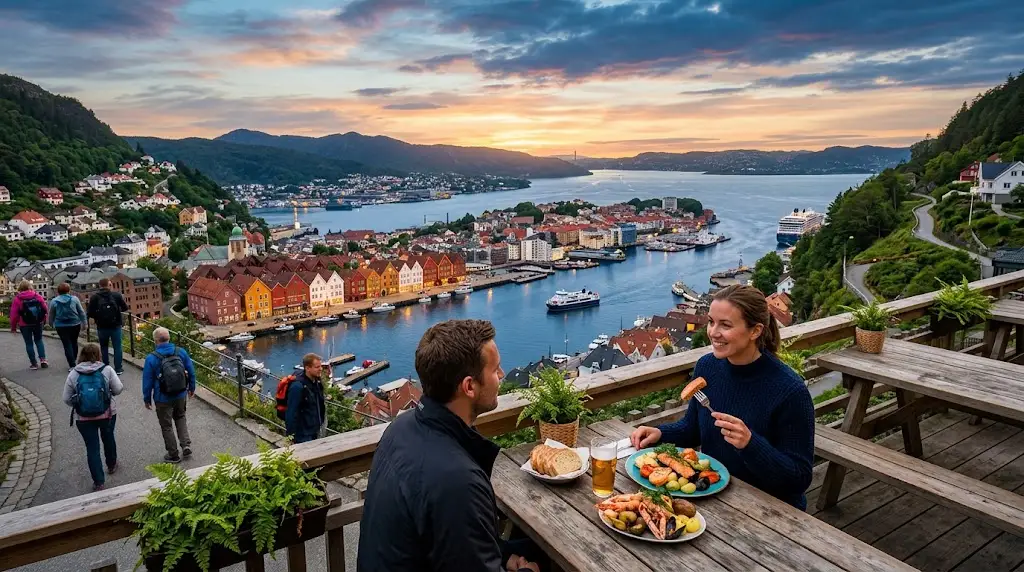
Walking around Bergen’s historic center is the easiest way to begin understanding the city. Start near the harbor, where boats, restaurants, historic architecture, and mountain scenery create an immediate sense of place. Bryggen should naturally form part of this walk, but visitors should also explore the streets behind the waterfront rather than remaining only along the famous row of colorful buildings. Nearby neighborhoods reveal wooden houses, narrow lanes, small cafés, shops, and quieter corners that feel removed from busier sightseeing areas. The center is compact enough that spontaneous wandering rarely creates major logistical problems. Leaving some time unplanned can therefore lead to unexpected viewpoints, bakeries, galleries, and residential streets that become favorite parts of the trip.
Riding the Fløibanen funicular to Mount Fløyen is another essential Bergen experience for first-time visitors. The journey begins close to the historic center and quickly rises above the rooftops, providing broad views over the harbor, surrounding islands, mountains, and urban neighborhoods. Once at the top, visitors can enjoy viewpoints without committing to a demanding hike, making Fløyen suitable for families and travelers with limited time. Walking trails extend into the surrounding landscape for anyone wanting a longer outdoor experience. One enjoyable strategy is taking the funicular uphill and walking back toward the city when weather and mobility allow. Visiting earlier or later in the day can also create a calmer experience than arriving during peak sightseeing hours.
Mount Ulriken offers another perspective and is particularly attractive to travelers who want a stronger sense of Bergen’s mountain environment. As the highest of the mountains commonly associated with the city, Ulriken delivers sweeping views that extend well beyond the central harbor. A cable car makes the summit accessible without requiring a full ascent on foot, although hiking opportunities are available for experienced visitors. Clear conditions obviously produce the broadest views, making flexibility useful when planning the excursion. Weather can shift quickly at higher elevations, so an extra layer and waterproof protection are sensible even when the center feels mild. For active travelers, combining Bergen’s urban attractions with Ulriken creates a satisfying contrast between city streets and rugged landscapes.
Museums and cultural attractions become especially valuable when Bergen’s weather turns wet. Visitors interested in art can dedicate time to the city’s galleries and collections, while music enthusiasts may enjoy exploring places connected with composer Edvard Grieg. Maritime and historic attractions provide further context for Bergen’s development as an important coastal trading city. Families can also find attractions designed around marine life and interactive experiences. Rather than viewing museums merely as backup plans for rainy weather, travelers can use them to understand the culture behind the scenery. Bergen’s mountains and harbor are visually dominant, but the city’s artistic, musical, and commercial history gives a longer stay significantly more depth.
A fjord trip should complete the essential Bergen experience whenever your itinerary allows enough time. Shorter cruises can introduce visitors to narrow waterways, waterfalls, mountains, and small settlements without requiring an overnight trip outside the city. Longer excursions can combine trains, boats, buses, and scenic routes through western Norway. The right option depends on how much time you have and whether Bergen is your main destination or one stop on a broader Norway itinerary. Travelers with only two days should avoid overloading both days with lengthy excursions. Those staying three or four nights can combine one full fjord day with Bryggen, mountains, food, and neighborhoods at a much more comfortable pace.
Explore Bryggen and Bergen’s Historic Waterfront
Bryggen is the visual symbol of Bergen and one of the most important places to understand the city’s history. Its colorful wooden facades line the eastern side of Vågen harbor, creating the scene that appears on countless photographs of Bergen. However, the most interesting experience begins when visitors walk behind the waterfront facades into the narrow passages between old wooden buildings. These spaces reveal workshops, small stores, galleries, courtyards, and architectural details that are easy to miss from the harbor. Walking slowly is worthwhile because the structures do not form a perfectly polished museum environment. Their irregular floors, timber construction, and tight passages help communicate the age and working history of the neighborhood far better than a quick photograph.
Bergen’s importance developed partly through maritime commerce, and Bryggen reflects centuries of connections between Norway and wider European trading networks. Fish, particularly dried cod from northern Norway, played an important role in trade, while imported goods moved in the opposite direction. Understanding that commercial history changes the way the waterfront appears. The narrow buildings and storage spaces were connected to working systems of trade rather than created as decorative architecture. Visitors interested in history can spend more time exploring museums and preserved interiors associated with the district. Even travelers who normally skip museums may find this background useful because Bergen’s identity remains deeply tied to shipping, fishing, commerce, and the North Atlantic environment.
Photography around Bryggen works especially well during early morning and evening. During the busiest daytime periods, the waterfront attracts tour groups, cruise passengers, and independent visitors, which can make the narrow areas feel crowded. Early arrivals often enjoy cleaner views of the facades and a quieter atmosphere along the harbor. Evening light can create attractive reflections and warmer colors, particularly when weather conditions cooperate. Rain should not discourage photographers because wet streets and dark skies can add character to the timber buildings. Looking across the water rather than standing directly in front of Bryggen can also reveal broader compositions incorporating boats, mountains, and the historic skyline.
The area surrounding Bryggen deserves almost as much attention as the famous wharf itself. Bergenhus Fortress occupies a strategic location near the harbor and provides another opportunity to explore the city’s long history. Continue wandering through nearby streets and you will discover quieter wooden-house districts that contrast with the more commercial waterfront. Small cafés offer convenient breaks, while local shops and galleries provide alternatives to purely souvenir-focused shopping. Travelers interested in food can also move toward the Fish Market and surrounding restaurants within minutes. Because so many attractions sit close together, this part of Bergen is ideal for an unstructured half-day in which history, food, photography, and harbor views naturally overlap.
Allow at least a couple of hours for Bryggen and the surrounding waterfront rather than treating it as a ten-minute photo stop. Visitors who enjoy history can easily spend considerably longer by entering museums, galleries, and historic structures. Those with limited time can combine Bryggen with the Fish Market and Mount Fløyen because the three attractions are conveniently positioned within the central area. Families may find the short distances particularly helpful when weather changes unexpectedly. Couples can return in the evening for a quieter waterfront walk after day visitors have decreased. Bryggen may be Bergen’s most famous attraction, but slowing down reveals why it is more meaningful than its colorful facades alone suggest.
Take a Fjord Trip From Bergen
Bergen’s reputation as a gateway to the fjords is one of the biggest reasons international travelers include the city in a Norway itinerary. The surrounding region provides access to spectacular waterways shaped by mountains, waterfalls, valleys, islands, and small settlements. Visitors do not need to rent a car or move hotels every night to experience this landscape because several excursions begin from or can be organized through Bergen. Some options involve straightforward boat cruises, while others combine railways, buses, ferries, and scenic stops. Choosing the right trip depends mainly on available time. A half-day journey provides a taste of fjord scenery, whereas longer excursions can become the central experience of an entire Bergen stay.
Cruises toward the Osterfjord and narrow Mostraumen area are popular with travelers wanting a relatively straightforward fjord experience from Bergen. The journey moves from the urban harbor into increasingly dramatic landscapes where steep mountainsides and waterfalls can appear close to the boat. Because these excursions can fit within part of a day, travelers still have time for dinner, Bryggen, or another city attraction afterward. Conditions on the water affect visibility and comfort, so dressing in layers is helpful. Outdoor deck areas provide the strongest sense of landscape but can feel colder than expected. Bringing waterproof protection also makes it easier to remain outside when light rain or waterfall spray appears.
Travelers with a full day can consider longer scenic journeys connecting Bergen with famous fjord landscapes farther inland. These itineraries often combine multiple types of transportation, transforming the journey itself into an attraction. Train routes through mountains, boat travel between steep valley walls, and road sections descending toward fjord communities can create a remarkably varied day. However, these experiences involve more logistics and longer hours than simple cruises. Travelers should read schedules carefully and avoid adding major evening plans immediately afterward. Anyone spending only two nights in Bergen should consider whether dedicating one complete day to an excursion leaves enough time to appreciate the city itself.
Independent travelers may also use Bergen as the beginning of a multi-day journey rather than returning after a single excursion. Norway’s fjord region rewards slow travel, particularly when visitors stay overnight in smaller towns or villages instead of viewing every landscape through transportation windows. Bergen can therefore serve as an arrival point before continuing toward destinations around Sognefjord, Hardangerfjord, or other parts of western Norway. This approach works particularly well for travelers with a week or more. It allows the city to provide culture, restaurants, and history before the itinerary becomes increasingly nature-focused. Packing relatively lightly also makes transfers between boats, buses, trains, and smaller accommodations substantially easier.
Whichever fjord experience you choose, avoid assuming that the longest or most expensive tour is automatically the best. Travelers who dislike long transportation days may enjoy a shorter cruise far more than an ambitious itinerary involving constant transfers. Photographers may prefer trips offering extended deck time, while hikers could use Bergen as a gateway to destinations where they can leave the boat and explore on foot. Families should consider duration, bathroom access, meal timing, and exposure to cold weather. Couples may appreciate smaller-scale or slower experiences if budget permits. The best fjord trip from Bergen is ultimately the one that matches your pace while leaving enough time to experience the city instead of simply sleeping there.
Ride Fløibanen, Visit Ulriken and Explore the Mountains
Mount Fløyen is the easiest mountain experience to add to almost any Bergen itinerary. The lower funicular station sits close to the city center, allowing travelers to transition from historic waterfront streets to elevated scenery remarkably quickly. From the upper area, panoramic views spread across central Bergen, the harbor, surrounding water, residential districts, and distant landscapes. Because reaching the viewpoint does not require strenuous hiking, families and short-stay visitors can experience the mountain environment without complicated preparation. Cafés, family activities, and trails provide reasons to remain longer than the initial viewpoint stop. Travelers who enjoy walking can extend the outing into surrounding forests before descending toward the city.
Walking down from Fløyen can be particularly enjoyable because the route gradually transitions from wooded slopes into residential Bergen. The descent provides a different experience from simply returning by funicular and allows travelers to see how closely the city sits against the mountain. Comfortable footwear is important because wet paths can become slippery after rain. Depending on pace and route, visitors can turn the outing into an hour or more of gentle walking. Families should choose routes appropriate for children rather than automatically following longer trails. Carrying a light waterproof jacket remains sensible even if the morning looks clear. Bergen’s weather can change quickly enough that preparation usually matters more than forecasting.
Mount Ulriken provides a more dramatic mountain experience and is often the better choice for travelers wanting expansive natural scenery. The summit stands higher than Fløyen and feels more removed from the urban center, even though access remains relatively straightforward with the cable car. On a clear day, views can extend across Bergen, islands, mountains, and surrounding waterways. Visitors should allow enough time to explore the summit rather than immediately returning after taking photographs. Weather at the top may be colder, windier, or cloudier than conditions downtown. Checking visibility shortly before traveling can therefore prevent disappointment. When clouds clear unexpectedly, however, the landscape can become one of the highlights of the entire Bergen trip.
Experienced hikers may be interested in the mountain route connecting the Ulriken and Fløyen areas. This is significantly different from casual sightseeing and should be approached as a proper outdoor excursion rather than a city walk. Weather, trail conditions, daylight, footwear, fitness, food, and water all matter when planning a longer route. The surrounding terrain can become exposed, and mist can reduce visibility quickly. Visitors unfamiliar with Norwegian mountain conditions should seek current local guidance before setting out. On a suitable day, the route provides an exceptional combination of wilderness feeling and city accessibility. Few urban destinations allow travelers to move so naturally between historic waterfront streets and an extended mountain landscape.
Travelers staying several days do not necessarily need to choose between Fløyen and Ulriken because the experiences complement each other. Fløyen is more convenient, family-friendly, and closely connected with central sightseeing, making it easy to visit almost spontaneously. Ulriken feels more adventurous and provides the stronger sense of Bergen’s mountainous setting. Photographers may want both perspectives because lighting and geography differ significantly. If time allows only one, choose Fløyen for simplicity and Ulriken for bigger mountain drama. Scheduling either activity around weather visibility rather than fixing it rigidly to a particular morning can improve the experience. Bergen’s mountains are best enjoyed with flexibility, appropriate clothing, and enough time to appreciate more than the summit photograph.
What to Eat in Bergen
Seafood naturally plays a central role in Bergen’s food identity because the city has been connected to fishing, maritime commerce, and Norway’s western coast for centuries. Visitors will find menus featuring salmon, cod, shellfish, local catches, fish soup, and ingredients sourced from surrounding coastal regions. Quality and price vary considerably between casual counters, traditional restaurants, and modern fine-dining establishments. Travelers interested in seafood should plan at least one proper meal rather than relying entirely on quick snacks around major tourist areas. Asking what is seasonal can lead to a more interesting experience. Bergen’s food scene works best when visitors combine traditional ingredients with newer restaurants interpreting Norwegian cuisine in contemporary ways.
The Fish Market is an obvious stop for anyone interested in Bergen’s relationship with the sea. Its central harbor location makes it extremely easy to combine with Bryggen and other historic attractions. Visitors can browse fish, seafood, produce, and prepared foods while observing one of the most tourism-oriented yet historically significant commercial areas of the city. Prices around such a famous location can be higher than budget travelers expect, so it is useful to view the market as an experience rather than automatically assuming it is the cheapest place to eat. Comparing menus before sitting down can help. Even visitors who choose to dine elsewhere will find the market worth exploring during a harbor walk.
Traditional Norwegian flavors extend beyond seafood. Travelers may encounter lamb, cured meats, hearty soups, potatoes, root vegetables, brown cheese, waffles, baked goods, and seasonal berries across cafés and restaurants. Breakfast can be substantial at many hotels, which is useful given Norway’s relatively high dining costs. Bakery lunches and casual cafés provide easier ways to control a food budget without relying entirely on supermarkets. Trying skillingsboller, Bergen’s well-known cinnamon-style bun, is an easy addition to a coffee break. Food-focused travelers should avoid filling every meal with internationally familiar choices because traditional dishes provide another way to understand the city’s relationship with climate, agriculture, and the surrounding coast.
Bergen also has a strong modern restaurant scene, and travelers willing to budget for one special dinner can find creative cooking based on Nordic ingredients. Contemporary chefs frequently emphasize seasonality, seafood, vegetables, preservation techniques, and produce from western Norway. Reservations are wise for popular restaurants, particularly on Friday and Saturday evenings or during busy summer periods. Travelers with dietary restrictions should usually find reasonable choices, although checking menus in advance helps for specialized requirements. Couples may enjoy planning a longer dinner after a day outdoors, turning the evening into a destination rather than another sightseeing block. Solo travelers can often experience high-quality food more casually at counter seating or smaller restaurants.
Food costs in Bergen can surprise visitors arriving from less expensive European destinations, so budgeting before the trip helps avoid frustration. One useful strategy is eating a generous hotel breakfast, choosing an affordable lunch, and reserving spending for a memorable dinner. Bakeries, supermarkets, food halls, and casual restaurants make it possible to travel without paying restaurant prices three times every day. Drinking tap water where appropriate also reduces unnecessary costs. Travelers should focus spending on foods and experiences they genuinely cannot replicate easily elsewhere. Fresh seafood, Norwegian baked goods, locally influenced meals, and a relaxed café stop usually deliver more value than eating expensive international food simply because it is located beside a major attraction.
Where to Stay in Bergen
Bergen city center is the best place to stay for most first-time visitors because it places the harbor, Bryggen, restaurants, transportation, shopping, and major attractions within easy walking distance. A central hotel allows travelers to adapt quickly when weather changes, returning indoors or rearranging plans without long transfers. It is also convenient for early fjord departures and evening walks along the waterfront. Accommodation ranges from historic properties and boutique hotels to larger international-style options. Rates can rise significantly during busy travel periods, particularly in summer. Booking earlier provides a better chance of finding desirable rooms without moving farther from the center than originally planned.
The Bryggen and Vågen harbor area is particularly attractive for travelers who want classic Bergen atmosphere immediately outside their accommodation. Historic buildings, boats, waterfront restaurants, and mountain views create a memorable setting from early morning until evening. This location works especially well for couples and short-stay visitors because sightseeing begins almost as soon as you leave the hotel. The main disadvantage is that busy central streets can become noisy, particularly during weekends or major events. Travelers sensitive to sound should examine property details and recent guest feedback carefully. Staying one or two streets away from the busiest waterfront can provide nearly identical convenience with a calmer sleeping environment.
Travelers wanting a more residential atmosphere can consider neighborhoods immediately outside the core while remaining within walking distance. Areas with traditional wooden houses and quieter streets offer a more everyday perspective on Bergen than accommodation directly beside major attractions. These locations often appeal to repeat visitors, couples, and travelers staying four nights or longer. Apartments can also become attractive for families wanting extra space or simple kitchen facilities. However, Bergen’s hills mean that map distance does not always reflect walking effort. Checking elevation and transportation connections before booking is important, especially when traveling with children, large luggage, or mobility limitations.
Budget travelers should compare hostels, guesthouses, apartments, and hotels beyond the most prestigious waterfront addresses. Norway is rarely a truly inexpensive destination, but accommodation costs can be controlled with flexibility around location and room type. Being near public transportation can compensate for staying slightly outside the historic core, although very short Bergen visits still benefit from central positioning. Solo travelers may find hostel accommodation useful for both cost control and social interaction. Families should calculate total room costs carefully because multiple inexpensive rooms can sometimes cost more than a centrally located family apartment. Breakfast inclusion is another factor worth comparing because it can reduce daily food spending substantially.
Where you stay also depends on the structure of your wider Norway itinerary. Travelers using Bergen mainly as a base for early fjord departures may prioritize easy access to the harbor or transportation terminals. Visitors focusing on museums, restaurants, and walking can choose central neighborhoods based more on atmosphere. Hikers may value straightforward connections toward mountain access points, while business travelers might prioritize airport and light-rail convenience. Regardless of neighborhood, check the actual walking route instead of relying exclusively on straight-line distance. Bergen’s center is compact, but cobblestones, hills, wet weather, and luggage can change how convenient a property feels. The best accommodation combines location with the practical realities of your specific trip.
Best Time to Visit Bergen and How Long to Stay
Summer is the most popular time to visit Bergen because long daylight hours provide tremendous flexibility for sightseeing, fjord trips, hiking, and evening exploration. Warmer temperatures make outdoor activities more comfortable, although rain remains possible and should always be expected. Popular attractions and accommodation can also become busier during this period. Travelers willing to start early or stay out later can take advantage of extended daylight to experience central streets during quieter hours. Mountain excursions become easier to fit around changing weather when days are long. Anyone traveling during peak summer should reserve important accommodation and high-priority excursions in advance while leaving enough flexibility for spontaneous changes.
Spring can be an excellent period for travelers who want fewer crowds and increasingly long days. Mountain landscapes may still show winter conditions at higher elevations while the city begins feeling brighter and more active. Weather remains changeable, making layered clothing especially important. Some seasonal excursions and outdoor services may operate differently from their summer schedules, so travelers should check plans before arrival. The changing landscape can be particularly attractive for photographers because fresh greenery contrasts with mountain scenery and occasional remaining snow. Hotel availability may also be easier outside major holidays. Visitors should simply avoid expecting consistent warm weather and prepare for a broad range of conditions.
Autumn brings another atmospheric side of Bergen, with cooler temperatures, changing vegetation, softer light, and fewer visitors than midsummer. Rain and wind can become more prominent, yet indoor culture, restaurants, museums, and cafés remain excellent reasons to visit. Hiking plans require greater attention to daylight and weather conditions as the season progresses. Travelers who enjoy photography may appreciate dramatic skies around the harbor and mountains. Accommodation can sometimes feel less competitive than during the busiest summer weeks, although festivals and events still affect demand. Packing waterproof outerwear and shoes becomes increasingly important. Autumn suits visitors comfortable adjusting outdoor activities rather than expecting every planned mountain excursion to happen exactly on schedule.
Winter offers the quietest and darkest version of Bergen. Short daylight hours significantly change how visitors should structure sightseeing, but the city can feel cozy around cafés, restaurants, museums, historic streets, and seasonal events. Mountain conditions require greater caution, and travelers should not assume summer hiking plans translate directly into winter. Some fjord experiences continue, producing striking scenery when mountains are covered with snow. Travelers interested in Christmas atmosphere or winter landscapes can find the season rewarding if they arrive with realistic expectations. Warm waterproof clothing, good footwear, and flexible plans become essential. Winter Bergen is less about maximizing attractions and more about enjoying a slower city break surrounded by dramatic seasonal scenery.
Three days is an excellent minimum for most first-time visitors. One day can focus on Bryggen, the harbor, museums, food, and Mount Fløyen, while a second is dedicated to a fjord excursion. The third can include Mount Ulriken, additional neighborhoods, cultural attractions, or slower exploration. Four days creates considerably more flexibility when weather interferes with viewpoints or boat plans. Five days works well for travelers interested in hiking, food, museums, and a longer fjord journey without rushing. Anyone continuing deeper into western Norway should consider Bergen the urban beginning or ending of a broader landscape-focused itinerary rather than trying to complete every possible fjord experience as a day trip.
Getting Around Bergen and Practical Travel Tips
Walking is the best transportation method for most sightseeing in central Bergen. Bryggen, the Fish Market, Fløibanen, shopping streets, restaurants, and many cultural attractions are located close enough together that repeatedly using public transportation would often add unnecessary complexity. Comfortable shoes are important because streets can include cobblestones, slopes, and wet surfaces. A compact umbrella may be useful, although wind can make a waterproof jacket more practical. Travelers should carry a small day bag with an extra layer because temperature and rain can shift throughout the day. Exploring on foot also makes it easier to discover small streets and neighborhoods that would be missed when moving directly between major attractions.
Public transportation becomes useful for destinations outside the central walking area. Bergen has buses and light-rail connections that make reaching residential districts, transportation hubs, and the airport relatively straightforward. Visitors staying several days may find local transport passes or visitor-oriented cards worthwhile depending on how many included attractions and journeys they expect to use. Rather than buying a pass automatically, compare the planned itinerary with actual benefits. Travelers staying centrally and spending significant time on fjord tours may use surprisingly little urban transportation. Families, however, can value the convenience even for distances adults might otherwise walk. Digital journey planning can make routes easier to understand once you arrive.
Bergen Airport is connected with the city by public transportation as well as other transfer options. Travelers should allow sufficient time when departing, particularly during busy periods or when checking luggage. Those arriving in Bergen by train experience one of Norway’s most scenic railway routes when traveling from Oslo, making the journey itself part of the trip. Ferry and boat connections also reinforce Bergen’s role as an important western transportation hub. When combining multiple transportation modes, avoid creating extremely tight transfers. Weather and operational conditions can affect journeys, especially when boats are involved. A little extra buffer time can prevent an otherwise beautiful travel day from becoming stressful.
Packing correctly can dramatically improve a Bergen visit. Waterproof footwear and a breathable rain jacket should take priority over fashion items that cannot handle wet streets. Layers work better than one heavy garment because temperatures vary between indoor spaces, city streets, boat decks, and mountain viewpoints. A small backpack is useful for carrying water, an umbrella or jacket, camera equipment, and snacks during excursions. Travelers taking fjord cruises should expect outdoor decks to feel colder than the city, particularly when boats move through exposed waterways. Sun protection remains useful even in cool weather because bright days around water and mountains can create significant exposure. Preparing for variation is the simplest packing strategy.
Budgeting also deserves attention because Norway can be expensive compared with many other European destinations. Accommodation, restaurant meals, alcohol, transportation, and guided excursions can quickly increase daily costs. Booking key travel components ahead may provide greater choice, while supermarkets and bakeries help control food spending. Many of Bergen’s most memorable experiences, however, involve walking, viewpoints, architecture, harbor scenery, and surrounding landscapes rather than constant paid attractions. Combining one premium fjord excursion with inexpensive city exploration can create an excellent balance. Travelers should spend intentionally on experiences that matter most instead of trying to recreate a low-cost travel style that may feel frustrating in Norway.
A Perfect Three-Day Bergen Itinerary
Spend the first day getting oriented in central Bergen rather than immediately leaving for the fjords. Begin around Bryggen before the busiest sightseeing period, exploring both the waterfront facades and narrow passages behind them. Continue toward Bergenhus Fortress or nearby historic attractions before walking around Vågen harbor toward the Fish Market. Stop for lunch and then explore central shopping streets, cafés, or a museum depending on weather. In the afternoon, ride Fløibanen to Mount Fløyen when visibility looks favorable. Stay long enough to enjoy a short walk before returning downtown. Finish with dinner featuring Norwegian seafood or another regional specialty, followed by an evening harbor walk.
Dedicate the second day to the fjord landscape. Choose an excursion that matches your tolerance for travel time rather than automatically selecting the itinerary with the greatest number of stops. A shorter cruise can leave space for additional Bergen exploration, whereas a full-day scenic route should remain the main activity. Wear layers and carry waterproof protection even if the morning appears clear. Spend time outside on deck whenever conditions are comfortable because the scale of the mountains is much easier to appreciate without windows between you and the landscape. Take photographs, but also allow periods when the camera stays away. Return to Bergen for an uncomplicated dinner rather than scheduling another demanding attraction.
Use the third morning for Mount Ulriken if skies are reasonably clear. Take the cable car if you want to prioritize views, or incorporate hiking if experience, conditions, and time allow. The higher mountain environment provides a valuable contrast with the more accessible Fløyen experience. After returning, enjoy lunch somewhere outside the most obvious waterfront tourist zone. Spend the afternoon exploring a museum, residential neighborhood, art collection, or attraction connected with Bergen’s musical heritage. This flexible structure makes it easy to respond to weather without sacrificing the day. If Ulriken is hidden in clouds, simply reverse the plan and save the mountain for a later clearing period.
Food should be incorporated naturally across the three-day itinerary rather than treated as a separate attraction. Try a Bergen-style cinnamon bun during a coffee break, explore seafood at or around the market, and reserve one evening for a more substantial Norwegian meal. A supermarket lunch or bakery stop on another day can help balance the budget. Travelers particularly interested in gastronomy may replace one museum with a food-focused experience or spend more time exploring restaurants. Couples can make the final dinner the centerpiece of the trip, while families may prefer casual restaurants that provide greater flexibility. Bergen’s culinary appeal becomes more enjoyable when meals are varied rather than expensive every time.
A three-day itinerary provides a good balance, but weather should always override the exact order. If your clearest forecast occurs on the first morning, consider visiting Ulriken immediately rather than saving it for day three. If heavy rain arrives during another afternoon, move museums and cafés into that period. Fjord excursions with fixed bookings naturally create less flexibility, so organize the rest of the schedule around them. This approach prevents visitors from standing on a cloud-covered mountain simply because an online itinerary said Tuesday was viewpoint day. Bergen rewards responsive travel. Treat the three-day plan as a framework, and adjust it according to visibility, energy, interests, and the city’s famously changeable weather.
Conclusion
Bergen succeeds as a travel destination because it delivers much more than a convenient entrance to the Norwegian fjords. Bryggen provides a visible connection to centuries of maritime trade, while the harbor keeps the city closely connected with the water today. Fløyen and Ulriken place mountain scenery remarkably close to central streets, allowing visitors to switch between urban culture and outdoor exploration within the same day. Museums, music, historic neighborhoods, seafood, bakeries, and modern restaurants provide enough variety for days when the weather encourages slower sightseeing. Travelers who spend at least two or three nights discover a far richer destination than those who simply arrive, board a fjord excursion, and immediately leave.
The fjords nevertheless remain one of Bergen’s greatest advantages. Travelers can choose relatively short cruises, ambitious full-day routes, or multi-day journeys deeper into western Norway. Mountains, waterfalls, narrow waterways, villages, and changing weather make these excursions memorable even for visitors who have seen dramatic landscapes elsewhere. The key is selecting a trip suited to your available time and tolerance for transportation. Longer is not automatically better. Leaving enough time for Bergen itself creates a more balanced itinerary, especially for first-time visitors. A city day, a fjord day, and a flexible mountain or culture day provide an excellent starting structure for a three-night trip.
Food adds another important dimension to Bergen. Seafood connects directly with the city’s maritime history, while Norwegian baked goods, traditional ingredients, contemporary Nordic cooking, and regional produce broaden the experience. Eating strategically also makes Norway’s higher travel costs easier to manage. Travelers can combine hotel breakfasts, bakeries, markets, supermarkets, casual lunches, and one memorable dinner instead of paying premium restaurant prices at every meal. Trying something locally distinctive provides greater value than simply choosing the nearest familiar international dish. Bergen is a city where the connection between landscape and food becomes especially visible, making dining part of the travel experience rather than just a practical necessity.
Preparation matters because Bergen’s climate can change quickly. Waterproof clothing, reliable shoes, layers, and flexible scheduling will usually improve the trip more than obsessing over long-range forecasts. Rain should not automatically cancel a day because museums, historic interiors, restaurants, cafés, and atmospheric waterfront walks remain available. Clear periods can then be reserved for Fløyen, Ulriken, or outdoor photography. Travelers who build flexibility into their itinerary are less likely to feel disappointed by unpredictable conditions. Bergen does not require constant sunshine to look beautiful. Clouds moving across mountains and rain reflecting lights along the harbor can become part of the character that distinguishes the city from more predictable destinations.
For most travelers, three or four days provide the ideal introduction to Bergen. That allows enough time for Bryggen, mountain viewpoints, local food, museums or neighborhoods, and at least one fjord experience without racing through each attraction. Visitors with five days can add longer hikes or more extensive excursions, while travelers continuing through Norway can use Bergen as the starting point for deeper exploration of the western fjords. Whatever the itinerary length, avoid treating the city simply as a transport hub. Walk its historic streets, eat something local, climb above the harbor, and spend time on the water. Bergen’s combination of fjords, food, history, and mountains makes it one of Norway’s most rewarding city breaks.
FAQs About Visiting Bergen
How many days do you need in Bergen?
Three days is a good amount of time for a first Bergen trip because it allows one day for central attractions, one for a fjord excursion, and another for mountains, museums, or neighborhoods. Four days provides extra flexibility when rain or cloud affects outdoor plans.
Is Bergen worth visiting without taking a fjord tour?
Yes, Bergen is worth visiting even without a fjord excursion because Bryggen, Mount Fløyen, Mount Ulriken, museums, historic streets, food, and waterfront scenery can fill several days. However, adding a fjord experience makes the trip especially rewarding for first-time visitors to western Norway.
What food should you try in Bergen?
Seafood, fish soup, Norwegian salmon or cod dishes, local baked goods, waffles, and skillingsboller are good places to begin. Travelers interested in food should combine traditional options with modern restaurants using seasonal ingredients from western Norway.
What is the best time to visit Bergen?
Summer is ideal for long daylight hours, hiking, fjord trips, and extensive outdoor sightseeing, although it is also the busiest season. Spring and autumn can provide fewer crowds, while winter suits travelers comfortable with short days, cooler weather, and a slower city-break atmosphere.
Is Bergen easy to explore without a car?
Yes, central Bergen is highly manageable on foot, and public transportation handles many destinations outside the historic center. Fjord cruises, trains, buses, and organized excursions also make it possible to experience much of the surrounding region without renting a car.