




Best Local Dishes to Try on Your Next Trip
Food can turn an ordinary trip into something you remember years after the photographs have disappeared into your phone. Trying local dishes gives travelers a direct connection to a destination’s history, agriculture, migration, religious traditions, climate, and everyday life. A bowl of noodles in Bangkok, fresh ceviche on the Peruvian coast, or handmade pasta in Bologna tells a story that a familiar international restaurant rarely can. Local food does not have to be expensive or served in a famous restaurant either. Some of the most memorable meals come from neighborhood cafés, markets, bakeries, roadside stalls, and family-run restaurants. Approaching regional cuisine with curiosity can therefore add an entirely new dimension to traveling.
Finding the best local dishes to try on your next trip is less about collecting famous foods and more about understanding what people genuinely eat where you are visiting. National cuisines often contain enormous regional differences, meaning a dish considered essential in one city may be relatively uncommon somewhere else in the same country. Seasonal ingredients, local preparation methods, and family traditions can also change how familiar foods taste. Travelers who explore these differences are rewarded with more authentic and varied experiences. This guide highlights memorable local dishes from destinations around the world while also explaining how to find authentic food, order confidently, navigate dietary restrictions, and enjoy street food more safely.
Why Trying Local Food Makes Travel More Memorable
Food is one of the easiest ways to experience a destination beyond its major attractions. Architecture may tell you how a city was built, while cuisine often reveals how generations of ordinary people actually lived. Ingredients can show what grows locally, which trade routes influenced the region, and how communities adapted to climate or scarcity. Spices may reveal centuries of migration and commerce, while preservation techniques can reflect winters, monsoons, or long journeys. Even a simple sandwich can carry historical meaning when its bread, filling, and preparation developed within a particular neighborhood. Eating local food therefore adds cultural context that sightseeing alone cannot always provide.
Local cuisine can also encourage travelers to explore neighborhoods they might otherwise overlook. Famous monuments tend to concentrate visitors in a few central areas, whereas respected bakeries, markets, noodle shops, and family restaurants may be scattered across residential districts. Following food can lead you into streets where daily life feels more visible and tourism plays a smaller role. A morning market may offer an entirely different atmosphere from the same city’s historic center. You might see vendors preparing ingredients, families shopping for dinner, and workers eating breakfast before starting their day. These ordinary moments can become some of the most meaningful parts of a trip.
Food also creates opportunities for conversation. Asking a server how a dish is traditionally eaten, speaking with a market vendor about an unfamiliar fruit, or discussing regional specialties with a local guide can quickly lead to broader cultural exchanges. Even when language is limited, food provides something concrete to point at, taste, and appreciate together. People are often proud of dishes associated with their hometown or family traditions and may enthusiastically suggest what you should try next. These conversations can reveal places and specialties that never appear on generic travel lists. Curiosity paired with respect usually produces a richer experience than treating local cuisine simply as another item to photograph.
Trying regional dishes can also challenge assumptions about cuisines you think you already understand. Italian food in Italy differs substantially by region, just as Mexican, Chinese, Indian, Japanese, and Turkish cuisines contain enormous local variation. Someone who associates Italian cuisine mainly with pizza may discover risotto in Milan, pesto in Liguria, tortellini in Bologna, and arancini in Sicily. A traveler expecting every Thai meal to resemble restaurant pad thai may encounter northern khao soi or northeastern som tam instead. These discoveries demonstrate why national labels only provide a starting point. The more locally you eat, the more complex and interesting a country’s food culture becomes.
Finally, memorable meals engage multiple senses at once. Travelers often remember the sound of a busy market, the smell of bread emerging from an oven, the texture of handmade noodles, and the setting in which a dish was eaten. Those sensory details become tied to the destination itself. Recreating the same food at home may immediately bring back memories of a particular street or evening. This emotional connection explains why culinary experiences frequently become highlights of otherwise activity-focused trips. Food is not simply fuel between attractions; when approached thoughtfully, it can become one of the attractions.
1. Italy: Pizza Napoletana, Pasta and Regional Classics
Naples is the place to experience pizza Napoletana, one of Italy’s most internationally famous local foods. Traditional Neapolitan pizza is known for a soft, elastic dough, blistered crust, simple toppings, and extremely fast cooking in a very hot oven. Pizza Margherita combines tomato, mozzarella, basil, and olive oil, while marinara traditionally uses tomato, garlic, oregano, and olive oil without cheese. What makes the experience memorable is how restrained the dish can feel compared with heavily topped versions found elsewhere. Good ingredients and dough technique do most of the work. Eating one fresh from the oven in Naples allows travelers to understand why such a seemingly simple dish became globally influential.
Travel north to Bologna and pasta becomes one of the strongest reasons to organize meals around regional specialties. Tagliatelle al ragù is particularly important because the wide ribbons of fresh egg pasta are traditionally paired with a slowly cooked meat sauce. The dish differs from the heavy tomato-based “spaghetti Bolognese” served in many countries. Bologna is also famous for tortellini, small filled pasta traditionally served in broth, and lasagne verdi, which may use spinach-tinted pasta sheets. Sampling several pasta styles demonstrates how strongly shape and sauce are connected in Italian cooking. Regional pasta is not simply different decoration; its ingredients and structure are designed around specific local preparations.
Rome offers another group of iconic pasta dishes that rely on remarkably few ingredients. Cacio e pepe combines pasta with Pecorino Romano cheese and black pepper, yet achieving the smooth sauce requires careful technique. Carbonara uses egg, cured pork, cheese, and black pepper rather than the cream commonly added outside Italy. Amatriciana introduces tomato and cured pork, creating another distinctive Roman combination. Trying these dishes locally is useful because their simplicity makes ingredient quality and technique especially noticeable. A tourist restaurant can easily produce an ordinary version, so looking for places frequented by residents can make a significant difference to the experience.
Northern Italy presents another culinary landscape entirely. Milan is associated with risotto alla Milanese, a creamy rice dish colored and flavored with saffron, while neighboring regions are known for polenta, filled pasta, mountain cheeses, and slow-cooked meats. In Liguria, pesto Genovese traditionally combines basil, pine nuts, garlic, cheese, and olive oil and may be served with regional pasta shapes. Sicily offers arancini, pasta alla Norma, seafood, and desserts influenced by centuries of Mediterranean exchange. This variation explains why asking simply for “Italian food” misses much of what makes eating in Italy interesting. The best local dish often depends on the exact city or region you are visiting.
Italian food culture also rewards travelers who pay attention to meal context. A quick slice of pizza may be perfect while sightseeing, while an evening trattoria meal provides a slower experience involving multiple courses. Markets and bakeries offer another way to sample regional ingredients without committing to formal dining. Local cheeses, cured meats, breads, pastries, and seasonal produce can become excellent picnic foods. Rather than trying to eat every famous Italian dish in one city, focus on specialties connected to the area you are actually visiting. Regional authenticity usually creates a more memorable meal than checking dishes off a generic national list.
2. Japan: Sushi, Ramen and Comforting Regional Foods
Sushi is one of Japan’s most recognized foods, but eating it locally can reveal how varied the category really is. Nigiri sushi combines seasoned rice with carefully prepared seafood or other toppings, while maki rolls, hand rolls, and regional styles offer different textures and presentations. Tokyo is particularly famous for Edomae-style sushi, historically influenced by seafood available around Edo Bay and techniques used to preserve fish before refrigeration. High-end counters can become elaborate culinary experiences, but excellent sushi is also available in more casual settings. Travelers do not need to book an expensive omakase meal to appreciate freshness, rice preparation, and careful knife work. Understanding these fundamentals can make even a modest sushi lunch feel distinctive.
Ramen provides an even clearer example of regional food diversity. Tokyo-style ramen may feature a soy-based broth, while Hakata ramen from Fukuoka is famous for its rich pork-bone broth and thin noodles. Sapporo is strongly associated with miso ramen, often suited to Hokkaido’s colder climate, and other cities have their own characteristic broths and toppings. Ramen shops are usually informal, making them approachable for travelers who want a quick local meal. Some use vending machines for ordering before customers take their seats. Exploring different bowls across Japan can become a culinary journey in itself because broth, noodle thickness, seasoning, and toppings change substantially between regions.
Osaka is an especially enjoyable destination for travelers interested in casual street-style dishes. Takoyaki, small batter balls containing pieces of octopus, are cooked in specialized rounded pans and usually topped with sauce and other seasonings. The city is also famous for okonomiyaki, a savory pancake-like dish containing cabbage and various additional ingredients. Diners may watch the food being cooked directly on a hotplate, adding an interactive element to the meal. These dishes feel different from more formal Japanese dining and highlight the country’s playful comfort-food culture. Sampling them in busy entertainment districts or neighborhood restaurants can make the experience feel inseparable from Osaka itself.
Travelers should also look beyond internationally famous dishes. Japanese curry, donburi rice bowls, yakitori, soba, udon, tonkatsu, and regional hot pots provide everyday meals that can be just as rewarding as sushi. Convenience stores and train stations can also offer surprisingly good prepared foods, snacks, and regional specialties. A beautifully packaged ekiben railway lunch can become part of the travel experience during an intercity train journey. Seasonal sweets and local ingredients add another layer of variety. Paying attention to what residents are actually eating allows visitors to experience Japanese food culture beyond its most exported dishes.
Dining etiquette can make Japanese food experiences more comfortable without requiring travelers to memorize complicated rules. Simple respect, observing what others do, and following staff instructions are usually enough. Some small restaurants have limited English menus, but photographs, translation tools, and polite questions can bridge most gaps. Removing shoes may be required in certain traditional settings, while counter restaurants may have very limited space. Travelers should avoid treating unfamiliar customs as obstacles because these environments often create the most memorable meals. Approaching them with patience and curiosity makes regional Japanese cuisine far easier to enjoy.
3. Thailand: Pad Thai, Khao Soi and Bold Street Food
Thailand is one of the world’s most appealing destinations for travelers who enjoy strong flavors and accessible street food. Pad thai may be the country’s most internationally recognizable dish, combining stir-fried rice noodles with ingredients such as egg, tofu or shrimp, tamarind, fish sauce, peanuts, and lime. Versions differ from vendor to vendor, and the best bowls balance sweetness, acidity, saltiness, and savory depth rather than tasting overwhelmingly sugary. Watching the noodles being cooked rapidly over high heat is part of the experience. Although pad thai is easy to find in tourist districts, markets and busy local food areas often provide more interesting variations. Eating it freshly cooked can transform a familiar restaurant dish into something much more distinctive.
Northern Thailand offers one of the country’s most memorable regional specialties: khao soi. Closely associated with Chiang Mai and surrounding areas, the dish typically combines egg noodles with a rich, aromatic curry broth and a topping of crispy noodles. Pickled greens, shallots, lime, and chili condiments may be served alongside so diners can adjust acidity, heat, and texture. Khao soi demonstrates how different northern Thai cuisine can feel from food associated with Bangkok or the southern islands. The dish reflects historical influences moving through the region while still feeling firmly rooted in northern Thailand. Travelers visiting Chiang Mai should make space for several versions because recipes differ considerably between shops.
Northeastern Thai cuisine, often called Isan food, brings another flavor profile. Som tam, or green papaya salad, combines shredded unripe papaya with ingredients that can include lime, chili, fish sauce, palm sugar, tomatoes, peanuts, and other additions. It is often eaten with sticky rice and grilled meat, creating a combination of fresh, spicy, sour, salty, and smoky flavors. The heat level can be intense for visitors unfamiliar with Thai chilies, so requesting a milder preparation may make the dish more enjoyable. This does not make the experience less authentic; restaurants routinely adjust spice levels for different customers. The goal is to taste the dish rather than prove tolerance.
Bangkok’s street-food culture makes it possible to sample many dishes within a small area. Grilled skewers, noodle soups, rice dishes, mango sticky rice, coconut desserts, and freshly cut fruit can turn an evening market into a progressive dinner. Popular stalls often specialize in only one or two items, allowing vendors to refine the same preparation repeatedly. Travelers should look for signs of high turnover because busy stalls tend to cook ingredients frequently and serve food quickly. Watching local customers can also reveal which stalls have strong reputations. Street food is not automatically inferior to restaurant food; in Thailand, it is an essential part of the culinary landscape.
Thai cuisine rewards experimentation because the country’s regional differences are so substantial. Southern curries can be particularly intense and may feature seafood, turmeric, coconut milk, or powerful spice blends. Central Thai cooking offers another mix of stir-fries, soups, curries, and rice dishes, while northern and northeastern cuisines contribute their own ingredients and techniques. Rather than ordering the same familiar dishes at every stop, ask what the region is known for. A trip through Thailand can feel like several culinary journeys combined. Local specialties provide one of the clearest ways to notice those geographic differences.
4. Mexico: Tacos, Mole and Regional Specialties
Tacos are essential to Mexican food culture, but the word covers an extraordinary range of regional styles. Mexico City is famous for tacos al pastor, traditionally featuring marinated meat cooked on a vertical spit and served in small tortillas with accompaniments such as onion, cilantro, salsa, and pineapple. Other stands may specialize in carnitas, barbacoa, grilled beef, seafood, or slow-cooked stews. The tortilla itself matters enormously because freshly made corn tortillas provide aroma and texture that packaged versions rarely match. A busy taquería can be one of the most satisfying and affordable meals of a trip. Trying several styles also demonstrates why “tacos” should be understood as a category rather than one standardized dish.
Oaxaca is frequently considered one of Mexico’s most important culinary destinations. The region is famous for mole, a family of complex sauces that can combine chilies, spices, seeds, nuts, herbs, fruit, and other ingredients depending on the recipe. Mole negro is particularly well known, but Oaxaca contains numerous traditional mole styles with very different flavors. The city is also associated with tlayudas, large tortillas topped with beans, cheese, meat, and other ingredients before being toasted or grilled. Oaxaca cheese, chocolate, mezcal culture, and market foods add further depth. Travelers interested in food could easily structure several days around tasting the region’s specialties.
Yucatán cuisine looks and tastes different from what many international visitors expect from Mexican food. Cochinita pibil, traditionally associated with slow-cooked pork flavored with achiote and citrus, is one of the peninsula’s signature dishes. It may be served in tacos or alongside pickled red onions, creating a combination of rich meat and bright acidity. Other Yucatecan foods incorporate ingredients and techniques shaped by Maya traditions and later cultural influences. Visiting regional markets makes these differences especially obvious because prepared foods sit beside local chilies, fruits, spices, and other ingredients. Travelers who stay only within resort menus may miss much of this distinctive culinary identity.
Mexico’s coastal regions provide excellent seafood traditions. Baja California is famous for fish tacos, while coastal states offer ceviches, aguachiles, grilled fish, shrimp dishes, and regional preparations influenced by nearby waters. Aguachile, particularly associated with northwestern Mexico, typically combines seafood with lime, chili, and fresh ingredients for an intensely bright flavor. Because raw or lightly cured seafood requires careful handling, choosing established and busy vendors is important. Coastal food also varies according to local catches, so menus may change with availability. Asking what is freshest often leads to better choices than ordering only something you recognize.
Mexican cuisine becomes most rewarding when travelers stop viewing it through the lens of heavily standardized international restaurant menus. Burritos, nachos, and other globally familiar foods represent only a small portion of what is available across the country. Regional soups, tamales, breads, stews, snacks, drinks, sweets, and market foods reveal enormous diversity. Even salsa styles can change from one restaurant or region to another. Travelers should taste gradually, ask for recommendations, and pay attention to local specialties. Mexico is large enough that food can become a reason to revisit different regions repeatedly rather than something fully understood on one trip.
5. Türkiye and the Middle East: Kebabs, Mezze and Fragrant Classics
Türkiye offers far more than the generic kebab dishes often associated with Turkish restaurants abroad. Different regions specialize in particular grilling techniques, breads, stews, pastries, and vegetable preparations. Adana kebab, associated with the southern city of Adana, uses seasoned minced meat grilled on skewers and is typically served with flatbread and accompaniments. Other cities have their own kebab traditions, making the term as broad as “pasta” or “tacos.” Istanbul provides an excellent introduction because restaurants representing many regional cuisines operate throughout the city. Eating beyond tourist-heavy menus can reveal how diverse Turkish cooking actually is.
A Turkish breakfast can itself become one of the most memorable meals of a trip. Bread, cheeses, olives, tomatoes, cucumbers, eggs, preserves, honey, tea, and other small dishes may fill the table, turning breakfast into a leisurely social experience. Menemen, made from eggs with tomatoes and peppers, is another comforting breakfast option worth trying. Bakeries contribute simit, a ring-shaped sesame bread commonly eaten on the go. These everyday foods can be as culturally revealing as an elaborate dinner. Travelers often discover that breakfast provides one of the easiest opportunities to experience local habits without needing reservations or formal dining.
Mezze culture extends across several eastern Mediterranean and Middle Eastern cuisines. Small plates may include hummus, baba ghanoush, labneh, salads, stuffed vegetables, pickles, and numerous regional specialties. The experience is often communal because diners share multiple dishes rather than ordering entirely separate meals. In Lebanon, manakish topped with za’atar or cheese makes a popular breakfast or snack, while dishes such as kibbeh and fattoush add further variety. Jordan offers mansaf, traditionally involving lamb, rice, and a fermented yogurt sauce, while other countries have equally distinctive celebratory foods. Understanding regional differences prevents travelers from treating an enormous area as one uniform cuisine.
Street foods provide another accessible entry point. In Türkiye, döner, dürüm wraps, stuffed mussels, grilled fish sandwiches, roasted chestnuts, and numerous pastries appear across cities. Elsewhere in the region, falafel, shawarma, flatbreads, and grilled meats offer fast meals with strong local variation. One city’s shawarma may taste substantially different from another’s because marinades, breads, sauces, and pickles change. Travelers should look for vendors with steady local traffic and ingredients that appear freshly prepared. Eating where turnover is high often improves both flavor and food-safety confidence.
Desserts and drinks should not be overlooked. Turkish baklava, künefe, strong tea, and coffee each carry their own traditions and social rituals. Across the region, sweets featuring pistachios, sesame, dates, cheese, rose water, orange blossom, or syrup appear in numerous forms. Portions can be rich, making shared tasting a good way to sample more varieties. Coffeehouses and tea shops also provide opportunities to slow down between sightseeing activities. Culinary travel becomes more rewarding when snacks, breakfast, desserts, and drinks receive as much attention as main meals.
6. India: Biryani, Dosa, Chaat and Regional Diversity
India’s cuisine is too diverse to reduce to a short list of curries. Geography, religion, climate, migration, agricultural traditions, and local ingredients have produced an enormous range of cooking styles across the country. Biryani provides one useful example because cities such as Hyderabad, Lucknow, and Kolkata have developed distinctive versions of the rice dish. Differences may involve meat, spices, cooking technique, potatoes, aromatic ingredients, or how the rice and filling are layered. Trying regional biryanis demonstrates how one dish can evolve into multiple local identities. Travelers interested in Indian food should therefore research city-specific specialties rather than relying on a generic menu of internationally familiar dishes.
South India offers some of the country’s most satisfying breakfast foods. Dosa, a thin fermented crepe typically made from rice and lentil batter, may be served plain or filled with spiced potato and accompanied by chutneys and sambar. Idli, soft steamed cakes made from fermented batter, provide another lighter option, while vada adds a crisp savory element. These dishes are widely available and often inexpensive, making them easy to sample repeatedly. Fermentation contributes both flavor and texture, while accompaniments vary from restaurant to restaurant. A breakfast based around dosa and filter coffee can become as memorable as any elaborate evening meal.
North India presents another culinary landscape involving breads, grilled meats, lentils, vegetable dishes, dairy, and rich spice combinations. Amritsar is associated with Amritsari kulcha, a stuffed bread commonly served with chickpeas and other accompaniments. Delhi offers an extraordinary range of street foods, kebabs, chaat, stuffed breads, sweets, and Mughlai-influenced dishes. Lucknow is famous for delicate kebabs and Awadhi cooking traditions. Rajasthan contributes dishes adapted to an arid environment, while Kashmir offers its own distinctive ingredients and ceremonial cuisine. Moving between states can feel like moving between separate food cultures rather than merely trying variations of the same national cuisine.
Chaat deserves particular attention because it captures the layered flavor combinations that make Indian street food so appealing. Different chaat dishes combine crisp textures, potatoes, chickpeas, yogurt, chutneys, spices, herbs, and other ingredients to create sweet, sour, spicy, creamy, and crunchy sensations in one serving. Delhi, Mumbai, and other cities have their own famous chaat traditions. Travelers new to Indian street food may prefer busy established vendors where ingredients move quickly. Starting with freshly cooked foods and observing hygiene practices can make the experience more comfortable. Chaat is especially rewarding because several small portions allow visitors to try many flavors without committing to one large meal.
India is also one of the easiest destinations for travelers seeking flavorful vegetarian food. Entire regional cuisines contain extensive selections of lentils, beans, vegetables, breads, rice dishes, fermented foods, dairy, and plant-based snacks. However, “vegetarian” does not always mean vegan because ghee, yogurt, paneer, or milk may appear in preparation. Travelers with dietary restrictions should learn a few relevant ingredient terms or use translation tools when ordering. Asking restaurant staff clearly and politely usually works better than assuming a dish meets a particular dietary requirement. The enormous variety means restrictions rarely have to prevent travelers from enjoying genuinely local cuisine.
7. Vietnam: Pho, Bánh Mì and Fresh Regional Flavors
Vietnamese cuisine is known for balancing fresh herbs, savory broths, noodles, vegetables, grilled proteins, and bright condiments. Pho is the country’s best-known dish internationally, but regional differences make eating it in Vietnam especially worthwhile. Northern-style pho, particularly associated with Hanoi, is often described as comparatively restrained and broth-focused, while southern versions may arrive with larger plates of herbs and additional condiments. Beef and chicken versions are common, and each restaurant develops its own broth character. Eating pho early in the morning alongside local diners can provide a different experience from ordering it as an evening restaurant meal abroad.
Bánh mì demonstrates how historical influences can become something entirely local. The Vietnamese baguette provides the base for sandwiches filled with combinations that may include meat, pâté, pickled vegetables, herbs, chili, sauces, and other ingredients. Vendors often specialize in particular fillings, and regional variations mean no single bánh mì represents the entire category. Its portability makes it especially convenient for travelers moving between attractions. The contrast between crisp bread, rich filling, fresh herbs, and acidic pickles creates much of the appeal. Sampling several vendors can quickly reveal how strongly bread texture and condiment balance affect the final result.
Central Vietnam offers specialties that differ from both Hanoi and Ho Chi Minh City. Bún bò Huế, associated with the former imperial city of Huế, is a deeply flavored noodle soup often characterized by lemongrass and a more assertive broth than pho. Hội An is associated with cao lầu, a noodle dish whose identity is closely tied to the city. Central Vietnamese cuisine can be intensely savory, aromatic, and spicy, depending on the dish. Travelers moving through the country should resist ordering pho everywhere simply because they know its name. Regional specialties provide a much clearer sense of geographic change.
Fresh herbs are one of the most noticeable features of many Vietnamese meals. Mint, cilantro, Thai basil, lettuce, and other greens may arrive alongside noodles, grilled meats, pancakes, or soups and become part of the dish rather than decorative garnish. Gỏi cuốn, often called fresh spring rolls, combine herbs, noodles, vegetables, and protein inside rice paper and are commonly served with dipping sauce. The light texture makes them useful between heavier meals. Travelers may also encounter numerous rice-paper snacks and wraps prepared differently across regions. Learning how locals assemble or season these dishes adds an interactive element to eating them.
Vietnam’s coffee culture deserves space in any food-focused itinerary. Strong coffee served with condensed milk is widely known, while egg coffee in Hanoi combines coffee with a rich whipped topping that creates a dessert-like drink. Cafés range from tiny sidewalk setups to stylish modern spaces, yet both can offer distinctly local experiences. Coffee breaks also provide useful pauses during hot or humid sightseeing days. Beyond coffee, fresh fruit drinks, teas, and regional desserts expand the culinary landscape further. A trip focused only on main meals would miss a significant part of Vietnamese food culture.
8. Spain: Paella, Tapas and Regional Foods Worth Seeking Out
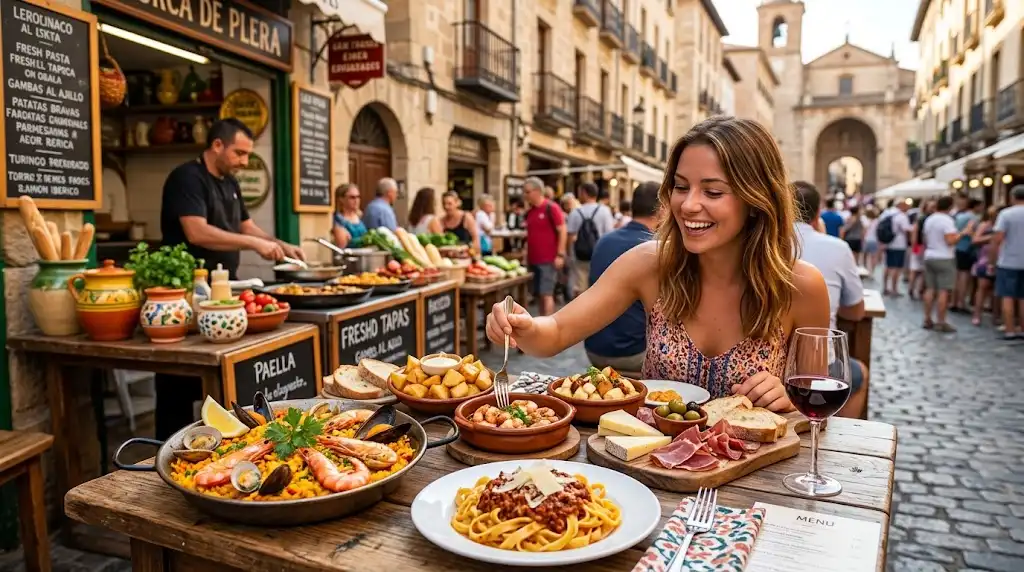
Paella is strongly associated with Spain internationally, but its roots are specifically connected with Valencia. Paella Valenciana traditionally differs from the seafood-heavy versions tourists may encounter in coastal resorts, and local ingredients and preparation methods matter greatly. The rice absorbs broth and flavor while developing a prized toasted layer on the bottom known as socarrat when cooked well. Good paella is typically prepared to order rather than sitting indefinitely in a large pan for passing tourists. Travelers visiting Valencia should seek restaurants known for rice dishes and allow time for preparation. Eating paella where the dish developed provides valuable context for understanding what has become a global symbol of Spanish cuisine.
Tapas are another famous Spanish food concept, but they represent a style of eating more than one particular dish. Depending on the region, diners may order olives, croquettes, cured meats, seafood, tortilla española, anchovies, fried vegetables, or countless other small plates. Moving between several bars can turn dinner into a social exploration rather than one long seated meal. In some cities, small bites may accompany drinks automatically, while elsewhere tapas are ordered individually. The culture varies enough that travelers should observe local habits rather than expecting a standardized national system. Shared plates also make it easier to try many specialties in one evening.
Northern Spain offers some of the country’s most exciting culinary destinations. In the Basque Country, pintxos are small bites commonly displayed or ordered in bars and can range from extremely simple combinations to sophisticated miniature dishes. San Sebastián is particularly celebrated for both casual pintxo bars and high-end dining. Galicia is famous for seafood and pulpo a la gallega, typically involving octopus seasoned simply with olive oil, salt, and paprika. Asturias contributes cider culture and hearty dishes suited to its cooler climate. These regional differences demonstrate again why Spanish cuisine cannot be understood through paella and tapas alone.
Andalusia provides another group of dishes shaped by southern Spain’s climate and agricultural traditions. Gazpacho, the chilled tomato-based soup, becomes particularly refreshing during hot weather, while salmorejo offers a thicker variation associated with Córdoba. Fried fish is popular in coastal areas, and cured ham plays an important role across several parts of the region. Olive oil is central to numerous preparations because Andalusia is one of the world’s most important olive-producing areas. Eating local food in summer can help travelers understand why cold soups and lighter preparations became so culturally important. Climate and cuisine often make immediate sense when experienced together.
Spanish food culture also rewards flexible meal timing. Lunch can be substantial, dinners may begin later than visitors from some countries expect, and small snacks or drinks can bridge the gaps. Markets provide excellent places to observe produce, seafood, cured meats, cheeses, and regional ingredients even when you do not intend to eat a full meal. Bakeries and cafés add pastries and breakfast traditions that vary between regions. Instead of forcing your normal eating schedule onto the destination, adapting gradually to local rhythms can make restaurants easier to enjoy. Food becomes more immersive when timing and social habits are experienced alongside the dishes themselves.
How to Find Authentic Local Food While Traveling
One of the easiest ways to find good local food is to look beyond restaurants positioned directly beside major tourist attractions. Prime sightseeing locations can contain excellent establishments, but they also attract businesses designed primarily around convenience and heavy visitor turnover. Walking several streets into residential or commercial neighborhoods often reveals smaller restaurants serving regular local customers. Pay attention to whether menus emphasize regional dishes rather than attempting to serve every international cuisine imaginable. A short focused menu can sometimes indicate that the kitchen specializes in a smaller number of preparations. This is not a universal rule, but it provides a useful starting point.
Markets are especially valuable because they reveal what ingredients are actually important in the destination. Morning food markets may contain produce, meat, seafood, spices, breads, prepared snacks, and small counters serving workers and shoppers. Even when you do not recognize everything, observing which stalls remain busiest can point toward trusted vendors. Guided market tours can be worthwhile when cultural context and language would otherwise make the environment difficult to understand. Independent travelers can also simply walk slowly, look before ordering, and ask permission before photographing vendors or their products. Respectful curiosity usually receives a better response than treating markets as visual attractions alone.
Local recommendations can outperform generic online rankings when you ask specific questions. Instead of asking a hotel employee, “Where should I eat?” ask where they would go for a particular regional dish or where they take family members for a casual dinner. Taxi drivers, guides, shopkeepers, and hosts may also have useful suggestions when approached politely. Recommendations become even more valuable when several unrelated people mention the same place. Travelers should still consider practical factors such as distance, dietary needs, and opening hours. Combining local knowledge with basic research often produces better results than relying entirely on either one.
Digital reviews can be useful, but rating numbers deserve context. Restaurants in heavily visited areas may accumulate thousands of reviews from international diners whose expectations differ from local preferences. A lower-profile restaurant with fewer reviews may still be exceptional. Read comments for repeated patterns involving particular dishes, service, hygiene, or value rather than choosing solely by star rating. Recent photographs can also reveal portion sizes and what people are actually ordering. If nearly every positive review praises the same local specialty, that dish is often a sensible place to start.
Food tours can be particularly helpful during the first day or two in an unfamiliar destination. A knowledgeable guide can introduce dishes, explain ordering customs, identify ingredients, and show neighborhoods travelers may not discover independently. A good tour should provide cultural context rather than simply moving participants between restaurants. Afterward, visitors can revisit favorite neighborhoods on their own with greater confidence. Cooking classes offer another form of culinary immersion by showing how ingredients are prepared and why certain techniques matter. These activities can transform food from something consumed passively into a deeper understanding of local culture.
How to Enjoy Street Food More Safely
Street food is one of the best ways to experience local dishes, but thoughtful food-safety choices can reduce the chance of illness. Start by looking for stalls with high customer turnover because food that is prepared and sold quickly spends less time sitting around. Local crowds can also suggest that a vendor has established trust within the neighborhood. Observe whether cooked and raw ingredients appear to be handled separately and whether the preparation area seems reasonably organized. Perfectly polished equipment is not necessary for good food, but obvious cross-contamination or food sitting uncovered for long periods deserves caution. A few minutes of observation can provide useful information.
Freshly cooked food served piping hot is often a practical choice because thorough cooking reduces many microbial risks. Grilled meats, stir-fried noodles, soups, and foods cooked directly in front of you can be easier to assess than items that have been sitting at room temperature. Avoid partially cooked meat or seafood when you are uncertain about handling practices. Raw shellfish can carry additional risks even in well-regarded destinations, particularly for people with certain health conditions. Food safety is about reducing risk rather than eliminating every possibility. Travelers can still eat adventurously while making sensible selections.
Water and ice deserve consideration in destinations where tap water is not considered safe for visitors. Sealed bottled water or reliably treated water may be preferable, and travelers should understand whether locally produced ice is commonly made from purified water. Fresh juices can be excellent but may carry additional risk if water is added or equipment is not cleaned properly. Peeled fruit can be a safer choice when you can peel it yourself. These precautions vary by country, so checking current destination-specific health guidance before traveling is useful. Advice suitable for one city should not automatically be applied worldwide.
Hand hygiene is another easy precaution. Washing hands before eating is ideal, while alcohol-based hand sanitizer can be useful when soap and water are unavailable. Travelers frequently touch phones, money, transport rails, market surfaces, and other shared objects before eating with their hands. Simple hygiene reduces exposure to many gastrointestinal pathogens unrelated to the food vendor itself. Carrying a small sanitizer bottle is therefore useful even in destinations with excellent sanitation. Food safety begins with the traveler as well as the kitchen.
People who are pregnant, immunocompromised, very young, older, or managing certain chronic conditions may need to be more selective about raw foods, unpasteurized dairy, undercooked eggs, or inadequately cooked seafood and meat. Dietary adventure should not override individual medical risk. Travelers can still enjoy regional cuisines by choosing well-cooked versions of local dishes. When uncertain, discussing destination-specific food precautions with a healthcare professional before departure can help. Being careful does not mean avoiding street food entirely; it means matching choices to your health circumstances and the preparation conditions you observe.
How to Handle Dietary Restrictions Without Missing Local Food
Vegetarian travelers can enjoy local cuisine more easily when they research traditional dishes before arriving. Many destinations contain naturally vegetarian specialties that do not require asking a restaurant to redesign a meat-based dish. India provides countless examples, while Mediterranean cuisines offer vegetable dishes, legumes, breads, cheeses, and salads. Japan, Thailand, and other countries can be more complicated because fish sauce, meat broth, or other animal ingredients may appear in dishes that look vegetarian. Learning a few key ingredient words in the local language can therefore prevent misunderstandings. Translation cards are particularly useful for communicating restrictions that must be followed strictly.
Vegan travelers need to ask additional questions because dairy, eggs, fish sauce, ghee, butter, or hidden stocks can appear in otherwise plant-focused dishes. Modern cities increasingly contain dedicated vegan restaurants, but exclusively eating international vegan food can reduce exposure to regional cuisine. A better strategy may involve researching local foods that are traditionally vegan or can be adapted simply. Markets can also provide fruit, breads, nuts, and other straightforward options. Being respectful when asking for modifications is important because some small kitchens may not be able to change recipes easily. Having backup foods available reduces pressure on every meal.
Food allergies require even clearer communication because misunderstandings can cause serious medical consequences. Travelers with severe allergies should consider carrying professionally translated allergy cards that explain exactly which ingredients must be avoided. Learning the local words for allergens such as peanuts, shellfish, milk, eggs, wheat, or sesame can provide another layer of protection. Cross-contact may occur even when the allergen is not deliberately included in the dish, particularly at busy street stalls or shared fryers. People prescribed epinephrine should carry it according to medical guidance rather than leaving it at the hotel. Culinary exploration should never take priority over allergy safety.
Religious dietary requirements also benefit from advance research. Muslim travelers may look for halal-certified restaurants or dishes traditionally prepared without prohibited ingredients, while Jewish travelers following kosher practices may require establishments meeting particular standards. Vegetarian dishes can sometimes provide alternatives but do not automatically satisfy every religious requirement because preparation methods matter. Major cities often contain communities and restaurants that make these needs easier to manage. Travelers can map a few reliable options before arrival while leaving room for spontaneous meals. Planning creates flexibility rather than restricting it.
The key is to avoid viewing dietary restrictions as something that automatically prevents meaningful food experiences. Every cuisine contains layers beyond its most famous dishes, and researching those layers often reveals unexpected options. Cooking classes designed around dietary needs, specialized food tours, and local guides can help travelers find dishes they might otherwise miss. Restaurants increasingly understand common restrictions, particularly in major tourism destinations, but clear communication remains essential. With preparation, travelers can enjoy authentic local food while respecting both health needs and personal values.
Final Thoughts on the Best Local Dishes to Try
The best local dishes to try on your next trip will depend on where you travel, but the most memorable choices are usually deeply connected to the destination. Pizza Napoletana in Naples, khao soi in Chiang Mai, tacos al pastor in Mexico City, dosa in southern India, pho in Vietnam, and paella in Valencia all become more meaningful when experienced in the places that shaped them. Flavor is only part of the attraction. The surrounding streets, local routines, preparation methods, and people serving the food create a context that cannot easily be reproduced elsewhere. Culinary travel therefore turns eating into a form of cultural exploration.
Regional specificity matters more than trying to complete a checklist of famous national foods. Italy contains dozens of distinct culinary traditions, just as India, Mexico, China, Japan, Spain, Türkiye, and other countries contain enormous internal variation. Asking what a particular city or province is known for usually produces more interesting answers than searching only for the country’s most famous dishes. Seasonal specialties can provide another layer of authenticity because certain foods are closely tied to harvests, festivals, or weather. Following regional and seasonal cues often leads to meals that feel naturally connected to the trip rather than selected from a generic tourist list.
Authenticity does not necessarily mean expensive, hidden, or difficult to access. A respected neighborhood bakery can be every bit as meaningful as a famous restaurant, while a market breakfast may reveal more about daily life than an elaborate tasting menu. Street stalls, cafés, family restaurants, food halls, and home-style kitchens all have a place in culinary exploration. Price is not a reliable measure of cultural value. What matters is whether the food reflects local ingredients, techniques, traditions, or everyday eating habits. Travelers who remain open to simple meals often find that some of their least expensive dishes become their favorite memories.
Food safety and dietary needs should remain part of the experience rather than afterthoughts. Busy vendors, freshly cooked foods, sensible hand hygiene, safe drinking water, and clear communication about allergies can significantly reduce avoidable problems. Travelers with medical or religious restrictions can research suitable regional dishes before departure and carry translated information when necessary. Preparation makes adventurous eating easier because it reduces uncertainty. There is no prize for eating something that makes you uncomfortable or conflicts with your health needs. Good culinary travel should be enjoyable, respectful, and sustainable throughout the journey.
Ultimately, eating locally encourages travelers to slow down and engage with destinations in a more personal way. Ask what people recommend, visit markets, try unfamiliar specialties, and learn why particular ingredients or dishes matter to the region. You do not need to love everything you taste for the experience to be worthwhile. Even discovering a flavor you would not order again teaches you something about the place. The goal is not simply to find the world’s “best” food but to experience dishes in the environments that give them meaning. When local cuisine becomes part of the itinerary, meals stop being breaks between travel experiences and become memorable travel experiences themselves.
Frequently Asked Questions
What local foods should I try when traveling?
Choose dishes strongly associated with the city or region you are visiting rather than relying only on nationally famous foods. Markets, local recommendations, regional restaurants, and food tours can help identify specialties worth trying.
How do I find authentic local restaurants while traveling?
Look beyond the immediate streets around major tourist attractions, observe where local residents eat, explore food markets, and ask specific questions about regional specialties. Reviews are useful when you focus on recent comments and frequently recommended dishes rather than ratings alone.
Is street food safe while traveling?
Street food can be enjoyed more safely by choosing busy vendors with high turnover, ordering food cooked thoroughly and served hot, practicing good hand hygiene, and following destination-specific advice about water and raw ingredients.
What are some of the best foods to try in Europe?
Popular regional choices include pizza Napoletana in Naples, Roman pasta dishes, paella in Valencia, pintxos in the Basque Country, and regional kebabs and breakfast dishes in Türkiye. The best choice usually depends on the exact region rather than the country alone.
How can I enjoy local food with dietary restrictions?
Research naturally suitable regional dishes before traveling, learn important ingredient terms, and carry translated allergy or dietary cards when necessary. Dedicated local guides, food tours, and restaurants experienced with dietary restrictions can also make eating more comfortable.