




Best Food Experiences Worth Traveling For
Some trips are memorable because of the landscapes, architecture, or history, while others stay with you because of what you ate along the way. For food lovers, a destination can become unforgettable through a bowl of noodles eaten at a market, a regional dish served by a family-run restaurant, or a meal built around ingredients found nowhere else in quite the same form. The best food experiences worth traveling for are rarely just about expensive restaurants or famous chefs. They are usually rooted in place, tradition, season, and the people who prepare the food. When the meal reflects the destination itself, eating becomes part of the reason to travel rather than something that simply happens between attractions.
Food-focused travel also encourages people to slow down and pay closer attention to local life. Markets reveal what people actually buy, street stalls show how everyday dishes are prepared, and regional restaurants introduce recipes that may never appear on international menus. A memorable food experience might involve learning to make pasta in Italy, joining a market tour in Thailand, tasting pintxos in San Sebastián, or eating fresh seafood beside the coast that supplied it. These experiences connect flavor with culture and geography in ways that are difficult to reproduce at home. The following guide explores some of the world’s most rewarding culinary experiences and explains why they deserve a place on a food lover’s travel list.
Eat Pizza in Naples, Italy
Naples is one of the clearest examples of a destination where a familiar food becomes completely different when experienced at its source. Neapolitan pizza is built around simplicity: soft fermented dough, tomato, mozzarella, basil, olive oil, and extremely high-temperature baking. The crust develops charred spots while remaining tender and flexible rather than uniformly crisp. A good pizza Margherita demonstrates how much flavor can come from a very short ingredient list when each component is carefully chosen. Travelers who have eaten pizza around the world often discover that Naples makes the dish feel less like fast food and more like a highly refined craft.
The atmosphere surrounding pizza is part of the experience. Some of Naples’ most respected pizzerias are informal, noisy, crowded, and focused almost entirely on getting excellent pizzas onto tables quickly. You may wait outside, share space with local families, and watch dozens of pizzas move through the oven in rapid succession. That energy gives the meal a sense of place that cannot be recreated by ordering the same style at home. The experience is not about polished luxury. It is about eating a regional staple in a city where generations of cooks have continually refined the process.
Pizza in Naples also demonstrates why culinary travel should focus on local variations instead of generic national cuisines. Different pizzerias adjust hydration, fermentation, tomato varieties, cheese, and oven technique in subtle ways. Eating several versions allows you to notice differences that would otherwise be easy to overlook. Some travelers prefer the simplicity of marinara, while others gravitate toward Margherita or seasonal toppings. The point is not to identify one universally perfect pizza but to understand the characteristics that define the Neapolitan tradition. Repetition becomes part of the learning process.
A pizza-focused visit can easily connect with other Neapolitan food experiences. Espresso culture, sfogliatelle pastries, fried street foods, seafood, and pasta dishes provide plenty of variety between pizzeria visits. Neighborhood bakeries and cafés make it possible to explore local food throughout the day without relying on elaborate reservations. This mix of inexpensive everyday eating and world-famous culinary tradition makes Naples especially attractive to food-focused travelers. The city allows you to eat exceptionally well without turning every meal into a major financial commitment.
What makes Naples worth traveling for is ultimately the connection between food and environment. The pizza tastes different because of the ingredients and technique, but also because you are eating it in the streets, neighborhoods, and social setting that shaped the dish. That combination of flavor, history, and atmosphere is exactly what culinary travel does best. Pizza may be available almost everywhere, yet eating it in Naples helps explain why this particular version became one of the world’s most influential foods.
Explore Sushi and Seafood Culture in Tokyo, Japan
Tokyo offers one of the deepest food cultures in the world, and sushi remains one of the most rewarding experiences for first-time culinary travelers. Edomae-style sushi developed around seafood available to old Tokyo and techniques used to preserve or season fish before modern refrigeration. Today, the style emphasizes carefully prepared rice, precise knife work, temperature, texture, and seafood quality. Travelers may experience it at an intimate counter, a casual neighborhood shop, or a conveyor-belt restaurant. The price range is enormous, which means sushi in Tokyo can be approached from multiple budgets rather than only through high-end omakase dining.
One of the most memorable aspects of a sushi counter is watching the chef work directly in front of you. Each piece is assembled individually, and subtle details such as the temperature of the rice or the amount of seasoning become noticeable when you are paying attention. The experience can feel almost theatrical without being flashy. At more traditional counters, diners may receive pieces one at a time in a sequence selected by the chef. Even a short lunch can teach you how much thought goes into something that appears visually simple.
Tokyo’s seafood experience extends far beyond sushi. Markets and specialty restaurants offer grilled fish, sashimi, shellfish, eel, seafood rice bowls, tempura, and seasonal preparations. The exact ingredients change with the time of year, which is important in Japanese food culture. A traveler visiting in spring may encounter different fish and produce from someone arriving in winter. This seasonal attention makes repeated visits rewarding because the culinary experience is never exactly identical. Food becomes a way to understand the calendar as well as the city.
The city’s scale also means travelers can move easily between refined and casual food experiences. A high-end sushi lunch can be followed by inexpensive ramen, yakitori, curry, or convenience-store snacks later in the day. This variety prevents a food-focused itinerary from becoming financially exhausting. Tokyo rewards curiosity at every level, and some of the most memorable meals may happen in tiny restaurants with only a handful of seats. Travelers who avoid judging quality by décor often discover exceptional places hidden inside train stations, shopping buildings, and quiet side streets.
Tokyo is worth traveling for because it rewards attention to detail. Sushi may be the headline experience, but the broader lesson is how seriously everyday food can be treated. Rice, broth, noodles, grilled skewers, pastries, tea, and convenience foods all reflect a culture in which technique and seasonality matter. For a food lover, the destination provides enough depth to structure an entire trip around eating without ever feeling repetitive.
Try Street Food in Bangkok, Thailand
Bangkok’s street-food culture turns everyday neighborhoods into some of the world’s most exciting informal dining rooms. Vendors cook noodles, curries, grilled meats, seafood, soups, desserts, and snacks in spaces that may contain only a cart, a few stools, and basic equipment. What makes the experience special is the speed and specialization. Many vendors have prepared the same dish thousands of times and focus on doing that one thing extremely well. A short walk can expose travelers to more flavors than a formal multi-course restaurant.
Pad thai is one obvious starting point, but it should not dominate the experience. Boat noodles, grilled pork skewers, chicken rice, som tam, coconut desserts, fried snacks, and countless regional dishes appear throughout the city. Different neighborhoods develop reputations for particular specialties, making food exploration a reason to move beyond the most famous tourist districts. The challenge is not finding something to eat but deciding what deserves limited appetite. Sharing small dishes with travel companions is one of the best strategies for tasting more without becoming uncomfortably full.
Bangkok is also an excellent place to understand how Thai cuisine balances sweet, sour, salty, spicy, and savory elements. Condiments are often provided so diners can adjust dishes according to preference. A bowl of noodles may seem complete when served but transform after the addition of chili, vinegar, fish sauce, or sugar. Observing how local diners season their food can help visitors understand this interactive style. The meal becomes something you participate in rather than simply receive.
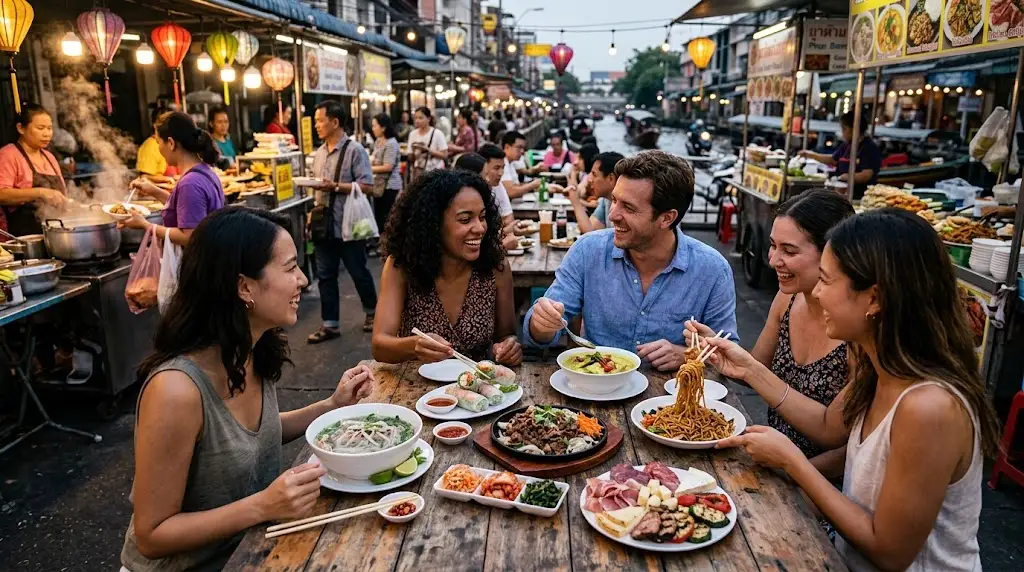
Night markets and evening food areas add another layer to the experience. As temperatures cool, food stalls become gathering places where people eat after work, shop, and socialize. Travelers can turn an entire evening into a food walk without purchasing separate entertainment. The atmosphere is often lively, inexpensive, and highly visual, making it particularly appealing for first-time visitors to Southeast Asia. Watching ingredients being chopped, grilled, fried, and assembled directly in front of you creates a connection between cooking and eating that formal restaurants sometimes hide.
Bangkok is worth traveling for because it demonstrates that extraordinary food does not require formality. Some of the city’s most memorable dishes may cost less than a coffee in another destination. What matters is ingredient freshness, timing, seasoning, and the vendor’s experience. For food lovers, the city offers a nearly endless combination of affordability, variety, and intensity that is difficult to match.
Experience Pintxos in San Sebastián, Spain
San Sebastián has become legendary among food travelers because it combines exceptional high-end restaurants with an equally compelling casual bar culture. Pintxos are small dishes commonly eaten while moving between bars, allowing diners to sample multiple flavors across an evening. Some are simple combinations of bread, seafood, cured meat, or vegetables, while others resemble miniature restaurant dishes involving elaborate sauces and techniques. This mix makes pintxos both accessible and sophisticated. Travelers can design their own progressive dinner without committing to one restaurant.
The best way to enjoy pintxos is usually to order a small number at each stop rather than staying in one place for the entire evening. This creates movement, variety, and conversation, which are central to the experience. One bar may be famous for grilled mushrooms, another for seafood, and another for a particular hot dish prepared only when ordered. Researching a few specialties beforehand can help, but leaving room for spontaneous choices is equally important. Watching what nearby diners order can reveal which dish a bar is best known for.
San Sebastián’s culinary reputation also extends to fresh seafood and Basque ingredients. The city’s coastal location influences restaurant menus, while surrounding farms and producers contribute meats, vegetables, cheeses, and cider. Even simple ingredients tend to be treated with respect rather than buried under excessive preparation. This emphasis on product quality helps explain why small bites can feel so memorable. A single anchovy, pepper, or piece of grilled seafood may deliver more impact than a complicated plated dish elsewhere.
For travelers who want a major splurge, the city also contains some of Europe’s most celebrated tasting-menu restaurants. That makes San Sebastián particularly flexible because one trip can combine inexpensive bar hopping with one carefully chosen high-end experience. A food lover can spend modestly for several days and then devote part of the budget to a meal that demonstrates a completely different side of Basque cooking. The contrast strengthens both experiences rather than making one seem superior.
The destination is worth traveling for because food is woven into the social fabric rather than confined to special occasions. Eating becomes an activity that moves through streets and neighborhoods. Pintxos encourage travelers to interact with bartenders, observe local customs, and make decisions dish by dish. For someone who loves both food and lively city exploration, San Sebastián offers one of the most naturally integrated culinary travel experiences in Europe.
Eat Tacos Across Mexico City
Mexico City is one of the world’s most exciting destinations for taco lovers because the category contains an enormous range of ingredients and techniques. Tacos al pastor are among the city’s signature foods, with marinated meat cooked on a vertical spit and typically served with onion, cilantro, salsa, and sometimes pineapple. The combination reflects multiple cultural influences that eventually became something uniquely Mexican. Watching the meat being sliced directly onto small tortillas makes the preparation as memorable as the flavor. Eating them late at night among local customers is a quintessential Mexico City experience.
Al pastor is only the beginning. Carnitas, barbacoa, suadero, grilled beef, stews, seafood, offal, and countless other fillings appear throughout the city. Different stands specialize in particular styles, and regular customers often develop strong loyalties. A food-focused trip can therefore become a map of taquerías rather than conventional attractions. Because portions are relatively small, travelers can try several stops in one day without committing to full restaurant meals. This makes taco exploration particularly well suited to curious eaters.
Salsa deserves as much attention as the filling. A great taquería may offer several versions ranging from mild and herbaceous to deeply smoky or intensely hot. The same taco can taste completely different depending on which salsa is added. Travelers unfamiliar with local chilies should taste cautiously because appearance does not always indicate heat level. A small amount first allows you to understand the flavor without overwhelming the entire dish. Learning how condiments interact with the taco becomes part of the experience.
Mexico City’s broader food scene also includes tamales, tortas, soups, pastries, market food, regional Mexican restaurants, and innovative contemporary dining. This allows taco-focused days to alternate with other culinary experiences. Markets provide especially valuable context because they show the chilies, herbs, corn products, fruits, and prepared foods underlying Mexican cooking. A guided market visit can help first-time visitors understand ingredients they might otherwise overlook. Food culture extends well beyond the restaurant table.
Mexico City is worth traveling for because it turns one globally familiar food into a seemingly endless field of discovery. Tacos can be inexpensive, quick, sophisticated, deeply traditional, or experimental depending on where you eat. The experience teaches travelers that simplicity and complexity can exist within the same format. Few destinations allow food lovers to taste so much variety while moving casually through the city.
Discover Regional Pasta in Bologna, Italy
Bologna is often treated as one of Italy’s great culinary capitals, and its handmade pasta provides one of the clearest reasons to visit. Tagliatelle al ragù is a defining dish, with broad ribbons of fresh egg pasta carrying a slowly cooked meat sauce. The texture of handmade pasta differs noticeably from many dried versions because it is softer and more delicate while still maintaining structure. A properly prepared ragù coats rather than floods the noodles. The experience can reset expectations for anyone familiar only with international versions of “spaghetti Bolognese.”
Tortellini offers another essential experience. These small filled pasta shapes are traditionally associated with the region and may be served in broth, particularly in classic preparations. Their size means each piece requires careful shaping, making the dish as much about craftsmanship as flavor. Watching fresh pasta being rolled and folded can make the final bowl feel more meaningful. Cooking classes are especially popular in Bologna because the techniques are visual, hands-on, and relatively easy for travelers to appreciate.
The city also offers lasagne verdi, mortadella, regional cheeses, cured meats, and other specialties linked to Emilia-Romagna. Markets and delicatessens display ingredients that help explain why the region has such a strong culinary reputation. A simple plate of bread, cheese, and cured meat can become an experience in itself when the ingredients come from nearby producers. Food lovers may therefore enjoy Bologna even without booking many elaborate restaurant meals. The everyday ingredient culture is strong enough to carry an itinerary.
One advantage of Bologna is that its food scene feels naturally integrated into the historic city. Markets, trattorias, cafés, and specialty shops are easy to encounter while sightseeing. Travelers do not need to cross the city constantly to build meals around regional food. Walking between meals also helps because the cuisine can be rich. A slower pace makes it easier to appreciate both architecture and food without treating them as separate activities.
Bologna is worth traveling for because it makes craftsmanship visible. Pasta may appear simple on the plate, yet the dough, shaping, filling, sauce, and cooking technique all reflect generations of practice. Eating these dishes where they developed highlights subtle differences that can be difficult to appreciate elsewhere. For travelers interested in technique as much as flavor, Bologna offers one of Europe’s most satisfying culinary experiences.
Eat Ramen in Different Regions of Japan
Ramen is one of the best examples of a dish worth traveling across a country for because regional variations can feel dramatically different. Tokyo may feature soy-based broths, while Fukuoka is famous for Hakata tonkotsu ramen with rich pork-bone broth and thin noodles. Sapporo is closely associated with miso ramen, and other cities have developed their own styles involving seafood, salt-based broths, thicker noodles, or regional toppings. A ramen-focused trip reveals that the dish is not one recipe but an evolving family of local traditions.
Ramen shops are usually casual and highly specialized. Many have limited menus centered around one broth or noodle style, allowing the kitchen to focus on repetition and consistency. Ordering may involve a vending machine at the entrance where customers select a bowl before sitting down. These systems can initially feel unfamiliar but are usually straightforward once observed. The informality makes ramen approachable for solo travelers because counter seating is common and meals move quickly.
One of the pleasures of ramen travel is comparing details. Noodle thickness, chewiness, broth richness, aromatic oils, egg preparation, and pork texture can all change from one shop to another. Two bowls labeled tonkotsu may taste dramatically different depending on cooking time and seasoning. Travelers begin noticing preferences they never knew they had. This comparative experience creates a reason to keep exploring even after eating the same basic dish several times.
Season and climate can also influence how ramen feels. A rich miso bowl in snowy Hokkaido creates a different sensory experience from lighter ramen eaten during warmer weather elsewhere. Food and environment reinforce each other, which is one of the strongest arguments for culinary travel. A dish designed within a particular climate often makes more sense when eaten there. This connection is difficult to recreate simply by importing ingredients.
Ramen is worth traveling for because it combines accessibility with extraordinary depth. A bowl can be affordable enough for everyday eating yet contain years of technical refinement. Travelers can enter without reservations, eat beside residents, and leave with a strong sense of regional identity. Few foods offer such a rewarding balance between specialization and casual dining.
Join a Food Market Tour in Marrakech, Morocco
Marrakech provides a food experience built around spice, smoke, markets, bread, preserved ingredients, and slow-cooked dishes. A guided market tour can be especially useful because the medina is intense, layered, and sometimes difficult for first-time visitors to interpret. A knowledgeable guide can explain spices, olives, preserved lemons, breads, sweets, and ingredients used in traditional Moroccan cooking. Without that context, a market may be visually exciting but harder to understand. The tour turns observation into knowledge.
Tagine is one of the dishes most strongly associated with Morocco, but its variations are extensive. Meat, vegetables, dried fruit, olives, spices, and preserved lemon can appear in different combinations depending on region and household. The cooking vessel allows ingredients to simmer slowly, developing deep flavor without requiring complicated presentation. Eating tagine in Morocco helps travelers understand how spice is used for fragrance and balance rather than simply heat. The experience is often communal, which adds a social dimension.
Couscous is another dish worth seeking out, particularly in settings where it is prepared according to traditional weekly or family customs. The texture of well-steamed couscous differs considerably from quick versions prepared elsewhere. Vegetables, meat, broth, and spices are layered around the grain to create a dish that feels both comforting and ceremonial. Travelers who only know instant couscous may be surprised by how much technique traditional preparation requires. Food tours or cooking classes can reveal this process clearly.
Marrakech also offers tea culture, pastries, grilled foods, soups, and numerous market snacks. Mint tea is more than a beverage; serving and drinking it can become part of hospitality and social interaction. Bread accompanies many meals and may be purchased from neighborhood bakeries or communal ovens. Observing these everyday practices helps travelers understand Moroccan cuisine beyond famous restaurant dishes. Food becomes a way to interpret family and community routines.
Marrakech is worth traveling for because the culinary experience engages all the senses. Markets are colorful and noisy, grills create strong aromas, spices are displayed in large quantities, and meals often involve sharing. A guided experience can help visitors navigate this richness respectfully while introducing foods they might never order independently. For travelers who enjoy food as cultural storytelling, the city offers extraordinary depth.
Experience a Seafood Feast on the Portuguese Coast
Portugal’s long Atlantic coastline makes seafood one of the country’s strongest culinary attractions. Grilled sardines, octopus, clams, prawns, squid, and fresh fish appear in different forms depending on region and season. A simple fish grilled over charcoal and finished with olive oil can become one of the most memorable meals of a trip. The preparation may be minimal because the ingredient quality does not need heavy seasoning. Eating seafood within sight of the water reinforces the connection between dish and place.
Bacalhau, or salted cod, is another important Portuguese tradition despite the fish historically coming from northern waters rather than being a local fresh catch. Hundreds of preparations exist, ranging from baked dishes to fritters and combinations with potatoes, eggs, onions, or cream. Trying several versions shows how preservation shaped culinary identity. A food can become nationally important even when its history involves trade and long-distance sourcing. Portugal’s cuisine provides many examples of this relationship between exploration, preservation, and cooking.
Coastal towns often provide better value than highly tourist-focused waterfront restaurants in major cities. Traveling slightly away from the busiest districts can lead to family-run seafood restaurants where menus depend on what is available that day. Asking which fish is freshest can be more useful than ordering the most famous species. Daily availability is part of genuine seafood cooking. Travelers should become comfortable with menus changing rather than expecting every dish year-round.
Lisbon and Porto add another side of Portuguese culinary travel through bakeries, markets, sandwiches, petiscos, and wine culture. Pastéis de nata are an obvious pastry experience, particularly when eaten warm with a crisp shell and creamy center. Sampling them from several bakeries is inexpensive and surprisingly revealing because texture and caramelization vary. These small daily experiences balance the larger seafood meals. A food trip becomes more enjoyable when not every highlight requires a full sit-down dinner.
Portugal is worth traveling for because its food feels strongly linked to ocean, climate, preservation, and everyday tradition. Fresh seafood may be the most obvious attraction, but bread, pastries, olive oil, cured products, and wine create a complete culinary environment. The simplicity of many dishes allows travelers to taste ingredients clearly. For people who value freshness over elaborate presentation, Portuguese coastal eating can be especially rewarding.
Take a Cooking Class in Chiang Mai, Thailand
Chiang Mai is one of the best places to experience Thai cooking through participation rather than observation. Many cooking classes begin with a market visit where instructors introduce herbs, chilies, vegetables, sauces, and ingredients unfamiliar to visitors. Seeing those components before cooking creates an immediate connection between market culture and the finished dish. Travelers learn why different chilies are used, how herbs change aroma, and which ingredients form the foundation of common curries. This context makes the experience much more valuable than simply receiving recipes.
Classes often include dishes such as curry, stir-fries, soups, spring rolls, and regional specialties. Grinding curry paste by hand can be particularly revealing because it shows how much texture and aroma come from fresh ingredients. A commercial paste may produce a good meal, but physically pounding herbs and spices helps explain what traditional preparation involves. The process also makes participants more attentive when tasting curries later in the trip. Learning changes how you eat.
Northern Thai cuisine deserves special attention while in Chiang Mai. Khao soi, with its curry broth, egg noodles, crispy topping, and acidic condiments, is one of the city’s defining dishes. Some classes include it, while others focus on more nationally familiar recipes. Travelers should look for courses that emphasize regional ingredients if local specificity is important. A class designed primarily around tourist favorites may still be enjoyable but provide less connection to northern Thailand.
Cooking classes can also provide good value because they often include several dishes and enough food to replace a large meal. Some include transportation and market tours as well, effectively combining multiple activities into one booking. For budget-conscious food travelers, this can make the price more reasonable than it first appears. Small-group classes tend to provide more hands-on time and allow instructors to answer questions. Recent reviews can help identify classes where participants actually cook rather than mostly watch.
Chiang Mai is worth traveling for because cooking becomes a bridge between ingredients, culture, and technique. You leave not only with memories but with skills that can be used at home. Recreating a curry or noodle dish months later can bring back the destination immediately. Culinary experiences that continue after the trip often provide some of the greatest long-term value.
Taste Biryani and Street Food in Hyderabad, India
Hyderabad is deeply associated with Hyderabadi biryani, a rice dish whose preparation reflects layers of regional and historical influence. Aromatic basmati rice, spices, meat, herbs, and other ingredients are assembled in ways that allow flavors to develop during slow cooking. The balance between rice and meat is important, and individual restaurants often have loyal followings. Eating biryani in Hyderabad provides context that international versions may lack. The dish becomes part of a wider culinary culture rather than a single restaurant menu item.
The city’s food scene extends well beyond biryani. Kebabs, haleem, breads, sweets, tea, and regional snacks create opportunities for multiple food-focused days. During particular religious or seasonal periods, certain dishes become especially prominent. Haleem, for example, has strong associations with Ramadan and is prepared intensively across the city during that season. Travelers who coordinate visits with local food calendars can experience dishes at the moments when they carry the greatest social meaning. Seasonality can be cultural as well as agricultural.
Street food introduces another side of Hyderabad. Busy markets and commercial districts offer snacks, fried foods, sweets, and drinks at modest prices. Travelers should observe food handling, choose vendors with good turnover, and favor freshly prepared dishes when possible. Local guides can be useful for first-time visitors who want to explore confidently. Street food works best when curiosity is balanced with basic food-safety awareness. The objective is to eat adventurously without being careless.
Tea culture is another memorable part of the city’s culinary identity. Irani chai, often paired with biscuits or baked goods, reflects historical cultural exchange and remains part of everyday social life. Sitting in an old café can feel very different from visiting a modern restaurant, yet both contribute to understanding the city. Food experiences worth traveling for are often as much about setting and ritual as taste. A simple cup of tea can reveal history when consumed in the right context.
Hyderabad is worth traveling for because its food feels layered. Mughal, regional, Persian-influenced, and local traditions intersect in ways that become apparent across meals. Biryani may attract visitors initially, but the deeper reward comes from discovering how many other foods surround it. For travelers interested in culinary history as well as flavor, the city provides substantial depth.
Eat Ceviche on the Peruvian Coast
Peru has become one of the world’s most influential culinary destinations, and ceviche remains one of the best dishes for understanding its coastal identity. Fresh fish is typically combined with citrus, chili, onion, and other ingredients to create a dish that is bright, acidic, savory, and deeply connected to the ocean. Timing matters because the fish is prepared close to serving rather than left marinating indefinitely. Eating ceviche near the coast allows travelers to appreciate why freshness is essential. The dish is simple enough that weak ingredients have nowhere to hide.
Lima offers enormous range, from neighborhood cevicherías to internationally celebrated restaurants. Travelers do not need to choose only one level. A casual lunch can provide an excellent ceviche experience, while a higher-end restaurant may explore Peruvian ingredients through contemporary techniques. This combination makes the city appealing to different budgets. Lunch is often a particularly natural time for ceviche, and many local restaurants are busiest then. Following local meal timing can enhance the experience.
Peruvian cuisine extends far beyond ceviche because the country’s geography includes coast, mountains, and Amazonian regions. Potatoes, corn, chilies, seafood, herbs, grains, and tropical ingredients appear across diverse regional traditions. Lomo saltado, anticuchos, causa, ají de gallina, and many other dishes reveal influences from migration and local history. A food-focused itinerary should therefore avoid treating ceviche as the entire national cuisine. It is a strong entry point rather than the final destination.
Markets can help travelers understand ingredients that make Peruvian food distinctive. Dozens of potato varieties, unfamiliar fruits, herbs, corn, chilies, and seafood provide context for restaurant dishes. A guided market visit can be particularly valuable because many ingredients look similar but have very different uses. Food becomes more interesting when you know what you are tasting. This is a recurring advantage of market-based travel experiences.
Peru is worth traveling for because its cuisine combines extraordinary biodiversity with cultural exchange. Coastal seafood, Andean agriculture, Asian influences, Indigenous techniques, and contemporary experimentation all intersect. Ceviche captures only part of that story, but it provides one of the most immediate and memorable introductions. For food lovers interested in both tradition and innovation, Peru deserves serious consideration.
Follow a Night Market Food Trail in Taiwan
Taiwan’s night markets are among the world’s most enjoyable food experiences because they transform eating into an evening of exploration. Instead of choosing one restaurant, travelers move between stalls selling dumplings, noodles, grilled meats, seafood, fried snacks, desserts, teas, and regional specialties. The atmosphere is busy and social, with food preparation happening directly beside shoppers. Small portions encourage experimentation because you can taste several dishes in one night. This makes night markets especially rewarding for groups who are willing to share.
Beef noodle soup is one iconic Taiwanese dish worth seeking out beyond the markets as well. Rich broth, noodles, beef, and aromatic seasonings create a comforting meal that varies substantially between restaurants. Lu rou fan, rice topped with braised pork, offers another everyday dish that can be inexpensive and deeply satisfying. Dumplings, scallion pancakes, and oyster omelets add further variety. Travelers quickly discover that famous snacks represent only a fraction of what Taiwan offers.
Bubble tea may be globally familiar, but drinking it in Taiwan provides a different context. Tea quality, sweetness levels, toppings, and shop styles vary widely. Traditional tea culture also exists alongside the modern drink scene, allowing travelers to explore both ends of the spectrum. A daytime tea house and an evening bubble-tea stop can reveal two very different ways tea functions socially. Food travel becomes richer when familiar international trends are traced back toward their regional origins.
Night markets also provide a useful lesson in pacing. It is easy to become full after the first two stalls, so travelers should walk through the market before making too many purchases. Sharing portions allows more variety, and alternating savory dishes with drinks or lighter foods can help. The experience is not a race to consume everything. Leaving something to try on another night can actually make the trip more enjoyable.
Taiwan is worth traveling for because food is embedded into everyday public life. Night markets make local cuisine accessible, informal, and social, while restaurants and tea houses provide further depth. Travelers can eat exceptionally well at relatively modest prices. For people who enjoy exploring many small dishes rather than sitting through long formal meals, Taiwan is especially rewarding.
How to Choose Food Experiences That Are Actually Worth the Trip
Start by asking whether the experience is strongly connected to the destination. A dish available internationally can still be worth traveling for when the local version has distinctive ingredients, technique, or cultural meaning. Pizza in Naples and sushi in Tokyo are obvious examples because the food may be familiar while the context changes completely. The strongest culinary experiences reveal something about geography, history, or daily life. If the same meal could occur almost identically anywhere in the world, it may be enjoyable but less compelling as a travel priority.
Look for regional specificity rather than broad national labels. Instead of searching for the “best Italian food,” identify what Bologna, Naples, Sicily, or another region is particularly known for. The same principle applies to Mexico, India, Japan, Spain, China, Türkiye, and other countries with substantial regional diversity. Local specialization often produces deeper food experiences because dishes have evolved around particular ingredients and traditions. Asking what people travel domestically to eat can reveal destinations overlooked by international visitors.
Consider seasonality as well. Seafood, truffles, fruits, vegetables, harvest dishes, and festival foods can be closely tied to particular times of year. Visiting during the right season may dramatically improve both availability and quality. Culinary festivals can provide unusual opportunities but may also raise accommodation prices, so the financial tradeoff deserves consideration. Sometimes visiting just before or after a major festival provides similar seasonal foods without peak crowds. Food timing can influence an itinerary as much as weather.
Balance famous experiences with everyday eating. A prestigious tasting menu can be extraordinary, but so can breakfast at a bakery or noodles at a crowded local stall. Trips built entirely around famous restaurants can become exhausting and financially heavy. Mixing price points and formats creates a more accurate picture of how a destination actually eats. It also keeps each experience distinct. A simple meal often feels better after several elaborate ones.
Finally, prioritize experiences that match your own interests rather than someone else’s bucket list. A traveler fascinated by bread may value a bakery tour more than a celebrated seafood restaurant. Someone interested in technique may prefer a cooking class, while another person wants markets and street food. Culinary travel is personal. The best food experience is the one that makes you more curious about the destination, not necessarily the one with the most awards.
Final Thoughts on Food Experiences Worth Traveling For
The best food experiences worth traveling for are memorable because they connect flavor with place. Pizza in Naples, sushi in Tokyo, street food in Bangkok, pintxos in San Sebastián, tacos in Mexico City, pasta in Bologna, and ceviche in Peru all become more meaningful when eaten where the traditions developed. The experience includes much more than the food itself. Streets, markets, local routines, ingredients, weather, and conversation all become part of the meal. Culinary travel allows people to understand destinations through senses that museums and landmarks cannot fully engage.
Expensive dining is only one part of the picture. Some of the world’s strongest food experiences remain remarkably affordable, particularly in street-food cultures and neighborhood restaurants. A carefully prepared taco or bowl of noodles can carry as much cultural significance as a formal tasting menu. Travelers should therefore avoid equating price with importance. What matters is the connection between the dish and its community. Good culinary travel is about depth rather than luxury.
Markets and cooking classes can add another dimension because they reveal what happens before food reaches the plate. Seeing ingredients, talking with vendors, and learning preparation techniques makes later meals easier to appreciate. Even a short market tour can change how you understand an entire cuisine. Cooking something yourself creates an especially strong memory because the technique can be repeated long after the trip ends. Experiences that teach often remain meaningful longer than meals that are only consumed.
Food travel also rewards flexibility. Famous restaurants may be worth booking, but unexpected discoveries often become equally important. A local recommendation, busy bakery, seasonal festival, or family-run restaurant can reshape the itinerary. Leave enough time and appetite for these moments instead of scheduling every meal months in advance. Curiosity works best when there is room to follow it.
Ultimately, food is worth traveling for when it helps you understand somewhere more deeply. Taste local specialties, learn where ingredients come from, explore regional differences, and pay attention to how people actually eat. You do not need to chase every viral restaurant or famous chef to have a remarkable culinary trip. The most rewarding experiences often combine strong flavor, cultural context, and a sense that the meal could only truly belong in that place. That is what turns eating into travel.
Frequently Asked Questions
What are the best food destinations in the world?
Popular food-focused destinations include Tokyo, Bangkok, Mexico City, Naples, Bologna, San Sebastián, Lima, Taipei, Marrakech, and several regional cities across India and Türkiye. The best choice depends on whether you prefer street food, seafood, fine dining, markets, or traditional regional cooking.
Are food tours worth it when traveling?
Food tours can be worthwhile when they provide cultural context, access to local specialties, and guidance through markets or neighborhoods that would be difficult to navigate independently. They offer the best value when the tastings also replace a meal.
What food experiences are worth planning a trip around?
Strong options include eating regional dishes at their source, visiting traditional markets, joining cooking classes, exploring street-food districts, attending seasonal food events, and booking one distinctive restaurant experience connected to the destination.
How do I find authentic food experiences?
Research regional specialties, ask local residents what they recommend, visit neighborhood markets, and look beyond restaurants beside major attractions. Recent local food coverage and guides can also help identify places that remain connected to local dining culture.
Can you plan a food-focused trip on a budget?
Yes. Combine street food, markets, bakeries, affordable neighborhood restaurants, and simple breakfasts with one or two planned splurges. Many of the world’s most memorable food experiences are inexpensive and closely tied to everyday local life.