




How to Travel on a Budget as a Food Lover
Traveling for food does not have to mean spending heavily at celebrity restaurants, booking tasting menus every night, or building an itinerary around expensive reservations. Some of the best culinary experiences are found in markets, bakeries, neighborhood cafés, food halls, family-run restaurants, street stalls, and small local shops where residents actually eat. For a food lover, traveling on a budget is less about eating less and more about spending more intentionally. The goal is to save money on meals that add little to the trip and spend selectively on dishes or experiences that genuinely matter. With a little planning, you can explore local cuisine deeply without turning every meal into a major expense.
A smart food budget also gives you more freedom to travel longer, try more dishes, and experience a destination beyond its most heavily marketed restaurants. Instead of paying premium prices near famous attractions, you can explore residential neighborhoods, morning markets, bakeries, lunch counters, and regional specialties that often provide better value. You may even discover that the cheapest meals become the most memorable because they feel closely connected to everyday life. Budget food travel does require some research, especially when balancing quality, food safety, dietary needs, transportation, and accommodation. This guide explains how to travel on a budget as a food lover while still eating well, discovering authentic dishes, avoiding tourist traps, and deciding when a splurge is actually worth it.
Set a Food Budget Before You Start Booking
The easiest way to overspend on food is to travel without deciding what you can comfortably spend each day. Restaurants, coffee stops, snacks, drinks, desserts, and spontaneous market purchases may look inexpensive individually but can add up quickly. Before booking your trip, estimate a realistic daily food allowance based on the destination’s typical costs and your travel style. A backpacker relying on street food will need a different budget from someone who wants one memorable restaurant dinner each evening. Separating food from the general travel budget also makes it easier to see where your money is going. A clear number gives you flexibility without forcing you to calculate every bite while traveling.
Instead of giving every meal an equal budget, consider dividing your daily food spending according to priorities. Breakfast might be inexpensive bakery food, fruit, yogurt, or something provided by your accommodation, while lunch can become the main restaurant meal of the day. Dinner can then be casual unless you have identified a particular restaurant worth prioritizing. This strategy works especially well in destinations where lunch menus offer the same level of cooking at lower prices than evening service. Food lovers do not need three premium meals every day to feel satisfied. Choosing one meal to emphasize often creates better experiences while protecting the overall travel budget.
It can also help to create a separate category for food experiences rather than combining everything into everyday meals. A cooking class, food tour, tasting menu, winery visit, or specialty market tour may cost much more than a standard lunch, but it can also become one of the highlights of the trip. Decide in advance whether one or two of these experiences matter enough to justify the expense. By setting aside the money beforehand, you avoid feeling guilty when the time comes to spend it. This approach also prevents repeated impulsive splurges that slowly undermine the rest of the budget.
Leave a small amount of flexibility because food-focused travel is naturally spontaneous. You may hear about a regional dish after arriving, discover a famous bakery around the corner, or be invited to join someone for dinner. A budget that allows absolutely no unplanned spending can make the trip feel unnecessarily restrictive. Instead, build in a modest daily or trip-wide cushion for discoveries you could not research in advance. If you do not spend it, the money can remain available for another part of the trip. Flexibility helps you behave like a curious traveler rather than someone following a rigid spreadsheet.
Finally, remember that budgeting is not the same as choosing the cheapest option every time. Spending very little on a disappointing meal is not necessarily better value than paying slightly more for something memorable. Food lovers should think in terms of value per experience, not simply price per plate. A modest family-run restaurant serving an excellent local specialty may be worth more to you than a generic fast-food meal that saves a few dollars. At the same time, an expensive restaurant is not automatically better. Your budget should help you identify what is worth paying for rather than make every decision about minimizing cost.
Choose Destinations Where Great Food Is Affordable
Destination choice has a major influence on how far your food budget will go. Some cities make it possible to eat extraordinary local dishes for relatively little money, while others have high restaurant costs even for simple meals. Southeast Asia, parts of South Asia, Latin America, Eastern Europe, the Balkans, and several Mediterranean destinations can offer strong culinary experiences at comparatively accessible prices. Cities such as Hanoi, Bangkok, Penang, Istanbul, Mexico City, and many regional destinations are popular with food travelers partly because local meals do not always require premium spending. Current prices vary considerably, so research the actual destination rather than relying on broad assumptions about a country.
Even within expensive countries, choosing the right city or region can reduce costs dramatically. A major capital may charge significantly more than a smaller regional city known for the same country’s food traditions. Italy, for example, offers very different dining costs depending on whether you are eating beside a major tourist landmark or in a smaller town away from the busiest routes. Japan also provides many affordable everyday meals despite its reputation for costly high-end dining. Regional destinations often provide another advantage: their food may be more distinctive because local specialties have not been designed primarily for international visitors. Budget and authenticity can therefore work together.
Traveling during the shoulder season can improve food value as well. Accommodation prices often fall outside the busiest months, leaving more money available for eating and culinary experiences. Restaurants in heavily seasonal destinations may also be easier to access without reservations or long waits. Seasonal travel can introduce dishes that visitors miss during peak summer tourism, including harvest foods, warming soups, regional festivals, or particular seafood seasons. Food-focused travelers can therefore choose travel dates partly around what they want to taste. Saving on flights and hotels can free up more of the budget for local cuisine.
Currency exchange rates also affect how affordable a destination feels. A place that was expensive several years ago may become relatively good value for international visitors after currency movements, while another destination may become considerably more costly. For upcoming trips, checking current exchange rates and recent menus can provide a much more realistic picture than reading an old travel blog. Restaurant pricing changes quickly because food, labor, rent, and energy costs change. Research should therefore focus on recent traveler reports and current local information. Budget travel depends on present conditions rather than a destination’s historical reputation.
Do not overlook cities that are famous domestically for food but receive fewer international visitors. These places may have excellent markets, regional restaurants, and specialties without the premium pricing associated with global tourism hotspots. A secondary city can often provide better hotel rates and more approachable restaurants while giving you deeper exposure to local life. Asking residents which city in their country is considered best for food can produce surprising answers. If your trip is primarily culinary, choosing the destination based on local food reputation rather than famous sightseeing can be both cheaper and more rewarding.
Make Lunch Your Main Restaurant Meal
Lunch is one of the best opportunities for food lovers to eat well without paying full dinner prices. Many restaurants offer fixed-price lunch menus, smaller set meals, daily specials, or business lunches designed for local workers. These menus may feature the same kitchen, ingredients, and cooking standards as dinner but at a lower price. France, Spain, Italy, Japan, and many other destinations have strong traditions of affordable midday meals. Researching lunch options before arriving can reveal restaurants that would otherwise feel outside your budget. The strategy works especially well when you care more about the quality of the food than the atmosphere of late-evening dining.
A substantial lunch can also reduce how much you need to spend at dinner. After eating a satisfying regional meal in the afternoon, you might be perfectly happy with a sandwich, soup, street-food snack, bakery item, or market food in the evening. This creates a natural balance between culinary exploration and budget management. It can also make evenings more flexible because you are not constantly searching for a restaurant reservation after a long day of sightseeing. In destinations where dinner begins late, having your main meal earlier may suit travelers who prefer an earlier schedule.
Look for words such as menu del día, prix fixe, set lunch, business lunch, or their local equivalents. These offers often include several courses at a price lower than ordering the same items separately. Understanding local meal terminology before the trip can save money without requiring any complicated coupon hunting. Hotel staff, local friends, food guides, and restaurant websites can help identify midday specials. Some Michelin-listed or highly regarded restaurants also offer much more approachable lunch menus than evening tasting menus. A strategic lunch can therefore give you access to high-quality cooking that would otherwise require a significant splurge.
Be careful not to assume that every fixed lunch automatically represents good value. Compare what is included, portion size, drink charges, service fees, and whether the restaurant genuinely specializes in local food. Tourist-heavy restaurants may advertise inexpensive sets that contain mediocre dishes designed for visitors. A crowded lunch service with local workers can often be a more encouraging sign than a prominent English-language “special menu” beside an attraction. Reading recent reviews for the lunch specifically can provide useful context. Value comes from the combination of price and quality rather than the format alone.
Making lunch the main meal can also fit naturally with food-market exploration. Visit a market in the morning, have a substantial restaurant lunch nearby, and then keep dinner relaxed. This schedule provides several food experiences without forcing you to pay for three formal meals. You may discover breakfast pastries, fruit, cheese, snacks, and local drinks throughout the day, so another elaborate dinner may not even feel necessary. Food-loving travelers often eat more interestingly when they stop treating breakfast, lunch, and dinner as three mandatory restaurant bookings.
Eat Where Local Residents Eat
Restaurants designed primarily for visitors often charge more because location and convenience are part of the price. A café facing a famous square may serve perfectly acceptable food, but you may be paying as much for the view as the meal. Walk several blocks away from heavily visited attractions and prices can change quickly. Residential neighborhoods, university areas, business districts, and local shopping streets often contain restaurants serving regular customers rather than one-time tourists. These places rely more heavily on repeat business, which can encourage better value and consistency. Exploring them also gives food lovers a reason to see parts of the city beyond the standard sightseeing route.
Observe where people actually eat during normal meal hours. A small noodle shop filled with office workers, a bakery with a line of residents, or a lunch counter busy with delivery drivers may indicate both value and local popularity. Long queues are not automatically proof of quality, particularly when social media creates tourist hype, so notice who is waiting and what they are ordering. If most diners appear to be residents ordering the same specialty, that dish is probably worth considering. Local crowds can be especially useful when online reviews are limited or written mainly for tourists.
Ask specific questions when seeking recommendations. Instead of asking, “Where is a good restaurant?” ask where someone would go for the city’s best affordable dumplings, noodles, grilled fish, curry, or regional breakfast. Specific questions make it easier for people to recommend everyday places rather than formal restaurants they think visitors expect. Hotel employees, hosts, shopkeepers, tour guides, taxi drivers, and bartenders may each have useful ideas. When several unrelated people mention the same neighborhood or dish, pay attention. Local recommendations are particularly valuable for finding small restaurants that do not invest heavily in online marketing.
Language barriers should not prevent you from entering local restaurants. Translation apps, menu photographs, pointing, and simple phrases can handle many situations. A short menu written only in the local language may actually be encouraging if the restaurant serves a regular neighborhood crowd, although this is not a guarantee of quality. Observe what others are eating and politely ask what is popular. Many memorable budget meals involve some uncertainty, and travelers do not need perfect knowledge before ordering. Curiosity and patience usually matter more than fluent language skills.
Eating where locals eat also means respecting local dining habits. Some restaurants specialize in breakfast and close early, while others may not serve dinner until later in the evening. Tables may turn quickly at busy lunch counters, and long lingering meals may be unusual in certain casual settings. Following the local rhythm can improve both the experience and your chances of finding food at its best. Trying to force every destination into your normal meal schedule may lead you toward international restaurants that cater specifically to travelers. Adjusting to local habits can therefore improve cultural immersion and reduce costs at the same time.
Use Markets as Both Attractions and Cheap Meals
Food markets are ideal for budget travelers because they combine sightseeing, cultural learning, and eating in the same place. Instead of paying separately for an attraction and a restaurant meal, you can spend a morning exploring produce, seafood, spices, breads, cheeses, snacks, and prepared dishes. Many markets contain small counters or stalls serving shoppers and workers at reasonable prices. These foods often reflect the destination more closely than menus created for international visitors. Even when you do not buy much, seeing ingredients helps you understand what appears later in restaurant dishes. Markets can therefore provide both education and affordable meals.
Arrive when the market is actually active rather than assuming every famous market functions the same way throughout the day. Some traditional markets are most interesting early in the morning when suppliers, restaurant workers, and residents are shopping. Others transform into evening street-food destinations after regular produce stalls close. Researching the best hours can make a large difference. Visiting at the wrong time may leave you with only souvenir stands or tourist-oriented food. Local markets work on local schedules, and food-focused travelers benefit from adapting to them.
Sampling small portions allows you to try several dishes while controlling spending. One pastry, a piece of fruit, a local cheese sample, a small bowl of noodles, and a regional drink can collectively create a satisfying meal without the cost of a formal restaurant. Sharing portions with a travel companion makes this strategy even more effective. It also reduces the risk of filling up on the first thing you see before discovering something more interesting later. Food markets reward slow exploration. Walk through once before buying heavily if the layout allows it.
Be aware that famous markets can become tourist attractions with prices to match. Some now contain upscale bars, souvenir shops, and gourmet stalls charging more than neighborhood restaurants. That does not automatically make them bad experiences, but they may not serve your budget goal. Compare prices and look beyond the most photographed market in the city. Smaller municipal or neighborhood markets may offer a more everyday experience at better value. Food lovers should distinguish between a market that happens to be famous and one that remains an important part of local food life.
Markets can also help reduce grocery costs when your accommodation includes a kitchen. Fresh fruit, bread, eggs, cheese, vegetables, and ready-made foods can become inexpensive breakfasts or simple dinners. You do not need to cook elaborate meals while traveling to benefit from market shopping. A picnic assembled from good bread, local cheese, tomatoes, fruit, and a dessert can feel more memorable than another generic restaurant meal. Using markets strategically creates budget room for the meals you genuinely want to splurge on later.
Stay Somewhere That Helps You Save on Food
Accommodation choice can significantly influence your food budget. A hotel room with no refrigerator, kettle, or breakfast may push you toward restaurants for every meal and snack. A guesthouse, hostel, serviced apartment, or rental with basic kitchen facilities gives you more flexibility. Even a small refrigerator can store yogurt, fruit, cheese, leftovers, drinks, and bakery items. You do not need to spend your holiday cooking full dinners to benefit from having basic food storage. Preparing one inexpensive meal each day can create considerable savings over a longer trip.
Free or included breakfast can also provide real value, but only when the room rate remains competitive. A good hotel breakfast may cover coffee, fruit, eggs, bread, and other foods that would otherwise require a separate purchase each morning. However, paying significantly more for a hotel simply because breakfast is included may not save money. Compare the total room price with nearby café costs before deciding. In destinations with excellent inexpensive breakfast culture, skipping hotel breakfast can actually improve both your budget and culinary experience. The right choice depends on local prices and what you want from the trip.
Location matters because staying in a food-friendly neighborhood reduces transportation costs. If affordable restaurants, markets, and bakeries are within walking distance, you are less likely to spend money on taxis simply to reach dinner. Central tourist districts may have convenient sightseeing but expensive food, while a nearby residential neighborhood can provide better restaurants and lower accommodation prices. Look at the surrounding area on a map before booking. Food lovers may gain more from being close to a market or restaurant district than from being directly beside the main landmark.
Shared kitchens in hostels can be especially useful for solo travelers and long-term travelers. You can prepare breakfast, make sandwiches for travel days, or cook a simple meal after several days of restaurant food. Kitchen use also allows you to buy interesting ingredients from markets without wondering how to eat them. Some hostels organize communal meals or cooking events, creating a social experience at a relatively low cost. Check kitchen reviews carefully because facilities vary widely. A kitchen that is permanently crowded or poorly maintained may not provide the savings you expect.
When choosing accommodation, consider how much money the room can indirectly save rather than looking only at the nightly rate. A slightly more expensive apartment with a refrigerator, kitchen, washing machine, and good location may reduce restaurant, laundry, and transportation spending enough to become better overall value. Travel budgeting works best when expenses are viewed together rather than independently. For food lovers in particular, accommodation can either support smart eating or force unnecessary spending. Choosing strategically gives you more money for meals that actually matter.
Build Cheap Breakfasts Around Local Bakeries and Cafés
Breakfast is often the easiest meal to keep inexpensive without sacrificing cultural experience. Many destinations have strong bakery traditions where travelers can buy local bread, pastries, sandwiches, or savory items for far less than a hotel restaurant breakfast. France has boulangeries, Türkiye has simit and breakfast bakeries, Mexico offers panaderías, Japan has bakeries and convenience-store options, and countless countries have inexpensive morning specialties. Eating breakfast the way local commuters do can feel more authentic than ordering an international buffet. It also lets you begin exploring immediately rather than spending heavily before the day’s activities start.
Coffee prices can quietly become a major part of a travel budget. A specialty café near a landmark may charge several times what a neighborhood counter charges for the local standard coffee. Learning how residents order coffee can save money and create a more interesting experience. In Italy, for example, drinking espresso at the bar can differ in price from sitting at a table in certain locations. Elsewhere, tea may be the inexpensive everyday drink rather than coffee. Adapting to local habits instead of insisting on your usual large café order can reduce spending throughout the trip.
Buying breakfast ingredients from a supermarket or market is another straightforward strategy. Yogurt, fruit, bread, cheese, boiled eggs, oats, or cereal can provide several breakfasts for the price of one restaurant meal. This approach is particularly useful on mornings when you have an early train, tour, or flight. It also prevents desperate purchases in expensive transportation hubs. Keeping a few simple foods in your room gives you control when nearby restaurants are closed. Convenience itself has financial value during travel.
Do not make breakfast so large or expensive that it interferes with food experiences you care about later. If your destination has a famous lunch culture or a market you want to explore at 11 a.m., a huge hotel buffet may leave you too full to enjoy it. A light bakery breakfast can help preserve your appetite and budget. Food-focused travel often works better when meals are treated as connected parts of the day rather than independent opportunities to maximize consumption. Planning appetite is almost as useful as planning spending.
On some days, however, breakfast may be the local experience worth prioritizing. Turkish breakfast, Vietnamese pho, South Indian dosa, Mexican regional breakfasts, or Japanese morning sets can become memorable culinary activities. In that case, deliberately spend more in the morning and keep lunch simpler. Budget food travel should remain flexible enough to follow the strongest local tradition. The point is not that breakfast must always be cheap, but that each meal should earn its place in the budget.
Make Street Food Work for Your Budget
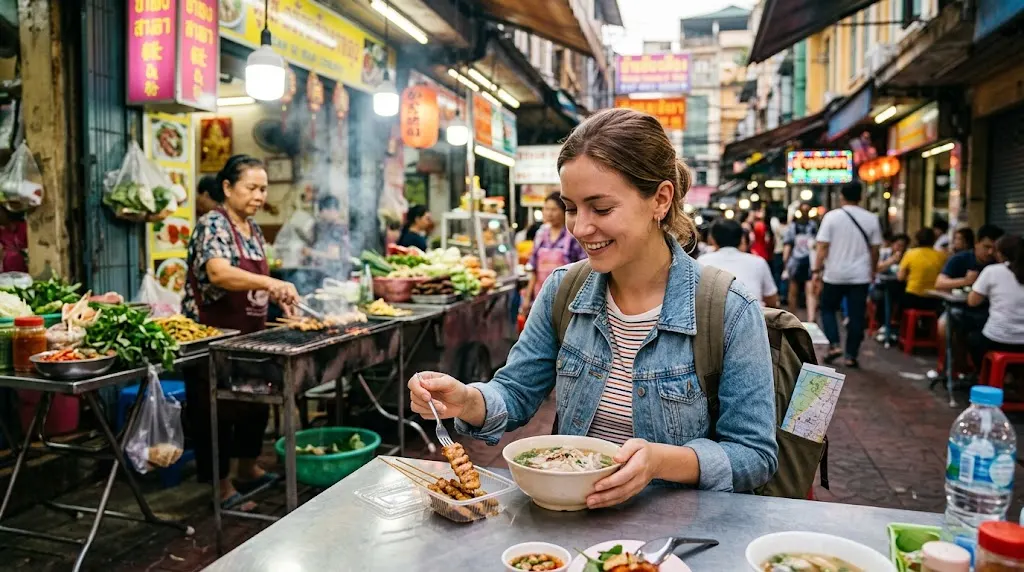
Street food offers some of the highest flavor-to-price value available in many destinations. Tacos in Mexico, satay in Southeast Asia, kebabs in Türkiye, bánh mì in Vietnam, chaat in India, and countless other local specialties can cost far less than formal restaurant meals. Street vendors often specialize in one dish and prepare it repeatedly, creating expertise through repetition. The informal environment also removes many overhead costs associated with table service and prime restaurant interiors. For a food lover on a budget, this combination can be ideal. However, the cheapest vendor is not automatically the best choice, so quality and food safety should still guide decisions.
Choose stalls with steady customer turnover because ingredients are more likely to be used and replaced frequently. Local customers can also provide a useful quality signal, particularly when several nearby vendors sell similar foods and one remains consistently busy. Watch how food is stored, cooked, and handled before ordering. Freshly cooked hot food is often easier to assess than items that have been sitting uncovered. An organized stall does not need to look luxurious to inspire confidence. Spending slightly more at a trusted vendor is better value than risking illness for a tiny saving.
Sharing street food is one of the best strategies for tasting more without spending more. Two travelers can buy different small dishes and split them, effectively doubling the number of foods each person gets to experience. Even solo travelers can order smaller portions when available and move gradually between stalls. Markets and food streets are especially suited to this approach. Instead of treating each stop as a full meal, think of the evening as a tasting route. This makes food exploration part of the entertainment budget as well as the meal budget.
Street food can also replace paid nightlife in some destinations. Spending an evening walking through a night market, sampling food, watching vendors cook, and observing local life may be more enjoyable than paying for a bar, club, or formal entertainment. This is especially useful for travelers whose main interest is food. Night markets in parts of Asia and Latin America can provide hours of inexpensive activity. Food becomes both dinner and the evening experience. Combining categories like this is one of the most effective ways to stretch a travel budget.
Keep cash and small denominations available where street vendors do not commonly accept cards. ATM fees and poor exchange rates can undermine otherwise inexpensive eating if you repeatedly withdraw small amounts. Research local payment habits before arriving so you can carry an appropriate amount safely. Digital payments are increasingly common in many destinations, but access may depend on local apps or bank systems unavailable to visitors. Being prepared prevents situations where the only food you can buy is at a more expensive card-accepting tourist restaurant.
Splurge Strategically Instead of Every Day
Budget food travel does not require avoiding expensive meals entirely. In fact, one carefully chosen splurge can make a trip more satisfying because you have something special to anticipate. Decide what would genuinely add value: a tasting menu, regional specialty restaurant, chef’s counter, seafood dinner, cooking class, winery meal, or famous local institution. Research it carefully and reserve if necessary. Knowing that one memorable meal is already planned makes it easier to choose affordable food on other days without feeling deprived. Intentional splurging feels very different from repeated impulsive spending.
Choose splurges based on uniqueness rather than prestige. A restaurant does not need Michelin stars or international fame to justify higher spending. Perhaps a particular regional dish requires hours of preparation and is best experienced at a respected specialist restaurant. Maybe a small seafood place is expensive because it serves exceptional local catch that you cannot easily experience at home. Spend where the destination offers something distinctive. Paying heavily for generic international cuisine while traveling usually provides less culinary value than spending on a local specialty.
Lunch can make premium dining more affordable here as well. Some well-regarded restaurants offer shorter midday menus at prices significantly below dinner. You still experience the kitchen’s approach without paying for the longest tasting menu, wine pairing, or evening atmosphere. Search specifically for lunch menus rather than assuming a restaurant is outside your budget after seeing its dinner prices. Booking directly through the restaurant can also reveal options that third-party reservation platforms do not highlight. Flexible timing expands what you can afford.
Control additional costs around the splurge. Alcohol pairings, bottled water, cocktails, supplemental dishes, and service charges can turn an already expensive meal into a dramatically larger bill. You do not need every optional add-on to enjoy the restaurant. Order according to what matters most to you. If wine is central to the experience, perhaps skip another paid activity that day rather than pretending the cost does not count. A splurge remains budget-friendly when it is fully included in the plan.
Afterward, do not feel pressure to repeat the experience because one upscale meal was excellent. Part of its value comes from contrast with simpler meals during the rest of the trip. A handmade dumpling from a street stall can be memorable the day after an elaborate tasting menu because they offer completely different experiences. Food travel becomes richer when price levels vary. The goal is not to eat luxuriously at every opportunity but to experience the widest possible range of what a destination does well.
Avoid Tourist-Trap Restaurants and Hidden Costs
Tourist-trap restaurants can damage a food budget because they often combine higher prices with forgettable food. Common warning signs include oversized menus covering several unrelated cuisines, aggressive staff trying to pull customers inside, prominent photographs designed mainly for visitors, and prime locations immediately beside major attractions. None of these features proves a restaurant is bad, but several together should encourage closer inspection. Walk a short distance away and compare menus before committing. The easiest restaurant to see is often priced for people who do not want to research alternatives.
Check menu prices before sitting down whenever possible. Some destinations have additional charges for bread, table service, cover fees, or seating in a particular area. These practices may be completely normal locally rather than scams, but they can surprise travelers who do not understand the system. Ask politely when something is unclear. Restaurant websites and recent traveler reports can help identify local tipping and service expectations. Understanding the billing culture prevents small charges from turning into repeated budget leaks.
Drinks are another common source of unexpected spending. Soft drinks, cocktails, bottled water, and alcohol can cost almost as much as inexpensive meals in some tourist areas. Ordering the standard local water option or limiting paid drinks can dramatically reduce restaurant bills over a week. Coffee and dessert purchased at a separate neighborhood café may also cost less than adding them to a formal dinner. Breaking the meal into different locations can create more variety while controlling cost. Food lovers often benefit from thinking beyond the single-restaurant model.
Transportation can become a hidden dining cost as well. A supposedly inexpensive restaurant on the opposite side of the city may no longer be cheap after adding taxi fares in both directions. Group restaurants by neighborhood so that food exploration fits naturally with sightseeing. If you are traveling primarily for food, consider staying near the neighborhoods containing the restaurants and markets that interest you most. Walking between food stops is free, adds physical activity, and lets you experience the city between meals. Geographic planning can save almost as much as menu planning.
Finally, avoid assuming that social-media fame guarantees value. Viral restaurants can develop long lines, higher prices, and menus optimized for visibility rather than quality. Some remain excellent, while others are successful mainly because one photogenic dish attracts visitors. Read local food coverage and recent reviews instead of relying solely on short videos. Ask whether the dish is genuinely important to the destination or simply popular online. Your budget is better spent on food you want to taste than food you feel obligated to photograph.
Save Money With Picnics and Simple Self-Catered Meals
A picnic can be one of the best meals of a trip when local ingredients are good. Visit a bakery, market, supermarket, or specialty shop and assemble bread, cheese, fruit, vegetables, cured foods, dips, or another regional combination. Eating in a park or scenic public space can cost far less than a restaurant while still feeling connected to the destination. This strategy works particularly well in places with strong bread, cheese, produce, or deli traditions. It also gives you control over portion size when several restaurant meals have begun to feel heavy.
Use local supermarkets as a form of food exploration rather than viewing them only as budget necessities. Grocery stores reveal everyday snacks, drinks, dairy products, sauces, prepared foods, and sweets that may never appear in restaurants. Japanese convenience stores, French supermarkets, Spanish grocery counters, and regional markets can all provide interesting foods at modest prices. Choosing one unfamiliar snack each day can satisfy curiosity without creating a large expense. Supermarkets are also useful for water, breakfast, and travel-day supplies that would cost significantly more at airports or tourist sites.
If your accommodation has a kitchen, cook strategically rather than recreating your home routine every night. One simple meal made from local ingredients can be fun, especially after visiting a market. Pasta with regional produce, eggs with local bread, or a simple salad can give your digestive system and budget a break from constant restaurant meals. Avoid buying large quantities of specialty ingredients that you will not finish before leaving. Short-term travelers should keep cooking simple. The goal is saving money and engaging with ingredients, not spending half the holiday washing dishes.
Leftovers can also become valuable when restaurant portions are large and your accommodation has safe refrigeration. Ask whether takeaway containers are culturally normal, because practices differ by destination. A substantial dinner may become breakfast or lunch the next day, effectively reducing the cost per meal. This is particularly useful in countries where portion sizes are generous. Do not keep perishable food without appropriate refrigeration or for longer than food-safety guidance allows. Saving money is not worthwhile if it increases the risk of illness.
Picnics and self-catering work best when combined with restaurants rather than used as a total replacement. Food lovers travel partly to experience cooking they cannot reproduce themselves, so eating every meal from a supermarket may defeat the purpose. Instead, use inexpensive self-catered meals to create financial space for better restaurant choices. A simple breakfast and picnic lunch might allow you to enjoy an excellent regional dinner without exceeding the day’s food budget. Strategic contrast is what makes the approach effective.
Plan Travel Days So Hunger Does Not Become Expensive
Airports, train stations, motorway stops, and tourist transportation hubs are often some of the least budget-friendly places to become hungry. Prices may be higher, options limited, and quality inconsistent. Buying food before leaving for a travel day can prevent expensive impulse purchases. A sandwich from a neighborhood bakery, fruit, nuts, or another portable meal may cost significantly less than the same category of food after security or at a station. Packing thoughtfully is especially useful when long transfers interrupt normal meal times.
Check rules about carrying food across borders because agricultural and customs restrictions vary by country. Fresh produce, meat, dairy, seeds, and other products may not be allowed into certain destinations even when they were purchased legally elsewhere. Finish restricted foods before arrival or choose packaged items appropriate to the route. Domestic train and bus journeys usually provide more flexibility, but transportation companies can have their own policies. A little research prevents wasted food and potential customs problems.
Reusable water bottles can reduce spending where safe refill stations or potable tap water are available. Buying multiple small bottles every day becomes surprisingly expensive and creates unnecessary plastic waste. In destinations where tap water is unsafe, use sealed or reliably treated water instead. Food budgeting should never encourage unsafe drinking practices. Research water quality before arrival so you know whether refilling is appropriate. Different destinations require different strategies.
Long train journeys can become enjoyable food experiences when you bring a picnic built from local ingredients. Some countries also have traditional station meals or train foods that are worth budgeting for specifically. Japan’s ekiben boxes are one example where transportation and culinary culture overlap. In other places, station food is mostly expensive convenience food with little regional value. Decide which situation applies rather than assuming you should always bring or always buy food. A food lover’s travel-day budget can still include cultural experiences when they are genuinely distinctive.
Arriving hungry in a new city can also lead to poor spending decisions. If you know you will reach your destination late at night, identify one nearby affordable restaurant beforehand or carry something small to eat. This prevents settling for the first expensive hotel restaurant simply because every other option appears closed. It can also reduce stress after a long journey. Planning food around transportation is one of the least glamorous but most effective habits for budget travel.
Use Food Tours and Cooking Classes Selectively
Food tours can seem expensive to budget travelers, but they may provide good value when they replace both a meal and a sightseeing activity. A strong tour introduces several dishes, explains neighborhoods and food traditions, and gives you information you can use for the rest of the trip. Taking one early in the visit can help you identify markets, restaurants, and foods worth exploring independently later. The value therefore extends beyond what you physically eat during the tour. Compare the number of tastings, tour length, group size, and level of cultural explanation before booking.
Avoid tours that simply move visitors between highly commercialized restaurants without explaining the food. You could usually visit those places independently for less money. Look for tours focused on a specific neighborhood, market, cuisine, or cultural history. Smaller groups may cost more but can provide better interaction with vendors and guides. Recent reviews are useful for judging whether participants actually leave full and whether the tour provides meaningful information. A food tour earns its price when it teaches you how to navigate the destination afterward.
Cooking classes can provide similar value when you enjoy learning techniques and recipes. A class that includes a market visit, several dishes, and a full meal may effectively combine multiple travel experiences into one booking. You also return home with knowledge that extends beyond the trip. Classes are particularly valuable for foods involving techniques difficult to understand simply by eating the finished dish. Dumpling folding, curry pastes, pasta making, or regional bread preparation can reveal details that ordinary restaurant meals hide.
Budget-conscious travelers should choose one or two paid culinary experiences instead of booking them in every destination. Many food discoveries can be made independently for almost nothing beyond the cost of the meal. Spend on guided experiences where language barriers, market complexity, historical context, or access genuinely add value. In familiar or easy-to-navigate cities, self-guided exploration may be enough. Your budget should pay for expertise when expertise changes the experience.
Free walking tours and self-guided food routes can provide alternatives as well. Create your own route around bakeries, markets, cafés, and specialty shops using recent local recommendations. Walking between stops costs nothing and lets you control both timing and portion sizes. You can spend the money saved on the foods themselves. A self-guided day is especially effective when several famous inexpensive dishes are concentrated in one neighborhood.
Travel Slowly and Eat Better for Less
Slow travel can reduce food expenses because longer stays make it easier to understand where residents shop and eat. During the first day in a city, travelers often choose convenient restaurants because they do not yet know the neighborhoods. After several days, you begin noticing the busy bakery, supermarket, lunch special, or market stall that locals rely on. This knowledge improves value naturally. Constantly moving between cities resets the learning process and pushes you toward convenient, highly visible options. Staying longer therefore benefits both the budget and the culinary experience.
Longer stays also make accommodation with a kitchen more worthwhile. Buying a small amount of olive oil, coffee, cereal, or cooking ingredients makes little sense for one night but can save money over a week. You can alternate restaurant meals with simple food at home without feeling that you are sacrificing precious opportunities. Laundry and transportation costs may decrease too, freeing additional money for culinary experiences. Travel budgeting is interconnected, and slow travel often reduces expenses across several categories at once.
You can also revisit restaurants after discovering what they do best. On the first visit, you may order conservatively because the menu is unfamiliar. After observing other diners or speaking with staff, you might return for the specialty you missed. Repeat visits sometimes create small social connections with owners or workers, particularly in neighborhood establishments. These experiences are difficult to develop when spending only one evening in each city. Food culture becomes richer when you have time to recognize patterns.
Slow travel makes seasonal and weekly food rhythms easier to notice. A market may operate only on particular mornings, a restaurant may serve a special dish once a week, or bakeries may produce certain items only on weekends. A rushed itinerary can miss these experiences simply because the schedule does not align. Longer stays let you plan around food traditions rather than forcing everything into one day. Authentic experiences often follow local calendars rather than tourist itineraries.
Most importantly, slow travel reduces the pressure to treat every meal as a once-in-a-lifetime event. When you have only 24 hours in a city, it is tempting to overspend because every breakfast, lunch, and dinner feels like your only chance. With several days available, you can eat simply sometimes and experiment gradually. That relaxed approach often produces better decisions. Budget food travel becomes easier when there is enough time for ordinary meals as well as highlights.
Final Thoughts on Traveling on a Budget as a Food Lover
Learning how to travel on a budget as a food lover is mostly about deciding which meals deserve your money. Markets, bakeries, neighborhood restaurants, street stalls, lunch specials, supermarkets, and simple self-catered meals can dramatically reduce everyday costs without removing food from the heart of the trip. In many destinations, these affordable experiences are actually closer to daily local life than expensive restaurants. The objective should not be to eat as cheaply as possible. It should be to spend less on forgettable meals so you can spend appropriately on the experiences you will remember.
Planning helps, but overplanning can remove the spontaneity that makes culinary travel enjoyable. Research regional specialties, affordable neighborhoods, market days, lunch menus, and one or two possible splurges before departure. Then leave enough budget and time for discoveries once you arrive. A recommendation from a local or an unexpectedly busy food stall may become more memorable than anything on your original list. The strongest travel plans create direction without eliminating flexibility. Food especially rewards curiosity.
Choosing the right accommodation and destination can make budgeting significantly easier. A neighborhood with affordable restaurants and markets reduces transportation costs, while a refrigerator or small kitchen creates options for breakfast and simple meals. Destinations with strong street-food and market cultures give travelers even more opportunities to eat well at modest prices. Longer stays allow you to understand these systems rather than repeatedly paying the newcomer premium. Budget strategy begins before the first meal is ordered.
Food safety and dietary needs should remain part of the plan. Busy vendors, freshly cooked foods, sensible water choices, hand hygiene, and clear communication about allergies can reduce avoidable health problems. Travelers with dietary restrictions can research local dishes that naturally fit their needs rather than relying only on expensive international restaurants. A cheap meal is never good value if it creates a serious health problem. Responsible eating allows you to stay adventurous throughout the trip.
Ultimately, some of the world’s best food experiences are already budget-friendly. A fresh taco, bowl of noodles, regional pastry, market lunch, bakery sandwich, or simple family-style meal can reveal more about a destination than an expensive international restaurant. Save intentionally, splurge selectively, and follow what local people genuinely enjoy eating. When you treat price as only one part of value, you can travel farther, taste more, and still keep your finances under control. Food-loving travel does not have to be luxurious to feel rich.
Frequently Asked Questions
How can I save money on food while traveling?
Use local markets, bakeries, lunch specials, supermarkets, street food, and occasional self-catered meals. Save restaurant spending for dishes or experiences that are genuinely important to the destination.
Is street food good for budget travelers?
Yes. Street food can provide excellent local flavor at a much lower price than formal restaurants. Choose busy vendors, favor freshly cooked food, and follow destination-specific food and water safety guidance.
Should I cook while traveling to save money?
Cooking some simple meals can significantly reduce expenses, especially on longer trips. You do not need to cook every day; preparing breakfast or an occasional dinner can create room in the budget for better restaurant experiences.
How do food lovers avoid tourist traps?
Walk away from major attractions, look for places popular with local residents, compare menus, read recent reviews, and ask specific local recommendations. Avoid choosing restaurants only because they are the most visible or heavily promoted online.
Is it possible to eat at expensive restaurants on a budget trip?
Yes. Plan one or two intentional splurges and balance them with cheaper breakfasts, markets, street food, and lunch specials. Premium restaurants may also offer more affordable lunch menus than dinner.