





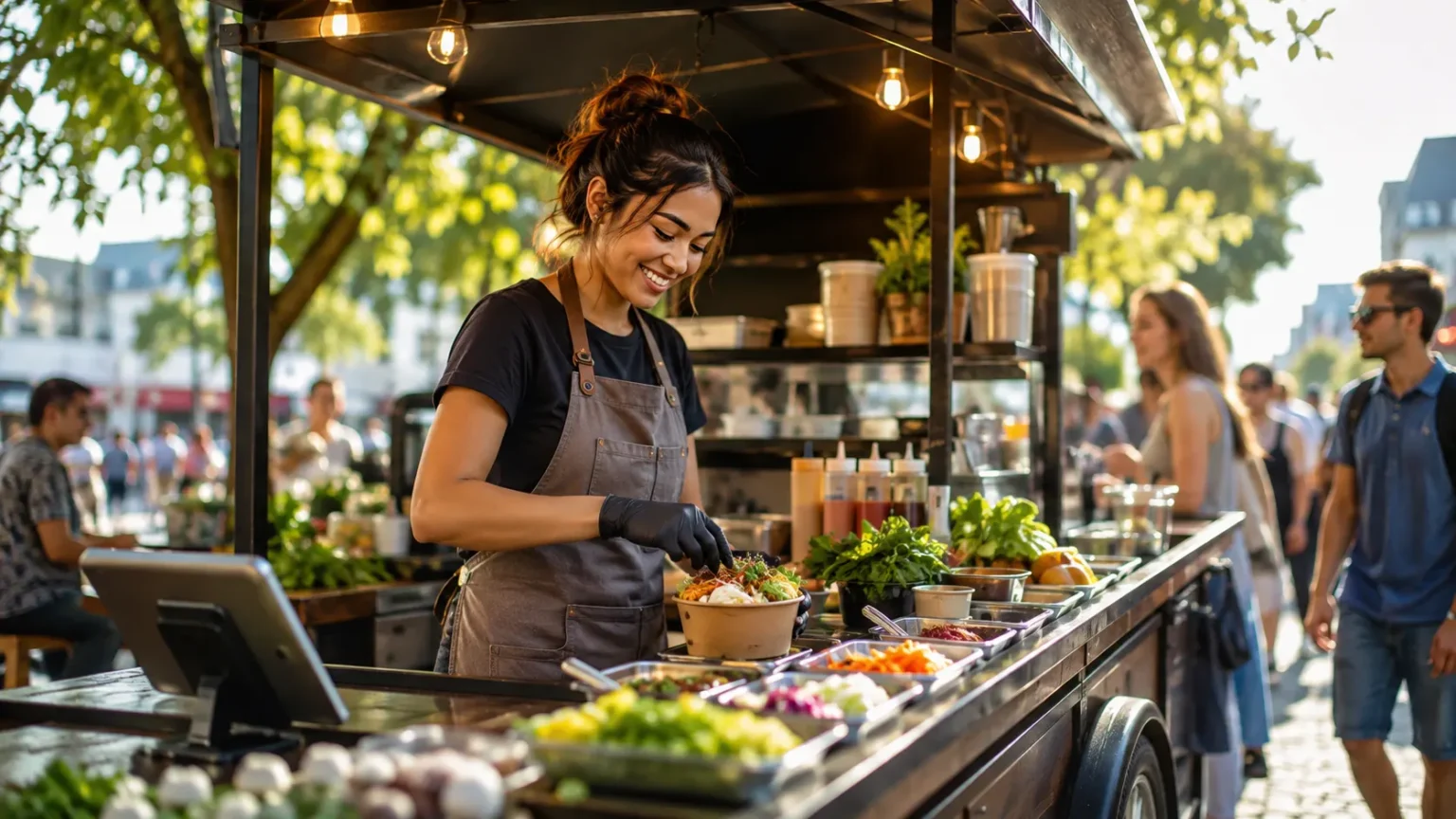
How to Start a Food Cart Business
Starting a food cart business can be an appealing way to enter the food industry without immediately taking on the high rent, large staff, and complex overhead of a traditional restaurant. A well-planned cart can serve anything from coffee and breakfast sandwiches to tacos, hot dogs, desserts, fresh juices, regional street food, or specialty snacks.
The model is flexible because you can often take your food closer to where customers already gather. Office districts, markets, festivals, parks, university areas, shopping zones, tourist attractions, and private events may all create opportunities depending on local regulations. That mobility can give a small operator more options than a fixed storefront.
However, lower startup costs do not mean the business is automatically easy or profitable. You still need to understand food safety, licenses, equipment, ingredient costs, labor, packaging, transportation, weather, location rules, marketing, and customer demand. Small operational mistakes can quickly reduce your margins.
If you are wondering how to start a food cart business, this guide walks through the process from choosing a concept and creating a menu to calculating startup costs, finding locations, pricing products, attracting customers, and eventually growing your mobile food business sustainably.
Is a Food Cart Business a Good Idea?
A food cart can be a practical entry point for entrepreneurs who want to test a food concept before investing in a larger restaurant or food truck. The smaller physical footprint may reduce some startup expenses while allowing you to learn what customers actually buy in real-world settings.
Food carts can also benefit from convenience. Customers often want meals, snacks, or drinks they can purchase quickly without sitting inside a restaurant. A cart positioned near workplaces, events, transport areas, campuses, or popular pedestrian zones can serve people exactly when hunger or convenience drives a purchase.
Another advantage is the ability to keep the menu focused. A small selection of strong products can simplify purchasing, preparation, food storage, training, and service. That can make it easier to understand your costs and improve your bestsellers before adding more complicated menu items.
Still, success depends heavily on demand, regulations, weather, location quality, and disciplined financial management. A cart placed in the wrong area or selling products with weak margins can struggle even when the food tastes excellent. Good planning is therefore just as important as cooking ability.
Step 1: Choose the Right Food Cart Concept
Start by deciding what you want the cart to be known for. A strong concept should be easy for someone to understand in a few seconds. Customers walking past rarely want to study a complicated business idea before deciding whether to stop.
Consider products that fit the realities of a mobile food business. Your food should ideally be quick to prepare, manageable in a small workspace, easy to hold or carry, and capable of maintaining quality during busy periods. Complicated restaurant dishes may not translate well to a cart.
Look at customer demand as well as your personal interests. You may love making an unusual dish, but the business still needs enough customers willing to purchase it at a profitable price. Research local tastes, competitors, price ranges, and popular food formats before committing.
Your concept should also contain some form of differentiation. That might be a distinctive regional recipe, premium ingredients, fast breakfast food, healthier snacks, creative sauces, vegetarian options, unusual desserts, or another feature that gives customers a reason to remember your cart.
Step 2: Research Your Target Customers
Before developing your menu, understand who is most likely to buy from you. Office workers may prioritize quick service and convenient lunches, while students may focus more on affordability. Festival visitors could be more willing to try indulgent or unusual foods.
Think about where these customers spend time and when they are most likely to buy. Breakfast demand may peak near commuter routes, lunch demand could be strongest in business districts, and evening snacks may perform better near entertainment or nightlife areas.
Your target customer also influences portion size and pricing. A premium artisan sandwich might work well at a specialty market but feel expensive near a school or budget-conscious workplace. The same food concept can perform very differently depending on where and to whom it is sold.
Creating a simple customer profile helps guide your food cart business plan. Identify likely age groups, spending levels, preferred foods, typical buying occasions, and common frustrations. These details can shape your menu, branding, operating hours, locations, and promotional strategy.
Step 3: Study Local Food Cart Competition
Visit areas where food carts, stalls, trucks, kiosks, and takeaway businesses already operate. Observe what they sell, how they display prices, how long their queues are, how fast they serve, what their customers appear to order, and where business is strongest.
Pay attention to direct and indirect competitors. A taco cart does not compete only with other tacos. Customers deciding what to eat may also choose burgers, wraps, sandwiches, pizza, noodles, salads, or nearby convenience stores depending on price, speed, and appetite.
Customer reviews can reveal additional opportunities. If nearby mobile food operators regularly receive complaints about slow service, inconsistent portions, limited payment options, or poor cleanliness, your business may be able to differentiate through better execution rather than a completely new cuisine.
Use competition as research rather than a blueprint to copy. Successful street food cart ideas usually have a recognizable personality or advantage. Your goal should be to understand what customers already have and identify where you can offer better value, taste, convenience, or experience.
Step 4: Create a Simple Food Cart Business Plan
A food cart business plan does not need to be unnecessarily complicated. It should explain what you will sell, who you will serve, where you plan to trade, how much products will cost, what expenses you expect, and how you intend to attract customers.
Include your startup budget and expected monthly or weekly operating expenses. Estimate equipment, cart purchase or construction, permits, ingredients, packaging, fuel, storage, insurance, payment processing, transportation, labor, marketing, and any fees associated with trading locations.
Then estimate realistic revenue. Consider the number of customers you might serve per hour, your expected average transaction value, and the number of trading hours or days. Compare that revenue with costs instead of assuming a busy-looking cart will automatically make money.
Your mobile food cart business plan should evolve once you begin trading. Replace assumptions with actual sales, ingredient costs, customer counts, busiest hours, bestselling products, and location performance. Real operating data will quickly become more useful than your original estimates.
Step 5: Calculate Food Cart Startup Costs
The cost to start a food cart business varies considerably depending on the cart, menu, equipment, location, and regulatory requirements. A coffee cart may have very different costs from a cart serving grilled meats, fried foods, or refrigerated desserts.
List every startup expense before buying anything. Common categories may include the cart itself, cooking equipment, refrigerators or coolers, handwashing equipment, utensils, storage containers, signage, payment tools, fire-safety equipment, ingredients, packaging, permits, and business registration.
Consider transportation and storage as well. Your cart may need to be moved to different locations and stored securely overnight. Depending on its size and weight, you might require a suitable vehicle, trailer arrangement, storage facility, or additional equipment to move it safely.
Keep some working capital available after launch. Unexpected repairs, weak trading days, supplier price increases, event cancellations, or weather problems can interrupt cash flow. Spending every available dollar on the initial setup can leave the business vulnerable before it has established regular sales.
Step 6: Understand Food Cart Licenses and Permits
Food cart regulations vary significantly by location, so checking local requirements should happen early. Depending on where you operate, you may need business registration, food-service permits, health approval, vending licenses, food-handler training, insurance, or specific permission to trade in public spaces.
Do not assume that owning a food cart automatically gives you permission to park and sell anywhere. Cities may restrict mobile food vendors to designated zones, require separate location permits, regulate operating hours, or limit how close vendors can operate to certain businesses or public spaces.
Health regulations may also specify how food is stored, prepared, cooked, transported, and served. Requirements can cover refrigeration, water supply, handwashing, waste disposal, temperature control, food preparation facilities, cleaning procedures, and protection from contamination.
Research food cart permits and licenses through the relevant local authorities before investing heavily in equipment. Rules can differ between countries, cities, markets, and private events, so local guidance should always take priority over generic advice found online.
Step 7: Understand Food Safety From Day One
Food safety is essential regardless of how small your cart is. Customers expect food purchased from a mobile vendor to be prepared and handled safely, just as they would expect from a restaurant. Poor food-safety practices can harm customers and destroy your reputation.
Create clear procedures for receiving ingredients, refrigeration, temperature monitoring, cooking, cooling, reheating, handwashing, cleaning, cross-contamination prevention, and waste disposal. The exact procedures will depend on what you sell and the food-safety rules that apply locally.
Pay particular attention to high-risk ingredients that require careful temperature control. Meat, dairy, cooked rice, sauces, seafood, and other potentially hazardous foods may require specific storage and handling practices. Use appropriate thermometers and equipment rather than relying on guesswork.
Anyone working on the cart should understand the same mobile food safety procedures. Training and consistency become especially important during busy periods when queues are long and employees may be tempted to take shortcuts. Speed should never come at the expense of safe food handling.
Step 8: Build a Small and Focused Menu
A food cart is not a full restaurant kitchen, so menu simplicity becomes an advantage. Start with a limited number of items you can produce consistently, quickly, and profitably. You can always introduce additional products after understanding real demand.
A focused menu reduces the number of ingredients you need to purchase and store. It can also decrease waste, shorten preparation times, simplify staff training, and help customers make decisions faster when a queue is forming.
Look for natural ingredient overlap. One protein, bread, sauce, vegetable preparation, or topping might work across several products without making them feel identical. Smart menu design helps you maximize limited storage and preparation space.
Your food cart menu should also be readable quickly. Use simple product names, short descriptions, and visible prices. Customers standing several feet away should be able to understand what you sell without needing a long conversation before ordering.
Step 9: Choose Food That Works in a Small Space
Not every profitable restaurant dish works well on a cart. Space, equipment, storage, and speed all create limitations. The best products usually involve relatively straightforward preparation and can be assembled consistently even when several orders arrive at the same time.
Consider how many cooking processes each item requires. If one dish needs grilling, another needs frying, another requires baking, and another requires extensive cold preparation, your small workspace may become difficult to manage during peak periods.
Also think about how customers will eat the food. Items that are excessively messy, require several utensils, or are difficult to carry may be less suitable for customers walking through an event or eating during a short work break.
Strong street food menu ideas often combine flavor with practicality. Burgers, wraps, tacos, sandwiches, skewers, hot dogs, rice bowls, coffee, pastries, desserts, and similar foods can work because they can be adapted to compact operations when local demand supports them.
Step 10: Test Your Menu Before Launch
Before selling publicly, test each product repeatedly. It should taste consistent whether you prepare one order or ten in quick succession. A recipe that works beautifully in a quiet home kitchen may behave differently inside a cramped commercial cart.
Measure preparation time for each dish. If customers need to wait too long, consider whether some components can be prepared safely in advance or whether the recipe can be simplified. Fast service can be an important competitive advantage for a mobile vendor.
Test portion sizes and packaging too. Customers should receive enough food to feel the price is reasonable without portions becoming so large that your ingredient costs destroy profitability. Packaging should make the food easy to hold and help prevent spills.
Ask people who resemble your target customers to try the products and provide specific feedback. Questions about flavor, serving size, price, ease of eating, and appearance are more useful than simply asking whether they liked the food.
Step 11: Calculate the Cost of Every Menu Item
Before setting prices, calculate exactly what each menu item costs to produce. Include proteins, vegetables, bread, sauces, seasonings, oils, garnishes, drinks, and any other ingredients used in the portion you actually serve.
Small ingredients matter because they add up over hundreds of orders. A sauce that costs only a small amount per serving may become a substantial monthly expense when multiplied across thousands of meals. Accurate measurements create much better financial visibility.
Include disposable items such as containers, cups, lids, napkins, cutlery, wrappers, bags, and condiment packets. Packaging is part of the direct cost of selling each product and should not disappear from your calculations simply because it is not edible.
Understanding your food cost per serving allows you to compare products properly. A popular menu item with expensive ingredients and large portions may generate plenty of sales while contributing less profit than a simpler product with better margins.
Step 12: Price Your Food Cart Menu for Profit
Do not choose prices simply because competitors charge a certain amount. Their rent, ingredient costs, staffing, purchasing power, portions, and business objectives may be completely different from yours. Your prices should be based on your own economics.
Account for ingredients, packaging, labor, location fees, transportation, fuel, payment charges, insurance, utilities, preparation time, waste, and equipment maintenance. Every sale needs to contribute toward operating costs as well as the food itself.
Consider customer expectations in the locations where you trade. A premium lunch product might sell comfortably at one event but struggle in a price-sensitive area. Your food cart pricing strategy should balance sustainable margins with the value customers believe they receive.
Review prices regularly rather than setting them once forever. Supplier costs, packaging expenses, location fees, and customer demand can change. Small price adjustments made at the right time may protect your margins without significantly affecting customer satisfaction.
Step 13: Find the Best Locations for Your Food Cart
Location can make or break a mobile food business. A cart serving excellent food in an area with little relevant foot traffic may struggle, while an average product in a busy location can sometimes generate strong initial sales simply because of convenience.
Look for places where your target customers naturally gather. Office districts, construction areas, markets, university campuses, parks, sports venues, tourist areas, shopping zones, nightlife areas, and transport hubs may create opportunities where vending is legally permitted.
Do not judge a location only by the number of people walking past. Observe whether those people actually stop and purchase food. Busy commuters rushing toward transportation may behave differently from festival visitors who are specifically looking for something to eat.
When possible, test several food cart locations before committing long term. Track customers, sales, average order value, peak periods, weather, nearby events, and product popularity. Comparing real numbers helps you identify locations that produce profitable demand rather than simply looking busy.
Step 14: Consider Markets, Festivals, and Private Events
Markets and festivals can place your cart in front of large numbers of potential customers within a short period. These events can be particularly useful for building awareness, testing products, and exposing your brand to customers who enjoy discovering independent food businesses.
However, high attendance does not always mean high profits. Event entry fees, vendor charges, transportation, staffing, extra stock, and longer operating hours can increase expenses substantially. Always estimate how many orders you need before agreeing to an expensive event.
Ask organizers about expected attendance, customer demographics, competing vendors, opening hours, utilities, parking, waste disposal, exclusivity rules, insurance, and other requirements. Knowing how many similar food vendors will attend can help you assess potential demand.
Private events can also become valuable revenue channels. Weddings, corporate gatherings, community celebrations, birthdays, and other functions may offer predictable customer numbers and pre-agreed pricing. Event catering can eventually complement your regular street food business schedule.
Step 15: Buy the Right Food Cart Equipment
Your equipment should match your menu rather than forcing your menu to fit whatever appliances you happen to own. Depending on the concept, you might require grills, hot plates, fryers, refrigeration, coolers, coffee equipment, water systems, storage, utensils, or warming units.
Think carefully about power and fuel requirements. Equipment that works easily inside a restaurant may be impractical on a mobile cart if adequate electricity, gas, ventilation, or water is unavailable at your trading locations.
Space is another major consideration. Every piece of equipment competes with food storage, packaging, preparation surfaces, and employee movement. Plan the layout carefully so the person taking orders and the person preparing food can work without constantly blocking each other.
Prioritize reliable food cart equipment that improves food safety, consistency, and service speed. Decorative accessories can be added later. A cart that looks beautiful but cannot safely refrigerate ingredients or handle peak demand will struggle quickly.
Step 16: Design a Cart That Gets Attention
Your cart acts as both kitchen and storefront. People should be able to understand your brand and main product from a distance. Clear signage, a recognizable name, visible menu prices, and appealing presentation make it easier for customers to decide whether to approach.
Avoid covering every available surface with promotions, photographs, and text. Too much information can make a small cart look cluttered. One strong visual identity and a clear menu often create a more professional impression.
Keep the service area visibly clean. Customers naturally judge food businesses by hygiene cues. Organized equipment, clean counters, tidy packaging, and appropriate waste handling can increase confidence before customers ever taste the food.
Good food cart design should also support operations. The most attractive layout is useless if staff cannot access ingredients efficiently or customers do not know where to order and collect. Balance branding with practical movement and service flow.
Step 17: Build a Memorable Food Cart Brand
Your brand is what helps customers remember your cart after they have finished eating. It includes your name, visual identity, food presentation, packaging, service style, menu language, and the overall experience associated with buying from you.
Choose a business name that is easy to pronounce, remember, and search online. Before investing heavily in signs or packaging, investigate whether the name creates relevant business registration, domain, social handle, or trademark issues in your market.
Your brand should communicate something about your positioning. A playful dessert cart may use a very different identity from a premium coffee cart or traditional regional street-food business. Consistency helps customers understand what kind of experience to expect.
Carry the same food business branding across your cart, social media, packaging, website, staff clothing, and promotional materials. Repeated exposure makes your business easier to recognize when customers encounter you at another market or event.
Step 18: Make Ordering and Payment Fast
Food cart customers often value speed. Long queues can create social proof, but slow-moving lines can also cause potential buyers to leave. Your ordering process should be clear from the moment a customer approaches the cart.
Make the menu visible while people wait so they can decide before reaching the counter. Reduce unnecessary questions by displaying prices, key ingredients, portion choices, and important options clearly. Simple menus generally move faster than complicated customization systems.
Offer payment methods that match customer expectations and available infrastructure. Card and contactless payments are common in many markets, while cash may remain important in others. Reliable processing is more important than accepting every possible payment method.
Design your food cart workflow around the busiest realistic period. Staff should know exactly who takes orders, prepares items, checks them, handles payment, and delivers food to the customer. Clear responsibilities reduce errors when several orders arrive simultaneously.
Step 19: Create Reliable Supplier Relationships
Ingredients are the foundation of your menu, so reliable suppliers matter. Compare vendors based on price, consistency, quality, minimum quantities, delivery schedules, payment terms, and their ability to supply products during busy periods.
The cheapest supplier is not automatically the best. Unreliable deliveries or inconsistent ingredient quality can create customer complaints and force last-minute purchases at higher prices. Look at the total value of the relationship.
Avoid over-ordering simply to receive bulk discounts. A lower unit cost creates little benefit if ingredients spoil before you use them. Food carts usually have limited storage, making careful purchasing even more important.
Maintain backup options for important ingredients where possible. A dependable network of food suppliers reduces the risk of removing a bestseller from the menu because one vendor suddenly experiences a shortage.
Step 20: Control Inventory and Reduce Food Waste
Waste directly reduces profit because ingredients are paid for before they are thrown away. New operators often prepare too much food because they fear selling out, but consistently discarding unsold products can seriously damage margins.
Track how much you sell by day, time, product, location, and event type. Historical data will gradually help you forecast demand more accurately. Friday lunch might require different preparation from a rainy weekday or major weekend festival.
Use proper stock rotation and clearly label ingredients. Organize storage so older stock is used appropriately before newer inventory where food-safety practices allow. Consistent portion control can also prevent employees from accidentally increasing food costs.
Good food inventory management balances availability with waste. Running out occasionally while learning demand can be frustrating, but preparing excessive quantities every day is often more expensive than gradually improving your forecasting.
Step 21: Prepare for Weather and Seasonal Changes
Weather has a greater impact on many food carts than on traditional restaurants. Heavy rain, extreme heat, cold temperatures, strong winds, or unexpected storms may reduce foot traffic or make certain trading locations difficult to operate safely.
Your product demand may also change with the seasons. Hot coffee and warm food may perform better during colder periods, while cold drinks, frozen desserts, and lighter products could gain popularity in warm weather depending on your market.
Invest in appropriate protection for the cart and staff where permitted. Canopies, weather-resistant signage, safe storage, adequate lighting, and suitable clothing can help maintain operations, but always prioritize safety over keeping the cart open.
Build seasonal variation into your financial planning. A mobile food business that performs extremely well during summer festivals may need enough cash reserves or alternative revenue streams to survive quieter periods during the rest of the year.
Step 22: Market Your Food Cart Before Launch
Do not wait for opening day before telling people your business exists. Begin sharing your food concept, menu testing, brand development, launch date, and first trading location through relevant social channels before you begin selling.
Food is naturally visual, which makes photos and short videos useful. Show real preparation, ingredients, sauces, cooking processes, finished meals, and behind-the-scenes moments. Customers often enjoy seeing the work that goes into independent food businesses.
If you are launching at an established market or event, ask whether the organizer promotes vendors through its website, social media, email list, or event materials. Their existing audience may provide valuable exposure during your first trading days.
Your launch food cart marketing strategy should make four details easy to understand: what you sell, why it is worth trying, where customers can find you, and when you will be open. Clear information converts attention into actual visits.
Step 23: Use Social Media to Build a Following
Social media is particularly useful for mobile businesses because your location may change regularly. Posting your daily or weekly schedule helps customers know where to find you rather than assuming the cart operates permanently in one place.
Share new menu items, sold-out updates, event appearances, customer favorites, behind-the-scenes preparation, seasonal specials, and upcoming locations. Consistent updates can turn occasional buyers into people who actively look for your cart.
Encourage customers to tag your business when they share photographs. User-generated content can expose your food to local audiences through trusted personal recommendations. Obtain appropriate permission before reusing customer images in your own marketing.
Focus on relevant engagement rather than follower numbers alone. Five hundred local followers who regularly purchase can be more valuable than thousands of distant users who will never visit. Effective social media marketing for food carts should ultimately contribute to orders.
Step 24: Use Local SEO to Help Customers Find You
Even mobile businesses can benefit from search visibility when customers look for local food. A simple website can explain your menu, operating schedule, event appearances, catering options, contact details, and the areas you typically serve.
Use natural location-related language when it genuinely helps visitors. Pages or updates about markets, events, or service areas can help searchers understand where they can find you. Avoid creating large numbers of thin location pages merely to target keywords.
If your business is eligible for a Google Business Profile, follow the applicable rules for how your mobile operation should be represented. Keep your hours, contact information, website, and service details accurate rather than confusing customers with outdated locations.
Strong local SEO for food businesses works alongside reviews, local mentions, social media, event listings, and a useful website. Search visibility becomes much more valuable when customers can immediately understand where and when they can purchase your food.
Step 25: Encourage Reviews and Word-of-Mouth
Customer recommendations can become one of the strongest marketing channels for a small food cart. People frequently share discoveries with coworkers, friends, family, and social followers when they find a local food business they genuinely enjoy.
Make the experience easy to recommend. Consistent flavors, friendly service, accurate orders, clean presentation, reasonable wait times, and recognizable packaging all contribute to whether someone remembers the business positively.
Encourage genuine reviews on appropriate platforms when your business is eligible. Reviews can reassure customers who have never purchased from you and may also reveal useful feedback about portion size, service, pricing, or menu quality.
Do not chase positive ratings while ignoring real problems. The best food cart reputation strategy is to create an experience customers naturally want to talk about and then respond professionally when feedback highlights something that needs improvement.
Step 26: Track Daily Sales and Expenses
A long queue can make a business look successful while hiding weak profitability. You need to know how much money remains after ingredients, packaging, location fees, labor, fuel, transportation, payment charges, and other expenses.
Record sales by menu item and trading location. Track transaction counts, average order value, busiest hours, food waste, ingredient spending, and staff costs. Even a simple spreadsheet can reveal valuable patterns when updated consistently.
Identify which products contribute the most profit rather than only which ones sell the most units. One popular item may have poor margins, while a side, drink, or simpler product could generate a stronger return for every order.
Regular food cart financial tracking helps you make smarter decisions about pricing, menu changes, locations, operating hours, and promotions. Financial visibility prevents you from confusing busyness with a healthy business.
Step 27: Calculate Your Break-Even Point
Your break-even point tells you approximately how much you need to sell before your business has covered its costs. Knowing this number turns vague goals such as “have a good day” into measurable sales targets.
Calculate how much contribution each average transaction provides after relevant variable expenses. Then compare that with fixed or recurring costs such as storage, permits, insurance, equipment payments, and other overhead.
Suppose a particular market requires a significant daily vendor fee. Break-even analysis can help you estimate the number of meals required simply to cover that fee and other costs before deciding whether the location is worth attending.
Understanding your food cart profit margin also helps prevent aggressive discounting. A promotion may generate more customers while actually reducing total profit if margins become too thin. Evaluate marketing based on financial results rather than sales volume alone.
Step 28: Increase Average Order Value
Generating another customer can require time and marketing, so increasing the value of existing transactions may improve profitability. Consider whether sides, drinks, desserts, sauces, or larger portions naturally complement your main product.
Meal combinations can simplify customer decisions while increasing order size. For example, a sandwich, drink, and side sold together may feel more convenient than asking customers to choose every component separately.
Add-ons should make sense for the meal rather than existing solely to increase prices. Customers should feel they are receiving extra value. Poorly chosen upsells can slow service and create a cluttered menu.
Track whether these strategies actually improve average order value and profit. A bundle that includes heavily discounted items may increase revenue while contributing less margin than customers purchasing individual products at normal prices.
Step 29: Prepare for Equipment Failures and Other Problems
Mobile food operations face many unexpected challenges. Equipment can fail, power may be unavailable, card machines can lose connectivity, ingredients may arrive late, staff can become unavailable, and weather can dramatically reduce customers.
Create backup plans for problems most likely to interrupt service. Carry essential spare tools where practical, know alternative ingredient suppliers, maintain emergency contact information, and understand what must happen if refrigeration or cooking equipment stops working.
Never continue selling food when equipment failure creates a food-safety risk. Losing one day’s revenue is frustrating, but risking customer health can produce far more serious consequences for your business.
An emergency financial reserve can also protect your small food cart business. Repairs and weak trading periods become easier to manage when every profitable day’s earnings have not immediately been withdrawn or reinvested.
Step 30: Know When to Hire Help
Many food carts begin as owner-operated businesses, but demand can eventually exceed what one person can manage. If customers wait while you cook, take payment, package orders, clean, restock, and answer questions simultaneously, additional help may improve service.
Hire based on actual bottlenecks rather than simply feeling busy. One employee handling payments and order assembly during peak periods may allow the cook to focus entirely on food production, increasing the number of customers served each hour.
Train employees using standardized recipes, portion sizes, food-safety procedures, cleaning routines, service expectations, and opening or closing checklists. Consistency becomes more difficult when knowledge exists only in the owner’s head.
Include labor when evaluating whether additional staff improve food cart profitability. An employee should ideally increase capacity, quality, or customer experience enough to justify the additional cost rather than simply making a quiet shift more comfortable.
Step 31: Consider Catering and Private Bookings
Once people know your brand, they may ask whether the cart can serve private events. Weddings, corporate lunches, birthday parties, school functions, festivals, and community events can create another revenue stream alongside normal street trading.
Private bookings have an important advantage: you may know approximately how many people need to be served before the event begins. That can make ingredient purchasing and preparation more predictable than relying entirely on walk-up demand.
Create clear event packages and minimum spending requirements. Account for travel, setup, staff, additional preparation, serving time, permits, and cleanup rather than pricing the booking as though every guest were simply visiting your normal location.
A strong food cart catering business can become particularly useful when regular street traffic is seasonal. Private events may provide revenue during periods when outdoor foot traffic or public markets become less predictable.
Step 32: Decide Whether to Upgrade to a Food Truck
If your cart consistently reaches capacity, you may eventually consider expanding into a food truck. A larger mobile kitchen can provide additional cooking equipment, storage, refrigeration, branding space, and weather protection depending on the vehicle.
However, a food truck can also introduce substantially higher purchase, maintenance, fuel, insurance, licensing, parking, and repair costs. Bigger equipment should not be confused automatically with a better business model.
Review why your current cart is limiting growth. If you regularly turn away profitable customers because of capacity, storage, or equipment restrictions, expansion may make sense. If sales are inconsistent, a more expensive truck could simply increase financial pressure.
The transition from food cart to food truck should therefore be based on proven demand and healthy economics. Scale a system that already works rather than hoping a larger vehicle will solve weak marketing, pricing, or location problems.
Common Food Cart Business Mistakes to Avoid
One of the biggest mistakes is offering too many products. A huge menu creates additional ingredients, equipment, preparation, storage, and training requirements. Start small enough to maintain quality and expand only when customer demand supports new items.
Another mistake is underpricing. New operators sometimes calculate ingredients but forget labor, packaging, permits, transportation, event fees, waste, fuel, and equipment maintenance. The result can be plenty of customers without enough profit.
Poor location research can also cause problems. High foot traffic does not automatically mean customers are willing to stop and eat. Test locations and measure real sales before committing significant money to regular trading fees.
Finally, do not overlook hygiene, branding, or customer service because the business operates from a cart. Customers still expect professionalism. A clean cart, consistent food, clear prices, friendly communication, and accurate orders can create an experience people actively recommend.
How to Grow a Successful Food Cart Business
Once your cart generates consistent sales, focus on strengthening systems before expanding. Standardize recipes, portion sizes, supplier ordering, food-safety procedures, inventory tracking, employee roles, and financial reporting so performance does not depend entirely on improvisation.
Use your sales data to identify the strongest products, locations, and trading periods. Growth becomes easier when you know exactly where profit comes from. You may discover that one lunch location or event type performs significantly better than everything else.
Expansion could involve another cart, a food truck, catering, packaged products, delivery, a permanent stall, or eventually a restaurant. There is no requirement to follow every growth path. Choose options that fit your finances, capabilities, and long-term goals.
A sustainable mobile food business grows because customers consistently want the product and the operation consistently makes money. Expanding before those fundamentals are established usually creates more complexity without solving the underlying problems.
Final Thoughts on Starting a Food Cart Business
Learning how to start a food cart business is about combining food quality with smart business decisions. Your menu needs demand, your prices need healthy margins, your locations need relevant customers, and your operation needs to meet food-safety and regulatory requirements.
Start with a focused concept instead of trying to serve everyone. Test recipes, calculate costs accurately, research local permits, select equipment based on the menu, and evaluate locations using actual sales data rather than assumptions.
Marketing can help people discover your cart, but customer experience determines whether they return. Consistent food, friendly service, quick ordering, clear pricing, clean presentation, and reliable operating information can turn first-time buyers into loyal customers.
Most importantly, treat your cart like a real business from day one. Track every meaningful cost, protect your time, learn from customers, and expand only when the existing operation is profitable and repeatable. That foundation gives your food cart the best chance of becoming a sustainable brand.
Frequently Asked Questions
How much does it cost to start a food cart business?
Startup costs vary based on the cart, equipment, menu, permits, location, and local regulations. A simple cart may cost significantly less than a fully equipped mobile kitchen, so build a detailed budget before buying equipment.
Do you need a license to operate a food cart?
In most areas, mobile food vendors must meet business, food-safety, health, or vending requirements. Exact permits vary by location, so contact the relevant local authorities before choosing where you will sell.
What food is best to sell from a food cart?
Foods that are flavorful, quick to prepare, easy to serve, and manageable in a small workspace usually work best. Burgers, tacos, sandwiches, hot dogs, wraps, coffee, desserts, and regional street foods are common options.
How do I find a good location for my food cart?
Look for areas with relevant foot traffic, such as office districts, markets, campuses, festivals, tourist zones, and events where vending is permitted. Test several locations and compare actual sales before committing long term.
How profitable can a food cart business be?
Profitability depends on sales volume, pricing, food costs, labor, permits, location fees, waste, and operating efficiency. A busy cart is not necessarily profitable, so track contribution margins and total expenses carefully.