




Lake Atitlán Travel Guide: Best Villages & Activities
Lake Atitlán is one of Guatemala’s most memorable destinations, surrounded by steep green hills, dramatic volcanoes, traditional Maya communities, coffee farms, and colorful lakeside villages. The lake sits in the Guatemalan Highlands and offers a combination of natural scenery, outdoor adventure, culture, wellness, and slow travel that appeals to backpackers, couples, families, photographers, and long-term travelers. Each village around the lake has its own personality, so choosing where to stay can shape your entire experience. Some towns are lively and social, others are quiet and artistic, while several remain deeply connected to Indigenous traditions. For many visitors, the best trip involves exploring more than one village instead of treating Lake Atitlán as a single destination. Understanding the differences makes planning much easier.
Panajachel is the most practical entry point for many travelers, San Pedro La Laguna is known for backpacker energy and nightlife, San Marcos La Laguna attracts wellness-focused visitors, and Santa Cruz La Laguna is ideal for peaceful lake views and outdoor activities. Santiago Atitlán offers a deeper cultural experience, while San Juan La Laguna has become especially popular for art, weaving cooperatives, murals, and community-based tourism. Smaller villages provide additional opportunities to experience local life away from the busiest tourist areas. Boats connect many communities, making village hopping one of the best things to do at Lake Atitlán. However, travel times, weather, accommodation style, and evening transport all affect how convenient each location feels.
This Lake Atitlán travel guide explains the best villages to visit, where to stay, activities worth adding to your itinerary, transportation options, hiking opportunities, cultural experiences, and practical planning tips. It also covers swimming, kayaking, volcano views, food, markets, wellness experiences, and how many days travelers should spend around the lake. Whether you want sunrise hikes, relaxed café mornings, artisan shopping, traditional Maya culture, or a lakeside retreat, Lake Atitlán offers enough variety to build a very different trip depending on your interests. Planning around village atmosphere rather than simply choosing the cheapest accommodation usually leads to a better experience. The lake rewards travelers who slow down and leave room for spontaneous exploration.
Why Visit Lake Atitlán?
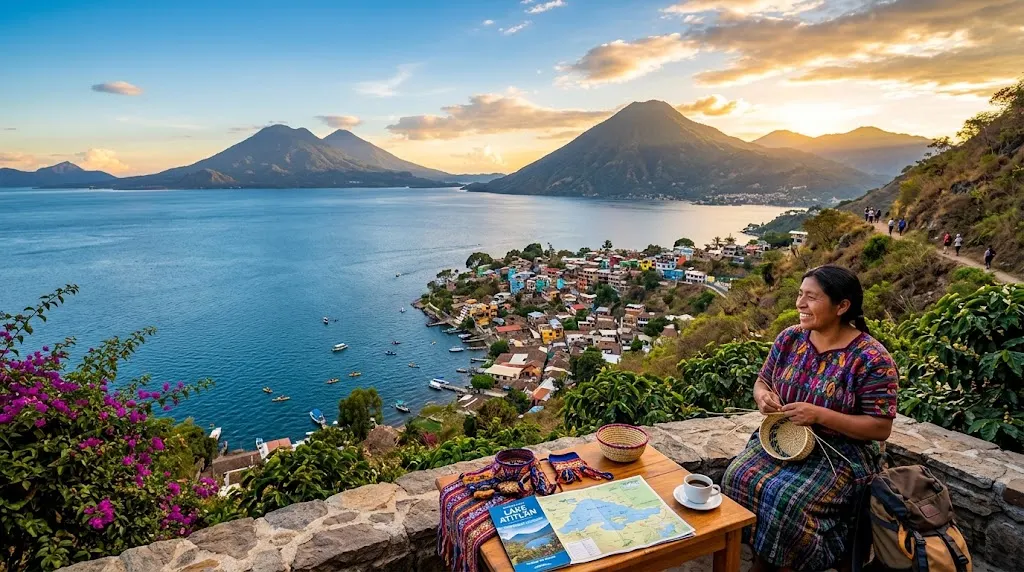
Lake Atitlán stands out because of its extraordinary landscape. The lake occupies a volcanic basin and is surrounded by mountains and prominent volcanoes, creating views that change dramatically throughout the day. Early mornings can be calm and reflective, while afternoon clouds often add depth to the surrounding peaks. From certain villages, travelers can look across open water toward multiple volcanoes rising behind one another. This combination of water, mountains, and traditional lakeside settlements makes the area particularly attractive for photographers and nature lovers. Even travelers who do very little sightseeing often remember simply sitting beside the lake and watching the scenery change.
Another reason to visit is the remarkable variety packed into a relatively small area. Within one trip, you can hike above the lake, take a Spanish class, visit a weaving cooperative, paddle a kayak, explore murals, attend a yoga session, shop at a local market, and eat dinner beside the water. Different villages specialize in different experiences, which keeps the destination interesting over several days. Travelers who enjoy active itineraries can stay busy from sunrise to evening. Those who prefer relaxation can spend days reading, swimming, enjoying cafés, or watching boats cross the lake. Lake Atitlán works equally well as an adventure stop or a place to slow down.
Cultural experiences are also central to the appeal of Lake Atitlán. Many communities around the lake have strong Maya identities, and Indigenous languages, clothing, traditions, religious practices, and crafts remain part of daily life. Visitors can learn about weaving, natural dyes, coffee production, local foods, and community history through responsible tours and locally run businesses. Respectful travel is particularly important because these communities are living places rather than attractions created for tourists. Asking permission before photographing people and supporting locally owned guides can make tourism more positive. Travelers who approach the region with curiosity rather than expectation often gain much more from the experience.
The lake is also attractive because travelers can choose between very different atmospheres without traveling far. Panajachel offers the largest range of transportation and services, while San Marcos feels quieter and more wellness oriented. San Pedro has a stronger backpacker scene, and Santa Cruz offers a peaceful hillside environment with exceptional views. San Juan provides a more artistic, organized village experience, while Santiago delivers a larger-town atmosphere with significant cultural importance. Moving between these communities by boat can feel like visiting several destinations within one holiday. This diversity is one of the biggest advantages of including multiple villages in your itinerary.
Lake Atitlán also combines well with other Guatemala destinations. Many travelers visit after exploring Antigua, while others continue toward Guatemala City, the Pacific coast, or northern destinations. Its highland location makes it particularly appealing after several busy days in Antigua because the lakeside environment encourages a slower pace. Travelers with limited time can still experience the area in two or three days, but those with a week can explore villages much more comfortably. The destination is especially rewarding for people who prefer experiential travel over simply checking landmarks off a list. Lake Atitlán feels less like one attraction and more like an entire region to discover.
Panajachel: Best Village for First-Time Visitors and Convenience
Panajachel, often shortened to Pana, is the main transportation hub around Lake Atitlán and the most convenient base for many first-time visitors. Travelers arriving from Antigua, Guatemala City, or other parts of Guatemala frequently enter the lake region here before continuing by boat. The town has a large selection of hotels, restaurants, shops, tour companies, banks, pharmacies, and transportation services. This makes it particularly easy for travelers who value convenience or have limited time. Although Panajachel is busier and more developed than some smaller villages, it provides an excellent introduction to the lake. Many visitors stay at least one night before deciding whether to move elsewhere.
One of Panajachel’s most recognizable areas is Calle Santander, a busy street lined with restaurants, cafés, souvenir stalls, textile shops, and travel services. It can feel touristy, but it is useful for browsing local crafts and getting familiar with products sold around the region. Travelers can find woven textiles, jewelry, artwork, bags, clothing, and decorative items representing a mixture of local production and goods from elsewhere in Guatemala. Bargaining may be expected in some market-style settings, though it should remain respectful. Exploring side streets beyond the main tourist corridor often reveals quieter restaurants and everyday local life. Pana becomes more interesting when visitors look beyond its most commercial areas.
The lakefront is another major attraction. Walking along the shore provides wide views toward the volcanoes and frequent opportunities to watch public boats, private launches, and fishing activity. Mornings are especially beautiful when the water is often calmer and visibility can be clearer. Travelers can arrange boat trips to other villages directly from the dock area, making spontaneous day trips relatively straightforward. Restaurants and accommodations near the lake offer easy access to sunset or early-morning views. Because Panajachel is well connected, it is one of the best choices for travelers who want to explore several communities without repeatedly changing hotels.
Panajachel also works well for visitors who prefer more infrastructure than smaller villages can provide. Families, remote workers, older travelers, and people who want convenient access to medical services or transportation may appreciate its range of amenities. Accommodation spans budget guesthouses, boutique stays, and more comfortable lakeside properties. Food choices are similarly broad, with Guatemalan dishes, international cuisine, bakeries, cafés, and vegetarian options widely available. The town can become lively during weekends and holidays, so travelers wanting complete tranquility may prefer another village. Convenience is Panajachel’s greatest strength rather than secluded atmosphere.
Staying in Panajachel does not mean missing quieter experiences. Early mornings can feel surprisingly peaceful before shops and transport activity fully begin, and nearby viewpoints or surrounding areas offer a break from the busiest streets. Travelers can also use Pana as a base for day trips and return each evening without dealing with late boat schedules between smaller villages. This can simplify a short itinerary considerably. If your priorities include easy transfers, restaurant variety, shopping, and straightforward access to boats, Panajachel is arguably the most practical place to stay at Lake Atitlán. It may not be the quietest village, but it is usually the easiest.
San Pedro La Laguna: Best for Backpackers, Nightlife, and Budget Travel
San Pedro La Laguna is one of the most popular villages for backpackers and younger travelers because it combines affordable accommodation with cafés, nightlife, language schools, and easy access to outdoor activities. The village sits beneath Volcán San Pedro and has long attracted travelers looking to stay for more than just a night or two. Budget hostels, guesthouses, social bars, casual restaurants, and coworking-friendly cafés make it easy to settle into a routine. At the same time, San Pedro is not only a backpacker destination. Beyond the tourist-oriented waterfront, traditional community life remains an important part of the town’s identity.
The lower part of San Pedro near the docks contains much of the tourism activity. Here, travelers find hostels, restaurants, bars, tour offices, and places offering activities around the lake. Walking uphill leads toward more residential and commercial areas where the atmosphere changes noticeably. Exploring beyond the waterfront helps visitors see a different side of San Pedro and experience local markets, bakeries, shops, and neighborhood streets. The town’s hillside layout means some walks can be steep, but tuk-tuks are readily used for short local trips. Travelers who stay several days usually become familiar with both the tourist zone and the wider community.
Spanish schools are one of San Pedro’s longstanding attractions. Visitors interested in improving their language skills can often combine private lessons with homestays or extended accommodation. Studying Spanish here can be particularly appealing because the relatively relaxed environment makes it easy to build lessons into a broader travel routine. Language learning also creates opportunities to interact more meaningfully with local people and understand cultural context. Travelers staying for a week or longer often find that structured classes give their visit a stronger rhythm. Even a few days of lessons can help visitors feel more confident navigating the rest of Guatemala.
Nightlife distinguishes San Pedro from many other Lake Atitlán villages. Bars and social hostels create opportunities to meet other travelers, and certain evenings can become lively. People seeking complete silence should therefore choose accommodation carefully rather than assuming the entire village has the same atmosphere. Staying a little away from the busiest waterfront streets can provide a calmer experience while keeping restaurants and nightlife within walking distance. San Pedro appeals particularly to solo travelers because social interaction is easy to find. Those who want a quiet wellness retreat may prefer San Marcos or Santa Cruz instead.
Outdoor activities are another reason to consider San Pedro. The village provides access to hiking, kayaking, swimming areas, and tours around the lake, while nearby highland routes attract travelers seeking more challenging adventures. Volcán San Pedro has historically been one of the area’s major hiking attractions, although trail access and safety conditions can change and should always be checked locally before setting out. Travelers should use reputable local guides where recommended rather than relying on outdated online advice. With its combination of affordability, social energy, and adventure, San Pedro remains one of the best Lake Atitlán villages for backpackers and active travelers.
San Marcos La Laguna: Best for Wellness, Yoga, and Relaxation
San Marcos La Laguna has developed a reputation as Lake Atitlán’s wellness-focused village. Travelers come here for yoga, meditation, massage, sound-based practices, holistic workshops, vegetarian food, and a quieter social environment than San Pedro. The village attracts a mixture of short-term tourists, long-term travelers, wellness practitioners, and people seeking a slower pace. Narrow pedestrian paths lead through lush vegetation toward cafés, accommodation, gardens, and retreat spaces. The atmosphere can feel intentionally calm, particularly away from the main dock. Visitors who enjoy wellness culture often find San Marcos one of the easiest places around the lake to spend several unhurried days.
Yoga is among the most popular activities in San Marcos. Classes may range from beginner-friendly sessions to more specialized practices, and some accommodation properties operate as dedicated retreat centers. Travelers do not need to arrive specifically for a retreat to participate, because drop-in experiences are often part of the local wellness scene. Meditation, breathwork, massage, and other complementary practices may also be available. It is worth remembering that wellness services vary in training standards and evidence, so visitors should use personal judgment when choosing providers. Enjoying a relaxing practice is different from treating a medical or mental health condition.
San Marcos is also popular for swimming and enjoying direct contact with the lake. Nearby natural areas and lakeside platforms provide appealing places to relax when conditions are suitable. Water quality can vary by location, weather, and season, so travelers should pay attention to current local advice before swimming. Jumping platforms and rocky shorelines may also require caution depending on conditions. Kayaking is another pleasant way to explore calmer sections of the shoreline, particularly earlier in the day when winds are often lighter. Spending a morning on the water followed by a relaxed afternoon is a classic San Marcos experience.
Food choices reflect the village’s international and wellness-oriented character. Visitors can find vegetarian and vegan meals, smoothie bowls, fresh juices, plant-focused cafés, international dishes, and traditional Guatemalan options. Prices can be higher in tourism-focused establishments than in local eateries, so mixing both can help travelers manage their budget. Long-stay visitors often appreciate the availability of lighter meals and café spaces suitable for reading or working. San Marcos has enough variety to remain comfortable without feeling as commercially developed as Panajachel. Its compact central area also makes walking easy once you arrive.
San Marcos is best for travelers who deliberately want a slower experience. Someone seeking intense nightlife, major shopping, or constant organized activities may find the village too quiet after a short stay. Couples, solo travelers, wellness enthusiasts, and people recovering from a fast-paced itinerary often appreciate it more. Accommodation can range from simple guesthouses to attractive retreat properties overlooking the lake. Choosing a hillside property can provide spectacular views but may involve considerable walking. If relaxation, yoga, quiet cafés, and lake access are priorities, San Marcos deserves a prominent place in a Lake Atitlán itinerary.
San Juan La Laguna: Best for Art, Textiles, and Community Tourism
San Juan La Laguna is one of the most rewarding villages for travelers interested in local art, textiles, community projects, and Maya culture. The town has become known for colorful murals, painted streets, weaving cooperatives, galleries, and small businesses that explain traditional production methods. Compared with some nightlife-oriented villages, San Juan feels more focused on daytime cultural exploration. Visitors often arrive by boat for a few hours, but staying overnight provides more time to appreciate the atmosphere after day-trippers leave. The village is particularly appealing to photographers, craft enthusiasts, families, and travelers who prefer community-based experiences over party scenes.
Textile cooperatives are among San Juan’s best-known attractions. Visitors can learn how cotton is prepared, dyed with plant-based colors, and woven using traditional techniques. Demonstrations may explain the significance of patterns, natural dyes, and the work involved in producing clothing or household textiles. Purchasing directly from cooperatives can help support artisans more transparently than buying generic souvenirs elsewhere. Travelers should still ask questions about how products are produced and how earnings are distributed. These conversations can transform shopping into a meaningful cultural exchange rather than a simple transaction.
The village’s murals add another layer of visual interest. Colorful artwork appears on buildings and streets, often reflecting local traditions, wildlife, agriculture, history, spirituality, or contemporary community themes. Walking through San Juan becomes an informal open-air art experience. Local guides can provide context that visitors may miss when viewing the artwork independently. Guided cultural walks may also include medicinal plant gardens, chocolate or coffee demonstrations, galleries, and workshops. The compact size makes it possible to see a lot in half a day, although a slower visit provides more opportunities to interact with local businesses.
Coffee is another important part of the local economy and visitor experience. The highlands around Lake Atitlán provide conditions suitable for coffee production, and small tours may explain how beans move from plant to cup. Travelers can learn about harvesting, processing, drying, roasting, and brewing while gaining a clearer understanding of the labor behind a familiar product. Buying locally produced coffee can also make a useful souvenir. As with any agricultural tour, experiences vary in depth, so visitors interested in serious coffee education should choose operations that emphasize production rather than only retail.
San Juan is also a good choice for travelers who want a culturally rich village without the intensity of a major urban destination. Streets become quieter in the evening, and the atmosphere encourages walking, eating locally, and observing everyday life. It can easily be combined with nearby San Pedro because the two towns are geographically close but feel distinctly different. Visiting both demonstrates how much village character can vary around Lake Atitlán. For travelers interested in responsible tourism, handicrafts, art, and Indigenous culture, San Juan is one of the most worthwhile places to include.
Santa Cruz La Laguna: Best for Views, Kayaking, and Peaceful Stays
Santa Cruz La Laguna is ideal for travelers who want exceptional lake views and a quieter atmosphere. Much of the tourist accommodation sits close to the shoreline or climbs the steep hillside above it, while the traditional village center is located higher up. This geography creates dramatic panoramas but also means getting around often involves steep walking. Boats are a central part of daily transportation, and many travelers choose Santa Cruz specifically because it feels more separated from road traffic and busy commercial areas. The result is a relaxed environment that can feel far removed from Panajachel even though the two are relatively close by boat.
Lakefront accommodation is a major attraction in Santa Cruz. Some properties provide docks, terraces, hammocks, gardens, restaurants, and direct access to kayaking or swimming. Waking up to volcano views can make the accommodation itself part of the travel experience. Because the village has fewer commercial services than Panajachel or San Pedro, travelers should think carefully about whether their property provides meals or whether nearby restaurants are easily accessible. This reduced convenience is part of the appeal for many visitors. Santa Cruz suits travelers who are comfortable planning around a smaller range of services in exchange for peace and scenery.
Kayaking is one of the best activities in the area. Early mornings are usually the most attractive time to paddle because the lake is often calmer before stronger winds develop later in the day. Kayakers can explore sections of shoreline, admire villages from the water, and enjoy uninterrupted volcano views. Life jackets should be used, and weather conditions should always be considered because the lake can change quickly. Travelers should avoid venturing farther than their ability and local guidance allow. A short morning paddle can provide a very different perspective from traveling between villages by motorboat.
Santa Cruz is also connected to hiking routes that run along portions of the lakeshore and hillsides. These trails can provide spectacular views, but conditions and security considerations can change. Travelers should ask accommodation staff or local guides about current recommendations before setting out independently. Guided hikes are often a good choice for people unfamiliar with the area because guides can provide navigation and cultural context. The landscape around Santa Cruz rewards walking, especially during cooler morning hours. Comfortable footwear and water are important because even short routes can involve steep elevation changes.
The village is particularly well suited to couples, nature lovers, readers, photographers, and travelers who want a restful break. It is less suitable for people who expect extensive nightlife, shopping, or a large selection of independent restaurants within a few minutes’ walk. Some visitors spend most of their time at their accommodation and take occasional boat trips elsewhere. That approach can make Santa Cruz feel like a lakeside retreat rather than a conventional sightseeing base. If your ideal Lake Atitlán experience involves quiet mornings, kayaking, volcano views, and limited traffic, Santa Cruz may be the best village for your stay.
Santiago Atitlán: Best for Culture, Markets, and Local History
Santiago Atitlán is one of the largest and most culturally important communities around the lake. Located in a bay between surrounding volcanic landscapes, the town has a strong Tz’utujil Maya identity and offers a very different atmosphere from tourism-focused villages such as San Marcos. Visitors come for markets, religious traditions, local history, textiles, and a deeper look at everyday life around Lake Atitlán. Santiago can feel busy and energetic, with tuk-tuks, vendors, residents, churches, shops, and market activity filling the streets. Travelers who want cultural depth should consider spending more than a quick hour here.
The local market is one of the best places to experience Santiago’s daily rhythm. Depending on the day and time, travelers may see fruit, vegetables, household products, textiles, food stalls, and other goods used by local residents. Markets are excellent places to observe regional produce and everyday commerce, but visitors should remember that they are working environments rather than staged attractions. Moving respectfully through crowded spaces and asking before taking close photographs is important. Early visits can be particularly interesting because commercial activity begins before many day-trip groups arrive. Markets provide a strong contrast with boutique-oriented shopping in smaller tourist villages.
Santiago is also known for religious traditions blending Maya beliefs with Catholic influences. One of the most widely discussed figures associated with the area is Maximón, a folk religious figure whose location and caretakers can change. Visitors interested in learning about these traditions should ideally go with a knowledgeable local guide who can explain the context respectfully. Simply entering sacred or ceremonial spaces without understanding their significance can reduce complex traditions to spectacle. Guided interpretation helps travelers appreciate the historical and spiritual layers involved. Cultural sensitivity is particularly important when photography or active ceremonies are involved.
The town’s history also includes difficult periods connected with Guatemala’s internal armed conflict. Community stories, memorials, religious sites, and local guides can provide insight into experiences that are often absent from superficial sightseeing itineraries. Travelers interested in history should approach these subjects thoughtfully because they relate to real community trauma and loss. Learning about the past can deepen understanding of modern Guatemala and the resilience of Indigenous communities. It also demonstrates why cultural tourism should involve more than taking attractive photographs. Santiago offers opportunities to connect landscape with history in a meaningful way.
Santiago can be visited as a day trip, but travelers who enjoy culturally immersive destinations may appreciate staying overnight. Evening and early-morning hours reveal a more local rhythm once many visitors have departed. Accommodation options are less focused on backpacker nightlife than San Pedro and less centered on retreats than San Marcos. The town instead offers a strong sense of being a significant regional community in its own right. For markets, history, religion, and Tz’utujil culture, Santiago is one of the most important stops in any thoughtful Lake Atitlán travel guide.
Best Things to Do at Lake Atitlán
Village hopping by boat is one of the essential Lake Atitlán activities because each community offers a different experience. A typical day might begin with breakfast in Panajachel, continue with art and textiles in San Juan, and finish with a meal in San Pedro. However, trying to visit too many villages in one day can become rushed because boat waiting times, walking, and weather all add uncertainty. Two villages in a day is often more enjoyable than racing through four. Travelers with several days can divide the lake into different areas and explore gradually. The journey across the water is itself part of the experience.
Kayaking and paddle-based activities provide a quieter way to experience the lake. Early morning is generally the best period because water conditions are often calmer and motorboat traffic may be lighter. Paddling close to shore allows travelers to see gardens, homes, cliffs, and volcanic scenery from an angle unavailable on land. Rental providers operate in several villages, particularly those with developed tourism infrastructure. Safety equipment should always be used, and inexperienced paddlers should avoid ambitious crossings. Strong winds can develop, so local advice is more reliable than assuming conditions will remain unchanged throughout the day.
Hiking attracts travelers looking for panoramic views and physical challenge. Popular options in the broader region have included Indian Nose or Rostro Maya sunrise experiences, volcano hikes, village-to-village routes, and shorter viewpoint walks. Trail access, security recommendations, and guide requirements can change, so current local information should always determine the plan. Sunrise hikes can involve extremely early departures and cool temperatures before the day warms quickly. Proper shoes, layers, water, and a reputable guide make the experience more comfortable. The reward can be extraordinary views over the lake, surrounding volcanoes, and highland landscape.
Cultural activities deserve just as much time as outdoor adventures. Weaving demonstrations, natural dye workshops, coffee tours, art walks, market visits, cooking experiences, and guided village tours can provide insight into the people who call the lake home. Choosing locally run operators can help direct more tourism spending into the communities being visited. Travelers should avoid treating traditional clothing, ceremonies, or religious practices as props for photographs. Asking questions respectfully and allowing guides to set appropriate boundaries creates a better exchange. Lake Atitlán’s cultural richness is one of its greatest attractions, and responsible behavior helps preserve its dignity.
Relaxation is also one of the best things to do here. Travelers sometimes create such packed itineraries that they forget the lake is an ideal place to slow down. Reading on a terrace, enjoying a long breakfast, swimming where conditions are considered suitable, watching sunrise, attending a yoga class, or simply sitting beside the water can become trip highlights. The landscape changes with light and weather, so staying in one place for several hours never feels completely static. Lake Atitlán rewards unstructured time. Leaving at least part of each day open often creates space for the experiences travelers remember most.
How to Get Around Lake Atitlán
Public passenger boats, commonly referred to as lanchas, are the primary way travelers move between many Lake Atitlán villages. Panajachel functions as a major departure point, with boats regularly traveling toward communities such as Santa Cruz, San Marcos, San Juan, and San Pedro. Routes and operating patterns can change throughout the day, so travelers should confirm destinations before boarding. Boats may stop at several villages rather than traveling directly. Sitting farther toward the rear can sometimes provide a smoother ride, although conditions vary. Keeping electronics and valuables protected from spray is sensible, especially when the water becomes choppy.
Travel is generally easier earlier in the day. Afternoon winds can make the lake rougher and boat rides less comfortable, particularly for travelers prone to motion sickness. Weather and visibility can also affect service, which is another reason not to schedule extremely tight connections. If you need to catch an airport transfer or long-distance shuttle, building in extra time is wise. Evening public boat options may become more limited compared with daytime service. Travelers planning dinner or nightlife in another village should confirm how they will return before assuming boats run late.
Tuk-tuks are widely used for local transportation within and around several villages. They are especially useful on steep roads in places such as San Pedro, San Juan, or Santiago, where walking uphill with luggage can be tiring. Agreeing on the fare before departure can avoid misunderstandings. Some villages are compact enough that most tourist areas can be explored on foot, while others require more local transport. Road connections around the lake do exist, but traveling by road between certain villages can take much longer than crossing the water. The lake often functions as the most practical highway.
Private boats provide additional flexibility for families, groups, photographers, or travelers who want to visit several villages on their own schedule. They cost more than public boats but can save time and reduce waiting. A private boat can be particularly useful for customized village-hopping itineraries or early departures. Prices vary according to route, duration, passenger count, and negotiation, so travelers should confirm the full arrangement beforehand. Asking accommodation staff to help organize a reliable captain can simplify the process. Groups may find the cost reasonable when divided among several people.
Walking remains an important part of getting around individual villages, but travelers should not underestimate the terrain. Lake Atitlán communities frequently rise steeply from the shoreline, and accommodations advertised as having panoramic views may require substantial uphill walking. Comfortable shoes are more useful than formal footwear for most itineraries. Travelers with limited mobility should ask accommodation providers about stairs, road access, and tuk-tuk availability before booking. A beautiful hillside property may be difficult to reach if it requires hundreds of steps. Understanding the geography before arrival can prevent unpleasant surprises.
Where to Stay at Lake Atitlán
Choosing where to stay should begin with the type of experience you want rather than simply comparing hotel prices. Panajachel is usually best for convenience, transportation, shopping, and restaurant variety. San Pedro appeals to backpackers, social travelers, Spanish students, and nightlife seekers. San Marcos is stronger for yoga, wellness, and slower travel, while Santa Cruz provides peaceful scenery and lakefront relaxation. San Juan works well for culture and art, and Santiago offers greater cultural depth and a more locally oriented atmosphere. Matching your base to your priorities can dramatically improve the trip.
Travelers staying only two nights may find Panajachel particularly efficient because they can arrive easily and make day trips without changing accommodation. Someone with four or five nights might divide the stay between a practical hub and a quieter village. For example, combining Panajachel with Santa Cruz provides both convenience and relaxation, while San Pedro plus San Marcos offers contrasting social and wellness experiences. Moving hotels every night is usually unnecessary. Packing, checking in, and coordinating boats can consume valuable travel time. Spending at least two nights in each base creates a more relaxed rhythm.
Accommodation location within a village matters almost as much as the village itself. Waterfront properties offer easy lake access but may experience more boat noise during operating hours. Hillside hotels can provide extraordinary views but require steep walking or tuk-tuk rides. Staying near nightlife in San Pedro makes evening socializing convenient but may reduce sleep quality for light sleepers. In Panajachel, being close to the docks can simplify day trips, while accommodations farther from busy streets may feel more peaceful. Reading recent location descriptions carefully can prevent mismatched expectations.
Budget travelers have plenty of options, particularly in larger tourism centers. Hostels, simple guesthouses, shared rooms, and family-run accommodations can keep costs manageable. Mid-range travelers can find boutique hotels with gardens, terraces, breakfast, and lake views, while higher-end properties may emphasize privacy, architecture, wellness facilities, or waterfront settings. Prices can vary substantially with weekends, holidays, season, and room view. Booking ahead is sensible during popular travel periods. Flexible travelers may find greater choice when visiting outside the busiest dates.
Remote workers and long-stay travelers should consider internet reliability, workspace, power consistency, and access to everyday services in addition to scenery. A secluded cabin may look ideal but become inconvenient if video calls are essential. Panajachel and San Pedro generally provide a larger ecosystem of cafés and practical services, although individual accommodation quality matters more than village reputation alone. Asking the property about actual internet performance can be useful before booking an extended stay. Lake Atitlán can be an appealing place to work remotely, but stable connectivity should never be assumed merely because Wi-Fi is listed as an amenity.
Frequently Asked Questions About Lake Atitlán
What is the best village to stay in at Lake Atitlán?
Panajachel is best for first-time visitors who prioritize convenience and transportation, while San Pedro suits backpackers and nightlife, San Marcos is ideal for wellness, and Santa Cruz is excellent for peaceful views. San Juan is particularly rewarding for art and culture, so the best choice depends on your travel style.
How many days should I spend at Lake Atitlán?
Three to five days gives most travelers enough time to explore several villages without rushing. A week or longer is worthwhile if you want hiking, Spanish lessons, wellness activities, cultural tours, or substantial relaxation time.
Is Lake Atitlán good for swimming?
Swimming is popular in certain parts of the lake, but water conditions and quality can vary by village, weather, and location. Ask locally about current conditions and choose established swimming areas rather than assuming every section of shoreline is equally suitable.
What are the best things to do at Lake Atitlán?
Top activities include village hopping, kayaking, sunrise hiking, visiting weaving cooperatives, exploring markets, learning about coffee production, taking Spanish classes, attending yoga sessions, and enjoying volcano views. Cultural experiences in San Juan and Santiago are especially worthwhile alongside outdoor activities.
Is Panajachel or San Pedro better?
Panajachel is better for transportation, shopping, broader services, and first-time convenience, while San Pedro offers a stronger backpacker atmosphere, budget accommodation, nightlife, and language schools. Travelers with enough time can visit both because regular boat connections make combining them relatively easy.