




10 Best Day Trips From San Sebastian
San Sebastian is one of northern Spain’s most rewarding destinations, but its location also makes it an excellent base for exploring the wider Basque Country and the nearby French coast. Within a relatively short journey, travelers can reach medieval towns, surf beaches, fishing villages, dramatic cliffs, vineyard-covered countryside, and major cultural cities. Places such as Hondarribia, Getaria, Zumaia, Bilbao, Biarritz, and Saint-Jean-de-Luz are all realistic options for a memorable day away from the city. The variety means you can plan completely different experiences on consecutive days. One excursion might revolve around seafood and coastal walks, while another could focus on museums, wine, architecture, or mountain scenery.
Another advantage of taking day trips from San Sebastian is that many destinations are relatively compact once you arrive. Instead of spending an entire day moving between distant attractions, you can often explore historic streets, waterfront promenades, viewpoints, restaurants, and cultural sites on foot. Public transportation works well for several popular destinations, while renting a car creates additional freedom for exploring smaller coastal communities and countryside. Guided excursions can also be useful when you want to combine multiple locations without coordinating transportation yourself. Your ideal choice depends on whether you prioritize beaches, food, history, nature, or urban attractions. Fortunately, San Sebastian sits near excellent options for every style of traveler.
The Basque coastline is particularly appealing because towns appear frequently between green hills and the Bay of Biscay. Zarautz is known for its long beach and surfing culture, Getaria combines maritime heritage with seafood and wine traditions, and Zumaia is famous for its dramatic coastal geology. Hondarribia offers another combination of historic architecture, colorful streets, and waterfront atmosphere close to the French border. Traveling north opens the possibility of crossing into France for sophisticated Biarritz or charming Saint-Jean-de-Luz. These destinations allow visitors to experience noticeable changes in architecture, cuisine, language, and atmosphere without traveling enormous distances.
Travelers who prefer cities can make Bilbao the centerpiece of a full day, combining contemporary architecture, museums, riverside walks, and Basque food. Those who prefer countryside can head toward Rioja Alavesa for vineyards, historic towns, and wine-focused experiences. Nature lovers have excellent opportunities around the Basque Coast Geopark and surrounding mountains. The official San Sebastian tourism organization specifically highlights coastal villages, the French Basque Country, Bilbao, Vitoria-Gasteiz, and Rioja Alavesa as worthwhile excursions from the city. These options make it easy to extend a San Sebastian itinerary without repeatedly changing hotels. Staying in one base and exploring outward can create a more relaxed vacation.
The following ten destinations represent some of the best day trips from San Sebastian for first-time visitors, couples, families, food lovers, photographers, surfers, and outdoor travelers. Each offers a distinctive reason to leave the city for a few hours while remaining close enough to return for dinner or an evening stroll along La Concha. Some can be reached easily without a car, while others become more rewarding with independent transportation. Rather than attempting to visit several distant destinations in a single day, choose one area and give yourself time to enjoy it properly. San Sebastian itself deserves several days, but adding one or two excursions can reveal just how diverse northern Spain and the French Basque Country really are.
1. Hondarribia: Best for History and Coastal Charm
Hondarribia is one of the easiest and most satisfying day trips from San Sebastian, particularly for travelers who enjoy historic streets combined with coastal scenery. The town sits near the mouth of the Bidasoa River, close to Spain’s border with France, and has long held strategic importance because of its location. Its fortified historic center contains narrow streets, old buildings, plazas, balconies, and remnants of its defensive past. The waterfront offers a completely different atmosphere, with restaurants, fishing traditions, and colorful architecture contributing to the town’s character. This contrast between medieval heritage and seaside life makes Hondarribia feel much larger in experiences than it actually is.
Begin your visit by exploring the historic quarter before the streets become busier later in the day. Walking through old gateways and along stone streets reveals an architectural side of the Basque Country that differs considerably from central San Sebastian. Buildings with wooden balconies and traditional façades provide excellent photography opportunities, while small squares encourage slow exploration. You do not need an extremely detailed sightseeing checklist because wandering is one of the main pleasures. Look upward frequently because balconies, rooflines, shutters, and architectural details are easy to overlook. The compact scale allows travelers to experience the area without rushing from landmark to landmark.
After exploring the old center, make your way toward the Marina neighborhood and waterfront. This section of Hondarribia has a more relaxed maritime personality and is especially enjoyable around lunchtime. Pintxo bars and restaurants provide plenty of opportunities to sample Basque cuisine, particularly dishes influenced by the nearby sea. Eating should be considered part of the itinerary rather than something squeezed between attractions. Visitors can then continue toward the harbor or beach depending on the weather. During warmer months, combining history with a few relaxing hours by the water creates an especially balanced excursion. The contrast between fortified streets and open coastal scenery is one reason the town appeals to so many different travelers.
Nature lovers can extend the experience toward Mount Jaizkibel and surrounding coastal landscapes. The mountain rises above the area and provides a dramatic backdrop to Hondarribia, while nearby viewpoints reveal broad sections of coastline. Travelers with a car have additional freedom to explore scenic roads and stop at viewpoints outside the center. Without a car, you can still enjoy an excellent day focusing on the historic district, waterfront, and food. Families may particularly appreciate the compact layout because sightseeing distances are manageable. Couples can slow the itinerary further with a long lunch and waterfront walk. Hondarribia works equally well as a half-day outing or a relaxed full-day escape.
Choose Hondarribia if you want a destination combining history, food, architecture, and coastal atmosphere without committing to a long journey. It is particularly suitable for first-time visitors because it provides a concentrated introduction to Basque heritage beyond San Sebastian. Photographers will find colorful streets and waterfront scenes, while food lovers can comfortably organize the entire day around leisurely eating. Travelers with extra time can even combine the area with nearby French border communities, although Hondarribia deserves several hours of its own. The town feels distinctive without requiring complicated planning. For many visitors, it becomes one of the most memorable short excursions from San Sebastian.
2. Getaria: Best for Seafood and Txakoli
Getaria is a small fishing town with an outsized reputation for food, maritime heritage, coastal beauty, and local wine. Located west of San Sebastian, it makes an excellent day trip for travelers who want to slow down and experience a smaller Basque community. Fishing boats, historic streets, seafood restaurants, and surrounding vineyards create a distinctive setting between the hills and the Bay of Biscay. The town is associated with navigator Juan Sebastián Elkano, adding another layer of history to its maritime character. Visitors often notice the smell of fish grilling outside restaurants as they walk through town. San Sebastian tourism highlights Getaria specifically for its seafaring traditions and coastal appeal.
Food is one of the strongest reasons to visit Getaria. Restaurants specialize in seafood prepared with relatively straightforward techniques that allow high-quality ingredients to remain the focus. Grilled fish is particularly associated with the town, making lunch an essential part of the experience rather than a quick stop between attractions. Visitors should leave enough time for a relaxed meal because rushing through Getaria defeats much of its appeal. Local wine is another important part of the experience, especially txakoli produced in vineyards around the coastal hills. Its fresh character pairs naturally with seafood and pintxos. Travelers interested in Basque gastronomy could easily build an entire day around food and drink.
The historic center is compact and easy to explore on foot. Narrow streets connect restaurants, shops, churches, stone buildings, and small public spaces before eventually leading toward the harbor. Because the town is relatively small, there is little pressure to follow a strict sightseeing schedule. Instead, alternate between walking, stopping for photographs, browsing shops, and enjoying the waterfront. The harbor remains an important visual and cultural feature rather than simply a backdrop for tourism. Watching boats and observing daily activity helps preserve the feeling that Getaria remains a working coastal community. This authenticity distinguishes it from destinations developed primarily around visitors.
Travelers interested in fashion and design may also recognize Getaria as the birthplace of celebrated designer Cristóbal Balenciaga. The connection adds an unexpected cultural dimension to a town primarily associated with fishing and wine. Meanwhile, outdoor travelers can combine Getaria with sections of the coastal walking route toward Zarautz. The path provides attractive views and creates a more active alternative to arriving and departing entirely by vehicle. Visitors should assess weather and footwear before committing to longer walks because the exposed coastline can feel very different under rain or strong wind. On clear days, however, the surrounding landscapes are among the highlights of the Basque coast.
Getaria is ideal for couples, food travelers, photographers, wine enthusiasts, and anyone seeking a slower day after intensive sightseeing in San Sebastian. It does not contain the large number of traditional attractions found in Bilbao, but that simplicity is part of its charm. You come here to eat, walk, watch the harbor, appreciate coastal scenery, and enjoy a small-town atmosphere. Combining Getaria with nearby Zarautz can work well for travelers who want additional beach time, although spending the entire day in and around Getaria can be equally rewarding. For a Basque day trip centered on seafood and atmosphere, few destinations are better suited.
3. Zumaia: Best for Dramatic Coastal Scenery
Zumaia is one of the best day trips from San Sebastian for travelers who want nature to dominate the itinerary. The coastal landscape around the town is famous for unusual layered rock formations and dramatic cliffs associated with the Basque Coast Geopark. These geological formations create striking patterns where land meets the sea, producing some of the most memorable scenery along this part of northern Spain. San Sebastian tourism specifically identifies the Flysch cliffs of Zumaia among the highlights visitors can discover nearby. The town itself provides restaurants, streets, and waterfront areas that can comfortably fill the quieter portions of your visit.
The coastline should be the centerpiece of your day. Depending on weather, tides, trail conditions, and your preferred activity level, you can explore viewpoints or walking routes that reveal the cliffs from different perspectives. Strong footwear is advisable for travelers planning longer coastal walks because surfaces can become uneven or slippery. Weather can change quickly beside the Bay of Biscay, so lightweight rain protection is useful even when the morning begins comfortably. Photographers may want to allow additional time because changing light can transform the appearance of the rocks and ocean. Instead of rushing through, give yourself room to stop frequently and appreciate the unusual geology.
Visitors should also respect safety barriers and local access restrictions around cliffs and tidal areas. The scenery can encourage people to venture closer to edges or exposed rocks than is sensible, particularly when taking photographs. Coastal conditions can change unexpectedly, and tides may affect areas that appear accessible earlier in the day. Following marked paths provides a safer and generally more enjoyable experience. Families with children should pay particular attention around exposed sections. Travelers uninterested in strenuous hiking can still enjoy several scenic perspectives without completing long routes. Zumaia therefore works for both active visitors and travelers primarily interested in photography and sightseeing.
After spending time outdoors, the town provides an opportunity to relax over lunch or coffee. Basque restaurants and bars give visitors the chance to return to food-focused travel after exploring the coast. Walking through the streets and waterfront also offers a gentler contrast to the dramatic cliffs. Those traveling by car can potentially combine Zumaia with Getaria because the two towns are relatively close along the coast. However, hikers and photographers may prefer dedicating most of the day to Zumaia alone. Trying to fit too many coastal towns into a single excursion can turn an enjoyable experience into a rushed checklist. Nature rewards patience here.
Choose Zumaia if dramatic landscapes, coastal geology, hiking, and photography are more important to you than museums or urban sightseeing. Couples can enjoy scenic walks, while active families may find the area an exciting change from city exploration. Solo travelers who enjoy hiking can also build a rewarding independent itinerary around the coast. Weather plays a greater role here than in destinations focused mainly on indoor attractions, so maintaining some flexibility is helpful. If conditions are favorable, Zumaia can provide one of the most visually impressive days of your Basque Country trip. It demonstrates how quickly the surroundings change once you leave San Sebastian behind.
4. Zarautz: Best for Beaches and Surfing
Zarautz is an excellent choice for travelers who want their day trip to revolve around sand, surfing, ocean views, and an energetic seaside atmosphere. Its beach stretches for approximately 2.5 kilometers and is the longest in Gipuzkoa, while its waves have helped establish the town as an important surfing destination. Unlike smaller fishing villages where sightseeing dominates the experience, Zarautz feels built for spending substantial time outside. The broad beach and long promenade create space for walking, watching surfers, relaxing, and enjoying café terraces. During warmer months, it offers a natural escape from more structured urban sightseeing.
Surfing is one of the most obvious reasons to visit, whether you already have experience or simply enjoy watching from shore. Conditions vary throughout the year, so travelers planning lessons should arrange them with reputable local operators and choose a session appropriate to their ability. Beginners should never assume that impressive surf conditions automatically make a beach ideal for learning. Even visitors who never enter the water can enjoy the culture surrounding the sport. Surf shops, casual restaurants, promenades, and groups carrying boards contribute to the town’s youthful energy. Zarautz therefore provides a noticeably different atmosphere from historic Hondarribia or sophisticated Biarritz.
The old town adds additional variety once you have spent enough time near the beach. Historical buildings and traditional streets reveal that Zarautz existed long before modern surf tourism became central to its identity. The destination’s history includes both maritime traditions and a period when it became an important seaside resort. Visitors can alternate between cultural exploration and relaxed waterfront time instead of choosing one experience exclusively. Cafés and bars make it easy to stop throughout the day. This flexibility is especially helpful when traveling with companions who have different interests.
One particularly rewarding option is combining Zarautz with Getaria. A scenic coastal route links the two towns, giving active travelers the chance to experience landscapes between destinations rather than simply moving by vehicle. Basque tourism also highlights walking along the coast between Zarautz and Getaria as a notable activity. Travelers should check weather conditions and choose suitable footwear before walking longer sections. Others can move between the towns using road transportation and spend more time eating or exploring. Either approach creates a varied excursion that combines beach culture with the character of a fishing village.
Zarautz is best for surfers, beach lovers, active couples, younger travelers, and families looking for an easygoing coastal day. It is particularly attractive when the weather encourages time outdoors. Visitors traveling outside summer should not dismiss it, however, because coastal walks and watching powerful waves can be enjoyable in cooler seasons as well. Compared with San Sebastian’s famous urban beaches, Zarautz feels more closely connected to surf culture and open coastal space. Spend the day slowly rather than trying to collect attractions. A beach walk, relaxed lunch, old-town wander, and optional surf session can easily create a satisfying itinerary.
5. Bilbao: Best for Art, Architecture, and City Culture
Bilbao provides the strongest urban contrast to San Sebastian among the most popular day trips in the Basque Country. While both cities are known for food and culture, Bilbao has a larger metropolitan atmosphere and is particularly associated with contemporary architecture, industrial transformation, museums, and riverside development. San Sebastian tourism identifies Bilbao as an easy excursion from Donostia and notes its cultural, gastronomic, and leisure appeal. Travelers who have spent several days exploring beaches and small coastal towns may enjoy switching to a city-focused itinerary. Bilbao easily contains enough attractions to justify an entire day.
The Guggenheim Museum is the obvious centerpiece for many first-time visitors. Even travelers who do not plan to spend hours viewing exhibitions often want to see the building and its relationship with the Nervión River. Contemporary architecture around the waterfront demonstrates how significantly parts of Bilbao have changed from their industrial past. Allowing time to walk along the river helps you appreciate this transformation better than moving directly between indoor attractions. Bridges, public spaces, sculptures, and modern buildings create an urban landscape that feels distinctly different from central San Sebastian. Architecture enthusiasts could spend much of the morning simply exploring the riverfront.
Afterward, head toward the Casco Viejo for a contrasting experience. The historic quarter offers narrower streets, traditional buildings, plazas, shops, bars, and a more intimate scale. This transition from contemporary architecture to historic streets is one of the great strengths of a Bilbao day trip. Food should also occupy a prominent place in your itinerary. Pintxos provide an easy way to sample several flavors while moving between bars rather than sitting down for one lengthy formal meal. Travelers can compare Bilbao’s food culture with what they have experienced in San Sebastian. The differences may be subtle, but discovering them becomes part of the fun.
Public transportation makes Bilbao manageable without needing your own car, although travelers should avoid scheduling the day too tightly. Museum visits can easily take longer than anticipated, and exploring Casco Viejo is more enjoyable when you can wander without checking the clock constantly. Those driving should research parking in advance rather than expecting to find convenient street spaces near major attractions. If your primary goal is the Guggenheim, reserve a meaningful portion of the day instead of treating it as a brief photo stop. Visitors more interested in neighborhoods and food can create an excellent itinerary without entering multiple museums. Bilbao rewards prioritization.
Choose Bilbao if you enjoy modern art, architecture, city neighborhoods, food, or urban regeneration. It works particularly well on days when you want an alternative to beaches and hiking, although rain should not be the only reason to visit. Culture lovers can easily fill an entire day with museums and architecture, while food travelers can focus on markets and pintxo areas. Families can tailor the itinerary to include more outdoor walking and fewer lengthy museum visits. Because Bilbao feels substantially different from San Sebastian, the excursion adds variety rather than simply repeating another Basque coastal experience. For city enthusiasts, it is one of the essential day trips from San Sebastian.
6. Biarritz: Best for French Basque Glamour
Biarritz allows travelers to cross into France and experience an elegant Atlantic resort within a practical day trip from San Sebastian. The city has long been associated with beaches, fashionable visitors, grand architecture, and surfing, giving it a distinctive mixture of refinement and relaxed coastal energy. San Sebastian tourism describes Biarritz as historically connected with European royalty and highlights its famous beaches and surfing culture. The change from Spain to France becomes visible through architecture, cafés, language, shops, and culinary traditions. Crossing an international border for the day makes the excursion feel particularly memorable despite the relatively short distance.
Start by exploring the central coastline rather than heading immediately indoors. Biarritz’s oceanfront is dramatic, with beaches, rocky sections, viewpoints, promenades, and architecture overlooking the Atlantic. Depending on weather conditions, waves can become an attraction in themselves. Walking between coastal viewpoints gives travelers an introduction to the city without requiring a complicated itinerary. Photographers should allow additional time because the relationship between buildings, cliffs, water, and changing light creates numerous possibilities. Unlike traditional resort towns built around one long flat promenade, Biarritz contains varied coastal scenery. Comfortable shoes make exploring much easier.
The city is also ideal for a long French-style lunch or café break. Seafood, pastries, Basque-influenced dishes, markets, and regional specialties allow food lovers to compare culinary traditions on both sides of the border. Travelers who have spent several days eating pintxos in San Sebastian may appreciate changing pace with a more leisurely meal. Shopping can occupy another portion of the afternoon, particularly for visitors interested in boutiques and French products. The city’s sophisticated reputation does not mean every activity needs to be expensive. Walking the coast and exploring streets can occupy several enjoyable hours without a formal attraction ticket.
Surf culture introduces a more casual side to Biarritz. The city’s beaches are closely associated with surfing, and seeing surfers beneath elegant architecture creates an unusual combination. Experienced surfers may want to research local conditions and equipment rental, while beginners should choose professional instruction suitable for the day’s waves. Travelers who simply want beach time can enjoy the atmosphere without entering the water. Cooler months remain appealing because the coastline itself provides the main visual experience. As with other Atlantic destinations, weather can shift quickly, so layers and light rain protection are sensible. Do not assume conditions in San Sebastian will be identical several hours later.
Biarritz is an excellent choice for couples, photographers, surfers, food lovers, and travelers who want an international element in their itinerary. It is also especially appealing for visitors who have never experienced the French Basque Country. Travelers should carry the identification and documentation required for their circumstances when crossing the border. Combining Biarritz with additional French towns is possible, but spending most of the day in one destination allows a more relaxed experience. The city works best when you give yourself time to walk the oceanfront, enjoy a good meal, browse central streets, and appreciate its unusual combination of glamour and surf culture.
7. Saint-Jean-de-Luz: Best for a Relaxed French Coastal Day
Saint-Jean-de-Luz provides a gentler alternative to Biarritz for travelers interested in the French Basque Country. The town combines a sheltered beach, traditional architecture, pedestrian shopping streets, historical character, and an attractive waterfront. San Sebastian tourism highlights its beach, Rue Gambetta, and the Church of Saint John the Baptist among the principal reasons to visit. The town feels compact enough to explore comfortably within a day while still providing enough restaurants and shops to prevent the itinerary from becoming repetitive. Couples and families may particularly appreciate its slower pace.
Begin with the historic center, where streets reveal a mix of French and Basque architectural influences. Rue Gambetta forms one of the principal pedestrian areas and is a natural place for browsing local shops and food businesses. Instead of rushing toward a checklist of monuments, allow yourself time to notice façades, balconies, doorways, signs, and everyday street life. The Church of Saint John the Baptist adds historical depth to the visit. Small towns like Saint-Jean-de-Luz are most rewarding when explored at walking pace. Spending an extra twenty minutes at a café often contributes more to the experience than forcing in another attraction.
The beach creates another major reason to visit. Its setting differs from the broader, surf-focused coastline associated with parts of Biarritz, giving Saint-Jean-de-Luz a more sheltered resort atmosphere. During warm weather, travelers can combine sightseeing with several hours beside the water. Families may appreciate the possibility of dividing the day between cultural exploration and beach time. Outside summer, the seafront remains pleasant for walking, particularly when paired with a relaxed lunch. Weather can still be unpredictable, however, so a flexible plan works best. A cloudy morning does not necessarily ruin the excursion because the town itself remains interesting.
Food is another highlight, and visitors should make room for French Basque flavors rather than treating lunch as a practical necessity. Seafood naturally features heavily along the coast, while bakeries and pastry shops provide easy opportunities for smaller treats. Local products also make good souvenirs because they connect your purchase directly with the region you are visiting. Dining styles may feel different from the fast-moving pintxo rhythm of San Sebastian, making the change of pace part of the cultural experience. Travelers interested in food can browse markets or specialty shops before choosing where to eat. A long lunch followed by a waterfront walk creates a particularly enjoyable afternoon.
Saint-Jean-de-Luz is ideal for couples, families, slower travelers, and visitors who want French atmosphere without the stronger urban energy of Biarritz. It can also be combined with another nearby French destination when transportation allows, although there is no need to rush. The town’s appeal comes from the complete atmosphere created by beach, architecture, food, shops, and history rather than one headline attraction. Travelers already planning a busy vacation may find this relaxed simplicity particularly welcome. If your idea of a perfect day trip includes wandering pretty streets, enjoying seafood, browsing shops, and walking beside the Atlantic, Saint-Jean-de-Luz is difficult to beat.
8. Rioja Alavesa: Best for Wine Lovers
Rioja Alavesa provides a completely different landscape from the coastal destinations surrounding San Sebastian. Here, vineyards, small towns, wineries, rolling countryside, and mountain backdrops replace surf beaches and fishing harbors. San Sebastian tourism highlights the wine region as being a little over an hour away by car and particularly notable for its vineyards and wineries. The excursion works especially well for travelers who want to understand another dimension of Basque culture beyond its coast. Wine enthusiasts can spend the day tasting local varieties, learning about production, enjoying regional food, and exploring historic towns surrounded by vines.
Transportation deserves careful planning because wine tasting and driving should never be combined irresponsibly. A guided tour with transportation is often the most practical solution for visitors who want to sample several wines without designating a driver. Private drivers can also provide flexibility for couples or small groups. Travelers using their own car should ensure the driver remains alcohol-free throughout the day. Unlike town-based excursions where public transportation can solve most logistical problems, vineyard visits often require moving between rural locations. Planning appointments and transportation before leaving San Sebastian therefore improves the experience considerably. Spontaneous exploration is possible, but reservations can be valuable.
Winery experiences range from traditional cellars to striking contemporary facilities. Some visits emphasize production techniques and vineyard landscapes, while others focus heavily on tastings and food pairings. Travelers new to wine should not feel that specialist knowledge is required to enjoy the region. Asking questions about local grapes, climate, aging methods, and food traditions can make the experience more engaging. Experienced wine travelers may prefer smaller producers or specialized tastings. Whatever your level of interest, avoid scheduling too many wineries. Two or three meaningful visits with a relaxed lunch usually create a better day than racing through numerous tastings.
Historic towns add another dimension to the excursion and prevent the day from feeling exclusively focused on drinking wine. Walking through stone streets and plazas provides insight into the communities that developed alongside surrounding vineyards. Lunch is also important because regional cuisine complements the wines and creates a natural break between visits. Travelers should leave enough time to enjoy the scenery instead of treating the countryside only as transportation between wineries. Photography opportunities are particularly attractive during seasons when the vineyards change color. Even companions who are less interested in wine can appreciate the landscapes, architecture, and food.
Rioja Alavesa is best for couples, groups of friends, food lovers, and travelers looking for a sophisticated countryside day trip. It is less suited to visitors who want a completely spontaneous excursion without transportation planning. Families can still enjoy the region, although the itinerary should emphasize towns, landscapes, and meals rather than repeated tastings. Booking a guided excursion removes much of the logistical effort and allows everyone in the group to relax. The region also works particularly well as a contrast after several days beside the coast. For travelers who associate the Basque Country only with pintxos and seafood, Rioja Alavesa reveals an entirely different culinary landscape.
9. San Juan de Gaztelugatxe: Best for Adventure and Views
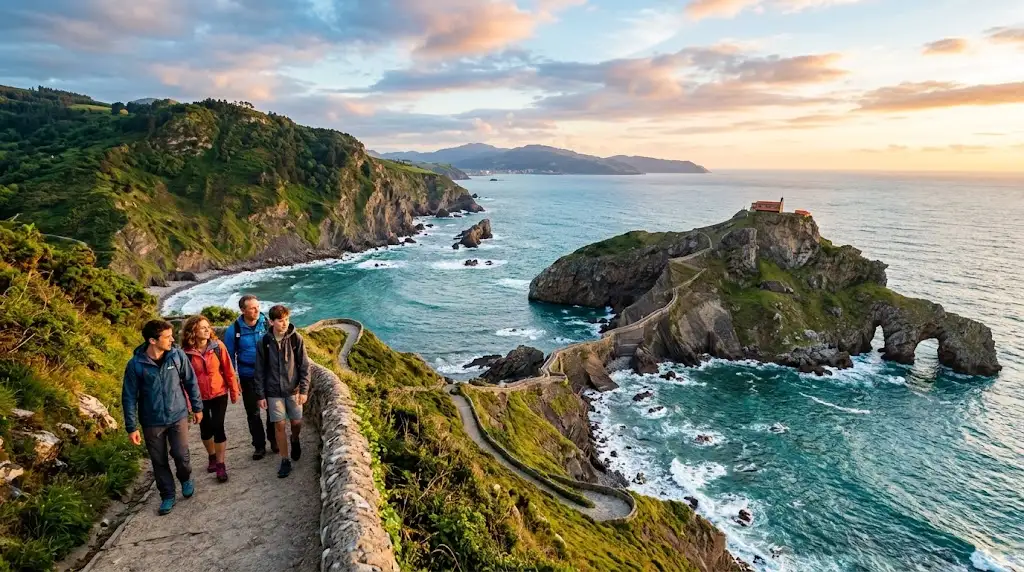
San Juan de Gaztelugatxe is one of the most dramatic landscape-focused excursions available in the wider Basque Country. The site is famous for a small rocky islet connected to the mainland by a winding stone approach, creating an instantly recognizable coastal scene. Basque tourism promotes the wider coastline for walking, boating, and visiting remarkable natural locations, including Gaztelugatxe. Because reaching the site from San Sebastian takes more planning than visiting nearby Getaria or Hondarribia, it works best for travelers comfortable dedicating much of the day to one major excursion. The payoff is unforgettable scenery.
The physical experience of visiting matters as much as the viewpoint itself. Expect walking, elevation changes, and potentially challenging conditions depending on weather. Comfortable footwear is essential, and visitors should carry water during warmer periods. Those with limited mobility should research current access arrangements carefully before committing to the excursion. Coastal wind and rain can also change the difficulty of the walk quickly. Travelers should never treat the route as simply an effortless photo stop. Taking your time makes the climb safer and allows you to appreciate views rather than focusing only on reaching the endpoint.
Advance planning can be necessary because visitor access arrangements may vary according to season, demand, maintenance, or conservation requirements. Travelers should verify current conditions before leaving San Sebastian rather than relying on old travel itineraries. Driving generally provides the greatest flexibility, while organized tours can simplify parking and logistics. Combining the site with Bilbao or another coastal destination may be possible, but doing so can create a long day. Travelers who dislike rushed sightseeing should pair it only with one nearby stop or simply dedicate the excursion to the coastline. Allowing extra time also protects the itinerary against traffic.
Photographers will find the landscape particularly rewarding, but conditions play an important role. Clear weather creates expansive coastal views, while mist and dramatic clouds can give the scenery a completely different personality. Instead of becoming disappointed by imperfect sunshine, embrace the Atlantic atmosphere. Respect barriers and protected areas because coastal landscapes are vulnerable to erosion and heavy visitor use. Carry out anything you bring with you and stay on designated paths. Responsible behavior helps preserve the experience for future travelers. Nature-focused attractions are most enjoyable when visitors treat them as landscapes rather than outdoor amusement parks.
Choose San Juan de Gaztelugatxe if your ideal day trip combines activity, scenery, photography, and a sense of adventure. It is particularly well suited to active couples, groups, and travelers comfortable spending significant time outdoors. Visitors seeking museums, shopping, or effortless sightseeing should choose Bilbao or a coastal town instead. Because logistics can change, this is one excursion where checking current access information before departure is particularly important. Plan conservatively, wear suitable shoes, and leave enough time to enjoy the surroundings. When conditions cooperate, the journey provides one of the most memorable coastal landscapes within reach of San Sebastian.
10. Bayonne: Best for French Basque Culture
Bayonne offers travelers another opportunity to explore the French Basque Country, but its atmosphere differs noticeably from the beach-centered appeal of Biarritz and Saint-Jean-de-Luz. The city combines historic streets, riverside scenery, traditional architecture, markets, religious heritage, food, and a strong regional identity. It works especially well for travelers interested in history and culture rather than spending most of their day beside the ocean. San Sebastian tourism includes Bayonne within its broader French Basque coastal touring options. Because it feels like a genuine small city rather than solely a resort, Bayonne provides an excellent cultural contrast to San Sebastian.
Walking should form the core of your visit because many of Bayonne’s attractions are found within atmospheric central districts. Narrow streets, traditional buildings, riverfront areas, bridges, shops, and squares create a cityscape that rewards slow exploration. The cathedral is a major landmark and provides a natural orientation point as you move through the historic center. Travelers interested in architecture can spend considerable time examining older façades and urban details. Unlike destinations where the scenery lies outside town, much of Bayonne’s appeal is embedded directly within its streets. This makes it particularly practical during cooler seasons when extended beach time is less attractive.
Food is another major reason to visit. Bayonne is associated with distinctive regional culinary traditions, and markets, bakeries, chocolate shops, cafés, and restaurants provide numerous opportunities to explore them. Travelers coming from San Sebastian should resist the temptation to compare every meal competitively. The more interesting experience is noticing how culinary styles change across a relatively short geographical distance. A market visit can provide context before lunch because you see ingredients and products connected with the region. Buying a small edible souvenir also creates a tangible reminder of the day. Food-focused travelers can easily make gastronomy one of the central themes of the excursion.
Bayonne can also be combined with Biarritz when transportation and timing make sense. The two destinations offer complementary experiences, with Bayonne emphasizing historic urban character while Biarritz provides dramatic coastline and resort atmosphere. However, combining them means reducing the amount of time available in each place. Travelers primarily interested in museums, food, and historic streets should stay longer in Bayonne. Those prioritizing ocean views might spend the larger portion of the day in Biarritz. A guided French Basque tour can simplify this kind of multi-stop itinerary. Independent travelers should build in enough time for transportation and avoid planning the return to San Sebastian too tightly.
Choose Bayonne if you want history, regional culture, traditional streets, food, and French atmosphere rather than a beach-focused excursion. Couples and solo travelers can enjoy wandering at their own pace, while families can create a flexible itinerary combining landmarks with markets and riverside walks. The city is also an excellent option for travelers who have already visited Biarritz and want a different perspective on the French Basque Country. Crossing the border expands a San Sebastian vacation considerably without requiring an overnight move. Bayonne demonstrates that the region’s cultural identity extends beyond national boundaries, making it a particularly interesting final choice among the best day trips from San Sebastian.
How to Choose the Best Day Trip From San Sebastian
The best day trip depends first on what you feel your San Sebastian itinerary is missing. If you have already spent several days eating pintxos and walking urban beaches, Rioja Alavesa or Bilbao can provide a strong change of scenery. Travelers who want even more coastline should consider Getaria, Zumaia, Zarautz, or Hondarribia. Those curious about France can choose Biarritz, Saint-Jean-de-Luz, or Bayonne. Active travelers may prefer the Flysch coast or San Juan de Gaztelugatxe. Matching the excursion to your interests creates a much better experience than selecting a destination solely because it appears frequently on travel lists.
Transportation should be your second consideration. Hondarribia and several coastal towns can work well for travelers who prefer public transportation, while more rural destinations are considerably easier with a car or guided excursion. A rental car gives you freedom to combine nearby locations and stop at viewpoints, but parking and navigation add responsibilities. Guided tours reduce logistical effort and can be especially useful for wineries or multi-stop itineraries. Public transportation is often the most economical choice for solo travelers. Always check current schedules close to your travel date because departure frequencies can change by day and season.
Weather can completely transform the experience, particularly along the Atlantic coast. A clear day is ideal for cliff walks around Zumaia or outdoor exploration at Gaztelugatxe, while rainy conditions may make Bilbao’s museums and indoor attractions more appealing. Surf destinations can remain interesting under dramatic weather, but travelers should never underestimate wind, waves, or slippery terrain. Keeping one flexible day in your itinerary allows you to choose the excursion best suited to conditions. This approach works particularly well when staying in San Sebastian for four or five nights. Instead of locking every detail months ahead, reserve only activities that genuinely require advance booking.
Do not underestimate travel fatigue when planning excursions. Visiting two or three towns may look efficient on a map but can lead to spending too much of the day checking schedules, finding parking, and moving between destinations. One town plus a nearby secondary stop often creates a much better rhythm. For example, Getaria and Zarautz combine naturally because they are close and connected by coastal scenery. Similarly, carefully planned French Basque itineraries can pair nearby destinations without becoming overwhelming. Long-distance excursions such as Bilbao or Rioja Alavesa deserve more focused attention. Quality of experience matters more than the number of places you can say you visited.
Finally, remember that San Sebastian itself deserves substantial time. Day trips should enhance your stay rather than leave you with no opportunity to enjoy La Concha, the Old Town, Gros, Monte Urgull, local markets, and the city’s celebrated food culture. Official tourism guidance itself presents the city as a base for additional days exploring the coast, Hondarribia, Getaria, highlands, and nearby French destinations. A balanced itinerary might include several full days in San Sebastian and one or two excursions based on your strongest interests. This structure provides variety without turning the entire vacation into continuous transportation.
Conclusion
San Sebastian’s location is one of its greatest advantages because an extraordinary variety of destinations lies within day-trip range. The surrounding Basque coast contains historic ports, surfing towns, vineyards, dramatic cliffs, mountain landscapes, and modern cities, while the French border opens an entirely different collection of experiences. Official tourism information highlights Hondarribia, Getaria, Zarautz, Zumaia, Bilbao, the French Basque coast, and Rioja Alavesa among the areas worth exploring from the city. This diversity allows travelers to customize excursions around food, culture, beaches, hiking, wine, architecture, or photography rather than following a single standard itinerary.
Hondarribia is arguably the strongest all-around option for travelers wanting history, food, coastal scenery, and manageable sightseeing in one destination. Getaria is particularly rewarding for seafood and wine lovers, while Zarautz attracts visitors who want beach time and surfing. Zumaia provides one of the best nature-focused experiences through its dramatic coastline and geological scenery. These towns demonstrate how varied the coastline becomes within relatively short distances. Travelers with several free days could choose more than one without feeling that they are repeating the same experience. Each destination has developed its own personality.
Bilbao and Rioja Alavesa provide excellent alternatives when you want to move away from the immediate coast. Bilbao delivers museums, modern architecture, historic neighborhoods, and urban culture, while the wine country offers vineyards, wineries, regional cuisine, and countryside. Both work particularly well after several days focused on beaches and fishing villages. San Juan de Gaztelugatxe provides another direction entirely, emphasizing outdoor adventure and dramatic coastal views. Transportation planning becomes more important for these excursions, so choosing between rental cars, tours, and private transportation should be part of the itinerary. Giving each destination sufficient time usually produces the most satisfying day.
The French Basque Country adds an international dimension without requiring a major travel commitment. Biarritz blends elegant resort architecture with powerful Atlantic scenery and surfing culture, Saint-Jean-de-Luz offers a gentler seaside experience, and Bayonne emphasizes historic streets and regional culture. San Sebastian tourism specifically recommends the French coast for its beaches, historic communities, surfing, and gastronomy. Travelers should simply carry the documentation appropriate for crossing the border and check transportation arrangements beforehand. Spending the day in France before returning to Spain for dinner can become one of the most memorable experiences of a northern Spain itinerary.
Ultimately, the best day trips from San Sebastian are those that complement your interests instead of simply adding destinations to a checklist. Pick Hondarribia for history, Getaria for seafood, Zumaia for cliffs, Zarautz for surfing, Bilbao for culture, Biarritz for French coastal glamour, Saint-Jean-de-Luz for relaxation, Rioja Alavesa for wine, Gaztelugatxe for adventure, or Bayonne for French Basque heritage. Leave enough time for long meals, unexpected viewpoints, and spontaneous walks because these experiences often become more memorable than carefully scheduled attractions. San Sebastian may be your base, but the landscapes and communities surrounding it can easily become highlights of the entire trip.
FAQs
What is the best day trip from San Sebastian for first-time visitors?
Hondarribia is one of the best choices because it combines a historic old town, waterfront atmosphere, Basque food, and attractive coastal surroundings. Getaria is another excellent option for travelers particularly interested in seafood and small fishing towns.
Can you take a day trip from San Sebastian to France?
Yes. Biarritz, Saint-Jean-de-Luz, Bayonne, and other destinations in the French Basque Country can be visited from San Sebastian, making an international day trip relatively practical. Travelers should carry any identification or travel documentation required for their circumstances.
Is Bilbao worth visiting as a day trip from San Sebastian?
Yes. Bilbao makes an excellent full-day excursion for travelers interested in contemporary architecture, museums, historic neighborhoods, shopping, and Basque cuisine. It offers a distinctly different urban experience from San Sebastian.
What is the best coastal day trip from San Sebastian?
Getaria, Zumaia, Zarautz, and Hondarribia are all excellent coastal choices. Zumaia is particularly suited to dramatic scenery and hiking, while Zarautz is better for surfing and beach lovers and Getaria excels for seafood and maritime atmosphere.
Do you need a car for day trips from San Sebastian?
No, several popular destinations can be reached using public transportation, and organized excursions provide another convenient option. A car becomes especially useful when visiting rural areas, vineyards, scenic viewpoints, or combining multiple smaller destinations in one day.