





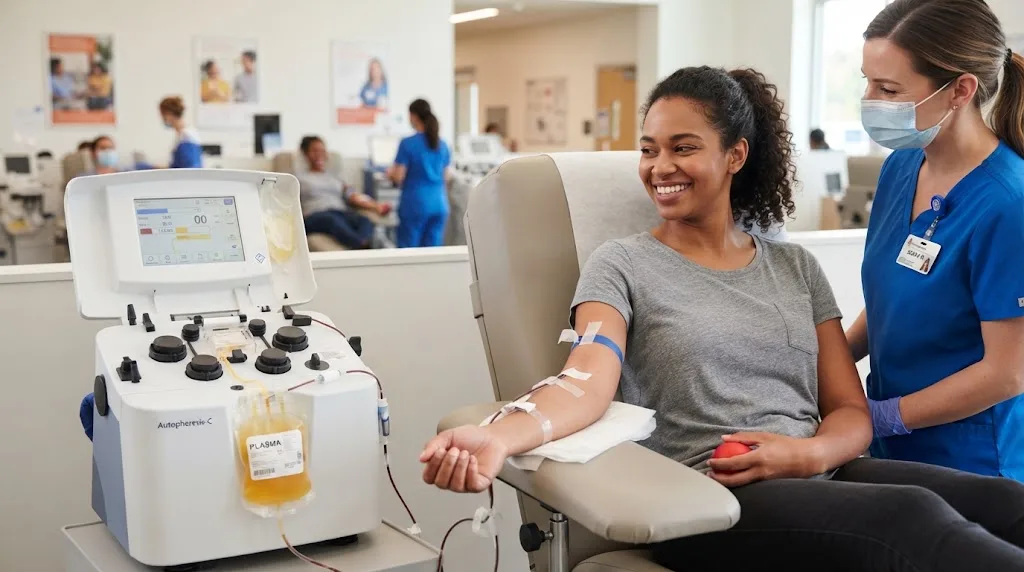
Plasma Donation: Requirements, Process and Side Effects
Plasma donation is an important part of modern healthcare because donated plasma provides proteins that can be used to manufacture therapies for people with serious and chronic medical conditions. Unlike a standard whole blood donation, plasma donation usually involves a process called plasmapheresis, which separates plasma from the other components of your blood. Red blood cells and certain other blood components are then returned to your body during the same appointment. The process generally takes longer than a whole blood donation, but eligible people may be able to donate more frequently. Understanding the requirements, process, potential side effects, and recovery recommendations can make the experience considerably less intimidating.
Many people first become interested in donating plasma because they want to help patients, while others learn about donation through plasma centers that compensate donors for the time involved. Whatever the motivation, donor safety should remain the priority. Donation centers conduct health screenings because plasma collection temporarily changes circulating fluid volume and removes proteins that the body must replace. Most healthy eligible donors tolerate the process well, although mild reactions such as bruising, fatigue, thirst, or lightheadedness can occur. A smaller number of donors experience reactions associated with citrate, the anticoagulant used during apheresis. Knowing these possibilities beforehand helps donors recognize normal symptoms and understand when something requires attention.
Plasma donation requirements are not identical everywhere, so potential donors should always check the rules of the specific collection center they plan to visit. Age, weight, general health, medications, recent procedures, infections, travel, tattoos, piercings, pregnancy history, and laboratory results may all influence eligibility. The rules can also differ between countries and between plasma collected for transfusion and source plasma collected for manufacturing medicines. This guide therefore explains commonly used requirements while highlighting U.S. standards where appropriate. It also covers how to prepare, what happens during plasmapheresis, common plasma donation side effects, and how your body recovers afterward. With that information, you can make a more informed decision before scheduling your first donation.
What Is Plasma Donation and Why Does It Matter?
Plasma is the pale yellow liquid portion of blood that carries blood cells, proteins, hormones, electrolytes, nutrients, and other substances throughout the body. It makes up a large portion of total blood volume and performs several essential functions. Plasma proteins help maintain fluid balance, support immune defenses, transport substances, and contribute to normal blood clotting. Because these proteins have valuable medical uses, donated plasma can become the starting material for therapies used by patients who cannot produce enough of certain proteins themselves. This is why plasma donation is not simply another version of giving blood. It supplies biological material that can be processed into specialized medicines used across many areas of healthcare.
Medicines produced from donated plasma may contain immunoglobulins, albumin, clotting factors, and other medically important proteins. Immunoglobulin therapies, for example, are used in the management of several immune deficiencies, autoimmune conditions, and neurological disorders. Clotting-factor products can be important for people with certain bleeding disorders, while albumin has applications in hospitals and emergency care. Producing these therapies requires a reliable supply of human plasma because many of the proteins cannot simply be replaced by ordinary synthetic ingredients. Multiple donations may ultimately contribute to a single patient’s treatment supply. Regular voluntary plasma donors therefore help support a supply chain that patients with ongoing conditions may depend on repeatedly rather than only during emergencies.
The main collection method is plasmapheresis, a type of apheresis in which whole blood temporarily enters a sterile collection system. A machine separates plasma from cellular blood components, including red blood cells, and the components not being collected are returned to the donor. This separation-and-return cycle may occur repeatedly until the intended amount of plasma has been collected. Because most red blood cells are returned rather than permanently removed, the body’s recovery from plasma donation differs from its recovery after whole blood donation. Fluid volume can be restored relatively quickly with normal hydration, while plasma proteins require additional time to be synthesized. The donation frequency permitted by regulators and collection centers is designed partly around these physiological differences.
Plasma collected through commercial or specialized source-plasma centers is commonly used to manufacture plasma-derived medicinal products rather than being transfused directly into another person’s bloodstream. Plasma intended for direct transfusion may be collected under a different donation program and can have different eligibility criteria and donation intervals. This distinction explains why someone may see different recommendations when comparing a blood bank with a commercial plasma center. Even though both procedures collect plasma, their intended use and regulatory framework may not be exactly the same. Donors should therefore avoid assuming that rules from one organization automatically apply to another. Asking what kind of plasma is being collected can clarify the eligibility requirements and expected donation schedule.
From the donor’s perspective, plasma donation combines charitable value with a structured medical screening process. Some centers compensate source-plasma donors for the substantial time required for screening and collection, but compensation policies depend on the country, organization, and type of donation. Payment does not eliminate the medical requirements, and an eligible donor must still meet health and laboratory standards each time required. Donor screening also should not be treated as a substitute for routine medical care or diagnostic testing. The purpose of screening is primarily to protect both the person donating and the eventual recipients of plasma-derived products. Understanding that purpose makes the many questions, measurements, and laboratory checks involved in the process easier to appreciate.
Plasma Donation Requirements: Who Can Donate?
Plasma donor eligibility begins with basic factors such as age, weight, and general health, although exact criteria vary according to location and collection program. In the United States, current HHS information states that plasma donors generally need to be at least 18 years old and weigh at least 110 pounds, or approximately 50 kilograms. Donors must also pass medical screening and testing designed to establish that donation is appropriate for them and safe for the plasma supply. Weight matters partly because the amount collected and the physiological effect of donation are related to body size. A person who meets the minimum numbers can still be deferred if another part of the screening indicates a potential safety concern.
Before donating, you can expect questions about your current health, medical history, medications, previous surgeries or procedures, infectious diseases, and other factors relevant to blood safety. A first-time donor generally receives a more extensive evaluation than a returning donor, including a medical history review and physical assessment. Collection centers may measure temperature, pulse, blood pressure, weight, hematocrit or hemoglobin, and blood protein levels as part of donor qualification. Plasma is also tested for specific infectious diseases, including HIV and hepatitis viruses, according to applicable regulations and center procedures. Providing truthful information during screening is essential because eligibility rules exist to protect both donors and people who eventually receive plasma-derived therapies.
Medical conditions do not always produce a simple yes-or-no answer because eligibility depends on the condition, its severity, current symptoms, treatment, and collection-center policy. Temporary illnesses such as fever or an active infection usually mean donation should be postponed until recovery and any required waiting period has passed. Certain chronic medical conditions may be compatible with donation when they are stable, whereas others can result in temporary or permanent deferral. Blood pressure or pulse readings outside acceptable limits may also delay donation even when someone otherwise feels well. Potential donors should never stop prescribed medication simply to qualify for plasma donation. Instead, they should disclose every medication and supplement accurately so trained staff can determine whether donation is currently appropriate.
Recent tattoos, piercings, vaccinations, procedures, travel, or possible infectious exposures can also affect plasma donation requirements. Current HHS guidance for U.S. source plasma states generally that donors should not have received a tattoo or piercing within the previous four months, although specific center and jurisdiction rules should always be confirmed. Other temporary deferrals may apply after certain surgeries, pregnancy, blood transfusions, infections, or international travel depending on the circumstances. These waiting periods are not intended as judgments about a person’s lifestyle or health. They are risk-management measures based on donor safety and the possibility of infections or physiological changes that may not be immediately detectable. Calling the center before visiting can prevent an unnecessary trip when a recent event might temporarily affect eligibility.
Identification requirements are another practical part of becoming a plasma donor, especially at a first visit. U.S. centers commonly request government-issued identification, proof of address, and additional identifying documentation, although the exact paperwork can differ by organization and country. HHS recommends contacting the donation facility before arriving because missing documents are a common reason first-time donors cannot complete the process. Returning donors still undergo health screening because eligibility is reassessed rather than permanently granted after the first successful donation. A new medication, illness, injury, travel history, or abnormal screening result can change whether someone is able to donate that day. Checking the center’s current requirements before every return after a significant health change is therefore a sensible precaution.
How to Prepare for Plasma Donation
Good preparation begins before you arrive at the plasma center, and hydration is one of the most important considerations. Plasma contains a large amount of water, so donation temporarily removes fluid from the circulation even though red blood cells are returned. Drinking adequate fluids during the day before donation and in the hours leading up to the appointment may help your body tolerate that fluid shift. HHS specifically encourages donors to drink plenty of water or another caffeine-free beverage before the procedure. There is no benefit in forcing an extreme amount of water immediately before your appointment, however. Consistent normal hydration is more comfortable and practical than suddenly consuming excessive fluid shortly before screening.
Eating beforehand is equally important because arriving hungry can make dizziness, weakness, or nausea more likely for some people. A balanced meal containing carbohydrates, protein, and nutritious foods can provide more stable energy throughout a donation that may take well over an hour. Many plasma centers recommend avoiding unusually high-fat meals shortly before donation because excess circulating fat can make collected plasma appear lipemic and may interfere with processing or testing. HHS similarly recommends a healthy, low-fat meal before giving plasma. Protein-rich foods can also support normal nutrition for people who donate regularly because plasma contains proteins that the body must replace. Donation should not become a reason to adopt extreme high-protein diets unless a healthcare professional has recommended one.
Sleep is another overlooked part of plasma donation preparation. Someone who is exhausted, stressed, dehydrated, or recovering from intense exercise may be more vulnerable to feeling weak or lightheaded during a lengthy collection procedure. Aim for a normal night’s sleep and avoid scheduling your first appointment when you already feel physically depleted. Alcohol should generally be avoided around donation because it can contribute to dehydration, while excessive caffeine may make some donors feel jittery or affect heart rate. HHS also advises avoiding alcohol and nicotine before plasma donation. If you wake up feeling feverish, unusually weak, nauseated, or otherwise unwell, rescheduling is generally more sensible than trying to push through the appointment.
Clothing can make the actual plasmapheresis procedure much easier. Wear something comfortable with sleeves that can be rolled securely above the elbow so the technician has clear access to a suitable vein. Because donors may feel cool during apheresis, especially while blood components and fluids move through the collection system, bringing an extra layer that does not obstruct the donation arm can also be useful. Avoid extremely restrictive clothing that makes sitting for an extended period uncomfortable. Bring whatever identification and documentation the center requested, particularly for your first visit. A phone, headphones, book, or another quiet activity can help pass the time. However, you should still remain aware of how you feel and immediately report unusual symptoms to staff.
Mental preparation matters as well, particularly for people who dislike needles or have previously fainted during medical procedures. The initial needle insertion is usually the most noticeable part, while the rest of the procedure typically involves sitting or reclining while the machine cycles. Tell the technician if you have a history of fainting, difficult venous access, strong anxiety, or previous reactions during blood donation. Staff may be able to adjust positioning and observe you more closely for early signs of a vasovagal response. Never hide symptoms because you are worried that the donation will be stopped. Mild tingling, nausea, dizziness, sweating, chills, or discomfort are useful signals for the collection team, and early intervention can often prevent a minor reaction from becoming more unpleasant.
Plasma Donation Process: What to Expect Step by Step
The plasma donation process usually begins with registration and identity verification. First-time donors generally spend more time at this stage because the center must establish a donor record, review documentation, and explain consent requirements. You will then complete a health questionnaire covering medical history, medications, recent illnesses, travel, procedures, and other eligibility factors. Staff may ask follow-up questions privately if an answer requires clarification. This screening can feel detailed, but the information is necessary for assessing donor suitability and maintaining the safety of collected plasma. Accurate answers are more important than trying to predict which response the center wants. If something makes you temporarily ineligible, staff can usually explain whether and when you may be able to return.
The next part generally involves physical measurements and a small blood sample. Your weight, temperature, pulse, and blood pressure may be recorded, while a finger-stick or another sample may be used to evaluate factors such as hematocrit or hemoglobin and total protein. First-time donors may undergo a more comprehensive physical examination according to the facility’s procedures. The center also collects blood specimens for infectious-disease testing required for plasma safety. Passing the initial screening does not mean every future donation is automatically approved because certain checks are repeated. Measurements outside the center’s permitted range can result in a temporary deferral. This repeated screening is one reason donors should arrive adequately hydrated, nourished, rested, and honest about recent health changes.
Once you are cleared, a technician prepares the donation area and selects a vein, usually in the arm. The skin is thoroughly cleaned to reduce infection risk, and a sterile needle connected to a single-use collection set is inserted into the vein. Blood then flows from your arm into the plasmapheresis machine, where plasma is separated from the cellular components. The machine collects the plasma while returning red blood cells and other components according to the equipment’s programmed cycle. An anticoagulant containing citrate is used within the system to prevent blood from clotting during processing. You may notice pressure, coolness, or unusual sensations during the return phase, but significant pain should always be reported rather than accepted as normal.
The collection-and-return sequence continues until the planned plasma volume has been obtained. The amount collected is determined according to applicable standards and factors such as donor weight rather than being identical for every person. During the procedure, staff monitor both the machine and your condition while you remain seated or reclined. You should tell them immediately if you develop dizziness, nausea, sweating, tingling around the mouth or fingers, chills, muscle twitching, increasing arm pain, or swelling near the needle. Some of these symptoms may represent a vasovagal reaction or an effect of citrate on available calcium. Early recognition allows the collection team to pause or modify the procedure and provide appropriate care. Trying to endure worsening symptoms silently offers no benefit.
After the collection is complete, the needle is removed and pressure is applied to the puncture site to control bleeding. A bandage is placed over the area, and you may be asked to remain briefly in a recovery space before leaving. HHS notes that a first plasma donation can take around two hours overall, while return visits may take approximately 90 minutes and sometimes less, although actual times vary considerably. The machine portion is only part of that visit because registration, screening, waiting, and recovery also take time. Before leaving, make sure you feel steady when standing and understand the center’s post-donation instructions. Driving or immediately beginning strenuous activity while dizzy or weak would create an unnecessary safety risk.
Plasma Donation Side Effects and Possible Risks
Most plasma donations are completed without serious complications, but mild side effects can occur during or shortly after the procedure. Common complaints include fatigue, thirst, lightheadedness, dizziness, bruising, soreness, and minor bleeding from the needle site. HHS lists fatigue, bruising, bleeding, dehydration, dizziness, and lightheadedness among possible reactions and notes that fainting can occur, although severe reactions are uncommon. These symptoms often improve with rest, fluids, food, and time. First-time donors may be especially nervous about every sensation, so it helps to know what is common without assuming that every symptom should simply be ignored. Persistent, severe, or worsening symptoms deserve professional medical attention.
Bruising around the needle site is one of the most recognizable plasma donation side effects. A bruise develops when a small amount of blood leaks into surrounding tissue, which can happen during needle insertion, removal, or movement of the needle. Mild discoloration and tenderness generally improve gradually over several days. Applying pressure after the needle is removed and avoiding heavy lifting with the donation arm for a period can reduce additional bleeding. A rapidly enlarging swelling, severe pain, significant numbness, continued bleeding, or marked loss of arm function is different from an ordinary small bruise. Those symptoms should be reported promptly because venipuncture can occasionally cause a larger hematoma, irritation of nearby structures, or another complication requiring evaluation.
Apheresis also produces a side effect that is less familiar to people who have only donated whole blood: a citrate reaction. Citrate prevents clotting inside the collection tubing by binding calcium, and a portion of the citrate returns to the donor with the blood components. In some people this temporarily lowers ionized calcium enough to cause tingling around the lips or fingers, chills, lightheadedness, twitching, nausea, or similar sensations. Reviews of apheresis complications identify citrate-related hypocalcemia as a characteristic reaction of the procedure, although most reactions are mild and treatable. Donors should tell staff as soon as tingling or muscle symptoms begin because the procedure can be adjusted and appropriate measures taken before symptoms progress.
Fatigue after plasma donation may result from several factors rather than a single cause. The temporary loss of circulating fluid, the length of the appointment, missed meals, anxiety, sleep deprivation, or a mild vasovagal reaction can all contribute to feeling tired afterward. Most donors can return to ordinary activities relatively quickly, but intense exercise, heavy lifting, sauna use, or other activities that worsen dehydration may be better postponed until you feel fully recovered. Continuing to drink fluids and eating normal balanced meals supports recovery. Some people feel essentially normal immediately, whereas others benefit from a quieter remainder of the day. Your own response to previous donations is useful information when planning future appointments, but a dramatically different reaction should still be discussed with the donation center.
Questions about frequent plasma donation and long-term protein levels deserve more nuance than simply saying that plasma always regenerates quickly. The body does replace donated plasma, but repeated plasmapheresis also removes proteins, including immunoglobulins. A 2025 randomized trial found reductions in total serum protein, IgG, and several other biomarkers in frequent donors, with greater reductions as donation frequency increased; the researchers noted that some markers required more than four weeks to return to baseline and that longer-term implications require additional research. This does not mean that everyone who donates frequently will develop a medical problem. It does reinforce why donation limits, protein monitoring, eligibility screening, proper nutrition, and honest reporting of symptoms remain important parts of donor safety.
How Often Can You Donate Plasma and How Long Does Recovery Take?
The answer to how often you can donate plasma depends strongly on where you live and the type of collection program you use. In the United States, FDA rules for Source Plasma permit donation no more frequently than once in a two-day period and no more than twice during a seven-day period. HHS presents the same maximum frequency in its current donor information. This is a maximum regulatory schedule rather than a recommendation that every eligible person should donate as often as possible. Other countries may require substantially longer intervals, while individual centers can impose additional limits. Your personal eligibility can also change if screening results or protein measurements fall outside the permitted range.
Fluid is one of the fastest components for the body to restore after plasma donation. Drinking water and consuming normal meals help replace the volume removed during the collection process, and many healthy people feel completely normal within hours. However, recovery should not be reduced to fluid replacement alone because plasma contains albumin, immunoglobulins, clotting proteins, electrolytes, and other substances. Different components recover at different rates, and donation frequency can affect measurable protein levels. That is one reason regular donors may undergo repeated protein screening rather than relying only on how energetic they feel. Feeling fine is reassuring, but it does not replace objective donor-safety testing. Following the collection center’s permitted interval gives the body more time to restore what has been removed.
People who donate plasma regularly should pay particular attention to nutrition, hydration, sleep, and changes in how they recover. Repeatedly arriving dehydrated, skipping meals, or donating while physically exhausted can make an otherwise routine process harder to tolerate. A balanced diet containing adequate protein, iron, vitamins, minerals, and calories supports normal blood and protein production without requiring specialized supplements for most healthy adults. Iron can still be relevant because small red-cell losses may occur through testing, residual blood in the collection system, or occasional incomplete returns, even though plasma donation preserves far more red cells than whole blood donation. Supplements should not be taken solely to overcome abnormal screening values without medical advice. Persistent low laboratory results deserve an explanation rather than an attempt to mask them.
Frequent donors should also consider their individual pattern of side effects rather than viewing the regulatory maximum as a personal target. Someone who consistently experiences substantial fatigue, recurrent bruising, difficult venous access, prolonged dizziness, or slow recovery may benefit from longer intervals even if the center technically allows another donation. A donation schedule should fit safely around work, exercise, sleep, meals, and overall health. If you repeatedly require several days to feel normal, discuss that pattern with center medical staff or your healthcare professional. Likewise, donors with concerns about recurrent low protein values or other laboratory changes should ask how those measurements are monitored. Donation is voluntary, and there is no obligation to maintain the highest possible frequency.
A useful way to think about plasma recovery is that eligibility rules establish an outer safety framework while your body provides additional information. The permitted interval tells you when another donation may legally or medically be considered, but it does not guarantee that every individual will be ready at exactly that moment. Listen for unusual exhaustion, persistent dizziness, significant arm problems, illness, or changes in overall health between visits. Update the center about new medications, diagnoses, procedures, or other circumstances even if previous donations were uncomplicated. Taking an occasional longer break does not undo the value of earlier donations. Sustainable donation means protecting the donor as carefully as the plasma supply so that helping others does not come at the expense of your own health.
Recovery After Plasma Donation and When to Get Medical Help
Immediately after donating, give yourself enough time to sit, drink something, and confirm that you can stand comfortably without feeling faint. Keep the bandage in place for the period recommended by the collection center and avoid repeatedly bending or straining the donation arm while the puncture site is sealing. HHS advises keeping the bandage on for several hours and keeping the area clean after removing it. Continue drinking fluids over the remainder of the day and have a balanced meal or snack if you have not recently eaten. If you feel tired, scheduling a lighter evening can be more sensible than immediately performing strenuous exercise. Most minor post-donation symptoms settle with these straightforward measures.
If dizziness develops after you leave the center, stop what you are doing and sit or lie down somewhere safe rather than trying to walk or drive through it. Raising your legs while lying down may help when symptoms are related to a vasovagal reaction, and fluids can help if dehydration is contributing. Do not resume driving until you feel fully alert and stable. Mild tiredness or brief lightheadedness can occur, but symptoms that are intense, recurrent, or prolonged deserve more attention. Fainting associated with an injury, chest pain, breathing difficulty, confusion, or seizure-like activity warrants urgent medical evaluation. The collection center should also be informed of a significant reaction because it may affect recommendations for future donations.
The needle site should gradually become less noticeable rather than increasingly painful or swollen. Minor tenderness and a small bruise can be expected, but continued bleeding should be managed with firm direct pressure according to the center’s instructions. Seek medical assistance if bleeding remains difficult to control or if a large swelling develops. Increasing redness, warmth, drainage, fever, or worsening pain may indicate infection or another local complication and should not be dismissed as routine bruising. Numbness, weakness, severe shooting pain, or persistent sensory changes in the arm also merit evaluation. Serious venipuncture complications are uncommon, but early assessment is appropriate when symptoms extend beyond the mild discomfort normally associated with a needle puncture.
Symptoms suggestive of a significant citrate reaction usually appear during the procedure, when trained staff are available to respond. However, donors should understand that severe muscle cramping, marked weakness, confusion, abnormal heart sensations, or other intense symptoms are not something to self-treat casually. Mild tingling during apheresis should be reported immediately rather than waiting to see whether it becomes severe. Although citrate reactions are generally mild, clinically important hypocalcemia is possible in unusual circumstances. Do not start taking large doses of calcium simply because you plan to donate frequently unless a healthcare professional or qualified donation-center clinician recommends it. More supplementation is not automatically safer, particularly for people with kidney, endocrine, or medication-related concerns.
Finally, contact the donation center if you become ill or learn important health information shortly after donating. A new diagnosis, positive infectious-disease test, or recognition that relevant screening information was accidentally omitted may matter to the collected plasma. Centers have established procedures for evaluating post-donation information and determining whether a unit should continue through processing. This communication protects recipients and should not be viewed as an admission of wrongdoing. It is simply another layer of the safety system surrounding plasma collection. Donors should also seek their own healthcare rather than expecting plasma-center screening to investigate unrelated symptoms. Donation facilities determine whether you can donate; they are not replacements for a primary-care clinician, urgent-care service, or emergency department.
Is Plasma Donation Safe and Worth Considering?
For appropriately screened donors, plasma donation is generally considered a well-tolerated medical procedure, and serious complications are uncommon. The process takes place in regulated collection environments using sterile equipment and donor-monitoring procedures designed to reduce preventable risks. Still, describing plasma donation as safe should not imply that it is completely free of side effects. Needle-related bruising, vasovagal reactions, dehydration, citrate symptoms, and fatigue can occur, while more serious complications are possible but much less common. Safety therefore depends on appropriate donor selection, trained staff, functioning equipment, honest health screening, and sensible donation intervals. A person who understands both the benefits and the risks is better prepared than someone who views donation as a completely routine transaction.
The decision to donate should also account for your own health and tolerance rather than compensation or social pressure alone. Being technically eligible does not mean you must donate, and donors can change their minds at any point before or during the procedure. If you are anxious, unsure about a medication, recovering from illness, or concerned about frequent donation, asking questions before proceeding is reasonable. A reputable center should be willing to explain the process, eligibility standards, frequency limits, compensation policies, privacy practices, and how adverse reactions are handled. You should never be encouraged to hide information to qualify. Transparent screening protects you, the center, manufacturers of plasma-derived medicines, and ultimately the patients who rely on those products.
For people considering regular donation, recent research supports continued attention to donation frequency and protein monitoring. Evidence published in recent years suggests that repeated plasmapheresis can reduce immunoglobulin concentrations and other biomarkers, particularly at higher frequencies, although the clinical meaning of these changes and their long-term implications are still being studied. This developing evidence does not establish that routine plasma donation is inherently harmful. Instead, it highlights why safety standards should continue evolving as better donor-health data become available. Regular donors can contribute to their own safety by attending required testing, respecting deferrals, discussing recurring symptoms, and avoiding the assumption that more frequent donation is automatically better.
Plasma donation can have significant value because plasma-derived therapies are difficult to replace and are used by patients who may need treatment repeatedly. A donor may never meet the people who ultimately benefit, yet the biological material collected can contribute to medications with meaningful clinical uses. That benefit is strongest when the donation system remains sustainable for both recipients and donors. Healthy donors who prepare appropriately, follow eligibility rules, and recover well may choose to return regularly. Others may decide that occasional donation fits them better, and some people will not be eligible at all. Every one of those outcomes is legitimate because plasma availability should be expanded through safe participation rather than by encouraging people to donate beyond what is appropriate for them.
Before booking your first visit, check the specific requirements of a licensed or appropriately regulated plasma collection center in your region. Confirm the documents you need, how long the appointment is expected to take, what you should eat and drink beforehand, and whether any medical conditions or medications need additional review. Plan enough time afterward that you will not have to rush directly into strenuous activity. During collection, communicate early about tingling, dizziness, nausea, pain, or swelling instead of waiting for symptoms to become difficult to manage. Afterward, hydrate, eat normally, care for the needle site, and allow yourself time to recover. Those simple steps make plasma donation more predictable while keeping donor wellbeing at the center of the process.
Conclusion
Plasma donation is a specialized form of blood-component donation that allows plasma to be collected while most cellular blood components are returned to the donor. Through plasmapheresis, donated plasma can become an important source of proteins used to produce medicines for people with immune, bleeding, and other serious medical conditions. The procedure is generally well tolerated by eligible donors, but it is still a medical process rather than something to approach without preparation. Screening, sterile collection practices, donation intervals, and post-donation care all play important roles in safety. Understanding these fundamentals makes it easier to decide whether donating plasma is appropriate for you and what you can realistically expect at your appointment.
Plasma donation requirements typically include minimum age and weight standards, acceptable health screening results, and testing intended to protect both donors and recipients. In the United States, general guidance uses age 18 and a minimum weight of 110 pounds as baseline criteria for source plasma donors, although eligibility involves much more than those two numbers. Medical history, medications, recent illnesses, tattoos, piercings, procedures, travel, and laboratory results can all affect whether someone can donate. Rules can differ internationally and between individual collection programs. Checking directly with your chosen center remains the most reliable way to determine your eligibility rather than relying entirely on a general online checklist.
Preparation can make the experience considerably more comfortable. Arriving rested, adequately hydrated, and having eaten a balanced meal gives your body a better starting point for handling the temporary changes associated with plasma collection. Comfortable clothing and the correct identification can prevent unnecessary delays, while telling staff about anxiety or previous donation reactions allows them to monitor you appropriately. Once the procedure begins, pay attention to how you feel and communicate symptoms early. Dizziness, tingling, nausea, unusual chills, or increasing pain are not complaints that need to be hidden. Collection teams can respond most effectively when they know about a developing reaction before it becomes more intense.
Most plasma donation side effects are mild and temporary, with bruising, fatigue, dehydration, lightheadedness, and citrate-related sensations among the better-known possibilities. Severe reactions are uncommon, but donors should understand the warning signs that justify prompt medical attention. Frequent donors should also take laboratory monitoring seriously because plasma proteins and immunoglobulins require time to recover, and newer research continues to examine the health effects of higher donation frequencies. The fact that regulations permit a particular maximum frequency does not mean every donor needs to use that schedule. Your recovery pattern, health status, screening results, and medical advice should help determine what level of donation is sustainable for you.
Ultimately, successful plasma donation depends on balancing the needs of patients with the wellbeing of the person providing the plasma. Donors provide a valuable resource, but their safety is part of what makes the entire system sustainable. Choose an appropriately regulated center, answer screening questions accurately, follow preparation and recovery guidance, and never hesitate to discuss symptoms or eligibility concerns. If you have a chronic condition, take regular medication, are pregnant or recently postpartum, or have another health concern, professional guidance from the collection center and your healthcare provider may be appropriate before donating. When undertaken responsibly, plasma donation can be a meaningful way for eligible people to support the availability of important plasma-derived therapies.
Frequently Asked Questions About Plasma Donation
How long does plasma donation take?
A first plasma donation may take around two hours because registration, medical screening, testing, and the collection procedure all need to be completed. Returning visits are often shorter, although appointment length varies by donor, center, waiting times, and equipment.
Does donating plasma hurt?
Most people mainly notice the brief needle insertion, along with occasional pressure or cool sensations during the collection-and-return cycles. Significant or increasing pain, burning, swelling, or numbness around the needle site should be reported to the technician immediately.
How often can you donate plasma?
For U.S. Source Plasma, FDA standards allow donation no more frequently than once in a two-day period and no more than twice in seven days. Rules in other countries and individual programs may require longer intervals, so always check the specific center’s policy.
What should you eat before donating plasma?
Eat a balanced, relatively low-fat meal before donating and avoid arriving with an empty stomach. Foods providing protein, complex carbohydrates, vitamins, and minerals can help support energy and normal recovery, while adequate fluids are also important.
What are the most common side effects of donating plasma?
Common plasma donation side effects include bruising, fatigue, dehydration, dizziness, lightheadedness, soreness, and occasional minor bleeding at the needle site. Some donors also experience citrate-related tingling, chills, nausea, or muscle sensations during apheresis, which should be reported to staff promptly.