





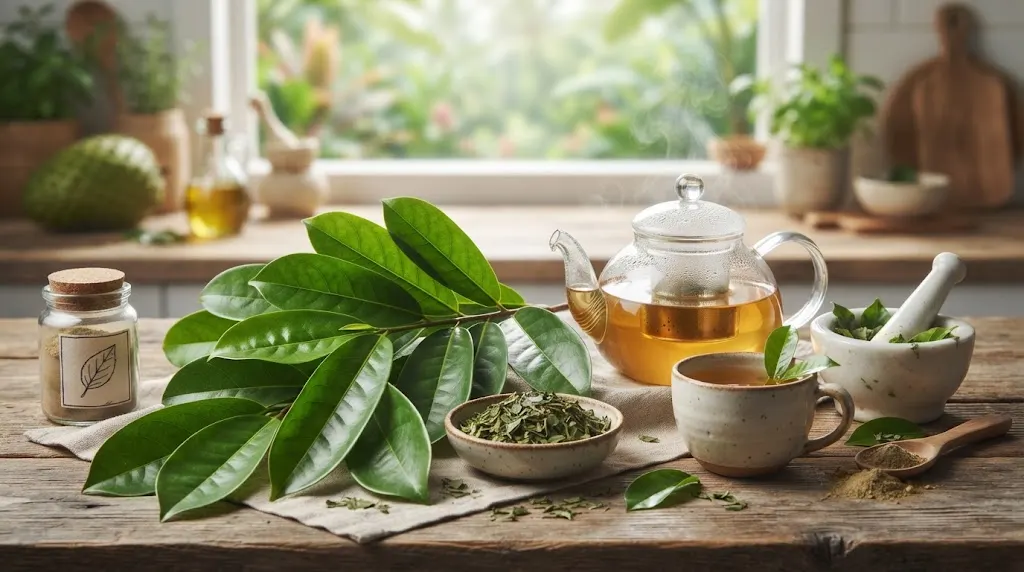
Soursop Leaves: Uses, Benefits & Possible Side Effects
Soursop leaves come from the tropical soursop tree, scientifically known as Annona muricata, which also produces the green, spiky fruit commonly called graviola, guanabana, or custard apple in different regions. The leaves have a long history of use in traditional herbal practices, especially in parts of the Caribbean, Central and South America, Africa, and Southeast Asia. They are commonly brewed into soursop leaf tea or prepared as herbal infusions for relaxation and general wellness. Interest in soursop leaves has grown because they naturally contain plant compounds such as flavonoids, alkaloids, phenolic compounds, and acetogenins. However, traditional use and laboratory findings do not automatically prove that a remedy provides the same benefits in humans.
Many claims surrounding soursop leaves focus on inflammation, immune support, blood sugar, blood pressure, digestion, sleep, infections, and even cancer. Some of these areas have been explored in laboratory or animal research, but good-quality human studies remain limited for many claimed benefits. This distinction is important because online discussions sometimes present soursop leaf benefits as medically proven when the available evidence is still developing. Soursop leaves should therefore be viewed as a traditional botanical product rather than a replacement for prescribed treatment. People with chronic conditions should be especially careful because herbal compounds can interact with medications or affect blood pressure and blood glucose. Understanding both potential benefits and possible risks allows people to make more informed choices.
The way soursop leaves are prepared can also influence their strength and potential effects. Dried leaves are often steeped or simmered in water to make tea, while concentrated extracts, capsules, and powders may contain substantially different levels of active plant compounds. A mild homemade infusion is therefore not necessarily comparable with a concentrated supplement marketed online. Product quality can vary as well because herbal supplements are not always standardized to the same concentrations. Using increasingly strong preparations in the hope of getting faster benefits may increase the chance of unwanted effects. Before making soursop leaf tea part of a regular routine, it is useful to understand what the leaves contain, what research actually suggests, and which people may need to avoid them.
What Are Soursop Leaves?
Soursop leaves are the glossy, dark-green leaves of the Annona muricata tree, a tropical evergreen that grows naturally in warm climates. The tree is best known for producing soursop fruit, which has creamy white flesh and a distinctive combination of sweet and tart flavors. While the fruit is eaten as food, the leaves are generally used differently and are commonly dried before being brewed into an herbal tea. Traditional healers have used different parts of the plant, including its leaves, bark, roots, and fruit, for a wide range of purposes. Modern interest has focused heavily on the leaves because they contain numerous biologically active plant chemicals. These compounds are responsible for both the potential benefits and many of the safety concerns associated with regular or concentrated use.
Among the naturally occurring compounds found in soursop leaves are flavonoids, phenolic compounds, alkaloids, tannins, and a group of substances known as annonaceous acetogenins. Plant antioxidants such as flavonoids and phenolics are of interest because they can interact with oxidative processes in cells. Acetogenins have received particularly strong attention because some laboratory experiments suggest that certain members of this chemical family can affect cellular energy production. However, a substance showing biological activity in a test tube does not mean it is automatically safe or useful as a human medicine. The same biological activity that attracts researchers can sometimes contribute to toxicity when exposure is excessive. This is why both potential effects and dose-related safety need to be considered together.
Soursop leaves are sometimes confused with the nutritional properties of the soursop fruit itself. The fruit provides carbohydrates, fiber, vitamin C, potassium, and other nutrients when eaten as part of a normal diet. Leaves, in contrast, are usually consumed as an herbal preparation rather than as an ordinary food. Their chemical composition and potential physiological effects are therefore different from eating a serving of soursop fruit. Someone who comfortably eats the fruit should not assume that consuming large quantities of leaf extract will have the same safety profile. Likewise, research on soursop fruit cannot automatically be applied to soursop leaf tea or supplements. Understanding which part of the plant is being discussed is essential whenever reading health claims about graviola.
Traditional preparations vary considerably between regions and households. Some people steep one or two dried leaves in hot water, while others simmer several leaves for an extended period to produce a stronger herbal decoction. Soursop leaves may also be combined with ginger, cinnamon, lemongrass, or other herbs for flavor or traditional purposes. Commercial products include tea bags, dried whole leaves, powdered leaves, capsules, liquid extracts, and concentrated formulas. Because there is no universally standardized household preparation, the amount of active compounds consumed can differ widely from one cup or product to another. This variability makes it difficult to define a single dose that guarantees either effectiveness or safety for every person.
The growing popularity of soursop leaves reflects a broader interest in natural wellness products, but “natural” does not mean risk-free. Many plants contain powerful pharmacologically active compounds precisely because those chemicals help the plant defend itself or interact with its environment. Herbal substances can influence enzymes, nerves, blood vessels, blood sugar, and other biological systems just as conventional medicines can. They may also interact with prescription drugs or create problems when taken in concentrated amounts over long periods. Soursop leaves deserve the same thoughtful approach applied to other herbal supplements. People considering regular use should focus on realistic expectations, moderate exposure, product quality, and their own medical history rather than assuming that more concentrated preparations provide greater benefits.
Traditional Uses of Soursop Leaves
Soursop leaves have been used in traditional medicine systems for generations, particularly in tropical regions where the tree grows easily. One of the most familiar traditional uses is preparing the leaves as a warm tea intended to promote relaxation or improve sleep. People may drink the infusion in the evening because it is often described as calming and soothing. Others use it during periods of stress or physical discomfort as part of a broader herbal routine. These uses are largely based on cultural experience rather than strong clinical evidence from controlled human trials. Traditional knowledge can offer valuable clues for researchers, but it should not be interpreted as proof that every historical use is medically effective.
Another common traditional use involves digestive discomfort. Soursop leaf tea has sometimes been consumed for bloating, stomach upset, constipation, diarrhea, or general digestive support depending on the local tradition. These seemingly opposite uses illustrate how herbal remedies are often applied broadly rather than according to a single well-defined mechanism. Some plant compounds in soursop may influence smooth muscle activity or microbial growth in laboratory settings, but human digestive effects have not been established clearly enough to recommend the leaves as a treatment. People with persistent abdominal pain, blood in the stool, severe diarrhea, or unexplained changes in bowel habits should not rely on herbal tea alone. Those symptoms may require proper medical evaluation.
Traditional practices also include using soursop leaves for fever, cough, inflammation, pain, or minor infections. In some communities, leaves may be used externally as well as internally, although methods vary greatly. Modern laboratory research has identified antimicrobial and anti-inflammatory activity in certain soursop extracts, which helps explain why some traditional uses continue to attract scientific interest. Still, extracts used in experiments can be much more concentrated than a typical cup of tea. An antimicrobial effect in a laboratory dish does not establish that drinking soursop tea can cure a bacterial or viral infection. Serious infections should always receive appropriate diagnosis and treatment rather than being managed solely with a botanical remedy.
Some people use soursop leaves with the goal of supporting blood sugar or cardiovascular health. Traditional preparations have been associated with lowering blood glucose or blood pressure in certain cultures, and animal studies have provided reasons for researchers to investigate these areas further. The concern is that a substance capable of lowering blood sugar or blood pressure could also amplify the effects of medication designed to do the same thing. Someone taking insulin, diabetes medication, antihypertensive drugs, or diuretics should therefore approach regular soursop leaf consumption cautiously. A natural product that affects a health measurement is not automatically harmless because that effect can become excessive. Monitoring and professional guidance become especially important when herbal products are combined with prescription medicines.
Perhaps the most controversial traditional and modern claim involves soursop leaves and cancer. Laboratory studies have examined soursop-derived compounds because some appear capable of affecting cancer cells under experimental conditions. However, there is no reliable evidence that drinking soursop leaf tea can cure cancer, shrink tumors in humans, or replace chemotherapy, radiation therapy, surgery, immunotherapy, or other evidence-based treatments. Presenting soursop as a proven cancer cure can be dangerous because it may cause people to delay effective medical care. Researchers may continue studying individual compounds from the plant, but that is very different from recommending whole-leaf tea as cancer treatment. People undergoing cancer therapy should also discuss herbal products with their oncology team because supplements can sometimes interact with treatment.
Potential Benefits of Soursop Leaves
One of the most frequently discussed potential benefits of soursop leaves involves antioxidant activity. Antioxidants help neutralize reactive molecules known as free radicals, which are produced naturally during metabolism and can also increase during environmental or physiological stress. Plant compounds such as flavonoids and phenolics may contribute to the antioxidant activity observed in soursop leaf extracts. Laboratory findings in this area are interesting because oxidative stress is associated with many biological processes involved in aging and chronic disease. However, drinking a high-antioxidant herbal tea does not guarantee protection from a specific illness. Human health depends on overall diet, exercise, sleep, genetics, environmental exposure, medical care, and many other factors beyond a single herbal beverage.
Soursop leaves are also studied for possible anti-inflammatory properties. Inflammation is a normal immune response that helps the body respond to injury or infection, but persistent inflammation can contribute to chronic health problems. Certain compounds extracted from Annona muricata leaves have shown the ability to influence inflammatory pathways in experimental settings. Animal research has also reported reductions in some signs of inflammation after exposure to soursop extracts. These results may help explain why the leaves have traditionally been used for aches, swelling, and discomfort. Nevertheless, human clinical evidence remains too limited to establish soursop leaf tea as a proven anti-inflammatory treatment. Chronic joint pain, unexplained swelling, or persistent inflammatory symptoms should still be assessed by a healthcare professional.
Possible effects on blood glucose have also received attention. Some animal studies suggest that soursop leaf extracts may influence glucose metabolism or insulin-related processes, creating interest in their potential role in metabolic health. These findings are sometimes simplified online into claims that soursop leaves can “treat diabetes,” but that conclusion goes beyond the available evidence. Human diabetes management requires careful monitoring because both high and low blood glucose can cause serious complications. If soursop does lower glucose in some people, combining it with diabetes medication could theoretically increase the risk of hypoglycemia. Anyone with diabetes or prediabetes who wants to use soursop leaves regularly should discuss the idea with a qualified healthcare professional rather than modifying medication independently.
Blood pressure is another area where soursop leaf benefits are sometimes promoted. Certain plant chemicals may affect blood vessels, fluid balance, or other processes involved in cardiovascular regulation, and experimental research has suggested possible blood-pressure-lowering effects. This does not mean soursop leaf tea should replace prescribed hypertension medication or lifestyle treatment. High blood pressure often causes no symptoms, so feeling well does not reveal whether a remedy is working adequately. At the same time, combining multiple substances that lower blood pressure may cause dizziness, weakness, fainting, or dangerously low readings. People who already take blood pressure medicines should monitor themselves carefully and seek professional advice before consuming concentrated soursop preparations on a regular basis.
Relaxation and sleep remain among the more practical reasons people choose soursop leaf tea, although scientific evidence is still limited. Traditional users often describe the tea as calming, particularly when consumed warm before bedtime. A soothing evening ritual itself can support relaxation because preparing tea creates a predictable pause between daytime activity and sleep. Some plant compounds may also influence nervous-system activity, but the size and consistency of this effect in humans have not been well established. People with persistent insomnia should consider factors such as caffeine, stress, sleep schedule, medications, sleep apnea, and other health conditions rather than relying entirely on herbal tea. Soursop leaves may fit into a relaxation routine for some adults, but they should not be treated as a guaranteed sleep remedy.
Soursop Leaf Tea: How It Is Commonly Prepared
Soursop leaf tea is generally made by steeping or gently simmering dried or fresh leaves in water. A common home method uses a small number of clean leaves in several cups of water rather than creating a highly concentrated decoction. The leaves may be torn or left whole, depending on preference, and the water is heated until the herbal compounds and flavor begin to infuse. Some people steep the leaves for around ten to fifteen minutes, while traditional recipes may simmer them longer. There is no universally established medically proven recipe because soursop leaf tea has not been standardized like a prescription medication. For that reason, moderate preparations are more sensible than extremely concentrated mixtures.
Fresh leaves should be washed carefully to remove dirt, insects, or agricultural residues before they are used. Dried leaves should come from a reputable source and be stored in a cool, dry place where moisture cannot promote mold growth. Leaves that smell musty, appear moldy, or show unusual discoloration should not be consumed. Commercial tea bags may offer greater convenience, but ingredient labels should still be checked because some blends contain additional herbs or flavorings. People with allergies or medication concerns need to know everything included in the product rather than assuming that the package contains only soursop. Herbal quality matters because contamination or incorrect plant identification can create risks unrelated to soursop itself.
Many people ask how many soursop leaves should be used per cup, but there is no clinically established universal dose. Household recipes can vary from one leaf to several leaves, while supplements may contain concentrated extracts equivalent to much larger amounts of plant material. This lack of standardization is one reason regular high-dose consumption should be approached cautiously. More leaves do not necessarily mean more health benefits, especially when biologically active compounds are involved. People experimenting with soursop tea for the first time may prefer a mild preparation rather than a strong decoction. Anyone with chronic disease, pregnancy, medication use, or neurological concerns should seek professional advice before using the leaves frequently.
The flavor of soursop leaf tea is generally described as mild, earthy, herbal, and slightly bitter. Some people add ginger, lemon, cinnamon, or a small amount of honey to improve the taste. Adding another herb can change both flavor and physiological effects, however, so combining several medicinal plants is not always harmless. Ginger, for example, may influence digestion or blood clotting, while cinnamon can affect blood glucose in some circumstances. The more herbal ingredients included in a drink, the more difficult it becomes to identify which ingredient caused a side effect. Keeping preparations simple is particularly useful when trying soursop leaf tea for the first time.
Soursop tea is sometimes consumed once daily or occasionally rather than continuously for months, but no evidence-based schedule has been established for long-term use. Habitual consumption deserves more caution because compounds that seem harmless after one cup can have different effects when exposure is repeated. Certain chemicals in plants can accumulate or influence biological systems gradually, especially in people with impaired liver or kidney function. Taking periodic breaks does not automatically eliminate every potential risk, but it avoids treating an unproven herbal product as an unlimited daily beverage. Anyone who intends to use soursop leaves for weeks or months should discuss the plan with a healthcare professional. This is particularly important when the goal is managing an existing medical condition.
Possible Side Effects of Soursop Leaves
Soursop leaves can cause side effects even though many people tolerate an occasional cup of mild tea without obvious problems. Digestive symptoms such as nausea, stomach discomfort, diarrhea, or changes in appetite may occur in sensitive individuals. Stronger preparations or concentrated extracts may be more likely to create noticeable effects because they contain higher amounts of active plant compounds. Someone who develops persistent nausea, vomiting, severe abdominal pain, or diarrhea should stop using the product and seek appropriate medical advice. Continuing to drink a tea that repeatedly causes unpleasant symptoms is not necessary simply because the product is natural. Individual tolerance can vary substantially between people.
Low blood pressure is another potential concern. If soursop leaves have blood-pressure-lowering effects in humans, people who already have naturally low blood pressure or take antihypertensive medication may be more susceptible to dizziness or fainting. Symptoms can include weakness, blurred vision, lightheadedness when standing, unusual fatigue, or feeling as though you may pass out. Dehydration, hot weather, exercise, and other medications can make low blood pressure more noticeable. Someone experiencing repeated episodes should not simply increase salt or fluids without understanding the underlying cause. Regular blood pressure monitoring can be useful for people with cardiovascular conditions who choose to consume herbal products that may affect circulation.
Blood sugar changes are also possible, particularly for people using insulin or glucose-lowering medicines. If soursop compounds lower blood glucose, combining them with diabetes treatment may potentially push glucose below a healthy range. Signs of hypoglycemia can include sweating, shaking, hunger, weakness, confusion, irritability, rapid heartbeat, or dizziness. Severe low blood sugar can become a medical emergency, especially in people taking insulin or certain diabetes medications. Herbal remedies should never be used as a reason to reduce or stop prescribed treatment without professional guidance. Anyone with diabetes who regularly consumes soursop leaf preparations should discuss blood glucose monitoring and potential interactions with a clinician or pharmacist.
Neurological safety is one of the most important concerns associated with frequent or concentrated consumption of products from plants in the Annona family. Certain annonaceous acetogenins have been investigated because they can interfere with cellular energy production, including processes relevant to nerve cells. Long-term or high exposure has raised concern about possible neurological effects, particularly symptoms involving movement or nerve function. Research has not defined a clear safe lifetime dose for soursop leaf products, which is another reason to avoid excessive or highly concentrated intake. Anyone who develops tremor, unusual muscle stiffness, coordination problems, numbness, weakness, or other new neurological symptoms should stop using the product and seek medical evaluation.
The liver and kidneys also deserve consideration because these organs process and eliminate many plant compounds. Laboratory and animal research involving high doses of certain herbal extracts does not always translate directly to human toxicity, but concentrated supplementation can place different demands on the body than occasional food or tea consumption. People who already have liver disease or impaired kidney function should be especially cautious about using soursop extracts without medical supervision. New yellowing of the skin or eyes, dark urine, marked fatigue, persistent vomiting, severe itching, or significant changes in urination should never be dismissed as a normal herbal reaction. These symptoms can indicate conditions that require prompt medical evaluation regardless of whether soursop was involved.
Who Should Avoid Soursop Leaves?
Pregnant people should generally avoid using soursop leaf products medicinally unless a qualified healthcare professional specifically advises otherwise. Safety data during pregnancy are insufficient, and certain plant compounds may have biological effects that have not been adequately studied in human pregnancy. Traditional use does not guarantee safety for fetal development, uterine activity, or pregnancy-related changes in metabolism. Concentrated extracts are particularly concerning because their chemical exposure may be much higher than that of a mild beverage. Breastfeeding safety is also poorly established, including whether active compounds can pass into breast milk in meaningful amounts. When evidence is limited, avoiding unnecessary concentrated herbal products is usually the more cautious approach during pregnancy and breastfeeding.
People with Parkinson’s disease, tremor disorders, or other neurological conditions should be especially cautious about soursop leaves and concentrated graviola products. Concerns about annonaceous acetogenins and nervous-system effects make regular exposure difficult to justify in someone who already has neurological symptoms. Even a person without a diagnosed neurological disease should not ignore new tremor, stiffness, balance problems, or unusual weakness after prolonged use. Herbal supplements marketed for wellness may not clearly display how much of each active compound they contain. This uncertainty makes concentrated capsules or extracts more difficult to evaluate than ordinary foods. Discussing soursop use with a neurologist or another qualified clinician is appropriate for anyone with existing movement or nerve disorders.
People taking medication for high blood pressure should also proceed carefully. Soursop may potentially enhance blood-pressure-lowering effects, depending on the individual and preparation used. Combining it with antihypertensive medicines could theoretically increase dizziness, weakness, or fainting in some people. Those taking multiple cardiovascular medications may have an even more complex response because diuretics, beta blockers, ACE inhibitors, calcium channel blockers, and other drug classes work in different ways. A pharmacist or healthcare professional can help identify whether an herb creates meaningful interaction concerns. People should not stop prescribed medication in order to continue consuming soursop tea.
Anyone taking insulin or other diabetes medication should use similar caution. Blood glucose medicines are carefully dosed to keep sugar within a target range, and adding another glucose-lowering substance can make those effects less predictable. This is particularly important for people who experience hypoglycemia easily or have impaired awareness of low blood sugar. Soursop leaf tea should not be marketed or used as a substitute for proven diabetes management strategies such as appropriate nutrition, physical activity, monitoring, and prescribed treatment. People with diabetes who want to experiment with an herbal tea should first understand how it might affect their current plan. Recording blood glucose readings can also help identify unexpected changes when a clinician believes use is appropriate.
People preparing for surgery may need to stop nonessential herbal supplements beforehand because some products can affect blood pressure, glucose control, sedation, or other aspects of perioperative care. Soursop leaves should be disclosed during the preoperative medication review just like vitamins, supplements, and other herbal products. People with liver disease, kidney disease, unexplained neurological symptoms, very low blood pressure, or complex medication regimens should also seek professional guidance before using soursop regularly. Children should not be given concentrated soursop supplements simply because adults use them traditionally. Pediatric bodies process substances differently, and standardized safety information is lacking. When the risks or interactions are uncertain, avoiding unnecessary exposure is often more sensible than assuming safety.
Soursop Leaves and Cancer: What You Should Know
Soursop is frequently promoted online as a natural cancer treatment, making this one of the most important areas where expectations need to remain realistic. Researchers have investigated compounds from Annona muricata because certain extracts and acetogenins can affect cancer cells in laboratory experiments. Some studies have reported changes in cancer-cell growth, metabolism, or survival when cells are directly exposed to concentrated compounds. These findings are scientifically interesting and may help researchers identify potential molecules for future drug development. However, laboratory activity is only the earliest stage of evaluating a possible treatment. Many substances kill cancer cells in a laboratory but cannot be used safely or effectively as medicines in humans.
A major difference exists between an isolated compound tested under controlled laboratory conditions and drinking soursop leaf tea at home. Researchers can precisely control concentration, exposure time, cell type, and experimental conditions, while homemade preparations vary greatly in strength. The human body also absorbs, metabolizes, distributes, and eliminates plant compounds in complicated ways. A concentration that affects cells in a laboratory dish may never be safely achievable in human tissues. Conversely, taking a very concentrated extract in an attempt to reach higher levels could increase toxicity. This is why laboratory research should not be translated directly into instructions to drink more tea or take high-dose soursop supplements.
People with cancer can be particularly vulnerable to misleading claims because they may understandably search for every possible option. Statements suggesting that soursop is more effective than chemotherapy or that it can cure cancer without medical treatment are not supported by reliable clinical evidence. Depending on the cancer type and stage, evidence-based treatment may include surgery, chemotherapy, radiation, targeted therapy, hormone therapy, immunotherapy, or combinations of these approaches. Delaying such treatment while relying on an unproven herbal remedy can allow cancer to progress. Complementary approaches can sometimes be discussed as part of supportive care, but they should not replace treatment with demonstrated benefits. Every supplement should be disclosed to the oncology team.
Herbal products can also interact with cancer treatment in ways that are difficult to predict. Chemotherapy and targeted medicines are often processed through liver enzymes or transport pathways that can potentially be affected by other substances. Some cancer treatments also influence blood pressure, blood counts, kidneys, nerves, or glucose levels, which may overlap with possible effects of soursop. A supplement that seems mild could therefore complicate side effects or make treatment response harder to interpret. Oncology teams generally need a complete list of herbs, teas, vitamins, and supplements a patient is using. Hiding complementary products out of fear that a doctor will disapprove can actually make care less safe.
Future research may clarify whether individual compounds found in soursop have useful pharmaceutical applications, but that possibility should not be confused with current clinical proof. Many modern medicines began with molecules discovered in plants, yet those compounds underwent purification, dose testing, toxicity studies, clinical trials, and regulatory review before becoming standard treatments. If a soursop-derived compound eventually becomes medically useful, its safe dose and formulation may be very different from traditional tea. For now, people can appreciate the scientific interest surrounding the plant without assigning it benefits that have not been demonstrated. The safest message is straightforward: soursop leaves are not a proven cancer cure and should never delay or replace professional cancer treatment.
How to Use Soursop Leaves More Safely
Anyone who chooses to use soursop leaves should begin with realistic expectations. The leaves may be part of a traditional wellness routine, but they should not be expected to diagnose, prevent, or cure serious diseases. A mild tea used occasionally is also fundamentally different from taking concentrated capsules or extracts several times per day. People should avoid assuming that increasing the dose will produce stronger health benefits. With biologically active plants, higher exposure can increase risk as easily as it can increase any desired effect. Using the smallest reasonable amount and avoiding prolonged high-dose consumption is a more cautious approach when human safety data are limited.
Product quality is another important consideration. Dried leaves or tea products should come from suppliers that clearly identify Annona muricata and provide basic information about sourcing and processing. Avoid products that make extreme medical claims such as guaranteeing cancer cures, reversing diabetes, or replacing prescription medicine. Such marketing can be a sign that a seller is prioritizing promotion over responsible health information. Check packaging for contamination warnings, added herbs, serving instructions, and expiration or best-use dates. Powdered products should not smell moldy or appear damp. Storing dried leaves away from heat and moisture can also reduce deterioration.
Medication interactions should be considered before regular use rather than after symptoms appear. People taking diabetes medication, blood pressure drugs, sedatives, or complex medication combinations should speak with a doctor or pharmacist about possible concerns. The same applies to people with neurological disorders, liver disease, kidney disease, or other significant chronic conditions. Bringing the actual product label to a healthcare appointment can make the discussion more useful because concentrated extracts differ from ordinary leaf tea. A clinician does not necessarily need to approve every beverage someone drinks, but ongoing use of pharmacologically active herbal products deserves more attention. Accurate disclosure helps reduce avoidable interaction risks.
It is also sensible to monitor how your body responds. New dizziness, recurrent nausea, weakness, unusual shaking, significant digestive changes, or other persistent symptoms should not be dismissed simply because the tea has been described as healthy. Stop using the product if you suspect an adverse effect and seek medical advice when symptoms are significant or do not resolve. People measuring blood pressure or blood glucose at home may notice changes that occur after adding a new herbal product. Keeping a simple record of timing, amount consumed, and symptoms can help identify patterns. This kind of observation is more useful than continuing a supplement automatically because someone online claimed that side effects mean it is “working.”
Finally, remember that overall lifestyle habits have a much stronger evidence base for general wellness than relying on a single herbal tea. Eating a varied diet rich in vegetables, fruits, whole grains, legumes, protein sources, and healthy fats provides many beneficial plant compounds without concentrating one particular chemical family. Regular physical activity, adequate sleep, tobacco avoidance, moderate alcohol intake, stress management, and appropriate preventive medical care remain foundational. Soursop leaf tea can be treated as an optional herbal beverage for some healthy adults rather than the centerpiece of a health plan. That perspective reduces the temptation to use increasingly concentrated preparations. Wellness is usually built through consistent habits rather than one supposedly powerful ingredient.
Conclusion
Soursop leaves have a long history of traditional use and continue to attract interest because they contain numerous biologically active plant compounds. They are most commonly brewed into soursop leaf tea and used for purposes such as relaxation, digestive comfort, general wellness, inflammation, blood sugar support, or blood pressure support. Laboratory and animal research gives scientists several reasons to continue studying Annona muricata. However, human clinical research remains limited for many of the benefits promoted online. Traditional experience and early scientific findings can be useful starting points, but they are not the same as proven medical effectiveness. Keeping that distinction clear helps consumers avoid unrealistic expectations.
Potential benefits of soursop leaves are often linked to their antioxidant, anti-inflammatory, antimicrobial, metabolic, and calming properties. These areas are scientifically interesting, but most people should avoid treating the tea as a medicine with guaranteed outcomes. A cup of herbal tea cannot replace appropriate treatment for diabetes, hypertension, infection, chronic inflammatory disease, or another medical condition. The same caution is especially important for cancer claims. Soursop leaves are not a proven cancer cure and should never replace chemotherapy, radiation, surgery, immunotherapy, or another treatment recommended by an oncology team. People deserve accurate information rather than promises that could delay effective medical care.
Possible soursop leaf side effects include digestive discomfort, dizziness, low blood pressure, changes in blood sugar, and concerns related to neurological effects with heavy or prolonged exposure. Concentrated extracts may present greater uncertainty because their levels of active compounds can be much higher than those found in a mild homemade tea. People with neurological disorders, diabetes, low blood pressure, liver or kidney disease, or complex medication regimens should be especially cautious. Pregnant or breastfeeding people should generally avoid medicinal use unless advised otherwise by a qualified professional. Children should also not be given concentrated soursop products without medical guidance. These precautions are particularly important because standardized safe long-term dosing has not been clearly established.
For healthy adults who choose to drink soursop leaf tea, moderation and product quality are sensible priorities. Use clean leaves or reputable commercial products, avoid excessively concentrated preparations, and do not assume that stronger tea is automatically better. Pay attention to your body’s response and stop using the product if unusual symptoms develop. Regular users should disclose soursop products to their healthcare providers, particularly before surgery or when medications are involved. Herbal products can influence the same biological pathways targeted by prescription drugs. Treating them with appropriate respect makes traditional wellness practices safer and more informed.
Ultimately, soursop leaves are best understood as an interesting traditional botanical rather than a miracle treatment. Their phytochemicals deserve further research, and future studies may clarify which compounds have useful medical applications and which exposures carry meaningful risks. For now, occasional soursop leaf tea may fit into the routine of some healthy adults, but it should be used with realistic expectations. Health decisions should be based on the full picture, including diet, lifestyle, medical history, medications, and professional advice when needed. A balanced approach allows people to appreciate traditional herbal practices without overlooking safety. That combination of curiosity and caution is the most responsible way to think about soursop leaves.
Frequently Asked Questions About Soursop Leaves
What are soursop leaves commonly used for?
Soursop leaves are traditionally brewed into tea for relaxation, digestive comfort, general wellness, and occasional support for inflammation or discomfort. Many additional health claims exist, but several have not been confirmed through strong human clinical research.
Can I drink soursop leaf tea every day?
There is no well-established evidence-based daily dose or long-term safety schedule for soursop leaf tea. Occasional moderate use is more cautious than consuming concentrated preparations every day for extended periods.
Do soursop leaves cure cancer?
No reliable clinical evidence shows that soursop leaf tea cures cancer in humans. Laboratory research on certain soursop compounds is interesting, but the tea should never replace proven cancer treatment.
Can soursop leaves lower blood sugar?
Experimental research suggests that soursop may influence blood glucose, but its effectiveness and safe dosage for people with diabetes are not established. Anyone taking insulin or diabetes medication should be cautious because combining treatments could potentially contribute to low blood sugar.
Who should avoid soursop leaf tea?
Pregnant or breastfeeding people, those with neurological conditions, people with very low blood pressure, and individuals taking certain diabetes or blood pressure medications should be particularly cautious. People with liver or kidney disease or those preparing for surgery should also discuss soursop use with a healthcare professional.