




Paris in Winter: Why It’s Magical & What to Do
Paris in winter has a completely different personality from the bright, crowded city many travelers picture during summer. Bare trees reveal elegant architecture, café windows glow against dark afternoons, museums offer hours of warm exploration, and festive lights transform famous avenues during the holiday season. The weather can be cold, gray, and rainy, yet those conditions often make the city’s indoor culture and romantic atmosphere feel even more appealing. Winter also gives travelers opportunities to experience famous landmarks without the intense heat that can make summer sightseeing exhausting. From December through February, Paris rewards visitors who pack properly and build a flexible itinerary. For many travelers, it is one of the most atmospheric times to discover the French capital.
A winter trip to Paris can include Christmas markets and illuminated streets in December, quieter museums after the holidays, long café lunches, seasonal food, neighborhood walks, shopping, and evenings at theaters or concert halls. Snow is possible but should be treated as a bonus rather than something to expect throughout the season. Rain and chilly wind are much more likely companions, making waterproof footwear and layered clothing more useful than heavy snow gear. Shorter daylight hours also change how travelers should organize each day, with outdoor sightseeing best planned around available light and museums reserved for darker or wetter periods. The result can be a slower, more intentional style of travel. This guide explains why Paris in winter is magical, what to do, what to wear, and how to plan a memorable cold-season visit.
Why Paris in Winter Feels So Magical
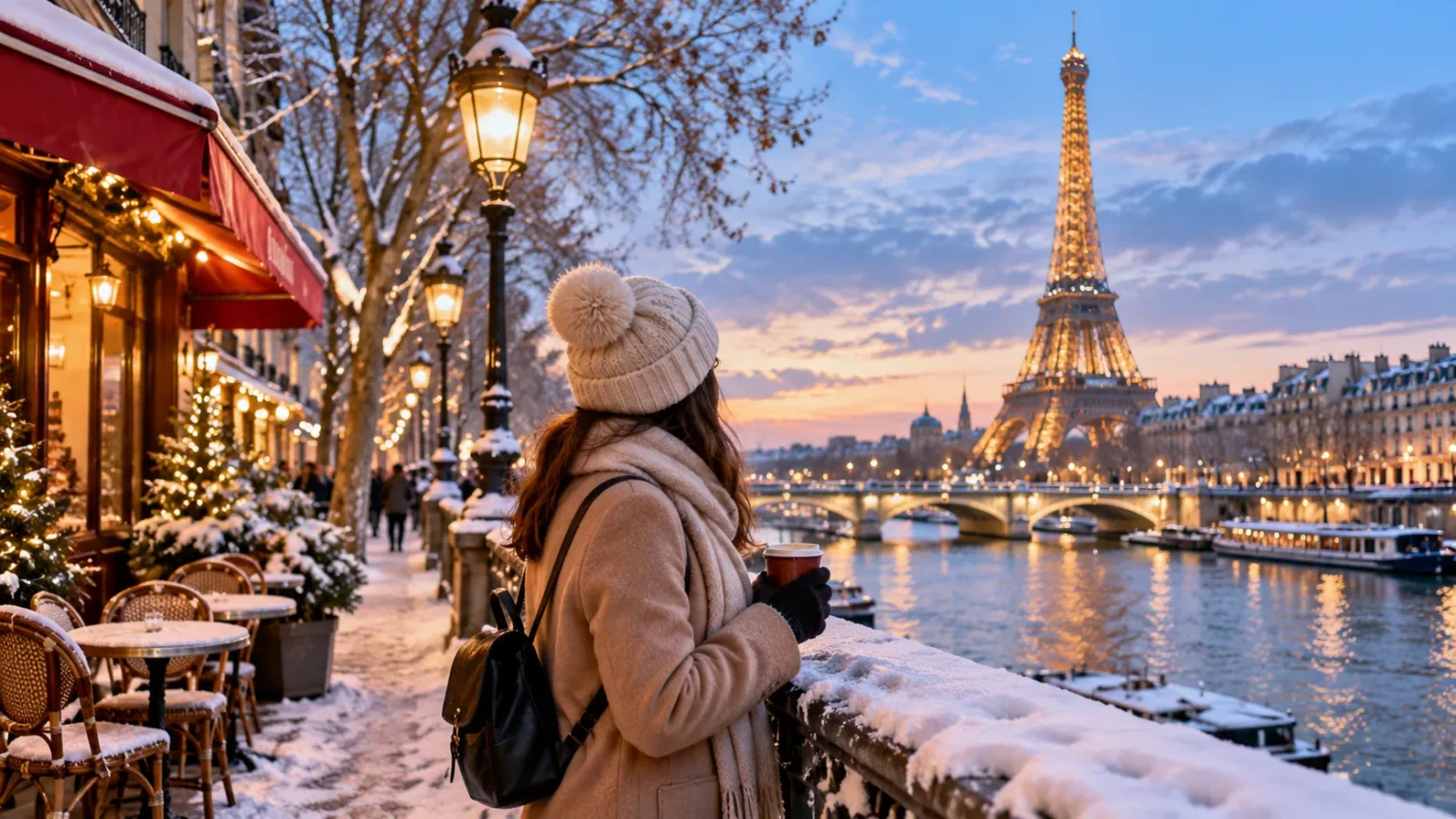
Paris becomes visually striking in winter because the colder season changes both the light and the rhythm of the city. Pale skies, bare branches, stone buildings, and glowing street lamps create scenes that feel dramatically different from summertime Paris. The Seine can appear especially atmospheric on misty mornings, while bridges and historic façades stand out more clearly without dense foliage. Sunset arrives earlier, allowing visitors to enjoy illuminated monuments without staying outside until very late at night. That makes evening photography and nighttime sightseeing easier to include in a normal day. Even cloudy weather can enhance the muted, cinematic look that many travelers associate with romantic winter Paris.
December adds another layer of atmosphere because streets, shopping districts, hotels, department stores, and public spaces embrace the year-end holiday season. Illuminated avenues and decorated storefronts make evening walks an attraction rather than simply a way to move between places. Large department stores traditionally create elaborate window displays that draw both families and international visitors. Christmas markets add wooden stalls, seasonal snacks, gifts, hot drinks, and festive music to different areas around Paris and the wider metropolitan region. Decorations change from year to year, so repeat visitors can experience something slightly different each season. Travelers visiting after Christmas lose some festive displays but gain a calmer version of the city.
Winter also makes Parisian café culture feel particularly satisfying. Stepping into a warm café after walking through cold streets creates a contrast that is difficult to recreate during warmer months. Travelers can slow down over coffee, hot chocolate, pastries, onion soup, or a full lunch rather than feeling pressured to remain outside all day. Historic cafés can be destinations themselves, while small neighborhood establishments provide opportunities to experience ordinary local life. Window seats are especially appealing because visitors can watch the city without standing in the weather. Paris rewards this slower pace, and winter gives travelers a natural reason to stop, sit, observe, and enjoy food between major attractions.
Another advantage is the way winter encourages deeper cultural exploration. Paris has enough museums, galleries, churches, covered passages, bookstores, culinary experiences, and performance spaces to fill several rainy days without feeling like a backup plan. A cold afternoon inside the Louvre or Musée d’Orsay can feel perfectly suited to the season rather than like time taken away from outdoor sightseeing. Smaller museums can be even more rewarding because travelers have time to explore beyond the biggest attractions. Winter therefore works especially well for people interested in art, history, fashion, architecture, food, and literature. The weather pushes visitors toward exactly the indoor experiences that make Paris culturally distinctive.
Finally, winter can make the city feel more personal outside the busiest holiday periods. Paris is never truly empty, and world-famous attractions can remain busy throughout the year, but January and parts of February often feel less intense than peak summer. Walking through residential streets, browsing shops, or stopping at neighborhood markets can feel less rushed when fewer vacation crowds dominate the sidewalks. Visitors may also find it easier to spend time appreciating architecture instead of moving constantly between photo spots. This does not mean every attraction will be quiet. It means winter can create more opportunities for unhurried moments between the major sights that define a Paris trip.
Paris Winter Weather: What to Expect From December to February
Paris winters are generally cold, damp, and changeable rather than consistently snowy or severely freezing. Daytime temperatures often remain in the single digits Celsius during the coldest parts of the season, while nights can approach freezing. Travelers from very cold climates may find Paris relatively mild, but visitors accustomed to warm weather can find the combination of low temperatures, wind, humidity, and long outdoor walks surprisingly uncomfortable. Rain is possible throughout winter and can arrive as drizzle rather than dramatic storms. Cloudy skies are common, so a trip should not depend on perfect sunshine. Dressing for damp cold usually matters more than preparing for deep snow.
December combines winter weather with some of the shortest daylight hours of the year. Mornings can remain dim relatively late, and darkness arrives early enough that outdoor sightseeing needs a little more planning. This can actually work well for travelers who want to see holiday lights because illuminated streets become enjoyable much earlier in the evening. December can also feel busier around Christmas and New Year’s celebrations, particularly in shopping districts and around major attractions. Temperatures are chilly enough to require a proper coat, but extreme cold is not an everyday expectation. Rainproof layers are especially valuable because a wet coat or soaked shoes can make moderate temperatures feel much colder.
January is often one of the best months for travelers who prioritize museums, food, and a quieter atmosphere. Holiday decorations gradually disappear, and the city moves into a more ordinary winter rhythm. Cold weather can continue, with gray days and occasional freezing conditions, but indoor attractions make it easy to build a comfortable itinerary. January is also associated with winter sales in France, making it interesting for visitors who enjoy fashion and shopping. Crowds at individual attractions can still vary significantly by day and exhibition. Booking major museums in advance remains sensible even during lower-demand months because reduced seasonal crowds do not guarantee immediate entry everywhere.
February begins to hint at the transition toward spring, although travelers should still prepare for genuine winter conditions. Days gradually become longer, creating more useful sightseeing time before sunset. Cold rain and gray skies remain possible, and short periods of freezing weather can still occur. Valentine’s Day also brings extra interest in Paris as a romantic destination, so couples should not assume February is uniformly quiet. Restaurant reservations can become important around popular dates and weekends. By late February, occasional brighter days can make outdoor walks particularly enjoyable, but packing decisions should still be based on winter rather than early spring expectations.
Snow receives a lot of attention in photographs because Paris looks extraordinary under a white covering, yet substantial snowfall is not reliable enough to plan a trip around. Light snow or flurries may occur, and occasionally a stronger event temporarily transforms landmarks and parks. When that happens, transportation and attraction operations can be affected because the city does not experience heavy snow as routinely as colder European destinations. Visitors should treat snowfall as an unusual visual bonus rather than an essential part of a Paris winter vacation. Waterproof walking shoes, an insulated coat, gloves, a scarf, and adaptable layers will be useful far more often. Weather forecasts should be checked shortly before departure because conditions can change considerably from week to week.
Best Things to Do in Paris in Winter
The Eiffel Tower remains an essential winter experience because colder conditions change both the views and the atmosphere around the monument. Clear winter days can provide excellent visibility from observation levels, while cloudy evenings create dramatic views of the illuminated city. Arriving with warm layers is important because exposed platforms can feel colder and windier than streets at ground level. Visitors who prefer not to spend long periods outside can admire the tower from nearby viewpoints before moving into a warm restaurant, museum, or café. Evening visits are particularly appealing because darkness arrives early. Booking ahead can save time when demand is strong, especially around holidays and weekends.
Walking along the Seine is another simple activity that takes on a distinctive character in winter. Start near one of the central bridges and move between river views, monuments, bookstalls, historic buildings, and small streets on either bank. A river cruise offers a warmer alternative when cold wind makes a long walk uncomfortable, while still providing views of many major landmarks. Cruises can be especially attractive after sunset when monuments are illuminated. Travelers should avoid trying to cover the entire riverfront in one freezing session. Breaking walks into shorter sections with indoor stops makes winter sightseeing much more comfortable and allows more time to appreciate each neighborhood.
Montmartre is particularly atmospheric during the colder months because its steep streets, old buildings, staircases, cafés, and views feel almost theatrical under winter skies. Begin around the lower streets and gradually work toward Sacré-Cœur instead of rushing directly to the basilica. Early morning can be useful for quieter photographs, while evening brings warm restaurant lighting and a more energetic neighborhood mood. Hills and stone surfaces can become slippery when wet or icy, so footwear with reliable grip matters. Travelers interested in art history can combine the walk with smaller museums or studios nearby. Montmartre works best when treated as a neighborhood to wander through rather than only a viewpoint to photograph.
Notre-Dame and the historic core of Paris also deserve dedicated winter time. Exploring Île de la Cité and the surrounding Latin Quarter allows visitors to combine major architecture with bookstores, churches, cafés, and riverside views in a relatively compact area. Because distances are manageable, the neighborhood works well when the weather is uncertain and frequent indoor stops are necessary. Crossing into the Latin Quarter opens opportunities for lunch, pastries, old streets, and educational institutions with centuries of history. Winter makes the stone architecture particularly striking in low light. A flexible half-day here can include both sightseeing and slower exploration without requiring complicated transportation between distant parts of the city.
Winter is also an ideal season for simply wandering through central Paris after dark. Place Vendôme, the Opéra district, Saint-Germain-des-Prés, the Marais, and elegant streets near major department stores all offer different versions of nighttime Paris. During the holiday period, seasonal lights make these walks more elaborate, while January and February emphasize architecture and street life instead. Rather than trying to visit every illuminated location, choose one district and explore it properly. Stop for dessert, wine, coffee, or dinner when the temperature becomes uncomfortable. Paris is especially rewarding when the evening itself becomes part of the sightseeing plan rather than merely the time between daytime attractions and sleep.
Museums and Indoor Experiences for Cold or Rainy Days
The Louvre is the obvious place to begin an indoor winter itinerary because its enormous collection can occupy far more time than most visitors realistically have. Trying to see everything usually leads to fatigue, so selecting several departments or major works before arriving produces a better experience. Winter weather makes spending three or four hours inside feel natural, especially when outdoor conditions are wet or windy. Timed entry is useful during popular periods because the Louvre attracts visitors year-round. Travelers should also check holiday closures and changing opening hours before building an itinerary around a specific day. A focused museum visit followed by a nearby café is often more enjoyable than attempting a marathon tour.
The Musée d’Orsay offers a different experience and is particularly appealing to travelers interested in nineteenth-century and early twentieth-century art. Its former railway-station architecture adds another dimension beyond the collection itself, making the building worth appreciating along with the paintings and sculptures. Many visitors find its scale more manageable than the Louvre, allowing a satisfying visit without spending most of the day indoors. Winter is ideal for lingering in galleries instead of rushing through them to return outside. Late-opening evenings, when available, can also fit well into short-day itineraries. Always confirm the current schedule because museum hours and holiday arrangements can change.
Smaller museums are one of the strongest reasons to visit Paris during winter. Depending on personal interests, travelers can explore art, decorative arts, fashion, sculpture, photography, science, architecture, literature, or the lives of individual artists. Smaller institutions often require less time and can be paired with nearby neighborhood exploration. This approach is particularly useful when weather changes suddenly because visitors can move between indoor and outdoor stops without committing an entire day to one attraction. Temporary exhibitions also give winter visitors reasons to return to museums they may have seen before. Checking exhibition calendars before the trip can help identify experiences available only during a specific season.
Covered passages provide a different type of indoor experience that still feels connected to the streets of Paris. These historic arcades contain combinations of shops, bookstores, cafés, restaurants, decorative architecture, and old-fashioned storefronts under glass roofs. They are particularly enjoyable during light rain because visitors can continue exploring without fully retreating into a large museum. Passages around central Paris can be connected into a leisurely walk with breaks for food and browsing. They also offer interesting photography opportunities when natural winter light filters through the roofs. Travelers interested in architecture and everyday urban history may find them more memorable than another checklist attraction.
Paris also has countless ways to spend winter evenings indoors. Theater, classical music, opera, cabaret, cinema, cooking classes, wine tastings, pastry workshops, and food tours all provide alternatives to standing outside after sunset. Some experiences require advance booking, particularly around holidays and weekends, while others can be chosen more spontaneously. Cultural performances can make a winter trip feel more complete because they reveal Paris as a living city rather than a collection of monuments. Even a simple evening meal in a traditional bistro can become an event when the weather encourages a long, relaxed dinner. Building at least one memorable indoor evening into the itinerary makes cold weather feel intentional rather than inconvenient.
Christmas Lights, Markets, and Festive Paris
Paris during the Christmas season is especially attractive after sunset, when seasonal illumination turns familiar streets into destinations of their own. The Champs-Élysées is traditionally one of the most recognizable places for festive lights, while luxury shopping streets and major squares create their own decorative displays. Because darkness falls relatively early, travelers can enjoy the illuminations before dinner instead of waiting until late evening. Holiday displays generally begin during November and continue through part of the Christmas and New Year period, although exact schedules vary annually. Checking current dates before travel is important. Walking is often the best way to appreciate the atmosphere because details can be missed from a vehicle.
Department stores are another major part of Christmas in Paris. Large stores around the Opéra and Haussmann area traditionally decorate their façades, interiors, and windows with elaborate seasonal themes. These displays attract local families as well as tourists, which can create significant crowds at popular times. Visiting on a weekday morning may provide a calmer experience than arriving during a weekend evening. Travelers interested in shopping can combine the displays with French fashion, cosmetics, food halls, and gifts. Even visitors who do not plan to buy anything may enjoy the architecture and festive design. Rooftop or upper-level viewpoints, where accessible, can add another perspective over winter Paris.
Christmas markets appear in different parts of Paris and the surrounding region, offering seasonal food, crafts, gifts, hot drinks, and temporary entertainment. The exact markets and dates change, so travelers should verify what is operating during their visit rather than relying on an old travel article. Some markets are large and heavily tourist-oriented, while others emphasize local makers, regional food, or neighborhood celebrations. They are best treated as atmospheric stops rather than the only reason for visiting Paris in December. Try a snack, browse the stalls, and combine the market with nearby sights. Evening visits can feel especially festive, although larger markets can become crowded during weekends.
Seasonal light installations also extend beyond conventional street decorations. Parks, gardens, and cultural venues sometimes host ticketed nighttime trails featuring illuminated sculptures, projections, lanterns, music, or themed installations. These experiences can work well for families and travelers who want something different after several days of traditional sightseeing. Because themes, locations, and operating dates change each year, advance research is especially useful. Tickets may sell out for popular evening slots close to Christmas. Visitors should also remember that these attractions still involve substantial outdoor time. Warm socks, gloves, and waterproof shoes can make the difference between enjoying the display and spending the entire evening thinking about the cold.
Travelers visiting Paris after the festive season should not assume winter loses its charm once decorations disappear. January has a cleaner, quieter character, with museums, cafés, shopping, food, and architecture becoming the main focus again. February offers longer daylight and the possibility of more comfortable walking days while still maintaining a distinctly winter atmosphere. Prices and crowds may also shift after the year-end holiday rush, although savings vary by date and demand. This makes the best winter month highly dependent on priorities. Choose December for festive energy, January for cultural depth and a slower rhythm, or February for gradually lengthening days and a romantic late-winter trip.
Best Paris Neighborhoods to Explore in Winter
Saint-Germain-des-Prés is an excellent winter neighborhood because cafés, bookstores, galleries, churches, shops, and historic streets sit close together. Travelers can walk for twenty minutes, warm up indoors, and then continue without crossing the entire city. The neighborhood’s literary and artistic associations add interest even when the weather is poor. A long café stop feels especially appropriate here because café culture is part of the area’s identity rather than merely a convenience. Nearby streets lead easily toward the Seine, Luxembourg Gardens, and the Latin Quarter. Winter turns this part of the Left Bank into a good balance of outdoor atmosphere and indoor comfort.
The Marais offers another compact area suited to winter exploration. Historic mansions, narrow streets, boutiques, bakeries, museums, galleries, and restaurants create plenty of options when rain interrupts a walk. Place des Vosges remains beautiful in colder months even when trees are bare, while covered shops and cultural spaces provide convenient escapes from bad weather. The neighborhood is also appealing for travelers interested in fashion, design, Jewish heritage, and contemporary food. Because the Marais is popular throughout the year, it should not be expected to feel empty. However, exploring early in the day can reveal a quieter side before shopping and dining areas become busier.
Montmartre offers the strongest village-like atmosphere among Paris’s famous neighborhoods, particularly away from its busiest central streets. Winter emphasizes the area’s steep lanes, residential buildings, small squares, and dramatic city views. Visitors should look beyond Sacré-Cœur by wandering toward quieter streets and cafés where the neighborhood feels less like a sightseeing corridor. The cold season can also be a good time to explore local museums because they add historical context to the area’s artistic reputation. Avoid rushing through the neighborhood simply to capture one photograph from the hill. A slow winter morning or afternoon reveals far more of what makes Montmartre memorable.
The Latin Quarter works especially well for travelers who enjoy history, books, churches, student life, and traditional streets. Its central location means visitors can combine it with Notre-Dame, Île de la Cité, Saint-Germain, or the Seine without spending much of the day underground on transportation. Bookshops and cafés provide obvious warm stops during rainy periods. The area’s dense street network is also enjoyable for unstructured exploration, allowing travelers to turn down smaller lanes instead of following only major roads. Winter suits this style because there is less pressure to chase gardens and outdoor viewpoints all day. A good meal here can easily become the centerpiece of a cold afternoon.
Canal Saint-Martin and other less monument-heavy neighborhoods appeal to travelers who want a more everyday version of winter Paris. Cafés, independent shops, bakeries, bars, and residential streets provide a contrast with the heavily visited historic center. Cold weather can make canal-side walking less attractive for long periods, but short walks combined with indoor stops remain enjoyable. These neighborhoods are particularly useful on longer trips when travelers have already seen the major landmarks. They provide space to observe how Parisians actually use their city during winter. Mixing one local neighborhood day with several classic sightseeing days can make the trip feel more balanced and less checklist-driven.
Winter Food, Cafés, Shopping, and Romantic Experiences
Winter is one of the best seasons to focus on French comfort food because cold weather makes rich dishes feel particularly satisfying. Traditional bistros may offer warming soups, slow-cooked meats, gratins, regional cheeses, and seasonal desserts alongside familiar Parisian classics. Travelers do not need to pursue famous restaurants at every meal to eat well. Neighborhood establishments, bakeries, food halls, and markets can create a varied culinary itinerary without requiring elaborate planning. Lunch can also become a strategic break from the cold during the middle of the day. Reserving a little more time for meals is worthwhile because winter Paris is better enjoyed slowly than through constant movement between attractions.
Hot chocolate is practically a winter sightseeing category of its own for many visitors. Paris has long-established cafés and pastry shops where thick, rich hot chocolate can serve as a reward after hours outside. Coffee, tea, vin chaud during the festive season, and warm pastries offer other options depending on taste. Rather than planning every café from a viral list, choose a few known places and leave room for spontaneous stops. Some of the most memorable winter moments come from entering a café simply because the windows look inviting. Good travel planning creates structure, but Paris benefits from leaving enough empty time for curiosity.
Winter shopping can range from luxury fashion to small independent boutiques and food gifts. December emphasizes Christmas shopping and decorated retail districts, while January traditionally brings winter sales that attract both locals and visitors. Department stores provide a convenient indoor option on rainy days because travelers can shop, eat, and admire architecture without changing locations. Smaller neighborhood boutiques offer a more personal experience and can be combined with walks through the Marais or Saint-Germain. Visitors interested in souvenirs may prefer food, stationery, books, fragrance, or locally designed objects over generic landmark merchandise. Winter allows shopping to become part of the cultural experience rather than just a rainy-day backup.
Paris also lives up to its romantic reputation particularly well in winter, although romance does not require an expensive itinerary. Walking beside the Seine after sunset, sharing dessert in a small restaurant, browsing a bookstore, taking an evening cruise, or watching the city lights from a viewpoint can feel more memorable than a heavily staged activity. Couples visiting around Valentine’s Day should make dinner reservations because demand can increase at popular restaurants. Cold weather also encourages slower evenings rather than exhausting full-day sightseeing schedules. The best romantic experiences often combine atmosphere, good timing, and privacy. Winter’s early darkness makes those moments easier to create throughout the season.
Solo travelers can enjoy the same qualities without feeling that winter Paris belongs only to couples. Museums, cafés, bookstores, photography walks, markets, concerts, and pastry shops are naturally comfortable solo activities. Sitting alone in a café is normal and can provide a welcome break from navigating the city. Winter can actually suit solo travel particularly well because indoor cultural experiences require less coordination than summer picnics or group-oriented outdoor plans. Choosing a centrally connected neighborhood makes evenings easier when darkness arrives early. A winter trip can therefore feel reflective and independent rather than lonely, especially for travelers who enjoy art, food, literature, and urban wandering.
What to Pack and Practical Tips for Visiting Paris in Winter
A warm waterproof or water-resistant coat should form the foundation of a Paris winter packing list. The ideal coat blocks wind, handles light rain, and leaves enough room underneath for several layers. Sweaters and thermal base layers provide flexibility because indoor spaces such as museums, stores, trains, and restaurants can feel much warmer than the street. A scarf is especially valuable because cold wind around the neck can make outdoor sightseeing uncomfortable very quickly. Gloves and a warm hat are useful during colder spells and evening walks. Packing for layers is more practical than bringing one extremely bulky garment that becomes uncomfortable indoors.
Footwear may be even more important than the coat because Paris trips usually involve extensive walking. Choose comfortable shoes or boots with water resistance, cushioning, and dependable traction on wet pavement. Brand-new fashionable boots can become painful after several kilometers, so footwear should be broken in before travel. Thick socks can provide additional warmth, but shoes still need enough space to remain comfortable. Carrying a second pair is helpful when one pair becomes wet. Winter Paris is not the ideal time to prioritize appearance over walking comfort because cold, damp feet can shorten sightseeing days faster than almost any other packing mistake.
An umbrella can be helpful, although wind sometimes makes a hooded jacket more convenient. A small crossbody bag or secure backpack works well for carrying gloves, an extra layer, water, and other essentials when moving between indoor and outdoor environments. A portable phone battery is particularly useful because cold temperatures and heavy use of maps, photography, tickets, and transportation apps can drain batteries quickly. Travelers should also save important reservations and directions offline in case mobile connectivity becomes unreliable. Winter days require slightly more logistical preparation than mild-weather sightseeing. Small practical choices reduce the amount of time spent dealing with preventable discomfort.
Itinerary design matters as much as clothing. Avoid scheduling several outdoor landmarks back-to-back on the same morning when rain is forecast. Instead, alternate outdoor walks with museums, churches, cafés, shops, and meals so there is always somewhere to warm up. Keep one or two flexible indoor options available for severe weather rather than locking every hour into a rigid plan. Because daylight is limited, prioritize parks, panoramic viewpoints, and neighborhood photography earlier in the day. Indoor attractions can then fill late afternoon and evening. A flexible winter itinerary often produces a better trip than an ambitious schedule designed as though every day will be sunny.
Finally, confirm opening hours whenever traveling over Christmas, New Year’s Day, or other holiday periods. Museums, restaurants, shops, markets, transportation services, and attractions may operate reduced schedules or close completely on particular dates. Popular restaurants can also fill earlier during festive periods, making reservations more important than during an ordinary January weekday. Keep digital tickets organized and allow extra time for security lines at major attractions. Most importantly, do not treat winter weather as an obstacle that needs to be defeated. Plan around it, use indoor culture strategically, and allow the slower seasonal rhythm to shape the trip rather than trying to recreate a summer itinerary in colder temperatures.
Frequently Asked Questions About Paris in Winter
Is Paris worth visiting in winter?
Yes, Paris is especially rewarding in winter for travelers interested in museums, cafés, food, architecture, festive lights, shopping, and a slower atmosphere. Cold and rainy weather is the main tradeoff, so good clothing and a flexible itinerary make a major difference.
Does it snow in Paris during winter?
Snow can fall in Paris, but significant or lasting snowfall is not guaranteed and should not be expected throughout a winter trip. Cold rain, clouds, damp conditions, and occasional freezing weather are generally more useful conditions to pack for.
What is the best winter month to visit Paris?
December is best for Christmas lights and festive atmosphere, January often suits travelers seeking a quieter cultural trip, and February offers gradually longer days. The best choice depends on whether your priority is holiday magic, lower-season sightseeing, shopping, or romance.
What should I wear in Paris in winter?
Wear layers under a warm water-resistant coat and bring comfortable waterproof footwear, a scarf, gloves, and a hat. Since museums and restaurants can be warm inside, removable layers are much more convenient than relying on one very heavy outfit.
Are Paris attractions open during winter?
Most major Paris attractions continue operating during winter, but weekly closing days and holiday schedules still apply. Christmas Day, New Year’s Day, and other special dates can affect opening hours, so always verify the individual attraction before visiting.