




Understanding the Italy Map
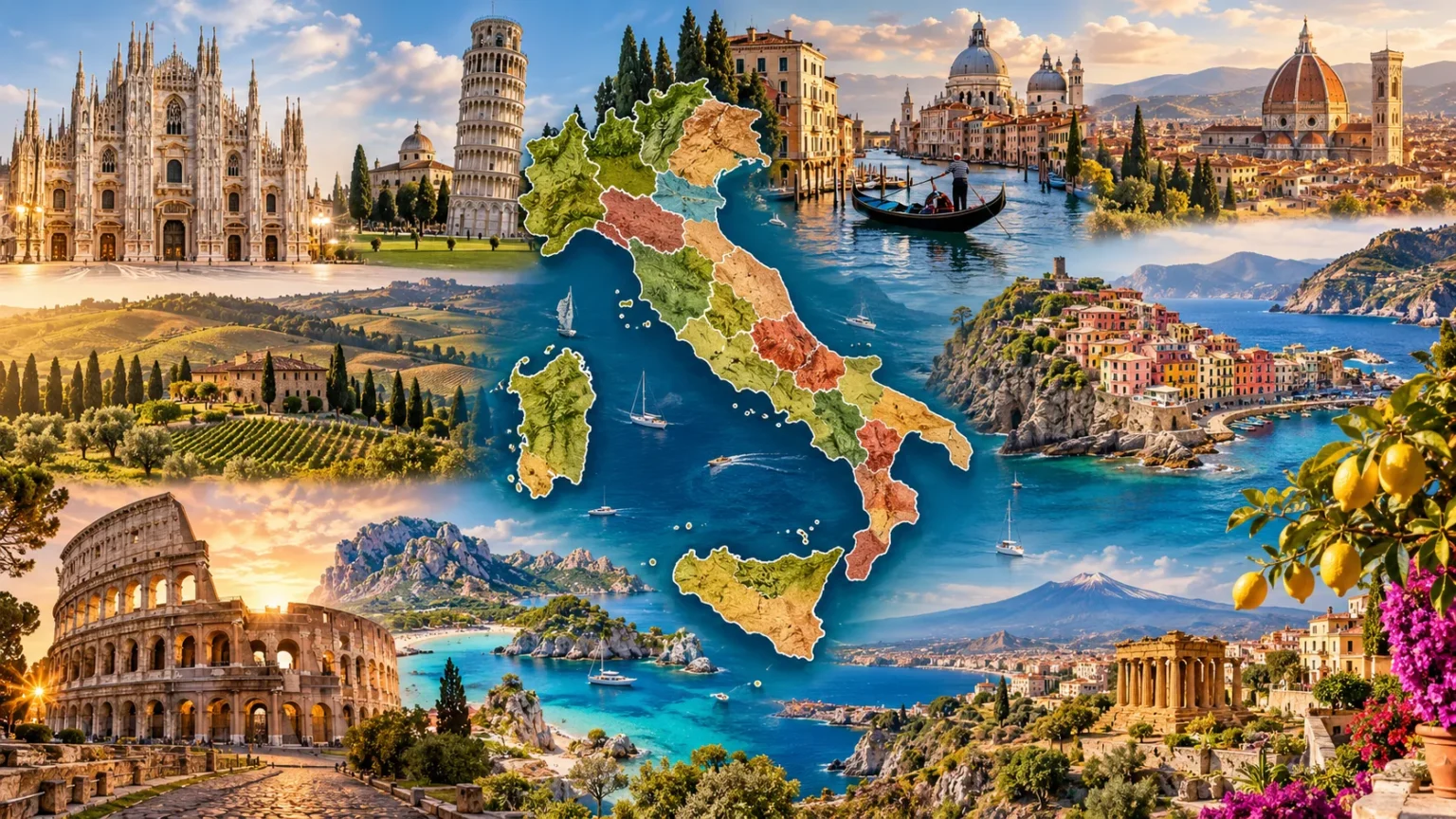
An Italy map is useful for understanding how the country’s famous cities, regions, mountains, islands, and coastlines fit together. Italy stretches from the Alps in the north deep into the Mediterranean, creating its distinctive boot-shaped peninsula. Because the country is long and geographically varied, looking at the map before planning a trip can make transportation and itinerary decisions much easier.
Italy is divided into 20 regions, and each has its own character, landscapes, traditions, cuisine, and important cities. Lombardy, Veneto, Tuscany, Lazio, Campania, Sicily, and Sardinia are among the regions travelers often recognize first. Knowing these regional boundaries helps explain why food, architecture, scenery, and even local customs can change noticeably as you travel across the country.
The map also shows why some Italian destinations work naturally together during one trip while others require longer transfers. Rome and Florence are relatively convenient to combine, while adding Sicily or Sardinia requires considerably more travel planning. Instead of choosing attractions randomly, travelers can use Italy’s geography to create routes that minimize unnecessary transport and leave more time for sightseeing.
Northern Italy: Mountains, Lakes and Famous Cities
Northern Italy stretches from the Alpine borders down toward the broad plains surrounding major cities such as Milan, Turin, Bologna, Verona, and Venice. This part of the Italy map includes dramatic mountain scenery, internationally known lakes, historic urban centers, and important transport connections. Travelers can experience luxury shopping, medieval architecture, skiing, hiking, lakeside villages, and world-famous art within the same broader region.
The Italian Alps and Dolomites dominate much of the far north, creating some of Europe’s most impressive mountain landscapes. Visitors come for skiing during winter and hiking, cycling, climbing, and scenic drives during warmer months. Mountain towns and villages offer a quieter experience than Italy’s largest cities, making northern regions appealing to travelers who want to combine cultural sightseeing with outdoor adventure.
Northern Italy is also home to famous lakes including Lake Como, Lake Garda, and Lake Maggiore. These destinations are known for mountain backdrops, waterfront promenades, villas, gardens, and picturesque communities. Because Milan, Verona, Venice, and several lake regions are relatively well connected, travelers can build a varied northern Italy itinerary without needing to cross the entire country.
Central Italy: Art, History and Rolling Countryside
Central Italy contains some of the country’s most recognizable cultural landscapes and historic cities. Tuscany, Lazio, Umbria, and Marche occupy much of this central area, with Rome and Florence serving as major travel highlights. Between the larger cities are rolling hills, vineyards, medieval villages, rural estates, historic roads, and smaller towns that provide a slower alternative to urban sightseeing.
Tuscany is particularly famous for its combination of Renaissance art, countryside scenery, historic towns, and regional food. Florence attracts visitors with museums, churches, bridges, architecture, and artistic heritage, while Siena, Pisa, Lucca, and numerous smaller communities offer different experiences. Driving or taking local transport beyond Florence allows travelers to appreciate why central Italy is as famous for landscapes as it is for cities.
Lazio contains Rome but offers much more beyond Italy’s capital. Lakes, archaeological areas, historic towns, countryside landscapes, and coastal destinations provide opportunities to extend a Rome-focused holiday. Neighboring Umbria is particularly attractive for travelers looking for hill towns, churches, green countryside, traditional food, and an atmosphere that often feels quieter than Italy’s most heavily visited tourist routes.
Southern Italy: Coastlines, Historic Towns and Local Character
Southern Italy begins to feel noticeably different from northern and central regions in both landscape and atmosphere. Campania, Puglia, Basilicata, Calabria, and other southern areas offer Mediterranean coastlines, ancient archaeological sites, dramatic villages, traditional towns, and distinctive regional cuisines. Travelers who move beyond Rome into the south can experience another side of Italy that combines history with relaxed coastal culture.
Naples is one of southern Italy’s most important cities and a practical starting point for exploring Campania. From the city, travelers can reach Pompeii, Mount Vesuvius, coastal towns, islands, and the Amalfi Coast. Naples itself rewards exploration with historic streets, churches, lively neighborhoods, waterfront views, and a food culture strongly associated with traditional Neapolitan pizza.
Farther east, Puglia forms the heel of Italy’s boot and provides a different coastal experience. Whitewashed towns, olive groves, beaches, historic architecture, and distinctive stone houses create memorable scenery across the region. Calabria occupies the toe of the peninsula and attracts travelers interested in beaches, mountainous landscapes, traditional communities, and destinations that can feel less crowded than Italy’s most famous tourist centers.
Sicily and Sardinia: Italy’s Major Islands
Sicily sits just beyond the southern tip of the Italian mainland and is the largest island associated with Italy. Its position on the Italy map reflects centuries of Mediterranean cultural influences, which can be seen in architecture, archaeological sites, food, and local traditions. Palermo, Catania, Taormina, Syracuse, and other destinations give travelers several very different bases for exploring the island.
Mount Etna provides one of Sicily’s most dramatic natural attractions, while ancient Greek and Roman sites reveal the island’s long history. Coastal towns, beaches, markets, baroque cities, and rural landscapes add considerable variety. Because Sicily is large, visitors should avoid treating it as one quick stop and instead choose specific sections based on their available time and interests.
Sardinia lies west of the Italian mainland and is especially known for striking coastlines, clear water, beaches, rugged landscapes, and archaeological heritage. Cagliari provides an urban gateway, while coastal areas offer opportunities for swimming, boating, hiking, and relaxing beside the Mediterranean. Renting a car can be particularly useful for travelers wanting to reach smaller beaches and inland communities beyond the main resort areas.
Rome and Lazio: Ancient Italy at the Center of the Map
Rome occupies a central position on many Italy travel itineraries because of its history, transport connections, and extraordinary concentration of landmarks. The Colosseum, Roman Forum, Pantheon, Trevi Fountain, historic squares, churches, and archaeological remains can fill several days of sightseeing. Walking through Rome often feels like moving between different historical periods within the space of a few streets.
The city should not be approached only as a collection of famous attractions. Neighborhoods, cafés, traditional restaurants, public squares, fountains, local markets, and evening walks provide much of Rome’s atmosphere. Allowing unscheduled time between major sights makes it easier to discover smaller churches, unexpected ruins, attractive streets, and quieter corners away from heavily visited areas.
Rome’s location also makes it useful within a broader Italian route. Travelers can continue north toward Florence and Tuscany or travel south toward Naples and Campania without complicated connections. Using Rome as part of a north-to-south itinerary is often more efficient than repeatedly returning to the same city after visiting destinations located in completely different directions.
Tuscany: Florence, Pisa, Siena and Scenic Villages
Tuscany occupies one of the most recognizable areas on an Italy tourism map because it combines famous cities with countryside that has become symbolic of Italian travel. Florence is the cultural centerpiece, attracting visitors with Renaissance architecture, museums, churches, historic bridges, and panoramic viewpoints. Several days allow enough time to explore its main attractions while still enjoying markets, restaurants, and quieter streets.
Pisa is best known for its Leaning Tower, but the city can be combined easily with other Tuscan destinations. Siena offers a different atmosphere with medieval streets, historic squares, and distinctive architecture. Lucca, San Gimignano, and smaller hill towns provide additional possibilities for travelers interested in slower sightseeing rather than spending every day inside major urban centers.
The Tuscan countryside adds another dimension to the region. Vineyards, cypress-lined roads, hilltop villages, farms, and rolling landscapes make road trips particularly appealing. Travelers with a rental car can explore rural areas more freely, while those relying on public transport may prefer using Florence or another well-connected town as a base for organized day trips.
Veneto: Venice, Verona and the Dolomites
Veneto stretches from the Adriatic coast toward the mountains of northeastern Italy, giving the region remarkable geographic variety. Venice naturally receives most international attention because of its canals, bridges, historic palaces, squares, and extraordinary lagoon setting. Exploring early in the morning or later in the evening can reveal a calmer side of the city beyond its busiest sightseeing periods.
Verona provides another strong reason to explore Veneto. Its historic center contains Roman remains, attractive squares, bridges, churches, and atmospheric streets that work well for walking. Compared with Venice, Verona offers a more conventional city layout while still delivering impressive architecture, cultural attractions, restaurants, and convenient connections to other northern Italian destinations.
Travelers interested in nature can continue north toward the Dolomites. These dramatic mountain landscapes offer hiking, skiing, scenic drives, cable cars, lakes, and spectacular viewpoints. Combining Venice with mountain destinations illustrates how useful an Italy map can be, as remarkably different coastal, urban, and alpine experiences can exist within one relatively compact regional itinerary.
Lombardy: Milan, Lake Como and Northern Italy Highlights
Lombardy occupies a major section of northern Italy and includes Milan, one of the country’s largest and most influential cities. Milan attracts travelers with fashion, shopping, art, architecture, restaurants, and major cultural attractions. The striking cathedral at the heart of the city is a natural starting point, while surrounding neighborhoods offer everything from historic buildings to modern design districts.
Lake Como provides a dramatic contrast to Milan’s urban energy. Mountains rise around the lake while towns and villages line the shoreline, creating one of northern Italy’s most recognizable landscapes. Boat journeys are particularly useful because they allow visitors to experience several lakeside communities and appreciate the surrounding scenery without spending the entire day traveling by road.
Lombardy can also work well as the beginning or end of a wider Italian journey because Milan has extensive transport connections. Travelers might combine the city with Lake Como before continuing toward Verona and Venice or traveling south toward Bologna and Florence. Grouping nearby destinations together reduces transit time and makes a multi-city Italy vacation considerably easier to manage.
Campania: Naples, Pompeii and the Amalfi Coast
Campania is one of the most exciting regions on the southern Italy map, combining major archaeological attractions with coastal landscapes and energetic cities. Naples serves as the main urban center and offers historic neighborhoods, traditional food, waterfront scenery, churches, and museums. The city also provides convenient access to several famous destinations located around the Bay of Naples.
Pompeii is an essential stop for many history-focused visitors. The ancient city provides an unusually detailed view of Roman urban life through preserved streets, homes, public buildings, and archaeological remains. Nearby Mount Vesuvius adds geological interest, allowing travelers to connect the ruined city with the volcano whose eruption shaped one of the world’s best-known archaeological stories.
The Amalfi Coast brings another completely different experience to Campania. Cliffside towns, winding coastal roads, Mediterranean views, beaches, walking routes, and boat excursions attract visitors from around the world. Positano, Amalfi, and nearby communities can become crowded, so staying several nights rather than attempting a rushed day trip may provide a more enjoyable coastal experience.
Emilia-Romagna: Bologna, Food and Historic Cities
Emilia-Romagna stretches across northern Italy between the Apennines and the Adriatic, with Bologna serving as its regional capital. Bologna is known for long covered walkways, historic towers, lively squares, university traditions, and an influential culinary identity. Its location also makes it a useful stop between northern cities and destinations farther south such as Florence and Rome.
Food is one of the strongest reasons travelers explore this region. Parma, Modena, Bologna, and surrounding areas are closely associated with numerous famous Italian ingredients and traditional dishes. Rather than simply eating quickly between attractions, visitors can make food markets, traditional restaurants, producers, and regional specialties part of the sightseeing experience itself.
Emilia-Romagna also contains smaller historic cities that can be easier to explore than Italy’s busiest tourism centers. Ravenna, Parma, Ferrara, and Modena each provide distinctive architecture, cultural attractions, and local character. Travelers with additional time can also reach the Adriatic coastline, creating an itinerary that mixes food, history, urban exploration, and beach destinations.
How to Plan Your Trip Using an Italy Map
Start by marking the Italian cities and regions that matter most to you, then group destinations geographically. A first trip might combine Rome, Florence, and Venice, while another could focus entirely on Milan, the northern lakes, Verona, and the Dolomites. Travelers interested in southern Italy may prefer Naples, the Amalfi Coast, Puglia, or Sicily instead of forcing northern destinations into the same schedule.
Italy can also form part of a wider European journey. Before adding several countries, compare travel distances and identify which European destinations connect logically with your Italian route. Switzerland, France, Austria, and Slovenia can complement northern Italy particularly well, while flights may make more sense when combining Italy with destinations located farther across the continent.
Avoid changing hotels every night simply to add more points to your map. Two or three nights in major destinations usually create a more relaxed rhythm, while larger cities such as Rome can easily justify longer stays. Include transfer time when planning each day, especially when your itinerary involves islands, mountain regions, rural villages, ferries, or destinations that require several transport connections.
Conclusion
An Italy map reveals just how diverse the country becomes from north to south. Alpine peaks and famous lakes dominate sections of the north, art cities and rolling countryside characterize much of central Italy, while southern regions provide archaeological sites, Mediterranean coastlines, and distinctive communities. Sicily and Sardinia add even more landscapes, history, beaches, and regional traditions.
For first-time travelers, understanding where Italy’s regions and cities sit can make itinerary planning far easier. Rome, Florence, Venice, Milan, Naples, Bologna, Sicily, Tuscany, and the Amalfi Coast are not simply attractions on one compact route. Grouping destinations by geography can reduce travel time and give you more opportunities to experience each place properly.
Whether your ideal Italian trip focuses on art, ancient history, mountains, beaches, food, villages, islands, or famous cities, there is no single perfect route. Use the map to identify the experiences that matter most and connect them efficiently. A thoughtful itinerary with fewer well-chosen destinations can often be more memorable than attempting to cover the entire country at once.
FAQs
How many regions are there in Italy?
Italy has 20 regions spread across the northern, central, southern, and island areas of the country. Each region has its own major cities, landscapes, culinary traditions, cultural identity, and attractions worth exploring.
What are the main cities shown on an Italy map?
Major Italian cities commonly shown on travel maps include Rome, Milan, Naples, Turin, Florence, Venice, Bologna, Genoa, Palermo, and Cagliari. Smaller tourist cities such as Pisa, Verona, Siena, and Bari are also frequently included.
Which part of Italy is best for first-time visitors?
Many first-time travelers focus on Rome, Florence, and Venice because they combine ancient history, Renaissance art, iconic architecture, food, and convenient transport. Your best route ultimately depends on your interests and available travel time.
Where are Sicily and Sardinia on the Italy map?
Sicily lies just off the southern tip of Italy’s boot, separated from Calabria by the Strait of Messina. Sardinia is located farther west in the Mediterranean, below the French island of Corsica.
How many days should you spend traveling around Italy?
Around 10 to 14 days gives travelers enough time to explore several well-connected destinations without excessive rushing. For a three-week trip, you can comfortably add smaller towns, countryside regions, islands, or more of southern Italy.