





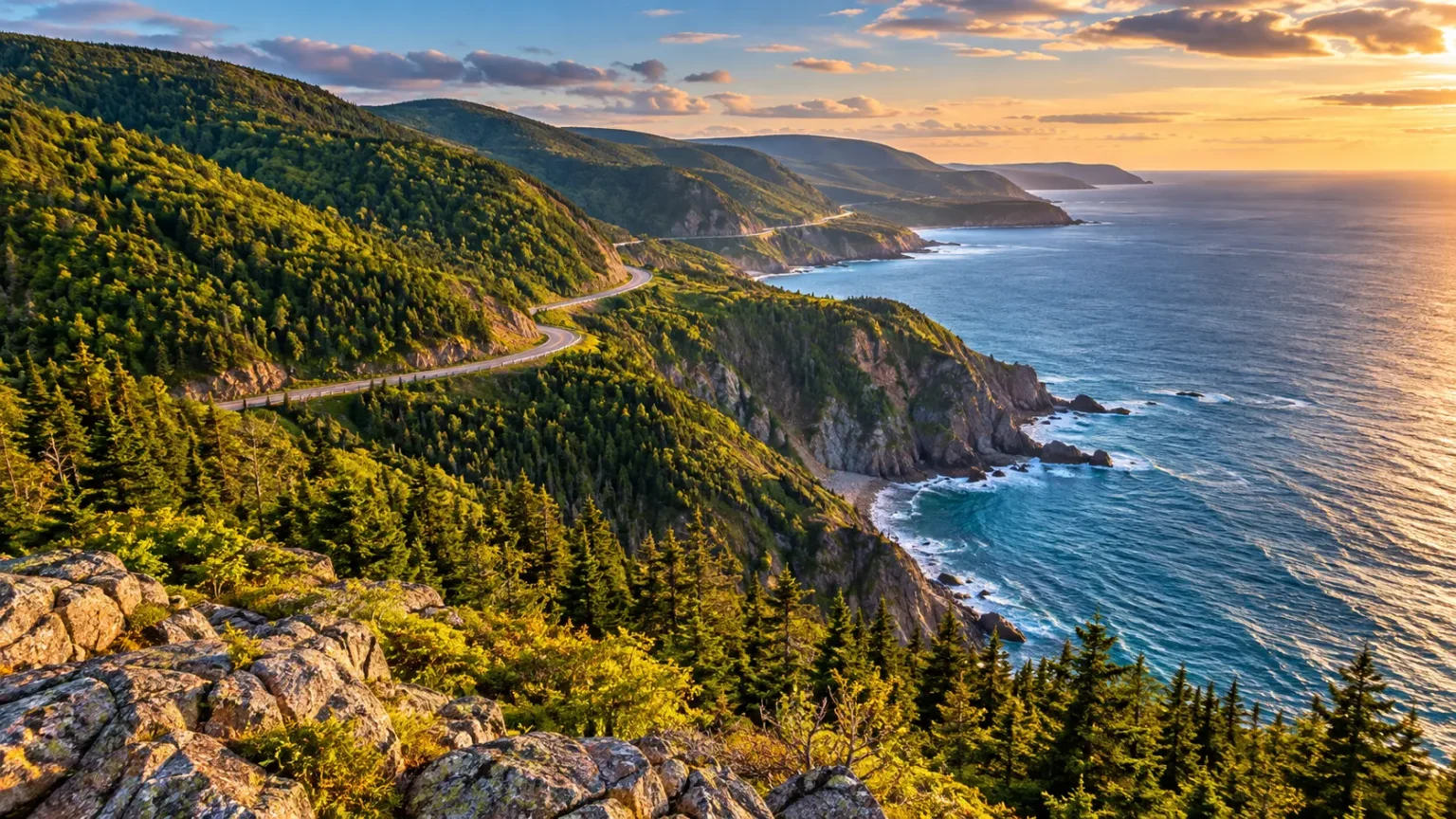
Cape Breton Highlands National Park is one of Canada’s most spectacular destinations for travelers who love dramatic coastlines, mountain scenery, hiking, wildlife, and scenic road trips. Located on northern Cape Breton Island in Nova Scotia, the park protects rugged highlands overlooking the Gulf of St. Lawrence and Atlantic Ocean. Its combination of forests, cliffs, valleys, beaches, and winding roads creates an unforgettable outdoor experience.
The famous Cabot Trail passes through the park, connecting viewpoints, hiking trails, beaches, campgrounds, and nearby coastal communities. Visitors can spend their days hiking above the ocean, watching sunsets from roadside overlooks, exploring waterfalls, or simply enjoying the changing landscape from the car. The area feels wild and remote while still offering accessible experiences for different types of travelers.
Whether you are planning a short road trip or several days of hiking and camping, thoughtful preparation can make your visit much more enjoyable. This Cape Breton Highlands National Park travel guide covers the best things to do, popular trails, wildlife, camping, seasonal conditions, scenic stops, and practical tips for experiencing one of Nova Scotia’s most beautiful natural areas.
Why Visit Cape Breton Highlands National Park?
Cape Breton Highlands National Park stands out because mountains rise dramatically beside the sea. Forested plateaus, deep river valleys, rocky headlands, waterfalls, and coastal cliffs create constantly changing scenery as you travel through the park. Even visitors who do very little hiking can experience impressive landscapes simply by driving the Cabot Trail and stopping at viewpoints along the route.
The park is equally rewarding for travelers who prefer active outdoor adventures. Hiking trails range from relatively gentle walks to challenging climbs that lead toward mountain ridges and elevated coastal viewpoints. Cycling, camping, wildlife watching, beach visits, photography, picnicking, and scenic driving provide additional ways to experience the landscape without following the same itinerary as every other traveler.
Another attraction is the park’s connection with the surrounding Cape Breton communities. Acadian and Mi’kmaq heritage, fishing traditions, local music, seafood, and small coastal villages add cultural depth to the natural scenery. Spending time both inside and outside the park helps visitors understand that Cape Breton is more than a collection of viewpoints along a famous road.
Drive the Famous Cabot Trail
The Cabot Trail is one of Canada’s most celebrated scenic drives and forms an essential part of a Cape Breton Highlands National Park visit. The road twists between forests, mountain slopes, valleys, and stretches of coastline, frequently revealing wide views over the ocean. Driving slowly allows you to appreciate the scenery rather than treating the route simply as transportation between attractions.
Several roadside viewpoints provide convenient opportunities to stop and photograph the landscape. Conditions can change quickly as the road rises into the highlands and then descends toward coastal communities. Fog, rain, wind, and bright sunshine may all appear during the same day, which gives the scenery a different personality depending on when you travel through each section.
Avoid trying to rush around the Cabot Trail in a single continuous drive if your schedule allows more time. Hiking trails, beaches, waterfalls, viewpoints, and villages deserve stops of their own. Dividing the route across two or more days creates a more relaxed experience and gives you flexibility when changing weather temporarily hides mountain or coastal views.
Hike the Skyline Trail
The Skyline Trail is one of the most recognizable hikes in Cape Breton Highlands National Park. It crosses an elevated landscape before reaching dramatic viewpoints over the Gulf of St. Lawrence and sections of the Cabot Trail. The combination of accessible terrain and impressive coastal scenery makes it especially popular with first-time visitors looking for a signature Cape Breton hiking experience.
At the viewpoints, the land appears to fall sharply toward the ocean, creating expansive views across the surrounding highlands and coastline. Clear weather can reveal distant headlands and open water, while clouds and mist create a completely different atmosphere. Sunset can be beautiful, although visitors should always allow enough time and preparation to return safely after enjoying the views.
Because the Skyline Trail is well known, it can attract substantial visitor numbers during popular travel periods. Starting earlier may provide a quieter experience and cooler walking conditions. Travelers should always follow posted instructions, remain on designated routes, respect wildlife, and check current access or reservation requirements before arriving because park procedures can change between seasons.
Discover More Hiking Trails
Although the Skyline Trail receives considerable attention, Cape Breton Highlands National Park offers many other rewarding hiking experiences. Trails lead through hardwood forests, along rivers, beside waterfalls, across headlands, and toward elevated viewpoints. Exploring more than one trail reveals how diverse the park can be rather than limiting your impression of Cape Breton to a single famous lookout.
The Franey Trail is popular with hikers seeking a more demanding climb and rewarding mountain scenery. From higher ground, visitors can experience broad views over the surrounding landscape and coastline. Other routes provide gentler alternatives through valleys and wooded areas, making it possible for travelers with different fitness levels and available time to find an appropriate hiking experience.
Choose trails based on distance, elevation, weather, and your actual hiking ability rather than photographs alone. Mountain terrain can feel considerably more demanding when trails are wet or temperatures change unexpectedly. Carrying water, suitable footwear, an extra layer, and basic supplies makes even shorter hikes more comfortable while allowing greater flexibility if conditions shift during the day.
Explore Beaches, Waterfalls, and Coastal Scenery
Cape Breton Highlands National Park is not only about mountains and hiking trails. Beaches provide another side of the park, with opportunities to walk along the shoreline, enjoy coastal views, and cool down during warmer weather. Some areas combine freshwater and ocean environments, while others provide long stretches of coastline framed by forested hills and rocky headlands.
Waterfalls and river valleys add further variety to the landscape. Shorter walks may lead through shaded forests toward flowing water, creating excellent options for travelers who want scenic experiences without completing a long mountain hike. After several hours of driving or climbing, these quieter natural areas can offer a relaxing change of pace during a busy sightseeing day.
Ocean conditions around Cape Breton can be colder and more powerful than visitors expect. Swimming areas should therefore be approached according to posted guidance and current conditions rather than appearances alone. Even if you do not plan to swim, beaches are worthwhile for photography, picnics, sunset watching, and experiencing the sound and scale of the Atlantic coastline.
Watch Wildlife Responsibly
Cape Breton Highlands National Park supports a variety of wildlife, and animal sightings can become memorable parts of a visit. Moose, deer, birds, and smaller mammals may appear beside roads or hiking routes. Marine wildlife can also sometimes be observed from coastal viewpoints, although sightings depend on location, season, weather, and simple good fortune.
Wildlife should always be viewed from a safe distance rather than approached for photographs. Feeding animals can change their behavior and create dangerous situations for both visitors and wildlife. Food, garbage, cooking supplies, and scented items should be managed carefully, particularly when camping, because improperly stored items can attract animals into areas regularly used by people.
Drivers should also remain alert because wildlife may cross roads unexpectedly, particularly around dawn, dusk, and quieter areas. Slowing down provides more reaction time and reduces risk to animals and passengers. Travelers should check current park wildlife guidance before hiking because temporary advisories or closures may be introduced when animal activity creates additional safety concerns.
Camping in Cape Breton Highlands National Park
Camping allows visitors to experience the park after daytime road-trip traffic begins to disappear. Evenings can become wonderfully peaceful, with forest sounds, cool mountain air, and opportunities to watch changing light across the landscape. Staying inside or close to the park also makes it easier to begin popular hikes early and explore scenic areas before the busiest part of the day.
Several camping environments are available around Cape Breton Highlands, ranging from developed campgrounds with useful facilities to quieter experiences surrounded by nature. The best location depends on whether you prefer easy access to beaches, hiking routes, visitor services, or specific sections of the Cabot Trail. Planning your route before selecting accommodation can reduce unnecessary driving each morning and evening.
Popular camping periods can become busy, particularly during summer and autumn foliage season. Reservations are therefore worth arranging early when possible, while travelers should confirm seasonal operating dates before depending on particular facilities. Even during warmer months, nights can feel cool, so appropriate sleeping equipment and layers remain important for a comfortable outdoor stay.
Best Time to Visit Cape Breton Highlands
Summer is one of the easiest seasons for exploring Cape Breton Highlands National Park because hiking, camping, scenic driving, and coastal activities are widely accessible. Longer daylight hours provide more flexibility for road trips and outdoor adventures. July and August are especially popular, however, so well-known trails, accommodations, campgrounds, and viewpoints can become busier during favorable weather.
Early autumn offers one of Cape Breton’s most visually impressive experiences. Hardwood forests change into shades of yellow, orange, and red, transforming the highlands and valleys along the Cabot Trail. Cooler temperatures can make hiking comfortable, but popular foliage periods attract travelers specifically for the scenery, so accommodation planning becomes particularly important.
Spring can feel quieter but conditions may remain cool, wet, or unpredictable, particularly at higher elevations. Winter creates dramatic landscapes but brings reduced services and more demanding driving and outdoor conditions. For most first-time visitors focused on hiking and sightseeing, summer through early autumn provides the broadest range of activities, although every season has a distinct character.
Find the Best Scenic Views and Photography Spots
Photography opportunities appear almost continuously along the Cabot Trail, making it tempting to stop every few minutes. Coastal overlooks provide wide compositions containing cliffs, roads, mountains, forests, and open water. Morning and evening light often creates greater depth across the landscape, while passing clouds can produce dramatic contrasts between illuminated hills and darker ocean sections.
Elevated trails provide different perspectives from roadside viewpoints. From places such as the Skyline and Franey areas, photographers can capture sweeping scenery that communicates the scale of the Cape Breton Highlands. Beaches and river valleys offer smaller details such as rocks, moving water, trees, and reflections, providing useful variety beyond repeated photographs of distant coastal panoramas.
Weather should be treated as part of the experience rather than simply an obstacle to photography. Fog can hide distant views but create atmospheric forest scenes, while rain may deepen the colors of vegetation. Keeping flexible plans allows you to revisit an important viewpoint later if conditions improve instead of becoming disappointed when one scheduled stop happens to be cloudy.
Plan a Cape Breton Highlands Road Trip
Two to three days provides a reasonable introduction for travelers who want to drive the park, complete several hikes, and enjoy scenic stops without excessive rushing. Longer stays allow more flexibility for weather, beach time, wildlife viewing, and exploring surrounding communities. Travelers planning demanding hikes should leave even more room so every day does not become a race against the clock.
Chéticamp on the western side and the Ingonish area on the eastern side make useful bases for exploring different sections of the park. Staying in more than one location can reduce repeated driving and let you experience both sides of Cape Breton’s coastline. Nearby communities also provide restaurants, accommodations, supplies, and cultural experiences that complement the national park.
Plan each day around a general region rather than repeatedly crossing the entire park. Combine nearby trails, beaches, lookouts, and meal stops while leaving space for unexpected viewpoints. Driving distances can feel longer than they appear because the Cabot Trail includes curves, elevation changes, scenic stops, and places where you will naturally want to slow down.
Practical Tips for a Safe and Enjoyable Visit
Bring clothing that can handle changing conditions, even when the forecast initially looks favorable. Coastal wind, mountain elevation, rain, and cooler evenings can create substantial temperature differences throughout the day. Comfortable hiking footwear, water, sun protection, insect protection, snacks, and extra layers provide a practical foundation for most hiking and sightseeing itineraries.
Cellular coverage can be inconsistent in remote and mountainous areas, so do not depend entirely on being connected throughout the trip. Downloading useful information or maps in advance can make navigation easier. Fill the fuel tank when opportunities are available and carry essential supplies because shops and services are more widely spaced than in a typical urban destination.
Before beginning a hike or long drive, check current weather, trail conditions, closures, and park notices. Stay on established trails, obey signs, and avoid unnecessary risks near cliffs or rough shorelines for photographs. A flexible itinerary is valuable in Cape Breton because weather and wildlife activity can change plans while still leaving many excellent alternative experiences nearby.
Conclusion
Cape Breton Highlands National Park combines mountains, ocean scenery, forests, waterfalls, beaches, wildlife, and one of Canada’s most famous scenic drives. The Cabot Trail provides access to many highlights, while hiking routes such as the Skyline Trail allow visitors to step away from the road and experience the landscape at a slower pace.
A rewarding visit should include more than rushing between famous viewpoints. Spend time walking through forests, exploring beaches, visiting surrounding communities, watching the weather move across the mountains, and enjoying quiet moments away from the busiest attractions. These smaller experiences often become as memorable as the park’s dramatic panoramic views.
Allow at least several days when possible, choose activities appropriate for your abilities, and keep your schedule flexible enough for changing conditions. With thoughtful planning and respect for the natural environment, Cape Breton Highlands National Park can become an outstanding destination for hiking, photography, camping, scenic driving, and discovering the rugged beauty of Nova Scotia.
FAQs
How many days do you need in Cape Breton Highlands National Park?
Two to three days provides a good introduction to the Cabot Trail, major viewpoints, and several hikes. Staying longer gives you more flexibility for weather, beaches, camping, and surrounding communities.
What is Cape Breton Highlands National Park famous for?
The park is famous for the Cabot Trail, dramatic coastal cliffs, forested highlands, hiking routes, wildlife, beaches, and sweeping ocean views. Autumn foliage is another major attraction.
What is the best month to visit Cape Breton Highlands National Park?
July through September generally provides excellent conditions for hiking and road trips. September can combine comfortable temperatures with early fall scenery, while peak autumn colors usually develop later depending on weather.
Is the Skyline Trail difficult?
The Skyline Trail is generally considered accessible compared with many demanding mountain hikes, although distance and conditions still require preparation. Wear suitable footwear, carry water, and check current trail information before starting.
Can you drive through Cape Breton Highlands National Park?
Yes. The Cabot Trail passes directly through the park and provides access to viewpoints, hiking trails, campgrounds, beaches, and surrounding communities. Allow plenty of time because the scenic drive encourages frequent stops.