





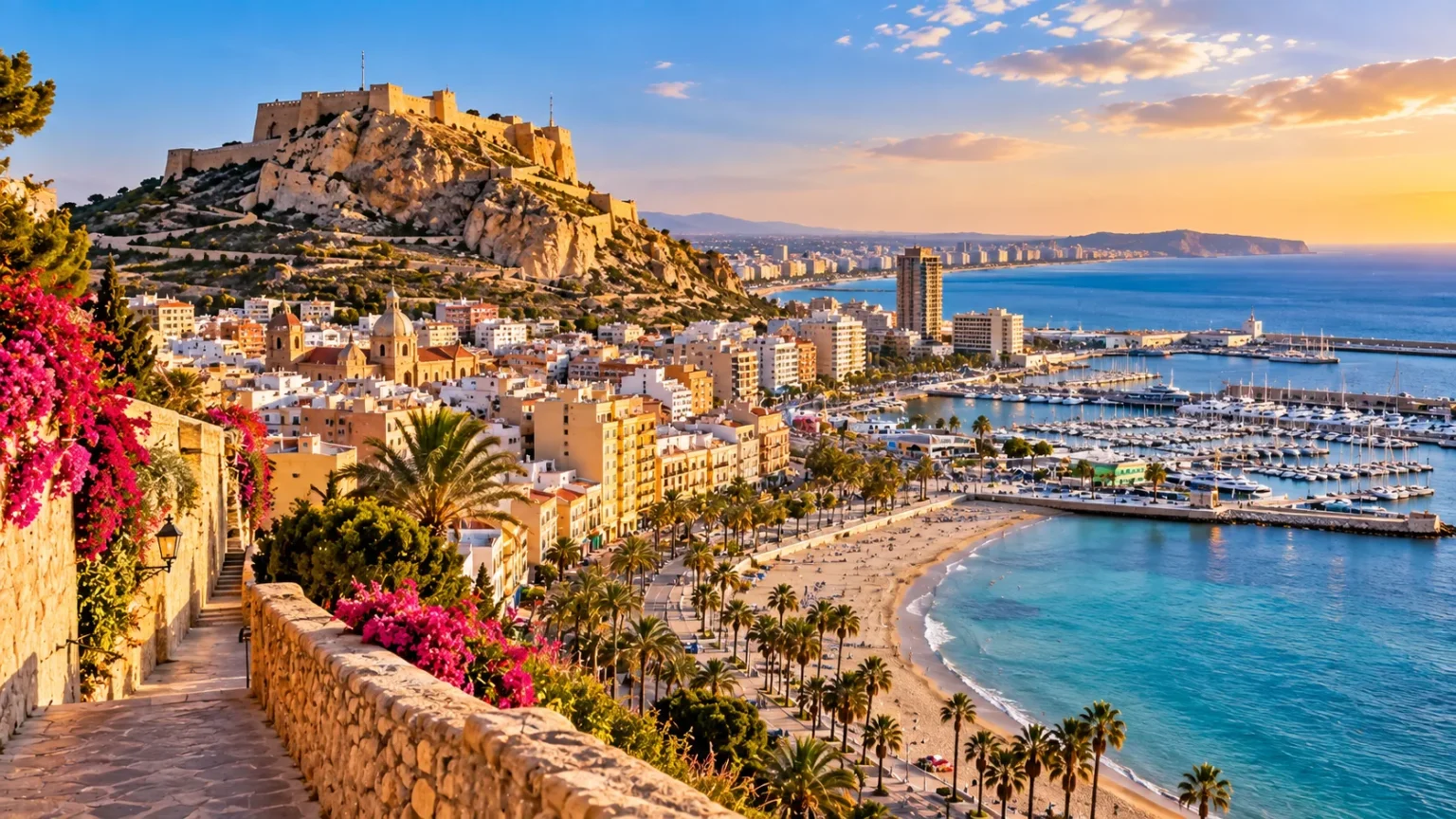
Alicante is one of Spain’s most inviting Mediterranean destinations, combining golden beaches, historic landmarks, palm-lined promenades, lively restaurants, and relaxed coastal neighborhoods. Located on the Costa Blanca in southeastern Spain, the city offers an easy mix of sightseeing and seaside relaxation. You can explore a centuries-old fortress in the morning and spend the afternoon swimming beside the city center.
What makes Alicante especially appealing is how naturally its attractions fit together. The old town, waterfront, marina, shopping streets, restaurants, and Postiguet Beach are close enough to explore without constantly planning long journeys. Travelers can comfortably combine history, culture, Spanish food, nightlife, and outdoor experiences during a relatively short stay.
This Alicante Spain travel guide covers the best things to do and see, from Santa Bárbara Castle and Barrio de Santa Cruz to beaches, markets, museums, local cuisine, and nearby island adventures. Whether you are planning a weekend getaway or a longer Costa Blanca holiday, Alicante offers enough variety to create a memorable Mediterranean trip.
Why Alicante Is Worth Visiting
Alicante delivers many of the experiences travelers associate with coastal Spain without requiring you to choose between beaches and city sightseeing. The Mediterranean Sea forms the backdrop to much of daily life, while historic streets, museums, restaurants, markets, and plazas provide plenty to explore away from the shoreline. This balance makes Alicante suitable for both active sightseeing and slower holidays.
The city is particularly convenient for first-time visitors because many major attractions are concentrated around the center. You can walk between the historic quarter, Explanada de España, marina, Postiguet Beach, and several important landmarks. Public transportation connects areas farther along the coastline, making it possible to explore additional beaches without needing a rental car.
Alicante also works well for different types of travelers. Couples can enjoy waterfront dinners and sunset walks, families have accessible beaches and attractions, while solo travelers can explore compact neighborhoods comfortably. Food lovers, history enthusiasts, beachgoers, and photographers can all build very different itineraries while staying within the same Mediterranean city.
Explore Santa Bárbara Castle
Santa Bárbara Castle dominates Alicante from the top of Mount Benacantil and is one of the city’s most recognizable landmarks. The fortress has roots reaching back to the Muslim period and provides sweeping views across Alicante, the harbor, surrounding mountains, and Mediterranean coastline. Its elevated position makes it an excellent place for understanding the city’s geography early in your visit.
Inside the fortress, visitors can explore defensive walls, courtyards, terraces, towers, and historic spaces from different periods. Walking between the various levels reveals changing views of the city below, while interpretive areas provide greater context about Alicante’s military history. Allow enough time to wander rather than treating the castle simply as a viewpoint for quick photographs.
Several approaches can be used to reach the castle, including walking routes and easier alternatives from near the waterfront. Travelers who enjoy walking can approach through the old town and surrounding hillside areas for a more atmospheric experience. Visiting earlier or later in the day can also make outdoor exploration more comfortable during Alicante’s warmer months.
Wander Through Alicante Old Town and Santa Cruz
Alicante’s historic center contains narrow streets, colorful buildings, small plazas, churches, restaurants, and traditional architecture. Walking without a rigid route is one of the best ways to experience this part of the city. Unexpected stairways, decorative balconies, hidden corners, and small cafés create an atmosphere that feels very different from the broader waterfront avenues nearby.
Barrio de Santa Cruz is particularly memorable because it climbs the lower slopes beneath Santa Bárbara Castle. Whitewashed houses decorated with colorful doors, flowers, tiles, and potted plants line its narrow lanes and stairways. The neighborhood rewards slow exploration, especially for travelers interested in photography, traditional streetscapes, or quieter corners away from busier commercial areas.
Important religious and civic buildings can also be found around Alicante’s historic center, including the Basilica of Santa María and Co-Cathedral of San Nicolás. Rather than rushing between individual landmarks, spend time observing the surrounding squares and streets. Evening is especially pleasant when restaurants fill, temperatures soften, and historic buildings take on a warmer atmosphere under city lighting.
Walk Along Explanada de España and the Marina
The Explanada de España is one of Alicante’s signature public spaces and an essential stop on any first visit. This palm-lined promenade runs beside the waterfront and is known for its distinctive wave-patterned paving. Locals and visitors use the area for walking, meeting friends, relaxing beneath the palms, and enjoying the city’s easygoing Mediterranean atmosphere.
Continue from the promenade toward Alicante’s marina, where boats, restaurants, terraces, and waterfront views create another enjoyable area for walking. The contrast between the historic center behind you and the open harbor ahead demonstrates how closely Alicante’s identity is connected with the sea. Morning and evening walks are particularly enjoyable when temperatures are milder.
The Explanada also makes a useful connecting point between several Alicante attractions. From here, you can easily continue toward Postiguet Beach, the historic center, shopping areas, or the harbor. Instead of treating the promenade as a separate sightseeing stop, use it naturally throughout your itinerary when moving between different parts of central Alicante.
Relax at Postiguet Beach
Postiguet Beach sits directly beside central Alicante, making it remarkably convenient for travelers who want sightseeing and beach time during the same day. Golden sand, Mediterranean water, palm-lined surroundings, and views toward Mount Benacantil create a classic coastal setting. Its location means you can move between historic attractions and the shoreline without spending much time traveling.
During warmer months, visitors come here to swim, sunbathe, walk beside the water, or simply rest between sightseeing activities. The beach’s urban location means restaurants, cafés, accommodation, and transportation options are nearby. Travelers who prefer relaxed itineraries can easily spend a morning exploring Alicante before returning to the beach for several hours in the afternoon.
Postiguet can become busier during summer and popular holiday periods, so timing matters if you prefer a calmer experience. Early mornings often feel more peaceful and are also comfortable for walking along the waterfront. Visitors interested primarily in larger beach areas can explore other stretches of the Alicante coastline while keeping Postiguet for convenient central beach time.
Discover Playa de San Juan and Other Beaches
Playa de San Juan is one of the most popular alternatives to central Postiguet Beach. Its long stretch of sand provides significantly more space for walking, swimming, relaxing, and spending an extended beach day. Restaurants and residential areas nearby create a different atmosphere from Alicante’s compact historic center, making the journey worthwhile for dedicated beach lovers.
The coastline surrounding Alicante contains additional coves and beaches that offer different experiences depending on your priorities. Some visitors prefer lively beaches with easy access to restaurants and facilities, while others search for smaller areas that feel quieter. Public transportation makes several coastal areas accessible, allowing travelers to explore without necessarily hiring a car.
Consider dedicating different days to sightseeing and beach exploration rather than trying to squeeze everything into one schedule. Alicante’s coastal atmosphere is best enjoyed without constantly checking the time. A slower beach day can provide a welcome break after visiting museums, historic streets, markets, and hilltop landmarks during the more active parts of your trip.
Visit Alicante Central Market and Taste Local Food
Alicante Central Market is an excellent place to experience everyday food culture while browsing fresh produce, seafood, meats, cheeses, olives, baked goods, and regional ingredients. Markets provide a different perspective from restaurants because they reveal what local residents actually buy and cook. Visiting earlier in the day generally allows you to experience the market when activity is strongest.
Rice dishes are particularly important within Alicante and the wider Valencian Community. Travelers will find numerous preparations featuring seafood, meat, vegetables, and rich stocks, each with its own local character. Rather than automatically ordering the most familiar version of paella, explore regional rice dishes and ask restaurants about specialties prepared in the Alicante style.
Tapas, seafood, cured meats, pastries, and Mediterranean ingredients provide plenty of opportunities for informal dining throughout the trip. Alicante’s warm evenings are particularly well suited to sharing small plates on an outdoor terrace. Exploring restaurants away from the most tourist-heavy waterfront streets can also reveal neighborhood establishments where meals feel more connected to everyday local dining traditions.
Discover Alicante’s Museums and Cultural Attractions
Alicante’s museums provide useful context for travelers who want to understand the region beyond beaches and restaurants. The Archaeological Museum of Alicante, often known as MARQ, explores different periods of local and regional history through archaeological discoveries and engaging exhibits. It can be particularly worthwhile when hot or rainy weather makes indoor sightseeing more appealing.
Contemporary art lovers can explore MACA, the Alicante Museum of Contemporary Art, located in the historic center. Combining museums with nearby architectural and religious landmarks creates an efficient cultural itinerary without requiring much transportation. These attractions also provide a welcome contrast to Alicante’s outdoor experiences, especially during the hottest portion of summer afternoons.
Smaller exhibitions, cultural spaces, theaters, and seasonal events add further variety depending on when you visit. Checking local programs shortly before traveling may reveal performances or exhibitions that fit your interests. Even visitors who primarily come for the beaches may find that spending a few hours exploring Alicante’s cultural attractions makes the destination feel far more complete.
Take a Day Trip to Tabarca Island
Tabarca Island is one of the most popular excursions from Alicante and offers a change of pace from the mainland city. Visitors travel across the Mediterranean to explore its compact settlement, coastal scenery, historic walls, small streets, and clear surrounding waters. The island works particularly well as a relaxed day trip during comfortable weather.
Once there, the experience is less about racing between major attractions and more about slowing down. Walking around the settlement, enjoying coastal views, swimming, and stopping for seafood can fill several pleasant hours. Comfortable footwear is useful because exploring beyond the main populated area allows you to appreciate the island’s landscape and quieter shoreline.
Boat services and schedules can vary by season and weather, so confirm transportation close to your travel dates. During busy summer periods, planning ahead can help avoid unnecessary waiting. Travelers who prefer peaceful surroundings may particularly enjoy visiting outside the most crowded summer weeks, provided suitable transport and weather conditions are available.
Experience Alicante After Sunset
Alicante remains lively after daytime sightseeing ends, particularly around the old town, waterfront, and central dining districts. Dinner often becomes a leisurely part of the evening rather than something squeezed between attractions. Outdoor terraces fill as temperatures cool, creating an atmosphere that encourages visitors to stay outside and enjoy the city at a slower pace.
A simple evening can begin with a walk along the Explanada before heading into the historic center for tapas or dinner. Afterward, explore the illuminated streets around central plazas or return toward the waterfront. Travelers looking for nightlife can find bars and late-night venues, while those preferring quieter evenings have plenty of relaxed cafés and terraces.
The city feels noticeably different after sunset, so avoid ending every sightseeing day too early. Santa Bárbara Castle above the city, illuminated streets, marina reflections, and evening activity around the center create excellent photographic opportunities. Building some unstructured time into your evenings allows you to experience Alicante as a living city rather than simply a collection of attractions.
Best Time to Visit Alicante
Spring is an excellent season for visitors who want comfortable sightseeing weather without the strongest summer heat. Walking through the old town, climbing viewpoints, visiting markets, and exploring the waterfront can be especially enjoyable during this period. Beach conditions gradually become more attractive as temperatures rise, although the sea may remain cooler than during midsummer.
Summer is ideal for travelers whose main priorities are swimming, beaches, nightlife, and a lively holiday atmosphere. However, daytime heat and larger visitor numbers can make sightseeing more tiring. Starting outdoor exploration earlier, resting during the hottest hours, and returning outside in the evening can create a more comfortable rhythm during July and August.
Early autumn can provide another attractive balance of warm coastal weather and enjoyable sightseeing conditions. Winter is quieter and generally better suited to city exploration than a traditional beach holiday. Your best time to visit Alicante therefore depends on whether you prioritize swimming, outdoor sightseeing, lower crowds, nightlife, or a combination of several experiences.
Alicante Travel Tips for First-Time Visitors
Alicante’s central districts are highly walkable, so comfortable shoes are one of the most useful things you can pack. Streets around Santa Cruz and the castle can involve slopes, stairs, and uneven surfaces. During warm weather, carrying water and using appropriate sun protection can make longer sightseeing days considerably more comfortable.
Avoid packing every major attraction into one day simply because locations appear close on a map. Combining two or three major sights with a long lunch, waterfront walk, or beach break better matches Alicante’s relaxed character. Grouping nearby attractions together also reduces unnecessary travel and creates more opportunities to discover cafés, plazas, and interesting streets spontaneously.
For a first trip, three or four days provides a comfortable introduction to Alicante itself, while additional days make room for beaches and nearby excursions. Travelers exploring the wider Costa Blanca may want a longer stay. Keep some flexibility in your itinerary because weather, seasonal events, and how much you enjoy the beach can easily change your original plans.
Conclusion
Alicante combines historic architecture, Mediterranean beaches, cultural attractions, Spanish cuisine, and relaxed waterfront living within an easy-to-explore coastal city. Santa Bárbara Castle, Barrio de Santa Cruz, Explanada de España, Postiguet Beach, and the marina provide a strong introduction for anyone visiting Alicante for the first time.
The destination becomes even more rewarding when you explore beyond its headline attractions. Spend time tasting regional rice dishes, browsing the Central Market, visiting museums, discovering Playa de San Juan, or taking a boat trip to Tabarca Island. Mixing sightseeing with slower coastal experiences helps capture the character that makes Alicante such an appealing Spanish destination.
Whether you visit for a weekend city break or include Alicante within a longer Costa Blanca holiday, avoid rushing through your itinerary. Leave room for beach time, evening walks, long meals, and unexpected discoveries in the old town. Alicante is best experienced as both a historic Mediterranean city and a place designed for slowing down beside the sea.
FAQs
How many days do you need in Alicante?
Three to four days gives first-time visitors enough time for the castle, historic center, waterfront, beaches, markets, and museums. Add another day if you want a relaxed Tabarca Island excursion.
What is Alicante best known for?
Alicante is known for Santa Bárbara Castle, Mediterranean beaches, the Explanada de España, its historic center, seafood and rice dishes, and its location along Spain’s popular Costa Blanca.
Is Alicante a good destination for a beach holiday?
Yes. Alicante combines accessible urban beaches with longer sandy stretches such as Playa de San Juan. Travelers can easily mix swimming and sunbathing with restaurants, shopping, cultural attractions, and historic sightseeing.
What is the best month to visit Alicante?
May, June, September, and early October can offer an appealing balance of warm weather and outdoor sightseeing. July and August suit beach-focused travelers but generally bring hotter conditions and a busier atmosphere.
Is Alicante easy to explore without a car?
Yes. Many major Alicante attractions are within walking distance in the central area, while trams and buses connect additional neighborhoods and beaches. A car is mainly useful for wider Costa Blanca exploration.