



Best Christmas Markets in Germany for a Magical Trip
Germany’s Christmas markets are among the most atmospheric winter experiences in Europe, combining glowing old-town squares, decorated wooden stalls, seasonal food, handmade gifts, music, and centuries-old Advent traditions. From the famous Christkindlesmarkt in Nuremberg to the medieval atmosphere of Rothenburg ob der Tauber and the riverside celebrations of Cologne, every city creates a slightly different version of Christmas. Some markets are large enough to fill several squares, while others feel intimate and traditional. Travelers can build an entire winter trip around these festive destinations using Germany’s excellent rail network. The best Christmas markets in Germany offer far more than shopping because they turn historic city centers into immersive seasonal experiences. Choosing the right markets depends on whether you prefer traditional charm, food, architecture, nightlife, or smaller crowds.
The German word Weihnachtsmarkt simply means Christmas market, while some cities use regional names such as Christkindlesmarkt. Most markets begin during the final weeks of November and continue through the days leading up to Christmas, although individual dates and closing days vary by location and year. Visitors typically wander between stalls selling ornaments, candles, wooden crafts, ceramics, sweets, sausages, roasted nuts, gingerbread, and steaming cups of Glühwein. Evening is especially atmospheric when thousands of lights illuminate historic buildings and church towers. However, afternoons are usually easier for travelers who prefer photography, family-friendly sightseeing, and shorter queues. Combining daytime exploration with an evening return provides the best of both experiences.
A successful Germany Christmas market trip benefits from planning because popular cities become extremely busy during December weekends. Hotels in central neighborhoods can sell out early, train prices may rise, and the most famous markets become crowded after sunset. Visiting on weekdays, staying within walking distance of the historic center, and combining major markets with smaller nearby towns can make the experience far more enjoyable. Germany also offers tremendous regional variety, so travelers do not need to visit every famous market during one trip. This guide explores some of the best Christmas markets in Germany and explains what makes each destination special, how to combine them efficiently, and what practical details can help create a memorable winter journey.
Nuremberg Christkindlesmarkt: Germany’s Classic Christmas Experience
Nuremberg is often one of the first destinations travelers imagine when planning a German Christmas market trip, and its Christkindlesmarkt has become internationally associated with traditional Advent celebrations. The market fills the Hauptmarkt in the historic center beneath the Frauenkirche, creating a setting framed by colorful facades and medieval architecture. Rows of red-and-white striped stalls sell decorations, sweets, toys, crafts, and regional specialties. The visual style feels remarkably cohesive compared with more commercial holiday events, which helps preserve its historic character. Evening lights make the square particularly beautiful, although the atmosphere can become very crowded. Arriving earlier allows visitors to explore the stalls more comfortably before returning after dark for the full festive effect.
Food is a major part of the Nuremberg Christmas market experience. Nürnberger Rostbratwurst, the city’s small grilled sausages, are commonly served several at a time in bread and make an easy lunch while walking between stalls. Nuremberg is also famous for Lebkuchen, a spiced gingerbread associated with the city for centuries. Visitors will find many styles ranging from chocolate-covered versions to traditional nut-rich varieties. Glühwein is widely available, often served in collectible mugs for which a refundable deposit is charged. Travelers who do not drink alcohol can usually find warm alternatives such as Kinderpunsch. Trying local specialties rather than eating only familiar foods is one of the easiest ways to make each market feel distinct.
The main Christkindlesmarkt is only part of Nuremberg’s seasonal appeal. Nearby areas frequently host additional Advent-themed stalls and international offerings, giving visitors more variety within a relatively compact section of the city. The historic old town itself deserves time beyond the Christmas market, particularly around the Imperial Castle, medieval streets, churches, and riverside viewpoints. Staying overnight is worthwhile because the market feels different once day visitors leave and the city settles into the evening. Travelers with limited time can still experience much of central Nuremberg on foot. However, allocating at least a full day prevents the trip from becoming little more than a quick walk through crowded stalls.
Nuremberg works particularly well as part of a Bavarian Christmas itinerary. Direct rail connections make it possible to combine the city with Munich, Bamberg, Regensburg, and other destinations without renting a car. This is especially helpful in winter because driving conditions can be unpredictable and parking near historic centers may be inconvenient. Travelers who want several very different Christmas markets can base themselves in Nuremberg for a few nights and take short day trips. The city also has enough restaurants, museums, and indoor attractions to provide alternatives if the weather becomes wet or extremely cold. That flexibility makes Nuremberg a practical choice for first-time winter visitors to Germany.
The biggest disadvantage of Nuremberg is popularity. Friday evenings, Saturdays, and the weeks closest to Christmas can bring substantial crowds that make the central market feel less intimate. Travelers seeking a quieter atmosphere should visit on a weekday afternoon and explore side streets rather than staying only around the busiest central square. Booking accommodation early can also make a significant difference, particularly if you want to stay inside or near the old town. Despite the crowds, the combination of architecture, regional food, traditional market design, and easy transport keeps Nuremberg among Germany’s most rewarding Christmas destinations. It is an excellent benchmark against which to compare other markets during a longer Advent trip.
Dresden Striezelmarkt: Historic Traditions and Saxon Flavors
Dresden offers one of Germany’s most historically significant Christmas market experiences, with the Striezelmarkt forming the centerpiece of the city’s Advent season. Set in the historic center, the market combines elaborate decorations with strong regional traditions from Saxony and the nearby Ore Mountains. Large wooden structures, festive pyramids, carved decorations, and illuminated stalls create a distinctive visual identity. Dresden’s reconstructed baroque architecture adds grandeur to the experience and makes the city appealing even outside the market itself. Visitors can easily move between the market and major landmarks such as the Frauenkirche and the riverfront. This combination of Christmas tradition and cultural sightseeing makes Dresden particularly suitable for travelers who want more than an evening of seasonal shopping.
One of Dresden’s best-known Christmas foods is Stollen, the dense fruit bread traditionally associated with the city. The classic version contains dried fruit, spices, butter, and powdered sugar, producing a rich seasonal flavor that pairs well with coffee or warm drinks. Visitors will find Stollen in bakeries as well as Christmas market stalls, and packaged versions can make practical edible souvenirs. The region also has strong traditions of wooden craftsmanship, especially items inspired by the Ore Mountains. Nutcrackers, candle arches, carved figures, and Christmas pyramids appear throughout the market. These objects can be more meaningful souvenirs than generic decorations because they are closely connected with regional Christmas culture.
The Striezelmarkt is large, but Dresden also rewards visitors who explore beyond the central market. Seasonal events and smaller Christmas areas can appear around other parts of the historic center, creating several different atmospheres within walking distance. Wandering between them helps break up the crowds and reveals more of the city’s architecture. A daytime walk along the Elbe can provide a quieter contrast to the busy market squares. Museums and churches are also useful when visitors need a warm indoor break. This matters in December because Dresden can feel particularly cold once the sun goes down, especially when wind moves across open spaces near the river.
Dresden combines particularly well with Leipzig or Berlin for travelers creating an eastern Germany Christmas market itinerary. Rail travel between major cities is straightforward, reducing the need for a rental car. Visitors interested in smaller-town charm can also use Dresden as a starting point for exploring Saxony, although winter day trips require more careful timing because daylight hours are short. Staying two nights allows time for the market, museums, food, and nighttime photography without rushing. Dresden is especially rewarding for travelers interested in Christmas craftsmanship and historic traditions rather than simply nightlife. Its market feels deeply connected with regional identity.
Crowds still become significant during December weekends, so timing matters. Arriving shortly after opening can provide a much calmer experience than entering the market during peak evening hours. Photographers may prefer the period around sunset, when market lights begin glowing but the square has not yet reached its busiest point. Comfortable waterproof shoes are particularly important because travelers often cover more ground than expected while moving between attractions. Dresden’s combination of regional food, traditional crafts, ornate architecture, and historic significance gives it a distinctive place among the best Christmas markets in Germany. It is an especially strong choice for travelers who want both festive atmosphere and cultural depth.
Cologne Christmas Markets: Multiple Festive Worlds in One City
Cologne is ideal for travelers who want variety because its Christmas season usually includes several major markets spread across different areas of the city. Instead of offering only one central square, Cologne creates multiple themed environments connected by walking routes and public transportation. The most photographed market areas are often those near Cologne Cathedral, where the towering Gothic architecture creates a dramatic backdrop for Christmas lights. Other markets around the old town and city center may have different decorations, food stalls, entertainment, and visual themes. This variety makes Cologne feel almost like a Christmas market festival rather than a single event. Visitors can spend an entire day moving from one atmosphere to another.
The cathedral area is a natural starting point because it is located immediately beside Köln Hauptbahnhof, the city’s main train station. Travelers arriving by rail can step outside and find themselves next to one of Germany’s most recognizable landmarks. The combination of the cathedral, illuminated stalls, and busy city atmosphere is visually impressive, particularly after dark. However, this convenience also makes the area extremely popular. Visitors who dislike dense crowds should explore earlier in the day and move toward less central market areas during the evening. Cologne rewards those willing to walk beyond the first collection of stalls they encounter.
Food and drink are important parts of the Cologne Christmas market experience. Glühwein appears almost everywhere, but each market area may use its own decorative mugs, which some travelers collect as souvenirs by choosing not to return them for the deposit. Regional dishes and hearty German winter foods make it easy to build meals from market snacks rather than sitting in a restaurant. However, visitors spending multiple days in Cologne should also explore the city’s traditional brewhouse culture and local Kölsch beer. Combining Christmas market food with a proper sit-down meal provides more variety and a welcome opportunity to warm up. Reservations can be useful for popular restaurants on busy Advent weekends.
Cologne is particularly well suited to travelers who want a larger city with nightlife, museums, shopping, and excellent transport connections. The city can serve as a base for day trips to nearby destinations along the Rhine or into western Germany. Düsseldorf, Bonn, and Aachen are among the cities that can be combined with Cologne by train, although trying to fit too many markets into one day can become exhausting. Two nights in Cologne provide a more relaxed pace and allow visitors to revisit their favorite markets. Because the city center is spread out compared with smaller old towns, comfortable walking shoes and familiarity with public transportation are useful.
The strongest reason to choose Cologne is diversity. A traveler who becomes bored after seeing similar wooden stalls in several towns may appreciate the different themes and settings across the city. At the same time, visitors seeking an intimate medieval atmosphere may prefer smaller destinations such as Rothenburg or Goslar. Cologne’s Christmas markets feel energetic, urban, social, and visually impressive rather than secluded. The cathedral provides one of the most dramatic Christmas market backdrops in Germany, while the wider city offers enough entertainment to fill several winter days. For first-time visitors who want both festive markets and big-city convenience, Cologne is an excellent option.
Munich Christmas Markets: Bavarian Tradition in a Grand City
Munich combines classic Bavarian Christmas traditions with the energy and convenience of one of Germany’s largest cities. The central Christmas market around Marienplatz places visitors among neo-Gothic architecture, historic churches, busy shopping streets, and beautifully decorated stalls. A large Christmas tree and seasonal lights transform the central square into one of the city’s most recognizable winter scenes. The market is easy to reach by public transport and forms a natural starting point for exploring Munich’s wider Advent offerings. Because the city hosts several seasonal markets and themed events, visitors can experience more than one style without leaving Munich. This variety makes it a strong destination for a multi-night winter break.
Bavarian food adds considerably to the experience. Market stalls may offer sausages, pretzels, roasted nuts, potato dishes, sweets, and warm drinks suited to cold evenings. Munich also has a strong beer-hall tradition, so visitors can alternate outdoor market exploration with indoor meals in historic restaurants and breweries. This combination is particularly appealing when December weather becomes wet or freezing. Seasonal pastries and gingerbread provide easy snacks between attractions, while warm Glühwein helps create the classic Christmas market atmosphere. Travelers should remember that portions can be filling, making it unnecessary to sample every specialty in a single evening.
Munich is also useful as a base for regional day trips. Nuremberg, Augsburg, Regensburg, and several smaller Bavarian towns can be reached by train, although journey times vary. Travelers might spend several nights in Munich and add one or two day trips rather than changing hotels constantly. This approach reduces luggage handling and makes winter travel easier. Munich itself has enough museums, palaces, churches, and neighborhoods to fill days when visitors need a break from market stalls. The city’s public transportation network also makes it easy to return to accommodation after late-evening market visits without relying on taxis.
The Marienplatz area becomes extremely crowded at popular times, particularly on weekends after dark. Travelers who want good photographs or a more relaxed experience should arrive during the afternoon and stay through the transition into evening. Exploring smaller markets elsewhere in the city can also provide breathing room. Accommodation prices can rise during Advent, so central hotels should be booked well in advance when possible. Staying near an S-Bahn or U-Bahn station slightly outside the historic core can offer better value without sacrificing convenience. Munich’s transportation system makes location flexibility easier than in smaller destinations.
Munich is best for travelers who want a complete city break rather than a trip focused only on Christmas markets. The architecture, shopping, food, museums, and transport connections make the city enjoyable even if poor weather limits outdoor time. It is also a convenient gateway for visitors flying into southern Germany. Those seeking the smallest and most intimate Christmas atmosphere may prefer nearby historic towns, but Munich offers unmatched variety and infrastructure. Spending at least two full days gives travelers enough time to explore several festive areas without rushing. For a Bavarian Christmas trip that combines tradition with urban comfort, Munich remains one of Germany’s strongest choices.
Rothenburg ob der Tauber and Regensburg: Medieval Christmas Atmosphere
Rothenburg ob der Tauber looks almost purpose-built for Christmas because its preserved medieval streets, half-timbered buildings, towers, and old city walls already create a storybook atmosphere before seasonal decorations appear. During Advent, the town becomes even more picturesque as lights and stalls fill historic squares. The Christmas market is smaller than those in major cities, but that intimacy is part of its appeal. Visitors can wander between market stalls and quiet side streets without needing public transportation. The compact scale makes Rothenburg especially attractive for couples, photographers, and travelers seeking a romantic German Christmas destination. Snow is never guaranteed, but even without it the architecture provides a remarkable winter backdrop.
Rothenburg’s biggest challenge is daytime tourism. The town attracts large numbers of day visitors, and its most famous streets can feel busy during peak hours. Staying overnight changes the experience significantly because the historic center becomes calmer after tour groups depart. Early morning and late evening are excellent times for walking along the streets and photographing illuminated buildings. Travelers can also explore sections of the old walls for elevated views, although winter conditions may require additional care. The town’s Christmas-focused shops and bakeries extend the festive theme beyond the official market area. This makes Rothenburg feel like a complete seasonal destination rather than simply a square with stalls.
Regensburg offers a different kind of medieval atmosphere because it is a larger living city with an exceptionally well-preserved historic center along the Danube. Its Christmas season often includes several market areas, allowing visitors to move between traditional squares and more elaborate festive settings. Stone lanes, old towers, churches, and historic houses create a rich backdrop for Advent lights. Regensburg also has a strong food culture, including sausages and Bavarian specialties that suit the winter environment. Unlike a very small tourist town, it has enough restaurants, shops, and everyday city life to sustain a longer visit. This balance makes it appealing to travelers who want charm without feeling confined to a tiny destination.
The city is compact enough for most central sights and markets to be explored on foot. A slow walk through the old town is often more memorable than rushing directly from one famous market to another. The Danube riverfront provides a quieter place to step away from crowds, although it can feel very cold in windy weather. Regensburg’s cathedral and medieval architecture give the city strong visual character after sunset. Visitors should allow enough time to explore during daylight as well, when architectural details are easier to appreciate. An overnight stay is preferable to treating Regensburg as a brief stop between larger cities.
Rothenburg and Regensburg both demonstrate why smaller or medium-sized German cities can be just as rewarding as internationally famous markets. Rothenburg delivers concentrated fairy-tale atmosphere, while Regensburg combines history, local life, and multiple festive experiences. Travelers building a southern Germany itinerary could pair either destination with Munich or Nuremberg. Rail access to Regensburg is straightforward, while reaching Rothenburg usually involves more regional connections, so journey planning matters. Choosing one rather than both may be sensible on a short trip. For travelers prioritizing historic streets and romantic atmosphere over sheer market size, these destinations can become highlights of an entire German Christmas journey.
Frankfurt, Heidelberg and Stuttgart: Excellent Stops for a Western Germany Route
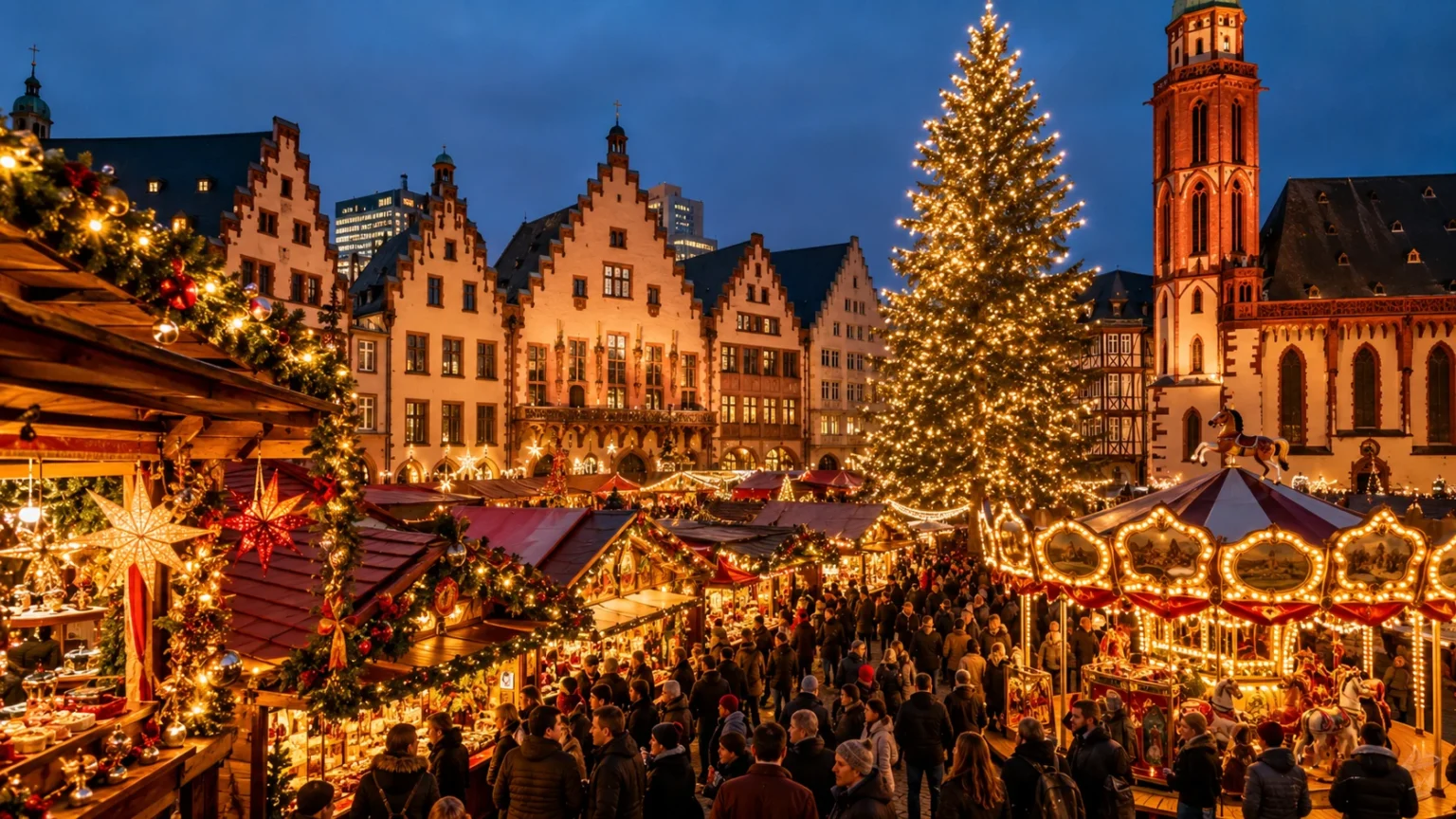
Frankfurt is sometimes overlooked by travelers who associate it primarily with business districts and its international airport, but the historic center creates a very different atmosphere during Christmas. Seasonal stalls spread around central squares near the reconstructed old town and Römerberg, creating an attractive contrast with the city’s modern skyline. This makes Frankfurt particularly convenient for travelers arriving in Germany by air who want an immediate Christmas market experience. Instead of transferring directly to another city, visitors can spend their first night in Frankfurt and explore the market on foot. The city’s major rail station and airport connections also make it an efficient starting point for a multi-city itinerary.
The Frankfurt Christmas experience blends regional food with familiar German market traditions. Visitors can sample warm drinks, sausages, roasted nuts, sweets, and Hessian specialties while exploring the old-town area. The market becomes especially atmospheric in the evening when lights illuminate Römerberg’s historic facades. However, the central location means it can become very crowded after work and during weekends. Early afternoon visits are usually calmer. Frankfurt also has museums, riverfront walks, and extensive indoor attractions, giving travelers alternatives during poor weather. This flexibility makes the city more useful than its reputation as merely a transportation hub might suggest.
Heidelberg provides a contrasting experience with romantic architecture, narrow old-town streets, hillside views, and the ruins of Heidelberg Castle rising above the city. Christmas stalls are commonly spread through several squares rather than concentrated in only one location. Walking between them becomes part of the experience because visitors pass historic buildings, shops, and pedestrian streets along the way. The surrounding hills add visual drama that flatter cities cannot match. Heidelberg is also compact enough to explore comfortably on foot. Visitors who combine the market with a castle visit can create a full winter day that feels much more varied than simply browsing stalls.
Stuttgart is another strong Christmas destination in southwest Germany and works particularly well for travelers who appreciate elaborate decorations. The city’s seasonal market is known for highly decorated stall roofs and an expansive central layout. Surrounding architecture and large squares provide room for numerous vendors, making Stuttgart better suited to visitors who enjoy browsing for several hours. Regional Swabian food adds another dimension to the experience, with hearty dishes particularly satisfying in cold weather. Stuttgart also has strong train connections to other German cities and neighboring regions. Travelers arriving from France or Switzerland may find it a practical addition to a cross-border winter itinerary.
Combining Frankfurt, Heidelberg, and Stuttgart creates a logical western or southwestern Germany Christmas route. Frankfurt provides international transport, Heidelberg delivers romantic old-town atmosphere, and Stuttgart offers a larger market experience with regional character. Travel between them is manageable by rail, allowing visitors to avoid winter driving. A trip of four to six nights can cover these cities without changing location every few hours. Those with additional time might extend toward Cologne, Nuremberg, or the Black Forest region. This route is particularly useful for repeat visitors who want alternatives to the most famous Bavarian and Saxon Christmas destinations while still experiencing high-quality German markets.
How to Plan the Perfect Germany Christmas Market Trip
Timing can determine whether a Christmas market trip feels magical or exhausting. Weekday afternoons are generally the most comfortable periods for browsing because local after-work crowds have not yet arrived and weekend visitors are absent. Sunset brings the most atmospheric lighting, so arriving a few hours beforehand allows travelers to experience both daylight and evening conditions. Saturdays are commonly the busiest days, particularly at famous markets such as Nuremberg, Cologne, and Munich. Visitors traveling during weekends should explore early and use evenings for smaller markets or restaurant reservations. Planning around crowd patterns is often more useful than simply choosing the biggest and most famous markets.
Accommodation location deserves careful consideration because winter days are short and temperatures can drop quickly after sunset. Staying within walking distance of the old town allows visitors to return to their hotel for a warm break before going back out in the evening. However, central hotels often cost more during Advent. In larger cities such as Munich, Cologne, Frankfurt, and Berlin, staying near a convenient train or metro station can offer excellent value while maintaining easy access. Smaller towns may have fewer rooms, making early booking more important. Travelers should compare transport convenience with the benefit of being directly inside the festive center.
Germany’s rail system makes multi-city Christmas market travel relatively easy, especially between major destinations. Trains eliminate parking concerns and allow travelers to relax rather than navigating unfamiliar roads in winter weather. When possible, choose geographically logical routes instead of zigzagging across the country. Nuremberg, Munich, and Regensburg work well together, while Cologne can pair with Aachen or Düsseldorf. Dresden and Leipzig make another natural combination, and Frankfurt can connect conveniently with Heidelberg and Stuttgart. Keeping individual train journeys moderate leaves more time for actually enjoying the markets. A seven-day trip with three primary bases often feels more enjoyable than trying to sleep in a different city every night.
Packing properly also improves the experience because market visits involve long periods outdoors. A warm waterproof coat, layers, gloves, a hat, and comfortable shoes with good grip are more useful than fashionable clothing that leaves you cold. Waterproof footwear is particularly valuable when rain, slush, or light snow covers cobbled streets. A small crossbody bag can keep valuables secure in crowded markets while leaving hands free for food and drinks. Portable chargers are useful because cold temperatures can reduce phone battery performance, especially when taking many photographs. Travelers should also leave some luggage space for ornaments, mugs, food gifts, and other souvenirs collected along the route.
Budgeting should include more than hotels and trains because frequent market snacks can add up quickly. Glühwein often involves a mug deposit, which is refunded when the cup is returned, although travelers may choose to keep attractive mugs as souvenirs. Carrying some cash is still useful because payment methods vary between individual vendors. Setting a daily food and souvenir budget can prevent impulsive spending across multiple markets where similar products appear repeatedly. It is also worth paying more for genuinely regional crafts rather than buying the first generic ornament you see. Planning carefully leaves room for spontaneous moments while keeping the overall winter trip manageable.
What to Eat and Buy at German Christmas Markets
Food is one of the strongest reasons to visit German Christmas markets because each region adds local specialties to familiar winter favorites. Bratwurst is common throughout the country, but sausage styles, breads, sauces, and seasonings vary by region. Potato pancakes, roasted chestnuts, mushrooms, pretzels, and hearty meat dishes provide savory options for travelers who want more than sweets. Markets are particularly enjoyable when visitors share several small items rather than committing immediately to a large meal. This approach makes it possible to taste more regional foods. Warm food also provides a welcome break from the cold during long evenings outdoors.
German Christmas sweets are equally important. Lebkuchen is strongly associated with Nuremberg, while Dresden is famous for Stollen. Roasted almonds coated with sugar create a distinctive aroma that drifts through many market squares. Waffles, pastries, chocolate-covered fruits, marzipan, and cookies offer plenty of additional choices. Travelers who plan to take edible souvenirs home should check packaging and customs rules for their destination. Properly packaged gingerbread or Stollen usually travels more easily than fresh market food. Buying directly from regional producers can also make gifts feel more connected to the destination.
Glühwein is the classic Christmas market drink and usually consists of warmed wine flavored with spices and citrus. Regional variations can taste surprisingly different, so travelers may enjoy comparing versions across several cities. Feuerzangenbowle is a stronger festive drink associated with flaming sugar and rum, while non-alcoholic fruit punches provide alternatives for children and adults avoiding alcohol. Drinks are often served in decorative ceramic mugs that require a deposit. Returning the mug gives the deposit back, while keeping it effectively turns the payment into a souvenir purchase. Checking the design before deciding can be worthwhile because some markets produce particularly attractive annual mugs.
Crafts are another highlight, especially in regions with established woodworking and Christmas decoration traditions. Nutcrackers, wooden pyramids, candle arches, hand-painted ornaments, ceramics, glass decorations, and carved figures can make memorable souvenirs. Quality varies greatly between stalls, so visitors should examine where products were made and how they were produced before paying premium prices. Handmade regional items generally cost more than mass-produced decorations but can carry greater meaning. Travelers who collect ornaments may choose one distinctive item from each city rather than buying several similar pieces at every stop. This creates a personal record of the journey without filling luggage too quickly.
The best Christmas market purchases are often those connected directly with the destination. Nuremberg gingerbread, Dresden Stollen, regional ceramics, locally produced ornaments, and unique market mugs can all bring back memories after the trip. Avoid feeling pressure to buy immediately because many markets have dozens of vendors selling similar products. Walk through once, compare prices and craftsmanship, and return to favorite stalls later. This approach also prevents carrying fragile purchases for the entire day. German Christmas markets are enjoyable even without extensive shopping, so visitors should view food and souvenirs as enhancements rather than the sole purpose of the experience.
Frequently Asked Questions
What is the best Christmas market in Germany?
Nuremberg’s Christkindlesmarkt is one of the strongest choices for a first-time visitor because it combines historic atmosphere, traditional food, beautiful stalls, and a walkable old town. Cologne, Dresden, Munich, Regensburg, and Rothenburg ob der Tauber are also excellent depending on the style of trip you prefer.
When do Christmas markets start in Germany?
Most German Christmas markets traditionally begin during the second half of November and operate through much of Advent. Exact opening and closing dates vary by market and year, so travelers should confirm the official schedule for each destination before booking.
Which German Christmas market is best for couples?
Rothenburg ob der Tauber is particularly romantic because of its medieval streets, half-timbered houses, old walls, and intimate atmosphere. Heidelberg and Regensburg are also excellent choices for couples seeking picturesque architecture and evening walks.
How many days do you need for Germany’s Christmas markets?
A five-to-seven-day trip allows most travelers to enjoy three or four destinations without constantly rushing between cities. Using two or three bases and taking occasional train day trips usually creates a more relaxed experience than changing hotels every night.
Is December a good time to visit Germany?
Yes, December is one of the most atmospheric times to visit Germany if Christmas markets and winter city breaks are your priority. Expect short daylight hours, cold or wet weather, and larger weekend crowds, but festive decorations, seasonal food, lights, and Advent traditions create a uniquely memorable experience.