





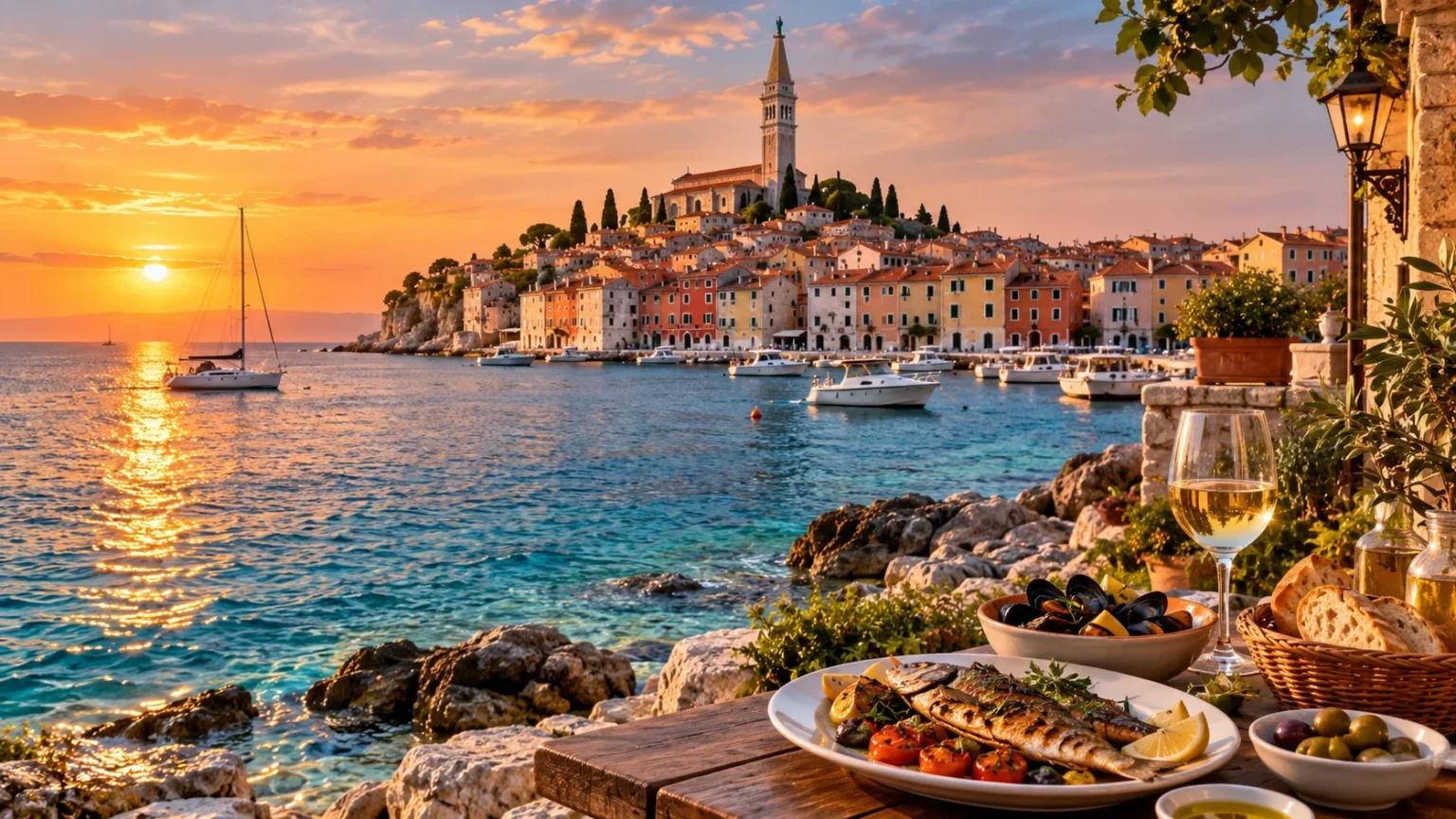
Rovinj, Croatia Guide: Old Town, Beaches & Food
Rovinj is one of Croatia’s most appealing Adriatic destinations, combining a compact historic center with clear blue water, rocky beaches, Mediterranean food, and the relaxed atmosphere of coastal Istria. Its Old Town rises from a small peninsula where pastel buildings, narrow stone lanes, hidden courtyards, and waterfront viewpoints create one of the most recognizable skylines in Croatia. Visitors can spend the morning climbing toward the Church of St. Euphemia, the afternoon swimming near pine-covered coastline, and the evening enjoying seafood, Istrian pasta, local olive oil, and wine. Rovinj feels polished enough for a comfortable holiday without losing the small-scale character that makes wandering enjoyable. It works particularly well for couples, food lovers, photographers, and travelers who prefer exploring on foot.
A Rovinj trip can be as relaxed or active as you want. Some visitors spend most of their time swimming, cycling, dining, and watching sunsets, while others use the town as a base for exploring Istrian villages, wineries, truffle country, and nearby coastal destinations. Beaches around Rovinj are generally pebble, gravel, stone, or rocky rather than long stretches of soft sand, so expectations matter when planning a beach holiday. The historic center also contains polished stone streets and steps that reward comfortable footwear. Summer brings the warmest sea and largest crowds, while late spring and early autumn can provide a quieter balance of pleasant weather and active sightseeing. This guide explains the best parts of Rovinj in practical detail so you can plan a trip around Old Town, beaches, food, and authentic Istrian experiences.
Why Rovinj Is One of Istria’s Best Coastal Destinations
Rovinj has an unusual ability to feel both like a historic European town and a genuine seaside destination. Many beautiful old cities require travelers to choose between architecture and beach time, but Rovinj puts both experiences within easy reach. You can walk through centuries-old streets in the morning and reach swimming spots without spending hours in transportation. Fishing boats, marinas, waterfront cafés, and working harbor areas also keep the sea visibly connected to everyday life. The town does not feel like a beach resort built separately from its history. Instead, the old settlement, harbor, islands, and surrounding coastline form one compact destination that is easy to experience over several days.
The historic center is especially appealing because it rewards wandering without requiring a strict sightseeing checklist. Narrow lanes rise gradually toward the highest point of the peninsula, opening unexpectedly onto small squares, sea views, art galleries, doorways, and balconies. Visitors can enter through the area around Balbi’s Arch and continue upward through streets such as Grisia toward the Church of St. Euphemia. The routes are short enough that getting slightly lost is part of the enjoyment rather than a major inconvenience. Cars do not dominate the oldest lanes, which helps preserve the pedestrian atmosphere. The compact layout makes Rovinj particularly satisfying for travelers who enjoy discovering a place slowly rather than moving between isolated attractions.
Rovinj also works well as a base because the surrounding Istrian region adds significant variety to a coastal holiday. Inland towns, vineyards, olive groves, traditional restaurants, and truffle-focused areas can be reached on day trips, while other coastal communities provide additional beaches and historic centers. Travelers renting a car can build a broader Istria itinerary around Rovinj without changing hotels every night. Those who prefer staying local still have enough to occupy several days through beaches, boat trips, cycling, Old Town walks, and food experiences. This flexibility makes the destination suitable for both short European breaks and longer Croatian holidays.
Another advantage is that Rovinj changes character noticeably throughout the day. Early mornings are quieter and more practical for photographing Old Town streets without large crowds. Midday naturally shifts toward beaches, boat trips, shaded cafés, and long lunches when summer temperatures rise. Late afternoon brings softer light across the colorful waterfront, while evenings turn the pedestrian center into a lively dining and strolling area. Travelers who stay overnight experience these different moods more fully than people arriving only for a quick daytime visit. The town’s strongest moments are often not major attractions but transitions between the harbor, streets, sea, and evening light.
Rovinj is not necessarily the best Croatian destination for travelers who want enormous sandy beaches or a heavy nightlife-focused holiday. Its appeal is more closely connected with atmosphere, scenery, swimming, food, and romantic Mediterranean character. Families can still enjoy the area, especially around accessible beaches and resort zones, but the steep Old Town lanes may require planning with very young children or strollers. Budget travelers should also expect higher prices in the most central waterfront locations during peak summer. Knowing these characteristics helps visitors choose Rovinj for the right reasons. For people who value walkability, coastal beauty, historic streets, and good food, it is one of Istria’s strongest all-around destinations.
Exploring Rovinj Old Town and Its Most Beautiful Streets
Rovinj Old Town is built around a hill rising above the Adriatic, with the Church of St. Euphemia dominating the skyline from its highest point. The best way to explore is simply to begin near the waterfront and walk upward without worrying too much about choosing the perfect route. Stone streets twist between tall houses painted in faded shades of yellow, pink, red, and cream. Laundry, shutters, small galleries, cafés, and glimpses of the sea give many streets a lived-in quality despite the area’s popularity with visitors. The pavement can be polished and slippery, particularly after rain, so shoes with reasonable grip are more comfortable than smooth sandals or flip-flops.
Balbi’s Arch is one of the familiar entry points into the historic quarter and provides a convenient starting point for an Old Town walk. From there, visitors can move toward Grisia Street, one of Rovinj’s best-known lanes and a natural route toward the church at the top of the hill. The street is lined with art, small shops, galleries, and characterful façades rather than major monuments at every step. That is part of Rovinj’s charm because the experience comes from the street itself. Instead of rushing directly uphill, look down side alleys where narrow passages often end in unexpectedly beautiful sea views.
The Church of St. Euphemia is the defining landmark of Rovinj and provides one of the strongest reasons to climb through Old Town. Its hilltop position makes the church and bell tower visible from many points along the coast and harbor. The area surrounding the church also provides open views that contrast with the dense streets below. Visitors interested in architecture, religious history, or panoramic photography should allow enough time to explore rather than treating the church only as a viewpoint. The climb is not extremely long, but hot summer afternoons can make it feel more demanding. Early morning or late afternoon generally provides a more comfortable walk.
The waterfront edges of Old Town deserve as much attention as its interior lanes. Some streets and terraces sit directly above the sea, creating restaurants and viewpoints where the water feels almost part of the architecture. Monte and nearby rocky areas provide opportunities to see the peninsula from a different perspective and, in suitable conditions, access the sea close to the historic center. Walking around the harbor also reveals the colorful town skyline more clearly than standing within the streets themselves. Photographers should explore several sides of the waterfront because the changing angle completely alters the relationship between the church tower, houses, boats, and sea.
Evenings are especially attractive in Old Town because the temperature becomes more comfortable and restaurants begin filling the narrow lanes. Travelers can begin with a waterfront walk, explore small shops, stop for an aperitif, and then choose dinner without needing transportation. Reservations can be worthwhile for highly popular restaurants during peak season, especially if you want a particular terrace or sunset-facing table. After dinner, the Old Town is compact enough for a slow walk back toward the harbor. Visiting the same streets in both daylight and darkness is worthwhile because lighting and crowd patterns change their character substantially. Rovinj rewards repetition more than many destinations, so do not feel every lane needs to be seen only once.
Best Beaches in Rovinj for Swimming and Relaxing
Beaches around Rovinj are best understood as Adriatic swimming areas rather than classic sandy resort beaches. Many have pebbles, gravel, flat rocks, concrete bathing platforms, or combinations of these surfaces. The advantage is often exceptionally clear water and attractive coastal scenery, while the trade-off is that water shoes can be useful for comfortable entry. Travelers who arrive expecting wide Caribbean-style sand may initially be surprised, but many quickly appreciate the accessibility and clarity of the sea. Beach choice should depend on whether you prioritize facilities, easy access, shade, scenery, or a more natural setting. Several excellent options sit within walking or cycling distance of central Rovinj.
Mulini Beach is one of the most polished options close to town and works well for visitors who want attractive surroundings without traveling far. The beach sits near major hotels and the green coastline leading toward Golden Cape Forest Park. Its combination of pebbly and rocky sections creates easy opportunities for swimming while the landscaped surroundings give the area a more refined character. Visitors can reach it on foot from central Rovinj, making it convenient for a half-day swim after morning sightseeing. Because of its location and facilities, it can become busy during the summer. Arriving earlier often provides a calmer experience and a better choice of places to settle.
Lone Bay is another popular choice and sits within the broader natural environment of Golden Cape Forest Park, also known as Punta Corrente. It is particularly appealing for travelers who want to combine swimming with trees, walking paths, cycling, and time away from dense urban streets. The coastline contains shaded areas and natural scenery that can feel cooler than exposed waterfront locations during hot weather. Families and casual swimmers often appreciate the relatively accessible setting, while active visitors can explore more of the park before or after swimming. Bringing water and basic beach equipment provides additional flexibility if you plan to stay for several hours.
Golden Cape Forest Park contains more than one swimming area, which makes it valuable for visitors who prefer exploring instead of sitting at a single beach all day. Walking or cycling paths pass through pine and Mediterranean vegetation before reaching coves, rocks, and sections of coastline with varying degrees of development. Some places feel active and social, while others offer more space and natural surroundings. The park is also useful on days when you want outdoor activity without spending the entire time in full sun. Renting a bicycle can make it easier to cover more ground, although walking remains practical if you have enough time and comfortable shoes.
Travelers should pack beach gear according to Rovinj’s rocky coastal environment. Water shoes can protect feet from sharp stones and improve grip on slippery underwater surfaces. A lightweight beach mat or padded towel makes sitting on pebbles or rock more comfortable, while sun protection is essential during summer afternoons. Some beaches provide services, bars, or nearby facilities, but natural stretches may have fewer conveniences. Never assume every beautiful cove has lifeguards, changing facilities, or easy entry for people with limited mobility. Choosing the right beach for your needs is more important than simply visiting the location that looks most dramatic in photographs.
What to Eat in Rovinj: Seafood, Pasta, Truffles, and Istrian Flavors
Food is one of the strongest reasons to spend more than a day in Rovinj because Istrian cuisine combines Adriatic seafood with ingredients and traditions from the peninsula’s rural interior. Fresh fish, shellfish, handmade pasta, olive oil, cured meats, cheeses, wild asparagus, and truffles all appear across restaurant menus depending on season and style. The Italian influence is also easy to notice in pasta, risotto, polenta, and the general approach to simple ingredients. Travelers who enjoy Mediterranean food can eat extremely well without needing every meal to be elaborate fine dining. The key is to look beyond restaurants positioned only for passing tourist traffic and explore different parts of town.
Seafood should be high on the list for visitors who enjoy fish and shellfish. Menus may include grilled fish, squid, octopus, mussels, scampi, cuttlefish, and seafood risotto, with preparations ranging from very simple grilling to richer sauces. Black risotto made with cuttlefish ink is one recognizable Adriatic dish and can be a memorable option for travelers comfortable with its intense color and flavor. Freshness and preparation matter more than choosing the most complicated recipe. Asking about the day’s catch can sometimes lead to better choices than automatically ordering the most familiar item on the menu. Waterfront restaurants provide atmosphere, but location alone does not guarantee quality.
Istrian pasta deserves attention even if you are visiting primarily for seafood. Fuži and pljukanci are two pasta forms commonly associated with Istrian cooking and can be served with truffles, meat sauces, mushrooms, seafood, or other seasonal ingredients. Truffle dishes are particularly associated with inland Istria, but they appear widely on Rovinj menus because they are one of the region’s signature flavors. Travelers who have never tried fresh truffle should start with a relatively simple pasta or egg-based dish where the aroma remains noticeable. Extremely truffle-heavy menus aimed at visitors can sometimes rely more on flavored products than high-quality fresh ingredients, so a focused traditional restaurant can provide a better introduction.
Istrian olive oil is another product worth tasting rather than treating simply as a cooking ingredient. Good local olive oil can appear with bread, seafood, vegetables, cheese, and other dishes, and visitors interested in food may enjoy visiting producers elsewhere in Istria. Regional prosciutto, cheeses, and cured meats make an easy shared starter before a larger meal. Istrian wines also pair naturally with local food, particularly fresh white wines with seafood and fuller reds with meat dishes. You do not need advanced wine knowledge to enjoy the experience. Asking a restaurant for a local recommendation by the glass can be an easy way to sample regional styles.
Dining strategy matters during the busiest months because central restaurants can fill quickly around sunset and dinner. Travelers with a specific restaurant in mind should consider booking rather than hoping for a prime table at peak time. Lunch can provide better availability and a calmer atmosphere, especially if you make dinner more casual. Gelato, bakeries, markets, and cafés can fill the gaps between larger meals without overscheduling food stops. Try to include both seafood and inland Istrian flavors during the trip so the region does not become defined only by its coastline. Rovinj’s food culture makes the most sense when you see the Adriatic and Istrian countryside as parts of the same culinary destination.
Islands, Boat Trips, and Outdoor Experiences Around Rovinj
Rovinj’s coastline becomes even more appealing when viewed from the water because the Old Town skyline looks dramatically different from a boat. Short sightseeing cruises, sunset trips, swimming excursions, and island-focused outings are widely associated with the destination during the warmer season. A boat trip can provide a welcome break from walking while allowing visitors to experience the surrounding archipelago and coastal scenery. Options vary considerably in size, duration, comfort, and atmosphere, so compare what is actually included rather than choosing solely by price. Travelers prone to seasickness should also consider weather conditions and boat size before committing to a long excursion.
St. Catherine Island sits close to central Rovinj and is visually connected with the town’s harbor scenery. Other nearby islands and resort areas can provide swimming, walking, or a quieter change of perspective depending on access and season. Boat schedules and services can vary throughout the year, so travelers should check current local information rather than building an entire itinerary around an assumed timetable. Some visitors will be satisfied with a short harbor or sunset cruise, while others may prefer a longer day on the water. The best choice depends on how much of your trip you want to devote to islands versus the mainland.
Kayaking and paddle-based activities can provide a more active way to experience Rovinj’s coast. Calm conditions allow visitors to move along sections of shoreline at a slower pace than motorized boats while stopping for swimming when appropriate. Guided trips can be useful for people unfamiliar with the local coastline or open-water conditions. Sunset kayaking is particularly attractive because the light on Rovinj Old Town can become dramatic as the sun lowers. As with any water activity, wind and sea conditions should determine whether an outing goes ahead. Travelers should prioritize experienced operators and realistic ability levels rather than treating the Adriatic as automatically calm.
Cycling is another excellent activity because the relatively flat coastal areas around Golden Cape and beyond offer an easy escape from the busiest streets. Bikes are useful for reaching beaches and exploring more of the coastline without relying on taxis or moving a car repeatedly. Riders should still pay attention to pedestrians, road conditions, and sections where cycling may not be suitable. Morning and late afternoon are more comfortable during hot summer months than midday. Combining a bicycle ride with one or two swimming stops creates a satisfying half-day activity that feels very different from sightseeing inside Old Town.
Walking remains the simplest outdoor experience and should not be underestimated. Rovinj’s waterfront, Golden Cape, marina areas, forest paths, and coastal viewpoints can fill several hours without requiring a formal tour. Sunset walks are particularly rewarding when the weather is clear, but mornings provide cooler temperatures and fewer people. Travelers who enjoy photography may find that exploring on foot offers more flexibility than organized excursions because they can wait for changing light. Outdoor activities are one reason Rovinj works well for longer stays. The destination offers enough natural variety that a week does not need to feel like seven consecutive days of sitting on the same beach.
Where to Stay in Rovinj for the Best Experience
Staying in or immediately beside Old Town gives travelers maximum atmosphere and puts restaurants, harbor walks, and historic streets directly outside the door. This is particularly appealing for couples or first-time visitors who want to experience Rovinj after day-trippers have left. The trade-off is that historic buildings may involve stairs, limited elevators, smaller rooms, or complicated luggage access. Cars are not practical inside many old streets, so travelers arriving with heavy bags should confirm exactly how they will reach accommodation. Noise can also be higher around popular restaurants and nightlife areas. Choosing Old Town means prioritizing character and walkability over conventional hotel convenience.
The waterfront and central areas just outside the oldest lanes can provide a useful compromise. Visitors remain within easy walking distance of attractions while gaining better access to taxis, parking connections, modern hotels, and larger rooms. This location works particularly well for travelers who plan several day trips because leaving town may be easier than from accommodation deep inside the pedestrian core. Families may also appreciate simpler access and flatter routes. Prices remain relatively high in well-positioned central properties during summer, but the convenience can justify the difference for shorter visits. Always compare exact map locations because descriptions such as “central Rovinj” can cover a surprisingly broad area.
Areas closer to Mulini Beach and the marina appeal to travelers who want a resort-style stay without losing access to Old Town. The waterfront walk makes it possible to move between beaches, hotels, restaurants, and the historic center without depending constantly on transportation. This can be one of the strongest choices for couples seeking comfortable accommodation with pools, beach access, or higher-end services. The surroundings feel greener and more spacious than the dense Old Town while remaining connected to Rovinj’s main attractions. The main disadvantage is cost, as premium waterfront properties can become expensive during peak season.
Apartments and guesthouses farther from the immediate center can offer better value and additional space. Travelers staying several nights may appreciate having a kitchen, balcony, washing machine, or easier parking. The key is checking walking distance carefully because a property that looks close on a map may feel less convenient during hot weather or when returning after dinner. Bicycles can reduce this problem and make outer neighborhoods more practical. Travelers with rental cars should prioritize guaranteed or clearly explained parking because parking in popular Croatian coastal towns can be stressful during summer. A slightly less central property with straightforward parking may be preferable for a road-trip itinerary.
The best location ultimately depends on the type of trip you want. Choose Old Town for romance, atmosphere, and immediate access to historic streets; choose the central waterfront for convenience; choose the beach and marina area for a more polished coastal holiday; and choose outer neighborhoods for space, parking, and value. Do not select accommodation based only on star rating or interior photographs. In Rovinj, location strongly affects how often you need transportation and how easily you can move between swimming, sightseeing, and dinner. A modest room in the right area can create a better trip than a luxurious property that makes every activity logistically inconvenient.
Best Time to Visit Rovinj and What the Seasons Are Like
Summer is the most popular season because the Adriatic is warm enough for swimming, restaurants and tourism services operate at full strength, and long daylight hours support beach-focused itineraries. July and August usually bring the highest combination of heat, crowds, and accommodation demand. Travelers who love lively waterfront evenings and warm sea conditions may consider this energy part of the appeal. Those who dislike packed streets should organize Old Town visits for early morning and spend midday hours around beaches or quieter coastal areas. Booking accommodation and popular restaurants earlier is particularly useful during peak summer.
Late spring can be one of the most attractive times for travelers who prioritize sightseeing, cycling, and outdoor exploration over guaranteed warm-water swimming. May and early June can bring comfortable temperatures, greener landscapes, and fewer visitors than the height of summer. Some people will swim during this period, but sea temperatures may feel cool depending on personal preference and weather conditions. Restaurants and tourism infrastructure increasingly come alive as summer approaches. This season works especially well for active couples and road-trip travelers exploring several Istrian towns. Accommodation availability can also be easier than during the busiest weeks.
September is another strong choice because the sea often retains summer warmth while peak holiday crowds begin easing. Daytime weather can still support beach time, yet walking through Old Town becomes more comfortable as extreme summer heat moderates. Food-focused travelers may also enjoy the transition toward autumn ingredients and broader exploration of inland Istria. Rain remains possible, as it does during any shoulder season, so flexibility is useful. Travelers who want a combination of swimming, restaurants, day trips, and sightseeing frequently find early or mid-September particularly appealing. Later in the month, weather becomes less predictable but crowds generally continue decreasing.
Autumn and winter reveal a much quieter side of Rovinj. The Old Town remains visually beautiful, but some seasonal restaurants, tours, beach facilities, and tourism businesses may reduce hours or close outside the main season. Swimming becomes less central, and weather can involve cooler temperatures, rain, and wind. This can still appeal to visitors interested in photography, local atmosphere, food, and slow travel rather than a classic beach holiday. Accommodation may provide better value, although travelers should confirm exactly which services will be operating. Off-season Rovinj should be chosen intentionally because the experience is very different from its summer personality.
There is therefore no single perfect month for everyone. Choose July or August if warm sea conditions and full summer energy matter most, while accepting higher costs and crowds. Consider May, June, or September if you prefer a balance between outdoor activity and a calmer atmosphere. October can work for food, road trips, and photography when swimming is less important. Winter suits travelers interested mainly in quiet Old Town atmosphere rather than beaches or boat excursions. Matching the season to your priorities prevents disappointment. Rovinj changes meaningfully throughout the year, so “best time” should describe the experience you want rather than simply the warmest weather.
Getting Around Rovinj, Day Trips, and Practical Travel Tips
Walking is the best form of transportation inside central Rovinj because Old Town is compact and many of the most attractive routes are pedestrian-focused. Comfortable shoes matter more than transportation apps when exploring the historic center. Stone streets can be steep, uneven, and polished, especially around the climb toward St. Euphemia. Travelers with limited mobility should research specific routes because the most atmospheric lanes are not always the easiest surfaces. Outside Old Town, longer waterfront paths connect central areas with beaches and parks. Building your itinerary geographically can prevent unnecessary backtracking during hot days.
Bicycles are useful for reaching Golden Cape, beaches, and areas beyond the immediate historic center. Many accommodations can provide rental recommendations, while dedicated rental businesses operate around the destination. Cycling gives travelers more independence than waiting for local transportation and reduces the need to move a rental car for short journeys. Cars become more valuable when exploring inland Istria or distant coastal towns. Visitors arriving by car should understand their accommodation’s parking arrangements before reaching central Rovinj because driving directly to an Old Town doorway may not be possible. Pre-planning parking can eliminate one of the most common sources of arrival-day stress.
Day trips can expand a Rovinj holiday significantly. Pula appeals to travelers interested in Roman history, while Poreč combines another attractive coastal center with major historical architecture. Inland Istrian towns can provide hilltop scenery, wine, olive oil, truffle-focused food, and a completely different atmosphere from the Adriatic coast. A rental car offers the greatest flexibility for combining several small destinations in one day. Organized excursions can work for visitors who do not want to drive, but compare itineraries carefully because tours sometimes spend limited time in each stop. Rovinj itself deserves enough time that day trips should complement rather than replace the destination.
Budgeting depends heavily on season and travel style. Waterfront hotels, high-end restaurants, private boat trips, and premium summer dates can make Rovinj an expensive Croatian stop. Apartments, bakeries, casual restaurants, public beaches, cycling, and self-guided Old Town walks allow travelers to manage costs more easily. Croatia uses the euro, simplifying price comparisons for many European visitors. Card payments are common in tourist areas, but carrying a small amount of cash can still be useful for minor purchases or situations where electronic payment is inconvenient. Avoid assuming every business follows identical payment practices, particularly smaller seasonal operators.
A three-night stay provides enough time for Old Town, beaches, food, and a short boat or outdoor experience, while four to five nights creates a more relaxed trip with room for a day trip. Travelers spending a week can use Rovinj as a base for wider Istria without constantly repacking. Avoid scheduling every hour because weather, swimming conditions, restaurant discoveries, and sunset plans can easily change your priorities. Start sightseeing early, protect midday time from excessive heat in summer, and reserve evenings for food and waterfront atmosphere. Rovinj is best experienced slowly. The town’s real strength comes from moving naturally between historic streets, the Adriatic, green coastline, and Istrian food rather than racing through a checklist of attractions.
Frequently Asked Questions
Is Rovinj, Croatia worth visiting?
Yes, Rovinj is worth visiting for travelers who enjoy historic coastal towns, clear Adriatic water, good food, walkable streets, and romantic Mediterranean scenery. It works especially well as both a standalone destination and a base for exploring the wider Istrian peninsula.
How many days do you need in Rovinj?
Three days is a good minimum for exploring Old Town, spending time at the beaches, and enjoying the food scene without rushing. Four or five days gives you additional time for boat trips, cycling, nearby islands, or a day trip elsewhere in Istria.
What are the best beaches in Rovinj?
Mulini Beach and Lone Bay are two popular options close to central Rovinj, while the Golden Cape Forest Park area provides several natural coves and rocky swimming spots. Most beaches around Rovinj are pebble, gravel, or rocky rather than sandy.
What food is Rovinj famous for?
Rovinj and the wider Istrian region are known for fresh seafood, Istrian pasta, truffles, olive oil, prosciutto, cheeses, local wine, and seasonal Mediterranean ingredients. Fish, shellfish, fuži, pljukanci, and truffle dishes are particularly worth looking for.
What is the best month to visit Rovinj?
June and September are excellent choices for many travelers because they can offer warm weather, active tourism services, and fewer crowds than peak July and August. If the warmest possible sea and full summer atmosphere are your priorities, July and August remain the classic high-season months.