




Prague in December: Christmas Markets, Snow & Tips
Prague in December feels like a city designed for winter, with medieval streets, illuminated towers, decorated squares, steaming cups of hot drinks, and Christmas markets filling the historic center. The Czech capital becomes especially atmospheric during Advent as wooden stalls appear around famous landmarks and festive lights brighten the long winter evenings. December is cold, and snow is possible, but travelers should not assume they will automatically find the city covered in white. Prague’s winter charm does not depend entirely on snow because its Gothic architecture, cozy cafés, concerts, and seasonal traditions create plenty of atmosphere on their own. Visitors should prepare for low temperatures, early sunsets, and busy central attractions. With thoughtful planning, December can be one of the most memorable times to visit Prague.
A December trip also offers a different experience from Prague’s warmer high season. Instead of spending long afternoons in outdoor gardens, travelers can combine shorter sightseeing walks with museums, historic interiors, coffeehouses, Czech restaurants, and festive markets. The busiest Christmas areas can become crowded, particularly in the evenings and around weekends, yet quieter streets are usually only a short walk away. Prague’s compact center and reliable public transportation make winter sightseeing relatively easy even when the weather turns cold. Comfortable waterproof shoes and warm layers are far more important than trying to create an overly complicated itinerary. This guide covers Prague weather in December, Christmas markets, snow expectations, seasonal food, packing advice, attractions, budgeting, and practical tips for enjoying the city comfortably.
What Is Prague Like in December?
Prague in December combines historic sightseeing with a strong festive atmosphere that changes the character of the city center. Old Town Square becomes one of the main focal points, where seasonal decorations, wooden market stalls, and illuminated architecture attract both visitors and local residents. Wenceslas Square also develops a Christmas atmosphere while remaining part of one of Prague’s busiest commercial areas. Streets between the major squares fill with people browsing shops, drinking hot beverages, and walking between attractions. The city’s architecture becomes especially dramatic after sunset because towers, churches, and historic façades are illuminated against the dark winter sky. December therefore feels more atmospheric than an ordinary sightseeing month.
Daylight hours are relatively short, so travelers need to plan differently than they would during spring or summer. Darkness can arrive around the late afternoon, which means outdoor sightseeing is best started relatively early in the day. Prague Castle, Charles Bridge, Old Town, and riverside areas are easier to explore when there is plenty of natural light. The early sunset is not necessarily a disadvantage because Prague becomes beautiful after dark. Festive lights make evening walks enjoyable, and many indoor attractions remain available after outdoor sightseeing becomes less practical. A balanced December itinerary often uses mornings for landmarks and evenings for markets, restaurants, concerts, or scenic illuminated walks.
December generally feels busier as Christmas approaches, although crowd levels vary depending on the day and neighborhood. Old Town Square and Charles Bridge can become particularly crowded around popular afternoon and evening hours. Travelers who want photographs or quieter sightseeing can visit these areas early in the morning before most day visitors arrive. Lesser Town, residential streets, smaller squares, and neighborhoods outside the busiest tourist route often feel calmer. Visiting Prague in December therefore does not mean spending the entire trip inside crowds. Changing the time of day can completely transform the experience of the same landmark.
The festive season also makes Prague appealing to couples, families, solo travelers, and groups with different interests. Couples may enjoy candlelit restaurants and evening walks, while families can explore decorated squares and seasonal events. Solo visitors benefit from the walkable center and easy public transportation system, which make independent sightseeing straightforward. History lovers have castles, churches, museums, and medieval streets, while food-focused travelers can spend cold evenings exploring Czech cuisine. December offers enough variety that travelers do not need to build the entire trip around Christmas markets. The markets are an important attraction, but Prague remains a major cultural destination underneath the seasonal decorations.
Winter also changes the pace of travel in a useful way. Cold temperatures naturally encourage visitors to slow down instead of rushing through twelve attractions in one day. A long lunch, café break, museum visit, or evening performance can become part of the experience rather than wasted sightseeing time. This slower rhythm suits Prague because much of its appeal comes from architecture, atmosphere, and small details rather than checking landmarks off a list. Travelers who allow flexibility for weather usually enjoy December more than those following strict minute-by-minute itineraries. The best Prague winter trips combine famous sights with enough unplanned time to warm up and simply enjoy the city.
Prague Weather in December and Chances of Snow
Prague weather in December is cold, and temperatures often remain only a few degrees above freezing during the day before dropping closer to or below freezing at night. Some days can feel relatively mild, while others bring sharp cold, wind, frost, or freezing conditions. Humidity and wind can make the temperature feel colder than the number shown on a weather application. Visitors coming from warmer climates may therefore find extended outdoor sightseeing uncomfortable without proper clothing. Warm layers make it easier to adapt because indoor restaurants, museums, hotels, and public transportation are usually heated. December weather is manageable when travelers dress for it instead of trying to tolerate the cold in ordinary autumn clothing.
Snow in Prague during December is possible but never guaranteed for a particular trip. The city can experience snowfall, light flurries, freezing rain, or completely snow-free periods depending on the year and weather pattern. Fresh snow can transform Prague Castle, Charles Bridge, and the red rooftops into an exceptionally beautiful winter scene. However, temperatures may rise afterward and cause snow in central areas to melt relatively quickly. Travelers should therefore view snowy Prague as a welcome bonus rather than the main reason for booking December. A successful winter trip should still feel enjoyable if the streets remain dry throughout the visit.
When snow does fall, walking conditions can change quickly. Historic Prague contains cobbled streets that are already uneven under normal conditions and can become slippery when wet or icy. Footwear with good traction is therefore more useful than fashionable shoes with smooth soles. Waterproof shoes or boots can also keep feet comfortable when melting snow creates slushy streets. Visitors should allow slightly more time when walking between attractions during poor weather. Most central areas remain accessible, but rushing across icy cobblestones can quickly turn an enjoyable winter trip into an unnecessary accident.
Rain is another possibility that travelers sometimes overlook because they focus entirely on snow. December precipitation may arrive as rain, sleet, or wet snow depending on temperature. A compact umbrella can help, although a water-resistant outer layer is often more convenient when walking through busy streets. Wind can also make umbrellas awkward in open areas such as bridges and exposed viewpoints. Protecting your phone or camera from moisture is worthwhile if you plan to photograph markets or architecture for several hours. Prague remains attractive in cloudy weather, but practical winter clothing determines whether you can comfortably stay outside long enough to enjoy it.
Checking the forecast shortly before departure is more useful than trying to predict exact December conditions months in advance. Pack for a realistic range that includes cold dry days, wet conditions, and the possibility of snow. Travelers should also remember that weather can change during a four- or five-day visit. One day might provide blue skies and crisp temperatures, while the next brings low cloud and freezing drizzle. Building indoor alternatives into the itinerary provides valuable flexibility. Museums, churches, historic interiors, galleries, cafés, and restaurants ensure that poor weather does not need to eliminate an entire sightseeing day.
Prague Christmas Markets in December
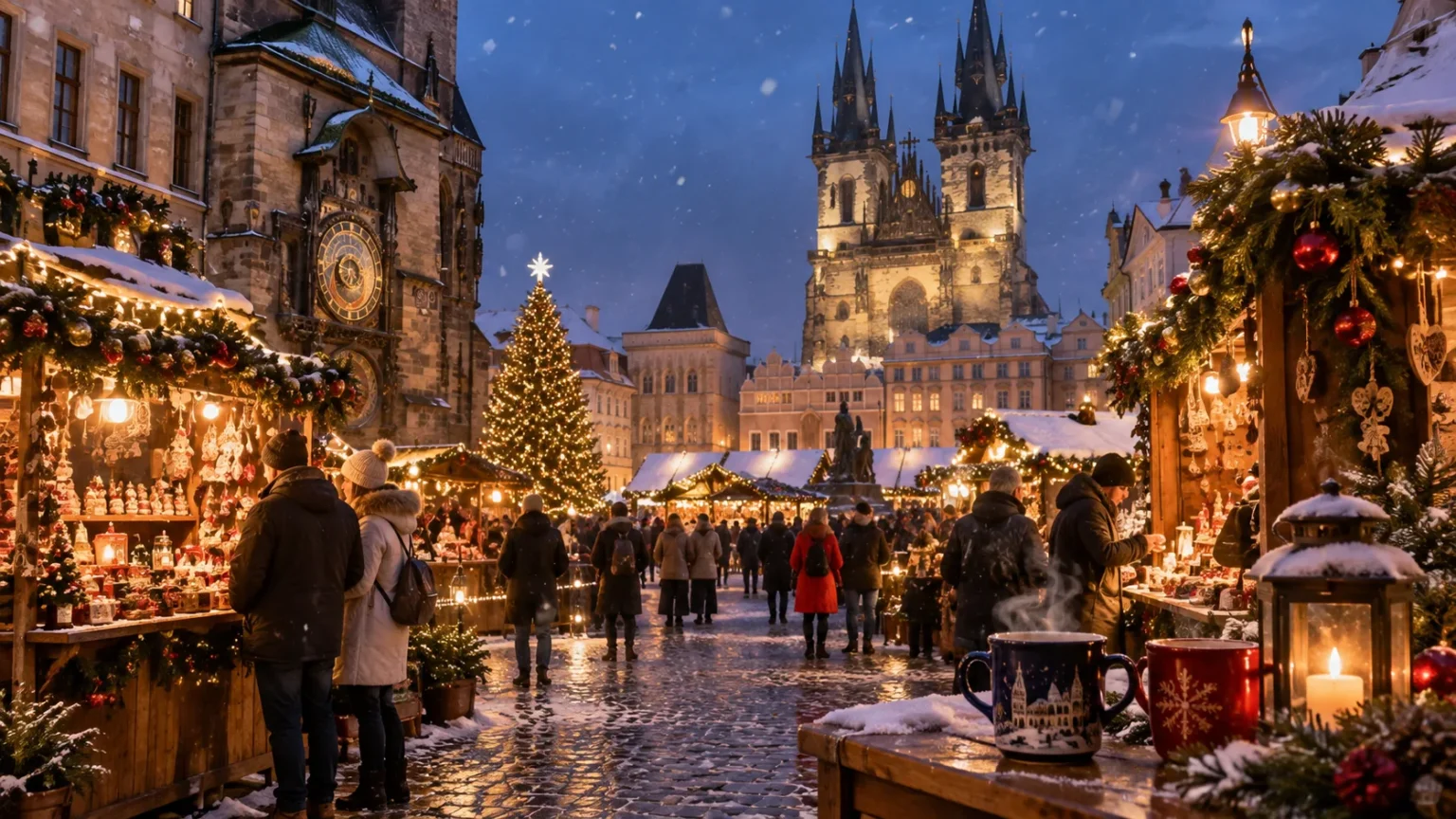
Prague Christmas markets are one of the biggest reasons travelers choose to visit the city in December. Old Town Square hosts the most famous festive market and provides a dramatic setting surrounded by historic architecture. Decorative lighting and a large Christmas tree make the square particularly attractive after dark, when the surrounding buildings add to the atmosphere. Wooden stalls typically sell seasonal food, hot drinks, ornaments, crafts, gifts, and other festive goods. Because this is Prague’s best-known Christmas market, it can become extremely busy. Visiting earlier in the day provides more space for browsing, while evening offers the strongest festive atmosphere.
Wenceslas Square is another important stop and is easy to combine with Old Town because the two areas are within walking distance. The square is much longer and more commercial in character than Old Town Square, creating a different Christmas market experience. Visitors can combine seasonal stalls with shopping, restaurants, cafés, and nearby cultural attractions. It also serves as a convenient route between New Town and the historic center. Evening lights create plenty of atmosphere, although the area remains part of a functioning central district rather than feeling like an isolated Christmas village. Travelers staying nearby can easily revisit it several times during their trip.
Smaller Christmas markets can provide a more relaxed experience than the major tourist locations. Náměstí Míru, or Peace Square, is particularly popular for its neighborhood atmosphere and attractive setting in front of the Church of St. Ludmila. Náměstí Republiky is another convenient option near central shopping and major transportation connections. Smaller markets may offer local crafts, food, decorations, and gifts while attracting fewer international tour groups than Old Town Square. Their schedules can differ from the larger central markets, particularly around Christmas Eve. Travelers interested in several markets should check current operating dates before their trip rather than assuming every location follows the same calendar.
Food and drink are an important part of the Prague Christmas market experience. Visitors commonly encounter grilled sausages, roasted nuts, potato dishes, pastries, sweets, and various warm beverages. Mulled wine is a familiar winter choice, while other hot seasonal drinks can provide welcome warmth between sightseeing stops. Market prices in the most tourist-heavy squares can be higher than prices at ordinary local restaurants or bakeries. Checking displayed prices before ordering helps avoid misunderstandings, especially when food is priced according to weight rather than by portion. Markets are best enjoyed for atmosphere and sampling rather than automatically assuming every stall provides the best-value meal in Prague.
Christmas market etiquette is relatively simple, but a little awareness improves the experience. Busy evenings involve close crowds, so keep phones, wallets, and bags secure while moving through popular areas. Avoid blocking narrow walking routes while taking photographs, particularly around major decorations and food stalls. Carrying some payment flexibility is sensible because card acceptance can vary between individual vendors. Travelers should also resist trying to visit every market in one evening because the experience becomes repetitive when rushed. Choose a few markets with different atmospheres and combine them naturally with sightseeing. Prague’s Christmas season is most enjoyable when markets become part of the journey rather than the only purpose of every day.
Best Things to Do in Prague in December
Prague Castle remains one of the city’s essential attractions regardless of season, and December can make the complex especially atmospheric. Arriving early provides quieter courtyards and more comfortable access before large visitor groups appear. St. Vitus Cathedral, Old Royal Palace, Golden Lane, and surrounding viewpoints can occupy several hours depending on your interests. Outdoor areas can become cold and windy, so alternating exterior sightseeing with historic interiors works well. The elevated location also provides broad city views when winter weather is clear. After exploring the castle, walking downhill through Lesser Town creates a natural route toward Charles Bridge and the historic center.
Charles Bridge deserves more than one visit because its character changes dramatically throughout the day. Early mornings are quieter and provide better opportunities for photography without large crowds. Daytime brings artists, musicians, visitors, and broad views of the Vltava River, while evenings create a more romantic atmosphere as Prague’s landmarks illuminate. Winter mist or light snow can make the bridge particularly memorable. However, exposed river wind can feel significantly colder than temperatures in sheltered streets. Gloves and a warm hat become especially valuable when spending time photographing views from the bridge.
Old Town is ideal for walking in December because many major attractions sit relatively close together. Old Town Square, the Astronomical Clock, Church of Our Lady before Týn, historic lanes, and nearby shopping streets can be explored without complicated transportation. The area becomes busiest around major market hours, so morning sightseeing creates a calmer experience. Returning after dark allows visitors to experience the same streets under Christmas lighting. Rather than following only the widest tourist streets, explore smaller side lanes where architecture and hidden courtyards reveal another side of central Prague. Comfortable footwear makes spontaneous exploration much easier.
Indoor cultural experiences become especially attractive during cold December evenings. Prague has a strong classical music tradition, and concerts are frequently held in historic halls, churches, and cultural venues. Theatre, opera, museums, and galleries provide additional ways to experience the city without spending every evening outdoors. Travelers should compare venues carefully because tourist-oriented performances and major professional productions can offer very different experiences. Reserving particularly important performances in advance can be worthwhile during busy holiday periods. A concert after an afternoon at the Christmas markets creates a natural winter itinerary that combines seasonal atmosphere with Prague’s broader cultural identity.
December is also an excellent time to explore Prague’s cafés and historic interiors. Café culture offers a comfortable way to warm up while experiencing another part of the city beyond outdoor landmarks. Visitors can spend an hour over coffee and dessert without feeling that they should immediately return to sightseeing. Museums focused on Czech history, art, music, or technology can provide several hours of indoor activity when weather becomes unpleasant. Beer halls and traditional restaurants offer another warm retreat during the evening. Building these slower experiences into the itinerary turns winter conditions into part of the trip rather than treating cold weather as an obstacle.
What to Eat and Drink in Prague in December
Czech cuisine suits cold weather particularly well because many traditional dishes are rich, warm, and filling. Travelers commonly encounter roasted or braised meats, dumplings, sauces, soups, and hearty potato-based dishes in traditional restaurants. Beef sirloin with creamy sauce and dumplings is one well-known Czech option, while goulash-style dishes are another comforting winter choice. Portions can be substantial, making a long meal a useful break after several hours outside. Restaurants around the most famous tourist squares can charge higher prices than places located a few streets away. Exploring beyond the immediate market areas can therefore provide both better value and a wider range of dining experiences.
Soups are especially welcome during Prague’s cold December weather. Czech restaurants may offer broth-based soups, garlic soup, potato soup, or seasonal specials depending on the establishment. A bowl of soup can work as a light lunch when travelers know they will eat more extensively at Christmas markets later in the day. It is also an effective way to warm up without committing to a long restaurant meal. Bakeries and cafés provide additional lighter options when traditional Czech dishes feel too heavy. Mixing substantial local meals with simpler lunches keeps food exploration enjoyable throughout a multi-day trip.
Christmas markets offer plenty of opportunities for casual snacking, but travelers should distinguish traditional Czech foods from items marketed primarily toward visitors. Sausages, roasted nuts, potato-based snacks, sweets, and warm drinks are easy to find during Advent. Trdelník, a sweet rolled pastry commonly sold in central tourist areas, has become strongly associated with the Prague visitor experience despite having a more complicated regional history than many travelers realize. It can still be enjoyable as a sweet treat, particularly when served warm. The key is viewing market food as part of the festive atmosphere rather than using it as the only guide to Czech cuisine.
Czech beer remains an important part of the country’s food culture even during the coldest months. Prague offers traditional beer halls, modern craft beer bars, breweries, and restaurants serving several Czech styles. Visitors who drink alcohol may find that an indoor beer hall provides a welcome contrast to cold outdoor markets. Trying local beer alongside Czech food can create a more authentic meal experience than ordering drinks only at tourist stalls. Non-drinkers still have plenty of options, including coffee, tea, hot chocolate, and other warm beverages. Winter travel does not require alcohol to enjoy Prague’s café and dining culture.
December is also a good time to try seasonal sweets and bakery products. Christmas traditions can bring cookies, pastries, cakes, and other desserts into cafés, markets, and shops. Travelers interested in food souvenirs can look for packaged sweets, local products, teas, or carefully selected gifts that travel well. Buying from established shops can sometimes provide better quality and clearer pricing than purchasing everything inside the busiest market. Food experiences are often more memorable when spread throughout the trip rather than completed in one tasting session. Allowing room for spontaneous cafés and bakeries is therefore a useful part of any Prague December itinerary.
What to Pack for Prague in December
Layering is the most practical clothing strategy for Prague in December because visitors move repeatedly between cold streets and heated indoor spaces. A warm base layer provides insulation without adding excessive bulk, while a sweater or fleece creates a useful middle layer. The outer layer should protect against cold wind and ideally provide some resistance to rain or wet snow. Heavy clothing that cannot be removed easily can become uncomfortable inside museums or restaurants. Packing several adaptable layers gives travelers more control as temperatures change throughout the day. This approach is usually more useful than relying on one extremely thick sweater under an ordinary jacket.
Comfortable winter footwear is one of the most important items to pack. Prague’s historic center contains large areas of cobblestone, which can become tiring after several hours even in dry weather. Rain, frost, snow, or slush makes good traction even more important. Waterproof or water-resistant walking shoes with supportive soles are preferable to fashion footwear that becomes cold or slippery. Thick socks can add warmth without requiring bulky snow boots for typical city sightseeing. Travelers should wear new footwear several times before departure to avoid discovering painful pressure points during a full sightseeing day.
A hat, gloves, and scarf can make a surprisingly large difference because wind exposure quickly affects uncovered skin. Gloves are particularly useful when waiting outdoors at Christmas markets or walking across Charles Bridge. Touchscreen-compatible gloves can make photography and navigation easier without repeatedly exposing your hands. A scarf helps protect the neck when temperatures drop after sunset, while a warm hat reduces discomfort during long outdoor periods. These accessories take relatively little luggage space but can determine how long a traveler comfortably remains outside. Carrying them during the day is worthwhile even when the morning initially feels mild.
Rain protection should remain part of the packing plan even when the forecast mentions possible snow. A water-resistant jacket handles light precipitation more conveniently than constantly opening an umbrella in crowded streets. A compact umbrella can still be useful during steadier rain, particularly when moving between indoor attractions. A small day bag should have enough protection to keep documents, electronics, and spare clothing dry. Travelers who plan to take many photographs may want a simple lens cloth because moisture and temperature changes can fog cameras. Practical preparation helps ensure that a wet day remains a sightseeing day rather than forcing an early return to the hotel.
Other useful items include a portable phone charger, reusable water bottle, moisturizer, lip balm, and any personal medications needed during the trip. Cold air and indoor heating can dry skin more than travelers expect. Phone batteries may also drain faster during extended exposure to low temperatures, especially when navigation and photography are used continuously. Carrying a power bank provides reassurance on long sightseeing days. Leave some luggage space for Christmas gifts or souvenirs if market shopping is part of the plan. Efficient packing should prioritize warmth and comfort without filling a suitcase with specialist winter gear that is unnecessary for ordinary city travel.
Crowds, Costs, and Getting Around Prague in December
December prices can vary significantly according to travel dates. Early December may offer a different pricing environment from the period immediately around Christmas and New Year, when demand can increase substantially. Hotels in or near Old Town often cost more because travelers can walk directly to major attractions and Christmas markets. Staying slightly outside the historic core can provide better value while remaining convenient through Prague’s public transportation network. Booking earlier is sensible when specific hotels or weekend dates matter. Travelers who leave accommodation until the last minute may have fewer well-located choices during popular holiday periods.
Dining costs also depend heavily on location. Restaurants directly beside major attractions generally target high visitor traffic and may charge more than establishments several streets away. Walking ten minutes beyond Old Town Square can dramatically increase the variety of dining options. Checking menus before sitting down makes budgeting easier because most restaurants display prices clearly. Christmas markets can also become expensive if every meal, snack, and drink is purchased from central stalls. Combining one market snack with ordinary restaurants, bakeries, or supermarkets can keep daily food spending more reasonable without sacrificing the festive experience.
Public transportation makes getting around Prague straightforward in winter. Metro lines, trams, and buses connect the central districts with neighborhoods and attractions throughout the city. Trams are particularly useful because they allow visitors to travel through scenic areas without spending long periods walking in cold weather. Tickets are generally time-based, meaning travelers can use appropriate connections during the ticket’s validity period according to current rules. Visitors should make sure they understand how their particular ticket needs to be activated or validated. Buying the correct ticket before traveling avoids unnecessary stress during inspections.
Walking remains the best way to experience the historic center because many major sights sit relatively close together. Old Town Square, Charles Bridge, Wenceslas Square, Josefov, and sections of the riverfront can be explored primarily on foot. Public transportation becomes more useful for reaching Prague Castle uphill, visiting neighborhoods outside the core, or returning to accommodation after a long day. Ride-hailing and taxis are available when needed, but most short sightseeing itineraries do not require constant car travel. Combining walking with trams and metro services provides an efficient balance. Winter visitors should simply allow more walking time when surfaces become slippery.
Crowd management can improve the trip more than trying to eliminate crowds entirely. Visit Charles Bridge and Old Town Square early, explore museums or residential areas during peak midday hours, and return to the Christmas markets later for evening atmosphere. Weekday mornings are often more comfortable for famous attractions than weekend evenings. Reservations can also reduce waiting for particularly popular restaurants, tours, or performances. Prague is a major European destination, so expecting an empty Old Town during Advent is unrealistic. A good itinerary works around busy periods instead of allowing them to dominate every part of the experience.
Practical Tips for Planning a Prague December Trip
A three- to four-day trip gives first-time visitors enough time to see the major Prague highlights without rushing excessively. One day can focus on Prague Castle, Lesser Town, and Charles Bridge, while another covers Old Town, Josefov, and Wenceslas Square. A third day can include museums, additional neighborhoods, seasonal shopping, and smaller Christmas markets. Travelers staying longer can slow the pace further or add a day trip outside Prague. December schedules should remain somewhat flexible because cold weather can make an ambitious outdoor itinerary exhausting. Planning fewer major attractions each day generally produces a more enjoyable winter experience.
Accommodation location deserves careful consideration because walking convenience becomes more valuable in cold weather. Staying in Old Town offers immediate access to major sights but usually involves higher prices and more nighttime activity. Lesser Town can provide historic atmosphere with easy castle and bridge access, while New Town offers excellent transportation and a wider range of hotels. Neighborhoods slightly outside the tourist center can deliver better value and a more local atmosphere. Prague’s transportation system means visitors do not necessarily need to sleep beside Old Town Square. The best location depends on budget, nightlife preferences, and how much walking you want to do each day.
Travelers should avoid scheduling every evening before arrival because spontaneous experiences are part of Prague’s December appeal. You might discover a smaller Christmas market, attractive café, concert advertisement, or restaurant that changes the day’s plan. Leaving one or two evenings relatively open makes room for these discoveries. At the same time, reserve any activity that would genuinely disappoint you if it sold out, such as a particular opera performance or special restaurant. This combination of advance planning and flexibility works particularly well during winter. It creates structure without turning a holiday into a list of appointments.
Christmas Eve and the days immediately around Christmas require additional planning because opening hours can differ from ordinary December schedules. Some museums, restaurants, stores, markets, and services may operate reduced hours or close entirely. Travelers visiting during this period should confirm essential attractions and dining arrangements shortly before arrival. Reserving Christmas meals may be especially useful when restaurant choices become limited. Public transportation generally remains important, but special holiday schedules can apply. A little advance research prevents visitors from arriving at a planned attraction only to discover that normal opening hours have changed.
Finally, approach Prague in December as a winter city rather than expecting a warm-weather itinerary with Christmas decorations added on top. Start mornings early enough to use limited daylight, take regular indoor breaks, and allow weather to influence the pace. Enjoy the Christmas markets, but also make time for Prague Castle, historic neighborhoods, Czech cuisine, culture, and ordinary city life. Do not let the absence of snow disappoint you because Prague’s atmosphere remains impressive without it. Some of the best moments may be simple ones, such as crossing a quiet bridge early in the morning or warming up in a café after several hours outside. December rewards travelers who embrace both the cold and the slower seasonal rhythm.
Frequently Asked Questions
Is December a good time to visit Prague?
Yes, December is an excellent time to visit Prague if you enjoy Christmas markets, festive decorations, winter atmosphere, cultural activities, and cold-weather travel. The main trade-offs are shorter daylight hours, low temperatures, and larger crowds around popular Christmas areas.
Does it snow in Prague in December?
Snow is possible in Prague during December, but it is not guaranteed. Some years bring picturesque snowfall, while other December visits may involve mostly cold, cloudy, rainy, or dry conditions.
What are the best Christmas markets in Prague?
Old Town Square and Wenceslas Square host two of the best-known Christmas markets in central Prague. Smaller markets such as those at Náměstí Míru and Náměstí Republiky can provide additional festive atmosphere and are worth considering when their seasonal schedules align with your trip.
How cold is Prague in December?
Prague is generally cold in December, with daytime temperatures often only a few degrees above freezing and colder conditions possible at night. Wind, moisture, and long periods outdoors can make it feel colder, so warm layers, gloves, a hat, and suitable shoes are important.
What should I wear in Prague in December?
Wear warm layers beneath a weather-resistant winter coat and choose comfortable walking shoes with good grip for Prague’s cobblestone streets. Gloves, a scarf, warm socks, and a hat are especially useful for Christmas markets, evening walks, and exposed locations such as Charles Bridge.