




Best Area to Stay in Rome for Sightseeing & Food
Choosing the best area to stay in Rome for sightseeing and food can make a bigger difference to your trip than choosing the fanciest hotel. Rome is large, but many of its most famous attractions sit within a surprisingly walkable historic core filled with piazzas, trattorias, cafés, archaeological sites, churches, and narrow cobbled streets. Staying in the right neighborhood can allow you to walk to the Pantheon before breakfast, stop for pasta at lunch, see the Trevi Fountain in the evening, and return to your accommodation without a complicated journey. The best choice depends on whether you prioritize ancient sights, Roman restaurants, nightlife, the Vatican, luxury shopping, or convenient transportation.
For most first-time visitors, the historic center offers the easiest sightseeing experience, while neighborhoods such as Trastevere and Testaccio appeal strongly to travelers who organize their days around food. Monti provides an atmospheric base close to the Colosseum and Roman Forum, whereas Prati is particularly practical for Vatican-focused itineraries. The Spanish Steps and Trevi area works well for travelers who want a central, polished location, while Termini can provide convenience and broader accommodation choices for people taking day trips. No single neighborhood wins every category, which is why understanding each area’s personality matters. This guide compares Rome’s most useful places to stay so you can choose a base that matches the way you actually travel.
Where Is the Best Area to Stay in Rome Overall?
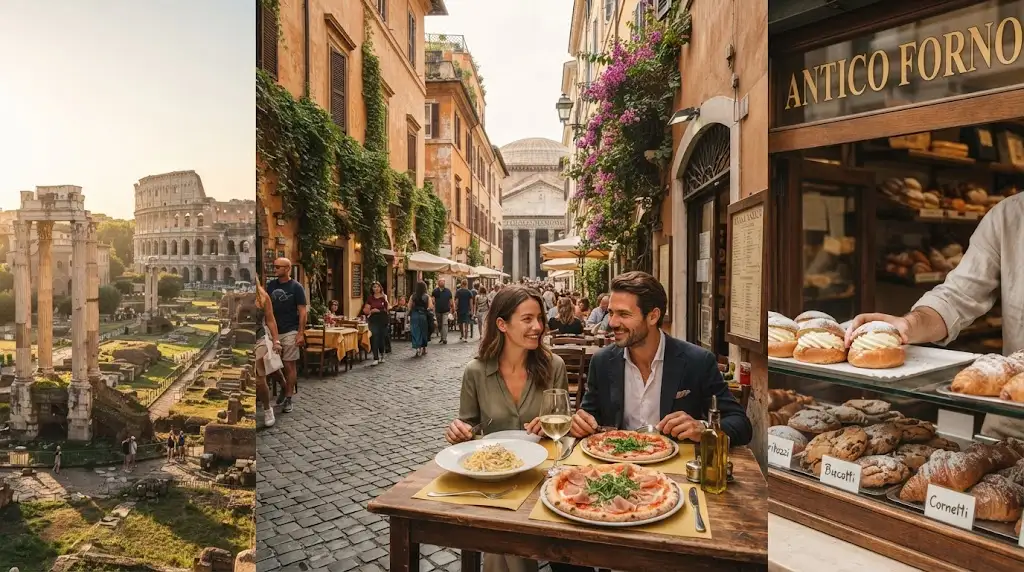
For a first visit, Centro Storico, or Rome’s historic center, is usually the strongest all-around choice because so many major attractions are within walking distance. Staying around Piazza Navona, the Pantheon, Campo de’ Fiori, or nearby streets places you directly inside the Rome many visitors imagine before arriving. You can step outside and immediately encounter Renaissance buildings, Baroque fountains, small churches, cafés, gelaterias, and atmospheric lanes. The Trevi Fountain, Spanish Steps, Jewish Ghetto, and river are also reachable on foot from much of this area. Accommodation can be expensive, especially in desirable streets, but the location reduces transportation time. For short sightseeing-heavy trips, that convenience can be worth paying for.
If food and evening atmosphere are almost as important as sightseeing, Trastevere becomes one of the strongest alternatives. Its lanes, piazzas, trattorias, bars, and neighborhood atmosphere create a different experience from staying directly beside Rome’s headline monuments. Travelers can spend the evening eating traditional Roman dishes and walking lively streets without planning a separate nighttime journey. The historic center sits just across the Tiber, making many attractions reachable on foot if you are comfortable with longer walks. The main compromise is that convenient metro access is weaker than in some other districts. Trastevere therefore works best for travelers who enjoy walking and want their neighborhood to remain lively after sightseeing ends.
Monti is another excellent option, particularly if the Colosseum and ancient Rome are high on your sightseeing list. The neighborhood combines proximity to major archaeological attractions with a more intimate collection of cafés, wine bars, independent shops, and attractive side streets. You can reach the Colosseum and Roman Forum quickly while still having pleasant places to eat and relax near your accommodation. Monti also feels more residential in certain streets than the busiest parts of the central tourist zone. Prices vary significantly according to exact location and property style, so exploring several streets can reveal better-value options. For travelers who want ancient landmarks outside the door without sacrificing neighborhood character, Monti is difficult to beat.
Prati works better for travelers who place the Vatican Museums and St. Peter’s Basilica near the top of their itinerary. The wide streets and orderly blocks can feel noticeably different from the twisting alleys of the historic center, but the neighborhood offers restaurants, cafés, shopping, and useful transportation connections. Staying here can make early Vatican mornings far easier because you avoid crossing much of central Rome before your reserved entry time. The historic center remains accessible, although you will spend more time walking or using public transport compared with staying beside Piazza Navona. Prati can also feel calmer at night than Trastevere. Couples and families who value comfort and location without constant nightlife may find that balance appealing.
There is therefore no universal answer that works for every visitor. Centro Storico is best overall for first-time sightseeing, Trastevere is excellent for food and nightlife, Monti is ideal for ancient Rome, Prati suits Vatican-focused travelers, and Testaccio appeals to serious food lovers. The Spanish Steps area offers a more polished central experience, while Termini is highly practical for rail connections and day trips. Think about where your earliest mornings and latest evenings will happen before choosing accommodation. A cheap room far from your priorities can cost valuable vacation time every day. The best neighborhood is ultimately the one that minimizes unnecessary travel while putting the experiences you care about close to your door.
Centro Storico: Best Overall for First-Time Sightseeing
Centro Storico is the most convenient answer for travelers who want to experience Rome mainly on foot. The broad historic-center label covers several smaller areas around landmarks such as Piazza Navona, the Pantheon, Campo de’ Fiori, Trevi, and surrounding streets. Staying near the Pantheon creates an especially useful middle ground because many famous sights radiate outward within manageable walking distance. Mornings can begin with coffee near an ancient monument, while evenings can end in a lantern-lit piazza without needing transportation back to the hotel. You will rarely feel disconnected from the city’s historic atmosphere. For visits of only two or three days, this ability to step immediately into sightseeing can make an enormous difference.
The neighborhood is particularly strong for travelers who prefer flexible itineraries rather than rigid transportation schedules. You might visit Piazza Navona early, wander toward the Pantheon, change plans for lunch, and continue toward Trevi without having to think about bus connections. Rome rewards this type of wandering because small churches, fountains, courtyards, shops, and archaeological details appear between the headline attractions. Staying centrally also lets you return to your room during the hottest or busiest part of the afternoon before going out again in the evening. Families may appreciate this convenience when children need rest, while couples can enjoy spontaneous evening walks. The ability to divide sightseeing into shorter sessions makes a central location surprisingly practical.
Food is abundant throughout the historic center, although location alone does not guarantee an excellent meal. Streets immediately beside the most photographed landmarks naturally contain restaurants aimed heavily at visitors, while better dining experiences can often be found by exploring less obvious streets. The advantage of staying here is sheer variety, ranging from Roman pasta and pizza to bakeries, wine bars, gelaterias, casual lunch counters, and contemporary restaurants. Campo de’ Fiori and the neighboring Jewish Ghetto expand the food options further. Travelers interested in classic Roman dishes can easily build meals around carbonara, amatriciana, cacio e pepe, artichokes, pizza, and seasonal specialties. Walking a few minutes away from the busiest squares often improves both atmosphere and choice.
The main disadvantage is price. Central hotels, guesthouses, and apartments usually command a premium because travelers are effectively paying for the ability to walk to some of Europe’s most famous sights. Rooms may also be smaller than similarly priced accommodations farther from the historic core, especially inside converted historic buildings. Street noise can become an issue around busy restaurant areas or nightlife-oriented piazzas, so light sleepers should read accommodation descriptions carefully. Elevators are not guaranteed in older buildings, making accessibility worth confirming before booking. The narrow historic streets can also make taxi drop-offs less straightforward. These inconveniences are manageable, but they should be weighed against the extraordinary location.
For the strongest balance, look around the Pantheon, Piazza Navona, or quieter streets connecting the two rather than insisting on a room directly overlooking a famous monument. This keeps you close to the action while reducing some of the crowd and noise pressure. Travelers who enjoy nightlife may lean closer to Campo de’ Fiori, while people seeking a more romantic atmosphere can prioritize smaller lanes around Piazza Navona and the Pantheon. If your Rome itinerary is packed with classic attractions and you dislike spending vacation time commuting, Centro Storico remains the most reliable choice. It may not provide the lowest accommodation rates or the most residential experience. What it provides better than almost anywhere else is immediate access to Rome itself.
Monti: Best for the Colosseum, Roman Forum & Local Atmosphere
Monti offers one of Rome’s most appealing combinations of history and neighborhood character. It lies close to the Colosseum, Roman Forum, Imperial Forums, and other archaeological landmarks, making it particularly convenient for travelers fascinated by ancient Rome. Instead of spending your first morning traveling across the city, you can walk toward the Colosseum while the streets are still relatively quiet. Yet Monti is not simply an accommodation zone surrounding an attraction. Its sloping lanes contain cafés, small boutiques, restaurants, wine bars, and gathering places that give the neighborhood an identity beyond tourism. This makes it attractive to visitors who want famous sights nearby but prefer not to sleep in the busiest part of Centro Storico.
The atmosphere changes noticeably from street to street, which makes choosing the exact location important. Streets close to the major archaeological corridor naturally experience more tourist traffic, while the interior of Monti can feel intimate and village-like by comparison. Piazza della Madonna dei Monti acts as a social center where people gather before moving toward restaurants and bars. The surrounding area is ideal for travelers who enjoy having places for coffee, aperitivo, or dinner within a short stroll. Creative shops and smaller businesses add personality between historic buildings. Because the district combines sightseeing infrastructure with everyday neighborhood life, it can feel more balanced than staying directly beside a major monument.
Food choices are varied enough to keep travelers close to the neighborhood for several evenings. You can find traditional Roman cooking alongside pizza, casual cafés, wine bars, bakeries, and more modern dining concepts. Monti’s popularity means you still need to avoid assuming every attractive terrace guarantees an outstanding meal. Exploring side streets and checking menus carefully can lead to a more satisfying experience than choosing solely according to proximity to the Colosseum. The area works especially well for travelers who like finishing sightseeing, returning to the accommodation briefly, and then walking to dinner without crossing the city again. That rhythm can make a packed Rome itinerary feel far less exhausting.
Transportation is another strength. The broader Monti and Colosseum area has access to metro connections, buses, and major walking routes, while Termini station is not impossibly far away. This creates flexibility for travelers combining central sightseeing with destinations that are harder to reach entirely on foot. Even so, many visitors staying in Monti will find themselves walking frequently because central Rome’s major attractions are relatively close. The Trevi Fountain and historic center require more effort than they would from a Pantheon-area hotel, but the distances remain realistic for active travelers. Comfortable shoes matter because Rome’s paving and changes in elevation can make relatively short distances feel longer by the end of a full sightseeing day.
Monti is particularly suitable for couples, solo travelers, repeat visitors, and anyone whose dream Rome morning involves seeing the Colosseum before the largest daytime crowds build. It can also work well for first-time visitors who want to prioritize ancient history without feeling isolated from restaurants and evening atmosphere. Families should consider exact street noise and walking requirements, just as they would elsewhere in central Rome. If Vatican City dominates your trip, Prati would be more convenient, while food-first travelers might prefer Trastevere or Testaccio. However, for a combination of archaeological access, attractive streets, good meals, and nightlife that does not completely overwhelm the neighborhood, Monti earns its place among Rome’s best areas to stay.
Trastevere: Best Area to Stay in Rome for Food & Nightlife
Trastevere is often the neighborhood travelers imagine when they want cobblestones, ochre buildings, climbing plants, intimate piazzas, and lively evenings. Situated across the Tiber from much of the historic center, it has long been associated with traditional Roman dining and social life. During the day, the streets can feel relaxed and photogenic, while evenings bring much heavier foot traffic around restaurants, bars, and major gathering points. Piazza Santa Maria in Trastevere and Piazza Trilussa are among the neighborhood’s best-known social spaces. Staying here means you do not have to leave immediately after dinner when day visitors return to other areas. You can experience the neighborhood’s late-evening energy and simply walk back to your room.
Food is the strongest reason many travelers choose Trastevere. Traditional trattorias, pizzerias, bakeries, cafés, wine bars, and informal food stops give visitors plenty of opportunities to explore Roman cuisine without traveling far. Classic pasta dishes such as carbonara, amatriciana, gricia, and cacio e pepe appear widely, alongside artichokes, fried specialties, pizza, and hearty meat dishes. The neighborhood’s fame has inevitably attracted restaurants designed mainly for tourism, so a crowded terrace is not automatically proof of quality. Exploring beyond the busiest lanes can uncover a calmer dining experience. Travelers who enjoy choosing dinner spontaneously rather than maintaining a strict reservation schedule will appreciate the extraordinary concentration of options.
Sightseeing convenience is still good, but the experience differs from staying in Centro Storico. From parts of Trastevere, you can walk across the river toward the Jewish Ghetto, Campo de’ Fiori, Piazza Navona, and other central attractions. Vatican City is reachable with a longer walk or transportation, while the Colosseum requires more planning than it would from Monti. The neighborhood itself contains worthwhile sights, churches, historic architecture, and riverside areas that deserve time rather than functioning only as an evening dining district. Travelers who enjoy exploring slowly may find that walking across the Tiber each morning becomes part of the charm. Those who demand immediate metro access may find the location less convenient.
Noise is the biggest potential drawback. Streets around popular bars and gathering areas can remain energetic late into the evening, especially during busy travel periods and weekends. A beautiful room directly above a famous nightlife street may become less romantic when conversations continue below the window after you want to sleep. Travelers who prefer Trastevere but need quiet should consider accommodation toward calmer edges of the neighborhood or on smaller residential streets. Checking reviews specifically for nighttime noise can be more useful than relying on a property’s general rating. The neighborhood also becomes crowded in the evening, so travelers seeking a consistently peaceful atmosphere may prefer Prati or a quieter part of the historic center.
Trastevere is best for couples, friends, solo travelers, food lovers, and visitors who want the neighborhood itself to become part of the holiday experience. It is particularly appealing when long dinners, evening walks, and casual drinks matter as much as ticking landmarks off a sightseeing list. Families can enjoy the area too, provided they select a quieter location and are comfortable walking. For a very short first trip focused primarily on seeing as many major landmarks as possible, Centro Storico may remain more efficient. But if your ideal Rome trip involves sightseeing by day and lively trattorias by night, Trastevere offers one of the city’s most satisfying combinations of atmosphere and food.
Prati: Best for the Vatican, Comfort & a Calmer Stay
Prati sits immediately east of Vatican City and provides one of the most practical bases for travelers who want to visit the Vatican Museums, Sistine Chapel, and St. Peter’s Basilica. Early entry times can feel far less stressful when your accommodation is within walking distance rather than across Rome. The neighborhood’s wide streets and orderly layout contrast with the maze-like historic center, creating a more spacious urban experience. Elegant apartment buildings, shops, restaurants, cafés, and everyday businesses give Prati a lived-in feel alongside its tourism infrastructure. It is especially attractive to visitors who want central access without staying amid the loudest nightlife or most intensely crowded piazzas.
Food in Prati is more varied than some first-time visitors expect. The area contains traditional Roman restaurants, pizza shops, bakeries, cafés, gelaterias, modern dining, and places serving the office and residential population. Staying here allows travelers to explore beyond the restaurants immediately surrounding Vatican entrances, where convenience can sometimes dominate the dining experience. Moving deeper into the neighborhood tends to create more interesting possibilities for relaxed breakfasts and dinners. Prati can be particularly enjoyable for travelers who like beginning the day at a neighborhood café before heading to major attractions. You may not have Trastevere’s concentrated nightlife, but you gain a quieter and often more comfortable evening rhythm.
Transportation is another major advantage. Metro access makes it easier to reach areas around the Spanish Steps and other parts of central Rome, while buses and walking routes provide additional options. Travelers planning several Vatican visits, shopping trips, or excursions toward northern parts of the city may find the location especially convenient. Walking to Centro Storico is realistic for many travelers, although it takes longer than staying around Piazza Navona. Crossing the Tiber can become a pleasant part of the day rather than an inconvenience when the weather is good. The combination of metro access and walkability makes Prati useful for visitors who prefer having multiple ways to move around instead of depending entirely on taxis.
Accommodation can also provide a different experience from the oldest parts of central Rome. Larger blocks and residential buildings sometimes make it easier to find comfortable rooms, apartments, elevators, or more modern facilities, although this varies greatly by property. Families may appreciate the less chaotic street environment, while couples can enjoy evenings that feel lively enough for dinner without becoming a constant party. Travelers with mobility considerations should still check individual building access carefully because Rome’s accommodation stock varies widely. Staying slightly away from the immediate Vatican perimeter can also produce a calmer experience. Prati rewards visitors who value functional comfort almost as much as postcard atmosphere.
Choose Prati if the Vatican is a major priority, you appreciate a calmer neighborhood, or you prefer convenient public transportation alongside walkability. It is also a strong choice for families and travelers staying longer than a few nights because the area feels practical for everyday routines. If your sightseeing revolves mostly around the Colosseum and Roman Forum, Monti will save more time. If you want nightlife directly outside the door, Trastevere offers considerably more energy. And if you want to wake up beside the Pantheon or Piazza Navona, Centro Storico remains stronger. Prati’s appeal lies in balance: major attractions nearby, plenty of food, straightforward streets, good connectivity, and a more relaxed atmosphere when the sightseeing day ends.
Testaccio & the Jewish Ghetto: Best for Serious Food Lovers
Testaccio is one of the most interesting choices for travelers whose Rome itinerary is built around eating rather than simply photographing monuments. The district is closely associated with traditional Roman cooking and has a more everyday neighborhood character than the central sightseeing zone. Restaurants and food businesses reflect the area’s culinary history, while the market adds opportunities to explore produce, prepared foods, and local ingredients. Testaccio also has archaeological and cultural attractions, including the Pyramid of Cestius and the unusual Monte Testaccio area. You will not wake up beside the Pantheon or Trevi Fountain, but that distance is precisely why some food-focused travelers enjoy staying here. It can feel more connected to contemporary Roman life.
Traditional Roman food is often hearty and deeply linked to the city’s working-class history. Travelers exploring Testaccio may encounter the classic pasta dishes found throughout Rome alongside preparations using artichokes, meat, offal, pizza, and seasonal produce. The neighborhood rewards curiosity because culinary experiences extend beyond formal dinner reservations. Markets, bakeries, casual counters, bars, and neighborhood cafés can become as memorable as full-service restaurants. Because dining is a major reason to stay here, travelers should leave space in the itinerary for lunch rather than treating food merely as something squeezed between attractions. A slow morning followed by a market visit and traditional lunch can become a sightseeing experience in its own right.
The Jewish Ghetto offers another exceptional base for travelers interested in the relationship between Roman history and food. Its compact streets sit much closer to Centro Storico than Testaccio, making it easier to combine culinary exploration with traditional sightseeing. Roman Jewish cuisine has influenced the city’s broader food identity, and the neighborhood remains known for dishes involving artichokes, fried preparations, baked goods, and other distinctive traditions. The Portico of Octavia, Great Synagogue area, Theatre of Marcellus, and nearby Tiber Island make the district rewarding even before considering its restaurants. From here, travelers can quickly walk toward Campo de’ Fiori, Piazza Venezia, the Pantheon, and Trastevere.
For sightseeing convenience, the Jewish Ghetto is the stronger accommodation choice of the two. Its position creates an almost ideal bridge between ancient Rome, the historic center, and Trastevere. Testaccio requires more use of public transport or longer walks when visiting the most famous central landmarks, although that inconvenience can be acceptable on longer trips. Travelers staying five or more nights may appreciate having a less tourist-heavy home base after busy sightseeing days. A first-time visitor staying only two nights might find Testaccio unnecessarily removed from core attractions. The Jewish Ghetto, by contrast, can work very well even on a short trip because its food credentials come with an exceptionally central location.
Choose between these areas according to whether you prioritize culinary immersion or sightseeing efficiency. Testaccio provides the stronger neighborhood-food experience and works wonderfully for repeat visitors, slow travelers, and anyone determined to explore traditional Roman cuisine. The Jewish Ghetto gives you much of Rome’s culinary history while keeping famous sights within easy walking distance. Both make excellent alternatives to more obvious accommodation districts. Travelers who want late-night bars may still favor Trastevere, while those who want luxury shopping may prefer the Spanish Steps. But when the most important question each day is where to eat next, Testaccio and the Jewish Ghetto deserve serious consideration rather than being treated merely as places to visit for one meal.
Spanish Steps, Trevi & Termini: Best for Luxury or Transport Convenience
The Spanish Steps area is one of the best places to stay for travelers who want central sightseeing combined with elegant shopping, polished hotels, and a refined atmosphere. Streets around Piazza di Spagna provide immediate access to some of Rome’s most recognizable scenery while placing luxury boutiques and fashionable shopping close by. The Trevi Fountain is within walking distance, as are Villa Borghese, Piazza del Popolo, the Pantheon, and other major attractions depending on the exact location. This makes the area highly efficient for sightseeing. Metro access around Spagna also adds flexibility when your feet need a break. The main drawback is cost, because this is rarely the neighborhood chosen by travelers seeking Rome’s cheapest accommodation.
Trevi offers a similarly central position with a slightly different atmosphere. Staying close to the fountain can be magical early in the morning or late in the evening when you can revisit the area outside your main sightseeing hours. During the day, however, the surrounding streets can become intensely busy with visitors. Travelers should therefore consider accommodation a few streets away rather than insisting on a direct landmark view. Food options are plentiful, but the same caution used elsewhere in the historic center applies: restaurants positioned directly beside major attractions may depend heavily on tourist traffic. Walking farther into quieter lanes can lead to a more enjoyable meal and better atmosphere without sacrificing convenience.
These central upscale areas work particularly well for short luxury breaks, couples, first-time visitors, and travelers who enjoy shopping between sightseeing stops. You can structure a trip around long walks rather than constantly consulting transportation routes. Returning to the hotel for an afternoon rest is easy because so many attractions lie nearby. Travelers who appreciate elegant cafés, rooftop drinks, boutique shopping, and classic central-Rome scenery may find the premium worthwhile. On the other hand, people seeking a strongly residential neighborhood or a deep local-food focus may prefer Testaccio or parts of Prati. The area delivers convenience and polish more reliably than it delivers the feeling of escaping the visitor circuit.
At the opposite end of the accommodation strategy, Termini is best understood as a practical transport base rather than Rome’s most atmospheric neighborhood. Staying near Rome’s main railway station makes early trains, airport connections, and day trips easier to manage. It can be especially useful when Rome forms part of a longer Italian itinerary involving Florence, Naples, Venice, or other destinations. The surrounding area also provides access to metro lines, buses, restaurants, shops, and a wide range of accommodation styles. Travelers arriving late or departing early may value this convenience enormously. However, the immediate station environment lacks the romantic evening atmosphere of Trastevere, Monti, or the historic center.
Termini can offer better value than Rome’s most coveted central streets, although accommodation quality varies and exact location matters. Areas toward Santa Maria Maggiore and parts of Esquilino can feel more appealing for travelers who want access to the station without sleeping directly beside its busiest entrances. Esquilino also brings a multicultural dining scene that adds diversity to Rome’s traditional food options. Active travelers can walk from this broader area toward Monti, the Colosseum, and other attractions, while metro connections shorten longer journeys. Choose Termini when logistics and budget matter more than atmosphere. Choose Spanish Steps or Trevi when you are willing to pay more to place iconic central Rome immediately outside your door.
How to Choose Where to Stay in Rome for Your Trip
Start with the attractions you consider non-negotiable rather than choosing a neighborhood because it appears frequently on social media. If your first two mornings involve the Colosseum and Roman Forum, Monti offers obvious advantages. If your itinerary includes an early Vatican Museums booking and significant time around St. Peter’s, Prati reduces unnecessary travel. Travelers planning mostly Pantheon, Trevi Fountain, Piazza Navona, and historic-center sightseeing will gain more from staying in Centro Storico. Food-centered visitors should compare Trastevere, Testaccio, and the Jewish Ghetto. Matching accommodation to your itinerary can remove an hour or more of unnecessary movement from some days and create more time for spontaneous exploration.
Next, consider how you prefer to experience evenings. Some travelers want to walk outside and immediately find crowded terraces, wine bars, music, and people filling public squares, making Trastevere appealing. Others want dinner nearby but prefer quiet streets when they return to sleep, which can make Prati a better match. Couples interested in romantic walks may appreciate the historic center or Monti, while luxury travelers may gravitate toward the Spanish Steps. Families should think carefully about late-night street noise and how easily they can return to their accommodation for breaks. Rome changes dramatically after sunset, so choosing a neighborhood only according to daytime attractions overlooks half of the travel experience.
Budget should be considered together with transportation rather than separately. A cheaper property far from your main attractions can become less attractive after adding taxis, transit time, and the inconvenience of returning during the day. Conversely, travelers comfortable with metro journeys may save significantly by moving beyond the most expensive historic streets. Termini can be a practical compromise when railway connections and value are priorities. Testaccio can also provide a different price-to-experience balance for travelers who do not require every landmark to be immediately outside the hotel. When comparing properties, calculate the convenience of the location rather than looking only at the nightly rate. Time is one of the most valuable resources on a short city break.
Walking ability should influence the decision more than many visitors expect. Rome is wonderfully walkable for sightseeing, but cobbled surfaces, heat, crowds, and long days can make distances feel more demanding than they appear on a map. Travelers with limited mobility should prioritize smooth access to transportation and verify elevator availability, entrance steps, bathroom design, and taxi access at individual accommodations. Families with young children may also prefer locations that reduce repeated cross-city walks. A highly central property can make afternoon rests dramatically easier. Active travelers who enjoy covering many kilometers every day gain more flexibility and can comfortably choose neighborhoods such as Trastevere or Testaccio without feeling geographically restricted.
For the simplest final decision, use your travel style as the tie-breaker. Choose Centro Storico for the best first-time sightseeing location, Monti for the Colosseum and neighborhood atmosphere, Trastevere for food and nightlife, Prati for the Vatican and a calmer stay, Testaccio for serious Roman food, the Jewish Ghetto for food plus central walkability, Spanish Steps for luxury, and Termini for transport convenience. None is objectively perfect because Rome rewards different approaches. The best accommodation is the one that makes your preferred daily routine easier. Once you identify where you want to spend mornings, dinners, and late evenings, the right neighborhood usually becomes much clearer.
Frequently Asked Questions About Where to Stay in Rome
What is the best area to stay in Rome for first-time visitors?
Centro Storico is generally the easiest choice for a first visit because attractions such as the Pantheon, Piazza Navona, Trevi Fountain, Campo de’ Fiori, and many historic streets are within comfortable walking distance. Monti is an excellent alternative if the Colosseum and Roman Forum are your highest priorities.
What is the best area to stay in Rome for food?
Trastevere is one of the best all-around choices for travelers who want a large concentration of trattorias, pizzerias, bars, and lively evening dining. Serious food travelers should also consider Testaccio and the Jewish Ghetto for distinctive Roman culinary traditions.
Is Trastevere a good place to stay in Rome?
Yes, particularly for travelers who enjoy food, nightlife, attractive streets, and an energetic neighborhood atmosphere. The main drawbacks are evening noise in busy areas and less convenient metro access compared with neighborhoods such as Prati or Monti.
Should I stay near the Colosseum or Vatican?
Stay around Monti or the Colosseum if ancient Roman sites dominate your itinerary, and choose Prati if the Vatican Museums and St. Peter’s Basilica are higher priorities. For travelers wanting reasonably convenient access to both sides, Centro Storico provides a useful middle position.
Is it better to stay near Termini or Centro Storico?
Centro Storico is better for atmosphere and walking to major attractions, while Termini is more convenient for train journeys, airport connections, and travelers prioritizing transportation. For a short first sightseeing trip, the historic center usually provides the more memorable base if the budget allows.
How many days should I stay in Rome?
Three full sightseeing days provide enough time for many first-time visitors to experience ancient Rome, the historic center, and Vatican City without reducing the trip to a single rushed circuit. Four or five days allow more time for neighborhoods, longer meals, museums, parks, and a slower exploration of Roman life.
Which part of Rome is best for couples?
Centro Storico is excellent for romantic evening walks around historic piazzas, while Monti offers attractive streets and a more neighborhood-oriented atmosphere. Couples who prioritize restaurants and nightlife may prefer Trastevere, while luxury-focused travelers can consider the Spanish Steps area.
Where should families stay in Rome?
Centro Storico can be especially convenient for families because central accommodation makes it easier to return for breaks between sightseeing sessions. Prati is another strong option for families seeking wider streets, Vatican access, restaurants, transportation, and generally calmer evenings.
Where should I stay in Rome without a car?
Most visitors do not need a car in central Rome, and staying in Centro Storico, Monti, Prati, Trastevere, or near the Spanish Steps makes sightseeing practical through walking and public transport. A car can actually become inconvenient in the historic center because central Rome is better explored on foot.
What is the best area to stay in Rome for both sightseeing and food?
Centro Storico offers the strongest overall balance because you can walk to many major landmarks while having an enormous selection of restaurants, cafés, bakeries, and gelaterias nearby. If food and evening atmosphere matter slightly more than maximum sightseeing efficiency, Trastevere is an excellent alternative.