




Aeolian Islands Guide: Best Islands & How to Visit
The Aeolian Islands are one of Sicily’s most distinctive escapes, combining volcanic landscapes, clear Tyrrhenian water, small villages, black beaches, vineyards, and some of Italy’s most memorable ferry journeys. Seven main islands form the archipelago, yet each feels different enough that choosing where to stay can be surprisingly difficult. Lipari offers convenience and history, Salina adds green slopes and food culture, Vulcano and Stromboli deliver raw volcanic drama, and Panarea brings a polished summer atmosphere. Farther west, Filicudi and Alicudi reward travelers who prefer quiet and simplicity. The best Aeolian Islands trip is rarely about visiting every island as quickly as possible. It is about matching two or three islands to your interests and giving them enough time to reveal their character.
Planning matters because the sea controls the rhythm of an Aeolian holiday. Ferries and hydrofoils link the islands with Milazzo and with one another, but schedules change by season and rough weather can alter even a carefully organized day. The islands are therefore ideal for travelers who can combine structure with flexibility. A successful itinerary leaves time for a boat excursion, a slow lunch, a swim, a volcanic viewpoint, and the possibility that plans may shift. Summer brings the broadest tourism services, while late spring and early autumn often provide a better balance of warm weather and lighter crowds. This Aeolian Islands guide explains which islands are best, what to do, how to get there, how to island-hop, and how many days to spend.
What Are the Aeolian Islands?
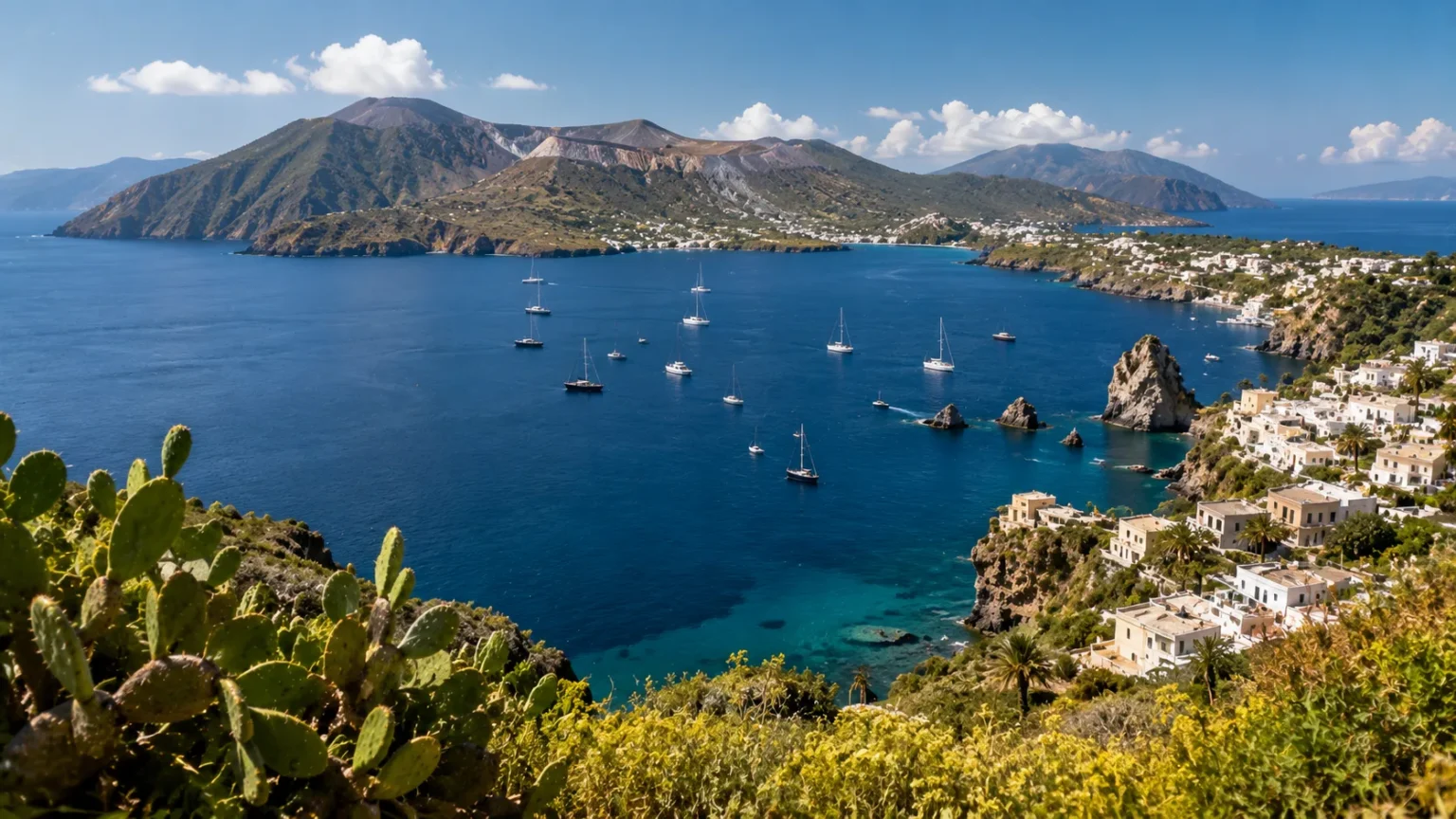
The Aeolian Islands are a volcanic archipelago in the southern Tyrrhenian Sea, just off the north coast of Sicily. The seven main islands are Lipari, Salina, Vulcano, Stromboli, Panarea, Filicudi, and Alicudi, each with a noticeably different personality. Together they form a UNESCO World Heritage site celebrated for extraordinary volcanic landforms and ongoing geological activity. Their landscapes shift from black-sand beaches and smoking craters to vineyard-covered slopes, whitewashed villages, and cliffs dropping into intensely blue water. You can spend one day hiking a volcano and the next swimming from a quiet pebble cove. That variety is the biggest reason an Aeolian Islands itinerary feels richer than a standard beach holiday.
Lipari is the largest and most practical island, while Salina feels greener, calmer, and especially rewarding for food and wine lovers. Vulcano is defined by its crater landscape and sulphurous volcanic character, while Stromboli offers the archipelago’s most dramatic active-volcano experience. Panarea is tiny, polished, and famous for stylish summer evenings, but it also hides beautiful coves and prehistoric remains. Farther west, Filicudi and Alicudi trade nightlife for rugged scenery, clear water, and a much slower rhythm. Because the islands differ so strongly, choosing where to stay depends more on travel style than on finding one universally “best” island. Many first-time visitors combine two or three instead of trying to sleep on all seven.
The islands are compact on a map, yet sea conditions and ferry timetables determine how easily you can move between them. Hydrofoils are normally the fastest passenger option, while conventional ferries are slower but can be useful when transporting more luggage or, where permitted, a vehicle. Milazzo on Sicily is the principal gateway and has frequent connections during the main travel season. Services also vary by month, day, weather, and operator, so an itinerary that looks simple geographically can become rushed if every connection is assumed rather than checked. This is especially true for the outer islands, where fewer departures may be available. Building some flexibility into your schedule is one of the smartest Aeolian Islands travel tips.
The volcanic setting shapes almost every part of an Aeolian holiday, from the beaches to the food and the views. Black lava, pale pumice, obsidian, fumaroles, crater rims, and steep cone-shaped mountains constantly remind you how the islands were formed. Stromboli and Vulcano are the names most associated with active volcanic phenomena, although access rules can change when authorities adjust safety measures. Travelers should therefore check current local guidance before planning crater hikes or entering restricted zones. Guided excursions may be required or strongly advisable depending on the route and conditions. Treating volcano rules as part of normal trip planning, rather than an inconvenience, keeps the experience both safer and more responsible.
Despite their Mediterranean setting, the Aeolian Islands are not only about beaches. Lipari has significant archaeology and an atmospheric historic center, Salina is known for capers and Malvasia wine, and Panarea combines Bronze Age history with fashionable summer tourism. Boat trips reveal sea caves, offshore rocks, hidden bays, and dramatic cliffs that are difficult or impossible to appreciate from land. Hiking can be excellent in cooler weather, especially on Salina and the quieter western islands. Food is another reason to travel slowly, with seafood, capers, tomatoes, local wine, granita, and simple island cooking appearing repeatedly across menus. The strongest trip combines sea, villages, geology, and food rather than treating the archipelago as seven interchangeable beach stops.
Which Aeolian Island Is Best for Your Trip?
For a first visit, Lipari is usually the easiest island to choose because it offers the broadest mix of accommodation, restaurants, transport, history, and ferry connections. It works particularly well for travelers who want one base and several day trips without changing hotels every night. Lipari Town feels lively enough for evening walks, meals, and shopping, while the rest of the island provides viewpoints, beaches, and smaller settlements. The island is not the quietest or most exclusive of the seven, but its convenience is difficult to beat. Couples, families, solo travelers, and first-time island hoppers can all use it comfortably. If you have only three or four nights in the Aeolians, Lipari is often the safest all-round base.
Choose Salina if you want a slower, greener island with strong food, wine, hiking, and village appeal. It is the second-largest Aeolian island and feels more spacious than Panarea or Stromboli, yet it remains relaxed rather than busy. Malfa, Santa Marina Salina, Lingua, and the area around Pollara give visitors several distinct places to explore without turning the trip into constant ferry travel. Vineyards and caper cultivation add a strong agricultural character that makes Salina especially attractive to travelers interested in local flavors. Hiking routes around the island’s extinct volcanic peaks add another layer beyond the coast. For couples and repeat visitors who value atmosphere over nightlife, Salina may be the most satisfying island of the group.
Vulcano is best for travelers who want a strong volcanic landscape close to the main ferry routes. The island sits near Lipari, making the two easy to combine when schedules and sea conditions cooperate. Its dark beaches, crater views, fumarolic terrain, and stark colors create a very different mood from greener Salina. Visitors often come specifically for hiking and geological scenery, although access to volcanic areas can be limited or adjusted for safety. Vulcano also works well as a day trip if you prefer staying somewhere with a larger choice of evening restaurants and hotels. For active travelers with limited time, it delivers a memorable volcanic experience without requiring the longer journey to Stromboli.
Stromboli and Panarea appeal to different versions of a more cinematic Aeolian holiday. Stromboli is the choice for travelers fascinated by an active volcano, black-sand beaches, dramatic sunsets, and the feeling of staying on a remote cone rising from the sea. Panarea is smaller and more polished, with whitewashed lanes, elegant summer energy, boat excursions, and beautiful Cala Junco among its highlights. Panarea can become expensive and lively in peak season, so it suits travelers who enjoy a fashionable atmosphere as much as natural beauty. Stromboli feels rawer and more elemental, particularly after dark. Both can be unforgettable, but each rewards at least one overnight stay more than a rushed midday stop.
Filicudi and Alicudi are the best Aeolian Islands for travelers deliberately seeking quiet, nature, and distance from busy resort routines. Filicudi has more visitor infrastructure and is easier for many people to approach, with rugged walking, clear water, sea caves, and scattered settlements. Alicudi is even more stripped back, with steep paths, limited services, and an atmosphere that feels far removed from mainland schedules. Neither is ideal for travelers who want extensive shopping, nightlife, or endless restaurant choice. They are also less forgiving if you build a tightly timed itinerary around frequent connections. For slow travelers, hikers, swimmers, writers, and anyone wanting a genuine digital reset, however, the western islands can become the highlight of the entire trip.
Best Things to Do Across the Aeolian Islands
Start with Lipari’s historic center because it gives useful context before you head deeper into the archipelago. The castle area and archaeological museum reveal how long people have lived on and moved through these volcanic islands. Afterward, wander down toward Marina Corta, where fishing boats, cafés, and harbor views create one of Lipari Town’s most enjoyable everyday scenes. Outside town, scenic roads and viewpoints show how sharply the island rises from the sea. Boat tours are especially worthwhile because they reveal pumice-colored cliffs, offshore rocks, and coves that look completely different from the water. Lipari is at its best when you mix culture and coastline rather than spending the entire day moving between beaches.
On Salina, plan at least one day around landscape and local food instead of rushing from sight to sight. The island is famous for capers and Malvasia delle Lipari, and vineyard visits or leisurely meals help explain why Salina feels so distinct from its neighbors. Pollara is one of the island’s most recognizable coastal areas, framed by the remains of an ancient volcanic crater. Hikers can explore routes linked to Monte Fossa delle Felci, the highest point in the Aeolian Islands, when weather and fitness are appropriate. Santa Marina and Malfa provide attractive bases for exploring, while Lingua is known for its relaxed waterfront atmosphere. Salina rewards travelers who leave enough time for long lunches, viewpoints, and unplanned stops.
Vulcano is the place to focus on volcanic geology, but safety information should shape your plans. The Gran Cratere area has historically been the island’s signature hike, offering sweeping views over neighboring islands when access is permitted. Conditions around fumaroles and volcanic gases can lead authorities to change routes, hours, or restrictions, so check locally rather than relying on an old blog or saved map. Beyond the crater, Vulcano has dark-sand beaches, rocky coastline, and strong views toward Lipari. Boat excursions can provide a different perspective on the island’s caves and volcanic formations. Even without a summit hike, the combination of stark terrain and sea makes Vulcano worth visiting for travelers interested in geology and photography.
Stromboli is most memorable when you stay long enough to experience the volcano after sunset. The Sciara del Fuoco, a broad slope where volcanic material descends toward the sea, is the classic side from which to observe activity at a safe distance. Depending on current regulations, visitors may be limited to specific viewpoints, guided routes, or lower elevations, so local instructions always take priority. Daytime can be spent exploring the village, swimming from dark volcanic beaches, or taking a boat trip around the island. Evening boat excursions are popular because they can offer offshore views of volcanic activity without requiring a high climb. The combination of darkness, sea, and intermittent glow gives Stromboli an atmosphere no other Aeolian island quite matches.
Panarea, Filicudi, and Alicudi show how diverse the archipelago becomes once you move beyond the most obvious volcano experiences. On Panarea, walk toward Cala Junco and the prehistoric settlement around Capo Milazzese, then explore the surrounding islets by boat if conditions allow. Filicudi is excellent for coastal excursions, snorkeling, diving, and seeing the striking rock formations around its shoreline. Alicudi is more about the experience of being there: steep paths, simple villages, sea views, and a slower routine with very little urban distraction. On all three islands, boat conditions matter because many of the best coastal places are easiest to reach from the water. These quieter experiences can balance the busier days you spend on Lipari or the volcano-focused islands.
How to Get to the Aeolian Islands
Milazzo is the main gateway for reaching the Aeolian Islands from Sicily and is the starting point most travelers should understand first. Passenger hydrofoils and conventional ferries connect the port with the archipelago, with services reaching the main islands throughout the operating schedule. Hydrofoils are faster and make sense for travelers carrying standard luggage, while ferries can be useful when you prefer a slower crossing or need vehicle options where permitted. The exact journey time depends on the island, intermediate stops, vessel type, and weather. Lipari and Vulcano are among the easiest islands to reach from Milazzo, while Stromboli, Filicudi, and Alicudi require longer travel. Always check the current timetable for your actual date rather than relying on a generic seasonal estimate.
If you are flying into Sicily, Catania Airport is a common arrival point for travelers heading toward Milazzo. The trip from Catania to the port requires an overland transfer, so leave a generous buffer between your flight arrival and the last practical island connection. Buses, private transfers, rental cars, and combinations involving rail can all work, depending on budget and schedule. Palermo Airport can make sense for a broader Sicily itinerary, but reaching Milazzo takes longer, so it is less convenient for a short Aeolian-only trip. Some seasonal sea services may operate from other cities or mainland ports, but frequencies vary significantly. For the most dependable planning, think of Milazzo as the core gateway and treat other routes as useful seasonal alternatives.
Travelers coming from mainland Italy may encounter seasonal ferry options that connect the Aeolian area with Naples, while fast services can also operate from points in Sicily or Calabria depending on the season. These routes can be appealing if you are building a longer southern Italy itinerary and want to avoid backtracking through Sicily. However, they tend to be more seasonal than the principal Milazzo connections, which means schedule changes matter more. Overnight or longer conventional ferries also create a different travel experience from quick hydrofoils. When comparing routes, look at total door-to-door time rather than only the sea crossing. A seemingly direct ferry can be less convenient than flying to Sicily and transferring through Milazzo if its operating days do not match your trip.
Buying ferry tickets in advance is sensible during July, August, holiday weekends, and other busy periods, particularly when your first or last connection is critical. Outside peak season, advance booking can still reduce stress, but travelers should preserve flexibility because wind and rough seas may disrupt smaller-island services. Keep confirmation details available offline in case mobile coverage becomes inconsistent around ports or on the water. Arrive with enough time to find the correct departure area, especially in busy Milazzo where several sailings may leave close together. Luggage rules can differ by operator and ticket type, so check allowances before arriving with oversized bags. Traveling light makes island hopping considerably easier because docks, steps, and transfers are part of everyday movement in the Aeolians.
Weather is the variable that experienced Aeolian travelers respect most. Hydrofoils can be affected by rough seas, and even conventional ferries may face delays or changes when conditions deteriorate. Avoid scheduling an international flight only a few hours after an island ferry if missing that flight would create a major problem. Spending the final night in Milazzo, Messina, Catania, or another mainland Sicilian base can provide valuable protection before an early departure. The same principle applies to weddings, cruises, or fixed events where arrival time matters. A flexible buffer may feel unnecessary when the sea is calm, but it becomes extremely valuable on a windy day. Good Aeolian Islands planning accepts that the sea, not the itinerary spreadsheet, has the final word.
How to Island-Hop and Get Around
Island hopping is one of the pleasures of visiting the Aeolian Islands, but the most enjoyable trips do not involve packing and changing hotels every day. Lipari works well as a transport hub because it has frequent connections with several neighboring islands and enough services for longer stays. Salina is another excellent multi-night base, particularly for travelers who prefer a greener, more relaxed setting. From either island, you can add day trips when ferry times allow, but some destinations deserve an overnight stay. Stromboli is the clearest example because its atmosphere changes after sunset, while Panarea can also feel very different once daytime visitors leave. A two- or three-base itinerary usually provides more depth than attempting to sleep on five islands in one week.
Hydrofoils are generally the fastest way to move between islands, and they make short hops such as Lipari to Vulcano especially convenient. Longer island-to-island journeys can involve several stops, so read the full routing rather than assuming a boat travels directly. Timetables also change seasonally, with more options typically available during the busiest months. On quieter islands, missing one departure can mean waiting much longer than expected. Build each day around the transport that actually exists, then add activities, rather than planning a full sightseeing schedule first and trying to fit ferries around it. This simple reversal makes island hopping far less stressful. It also reduces the temptation to abandon a beautiful place just because you scheduled too many stops.
Once ashore, transport differs noticeably from island to island. Lipari and Salina have roads, buses, taxis, scooters, and vehicle options that make broader exploration practical. Panarea is largely car-free for visitors and is compact enough that walking, small local transport, and boats play a larger role. Stromboli is also best experienced on foot and by boat around its main settlements and coastline. Filicudi has limited road transport compared with Lipari, while Alicudi is famously defined by steep paths rather than normal road travel. Comfortable shoes matter even if you are not planning formal hikes. Travelers with mobility limitations should research their chosen island carefully because docks, slopes, stairs, and uneven surfaces can affect accessibility.
Renting a scooter can be appealing on Lipari or Salina, especially when you want to reach viewpoints and villages independently. However, narrow roads, curves, summer traffic, and unfamiliar riding conditions mean a scooter is only a good choice for confident riders. Local buses and taxis remove much of that pressure and allow everyone to enjoy the scenery. Rental cars can be useful in limited contexts, but vehicle restrictions may apply during busy periods or on specific islands, especially for non-residents. Check current rules before planning to bring a car onto a ferry. For many visitors, the most relaxed approach is arriving without a vehicle and combining buses, taxis, walking, and occasional scooter rental. The archipelago is easier to enjoy when transport remains simple.
Boat excursions are not merely transportation; they are one of the best ways to experience the islands. Small-group tours and private charters can reach coves, sea caves, offshore islets, and swimming spots that land-based itineraries miss entirely. Panarea’s surrounding rocks, Filicudi’s rugged coast, Lipari’s cliffs, and the sea-facing side of Stromboli are especially rewarding from the water. Always choose operators that adapt to weather and respect current volcanic or marine safety rules. A trip may be rerouted when wind makes one side of an island uncomfortable or unsafe, and that flexibility is a positive sign rather than a disappointment. Leaving one open day for a boat trip gives you room to choose the best conditions after arrival.
Best Time to Visit the Aeolian Islands
May, June, September, and early October are often the most balanced months for an Aeolian Islands trip. Temperatures are generally suitable for swimming and outdoor exploration, while the islands feel less crowded than during the peak of summer. Ferry services are typically stronger than in winter, although the exact seasonal schedule still needs to be checked. Hikers also benefit from avoiding the most intense midday heat, especially on exposed volcanic routes. Accommodation can be easier to secure at reasonable rates outside July and August. For many first-time visitors who have flexibility, June and September offer the best combination of warm water, active island life, and manageable crowds. They also make it easier to enjoy villages without every table and transfer feeling heavily booked.
July and August deliver the liveliest version of the Aeolian Islands. Sea temperatures are warm, boat excursions are abundant, restaurants and seasonal businesses are fully active, and evening life is at its strongest. Panarea becomes especially fashionable during this period, while Lipari and popular beaches can feel busy throughout the day. Prices usually rise, and accommodation with the best locations may sell out well in advance. The heat can also make exposed hiking uncomfortable or inappropriate during the middle of the day. If you must travel in peak summer, book key hotels and transport early, then build slower afternoons around swimming or shade. Early mornings and evenings are the best times for walking and sightseeing.
Spring offers wildflowers, greener slopes, cooler walking conditions, and a quieter atmosphere, but it requires more flexibility around the sea. April and early May can be excellent for travelers interested in hiking, geology, and village life rather than guaranteed beach weather. Water temperatures remain cooler than in summer, and some seasonal businesses may not yet operate every day. Ferry schedules can also be less dense than during the main holiday period. On the positive side, the islands can feel much more local, particularly once day-trippers leave. This is a strong season for photography because clear air and fresh vegetation soften the volcanic landscape. Pack layers and a light waterproof jacket instead of assuming every day will feel like midsummer Sicily.
Late autumn and winter reveal a completely different archipelago. Many tourism-focused businesses reduce hours or close, ferry options can be more limited, and rough weather can disrupt plans more easily. Beaches and nightlife are no longer the main attraction, but travelers seeking solitude may appreciate the quiet villages and dramatic winter sea. This season is best for flexible visitors who do not mind adapting to closures and changing transport conditions. It is less suitable for a first trip built around island hopping, swimming, and boat excursions. Short daylight hours also reduce the time available for outdoor exploration. If you visit in winter, choose a well-served base such as Lipari and verify accommodation, restaurants, and transport before committing to a multi-island route.
Weather should influence individual days even during the best months. Wind can make one coast rough while another remains calm, and strong conditions can affect both beach comfort and ferry operations. Volcano excursions may also be restricted because of activity, gas conditions, weather, or civil-protection decisions rather than ordinary seasonality. Avoid building a trip around one specific hike on one specific afternoon with no alternative. Instead, prioritize flexible experiences such as exploring Lipari, visiting Salina villages, or taking a boat excursion when conditions are favorable. This mindset makes the Aeolians much more enjoyable because you work with the islands rather than against them. The best time to visit is partly a month on the calendar and partly your willingness to adapt once there.
How Many Days Do You Need? A Practical Aeolian Itinerary
Three days is the minimum that gives most first-time visitors a meaningful taste of the Aeolian Islands. Base yourself on Lipari, use the first day to explore the town and island, then make a short trip to Vulcano when connections and volcanic access conditions are suitable. On the third day, choose Salina for villages, food, and scenery rather than attempting two or three distant islands in one excursion. This plan keeps transfers short and provides a clear contrast between the archipelago’s largest island, volcanic terrain, and greener landscapes. It also leaves enough time for proper meals and evening walks. Travelers with only one or two days can visit, but the experience becomes much more dependent on ferry timetables and organized day tours.
Five days allows a more rewarding first trip because you can add an overnight experience instead of returning to the same base every evening. Spend two nights on Lipari, explore Vulcano as a day trip, then move to Salina for two nights of slower travel, local food, and coastal scenery. If Stromboli is your main priority, substitute one Salina night for an overnight on Stromboli and plan the transfer around actual ferry times. This itinerary works because it does not try to collect islands simply for the sake of counting them. You experience three distinct moods while keeping hotel changes manageable. A weather delay is still inconvenient, but it is less destructive than it would be on an itinerary involving daily transfers.
A full week is ideal for many travelers and creates enough flexibility for a classic island-hopping route. One practical sequence is Lipari for two nights, Salina for two nights, Stromboli for one or two nights, and a final night back on Lipari or mainland Sicily depending on your departure plan. Use Lipari for a Vulcano day trip, and consider visiting Panarea while moving east if ferry times cooperate. This route combines history, food, green landscapes, active-volcano atmosphere, and convenient transport without requiring accommodation on every island. If nightlife matters, replace part of the Salina stay with Panarea. If wilderness matters more, move west toward Filicudi instead of east toward Panarea and Stromboli.
Ten days or more lets you include the western islands without turning them into hurried excursions. Begin with Lipari and Vulcano, spend several nights on Salina, then devote two nights to Filicudi so you can explore its coast and enjoy the quieter evenings. Alicudi can be added for travelers genuinely comfortable with limited services, steep walking, and a very slow pace. You could then return east for Panarea or Stromboli, although crossing the archipelago takes time and should be based on current connections. Longer trips also create space for weather days, which is valuable if boat excursions are important. Rather than filling every morning with a departure, use extra time to revisit a favorite beach or stay longer over lunch.
Whatever length you choose, protect the final day of the trip if you have a flight, train, cruise, or other fixed departure. Sea conditions can change and ferry delays are a normal planning risk in an island archipelago. Returning to Milazzo or another mainland base the night before an important onward journey creates far more resilience. Pack lightly, keep at least one activity flexible, and avoid booking nonrefundable experiences immediately after a long ferry connection. The Aeolian Islands reward travelers who leave room for weather, conversation, swimming, and spontaneous changes of plan. A successful itinerary is therefore not the one that includes the greatest number of islands. It is the one that gives each chosen island enough time to feel different from the last.
Frequently Asked Questions About the Aeolian Islands
Which is the best Aeolian Island for first-time visitors?
Lipari is usually the best all-round choice for a first visit because it combines good transport connections, restaurants, accommodation, history, and easy access to neighboring islands. Salina is an excellent alternative if you prefer a quieter atmosphere centered on scenery, food, wine, and hiking.
How do you get to the Aeolian Islands from Sicily?
Most travelers reach the islands by hydrofoil or ferry from Milazzo on Sicily’s northeast coast. Services connect Milazzo with all seven main islands, but schedules vary by season, vessel, weather, and destination.
How many days should you spend in the Aeolian Islands?
Three days is enough for a short introduction, but five to seven days gives you a much better experience. A week allows you to combine Lipari, Salina, Vulcano, and an overnight on Stromboli or Panarea without making every day a travel day.
Can you visit Stromboli volcano?
Visitors can experience Stromboli, but access to higher volcanic areas can change according to volcanic activity and official safety restrictions. Check current local rules shortly before your visit and use an authorized guide whenever the permitted route or regulations require one.
What is the best month to visit the Aeolian Islands?
June and September are particularly attractive because they generally combine warm conditions, active ferry and tourism services, and fewer crowds than July or August. May and early October can also be excellent for travelers who prioritize hiking, scenery, and a quieter atmosphere.