




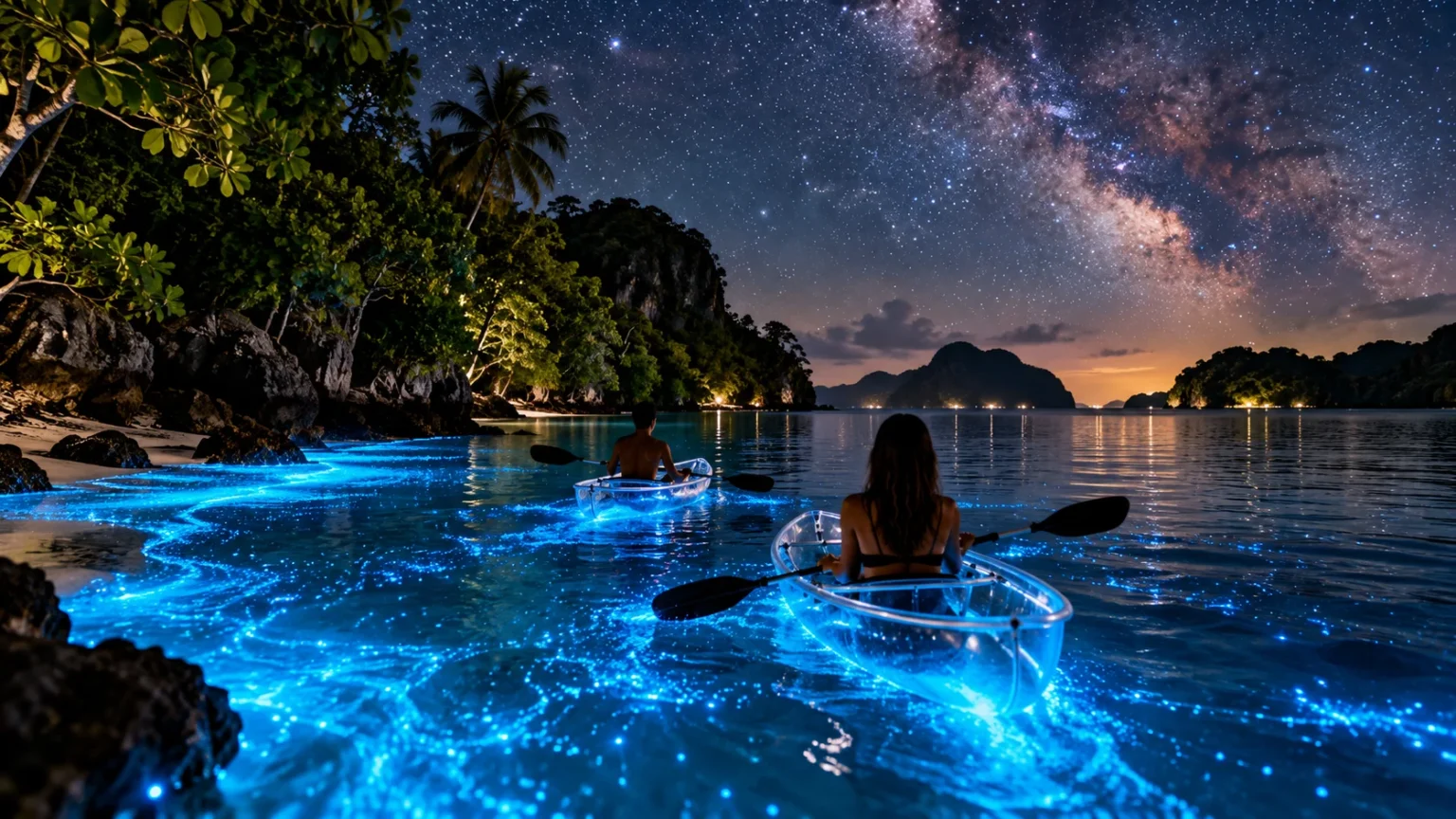
Imagine standing beside a beach at night and watching the waves glow with beautiful blue light as they reach the shore. This extraordinary natural phenomenon, known as bioluminescence, creates some of the most unforgettable experiences in nature. From glowing tropical lagoons to mysterious caves filled with tiny lights, there are incredible destinations around the world where travelers can witness this fascinating display.
Bioluminescence occurs when certain living organisms produce light through chemical reactions within their bodies. Marine plankton, fireflies, glowworms, and some deep-sea creatures are among the organisms capable of creating this natural illumination. Depending on the location, visitors may see sparkling ocean waves, glowing water trails, or thousands of tiny lights covering dark cave ceilings.
Finding the best places to see bioluminescence requires understanding where this phenomenon occurs and when viewing conditions are most favorable. Some destinations offer relatively consistent displays, while others depend heavily on seasonal changes, weather, and marine conditions. This guide explores remarkable bioluminescent destinations worldwide, along with useful tips for planning an unforgettable nighttime experience.
What Is Bioluminescence and Why Does It Happen?
Bioluminescence is the natural production of visible light by living organisms through chemical reactions. In many species, these reactions involve a light-producing molecule called luciferin and an enzyme or related protein system. Unlike ordinary artificial lighting, bioluminescent light is produced with relatively little heat, creating the beautiful glow commonly seen in certain marine environments and organisms.
In coastal waters, microscopic organisms called dinoflagellates often create glowing blue or green flashes when disturbed. Movement from waves, boats, or swimming animals can trigger brief bursts of light. When large numbers of these organisms gather in suitable conditions, their combined flashes can make entire sections of water appear illuminated during dark evenings.
Bioluminescence serves different biological purposes depending on the organism producing it. Some marine species use light to discourage predators, while others rely on it for communication or attracting prey. Understanding these natural functions makes glowing beaches, underwater displays, and illuminated caves even more fascinating for travelers interested in wildlife and unusual natural experiences.
Mosquito Bay, Puerto Rico: One of the Brightest Bioluminescent Bays
Mosquito Bay on Vieques Island in Puerto Rico is internationally recognized for its exceptionally bright bioluminescent waters. The sheltered bay contains large populations of microscopic dinoflagellates that emit blue-green flashes when disturbed. On suitable dark nights, the movement of paddles and passing fish can create remarkable glowing patterns across the water’s surface.
Visitors typically experience Mosquito Bay through guided nighttime kayaking excursions that explore its peaceful waters. The surrounding natural environment and limited artificial lighting provide favorable conditions for viewing the glow. Choosing a night near the new moon can improve visibility because moonlight competes with the relatively faint light produced by marine organisms.
Although the bay is famous for its brightness, the intensity of the display changes with environmental conditions. Visitors must follow local conservation rules, including restrictions on entering the water. Booking an authorized guided excursion helps protect the fragile ecosystem while providing an opportunity to experience one of the world’s most celebrated bioluminescent destinations.
Laguna Grande, Puerto Rico: A Magical Glowing Lagoon
Laguna Grande in Fajardo offers another spectacular opportunity to witness natural bioluminescence in Puerto Rico. Unlike a traditional open bay, this coastal lagoon connects to the sea through a narrow mangrove-lined channel. Its sheltered waters support light-producing organisms that create visible flashes when disturbed under suitable nighttime conditions.
Guided kayaking tours generally take visitors through the mangrove channel before reaching the lagoon. As paddles move through the water, small bursts of blue-green light may appear around them. The surrounding vegetation and quiet nighttime atmosphere make this experience particularly memorable for travelers interested in exploring natural coastal landscapes.
Laguna Grande is convenient for visitors staying in northeastern Puerto Rico or the San Juan area. Nevertheless, visibility depends on moonlight, water conditions, and the abundance of bioluminescent organisms. Travelers should select reputable guides, follow environmental restrictions, and remember that natural light displays cannot be guaranteed on every visit.
Vaadhoo Island, Maldives: The Famous Sea of Stars
Vaadhoo Island in the Maldives is widely associated with the beautiful phenomenon often called the Sea of Stars. Under favorable conditions, bioluminescent plankton can create sparkling blue light along the shoreline. The glowing patterns may resemble stars scattered across the sand, making this tropical destination especially appealing to nature enthusiasts and photographers.
The Maldives offers warm tropical waters and picturesque coastal landscapes, but its famous glowing beaches are not illuminated continuously. Bioluminescent displays depend on plankton concentrations, water movement, and local environmental conditions. Visitors should therefore avoid assuming that a particular island will produce a bright display simply because photographs show glowing waves.
Travelers interested in witnessing bioluminescence should ask knowledgeable local operators about recent sightings and suitable viewing locations. Dark evenings with limited artificial lighting can make natural illumination easier to observe. Combining the experience with other island activities creates a rewarding trip even when the glowing plankton remain difficult to see.
Luminous Lagoon, Jamaica: Glowing Water Near Falmouth
Jamaica’s Luminous Lagoon is a well-known destination for travelers hoping to experience bioluminescent water in the Caribbean. Located near Falmouth, the lagoon contains microorganisms that can produce visible light when surrounding water moves. Under suitable conditions, boat movement creates beautiful glowing trails that stand out against the darkness of the lagoon.
Nighttime boat excursions provide opportunities to observe the phenomenon while learning about the lagoon’s natural environment. Guides may explain how water conditions and microorganisms contribute to the unusual illumination. The surrounding tropical landscape adds to the atmosphere, making Luminous Lagoon a distinctive attraction for visitors exploring Jamaica’s northern coast.
The brightness of the water varies depending on environmental conditions, rainfall, and the amount of natural light present. Travelers should choose experienced tour operators and follow instructions regarding water access and personal safety. Checking recent viewing conditions can help establish realistic expectations before planning an evening visit to the lagoon.
Indian River Lagoon, Florida: A Bioluminescent Kayaking Destination
Florida’s Indian River Lagoon system offers fascinating opportunities to observe glowing water along the state’s Atlantic coast. Certain areas, including waters near the Space Coast, can support concentrations of bioluminescent dinoflagellates during suitable periods. Their light-producing reactions sometimes create striking blue flashes around paddles and moving aquatic animals.
Summer is often associated with dinoflagellate bioluminescence in this region, although exact timing and intensity vary. Some locations may also feature glowing comb jellies during cooler periods. These organisms produce a different kind of visual experience, creating an opportunity to encounter several forms of natural marine illumination across different seasons.
Guided nighttime kayaking excursions are a popular way to explore suitable sections of the lagoon. Visitors should follow local water-quality advisories and avoid disturbing wildlife or entering unfamiliar water independently. Because marine conditions change frequently, confirming recent sightings and tour availability is important when organizing a bioluminescent kayaking experience.
Jervis Bay, Australia: Beautiful Glowing Coastal Waters
Jervis Bay in New South Wales, Australia, is admired for its clear waters, beautiful beaches, and occasional bioluminescent displays. When concentrations of light-producing plankton occur near the coast, moving waves can create glowing blue patterns. The contrast between dark shorelines and illuminated water makes this phenomenon particularly attractive to photographers.
Bioluminescence at Jervis Bay is unpredictable and should not be considered a permanent attraction. Plankton blooms depend on environmental conditions, and visible displays may appear intermittently at different locations. Even during favorable periods, the brightness can change considerably between evenings, making flexibility important for visitors hoping to witness the phenomenon.
Travelers should consult recent local observations before choosing a viewing location and avoid entering unfamiliar beaches after dark. Coastal weather, currents, and water-quality conditions deserve attention regardless of how attractive the glow appears. Jervis Bay also offers scenic landscapes and wildlife experiences that make it worthwhile beyond occasional bioluminescent events.
Toyama Bay, Japan: The Remarkable Firefly Squid
Toyama Bay in Japan is famous for a different kind of marine bioluminescence involving firefly squid. These small marine animals possess specialized light-producing organs that create beautiful blue illumination. When large numbers gather in suitable conditions, their combined light can form an extraordinary natural display unlike the glowing plankton commonly found at tropical beaches.
Firefly squid are particularly associated with seasonal appearances in Toyama Bay, generally during spring. Their movements and visibility depend on biological cycles, weather, and local marine conditions. The phenomenon attracts visitors interested in marine wildlife, Japanese coastal traditions, and unusual natural events that occur during limited periods.
Travelers may learn about these creatures through specialized exhibitions, local museums, and seasonal observation opportunities where available. Wildlife encounters are not guaranteed, and access may be restricted by weather or conservation requirements. Planning around the appropriate season and checking local arrangements provides a better opportunity to appreciate this remarkable marine phenomenon.
Waitomo Glowworm Caves, New Zealand: A Glowing Underground World
Waitomo Glowworm Caves in New Zealand offer an unforgettable bioluminescent experience far from the ocean. Instead of glowing waves, visitors encounter tiny blue-green lights scattered across dark cave ceilings. These lights are produced by the larvae of a native fungus gnat species commonly known as the New Zealand glowworm.
The glowworms use bioluminescence to attract small prey within their underground environment. Their illuminated bodies create an extraordinary appearance resembling thousands of stars suspended above the cave floor. The combination of limestone formations, underground waterways, and delicate natural lighting makes Waitomo one of the world’s most recognizable glowworm destinations.
Guided cave experiences allow visitors to observe these fascinating organisms while learning about their habitat and life cycle. Photography and artificial lighting restrictions may apply because excessive light can disturb the cave environment. Following the guide’s instructions helps protect the glowworms and preserve the unusual natural display for future visitors.
Isla Holbox, Mexico: Tropical Beaches With Glowing Water
Isla Holbox, located off the Yucatán Peninsula in Mexico, is another destination known for occasional bioluminescent waters. During favorable conditions, microscopic plankton can create sparkling light in shallow coastal areas. The island’s relaxed atmosphere and beautiful beaches make it an appealing setting for observing this unusual natural phenomenon.
Bioluminescent sightings around Holbox are often associated with warmer months, although actual visibility depends on weather and plankton activity. Dark skies, limited artificial lighting, and suitable water conditions can improve the experience. Travelers should remember that natural displays vary and may be difficult to observe during certain evenings.
Local guided excursions can help visitors identify suitable viewing conditions and accessible locations. Choosing responsible operators is particularly important because shallow coastal habitats can be sensitive to disturbance. Holbox also offers opportunities to enjoy beaches, local culture, and coastal scenery when bioluminescent conditions are less impressive than expected.
Kuala Selangor, Malaysia: Magical Fireflies Along the River
Kuala Selangor in Malaysia offers a remarkable land-based bioluminescent experience involving thousands of fireflies. These insects gather around riverside vegetation and produce rhythmic flashes that can illuminate sections of the surrounding trees. Their natural light creates a captivating nighttime atmosphere that differs from the glowing ocean waves found at marine destinations.
Visitors commonly observe the fireflies during guided boat excursions along suitable sections of the Selangor River. Certain firefly species display synchronized flashing behavior, making groups of insects appear to blink together. The surrounding river environment provides an opportunity to appreciate the relationship between native vegetation, insect populations, and healthy natural habitats.
Firefly displays depend on environmental conditions, habitat quality, and the amount of surrounding artificial lighting. Visitors should avoid flash photography, disturbing insects, or using bright lights near their resting areas. Choosing conservation-conscious operators helps protect these delicate habitats while supporting responsible wildlife tourism in the region.
San Diego, California: Glowing Waves Along the Pacific Coast
San Diego occasionally experiences spectacular bioluminescent waves when blooms of certain marine dinoflagellates develop offshore. At night, breaking waves may produce bright blue flashes that briefly illuminate the coastal water. These events can create extraordinary visual displays along beaches, attracting residents and travelers interested in unusual ocean phenomena.
Some bioluminescent events are associated with red tides, although the organisms involved and their potential effects vary. The presence of discolored water does not guarantee a glowing nighttime display. Similarly, a beach that appeared luminous on one evening may show little visible bioluminescence the following night because marine conditions can change.
Visitors should monitor recent local observations and public water-quality advisories before planning a coastal outing. Observing waves from a safe, accessible shoreline is generally preferable to entering unfamiliar water after dark. Responsible viewing also means respecting beach restrictions, wildlife habitats, and changing surf conditions during nighttime coastal visits.
Best Time to See Bioluminescence Around the World
The best time to observe bioluminescence depends on the destination and the organisms responsible for the light. Tropical bays may support viewing opportunities throughout much of the year, while other locations experience seasonal blooms. Firefly squid in Japan, for example, are associated with spring, whereas some glowing plankton displays become more common during warmer periods.
Moon phases can strongly influence the visibility of naturally glowing water because bright moonlight reduces contrast. Nights near the new moon generally provide darker conditions that make faint bioluminescent flashes easier to observe. However, even ideal darkness cannot create a display when the necessary organisms are absent or environmental conditions are unsuitable.
Weather and water conditions also affect the overall experience. Heavy rainfall, strong winds, unusual tides, or changes in water quality may influence organism concentrations and tour operations. Before traveling, research the destination’s seasonal patterns and confirm recent observations rather than relying entirely on general descriptions of the best months.
Tips for Planning a Bioluminescence Viewing Experience
Planning ahead improves your chances of enjoying bioluminescence while minimizing unnecessary travel complications. Research destinations known for regular sightings and consider visiting during seasons associated with greater biological activity. Booking reputable guided experiences can provide useful local knowledge, particularly in protected lagoons, caves, and environmentally sensitive coastal areas.
Choose accommodations near suitable viewing locations when possible, especially if nighttime travel options are limited. Bring practical clothing for the climate and follow any equipment recommendations provided by your guide. Keep artificial lighting to a minimum during observations because bright lights can interfere with your ability to see faint natural illumination.
Keep expectations realistic because bioluminescence is a natural phenomenon rather than a scheduled performance. Some nights produce spectacular displays, while others reveal only subtle flashes or no visible glow. Planning additional activities around your destination ensures that the journey remains enjoyable even when natural viewing conditions are less favorable.
How to Photograph Bioluminescence at Night
Photographing bioluminescence can be challenging because the light is often extremely faint and appears only briefly. Cameras may struggle to capture the same colors and brightness visible to the human eye. Using suitable low-light photography equipment can improve results, although the conditions may still prevent clear images.
A stable tripod and a camera with adjustable exposure settings can be useful for stationary nighttime photography where photography is permitted. Longer exposures may capture faint light, but moving waves and boats can create blur. Photographers should experiment cautiously without interfering with wildlife, tour operations, or other visitors enjoying the natural display.
Many dramatic bioluminescence photographs online use long exposures, image processing, or conditions that differ from ordinary viewing experiences. The actual glow may appear subtler than expected, particularly in places with unpredictable plankton blooms. Appreciating the phenomenon directly is often more rewarding than concentrating entirely on capturing the perfect photograph.
How to Protect Bioluminescent Environments While Traveling
Bioluminescent ecosystems can be sensitive to pollution, habitat damage, artificial lighting, and excessive tourism. Mangrove forests, coastal lagoons, caves, and river habitats support organisms that depend on specific environmental conditions. Protecting these environments helps preserve the natural processes responsible for creating extraordinary nighttime light displays.
Travelers should follow local conservation regulations and avoid touching wildlife, collecting organisms, or disturbing sensitive habitats. Swimming may be restricted in certain bioluminescent bays to protect water quality and aquatic life. Respecting these rules is essential even when the glowing water appears inviting or easily accessible from shore.
Responsible tourism also involves choosing operators that prioritize environmental protection and appropriate group sizes. Avoid leaving litter, introducing chemicals into waterways, or using unnecessary artificial lighting near wildlife. Small conservation-minded decisions can help protect these remarkable destinations and maintain opportunities for future generations to experience natural bioluminescence.
Conclusion
The best places to see bioluminescence around the world offer extraordinary opportunities to experience one of nature’s most beautiful phenomena. From Puerto Rico’s glowing bays and the Maldives’ sparkling shores to New Zealand’s illuminated caves, each destination provides a different natural display. These experiences reveal the remarkable diversity of organisms capable of producing their own light.
Choosing the right destination depends on seasonal conditions, accessibility, local regulations, and the type of bioluminescence you want to experience. Dark nights near the new moon can improve visibility for glowing water, while seasonal wildlife encounters require more specific planning. Researching recent conditions helps create realistic expectations and improves the overall travel experience.
Whether you prefer peaceful coastal scenery, guided kayaking experiences, or fascinating underground environments, bioluminescence offers something truly memorable. Responsible travel practices help protect the habitats that make these experiences possible. With thoughtful planning and a little luck, witnessing natural light illuminating the darkness can become an unforgettable part of your travels.
Frequently Asked Questions (FAQs)
1. Where is the best place in the world to see bioluminescence?
Mosquito Bay in Vieques, Puerto Rico, is widely recognized for its exceptionally bright bioluminescence. Other famous destinations include the Maldives, Jamaica’s Luminous Lagoon, and New Zealand’s Waitomo Glowworm Caves.
2. What is the best month to see bioluminescence?
The best month depends on the destination and local environmental conditions. Some tropical bays offer year-round opportunities, while locations such as Toyama Bay in Japan are associated with particular seasonal wildlife activity.
3. Can you see bioluminescence with the naked eye?
Yes, bioluminescence can be visible without special equipment when sufficient light-producing organisms are present. Dark surroundings and minimal moonlight generally improve visibility, although actual brightness varies considerably between destinations and nights.
4. Is it safe to swim in bioluminescent water?
Safety depends on local water conditions, the organisms present, and applicable regulations. Some locations prohibit swimming to protect sensitive ecosystems, while certain algal blooms may create health concerns. Always follow local advisories.
5. Why do bioluminescent beaches glow blue at night?
Many glowing beaches contain microscopic dinoflagellates that produce brief blue flashes when disturbed by moving water. When large populations are present, their combined light can create beautiful illuminated waves and sparkling coastal displays.