




Rapallo Travel Guide: Beaches, Food & Day Trips
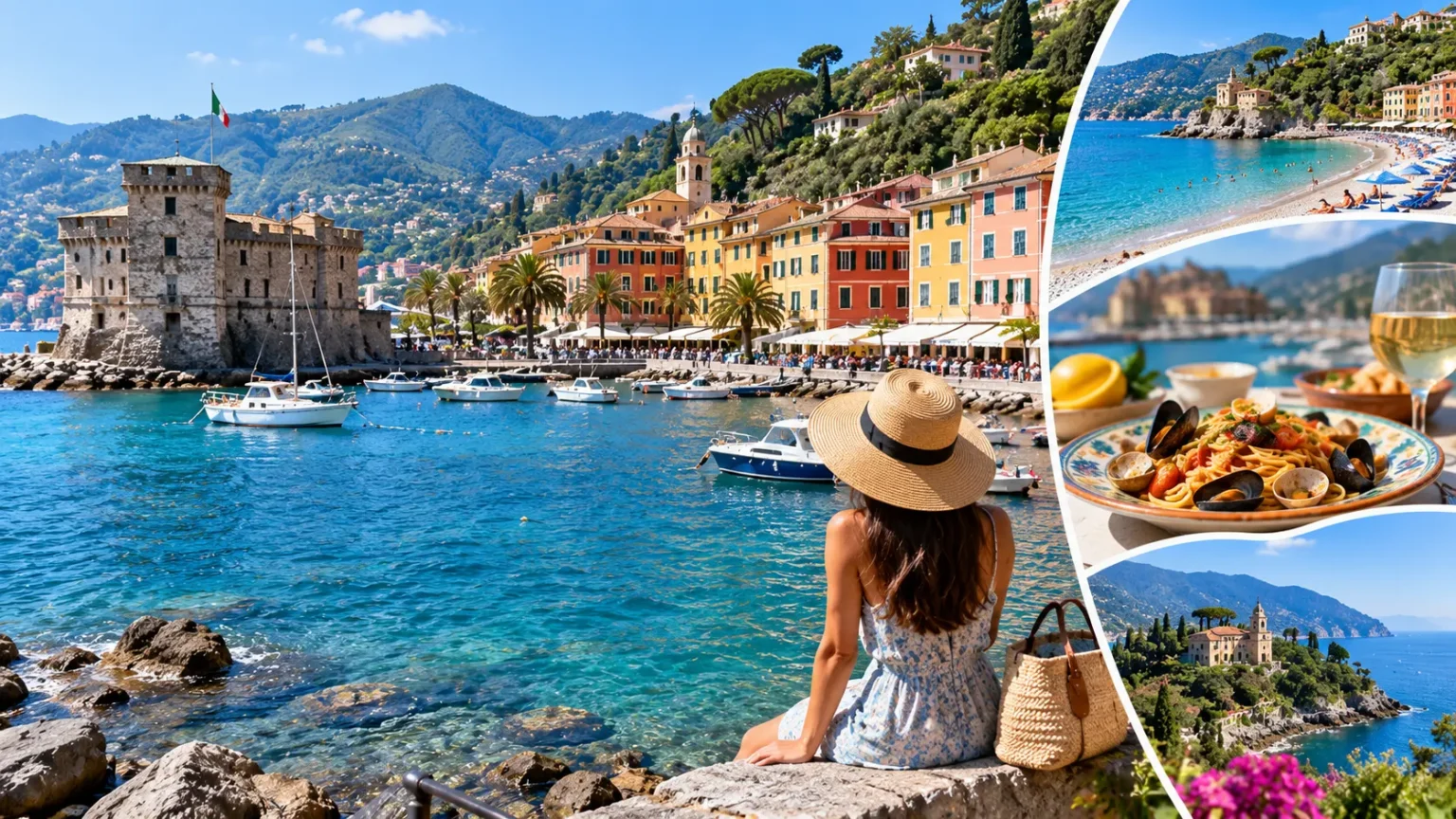
Rapallo is one of the most convenient and enjoyable bases on the Italian Riviera, combining a colorful waterfront, relaxed beaches, historic streets, Ligurian food, and easy connections to some of northern Italy’s most famous coastal destinations. Located on the Gulf of Tigullio between Genoa and the Cinque Terre, the town feels lively without being as intensely crowded or expensive as nearby Portofino. Visitors can spend mornings swimming in the Ligurian Sea, afternoons exploring castles and hillside sanctuaries, and evenings walking along the palm-lined promenade. Excellent train and seasonal boat connections also make Rapallo useful for travelers who prefer staying in one place while taking several day trips. Its mixture of practical transport, seaside atmosphere, restaurants, and attractive surroundings makes it especially suitable for a multi-day Liguria itinerary.
Rapallo works well for couples, families, solo travelers, and visitors exploring Italy without a car. Its historic center is compact enough to explore on foot, while the train station places towns such as Santa Margherita Ligure, Camogli, Sestri Levante, Genoa, and the Cinque Terre within easy reach. Portofino and San Fruttuoso can also be reached by boat when services are operating, giving travelers the chance to experience the coast from the sea. Food is another major reason to visit, with pesto, focaccia, fresh seafood, stuffed pasta, olive oil, and local white wines appearing throughout the region. This Rapallo travel guide covers the best things to do, beaches, food, accommodation areas, transportation, and day trips so you can plan a relaxed Italian Riviera stay.
Why Visit Rapallo?
Rapallo offers many of the attractions travelers associate with the Italian Riviera without requiring the budget or advance planning often needed for Portofino. Its waterfront is lined with pastel-colored buildings, palm trees, cafes, restaurants, and views across the Gulf of Tigullio. Behind the coast, green hills rise quickly and create the dramatic landscape typical of Liguria. The historic center contains narrow pedestrian lanes where small shops, bakeries, bars, and traditional restaurants remain part of everyday life. Visitors can move between sightseeing, swimming, shopping, and dining without spending much time on transportation. This compactness makes Rapallo particularly pleasant for slow travel.
Another advantage is that Rapallo feels like a functioning Italian town rather than a destination built entirely around tourism. Residents use the same markets, cafes, promenades, and streets as visitors, creating a more lived-in atmosphere than some smaller resort villages. Mornings can begin with espresso and focaccia at a local bakery before the waterfront becomes busy. In the afternoon, families gather around beaches and outdoor spaces while boats move through the bay. Evenings are ideal for an aperitivo followed by seafood or pasta in the old town. This everyday rhythm gives travelers a chance to experience Ligurian coastal life beyond famous photo locations.
Rapallo is also an excellent transportation base. The railway runs along the Ligurian coast, connecting the town with Genoa to the northwest and the Cinque Terre and La Spezia to the southeast. Santa Margherita Ligure is only a short train journey away, while Camogli, Chiavari, Sestri Levante, and other coastal towns are similarly accessible. Boats connect Rapallo with Santa Margherita Ligure, Portofino, and San Fruttuoso on applicable schedules, although departures can change with weather, passenger demand, and season. The official Tigullio maritime service continues to operate these routes in 2026. This flexibility makes it easy to build several day trips around one hotel.
Cost can be another reason to choose Rapallo instead of Portofino. Accommodation, dining, and everyday services often provide a wider range of price points, making the town easier to fit into moderate travel budgets. Visitors can still reach Portofino during the day and return to Rapallo for dinner or accommodation. This approach allows travelers to experience one of Italy’s most glamorous villages without paying premium prices for every part of the trip. Rapallo also has supermarkets, pharmacies, transport services, and a larger selection of practical businesses. These conveniences can become particularly valuable during stays of several nights.
The town is best suited to travelers who enjoy combining sightseeing with a relaxed pace. Rapallo is not primarily about checking dozens of monuments off a list. Its appeal comes from walking beside the sea, lingering over lunch, taking boats across the gulf, swimming between excursions, and exploring neighboring towns at an unhurried speed. Travelers who enjoy photography will find colorful architecture, fishing boats, mountain backdrops, and coastal views around almost every corner. Those interested in food can easily turn the trip into a tour of Ligurian specialties. Rapallo ultimately works as both a destination and a comfortable gateway to the wider Italian Riviera.
Best Things to Do in Rapallo
One of the best ways to begin exploring Rapallo is by walking along Lungomare Vittorio Veneto, the town’s waterfront promenade. The route provides views over the harbor, surrounding hills, beaches, and colorful buildings facing the Gulf of Tigullio. Palm trees and benches make it a pleasant place for a morning walk or evening passeggiata. Cafes and gelaterias nearby provide convenient stops throughout the day. The waterfront atmosphere changes with the light, becoming especially attractive around sunset when the buildings and sea take on warmer colors. It also gives first-time visitors an easy sense of Rapallo’s layout.
At the eastern end of the waterfront stands Rapallo’s small seaside castle, often called Castello sul Mare. Built in the sixteenth century as part of the town’s coastal defenses, the compact stone structure sits directly beside the water and has become one of Rapallo’s most recognizable landmarks. Even when the interior is not open, the surrounding waterfront makes the castle worth seeing. It is particularly photogenic when viewed from farther along the promenade. Events and exhibitions may occasionally take place inside depending on local schedules. The castle also provides an attractive starting point for exploring the eastern side of the bay.
Rapallo’s historic center deserves time beyond a quick walk between the station and waterfront. Narrow streets run behind the promenade, revealing painted facades, small churches, boutiques, bakeries, and traditional food shops. Ligurian towns often decorate building exteriors with trompe-l’œil details that imitate architectural features, and visitors can spot examples while wandering. The center is compact, so getting temporarily lost is part of the experience rather than a major inconvenience. Piazza Cavour and surrounding streets form part of the active heart of town. Visiting early in the morning can offer a quieter look at everyday local life.
A particularly memorable experience is taking the cable car or funicular-style ride up toward the Sanctuary of Our Lady of Montallegro when operating. The sanctuary sits high above Rapallo and offers broad views over the coastline and wooded hills. The elevated position provides a dramatic contrast with the busy waterfront below. Visitors can combine the trip with walking routes through the surrounding landscape if weather and fitness allow. The sanctuary itself has religious and cultural significance to the local community. Even travelers primarily interested in scenery often consider the panoramic views one of Rapallo’s highlights.
Rapallo is also a good place to enjoy the Italian habit of doing relatively little for part of the day. Sit beside the harbor with coffee, browse local shops, stop for gelato, or watch boats move across the bay. A travel itinerary that schedules every hour can miss much of what makes Liguria enjoyable. Leaving time between day trips lets you appreciate Rapallo as more than a place to sleep. Markets, seasonal events, evening concerts, and local celebrations can also add interest depending on your dates. The town’s official tourism information point provides current visitor information and operates seasonally adjusted hours throughout the year.
Best Beaches in Rapallo
Rapallo’s shoreline contains a mixture of small beaches, rocky swimming areas, and organized beach establishments rather than long stretches of wide sand. This is typical of much of the Ligurian coast, where mountains meet the sea and available flat shoreline is limited. Visitors should therefore expect compact beaches with pebbles, gravel, or imported sand rather than enormous Mediterranean resort beaches. Several swimming areas are located close enough to the center to reach on foot. The water can be beautifully clear when conditions are calm. Water shoes can make entering from pebbly or rocky sections more comfortable.
Beach clubs, known in Italy as stabilimenti balneari, occupy portions of the Rapallo waterfront. These establishments typically offer sun loungers, umbrellas, changing facilities, showers, and sometimes cafes or restaurants for a fee. They can be useful for visitors who want a comfortable full beach day without carrying equipment. Prices vary according to season, location, and facilities, so checking locally is worthwhile. During July and August, popular spots can become busy and advance booking may be useful. Travelers on tighter budgets can look for public access areas, known as spiagge libere.
One of the pleasures of swimming in Rapallo is having a town immediately behind the beach. Instead of spending an entire day isolated at a resort, you can swim in the morning, walk into the center for lunch, and continue sightseeing afterward. This flexibility works particularly well during hot summer weather when outdoor sightseeing is more comfortable early or late in the day. A beach break around midday can provide relief from the strongest sun. Cafes, supermarkets, gelaterias, and restaurants remain within easy reach. Families may especially appreciate having practical facilities nearby.
Travelers looking for more picturesque swimming environments can also use Rapallo as a base for nearby beaches. Santa Margherita Ligure has several attractive waterfront bathing areas only a short distance away. Paraggi, between Santa Margherita and Portofino, is famous for its sheltered turquoise water, although it can be expensive and crowded in high season. Camogli offers a longer pebble beach in front of colorful waterfront houses. Sestri Levante combines town beaches with the scenic Baia del Silenzio. Exploring several beaches makes a longer Rapallo stay more varied.
The best beach months generally run from late spring into early autumn, with July and August providing the hottest conditions and largest crowds. June and September often offer an appealing compromise between swimming weather and somewhat calmer surroundings. Sea temperatures and weather vary from year to year, so early May or late October swimming is more dependent on personal tolerance and conditions. Strong sun protection is important even when sea breezes make temperatures feel comfortable. Pack sunscreen, a hat, water, and footwear appropriate for pebbles. Checking sea and weather conditions before entering unfamiliar swimming areas is always sensible.
What to Eat in Rapallo
Pesto Genovese is one of the essential foods to try in Rapallo because Liguria is its home region. Traditional pesto combines fresh basil, pine nuts, garlic, Parmigiano Reggiano, Pecorino, extra-virgin olive oil, and salt into an intensely aromatic sauce. It is commonly served with trofie, a short twisted Ligurian pasta that holds pesto especially well. Another traditional pairing is trenette pasta, sometimes accompanied by potatoes and green beans. The flavor of fresh local-style pesto can be noticeably different from mass-produced supermarket versions. Travelers who enjoy Italian cuisine should try it at least once during their stay.
Focaccia is equally important to Ligurian food culture and works at almost any time of day. Classic focaccia genovese is relatively thin, soft inside, slightly crisp outside, and generously flavored with olive oil and salt. Locals may eat focaccia for breakfast alongside coffee, although visitors often prefer it as a snack or light lunch. Bakeries throughout Rapallo sell slices by weight or portion. Variations may include onions, olives, cheese, herbs, or other toppings. Buying focaccia directly from a bakery is inexpensive and provides one of the easiest introductions to everyday Ligurian food.
Seafood naturally plays a major role in coastal menus. Depending on season and restaurant, visitors may encounter anchovies, mussels, squid, octopus, sea bass, prawns, and mixed fried seafood. Anchovies are particularly associated with Ligurian cuisine and can be served marinated, stuffed, fried, or incorporated into other dishes. Pasta with seafood is another common choice, often allowing local ingredients to remain relatively simple rather than covered in heavy sauces. When choosing restaurants, menus emphasizing seasonal ingredients can be more interesting than enormous menus designed around every possible tourist preference. Asking about the catch of the day may also lead to good choices.
Other regional specialties include pansoti, a filled pasta traditionally served with walnut sauce. The filling often contains greens and herbs, creating a dish that feels distinctly different from the meat-filled pasta found in other Italian regions. Farinata, a thin savory pancake made from chickpea flour, olive oil, water, and salt, is another inexpensive Ligurian specialty worth trying. Vegetable pies and savory tortes are also common because Ligurian cooking makes excellent use of herbs and greens. These dishes can be especially useful for vegetarians. Exploring bakeries and casual shops can reveal as much regional food culture as formal restaurants.
For dessert or an evening treat, gelato is an obvious choice, but travelers should also look for regional pastries and biscuits. Liguria produces several white wines that pair naturally with seafood and pesto-based dishes. An aperitivo before dinner might include a spritz, wine, or another drink accompanied by small snacks depending on the bar. Meal times tend to run later than in some countries, particularly for dinner. Avoid filling every meal with the most famous foods; alternating restaurant dinners with bakery lunches and market snacks makes the experience more varied. Rapallo’s food is best enjoyed slowly and repeatedly rather than through one oversized tasting session.
Where to Stay in Rapallo
Staying close to the waterfront is ideal for travelers who want sea views, evening walks, and immediate access to restaurants. Hotels and apartments around the central promenade place most major Rapallo attractions within a short walk. This location is particularly convenient for short stays when maximizing time matters. The trade-off is that rooms facing busy streets or nightlife areas can experience more noise, especially during summer. Sea-view rooms may also cost considerably more than rooms a few blocks inland. Travelers should compare location with actual room features rather than paying for an address alone.
The historic center is another excellent area for visitors who prioritize atmosphere and food. Staying behind the promenade puts bakeries, cafes, restaurants, and pedestrian streets directly outside your accommodation. The train station is also close to much of central Rapallo, making this area practical for frequent day trips. Older buildings can have smaller elevators, stairs, or unusual layouts, so checking accessibility information is important when traveling with heavy luggage. Rooms inside pedestrian streets may be quieter than those on larger roads. Apartments are especially common for stays of several nights.
Travelers planning many train excursions may want accommodation near Rapallo railway station. The station is centrally located enough that choosing it for convenience does not mean sacrificing access to the waterfront. Being able to walk to an early train within minutes is valuable when visiting the Cinque Terre, Genoa, or other Ligurian towns. It also simplifies arrival and departure with luggage. Before booking, look at the actual walking route rather than only the straight-line distance shown on a map. Hilly streets can make a short distance feel longer.
Properties farther into the hills can provide quieter surroundings and impressive views over the Gulf of Tigullio. Villas and hillside apartments may appeal to travelers who prioritize scenery, space, or privacy. However, steep roads and stairs can make these locations less convenient without a car. Parking is another important consideration because central Rapallo can be challenging for drivers, particularly during busy periods. If you plan to rent a car, accommodation with guaranteed parking can save considerable time. For most visitors focused on the coast, trains and boats make a car unnecessary.
Booking timing depends heavily on season. July and August are among the busiest months, and attractive accommodation can become expensive or sell out well ahead of arrival. Spring and early autumn often offer more moderate demand while still providing pleasant conditions for sightseeing. Weekends can also be busier because Rapallo is accessible to domestic travelers from northern Italian cities. Read recent reviews for air conditioning, noise, elevator access, breakfast quality, and room condition. A slightly less scenic hotel with excellent transport access can sometimes create a much easier overall trip.
Day Trip From Rapallo to Portofino
Portofino is the most famous day trip from Rapallo and one of the reasons many travelers choose the town as their base. The tiny harbor village is known for pastel-colored buildings, luxury yachts, designer boutiques, and forested hills surrounding the waterfront. Because Portofino is compact, visitors generally do not need an entire day simply to see the village itself. The experience becomes more rewarding when combined with walking, viewpoints, or nearby coastal attractions. Arriving early helps visitors see the harbor before the largest crowds appear. Staying in Rapallo also avoids paying Portofino accommodation prices.
Boat travel is one of the most scenic ways to reach Portofino. In 2026, the Tigullio maritime service lists a Rapallo–Santa Margherita Ligure–Portofino route, with a published adult fare of €14 one way or €22 return on the applicable service. Boat operations can vary with weather, sea conditions, demand, and seasonal schedules, so travelers should confirm the exact departure time on the day of travel. The journey provides coastal views that cannot be seen from the road. For many visitors, the boat ride becomes part of the attraction rather than merely transportation.
Once in Portofino, spend time around Piazza Martiri dell’Olivetta and the small harbor before walking uphill. Castello Brown and the Church of San Giorgio area provide elevated views over the harbor and surrounding coastline. Comfortable shoes are useful because many scenic routes involve steps or inclines. Travelers interested in hiking can continue toward coastal paths depending on trail conditions. Shops and restaurants around the harbor tend to be expensive, so budget-conscious visitors may prefer coffee or a small snack rather than a full meal. Returning to Rapallo for dinner can provide better value.
Another option is to combine Portofino with Santa Margherita Ligure. Visit one destination by boat, move between them by bus, boat, or walking route when appropriate, and then return to Rapallo. Santa Margherita has a larger town center, beaches, shops, and restaurants, making it a good complement to tiny Portofino. This combination allows a full day without feeling rushed. During summer, however, transport can be crowded, so avoid leaving your return until the final possible connection. Checking schedules before beginning the day prevents unnecessary stress.
Portofino is beautiful but often most enjoyable when expectations are realistic. It is a very small place, and much of its fame comes from setting and atmosphere rather than a long list of major monuments. Walking beyond the harbor reveals more of the landscape and reduces the feeling of simply joining crowds for photographs. Early morning and later afternoon generally feel calmer than peak midday periods. Rapallo’s convenience means you can visit Portofino briefly without forcing the entire vacation to revolve around it. That flexibility is one of Rapallo’s biggest advantages.
Day Trip to Santa Margherita Ligure and San Fruttuoso
Santa Margherita Ligure is one of the easiest excursions from Rapallo. The neighboring town shares the Gulf of Tigullio but has its own elegant waterfront, marina, beaches, villas, and historic streets. Because the distance is short, travelers can visit for only a few hours or combine it with another destination. Train connections make the journey particularly easy, while boats offer a more scenic alternative when operating. The town is larger and more relaxed than Portofino yet still feels distinctly upscale. It is also a good destination for lunch or an evening aperitivo.
Begin around Santa Margherita’s waterfront before exploring streets behind the harbor. Villa Durazzo and its gardens are among the town’s notable attractions, providing architecture, greenery, and views close to the center. The waterfront includes several beaches where visitors can swim during warmer months. Restaurants serve Ligurian dishes, seafood, and aperitivo options. Travelers who want a quieter coastal day may find Santa Margherita more comfortable than Portofino. Its practical services and relatively spacious center make it easy to spend several unhurried hours.
San Fruttuoso offers a very different experience. The tiny bay is famous for the Abbey of San Fruttuoso, a historic complex positioned between the sea and steep wooded hills. There is no ordinary road leading directly into the bay, making arrival by boat or hiking trail part of the experience. The setting feels dramatically more isolated than Rapallo despite being relatively close. During summer, the small beach can become crowded because available space is limited. Arriving earlier generally improves the experience.
Rapallo has direct maritime connections through Santa Margherita and Portofino toward San Fruttuoso on applicable services. For 2026, the operator publishes a €27 adult return fare for the Rapallo–Santa Margherita–Portofino–San Fruttuoso combination, subject to operating conditions and current schedules. The operator notes that a ticket from Rapallo to San Fruttuoso can allow an intermediate stop in Portofino when compatible with that day’s timetable. This can turn one excursion into an efficient coastal sightseeing day.
Do not overpack this trip simply because several destinations can theoretically be combined. San Fruttuoso deserves enough time to appreciate the abbey, beach, and unusual setting, while Portofino becomes more enjoyable when you can walk beyond the harbor. One sensible approach is visiting San Fruttuoso first, stopping in Portofino on the return, and reaching Rapallo for dinner. Weather is crucial because boat services can change when sea conditions deteriorate. Always check the final return options before leaving the last stop. Flexibility is essential for any Ligurian itinerary that depends on boats.
Day Trip From Rapallo to the Cinque Terre
The Cinque Terre can be visited from Rapallo as a day trip, particularly for travelers who do not want to change hotels. The five villages—Monterosso al Mare, Vernazza, Corniglia, Manarola, and Riomaggiore—lie southeast along the Ligurian coast. Trains are usually the most practical way to explore because the railway connects the villages and avoids difficult parking. A day trip requires an early start if you want to experience several locations without rushing excessively. Trying to see all five villages in depth during one day can feel more like transportation than travel. Selecting three or four often creates a better experience.
Monterosso is a logical starting point for travelers interested in beaches because it has the most substantial beach areas among the five villages. Vernazza offers one of the most photographed harbor views in Liguria, while Manarola is famous for its colorful buildings and dramatic coastline. Riomaggiore has a steep main street descending toward its small harbor. Corniglia differs because it sits above the sea rather than directly around a harbor. Each village has a distinct character despite their geographic proximity. Choosing based on your interests produces a more satisfying day than following a rigid checklist.
Boat services may also connect Rapallo with the Cinque Terre during relevant operating periods. The 2026 Tigullio maritime fare page lists a “Super 5 Terre” service from Rapallo or Santa Margherita Ligure at €31 one way or €47 return, although actual sailings depend on schedules and sea conditions. Traveling by sea offers spectacular coastline views but is less flexible than using trains. Weather disruption is another consideration. Some travelers therefore use boats in one direction and trains for other portions when schedules allow.
Hiking is one of the Cinque Terre’s major attractions, but trails should never be assumed open. Weather, landslides, maintenance, and seasonal restrictions can affect access. Appropriate footwear is important because many paths contain steep steps, uneven surfaces, and prolonged climbs. Visitors primarily interested in villages do not need to hike between every stop. Trains make it easy to combine short walks with sightseeing. During the hottest summer days, extensive midday hiking can be uncomfortable and demands adequate water and sun protection.
Returning to Rapallo after the Cinque Terre can feel pleasantly calm after a busy day. Have dinner near the waterfront instead of scheduling another attraction immediately. If the Cinque Terre is your highest priority, consider spending at least one or two nights there rather than only day-tripping from Rapallo. But for a broader Ligurian itinerary in which Portofino, Camogli, Genoa, and other destinations are equally important, Rapallo makes an efficient base. Its central position lets you explore in both directions. This flexibility is particularly valuable for travelers staying four or five nights.
Other Easy Day Trips From Rapallo
Camogli is one of the best alternatives to the more famous destinations around Rapallo. The town is known for tall colorful buildings facing a long pebble beach and a working maritime atmosphere. It feels compact yet provides enough restaurants, waterfront walking, and swimming opportunities for several hours. Trains make it easy to reach without a car. The beachfront becomes particularly attractive around sunset. Travelers who enjoy photography may find Camogli one of the most visually rewarding stops on the Ligurian coast.
Sestri Levante is another excellent day trip, particularly for beach lovers. The town is famous for Baia del Silenzio, or the Bay of Silence, a picturesque curve of water bordered by colorful buildings. It also has another larger bay and a pleasant historic center between the two waterfronts. Compared with some smaller Riviera villages, Sestri Levante provides enough space and variety for a full beach day. The town is easily reached by train from Rapallo. Arriving early can help during summer because the Bay of Silence becomes extremely popular.
Chiavari lies even closer and receives fewer international visitors than Portofino or the Cinque Terre. Its historic center contains arcaded streets, shops, cafes, and a distinctly local atmosphere. Travelers interested in markets, architecture, and ordinary Ligurian town life may appreciate the contrast with resort destinations. Chiavari also has a waterfront and beach area. Because travel time is short, it works well as a half-day excursion. It can also be combined with nearby Lavagna for a slower exploration of the Gulf of Tigullio.
Genoa makes an excellent urban day trip when you want a break from small coastal towns. Liguria’s capital has one of Europe’s largest historic centers, grand palaces, narrow medieval lanes, churches, museums, and a revitalized old port. Food lovers can explore focaccia, pesto, farinata, seafood, and traditional markets in the city where many Ligurian specialties are deeply rooted. Genoa deserves more than a rushed visit if time allows. Nevertheless, direct rail connections make a day trip feasible. The change from tranquil Rapallo to dense historic Genoa adds considerable variety to an itinerary.
Travelers with additional time can consider Levanto, Moneglia, or La Spezia, depending on their interests. Levanto provides beaches and hiking access near the Cinque Terre, while Moneglia has a smaller seaside atmosphere. La Spezia is more urban and functions as an important transportation gateway to the eastern Ligurian coast. The abundance of options means Rapallo is especially suitable for travelers who dislike changing hotels every night. Choose two or three excursions that genuinely interest you instead of attempting the entire coast. Leaving unscheduled time in Rapallo will usually make the trip more enjoyable.
Getting Around Rapallo and the Italian Riviera
Walking is the easiest way to explore central Rapallo. The train station, old town, waterfront, castle, restaurants, and several swimming areas are relatively close together. Comfortable shoes are useful because some streets are paved unevenly and hillside routes quickly become steep. Most visitors staying centrally do not need local transportation for ordinary sightseeing. Walking also reveals small bakeries and streets you might miss from a vehicle. In summer, carry water because humidity and strong sun can make short distances feel warmer than expected.
Trains are the backbone of travel along the Ligurian coast. The railway links Rapallo with Genoa, Camogli, Santa Margherita Ligure, Chiavari, Sestri Levante, the Cinque Terre, and La Spezia. Regional trains are particularly useful because many destinations are separated by only a few stops. Services can become crowded during summer weekends and holidays, especially toward the Cinque Terre. Validate or activate tickets when required according to the ticket type and current rail rules. Checking live schedules on the day of travel helps account for timetable changes.
Boats provide the most scenic transportation around the Gulf of Tigullio. The maritime service connects Rapallo with Santa Margherita Ligure, Portofino, and San Fruttuoso, while selected services extend toward other destinations. The operator states that services depend on favorable weather and sea conditions and may change because of passenger demand. Travelers should therefore treat boat schedules as more weather-dependent than trains. Confirm the last return departure carefully, particularly when visiting San Fruttuoso, where road access is absent. Having a backup plan can prevent a stressful afternoon.
A car is rarely necessary for a standard Rapallo itinerary. Parking in coastal Ligurian towns can be difficult, expensive, and time-consuming, particularly in summer. Roads around Portofino and the surrounding hills can also become congested. Trains and boats generally place visitors closer to historic centers than parking areas do. A rental car becomes more useful if your itinerary extends into inland Liguria or rural villages poorly served by public transport. For a trip focused on Rapallo, Portofino, Genoa, and the Cinque Terre, public transportation is usually simpler.
Allow extra time whenever several transport connections are required. Liguria’s geography funnels roads and railway lines through narrow coastal corridors, so disruptions can occasionally affect multiple destinations. Do not schedule a ferry return immediately before a long-distance train or flight without a reasonable buffer. Travelers departing from airports should use more reliable transport planning than they would for casual sightseeing. Flexible day-trip itineraries work particularly well from Rapallo because another nearby town can often substitute when weather changes. A relaxed attitude toward timing fits the region better than a minute-by-minute schedule.
Best Time to Visit Rapallo
Spring is one of the most attractive times to visit Rapallo. April and May generally bring milder temperatures, blooming vegetation, and fewer visitors than the peak summer period. Conditions can be excellent for walking, sightseeing, and day trips, although sea temperatures may still feel cool for swimming. Rain is possible, so packing a light waterproof layer is useful. Accommodation availability tends to be better than during July and August. Travelers more interested in exploring than spending entire days at the beach may particularly enjoy this period.
June offers a strong combination of warm weather and long daylight hours. Swimming becomes more comfortable, restaurants and seasonal tourism services are fully active, and the coast feels lively. Crowds usually increase as the month progresses, especially around famous locations such as Portofino and the Cinque Terre. Booking popular hotels in advance is sensible. Morning sightseeing and afternoon swimming work particularly well because temperatures can become hot around midday. June is often one of the best choices for travelers wanting both beach time and exploration.
July and August are the busiest and hottest months. Beaches fill quickly, accommodation prices rise, and transport to Portofino and the Cinque Terre can become crowded. The atmosphere is energetic, however, and visitors benefit from long evenings, warm sea temperatures, outdoor dining, and extensive seasonal services. Reservations become more important for accommodation and some beach clubs. Start major sightseeing early in the morning whenever possible. Afternoon heat provides a natural excuse for swimming or resting before evening activities.
September is another excellent month for Rapallo. The sea often remains warm from summer while the most intense holiday crowds begin easing, particularly later in the month. Restaurants and coastal services generally remain active, and daytime temperatures can be comfortable for both beaches and walking. Shorter daylight hours should be considered when planning long excursions. Occasional rain becomes more likely as autumn approaches. For many travelers, the balance of swimming conditions and reduced congestion makes September particularly appealing.
Winter provides a completely different Rapallo experience. The town remains inhabited year-round, unlike some seasonal resort destinations, so visitors can still enjoy local restaurants, walks, and nearby cities. Swimming is generally not the focus, and some maritime or tourism services operate reduced schedules. Weather can range from sunny and mild to cool and wet. Accommodation prices may be lower outside holiday periods. Travelers interested in food, local atmosphere, and crowd-free coastal views may enjoy winter, while anyone dreaming primarily of beach days should choose warmer months.
Frequently Asked Questions
Is Rapallo worth visiting?
Yes. Rapallo combines an attractive waterfront, historic streets, beaches, Ligurian food, and excellent transportation links, making it both an enjoyable destination and a practical base for exploring the Italian Riviera.
How many days do you need in Rapallo?
Three to five nights works well for many travelers. This gives you time to explore Rapallo itself while taking day trips to places such as Portofino, Santa Margherita Ligure, Camogli, San Fruttuoso, or the Cinque Terre.
Can you visit Portofino from Rapallo?
Yes. Portofino can be reached from Rapallo using boat and land connections, with maritime services operating according to season, demand, and sea conditions. The boat is particularly scenic because it provides views of the Gulf of Tigullio from the water.
Does Rapallo have good beaches?
Rapallo has several small beaches and swimming areas, including both organized beach clubs and public sections. The coastline is generally compact and often pebbly, while nearby Santa Margherita Ligure, Camogli, Paraggi, and Sestri Levante provide additional beach options.
Is Rapallo a good base for the Cinque Terre?
Yes, especially if the Cinque Terre is one part of a wider Ligurian trip rather than your only destination. Rapallo offers convenient coastal transport while also placing Portofino, Camogli, Santa Margherita Ligure, Genoa, and other towns within easy day-trip range.