





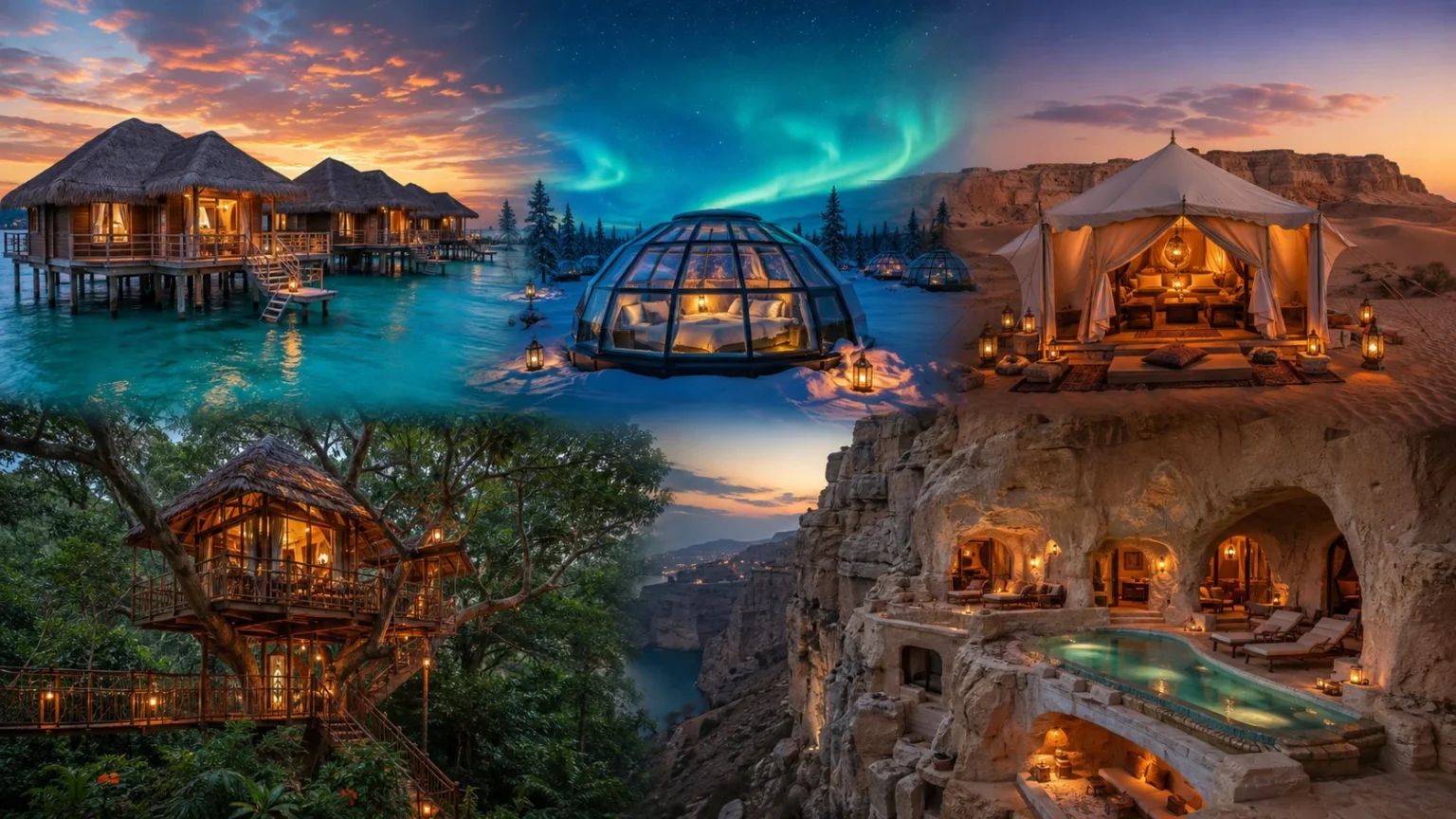
Extraordinary Places to Stay That Make Travel Unforgettable
Travel is often remembered through destinations, food, culture, and the people we meet, but sometimes the accommodation itself becomes one of the most unforgettable parts of the journey. Instead of checking into another standard hotel room, travelers today can sleep beneath the ocean, stay inside a cave, wake up among treetops, or watch the northern lights through a glass roof. These unique places to stay around the world transform an ordinary overnight stop into a meaningful travel experience. They allow travelers to experience landscapes and cultures in ways that traditional hotels rarely offer.
The popularity of unusual accommodation has grown as travelers increasingly look for experiences that feel personal and memorable. Treehouse hotels, eco-lodges, floating villas, ice hotels, converted castles, glamping resorts, and wildlife retreats offer alternatives for people who want more than comfortable beds and room service. Some stays focus on architectural creativity, while others are built around nature, history, or adventure. What makes the best unusual hotels special is not simply how different they look but how strongly they connect guests with the destination surrounding them.
Choosing extraordinary accommodation does require more planning than booking a conventional hotel. Many bucket-list places to stay are located in remote forests, mountains, deserts, islands, or Arctic regions where transportation and weather can influence the experience considerably. Some properties also have very limited room availability, meaning travelers may need to reserve months in advance. Understanding seasonality, transportation, accessibility, and what is actually included in the booking can help prevent disappointment after reaching the destination.
Travelers should also think about whether the experience matches their personal preferences rather than booking somewhere simply because it looks impressive online. An underwater room may be magical for an ocean lover but uncomfortable for someone who dislikes enclosed spaces. Similarly, sleeping in an ice hotel might appeal to an adventurous winter traveler but not someone who struggles with cold conditions. The best unique hotels in the world are therefore not necessarily the most dramatic ones but the properties that create an experience you genuinely want to have.
From the Arctic wilderness of Scandinavia to the wildlife of East Africa and the ancient landscapes of Cappadocia, extraordinary accommodation can be found across almost every continent. Some stays provide luxury and privacy, while others focus on adventure, nature, or cultural immersion. The following destinations represent some of the most fascinating ways to turn accommodation into part of the journey itself. If you are searching for once-in-a-lifetime places to stay, these remarkable options can provide inspiration for your next unforgettable trip.
Treehotel, Sweden: Sleep High Among the Forest Trees
Located in the peaceful forests of northern Sweden, Treehotel offers travelers the chance to stay inside imaginative structures suspended among tall pine trees. Rather than creating a collection of identical rooms, the property features individually designed treehouses that each have their own architectural personality. Guests can choose from futuristic designs, minimalist Scandinavian spaces, and unusual structures that appear almost hidden within the landscape. This creative approach has made Treehotel one of the world’s most recognizable treehouse hotels.
One of its most famous rooms is the Mirrorcube, a reflective structure designed to blend visually with the surrounding woodland. Another is the UFO, which looks like a spacecraft that has landed between the trees and creates a completely different atmosphere. Other treerooms draw inspiration from bird nests and contemporary architecture, allowing travelers to choose an experience that reflects their personal taste. The variety means the hotel appeals not only to nature lovers but also to photographers, architecture enthusiasts, couples, and travelers searching for unusual Scandinavian accommodation.
The natural environment is a major part of the experience. Instead of waking to traffic or busy hotel corridors, guests are surrounded by forest scenery and the quiet atmosphere of Swedish Lapland. During winter, snow can cover the trees and transform the landscape into a peaceful Arctic setting, while warmer months bring greener scenery and long northern days. Outdoor activities can complement the stay, allowing visitors to explore the wider region rather than spending the entire trip inside their accommodation.
Seasonality should be considered carefully before booking because Swedish Lapland changes dramatically throughout the year. Winter is ideal for travelers dreaming about snowy forests and Arctic experiences, while summer provides longer daylight hours for hiking and outdoor exploration. Travelers interested in northern lights should also understand that aurora sightings depend on natural conditions and can never be guaranteed. Choosing the right season based on the activities you actually want will make this unique accommodation experience more rewarding.
Treehotel is particularly suitable for travelers who appreciate creative architecture but still want a genuine connection with nature. It offers the novelty of sleeping above the forest floor without turning the surrounding environment into a secondary attraction. Instead, the rooms are designed to make guests notice the trees, light, weather, and peaceful landscape around them. For anyone building a Scandinavian bucket-list itinerary, this extraordinary treehouse retreat can easily become one of the most memorable stops.
ICEHOTEL, Sweden: Spend a Night Inside a Frozen Work of Art
ICEHOTEL in Jukkasjärvi, Sweden, takes unusual accommodation in an entirely different direction by turning ice and snow into temporary architecture. The hotel is internationally famous for frozen rooms, ice sculptures, artistic suites, and spaces created by designers and artists. Rather than simply providing somewhere unusual to sleep, the property combines hospitality and art to create an immersive Arctic experience. It remains one of the most famous ice hotels in the world and attracts visitors from many countries each winter.
The artistic rooms are among the main reasons travelers choose this destination. Individual spaces may feature detailed sculptures, frozen walls, artistic themes, and creative lighting that make each suite feel more like an installation than a conventional bedroom. Because many elements of the seasonal ice hotel are recreated, travelers can experience something that changes over time rather than staying in a completely permanent structure. This temporary nature adds to the feeling that a winter stay is something special and difficult to replicate elsewhere.
Naturally, sleeping in an icy environment requires preparation. Guests should understand how cold-room accommodation works and what clothing, sleeping equipment, and facilities are available before arriving. Many travelers combine an ice-room experience with warmer accommodation so they can enjoy the novelty without spending every night in freezing surroundings. Checking room descriptions carefully can help travelers choose the experience that matches their comfort level rather than assuming every room operates in exactly the same way.
The wider destination also adds considerable value to the trip. Swedish Lapland can offer snow-covered landscapes, winter activities, cultural experiences, and opportunities to spend time outdoors in a dramatically different environment. Northern lights may also appear under suitable conditions, but travelers should build an itinerary that remains enjoyable even if the sky stays quiet. Snowy scenery, Arctic activities, and unusual accommodation provide plenty of reasons to visit regardless of whether an aurora becomes visible.
ICEHOTEL is an excellent choice for couples, adventurous travelers, photographers, art lovers, and anyone looking for something completely different from traditional luxury. Its appeal comes from experiencing an environment that would normally seem unsuitable for hospitality and seeing it transformed through creativity and design. Travelers willing to embrace the cold and prepare properly can leave with a story few conventional hotels can match. It is undoubtedly one of the most unusual places to sleep in the world.
Glass Igloos in Finnish Lapland: Watch the Arctic Sky From Bed
Few accommodation concepts are as strongly connected with the sky as the glass igloos found across Finnish Lapland. Resorts such as Kakslauttanen have helped make transparent-roof accommodation famous among travelers interested in Arctic landscapes and northern-light experiences. Guests can lie in bed while looking upward through a glass roof, enjoying stars, snowfall, or potentially an aurora without spending the entire evening outside in freezing temperatures. These properties have become some of the most recognizable unique stays in Finland.
The northern lights are naturally one of the biggest attractions, but travelers should avoid treating them as a guaranteed part of the booking. Auroras depend on solar activity, darkness, weather, and cloud conditions, all of which remain outside the control of the hotel. The glass roof is therefore best appreciated as a way to stay connected with the Arctic environment throughout the night. Even when the aurora does not appear, watching snow fall or seeing a clear northern sky can make the room feel dramatically different from ordinary accommodation.
Travelers can often choose from several types of accommodation within Arctic resorts. Smaller glass igloos may focus primarily on sky views, while larger cabins or chalets can offer more room, private saunas, living areas, and additional comfort for families or groups. Some travelers prefer traditional log cabins because they create a cozy Finnish atmosphere without sacrificing access to outdoor activities. Comparing room layouts, bathroom facilities, privacy, and amenities is important before selecting a specific option.
Winter is particularly popular because snow-covered forests create the classic Lapland experience many travelers imagine. However, extremely cold temperatures mean suitable clothing and preparation are essential. Autumn can also be attractive for travelers interested in darker skies without the deepest winter conditions, while summer offers long daylight hours and completely different scenery. Instead of asking which season is universally best, travelers should decide whether northern lights, snow, hiking, or outdoor exploration matters most to them.
Glass igloos are especially appealing to honeymooners, couples, photographers, and families looking for romantic and unusual places to stay. Their success comes from a relatively simple idea: design a room that allows the landscape and sky to become part of the interior experience. Rather than distracting guests with excessive decoration, the architecture encourages them to look outward. That connection between accommodation and environment is exactly what makes many of the world’s most memorable hotels feel so special.
Giraffe Manor, Kenya: Wake Up Beside Remarkable Wildlife
Giraffe Manor in Nairobi offers an accommodation experience that wildlife enthusiasts are unlikely to forget. The boutique property is known for encounters with resident Nubian giraffes, which may approach parts of the manor during their daily routines. Instead of simply observing wildlife from a distant vehicle, guests have the possibility of seeing giraffes close to the historic building during particular moments of the day. This distinctive relationship between accommodation and wildlife has made Giraffe Manor one of the world’s most famous wildlife hotels.
The experience is particularly associated with breakfast, when giraffes may approach windows and dining areas. Photographs of these moments have helped make the property internationally recognizable, but travelers should remember that the animals are living creatures rather than scheduled performers. Their movements and behavior cannot be controlled simply to create photographs. Following staff guidance and respecting boundaries is essential for keeping wildlife encounters responsible and enjoyable for both guests and animals.
Giraffe Manor can also fit naturally into a larger Kenya itinerary. Nairobi is an important gateway for travelers heading toward safari regions and national parks, which makes the property suitable for the beginning or end of a longer wildlife journey. Guests might spend one or two nights there before continuing to destinations where animals can be observed across larger natural habitats. This creates variety within the trip and prevents a distinctive hotel experience from replacing the broader wildlife and cultural experiences Kenya offers.
Because the property is famous and has limited capacity, booking well in advance can be important. Travelers building an itinerary around the manor should confirm accommodation availability before purchasing restrictive transportation arrangements. They should also consider whether the experience justifies several nights or whether a shorter stay would allow more time for other parts of Kenya. Unique hotels often work best as highlights within a varied itinerary rather than becoming the entire purpose of the journey.
Anyone interested in ethical wildlife accommodation should research how animal interactions and conservation efforts are managed before booking wildlife-focused properties anywhere in the world. Responsible tourism should prioritize animal welfare rather than creating unnatural encounters purely for entertainment. Travelers who approach wildlife with patience and respect are more likely to appreciate the experience for what it genuinely represents. Giraffe Manor can therefore be memorable not simply because giraffes appear close to guests, but because it can encourage greater interest in conservation.
The Manta Resort, Tanzania: Sleep Beneath the Ocean
Few rooms offer a perspective as unusual as the underwater accommodation associated with The Manta Resort on Pemba Island, Tanzania. Part of the sleeping space sits beneath the surface of the Indian Ocean, allowing guests to look directly into the surrounding marine environment. Instead of waking to city streets, mountains, or forest views, visitors can watch fish and changing underwater light from the bedroom. This remarkable concept has made it one of the world’s most famous underwater hotel rooms.
The experience extends above the water as well, giving travelers opportunities to relax while surrounded by open sea. During daylight hours, the ocean dominates the landscape, while nighttime changes the atmosphere completely as the underwater environment becomes darker and quieter. The accommodation is unusual because the room itself encourages observation rather than simply providing a luxurious space to sleep. Guests may find themselves spending longer inside simply because the view constantly changes.
Pemba Island adds significantly to the overall experience. The destination is known for tropical scenery, marine environments, diving opportunities, snorkeling, and a slower rhythm than many heavily developed resort destinations. Travelers can therefore combine an underwater stay with activities that deepen their appreciation for the surrounding ocean. Rather than treating the room as an isolated attraction, incorporating it into a broader island itinerary creates a more complete and meaningful experience.
This type of accommodation will not suit every traveler, which makes honest self-assessment important before booking. People who dislike boats, enclosed spaces, deep water, or isolated environments may find the experience less relaxing than the photographs suggest. Travelers should understand transfer arrangements, room facilities, weather considerations, meal logistics, and emergency procedures in advance. The best once-in-a-lifetime hotel experiences are those that match your comfort level as well as your sense of adventure.
For ocean lovers, honeymooners, divers, and travelers celebrating a special occasion, an underwater room can provide an extraordinary memory. It is also a reminder that some of the world’s most compelling accommodation uses architecture to direct attention toward nature. The ocean remains the real attraction, while the room simply provides an unusually intimate way to experience it. Travelers who appreciate marine environments may find this one of the most distinctive stays available anywhere in the world.
Cave Hotels in Cappadocia, Türkiye: Stay Inside the Landscape
Cappadocia is already famous for surreal rock formations, valleys, underground settlements, and historic structures carved into stone, so cave-style accommodation feels naturally connected to the destination. Many local hotels incorporate carved rooms, stone architecture, terraces, and traditional design elements rather than creating generic buildings that could belong anywhere. Staying in one of these properties allows travelers to remain connected with Cappadocia’s distinctive landscape even after sightseeing ends. This makes the region one of the best destinations for unique cave hotels.
Cave accommodation ranges from rustic guesthouses to luxurious boutique properties, giving travelers considerable choice depending on budget and expectations. Some rooms preserve rough stone textures and traditional architectural details, while others combine cave interiors with modern bathrooms, private terraces, heated floors, pools, and high-end amenities. Travelers should compare specific room categories because layouts can differ dramatically within the same hotel. A room shown prominently in promotional photographs may not be the exact room included in the lowest booking category.
Location can also enhance the experience considerably. Some hotels offer terraces overlooking valleys and distinctive rock formations, while others provide elevated viewpoints where travelers can observe early-morning activity across the landscape. Cappadocia’s famous hot-air balloons often become part of the visual experience, although balloon operations depend on weather and should never be assumed to occur every morning. Even without them, the natural scenery makes staying in the region feel dramatically different from a typical city break.
Practical considerations matter because cave architecture can create unusual layouts. Some rooms may have limited natural light, uneven floors, narrow entrances, stairs, or layouts that are less suitable for travelers with mobility requirements. Temperature, ventilation, bathroom arrangements, and accessibility can vary from property to property. Reading detailed reviews and descriptions helps travelers understand whether the authentic characteristics of the room will feel atmospheric or inconvenient based on their individual needs.
Cappadocia works beautifully for couples, photographers, hikers, history enthusiasts, and travelers building a wider Türkiye itinerary. Unlike some highly specialized unique hotels, the region offers distinctive accommodation across different price ranges, making the experience more accessible. Guests can choose between intimate family-run properties, boutique cave hotels, and sophisticated luxury retreats. That variety helps make Cappadocia one of the easiest destinations for travelers who want unusual accommodation in Europe without structuring an entire vacation around one expensive hotel.
Skylodge Adventure Suites, Peru: Sleep High Above the Sacred Valley
Skylodge Adventure Suites in Peru offer one of the most dramatic accommodation experiences for travelers comfortable with heights. Transparent sleeping pods are positioned high above the Sacred Valley, creating the sensation of spending the night attached to the mountainside. Unlike a hotel where arrival means stepping out of a taxi and walking through reception, reaching the accommodation forms part of the adventure itself. This makes Skylodge particularly appealing to people searching for adventure places to stay around the world.
The transparent design allows the landscape to dominate the experience. Mountain views stretch around the pods during daylight, while sunset and sunrise can completely change how the valley looks. At night, the elevated position creates a sense of isolation that would be difficult to recreate in a conventional hotel. Instead of luxurious decoration becoming the main attraction, the architecture provides a frame through which guests experience the surrounding mountains and open space.
Travelers should carefully evaluate the access requirements before booking because this is not simply a room with an unusual view. Reaching the pods can involve adventurous routes that require comfort with heights and a reasonable level of physical ability. Anyone with significant fear of exposure should consider whether the experience would genuinely feel exciting rather than stressful. Reviewing the requirements honestly before committing can prevent a highly anticipated bucket-list stay from becoming uncomfortable.
The Sacred Valley location makes the accommodation easy to combine with a broader journey through Peru. Travelers often visit Cusco, historic archaeological sites, local communities, mountain landscapes, and Machu Picchu during trips to this part of the country. Including one adventurous overnight stay can provide contrast without replacing the cultural and historical experiences that make the destination special. Travelers should also consider altitude and avoid making their itinerary unnecessarily exhausting during the first days of arrival.
Skylodge suits adventurous couples, active travelers, photographers, and people who value experiences more than conventional hotel luxury. It demonstrates that unique vacation stays do not need marble bathrooms or enormous suites to feel extraordinary. Sometimes location, access, perspective, and a little adrenaline can create a stronger memory than traditional luxury. For travelers who genuinely enjoy heights and outdoor adventure, waking above the Sacred Valley can become one of the highlights of a Peru trip.
Desert Camps Around the World: Sleep Beneath Dark Skies
Deserts offer some of the most atmospheric accommodation experiences because the landscape changes dramatically throughout the day. Destinations such as Jordan, Morocco, Oman, Namibia, and other desert regions provide everything from simple tented camps to sophisticated luxury retreats. During daylight, guests experience wide-open landscapes, rock formations, dunes, and intense sunlight, while evenings often bring cooler temperatures and darker skies. Staying overnight allows travelers to experience parts of the desert that day visitors may completely miss.
The phrase luxury desert camp can describe very different experiences, so travelers should look closely at what a specific property provides. Some camps offer traditional-style tents and shared facilities, while others include private bathrooms, air conditioning, plunge pools, fine dining, and resort-style service. Certain properties focus on cultural immersion and local hospitality, whereas others emphasize architecture, wellness, and privacy. Understanding those differences helps travelers choose something that matches both their budget and expectations.
Sunset and sunrise are often among the most memorable moments of a desert stay. Changing light can transform dunes and rocky landscapes within minutes, while nighttime may reveal stars that are difficult to see in cities affected by light pollution. The quiet atmosphere can also be surprisingly powerful for travelers accustomed to busy urban environments. In these settings, the surrounding landscape frequently becomes more important than the accommodation itself, which is exactly why a well-designed desert retreat can feel so distinctive.
Responsible tourism is particularly important in landscapes that may appear empty but can still contain fragile ecosystems and important cultural communities. Travelers should look for camps that manage waste responsibly, avoid unnecessary damage to terrain, and employ or collaborate meaningfully with local people. Cultural experiences should be respectful and informative rather than reducing local traditions to entertainment. The best eco-friendly places to stay usually demonstrate that guest comfort and environmental responsibility can work together.
Desert accommodation can suit couples, photographers, families, adventure travelers, and people simply looking for quiet surroundings. Travelers who prefer simplicity may enjoy traditional camps where the landscape takes center stage, while others may choose high-end retreats that combine wilderness with luxury. Neither approach is automatically better. What matters is selecting a property whose level of comfort, isolation, and activities align with the type of desert experience you want to remember.
How to Choose the Best Unique Accommodation for Your Trip
Before booking an unusual hotel, decide what type of experience you actually want. Some travelers are excited by wildlife encounters, while others are more interested in architecture, romantic settings, cultural heritage, outdoor adventure, or complete isolation. Choosing based on your interests is far more important than selecting whichever property appears most frequently on social media. The best unique places to stay are those that enhance the style of travel you already enjoy rather than forcing you into an experience that does not suit you.
Location and transportation should be considered just as carefully as the room itself. Extraordinary hotels are often found in remote islands, forests, mountains, deserts, or Arctic regions, which can make transfers complicated or expensive. Before booking, find out where the nearest airport, railway station, or major town is located and how guests normally reach the property. Transportation schedules may also influence which flights or arrival times are practical.
Seasonality can completely transform an unusual stay. Glass igloos are strongly associated with dark Arctic skies, ice hotels depend on cold conditions, and wildlife experiences change throughout the year. Desert heat, tropical rainfall, mountain snowfall, and ocean conditions may also influence activities and transportation. Travelers should therefore research the destination’s seasonal conditions before focusing entirely on hotel availability. The best travel dates should support the experience you want outside the room as well as inside it.
Budget should be evaluated in terms of overall value rather than nightly rate alone. Some bucket-list hotels charge premium prices because they have limited capacity, specialized architecture, remote locations, or included experiences. Check whether meals, transfers, activities, equipment, excursions, or other services are included before comparing rates. A costly property with several inclusions may provide better overall value than a cheaper room requiring expensive transportation and activities separately.
Finally, read recent reviews before committing. Pay attention to practical details such as temperature, noise, room size, bathroom facilities, transportation, accessibility, staff communication, and how closely the real experience matches the promotional photographs. Unusual design often involves compromises that ordinary hotels avoid, including narrow spaces, ladders, shared facilities, or remote settings. Knowing these details beforehand helps travelers distinguish between charming quirks they will enjoy and inconveniences that could negatively affect the trip.
Final Thoughts
The best unique places to stay around the world show how accommodation can become far more than somewhere to sleep. Treehouses, glass igloos, underwater rooms, cave hotels, wildlife retreats, mountain pods, and desert camps each offer a completely different way to experience a destination. What makes these stays memorable is not simply unusual architecture but the way they help travelers connect more closely with forests, oceans, wildlife, history, mountains, and open landscapes.
A visually impressive hotel does not automatically guarantee a meaningful experience. The strongest unique accommodation usually reflects the environment or culture around it rather than existing purely as a novelty. A glass igloo works because it opens the room toward the Arctic sky, while a cave hotel feels special because it belongs within Cappadocia’s unusual landscape. When design and destination support one another, accommodation becomes part of the story travelers take home.
Realistic expectations are important when planning these experiences. Natural phenomena such as auroras, wildlife sightings, snowfall, and weather conditions cannot be guaranteed simply because an accommodation is famous for them. Remote properties may also involve transportation challenges, limited facilities, or unusual room layouts. Travelers who understand these realities beforehand are more likely to appreciate the overall experience instead of comparing every moment with a carefully staged photograph.
You also do not need to spend an entire vacation staying in extraordinary hotels. One or two memorable nights can be combined with practical accommodation during the rest of the trip. This approach can make expensive bucket-list properties more affordable while still allowing travelers to experience something genuinely special. A single night beneath the ocean, above a valley, inside a cave, or among forest trees may provide enough memories to last long after the rest of the itinerary fades.
Ultimately, the right unique stay depends on what makes travel meaningful to you. Some people dream of sleeping beneath the northern lights, while others would rather wake beside wildlife, explore historic architecture, or watch the ocean outside their bedroom window. Research carefully, choose according to your interests and comfort level, and allow enough time to enjoy the experience instead of simply photographing it. The world’s most extraordinary accommodations can become destinations in their own right when chosen for the right reasons.
What are the most unique places to stay in the world?
Some of the most unique options include underwater rooms, glass igloos, treehouse hotels, ice hotels, cave suites, wildlife lodges, desert camps, and mountain pods. The best choice depends on whether you prefer nature, adventure, culture, or luxury.
What are the best unusual places to stay for couples?
Couples often choose glass igloos, secluded treehouses, underwater suites, cave hotels, and private desert retreats. Look for privacy, romantic surroundings, convenient transportation, and activities that both travelers will enjoy.
Are unique hotels expensive?
Some unique hotels are expensive because of limited rooms, remote locations, or specialized architecture, but unusual accommodation exists at many price points. Travelers can also find affordable glamping sites, cave guesthouses, eco-lodges, and treehouse stays.
How early should I book a unique hotel?
Highly popular properties may need to be booked several months in advance, especially during peak travel seasons. If a particular hotel is essential to your trip, confirm accommodation availability before purchasing non-refundable transportation.
Are unique accommodations suitable for families?
Many are family-friendly, but every property is different. Check age restrictions, sleeping arrangements, stairs, balconies, accessibility, room capacity, and activity requirements before booking unusual accommodation with children.