




Read This Before Planning a Trip
As of October 2026, the UK Foreign, Commonwealth & Development Office advises against all travel to Belarus, and the U.S. Department of State strongly urges U.S. citizens to avoid traveling there. These warnings reflect serious, changing conditions. Read your government’s current advice before making plans, and consider postponing a visit.
Border crossings, flight routes, entry requirements, and available consular help can change with little notice. A visa-free rule for one nationality or route may not apply to another, so verify the requirements for your passport and planned itinerary. Check that your travel insurance covers your destination and circumstances before paying for bookings.
The places in this guide offer a sense of what Belarus has to see, from Minsk’s broad avenues to castles, forests, and historic towns. If travel becomes appropriate for you, plan flexibly and confirm that attractions and transport are operating. A carefully researched itinerary can help you make informed choices about timing and logistics.
Why Visit Belarus?
Belarus’s appeal comes from the range of experiences its landscape and history offer. The capital, Minsk, has wide boulevards and striking architecture, while towns such as Grodno and Brest invite slower explorations of older streets. Beyond the cities, forests, lakes, and countryside provide a quieter change of pace.
History lovers can plan around castles, memorial sites, churches, and museums that tell different stories of the region. Mir Castle and the palace complex at Nesvizh are two of the best-known heritage stops. Each place has its own atmosphere, so combining urban sights with countryside excursions can make a trip feel varied.
Belarus is also a destination where local food and everyday customs can shape the experience. A meal of draniki, a walk through a city market, or a visit to a small museum can add texture between major attractions. Leave breathing room in your schedule to notice details beyond the headline sights.
Explore Minsk
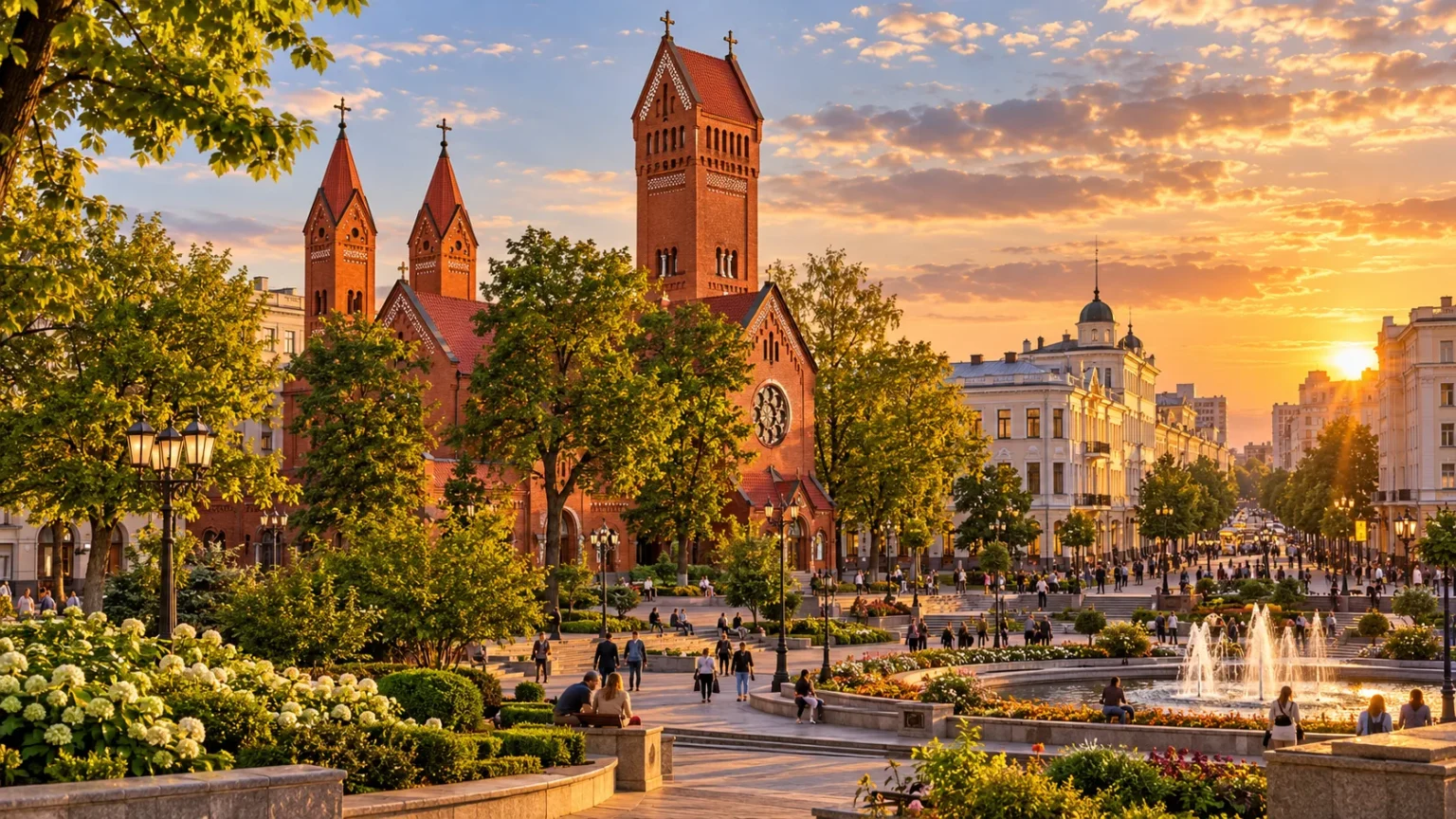
Minsk is a practical starting point for discovering Belarus, with museums, parks, cafés, and monumental architecture concentrated across a large city. Begin around Independence Avenue, where grand façades and public squares reveal the capital’s distinctive scale. Walking the central streets helps you appreciate how modern buildings sit beside older landmarks.
For an overview of the city’s past, visit museums that cover Belarusian history, art, or the Second World War. The Island of Tears memorial and the area around the Trinity Suburb offer quieter stops near the Svislach River. Check opening times before you go, since schedules and access can change.
Minsk also rewards unhurried time in its parks and neighbourhoods. Gorky Park and the botanical garden offer green space, while cafés and restaurants introduce visitors to local dishes and contemporary city life. If you have only one day, combine a central walking route with one museum and a relaxed evening meal.
Visit Mir Castle and Nesvizh
Mir Castle is one of Belarus’s signature historic landmarks, known for its towers, brick walls, and mix of architectural styles. Its compact setting makes it easy to appreciate the castle from different angles, including across the surrounding pond. Inside, exhibits can help explain how the building changed through different periods and owners.
Nesvizh is another rewarding stop, especially for visitors interested in palaces, gardens, and aristocratic history. The palace complex and its grounds offer a different experience from the more fortified appearance of Mir. Allow enough time to explore the estate and nearby town rather than treating it as a quick photo stop.
The two sites are often paired on an excursion, but the best route depends on current transport and attraction schedules. If public connections are limited, an organized day tour or private driver may simplify the visit. Confirm what is open, how tickets work, and whether the journey fits your wider itinerary before setting out.
Discover Brest and Its History
Brest sits in the southwest of Belarus, close to the border with Poland, and is known for its historic role as a transport and trade hub. The Brest Fortress memorial complex is a major site, with monuments and exhibits commemorating the defense of the fortress during the Second World War. Give the memorial space and time for a thoughtful visit.
The city itself has a pleasant pedestrian stretch along Sovetskaya Street, where shops, restaurants, and historic façades make for an easy stroll. The nearby railway station is also known for its architectural details. Exploring the central area on foot gives a sense of everyday Brest beyond its most famous memorial.
Belovezhskaya Pushcha, one of Europe’s best-known ancient forest areas, is often considered as an excursion from Brest. The journey and visitor arrangements need advance checking, since conditions and access may vary. If you plan to combine the forest with the city, avoid packing the day too tightly and confirm transport for the return.
See Grodno’s Historic Architecture
Grodno, also called Hrodna, is often singled out for its layered architectural character and riverside setting. Its old town is a good place to wander, with churches, historic buildings, and public squares gathered within a walkable area. The city’s mix of styles reflects the different influences that shaped its past.
The Old and New Castles overlook the Neman River and are among the city’s best-known landmarks. Religious architecture, including the Kalozha Church of Saints Boris and Gleb, adds another perspective on local history. Look for museum displays and interpretation on site to better understand how each building fits into the region’s story.
Grodno can work as a day trip or as an overnight stop on a longer route. Staying the night gives you more time to explore the streets at a relaxed pace and enjoy a meal in town. Before travelling, check current border and transport conditions, especially if your itinerary includes nearby international crossings.
Experience Belovezhskaya Pushcha
Belovezhskaya Pushcha is an ancient forest landscape shared by Belarus and Poland, recognized for its ecological importance and rich biodiversity. Visitors come for woodland scenery, marked trails, and the chance to learn about the region’s wildlife. The European bison, a symbol of the forest, is among the animals associated with the area.
A visit is best planned around the official visitor facilities and the activities available during your dates. Depending on current operations, options may include nature trails, guided excursions, or exhibits about the forest ecosystem. Follow local guidance, stay on permitted routes, and avoid assuming that every section of the protected area is open.
The forest offers a striking contrast with Minsk’s urban scale and the country’s castle towns. It suits travellers who enjoy quiet landscapes, birdlife, and time outdoors more than a tightly scheduled sightseeing day. Confirm transport, opening hours, and ticket arrangements in advance, since reaching rural attractions can take more planning than visiting a city museum.
Explore Lakes, Forests, and Countryside
Belarus has a landscape of forests, wetlands, rivers, and lakes that can appeal to travellers seeking outdoor scenery. The Braslav Lakes region is known for its waterside views and opportunities for walking, boating, or simply spending time in nature when facilities are available. In rural areas, distances can be significant, so plan transport carefully.
Pripyatsky National Park offers another glimpse of the country’s natural side, with wetlands and floodplain habitats that support a variety of wildlife. Guided outings can help visitors understand the landscape while respecting conservation rules. Check what excursions operate during your visit and whether guides or advance reservations are needed.
For a more relaxed pace, consider adding a countryside overnight to a city-and-castle itinerary. Guesthouses and rural stays may provide a closer look at village life, seasonal food, and quieter surroundings. Choose accommodations with clear booking terms, verify how you will get there, and keep a flexible plan in case weather or transport affects outdoor activities.
Try Belarusian Food and Culture
Belarusian cuisine is hearty and shaped by potatoes, grains, dairy, mushrooms, and seasonal produce. Draniki, or potato pancakes, are among the dishes visitors are most likely to encounter, often served with sour cream or other accompaniments. Menus may also feature soups, dumplings, and meat dishes suited to colder weather.
Trying local food is an easy way to connect sightseeing with everyday culture. Look for cafés and restaurants that serve traditional dishes alongside contemporary options, and ask staff about ingredients if you have dietary needs. Markets can be interesting places to see regional produce, although opening days and hours should be checked locally.
Cultural experiences extend beyond meals to music, crafts, theatre, and local museums. A performance or exhibition can add context to the places you have visited, while small galleries may showcase modern Belarusian artists. Schedules can vary, so check listings ahead of time and keep a flexible evening in your itinerary for an event that catches your interest.
Choose the Best Time to Visit Belarus
Belarus has four distinct seasons, and the best time to visit depends on the activities you have in mind. Late spring and summer generally bring longer days and greener landscapes, which can suit city walks and nature outings. These months can also be busier, so book accommodation early if travel is possible and appropriate.
Autumn brings changing foliage and cooler weather, making it a memorable season for forests and historic towns. Winter can be cold, with snow possible, and may suit visitors drawn to seasonal scenery and indoor museums. Pack for conditions rather than relying on averages, and check local forecasts close to departure.
Weather is only one part of seasonal planning. Museum hours, rural transport, guided tours, and outdoor facilities may follow seasonal schedules, while public holidays can affect opening times. Once you have confirmed that travel is advisable and feasible, build your itinerary around current operating information instead of assuming every attraction runs year-round.
Getting Around Belarus
Minsk has public transport options that can help visitors move between central areas and outlying sights. Depending on the route, these may include metro, buses, and trolleybuses. Learn how tickets are purchased and validated, and allow extra time when travelling to an appointment or timed attraction.
For longer journeys, trains and intercity buses may connect major cities, but routes and schedules can change. Check current timetables through official operators or at stations before you commit to a tight connection. If travelling to a castle or national park, look at the final leg carefully, since rural transport may be less frequent.
Driving can provide flexibility for reaching countryside destinations, but it requires additional preparation. Confirm the validity of your licence, vehicle documents, insurance, border permissions, and road rules before setting off. If you are not comfortable managing these details, a reputable local tour provider or driver may make a complex day trip simpler.
Practical Travel Tips for Belarus
Start with the essentials: check current government travel advice, entry rules for your nationality, and the status of routes and border crossings. These details can change, and general travel articles cannot substitute for up-to-date official guidance. Make decisions based on the situation at the time you plan to travel, not on old itineraries or social media posts.
Payment methods and mobile services can differ from what visitors expect, so ask your bank and accommodation providers what will work. Keep important documents accessible, maintain a backup of reservations, and know how to contact your insurer. Avoid relying on a single payment method or assuming every international service will operate normally.
When travel is possible, respectful local manners and thoughtful planning go a long way. Learn a few basic phrases, follow rules at memorials and religious sites, and ask before photographing people or private spaces. Keep your schedule flexible, save offline maps where useful, and confirm opening hours directly before setting out.
Conclusion
Belarus offers a compelling mix of capital-city architecture, historic castles, memorials, old towns, and broad natural landscapes. Minsk, Mir, Nesvizh, Brest, Grodno, and Belovezhskaya Pushcha each bring a different perspective, while local food and cultural venues help round out an itinerary.
A good travel plan balances well-known landmarks with enough time to explore at a comfortable pace. Confirm transport, attraction access, seasonal schedules, and entry requirements before finalizing any route, especially for trips beyond the main cities.
Most of all, make your decision with current safety information in view. As of October 2026, the UK advises against all travel to Belarus and the U.S. strongly urges its citizens to avoid travel there. Recheck official guidance before booking or departure.
FAQs
What are the best places to visit in Belarus?
Minsk, Mir Castle, Nesvizh Palace, Brest Fortress, Grodno’s old town, and Belovezhskaya Pushcha are among the country’s most recognized sights. Check current travel advice and site access before planning a visit.
How many days do you need to see Belarus?
A city-focused visit could take several days, while adding castles, Brest, Grodno, or national parks requires more time. Build in flexibility for transport and changing conditions, and reconsider travel based on current official guidance.
What is the best time of year to visit Belarus?
Late spring through early autumn brings longer days and greener scenery, while winter offers a colder, quieter atmosphere. Weather, attraction hours, and travel conditions vary, so verify them close to your intended dates.
What food should I try in Belarus?
Try draniki, Belarusian potato pancakes, along with local soups, dumplings, and seasonal mushroom dishes. Restaurant menus vary, so ask about ingredients and preparation if you have allergies or dietary restrictions.
Is Belarus safe for tourists right now?
As of October 2026, the UK advises against all travel, and the U.S. strongly urges its citizens to avoid travel to Belarus. Check your government’s latest advice before making any travel decision.