




Matera, Italy: Cave Hotels, Sights & Best Things to Do
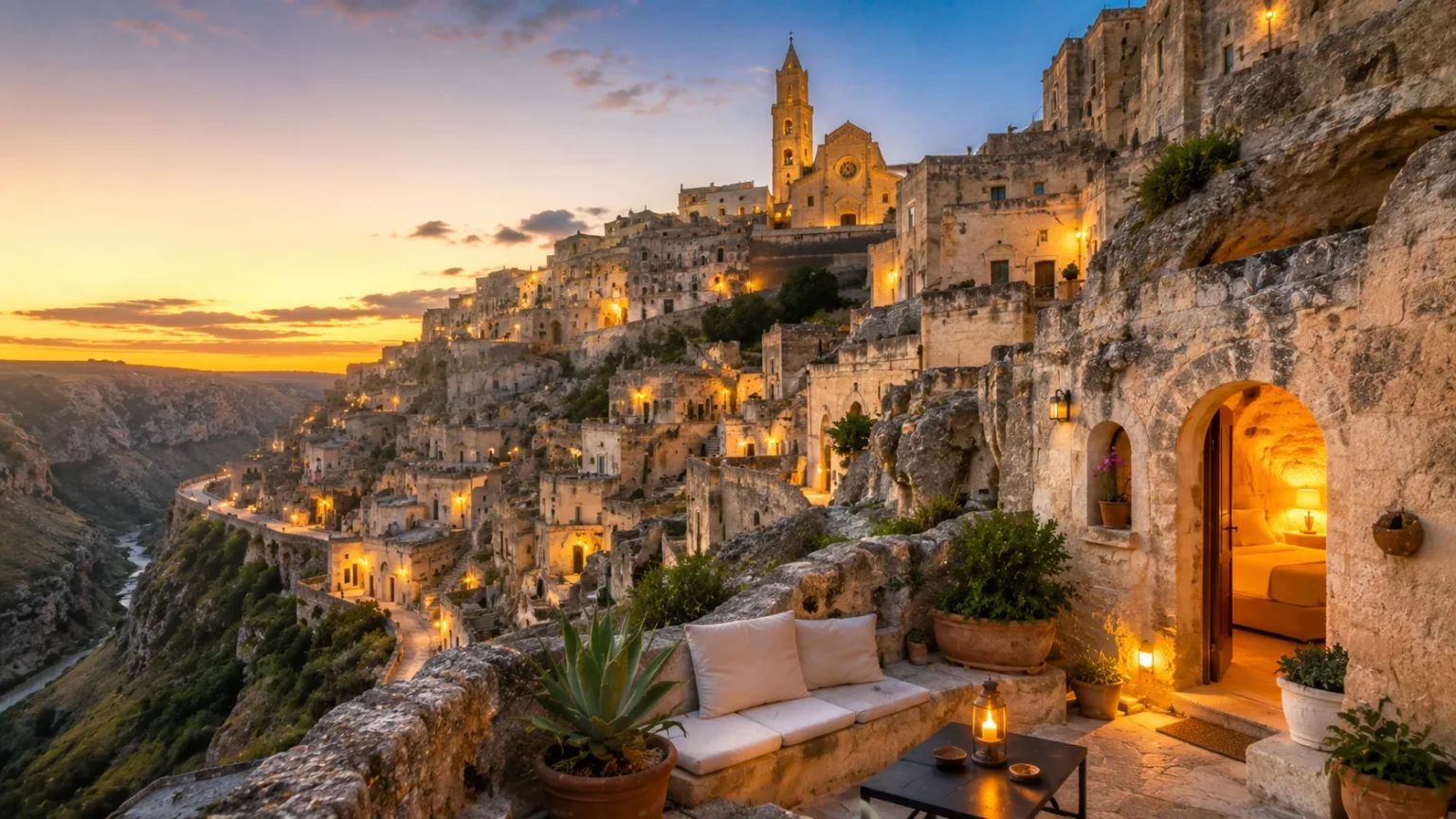
Matera is unlike almost anywhere else in Italy because the city appears to grow directly from the pale limestone landscape surrounding it. Ancient cave dwellings, rock-cut churches, stone stairways, terraces, courtyards, and narrow passages tumble down the slopes toward the dramatic Gravina ravine. The historic Sassi districts create the impression of a city layered vertically, where one building’s roof can become another person’s pathway. Matera’s extraordinary relationship between human settlement and natural terrain helped earn the Sassi and surrounding rupestrian landscape UNESCO World Heritage status. Yet Matera is not simply an archaeological attraction preserved behind barriers. Restaurants, homes, galleries, artisan shops, museums, and atmospheric cave hotels now bring daily life back into its historic stone quarters.
A visit to Matera works best when you slow down enough to explore rather than trying to check every attraction from a list. Walking between Sasso Caveoso, Sasso Barisano, the Civita ridge, and panoramic terraces repeatedly reveals completely different views of the same ancient landscape. You can sleep inside a restored cave, enter centuries-old rock churches, explore underground water systems, cross the ravine, and watch the city glow after sunset. Food adds another layer through crusty Matera bread, peperoni cruschi, rustic pasta, local cheeses, and Basilicata wines. This guide covers the best things to do in Matera, cave-hotel tips, viewpoints, neighborhoods, food, trip planning, and practical advice. It is designed to help first-time visitors experience the city without rushing past what makes it special.
What Makes Matera One of Italy’s Most Extraordinary Cities?
Matera sits in Basilicata in southern Italy, where limestone plateaus are divided by deep ravines and naturally occurring caves. Human communities gradually expanded these caves into dwellings, workshops, churches, storage areas, water systems, and agricultural spaces over many centuries. The most famous historic neighborhoods are known collectively as the Sassi di Matera, with Sasso Caveoso and Sasso Barisano spreading across opposite sides of the old center. Between them rises the Civita, the historic ridge crowned by Matera Cathedral. This unusual urban structure means Matera cannot be understood from one square or viewpoint. Walking through it reveals a complex settlement shaped simultaneously by geology, architecture, religion, agriculture, and human adaptation.
The story of Matera is also more complicated than romantic descriptions of an ancient cave city sometimes suggest. By the twentieth century, many families in the Sassi were living in extremely difficult and overcrowded conditions with limited sanitation. Government relocation programs moved residents from the old districts into newer housing during the 1950s as part of an effort to address severe living conditions. Large areas of the Sassi were subsequently abandoned and deteriorated before restoration gradually began later in the century. Today’s boutique hotels and atmospheric restaurants therefore occupy spaces connected to both remarkable cultural continuity and genuine social hardship. Understanding this history makes a visit more meaningful than viewing the caves simply as beautiful backdrops.
Matera’s transformation has been remarkable because restoration returned activity to spaces that had once been emptied. Historic homes have become museums explaining domestic life, while carefully restored caves now contain accommodation, restaurants, studios, and cultural venues. The city gained international recognition through UNESCO World Heritage designation and later served as a European Capital of Culture in 2019. Film productions have also used its stone landscape to represent ancient settings, helping introduce Matera to travelers around the world. Increased popularity has brought new economic opportunities along with concerns about managing visitor pressure responsibly. Staying overnight and exploring beyond the busiest viewpoints helps visitors experience Matera as a living city rather than a daytime photo stop.
What makes the Sassi especially fascinating is the way buildings interact with the slope. A facade that appears to be an ordinary stone house may open into chambers excavated deeply into the rock behind it. Staircases pass above roofs, lanes suddenly become terraces, and tunnels reveal structures hidden beneath streets and squares. Water management was historically crucial because inhabitants developed cisterns and channels to collect and store scarce rainfall. These systems demonstrate how closely daily survival depended on understanding the local environment. Matera therefore rewards visitors who look beyond the surface appearance of stone buildings and ask how communities actually lived within such a demanding landscape.
The best first impression usually comes from one of the upper panoramic terraces before descending into the Sassi on foot. From above, the tightly packed houses, church towers, rocky outcrops, caves, and ravine become easier to understand as one interconnected landscape. Once inside the districts, the scale changes completely and navigation becomes intentionally less predictable. Maps help, but following interesting stairways and small lanes is part of the experience. Comfortable shoes matter more here than fashionable footwear because polished stone, uneven steps, and steep gradients appear constantly. Matera’s greatest attraction is ultimately the city itself, and allowing several unstructured hours for walking may become the most memorable part of the trip.
Best Things to Do in Matera
Begin with a long walk through the Sassi rather than immediately moving between indoor attractions. Sasso Caveoso retains some of the strongest visual connections between natural caves and built stone architecture, creating the classic landscape most travelers imagine before visiting Matera. Sasso Barisano contains another dense network of lanes, restored buildings, workshops, accommodation, and viewpoints with a somewhat different architectural character. Move between them through the Civita and upper historic center so you repeatedly see the ravine from changing angles. Early morning is especially rewarding because streets are quieter and soft light brings out the warm color of the limestone. Return after sunset when lamps transform the same landscape into something dramatically different.
Visiting a historic cave house helps explain what life inside the Sassi actually involved. Reconstructed dwellings show how families organized domestic activities within limited spaces and sometimes shared their environment closely with animals, tools, food storage, and agricultural equipment. Seeing furnishings and household objects provides context that exterior walks cannot communicate on their own. Casa Grotta experiences are generally relatively compact visits, making them easy to include between longer walks. They also help counter the impression that every cave was originally designed as the luxurious room visitors may encounter in modern accommodation. Understanding historical living conditions makes the restoration of Matera easier to appreciate without romanticizing hardship.
Palombaro Lungo offers a completely different look beneath the city by revealing the importance of water collection. This vast underground cistern lies below the area around Piazza Vittorio Veneto and forms part of Matera’s sophisticated historic approach to storing precious rainfall. Descending beneath the modern square demonstrates how much of the city exists beyond what is visible at street level. Stone surfaces and the scale of the reservoir create an atmospheric visit that works particularly well during hot afternoons or unsettled weather. It also reinforces the idea that Matera’s architecture functioned as an environmental system rather than simply a collection of cave homes. Visitors interested in engineering and urban history often find the cistern unexpectedly memorable.
Rock churches are essential because Matera’s cave architecture was religious as well as domestic. Santa Maria de Idris is among the most visually striking, rising from a rocky prominence above Sasso Caveoso and blending almost seamlessly into the stone. Other rupestrian churches preserve carved interiors and surviving frescoes that reflect different stages of religious history. Rather than racing through as many churches as possible, choose several and spend enough time examining how worship spaces were created within natural rock. Modest interiors often feel especially powerful because their architecture is so closely connected to the landscape. Opening arrangements can vary, so checking local visitor information when you arrive helps prioritize the sites currently accessible.
Casa Noha is another worthwhile stop because it presents Matera’s history through a multimedia experience inside an old building near the Cathedral area. It can be especially useful early in a trip because the presentation gives context to places visitors will later walk through independently. Afterward, explore the Civita and Matera Cathedral before returning toward panoramic points around the upper city. Piazzetta Pascoli and viewpoints around the historic center offer excellent opportunities to understand the geography without committing to a long hike. Leave room for unscheduled discoveries such as tiny courtyards, artisan workshops, church facades, and unexpected terraces. Matera becomes far more satisfying when major sights are mixed with time that has no predetermined destination.
Cave Hotels in Matera: What Staying Underground Is Really Like
Sleeping in a cave hotel is one of Matera’s most distinctive travel experiences because accommodation becomes part of the destination rather than simply somewhere to leave luggage. Many restored rooms combine original rock surfaces with contemporary bathrooms, lighting, heating, cooling, and carefully designed furnishings. The best restorations preserve the atmosphere of the cave while providing comfort expected from a modern hotel. Rooms can feel quiet and cocoon-like because thick stone surrounds much of the interior. However, every cave room is different, and travelers should examine photographs of the exact room category before booking. A hotel may offer both genuine excavated caves and conventional stone rooms within the same property.
Natural light is one of the most important differences between cave rooms. Some open onto terraces or courtyards with generous doors and windows, while deeper rooms may receive little daylight beyond the entrance. Travelers who enjoy dark, peaceful spaces may consider this atmospheric, but people who dislike enclosed environments should choose carefully. Ventilation and humidity management are equally important because caves naturally behave differently from standard hotel structures. Good properties use modern systems to keep rooms comfortable without erasing their historic character. Reviews mentioning persistent dampness, ventilation, or musty smells deserve attention rather than being dismissed as unavoidable cave features. The romantic idea should still come with practical comfort.
Location matters almost as much as the room itself because staying deep inside the Sassi means dealing with stairs and restricted vehicle access. Some accommodations require guests to walk over uneven stone lanes with luggage after the nearest vehicle drop-off point. This is part of Matera’s charm until someone arrives with oversized suitcases or limited mobility. Before booking, ask how luggage transfer works, how far the room is from a taxi drop-off, and whether significant staircases are involved. Travelers driving to Matera should also understand that historic areas have traffic restrictions and that hotel parking may be located elsewhere. A beautiful cave room is easier to enjoy when arrival logistics have been considered beforehand.
Cave hotels range from simple atmospheric guesthouses to highly polished luxury properties, so the experience does not require choosing the most expensive room available. Prioritize authenticity, location, ventilation, cleanliness, and good guest communication over dramatic marketing photographs alone. A terrace with a Sassi view can sometimes add more to a stay than an enormous underground room. Breakfast areas carved into rock or overlooking the ravine can also create memorable mornings before day visitors fill the streets. Staying at least one night allows you to see Matera during its quieter evening and early-morning hours. Two nights provide an even better balance between cave-hotel atmosphere and unhurried sightseeing.
People who prefer abundant daylight, elevators, easy taxi access, or conventional room layouts should not feel obligated to sleep underground simply because Matera is famous for caves. The upper historic center contains accommodation within beautiful traditional buildings while keeping the Sassi within easy walking distance. Families with strollers, travelers with significant luggage, and people with mobility limitations may find these locations more practical. You can still spend entire days exploring rock-cut architecture without making your bedroom part of the cave experience. Matera offers enough atmosphere outdoors that accommodation should be selected according to comfort. The best hotel is the one that lets you enjoy the city rather than creating avoidable logistical stress.
Explore Sasso Caveoso, Sasso Barisano and the Civita
Sasso Caveoso is often the district that leaves the strongest visual impression on first-time visitors. Its stone buildings descend toward the ravine while rocky outcrops and cave openings remain clearly visible among the constructed facades. Walking here feels less like following conventional streets and more like moving through a three-dimensional maze. San Pietro Caveoso and the dramatic rock around Santa Maria de Idris create recognizable landmarks that help orient visitors. From many lanes, the opposite side of the Gravina appears surprisingly close even though the terrain between them is rugged. Spend time looking back uphill because some of the district’s best views appear after you have already descended.
Sasso Barisano offers a somewhat different experience, with substantial restored architecture and a dense network of buildings that demonstrate how cave excavation and constructed spaces overlap. Restaurants, workshops, guesthouses, and small cultural sites make parts of the district feel particularly lively. The easiest mistake is treating Barisano merely as a path between the modern center and Caveoso. Its stairways and secondary lanes deserve exploration because they reveal quieter corners away from the best-known viewpoints. Morning and evening light can produce excellent photographs as stone facades catch changing shadows. Because both Sassi districts contain steep gradients, spreading exploration across more than one day reduces fatigue and makes wandering more enjoyable.
The Civita occupies the ridge dividing the two Sassi and historically formed a central fortified nucleus of Matera. Matera Cathedral dominates the skyline from this elevated area and provides an obvious destination when climbing out of either cave district. The surrounding lanes contain historic buildings, small squares, viewpoints, and a calmer urban character than some of the steep lower passages. Moving through the Civita also helps visitors understand that Matera is not simply two separate cave neighborhoods. The historic city developed as an integrated system extending upward toward later districts beyond the Sassi. Taking time here provides a useful transition between ancient-looking cave architecture and the broader development of Matera’s urban center.
Above the Sassi, the Piano and streets around Piazza Vittorio Veneto offer easier walking, shops, cafés, and connections to the modern city. The contrast can initially feel surprising after emerging from steep stone lanes into more conventional public squares. This upper level is useful for breaks, shopping, meals, and arranging transportation without abandoning the historic atmosphere entirely. Several excellent overlooks are positioned along the edge where the upper city suddenly opens toward the Sassi below. These terraces make good orientation points before descending again by a different route. Using the modern center as a practical base while exploring the Sassi on foot can work especially well for travelers who want convenience.
Do not try to follow one rigid walking route through these districts because Matera’s character comes partly from discovering how pathways connect unexpectedly. A lane that appears to end may reveal steps descending beneath an arch, while another climb can emerge onto an expansive terrace. Navigation apps can occasionally struggle with vertical pathways because two routes close together on a map may sit at completely different elevations. Keep a broad sense of direction rather than worrying about every turn. Allow extra time before restaurant reservations or timed attractions because climbing can take longer than horizontal distance suggests. Getting slightly lost in Matera is usually not a mistake; it is one of the city’s most enjoyable travel experiences.
Murgia Materana, Rock Churches and the Best Views
The Murgia Materana landscape across the Gravina is essential for understanding why the Sassi developed where they did. Looking from Matera toward the plateau reveals caves, archaeological traces, rock churches, paths, and open terrain that continue the cultural landscape beyond the built city. The contrast between dense stone settlement and rugged plateau is one of Matera’s defining views. Visiting the Murgia also allows you to look back toward the entire Sassi skyline instead of seeing individual neighborhoods from within them. Late afternoon can be particularly beautiful when sunlight warms the limestone. Weather conditions matter because exposed areas offer limited shelter from strong sun, wind, or sudden rain.
Belvedere di Murgia Timone provides the classic panorama across the ravine toward Matera. From this side, the city appears almost theatrical, with pale buildings stacked along the opposite slope and church towers rising above the Sassi. The viewpoint is popular around sunset for obvious reasons, but arriving before peak light gives you time to explore rather than immediately competing for one photograph. Bring water during warm months because the plateau can feel much hotter than shaded streets inside the Sassi. Comfortable footwear remains important because surrounding terrain can be uneven and rocky. Staying until the city lights begin appearing provides a completely different view from the bright midday landscape.
Hiking between Matera and the Murgia can be rewarding for active travelers, but the ravine should be treated as real terrain rather than a casual urban stroll. Routes involve steep descents and climbs, rocky surfaces, and exposure to weather, so preparation matters. Conditions can change because of maintenance, weather, or access management, making current local information valuable before setting out. Carry enough water, avoid the hottest part of summer days, and wear footwear designed for uneven ground. Travelers who do not want a demanding walk can still reach panoramic areas through other transport arrangements. The goal is to appreciate the landscape, not turn a sightseeing day into an endurance test.
The wider rupestrian landscape contains a remarkable concentration of rock-cut religious sites. Some preserve frescoes, apses, carved architectural features, and traces of monastic or devotional use that connect spiritual history with the surrounding geology. Visiting them demonstrates that Matera’s cave culture extended well beyond domestic life inside the Sassi. Access to particular churches can vary, and some sites are easier to understand with a knowledgeable guide who can explain frescoes and historical context. The Crypt of the Original Sin, located outside the immediate center, is particularly celebrated for its early medieval painted interior. Because visits may require planning, travelers strongly interested in religious art should organize this part before arriving.
Matera’s urban viewpoints are still worthwhile even if you never cross the ravine. Piazzetta Pascoli provides an accessible panorama across sections of the Sassi, while terraces around the old center reveal different combinations of Caveoso, Barisano, Civita, and the Murgia. Visit the same viewpoint at different times rather than assuming one midday photograph captures the experience. Morning creates softer streets and fewer crowds, sunset emphasizes warm stone colors, and night turns the city into a field of scattered lights. Photographers should also look for closer compositions involving stairways, doorways, roofs, and rock textures instead of only wide panoramas. Matera rewards both grand landscapes and intimate architectural details.
What to Eat and Drink in Matera
Bread is fundamental to Matera’s food identity, and Pane di Matera is far more than something placed automatically beside a meal. Made from durum wheat and traditionally formed into substantial loaves, it has a firm crust and flavorful interior suited to both fresh eating and recipes that reuse older bread. Its importance reflects a food culture shaped historically by agricultural life and the need to avoid waste. Try it simply with local olive oil before seeking more complicated preparations. Bakeries are excellent places to experience Matera beyond restaurants because bread remains part of everyday life. A good loaf also makes an easy edible souvenir if you are continuing your trip through southern Italy.
Cialledda demonstrates how simple ingredients can create a dish closely tied to place. Versions generally use bread combined with ingredients such as tomatoes, onion, herbs, olives, or other seasonal additions, with preparations differing according to temperature and tradition. It reflects a practical cuisine where stale bread was transformed rather than discarded. Modern restaurant presentations may appear polished, but the dish’s appeal comes from straightforward textures and strong local ingredients. It works particularly well as a lighter meal during hot weather when heavy dishes feel less appealing. Trying cialledda beside more elaborate restaurant food gives visitors a better sense of how Basilicata’s culinary history developed.
Peperoni cruschi are another ingredient worth seeking throughout Basilicata. These thin peppers are dried and then quickly fried or otherwise prepared until crisp, producing a distinctive texture and concentrated flavor. They may appear over pasta, vegetables, potatoes, meat, or simple bread-based dishes. Their crunch can be surprising for anyone expecting a soft cooked pepper. Restaurants across Matera use them in both traditional and contemporary ways, so tasting the ingredient in several dishes can be enjoyable. They are strongly associated with the wider region rather than Matera alone. Food in the city makes more sense when understood as part of Basilicata’s rural and agricultural traditions.
Heartier dishes may include slow-cooked meat, rustic pasta, legumes, cheeses, and seasonal vegetables. Pignata traditionally involves meat slowly cooked with other ingredients in an earthenware vessel, producing the kind of substantial dish that suits cooler evenings. Pasta preparations frequently emphasize local wheat, vegetables, breadcrumbs, peppers, or simple sauces instead of the heavy combinations tourists sometimes expect from generic Italian restaurants abroad. Ask about regional specialties rather than automatically ordering familiar dishes available anywhere in Italy. Servers can often point toward seasonal preparations that do not appear in simplified travel lists. Matera’s dining scene now includes refined restaurants, but some of the most satisfying meals remain rooted in uncomplicated regional cooking.
Basilicata also produces wines that deserve attention, including reds made from varieties such as Aglianico and Primitivo alongside other regional grapes. A glass of local wine can pair naturally with meat, cheeses, vegetables, or the strong flavors of cruschi peppers. Travelers who do not drink alcohol can still explore local food through bread, olive oil, cheeses, sweets, and seasonal produce. Restaurant reservations are sensible for popular evenings, especially during weekends and high season when the historic center becomes busy. Consider one atmospheric dinner inside a cave or stone room but also eat somewhere with an outdoor terrace when weather permits. Experiencing different settings is part of Matera’s appeal.
Best Time to Visit Matera and How Long to Stay
Spring is one of the most comfortable seasons for exploring Matera because temperatures are generally better suited to long days of climbing stone stairways. The surrounding landscape can also appear greener than during the dry height of summer, making Murgia walks particularly appealing. April and May can bring variable weather, so lightweight layers and rain protection remain useful. Easter periods and holiday weekends may increase visitor numbers, requiring earlier accommodation planning. Longer daylight gives travelers enough time to explore the Sassi and still reach a viewpoint before sunset. For visitors prioritizing walking, photography, and outdoor sightseeing, spring provides an excellent overall balance.
Early autumn offers similar advantages, particularly from September into October when extreme summer heat begins easing. Warm evenings can still support outdoor dining while daytime walking becomes more comfortable than during the hottest weeks. Visitor levels may remain substantial because Matera is no longer an obscure destination, but traveling outside peak holiday periods generally improves the experience. The warm stone colors also suit autumn light beautifully, especially around sunset. Nights can become cooler as the season progresses, which matters when staying inside naturally cool cave rooms. Layered clothing works well because temperatures can differ noticeably between sunny terraces, shaded alleys, and underground interiors.
Summer brings long days and energetic evenings but requires a different sightseeing rhythm. The exposed limestone landscape can become very hot during midday, particularly on the Murgia and along steep routes without shade. Start outdoor exploration early, take a longer lunch or indoor attraction break during peak heat, and return to the streets later in the afternoon. Hydration becomes especially important because repeated climbing makes temperatures feel more demanding. Cave interiors can provide welcome relief, although accommodation should still have appropriate ventilation and climate control. Summer works well for travelers comfortable with heat, but trying to walk every attraction continuously from late morning to afternoon can make Matera unnecessarily exhausting.
Winter gives Matera a quieter and sometimes more atmospheric character, especially when mist or dramatic skies settle over the stone city. Daylight hours are shorter, and some visitor services may operate differently than during peak months, so flexibility is useful. Cold weather can make stone interiors feel particularly cool, increasing the importance of well-heated accommodation. The advantage is having more space to appreciate viewpoints and lanes without constant crowds. Winter photography can be striking because softer light emphasizes the texture of the Sassi. Travelers interested primarily in atmosphere, food, and history rather than long outdoor hikes may find the quieter season surprisingly rewarding.
Two nights is a strong minimum for most first-time visitors because it provides one full day plus arrival and departure periods without compressing everything. Three nights works even better if you want to explore Murgia Materana, visit several rock churches, enjoy cave-hotel time, and eat slowly rather than treating meals as interruptions. With only one day, focus on the Sassi, one cave-house experience, key rock churches, Palombaro Lungo, and sunset views. A second day can add the Murgia, Casa Noha, museums, and more relaxed neighborhood exploration. Matera does not require a week for most visitors, but it deserves significantly more than a rushed two-hour excursion from another city.
How to Get to Matera and Practical Tips for Your Trip
Bari is one of the most practical gateways for many international travelers because its airport and wider transport network connect well with other parts of Italy and Europe. Matera does not sit directly on Italy’s main high-speed rail network, so journeys often involve a combination of major rail connections and regional train, bus, shuttle, or road transport. Travelers arriving from Rome, Naples, or northern Italy should compare complete journey times rather than assuming the train is automatically simplest. Regional transport schedules can change, particularly seasonally or during infrastructure work. Checking current timetables shortly before travel prevents outdated blog information from disrupting an itinerary. Building some flexibility into arrival day is sensible.
Driving provides freedom for travelers combining Matera with destinations across Basilicata, Puglia, or southern Italy, but a car is unnecessary once you begin exploring the historic center. The Sassi are designed for walking, not for ordinary visitor traffic, and access restrictions apply in central areas. Choose accommodation with clear parking instructions before arriving rather than attempting to drive toward a cave-hotel entrance. Many properties direct guests toward garages or legal parking outside restricted zones and then arrange walking or transfer assistance. Confirm these details directly because parking logistics differ between accommodations. Once settled, leave the vehicle parked and explore Matera on foot whenever possible.
Footwear may be the single most important packing decision. Matera contains countless stone steps, steep lanes, uneven surfaces, and polished sections that can become slippery when wet. Comfortable walking shoes with secure grip are far more useful than sandals chosen mainly for appearance. Pack lightly if your accommodation is deep within the Sassi because dragging heavy suitcases over stairways quickly becomes unpleasant. A small day bag, reusable water bottle, sun protection, and lightweight layer cover most sightseeing needs. During summer, a hat and sunscreen become especially valuable on exposed walks. During wetter seasons, compact rain protection is easier to manage than a large umbrella in narrow passages.
Accessibility requires advance planning because Matera’s historic topography naturally creates challenges for wheelchair users, people with limited mobility, and families using strollers. Some upper viewpoints and modern-center areas are easier to access, while many Sassi routes involve unavoidable stairs or steep slopes. Hotels vary greatly in accessibility even when they appear close together geographically. Contact accommodation directly and describe specific mobility requirements rather than relying only on a generic accessibility icon. Guided tours can also be adapted around more manageable routes when arranged beforehand. Matera can still be enjoyed without descending every staircase, especially because several impressive views are available from the upper city.
Finally, resist planning every hour. Book attractions requiring timed entry, important dinners, transport, and accommodation, but leave significant gaps between them for wandering. Distances on a map can be misleading because vertical climbs turn short routes into longer walks, while unexpected viewpoints encourage frequent stops. Begin early when possible, return to your accommodation during the busiest or hottest period, and experience the Sassi again after day visitors leave. Carry curiosity rather than a checklist because Matera’s appeal comes from relationships between caves, streets, landscape, history, and daily life. Travelers who allow time for those connections usually leave understanding why this small southern Italian city creates such an outsized impression.
Frequently Asked Questions
How many days do you need in Matera, Italy?
Two nights is an excellent starting point for a first visit because it gives you time to explore both Sassi districts, experience sunset and evening, and visit several major attractions. Three nights is better if you also want Murgia Materana, slower meals, museums, and relaxed cave-hotel time.
Is it worth staying in a cave hotel in Matera?
Yes, a well-restored cave hotel can be one of Matera’s most memorable experiences. Check natural light, ventilation, stair access, luggage arrangements, and the exact room type before booking because cave rooms vary significantly.
What are the best things to do in Matera?
Prioritize walking through Sasso Caveoso and Sasso Barisano, visiting a historic cave house, seeing rock churches, exploring Palombaro Lungo, visiting Casa Noha, and watching sunset from a panoramic viewpoint. Murgia Materana is especially worthwhile if you have a second full day.
What is the best time to visit Matera?
Spring and early autumn generally provide the best combination of comfortable walking weather and attractive light. Summer is beautiful but can become very hot, while winter offers fewer crowds and a quieter atmosphere.
Can you visit Matera without a car?
Yes, and a car is not useful for sightseeing within the Sassi because the historic districts are primarily explored on foot. Regional public transportation and road connections link Matera with surrounding cities, while drivers generally leave their vehicles outside restricted historic areas.