





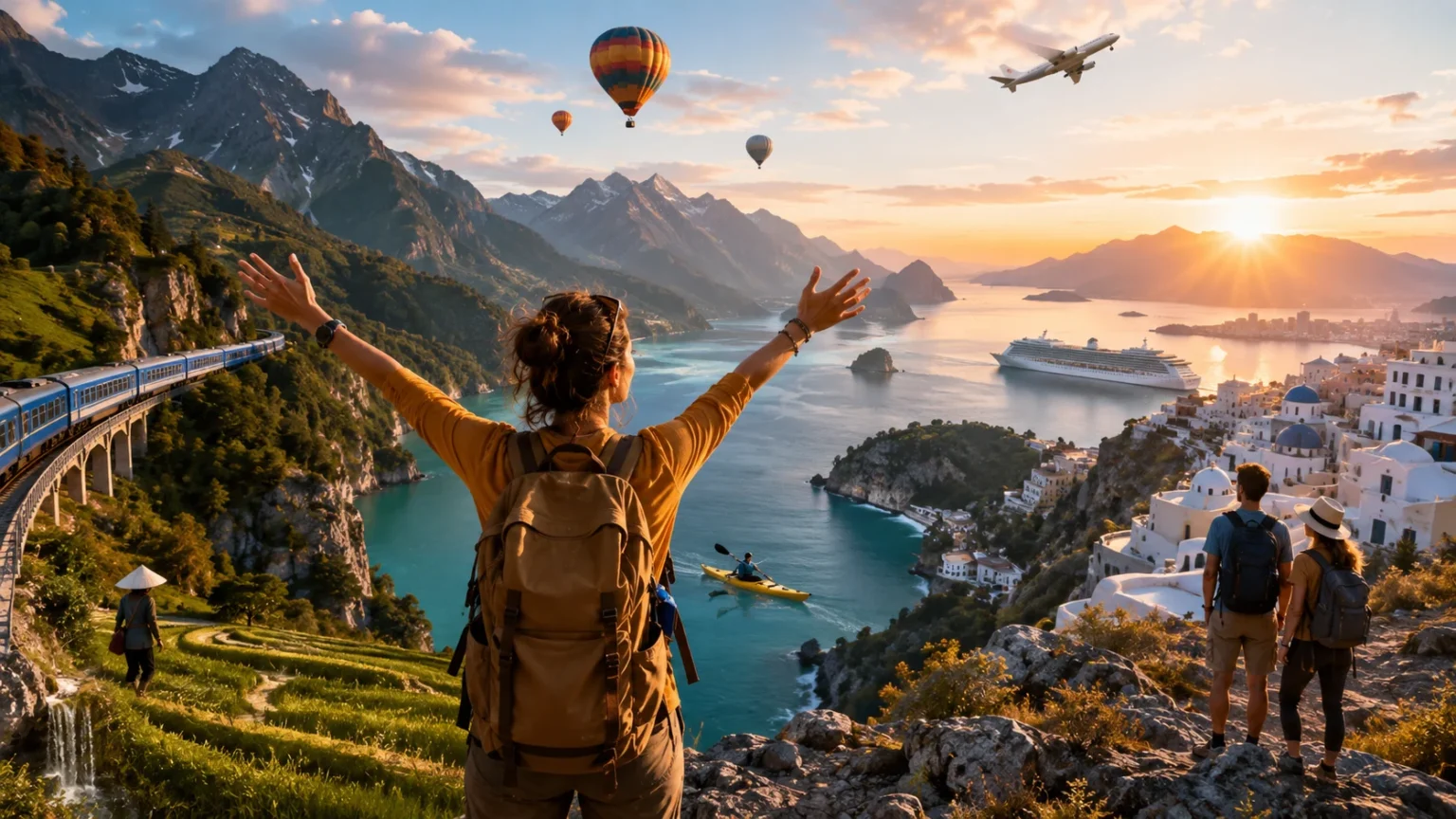
Top 10 Reasons to Travel in 2026
Travel in 2026 is about more than taking photographs, checking into hotels or escaping from work for a few days. People are increasingly looking for journeys that support their well-being, reflect their interests and create a genuine connection with the places they visit. A thoughtfully planned trip can provide rest, education, excitement and personal growth at the same time.
Modern life can feel repetitive when every week follows the same routine. Work responsibilities, digital notifications and household tasks can leave little space for curiosity or reflection. Travelling creates a natural pause, allowing you to step away from familiar surroundings and experience life from a fresh perspective.
There are also more ways to travel than ever before. You can take an international holiday, plan a local road trip, explore a nearby city, join a wellness retreat or spend several quiet days in nature. Meaningful travel experiences do not always require a large budget, a long flight or an extensive itinerary.
The top reasons to travel in 2026 include personal development, cultural discovery, stronger relationships, improved well-being and unforgettable experiences. Whether you have been postponing a dream vacation or simply need a change of scenery, this may be the year to turn your travel ideas into a realistic plan.
1. Travel Gives You a Break From Routine
Daily routines provide stability, but too much repetition can make life feel predictable and mentally tiring. Travelling places you in a different environment where the scenery, schedule and activities are no longer automatic. This temporary change can help you feel more alert, interested and engaged with your surroundings.
A break from routine does not mean ignoring your responsibilities. It means creating enough distance to rest and return with greater clarity. Even a short weekend trip can interrupt an exhausting cycle and give your mind an opportunity to focus on something other than deadlines, errands and familiar pressures.
Travel also encourages you to be more present. When you are navigating a new city, tasting unfamiliar food or watching a landscape for the first time, your attention naturally moves toward the current moment. These experiences can feel more satisfying than spending another day switching between work, social media and household tasks.
One of the strongest reasons to travel in 2026 is the opportunity to reset your routine before it becomes overwhelming. A journey will not solve every problem, but it can provide the mental space needed to reconsider priorities, restore motivation and return home with renewed energy.
2. Travel Supports Mental and Emotional Well-Being
Travelling can support emotional well-being by giving you something enjoyable to anticipate and experience. Planning a trip creates a positive goal beyond everyday obligations, while the journey itself may offer relaxation, excitement or a welcome sense of freedom. The emotional benefit often begins before departure.
Many travellers in 2026 are choosing quieter experiences rather than overcrowded itineraries. Nature retreats, beach stays, countryside escapes and wellness-focused holidays provide opportunities to slow down. These journeys place less pressure on travellers to visit every attraction and allow more time for genuine rest.
A change of environment may also help you recognise how stress affects your daily life. When familiar pressures are temporarily removed, you can notice which habits make you feel better and which ones drain your energy. This awareness can lead to healthier routines after you return home.
Travel should not be treated as a replacement for professional mental health support when it is needed. However, a safe and realistic vacation can complement a balanced lifestyle by creating space for movement, sleep, connection, reflection and enjoyable experiences outside your usual environment.
3. Travel Encourages Personal Growth
Personal growth often begins when you do something unfamiliar. Travelling introduces situations that require flexibility, patience and decision-making, especially when plans change. Finding your way through these moments can reveal strengths that may remain hidden when everything around you feels comfortable and predictable.
You may need to communicate despite a language barrier, navigate public transportation or adjust to an unexpected delay. These experiences are not always convenient, but they can become valuable lessons in confidence and problem-solving. Each challenge successfully handled makes future uncertainty feel more manageable.
Solo travel can be particularly useful for personal development because it places more responsibility on the individual traveller. You choose the schedule, manage the budget and decide how to respond to difficulties. At the same time, solo travellers must use good judgement and know when to request assistance.
Personal growth through travel is not measured by how far you go. Visiting a nearby destination alone, joining a group tour or trying a new outdoor activity can also expand your comfort zone. The important step is choosing an experience that feels challenging enough to teach you something without creating unnecessary risk.
4. Travel Helps You Experience New Cultures
One of the most meaningful benefits of travelling is the opportunity to experience cultures beyond your own. Local food, architecture, music, traditions and everyday interactions reveal how communities develop distinct ways of living. These details are difficult to understand fully through online content alone.
Cultural immersion encourages travellers to move beyond stereotypes. Speaking with local residents, visiting community-run businesses and learning about regional history can provide a more accurate picture of a destination. It also reminds visitors that no country or culture can be reduced to a few popular images.
Travelling respectfully is essential when entering another community. Visitors should research local customs, follow dress expectations where appropriate and ask permission before photographing people. Small acts of consideration can improve interactions while showing that the traveller values the people who make the destination meaningful.
Cultural travel in 2026 can be more personal and thoughtful than simply moving between famous attractions. Cooking classes, traditional craft workshops, guided heritage walks and locally hosted experiences allow travellers to participate rather than only observe. These activities often become the most memorable parts of a journey.
5. Travel Creates Lasting Memories
Material purchases may provide temporary excitement, but travel experiences often remain meaningful for many years. The memory of watching a sunrise, exploring an old town or laughing through an unexpected travel mistake can become part of your personal story. These moments gain value as time passes.
Travel memories are powerful because they involve emotion, movement and discovery. You are not simply looking at a place; you are experiencing its sounds, weather, food and atmosphere. This combination of sensory details makes important moments easier to remember and more enjoyable to revisit.
Photographs and videos can preserve parts of the experience, but they should not become the main purpose of the journey. Constantly recording every moment can prevent travellers from fully noticing what is happening. A balanced approach allows you to capture meaningful memories without viewing the entire trip through a screen.
The best travel memories are not always created by expensive resorts or famous landmarks. A quiet conversation, a local meal or an unplanned walk may become more meaningful than the attraction that originally motivated the trip. Travelling leaves room for these unexpected moments to happen.
6. Travel Strengthens Relationships
Travelling with a partner, family member or friend creates shared experiences outside the usual routine. People spend focused time together, make decisions and solve small problems as a team. This can strengthen communication and create stories that continue to bring them closer after the trip.
A journey may also reveal differences in travel styles. One person might prefer a detailed itinerary, while another wants more flexibility. Discussing budgets, activities and expectations before departure can prevent unnecessary conflict and help everyone feel involved in the planning process.
Family travel can give parents and children time to connect without the constant distractions of school, work and household responsibilities. Children can learn about different places while building memories with the people closest to them. The trip does not need to be luxurious to create meaningful family experiences.
Travelling together is not automatically relaxing, so realistic planning matters. Allowing personal space, including activities for different interests and avoiding an overloaded schedule can make the journey more enjoyable. Strong travel relationships are built through cooperation rather than expecting every moment to be perfect.
7. Travel Makes Learning More Engaging
Travel transforms places, cultures and historical events into real-world learning experiences. Standing inside a museum, exploring a natural landscape or walking through a historic district can make information more memorable than reading the same facts without any physical context.
Educational travel is valuable for people of every age. Children can learn about geography and wildlife, while adults may develop interests in architecture, language, food or history. A curious traveller can find learning opportunities in a local market, national park, village or major international city.
Travel also encourages questions. You may wonder why buildings use particular materials, how a traditional dish developed or how the local environment influences daily life. Searching for these answers makes learning feel active and personal rather than something that must be completed for a test.
One reason to travel in 2026 is to replace passive online consumption with direct experience. Digital tools can help you research a destination, but they cannot fully reproduce its atmosphere. Travelling allows you to observe, participate and form your own understanding of the places you explore.
8. Travel Inspires Creativity
Creativity often improves when the mind receives new information. Different colours, landscapes, sounds and design styles can provide inspiration that is difficult to find in familiar surroundings. Writers, photographers, designers and business owners may return from travel with fresh ideas and perspectives.
You do not need to work in a creative profession to benefit from this effect. Travelling can inspire changes in cooking, home design, exercise habits or personal goals. A simple experience in another place may show you a different way to approach something in your everyday life.
Slow travel can be especially helpful for creative thinking. Staying in one destination for longer provides time to notice details rather than rushing between attractions. Quiet walks, journal writing and unplanned exploration create mental space where new ideas can naturally develop.
The goal should not be to force inspiration from every trip. Creativity often appears when travellers are relaxed, curious and open to observation. By changing your surroundings and reducing familiar distractions, travel can give your mind the variety it needs to form new connections.
9. Travel Reconnects You With Nature
Many people spend most of their time indoors, surrounded by screens, traffic and artificial lighting. Travelling to natural environments can provide a valuable change. Mountains, forests, beaches, lakes and deserts encourage movement while offering a quieter setting for rest and reflection.
Nature-based travel can involve hiking, wildlife watching, camping, swimming or simply staying somewhere with open space. These activities do not need to be physically demanding. A peaceful walk or scenic train journey may be enough to help travellers notice the landscape and slow their pace.
Outdoor travel also creates opportunities to understand environmental issues more clearly. Seeing fragile ecosystems, water shortages or changing landscapes can make sustainability feel more immediate. Travellers may become more thoughtful about waste, transportation and the effect of tourism on natural areas.
Responsible nature travel means following marked routes, respecting wildlife and leaving destinations as clean as possible. Choosing trained local guides and conservation-minded operators can also support the protection of natural resources. The aim is to enjoy the environment without damaging what makes it special.
10. Travel Helps You Live More Fully
It is easy to postpone travel until work becomes less busy, finances feel perfect or the ideal companion becomes available. However, waiting for flawless circumstances may result in meaningful experiences being delayed indefinitely. A realistic trip planned around your current situation can still be deeply rewarding.
Living fully does not mean travelling constantly or spending beyond your means. It means giving important experiences a place within your priorities. This could involve saving gradually for an international journey or planning a simple local escape that fits comfortably within your budget.
Travel can remind you that life contains more than productivity and routine. Time spent exploring, resting and connecting with others is not necessarily wasted time. These experiences can contribute to a balanced life by creating enjoyment, perspective and stories that extend beyond professional achievements.
Among the top reasons to travel in 2026 is the recognition that time is valuable. Destinations may change, personal circumstances can shift and opportunities may not always remain available. Thoughtful travel allows you to engage with life now while planning responsibly for the future.
Why 2026 Is a Good Year to Travel
Travel in 2026 is becoming increasingly personalised. Instead of following the same popular itinerary, many travellers are choosing destinations and activities based on individual interests. Food tourism, sports trips, wellness retreats, cultural journeys and nature escapes can all be shaped around personal goals.
Technology is also making travel planning more convenient. Digital maps, translation tools and itinerary platforms can help travellers compare options and organise essential information. However, important details should still be confirmed through airlines, accommodation providers and official destination sources before departure.
Responsible tourism is another important consideration. Travellers are becoming more aware of overcrowding, environmental pressure and the effect of visitor spending on local communities. Choosing off-season travel, locally owned businesses and less crowded destinations can create a more balanced experience.
The best travel plans for 2026 combine inspiration with preparation. Researching entry requirements, transportation, weather, insurance and local customs can reduce avoidable problems. Flexibility is equally important because schedules, prices and conditions may change before or during the journey.
How to Travel Responsibly in 2026
Responsible travel begins with recognising that a destination is someone else’s home. Visitors should respect local laws, traditions, neighbourhoods and public spaces. Behaviour that seems harmless on holiday may create inconvenience or discomfort for residents when repeated by large numbers of tourists.
Supporting local businesses can help tourism income remain within the community. Independent restaurants, local guides, family-run accommodation and regional markets often provide more personal experiences. Travellers should still check quality and safety while looking for opportunities to spend responsibly.
Environmental responsibility can involve reducing unnecessary waste, carrying reusable items and selecting efficient transportation when practical. Staying longer in fewer places may also reduce the pressure created by rushed, high-frequency travel. Responsible decisions should be realistic rather than performative.
Travellers should also avoid activities that exploit people, wildlife or cultural traditions. Researching tour operators and asking how an experience benefits the community can support better choices. Ethical travel requires curiosity about what happens behind the attraction, not only whether it looks appealing online.
How to Make Travel More Affordable
A limited budget does not always prevent meaningful travel. Flexibility with dates, accommodation types and destinations can significantly reduce costs. Travelling outside major holiday periods may also offer lower prices and a calmer experience at popular attractions.
Creating a realistic travel budget helps prevent financial stress. Include transportation, accommodation, food, entry fees, insurance and emergency funds rather than calculating only the largest expenses. Small daily purchases can become expensive when they are not considered during the planning stage.
Travellers can save money by combining paid attractions with free activities. Public parks, walking routes, local neighbourhoods and community events often provide memorable experiences without increasing the budget. Preparing some meals can also reduce expenses while leaving room for selected local dining experiences.
The cheapest option is not always the best value. Unsafe accommodation, unreliable transportation or extremely restrictive tickets may create additional costs later. Affordable travel means balancing price with location, flexibility, security and the overall quality of the experience.
How to Choose the Right Trip in 2026
Start by asking what you genuinely need from the journey. You may want rest, adventure, family time, cultural learning or a break from technology. A destination should support the purpose of the trip rather than being selected only because it is popular on social media.
Consider the season, travel time and physical demands of the itinerary. A beautiful destination may not be suitable if the weather is uncomfortable or the activities exceed your current fitness level. Matching the journey with your needs makes the experience more enjoyable.
Budget and available time should also guide the decision. A shorter trip with comfortable planning may be more satisfying than an ambitious itinerary filled with rushed connections. Prioritising a few meaningful activities can reduce pressure while providing enough time to explore naturally.
Finally, review safety guidance, entry requirements and essential documents before booking. Conditions can change, so travellers should rely on current official information. Good preparation does not remove spontaneity; it creates a secure foundation from which spontaneous experiences can be enjoyed.
Conclusion: Make 2026 the Year You Explore
The top reasons to travel in 2026 extend far beyond entertainment. A well-planned journey can improve confidence, support well-being, deepen relationships and create a clearer understanding of the world. It can also provide the refreshing change needed to return to daily life with renewed perspective.
Travel does not need to look impressive online to be valuable. A local road trip, a quiet countryside stay or a visit to another city can provide meaningful benefits. The quality of the experience depends more on attention and intention than distance or luxury.
Travelling responsibly also makes the journey more rewarding. Respecting local communities, protecting natural spaces and spending thoughtfully help visitors create positive experiences without ignoring their impact. Meaningful tourism benefits both the traveller and the destination.
You do not need a perfect plan to begin exploring. Choose a journey that suits your budget, interests and responsibilities, then prepare carefully and remain flexible. The best reason to travel in 2026 may simply be that new experiences are waiting beyond your normal routine.
Frequently Asked Questions
Why should I travel in 2026?
Travelling in 2026 can provide rest, cultural discovery, personal growth and meaningful time with others. It also allows you to explore more personalised, wellness-focused and responsible travel experiences.
Is 2026 a good year for international travel?
Yes, international travel remains popular in 2026, but conditions vary by destination. Check current entry rules, safety information, weather and transportation updates before confirming your plans.
What are the biggest travel trends in 2026?
Major travel trends include personalised itineraries, wellness retreats, slow travel, nature-based experiences and responsible tourism. Travellers are also using digital tools to simplify research and trip planning.
How can I travel on a limited budget in 2026?
Travel during quieter seasons, compare several destinations and create a complete budget before booking. Local trips, public transportation and a mixture of free and paid activities can keep costs manageable.
Is local travel as beneficial as international travel?
Yes, local travel can provide relaxation, education, adventure and cultural discovery without the cost of an international journey. The benefits depend on how thoughtfully you explore, not how far you travel.