





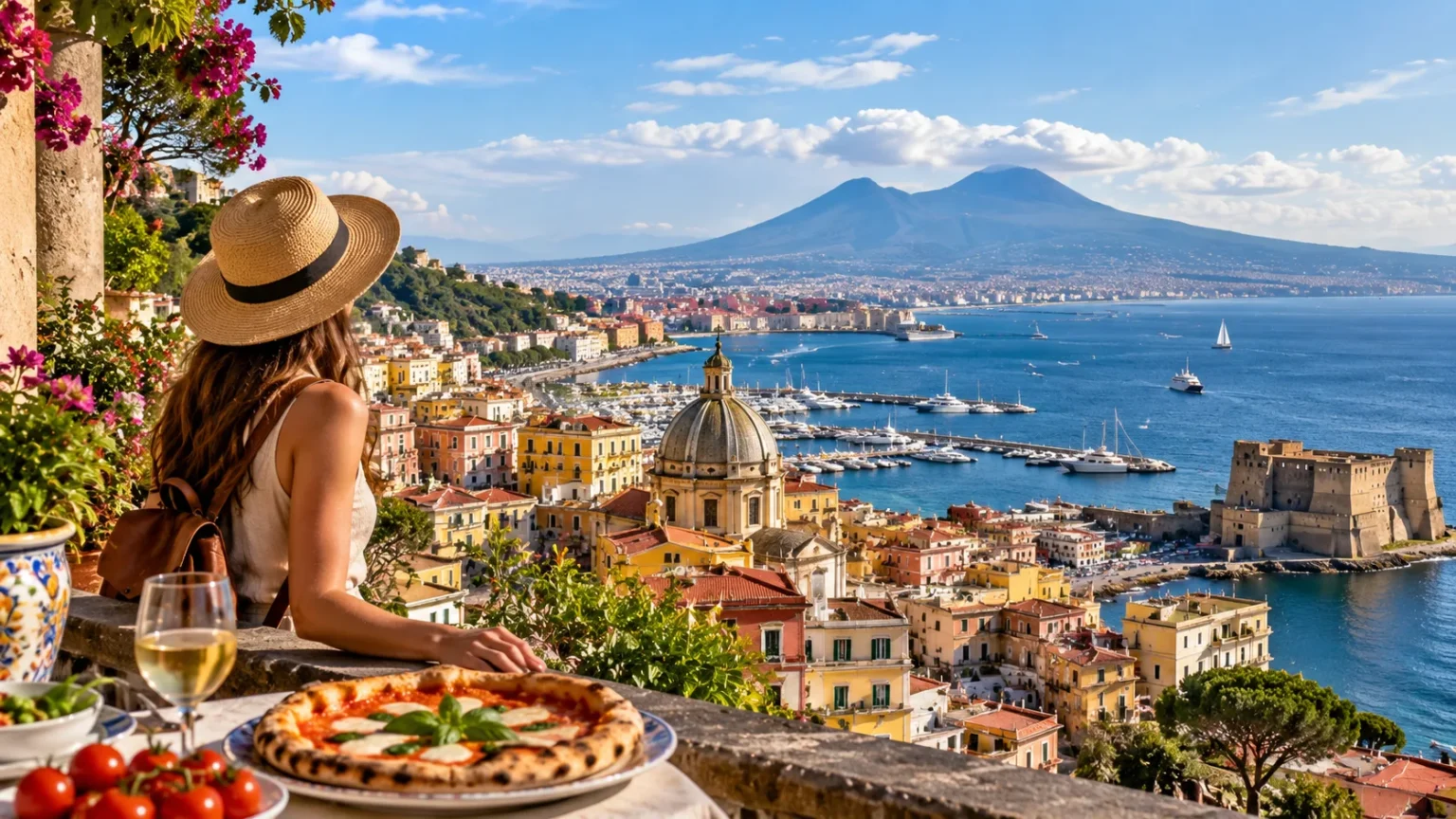
Naples is the kind of Italian city that rewards travelers who look beyond polished tourist streets. Set beside the Bay of Naples with Mount Vesuvius dominating the horizon, the city combines ancient history, energetic neighborhoods, remarkable churches, underground ruins, waterfront views, and one of Italy’s most celebrated food cultures. Every street seems to reveal another layer of southern Italian life.
Unlike destinations that feel designed around visitors, Naples remains intensely lived-in and wonderfully unpredictable. Laundry hangs above narrow alleys, scooters weave through historic streets, neighborhood cafés stay busy, and centuries-old buildings stand beside lively markets. Exploring Naples is less about checking attractions off a list and more about experiencing the atmosphere connecting its history, food, people, architecture, and coastline.
Whether you are spending two days in Naples or using the city as a base for a longer Campania itinerary, there is plenty to fill your schedule. The best things to do in Naples, Italy, range from exploring the historic center and eating authentic Neapolitan pizza to visiting castles, archaeological treasures, underground tunnels, and nearby Pompeii. Here is how to experience the city properly.
Why Naples Deserves a Place on Your Italy Itinerary
Naples offers a completely different atmosphere from Rome, Florence, Venice, or Milan. The city feels energetic, layered, and remarkably authentic, with history visible in churches, palaces, ancient street layouts, underground spaces, and everyday neighborhoods. Travelers interested in culture often discover that Naples provides some of Italy’s richest experiences without feeling as polished or predictable as more famous destinations.
Food is another major reason to visit Naples. Pizza may be the city’s most famous culinary contribution, but local cuisine extends far beyond one dish, including seafood, pasta, fried street food, pastries, espresso, and regional specialties. Eating becomes part of sightseeing because small bakeries, pizzerias, cafés, food stalls, and family-run restaurants appear throughout the historic neighborhoods.
Naples is also exceptionally well positioned for exploring Campania. Pompeii, Herculaneum, Mount Vesuvius, Capri, Ischia, Procida, Sorrento, and the Amalfi Coast can all be incorporated into a wider regional trip. This combination of fascinating city attractions and impressive nearby destinations makes Naples an excellent base for travelers who want variety without constantly changing accommodation.
1. Explore the Historic Center of Naples
The historic center is the natural starting point for discovering Naples. Narrow streets wind between centuries-old churches, residential buildings, tiny workshops, cafés, monuments, and hidden courtyards, creating an atmosphere that feels completely different from modern European city centers. Walking slowly is essential because many of the neighborhood’s most memorable details appear unexpectedly rather than at major attractions.
Spaccanapoli is one of the best routes for experiencing the old city on foot. This long, narrow street seems to cut through the historic center, passing churches, shops, restaurants, street-food counters, and lively squares. Nearby Via dei Tribunali provides another energetic route through central Naples and makes it easy to combine cultural attractions with frequent stops for pizza, coffee, or pastries.
Do not rush through the historic center simply to reach individual landmarks. Much of its appeal comes from watching neighborhood life unfold around balconies, religious shrines, markets, workshops, and crowded street corners. Comfortable shoes are important because uneven paving and long walking days are common, but wandering these streets remains one of the most rewarding free things to do in Naples.
2. Walk Along Spaccanapoli
Spaccanapoli deserves special attention because it captures so much of Naples within one walking route. Historic buildings rise closely on either side while small businesses, churches, souvenir shops, cafés, and street vendors create constant activity at ground level. It is one of those places where walking a relatively short distance can take hours because there is always something worth noticing.
Several important Naples attractions sit directly along or close to the Spaccanapoli route. You can easily reach Santa Chiara, Piazza del Gesù Nuovo, Sansevero Chapel, and many smaller churches while exploring nearby lanes. Instead of designing an overly rigid schedule, use the street as the backbone of a relaxed day and make spontaneous detours whenever something catches your attention.
Early morning provides a quieter view of the area, while later hours create the lively atmosphere for which Naples is famous. Visiting at different times can almost feel like seeing two separate neighborhoods. Daylight is ideal for appreciating architecture and photography, while the evening brings restaurants, conversations, scooters, and street activity that showcase Naples at its energetic best.
3. See the Veiled Christ at Sansevero Chapel
The Sansevero Chapel is one of Naples’ most memorable artistic attractions and a highlight for travelers interested in sculpture. Its best-known masterpiece is the Veiled Christ, an extraordinary marble sculpture depicting Christ beneath an apparently delicate transparent veil. The realism of the fabric carved from stone makes the work particularly striking when viewed closely inside the intimate chapel.
The chapel contains much more than its famous centerpiece. Elaborate sculptures, symbolic decoration, architectural details, and unusual anatomical exhibits create an experience unlike a traditional museum. Because the interior is relatively compact, visitors can appreciate individual artworks without needing several hours, making it easy to combine Sansevero with other attractions around the historic center.
This is one Naples attraction worth planning ahead because visitor numbers can be controlled and popular times may fill quickly. Build your surrounding walking route around your chosen entry rather than arriving casually during a busy period. After visiting, continue through nearby historic streets toward Via dei Tribunali, San Gregorio Armeno, or one of the neighborhood’s traditional pizzerias.
4. Wander Down Via San Gregorio Armeno
Via San Gregorio Armeno is famous for artisan workshops producing nativity figures and elaborate presepi, or Christmas crib scenes. Although the tradition becomes especially visible around Christmas, workshops operate throughout the year and display everything from traditional religious characters to humorous figures inspired by celebrities and contemporary culture. The craftsmanship makes this short street one of Naples’ most distinctive attractions.
The street can become extremely crowded, particularly during busy travel seasons and around the holidays. Visiting earlier in the morning gives you more space to examine workshops and appreciate the details before larger groups arrive. Even if you do not intend to buy anything, watching craftspeople maintain a centuries-old Neapolitan tradition makes the walk worthwhile.
San Gregorio Armeno sits conveniently within the historic center, making it easy to include between other major sights. Explore the adjoining lanes rather than walking only from one end to the other, since the surrounding neighborhood contains churches, food stalls, cafés, and small shops. This broader wandering experience provides much more context than treating the street as a quick souvenir stop.
5. Visit the Naples National Archaeological Museum
The Naples National Archaeological Museum is one of the city’s essential attractions for anyone interested in ancient history. Its collections contain remarkable sculptures, mosaics, frescoes, artifacts, and objects connected with the ancient Roman world. Visiting before or after Pompeii can dramatically improve your understanding because museum displays provide additional context for what life looked like across the region.
Give yourself enough time rather than attempting to rush through every gallery. Archaeological museums can become overwhelming when visitors try to see everything, so focus on the collections that most interest you. The objects recovered from ancient sites around the Bay of Naples are particularly compelling because they connect museum displays with locations you may visit during your trip.
Pairing the museum with Pompeii works especially well across separate days. Explore the archaeological site outdoors when you have plenty of energy, then use the museum to examine smaller details that may be easier to appreciate indoors. Travelers interested in Roman history could comfortably spend several hours here, while casual visitors can still enjoy a shorter focused visit.
6. Eat Authentic Neapolitan Pizza
No list of the best things to do in Naples would be complete without pizza. Naples is deeply associated with traditional pizza-making, particularly simple combinations built around carefully prepared dough, tomatoes, mozzarella, basil, and olive oil. The experience can feel surprisingly different from eating pizza elsewhere because traditional Neapolitan versions emphasize soft texture, simplicity, freshness, and extremely hot ovens.
Do not assume that only the most famous pizzeria provides an authentic experience. Excellent pizza is available throughout Naples, including neighborhood restaurants where waiting times may be shorter and prices more reasonable. Try different styles during your stay, including classic Margherita, Marinara, and pizza fritta, a fried variation that represents another important part of the city’s street-food culture.
Pizza in Naples is more than an inexpensive meal; it provides an accessible connection to local identity. Watch how quickly restaurants operate, notice how few ingredients some traditional pizzas require, and appreciate the social atmosphere surrounding everyday dining. Leaving room in your itinerary for several different pizzerias is often more enjoyable than waiting hours for one restaurant simply because it became famous online.
7. Discover Naples Underground
Much of Naples’ history is hidden beneath its modern streets. Underground tours reveal tunnels, ancient structures, cisterns, chambers, and archaeological layers created during different periods of the city’s long development. Descending below busy streets provides an entirely different perspective on Naples and demonstrates how generations continued building on top of earlier settlements.
Different underground experiences exist across Naples, so pay attention to what a particular tour includes before booking. Some focus heavily on ancient Greek and Roman history, while others explore tunnels that later served practical or wartime purposes. Travelers who enjoy archaeology, urban history, unusual architecture, or atmospheric spaces often consider underground Naples one of their trip highlights.
Wear suitable footwear and remember that certain underground passages can feel narrow or enclosed. Anyone uncomfortable in confined spaces should review the experience beforehand rather than assuming every section resembles a spacious museum. Once you return above ground, the historic center often feels even more fascinating because you understand that another complex layer of Naples exists beneath your feet.
8. Walk the Naples Waterfront and Visit Castel dell’Ovo
Naples’ waterfront provides a refreshing contrast to the dense lanes of the historic center. Walking beside the Bay of Naples opens wide views across the water toward Mount Vesuvius, with cafés, restaurants, boats, historic buildings, and local residents enjoying the promenade. Late afternoon is particularly appealing when softer light creates excellent conditions for photography and relaxed sightseeing.
Castel dell’Ovo occupies a dramatic waterfront position and has become one of Naples’ most recognizable landmarks. Even travelers less interested in castle interiors can enjoy the surrounding area for its coastal views and atmosphere. Nearby Borgo Marinari adds restaurants and waterfront scenery, making this section of Naples ideal for slowing down after a busy morning of churches and museums.
Continue walking along the Lungomare if you have time rather than visiting only the castle area. The open coastal setting offers some of the clearest views toward Vesuvius and gives you space to experience a calmer side of the city. Sunset followed by dinner near the waterfront can create one of the most enjoyable evenings on a Naples itinerary.
9. Experience the Spanish Quarter
The Quartieri Spagnoli, or Spanish Quarter, offers one of the most atmospheric walks in central Naples. Steep narrow streets, balconies, neighborhood shrines, restaurants, murals, scooters, and tightly packed buildings create a distinctly local visual identity. The district has changed considerably as tourism has increased, yet it still retains much of the everyday street energy visitors associate with Naples.
Football culture is particularly visible throughout the neighborhood. Murals, shirts, flags, photographs, and tributes demonstrate the extraordinary relationship between Naples and its football identity. Even visitors with little interest in the sport can appreciate how deeply it connects with neighborhood culture and provides another window into the passions shaping modern Neapolitan life.
Explore during daylight when you can comfortably wander side streets and photograph the district’s details. Respect that the Spanish Quarter remains a residential neighborhood rather than an open-air attraction created exclusively for tourists. Eat at a small trattoria, stop for espresso, and spend time observing the streets instead of rushing through only to capture a famous photograph.
10. Take a Day Trip to Pompeii and Mount Vesuvius
Pompeii is one of the most compelling day trips from Naples and deserves substantial time rather than a hurried visit. Walking through ancient streets, houses, public spaces, temples, baths, and entertainment areas creates a remarkably tangible connection with Roman life. The scale of the archaeological site surprises many first-time visitors, so allow several hours if history is an important part of your trip.
Mount Vesuvius can sometimes be combined with Pompeii for travelers wanting a full day focused on the volcanic landscape surrounding Naples. The volcano dominates views throughout the region, and approaching it provides a completely different perspective from simply seeing its silhouette across the bay. Combining both attractions also helps connect the geological landscape with Pompeii’s extraordinary archaeological story.
Trying to explore Pompeii, Vesuvius, and several other destinations in one day can become exhausting. Prioritize quality over the number of places visited, especially during hot weather when the exposed archaeological site requires substantial walking. Carry water, wear comfortable shoes, use sun protection, and begin early when possible to make the experience considerably more comfortable.
Explore Piazza del Plebiscito and the Royal Side of Naples
Piazza del Plebiscito offers a dramatic change from Naples’ narrow historic lanes. The broad open square is surrounded by monumental architecture and sits close to several major cultural landmarks. Its generous scale makes it one of the easiest places to pause, orient yourself, and appreciate the more formal side of Naples after exploring crowded streets elsewhere.
The Royal Palace, Teatro di San Carlo, Galleria Umberto I, and Via Toledo are all within convenient walking distance. Together, they create an excellent half-day route for travelers interested in royal history, architecture, shopping streets, and elegant interiors. The contrast between these grand spaces and the old city’s intimate alleys demonstrates how varied central Naples can feel within a relatively small area.
Visit the square during both daylight and evening if your itinerary allows. Daytime makes architectural details easier to appreciate, while evening lighting produces a different atmosphere as residents and travelers gather around nearby streets. Continue toward Via Chiaia or the waterfront afterward, creating a natural walking route through several of Naples’ most attractive central neighborhoods.
Ride the Funicular to Vomero for Panoramic Views
Naples rises sharply away from the sea, meaning some of the best city views come from its higher neighborhoods. Vomero provides a calmer atmosphere than the crowded historic center and offers panoramas stretching across rooftops, the Bay of Naples, and Mount Vesuvius. Riding a funicular adds an enjoyable local transportation experience while saving you from a demanding uphill walk.
Castel Sant’Elmo is one of the major landmarks on the hill and provides particularly impressive views over Naples. From elevated viewpoints, the shape and density of the historic city become much easier to understand. You can see how neighborhoods connect with the coastline while Vesuvius provides the dramatic backdrop that defines so many classic Naples photographs.
Consider visiting Vomero in the late afternoon and remaining until the light begins to soften. The changing colors across the city and bay can make the trip especially memorable for photographers. Afterward, you can descend for dinner in central Naples or stay in Vomero to experience a more relaxed neighborhood atmosphere away from the busiest visitor areas.
Try Naples Street Food and Traditional Desserts
Pizza deserves its fame, but limiting your Naples food experience to traditional pizzerias would mean missing much of the city’s culinary personality. Street-food counters serve fried snacks, seafood, pastries, sandwiches, and inexpensive bites that are easy to enjoy while exploring. Trying several smaller portions across the day can turn sightseeing into an informal self-guided food tour.
Neapolitan pastries deserve particular attention. Sfogliatella combines crisp layered pastry with a rich filling, while babà offers a completely different soft, syrup-soaked experience. Espresso is another essential part of local food culture, and standing briefly at a neighborhood bar for coffee provides an inexpensive way to participate in an everyday Neapolitan routine.
Avoid eating only around the most obvious tourist squares. Walking a few streets farther can reveal neighborhood bakeries, cafés, markets, and trattorias where local customers provide a useful indication of quality. Keep some flexibility in your schedule because spontaneous food discoveries frequently become more memorable than restaurants selected weeks before arriving.
How Many Days Do You Need in Naples?
Two days can cover several essential Naples attractions, particularly if you remain mainly within the historic center and central neighborhoods. You could spend one day exploring Spaccanapoli, Sansevero Chapel, San Gregorio Armeno, and local food, then use another for the archaeological museum, Spanish Quarter, Piazza del Plebiscito, and waterfront. However, this schedule will remain relatively fast paced.
Three days provides a better balance for most first-time visitors. You gain enough time to explore major neighborhoods without constantly checking the clock while still fitting in museums, underground attractions, viewpoints, and relaxed meals. Adding a fourth or fifth day becomes worthwhile when you plan excursions to Pompeii, Vesuvius, Capri, Ischia, or other destinations around Campania.
Avoid treating Naples solely as a place to sleep while visiting attractions elsewhere. The city deserves dedicated exploration because its strongest experiences often emerge while wandering neighborhoods rather than visiting famous landmarks. Giving Naples at least two full city days before adding regional excursions usually creates a much more satisfying itinerary than immediately leaving every morning.
What Is the Best Time to Visit Naples?
Spring is an excellent season for sightseeing because temperatures are generally more comfortable for walking than during peak summer heat. The city feels lively without requiring the same level of heat management that can become necessary in July and August. Spring conditions are also convenient for combining Naples with archaeological sites, islands, and other outdoor destinations around Campania.
Autumn offers many similar advantages and can work particularly well for travelers interested in food, culture, and city sightseeing. Summer remains popular because travelers can combine Naples with coastal destinations and islands, although midday heat can make long walks more tiring. If visiting during summer, start sightseeing earlier and schedule indoor attractions or relaxed meals during hotter afternoon hours.
Winter can provide a more local-feeling city experience with fewer visitors at some attractions, although weather is naturally less reliable for coastal excursions. Naples itself remains an appealing cultural destination because museums, restaurants, churches, archaeological collections, and historic neighborhoods do not depend on beach weather. Your ideal season should reflect whether the city or surrounding coast is your main priority.
Is Naples Expensive to Visit?
Naples can provide better value than several major Italian tourism destinations, especially when you eat local food, walk between central attractions, and choose accommodation outside the most premium areas. Pizza, street food, espresso, and bakery items make it possible to eat memorably without relying entirely on expensive restaurants. Many rewarding city experiences also involve simply walking through neighborhoods and public spaces.
Accommodation and popular attractions can still increase your total travel budget, particularly during busy periods. Booking earlier and comparing neighborhoods helps control costs, while public transportation can reduce dependence on taxis. Regional day trips should be budgeted separately because trains, ferries, attraction tickets, tours, and island transportation can quickly change what initially looked like an inexpensive city break.
Travelers comparing different European vacations should evaluate the entire trip rather than accommodation alone. A destination with inexpensive flights can still become costly once meals, transport, and activities are included; our guide to Iceland costs shows how dramatically travel expenses can vary between destinations. Naples generally offers plenty of flexibility for visitors trying to balance experiences with affordability.
Where Should You Stay in Naples?
The historic center is ideal for travelers who want to step outside and immediately experience Naples’ busiest cultural streets. Staying around Centro Storico places churches, restaurants, cafés, pizzerias, and several major attractions within walking distance. The trade-off is noise and activity, so light sleepers should pay attention to room location and guest reviews when choosing accommodation.
Chiaia offers a more polished atmosphere with shopping streets, restaurants, and convenient access to the waterfront. It suits travelers who want to remain central while enjoying a slightly calmer setting than the densest historic streets. Vomero is even quieter and provides elevated views, although you will rely more frequently on public transportation or funicular connections when sightseeing downtown.
Travelers planning multiple train excursions may prefer accommodation with convenient access to Napoli Centrale. However, the atmosphere around major stations differs from the picturesque areas many visitors imagine when planning an Italian trip. Decide which matters more—neighborhood experience or transportation convenience—and choose accommodation according to your actual itinerary rather than simply booking the cheapest central-looking option.
How to Get Around Naples Easily
Walking is the best way to explore much of central Naples because many major attractions sit relatively close together. Historic neighborhoods are packed with details that are easy to miss when traveling underground or inside vehicles. Comfortable footwear is essential, as sightseeing often involves uneven surfaces, hills, stairs, and far more walking than travelers initially expect.
Metro lines, buses, and funiculars become useful when traveling between neighborhoods or reaching higher areas such as Vomero. Public transportation can save substantial energy after several hours on foot. Learn the basic route between your accommodation and major sightseeing areas early in the trip so you are not attempting to understand the system only when tired at the end of the day.
Avoid renting a car simply to explore central Naples unless your wider itinerary genuinely requires one. Dense traffic, parking challenges, restricted areas, and narrow streets can make driving unnecessarily stressful for visitors. Cars become more useful for certain regional routes, while trains, ferries, and organized excursions often provide simpler alternatives for popular day trips.
How to Plan the Perfect Naples Itinerary
Organize your Naples itinerary geographically rather than crossing the city repeatedly. Spend one day around the historic center, combining Spaccanapoli, Sansevero Chapel, San Gregorio Armeno, churches, street food, and underground attractions. Another day can connect Via Toledo, the Spanish Quarter, Piazza del Plebiscito, Chiaia, the waterfront, and evening views across the bay.
Reserve separate time for attractions requiring longer visits, particularly the archaeological museum and major excursions. Pompeii deserves several hours on its own, while island trips usually consume most of a day once ferry schedules are considered. Packing too many distant attractions into one day creates more time in transit and less opportunity to actually enjoy Naples.
Leave some unscheduled space because Naples rewards spontaneity more than many destinations. A neighborhood bakery, unexpected church interior, small market, viewpoint, or lively square may convince you to stay longer than planned. A flexible itinerary covering fewer places properly usually creates stronger memories than racing between every attraction simply because it appeared on a checklist.
Conclusion
The best things to do in Naples, Italy, combine ancient history, remarkable art, unforgettable food, atmospheric neighborhoods, and some of southern Italy’s most dramatic coastal scenery. Walking through the historic center, seeing the Veiled Christ, eating authentic Neapolitan pizza, exploring underground Naples, and watching Vesuvius from the waterfront provide an excellent introduction to the city.
Make time for experiences beyond the obvious landmarks as well. Wander the Spanish Quarter, ride toward Vomero for panoramic views, try street food, explore local cafés, and dedicate a full day to Pompeii when your schedule allows. These experiences reveal why Naples feels so different from Italy’s more polished tourist cities and why many visitors become unexpectedly attached to it.
Two or three dedicated days provide a strong city break, while four or five days allow you to incorporate memorable excursions around the Bay of Naples. Keep your itinerary flexible, walk whenever possible, and arrive ready for a city that is energetic rather than perfectly orderly. Naples becomes most rewarding when you embrace its personality instead of expecting it to behave like somewhere else.
Frequently Asked Questions
What is the number one thing to do in Naples, Italy?
Exploring the historic center is the best introduction to Naples because it combines architecture, churches, street life, food, and centuries of history. Spaccanapoli and nearby lanes are excellent places to begin.
Is two days enough for Naples?
Two days can cover major central attractions, but three days provides a more relaxed experience. Add extra days if you want to visit Pompeii, Vesuvius, Capri, Ischia, or other nearby destinations.
Is Naples worth visiting for tourists?
Yes. Naples offers exceptional food, archaeological treasures, historic neighborhoods, coastal views, museums, churches, and easy access to major Campania attractions, making it particularly rewarding for travelers interested in culture and local atmosphere.
Can you walk around Naples easily?
Much of central Naples is highly walkable, although hills, uneven paving, stairs, and busy streets can make long sightseeing days tiring. Public transportation and funiculars are useful when traveling farther or uphill.
What food should you try in Naples?
Start with Neapolitan pizza, pizza fritta, sfogliatella, babà, seafood, pasta, and local street foods. Espresso is also an important part of everyday Neapolitan culture and worth experiencing at a traditional neighborhood bar.