Why a Luxury Villa Rental in St Jean Cap Ferrat Beats the Hotels?
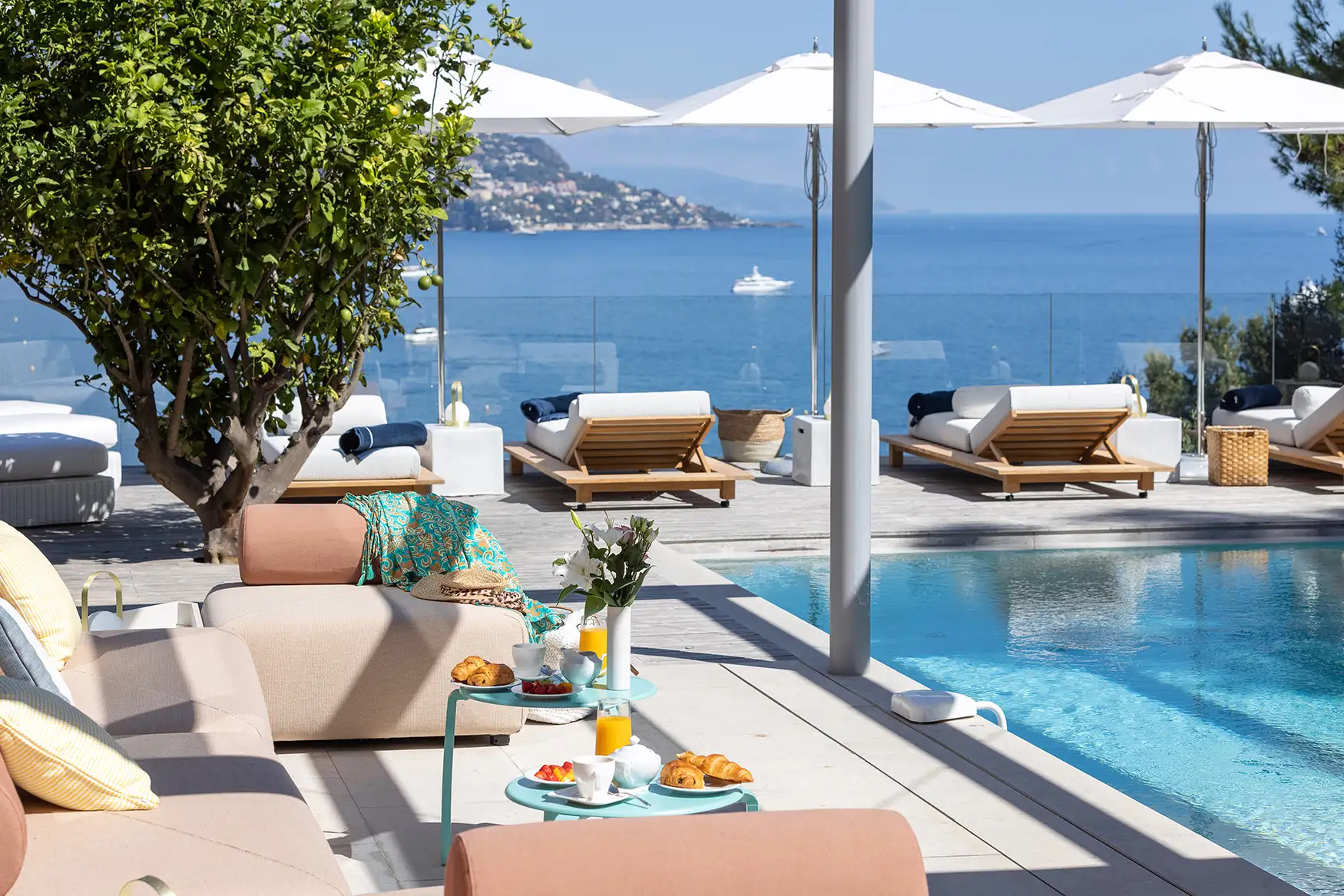
For travellers who have already stayed at every five-star address along the Riviera, Cap Ferrat’s appeal lies in what it offers less of: hotels. Beyond the legendary Grand-Hôtel du Cap-Ferrat, the peninsula remains defined by private estates hidden behind hedgerows and wrought-iron gates. A luxury villa rental in St Jean Cap Ferrat offers something the world’s finest hotels cannot: complete privacy, generous living spaces, and the freedom to experience the French Riviera from your own exclusive residence.
A Peninsula, Not a Resort Town
Cap Ferrat covers roughly 90 hectares, connected to the mainland by a narrow isthmus near Villefranche-sur-Mer. Unlike Monaco, eleven minutes east, or Cannes, forty minutes west, it was never built for visitors. A single road loops the coastline, a small port sits at Saint-Jean, and the rest is estates — many held by the same families for generations. That scarcity is the point: fewer than a dozen properties on the peninsula are ever available to rent in a given season, which keeps demand from discerning travellers consistently ahead of supply.
It also explains why so little of it is visible from the road. Most estates sit behind mature pine and cypress, reached by private driveways that give nothing away. The only way to actually see the peninsula’s interior — its gardens, its old stone villas, its coves — is either from a boat offshore or from inside one of the properties itself.
| Cap Ferrat | Monaco | Cannes / Antibes | |
|---|---|---|---|
| Character | Private estates, wooded coastline | Dense urban principality | Beach clubs, festival crowds |
| Where you stay | Villa | Hotel or apartment | Hotel |
| Privacy | Gated grounds, no public thoroughfare through most estates | Limited — high-rise density | Limited — beachfront visibility |
| Notable residents (historic) | Somerset Maugham, Charlie Chaplin, King Leopold II | Grace Kelly’s court, F1 paddock | Picasso (Antibes), festival circuit |
| Best suited to | Multi-generational stays, private events | Nightlife, casino culture, the Grand Prix | Beach-day tourism |
The Villa Experience
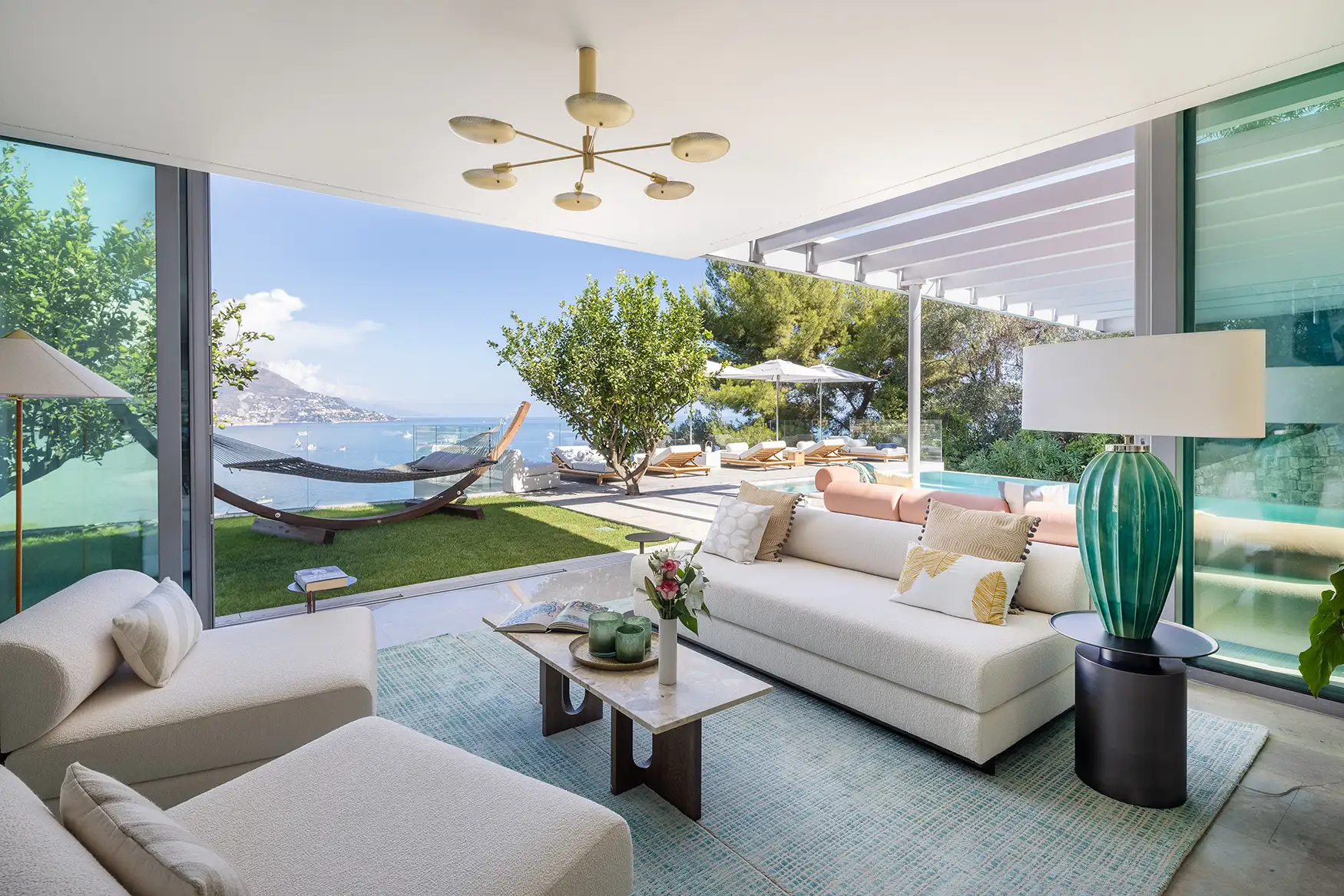
A hotel suite, even the best one on the coast, still runs on someone else’s schedule — breakfast hours, pool access, other guests down the corridor. A villa on Cap Ferrat runs on yours. Private chefs, staff on-site, and grounds large enough that six children and their grandparents can each have a version of the same holiday without colliding. Among luxury villas Cap Ferrat is distinguished less by size than by land: plot sizes here rival small vineyards elsewhere on the coast, and mature pine and olive groves do the work that a privacy hedge does everywhere else.
Villa Aulivie, a two-villa estate near the Rothschild grounds, is one example of this: sixteen guests across two houses, a private pool, and a walk to the village short enough to do before coffee gets cold. It’s the kind of arrangement that suits a family split across generations — one villa for parents and children, one for grandparents or staff — without anyone feeling like they’re sharing a holiday rather than having their own.
The distinction matters more than it sounds. A single large villa forces everyone onto one schedule — one breakfast table, one pool queue, one set of house rules. Two villas on the same estate solve that quietly: teenagers can keep their own hours without disturbing grandparents’ afternoons, and a private event — a milestone birthday, an anniversary, a small wedding — can use one house for the party and the other for guests who want to retreat from it.
A Peninsula With a Long Memory
Cap Ferrat has been attracting people who value discretion over visibility since well before “luxury travel” was a category. Somerset Maugham wrote at the Villa Mauresque for over thirty years, hosting Churchill and Ian Fleming among others. David Niven kept a house on the peninsula for decades. King Leopold II of Belgium built one of the earliest grand estates here in the late 19th century, and Béatrice Ephrussi de Rothschild’s pink Belle Époque villa — now the public gardens most visitors associate with the peninsula — was completed in 1912 and remains privately held by the Institut de France.
None of this is incidental to why the peninsula still functions the way it does. The families who built these estates set a precedent for privacy that persists in local planning rules, in the absence of hotel development, and in how little of the interior is visible from any public vantage point. Renting here isn’t just booking a nice house — it’s stepping into a place that was built, from the outset, to keep the outside world out.
Getting There
Nice Côte d’Azur airport is around 25 minutes by car, making Cap Ferrat one of the more accessible private-estate destinations in Europe relative to its seclusion. Most villa stays are arranged with a private transfer directly from the tarmac; a helicopter transfer from Nice or Monaco is also common for the final leg, landing at Monaco’s heliport before a short drive or boat crossing. Once on the peninsula, a car is largely unnecessary — Saint-Jean’s port, the beaches, and the Rothschild gardens are all within easy walking distance of most estates.
A Week on the Peninsula
- Morning — Paloma Beach or Plage de Passable, both accessible by a short walk or the estate’s own steps to the water
- Midday — lunch at one of the port-side restaurants in Saint-Jean, where the boats moor close enough to watch
- Afternoon — the Villa Ephrussi de Rothschild gardens, seven themed gardens across fourteen acres, or a walk along the Sentier du Littoral coastal path
- Early evening — Beaulieu-sur-Mer’s market or a drive up to Èze for the view back down the coast
- Dinner — either at the villa, with staff handling everything, or a table in Villefranche’s old port
- By boat — many villas have direct access to private moorings; a half-day out toward Monaco or the Lérins Islands is a common way to see the coast without competing for a table anywhere
When to Go
May and June bring warm water without the August crowds; September holds the same advantage on the way out of summer, with calmer seas for anyone chartering a boat from the peninsula’s own moorings. July and August are when the coast is at its busiest — worth choosing deliberately, not by accident, if privacy is the reason you’re here in the first place. Villas on the peninsula are typically booked six to twelve months ahead for peak summer weeks, considerably further out than most Riviera hotel bookings.
What the Brochures Don’t Tell You
The peninsula’s coastal path is public and free, and it’s the best way to see estates you’d otherwise never glimpse from the water. Beaulieu’s Thursday and Sunday markets are smaller and better than anything in Nice, worth building a morning around rather than treating as a stop. And the walk from Saint-Jean’s port up to the Villa Ephrussi gates takes under fifteen minutes on foot — a detail most itineraries skip in favour of booking a car for a five-minute drive.
A few practical notes worth knowing before you book:
- Most villa rentals on the peninsula run Saturday to Saturday in peak season, matching the staff turnover schedule rather than airline timetables
- Staff — chef, housekeeper, sometimes a boat captain — are typically included in the rental rather than arranged separately
- Beach clubs at Paloma require reservations well ahead in July and August, even for villa guests staying metres away
The Short Answer
Is Cap Ferrat quieter than Saint-Tropez or Monaco? Considerably — there’s no marina scene, no late-night strip, and the road network limits through-traffic to residents and their guests.
Do you need a car on the peninsula? Not really. Most estates sit within walking distance of the port, the beaches, and the gardens; a car matters more for day trips to Èze, Monaco, or Nice.
How far ahead should you book a villa here? Six to twelve months for the peak July–August weeks is standard, since the number of available estates is small and repeat guests often hold first refusal for the following year. Shoulder-season stays in May, June, or September can be arranged with far shorter notice.
Cap Ferrat rewards travellers who already know what they don’t want from a holiday — crowds, schedules, a lobby between them and the sea — more than it rewards a checklist of things to see. A villa on the peninsula is less a booking than a way of removing everything a hotel stay still asks of you.