





Florence Travel Guide: Best Things to Do and See
Florence brings together Renaissance art, remarkable architecture, lively streets, and the everyday pleasures of Italian city life. The historic center rewards walking, with churches, museums, and inviting squares appearing within a compact area. You can spend the morning studying masterpieces, the afternoon exploring artisan neighborhoods, and the evening watching the city change color beside the Arno River.
The best Florence itinerary balances famous attractions with time to enjoy the surroundings. Rushing between museums can leave little room for the quieter experiences that make a visit memorable. A neighborhood café, a workshop window, or an unexpected courtyard can add as much character to your day as another stop on a crowded sightseeing list.
This Florence travel guide covers the main places to explore and practical ways to organize your visit. Choose experiences that match your interests rather than trying to fit everything into one trip. With a little preparation and a realistic pace, you can enjoy the city’s cultural highlights while leaving space for meals, rest, and spontaneous discoveries.
Explore the Florence Cathedral and Piazza del Duomo
Piazza del Duomo is a natural starting point because it places several of Florence’s most recognizable monuments together. Santa Maria del Fiore, usually called the Duomo, rises above the square with its distinctive dome. Walk around the cathedral before entering anything, giving yourself time to appreciate the building’s scale, decorative details, and relationship with the surrounding streets.
The cathedral complex includes separate experiences, such as Brunelleschi’s Dome, Giotto’s Bell Tower, the Baptistery, and the Opera del Duomo Museum. Do not assume that cathedral admission includes every monument or climb. The cathedral itself has free admission, while the other monuments have their own ticket arrangements, so review the current options before deciding which visit suits you.
A climb can be memorable, but consider the stairs, confined spaces, and your comfort with heights before booking. You can appreciate the complex without choosing the most physically demanding experience. The museum provides another way to explore the craftsmanship and history behind the monuments, making it a useful option for visitors who want more context.
Discover Renaissance Art at the Uffizi Gallery
The Uffizi Gallery is one of Florence’s essential stops for travelers interested in painting and Renaissance culture. Its collections include works associated with artists such as Botticelli, Leonardo da Vinci, and Michelangelo. Instead of approaching the museum as a challenge to see every room, choose several artists or themes that genuinely interest you.
Prepare a short list of works you hope to see, then allow time for unexpected discoveries along the way. Looking closely at a few paintings can be more rewarding than moving rapidly past dozens. Notice the use of color, the relationships between figures, and the details that help explain why a particular work has remained significant.
Advance booking is worth considering, particularly during busy periods, because entry queues can take time. Check current opening arrangements and the instructions attached to your ticket before arriving. Leave some space after the visit for a break, since a major museum can demand considerable attention even when the physical distance covered does not seem large.
See Michelangelo’s David at the Accademia
The Galleria dell’Accademia is best known for Michelangelo’s David, a sculpture that often becomes a highlight of a first Florence visit. Seeing the original in person allows you to appreciate its scale and details beyond familiar photographs. Give yourself time to look from different permitted viewpoints rather than taking one picture and moving immediately onward.
The museum also offers an opportunity to consider Michelangelo’s working process through his unfinished sculptures. These works can encourage a different kind of looking, drawing attention to figures emerging from the surrounding stone. They provide a useful contrast with David and make the visit more substantial than a single encounter with a famous object.
Reservations are strongly recommended by the museum because waiting times without one can be lengthy. Confirm current admission arrangements and arrive according to the instructions supplied with your booking. If your time is limited, decide whether sculpture or painting matters more to you rather than automatically scheduling the Accademia and Uffizi back to back.
Walk Through Piazza della Signoria and Visit Palazzo Vecchio
Piazza della Signoria introduces Florence’s civic history through a setting that still feels active and public. Palazzo Vecchio dominates the square, while sculptures and the nearby Loggia dei Lanzi create an outdoor encounter with art. Spend a few minutes looking around before choosing where to go next, especially if you have arrived through one of the narrower surrounding streets.
The square is a useful place to distinguish originals from replicas when exploring Florence’s famous sculptures. The David outside Palazzo Vecchio is a replica, while the original is inside the Accademia. Understanding this difference helps you enjoy the public setting on its own terms without assuming that seeing one replaces the experience of visiting the other.
Consider entering Palazzo Vecchio if you want to explore the city’s political and administrative past alongside its artistic heritage. Review which spaces are included in the available visit and whether additional experiences require separate arrangements. Even without going inside, the building and square deserve a deliberate stop rather than serving only as a route toward another museum.
Cross Ponte Vecchio and Follow the Arno
Ponte Vecchio offers one of Florence’s most recognizable views, with shops lining the bridge above the Arno River. Walk across slowly enough to notice the structure and the changing perspective toward the riverbanks. The crossing can be busy, so move aside when stopping for photographs and keep the central passage clear for others.
Some of the most satisfying bridge views come from nearby riverfront paths or another crossing rather than from the bridge itself. Explore both banks and notice how the scene changes with the direction of the light. A short walk away from the busiest section can provide a more relaxed setting for appreciating the river and surrounding architecture.
The Arno also creates a natural connection between sightseeing areas. You can use a riverside walk to move from the central monuments toward the Oltrarno without treating the journey as empty time. Keep the route flexible, allowing a pause for a drink or a quieter street when crowds or weather make the main crossing less comfortable.
Explore the Oltrarno and Santo Spirito
The Oltrarno, on the opposite side of the Arno from many of the best-known central sights, invites a different pace. Streets around Santo Spirito combine restaurants, homes, small businesses, and artisan activity. Wander with a loose plan rather than expecting every doorway to reveal an attraction, and respect the fact that these neighborhoods are also places where people live.
Piazza Santo Spirito makes a useful stop for observing the area and taking a break. The basilica is worth considering for its architecture and interior, with access subject to current arrangements and religious use. Dress appropriately when entering churches, and avoid assuming that a quiet building is available for unrestricted sightseeing at any moment.
Browse workshops and independent shops with genuine interest in their craft. If you want to buy something, ask about materials, production, and care rather than judging only by appearance. A thoughtful purchase can become a meaningful reminder of Florence, while leaving time for these encounters helps the neighborhood feel like more than a shortcut between major monuments.
Visit Pitti Palace and the Boboli Gardens
Pitti Palace adds another dimension to a Florence itinerary through its substantial building and museum spaces. Its position in the Oltrarno makes it convenient to combine with nearby streets and a meal around Santo Spirito. Decide which collections interest you before booking, since the palace should not be treated as one brief room added casually to an already full afternoon.
Behind the palace, the Boboli Gardens offer a designed landscape with paths, sculptures, and changing viewpoints. This is a different experience from sitting in a small city park, so allow time for walking and exploration. The grounds include slopes and areas exposed to the weather, making comfortable footwear and suitable timing important to the visit.
You do not need to complete both palace museums and extensive garden walks on the same day. Choose according to your interests, energy, and the forecast, and review current ticket coverage carefully. If the weather is hot or wet, adjust your plans rather than relying on an ambitious outdoor schedule that leaves little room for comfort.
Enjoy Florence’s Churches Beyond the Duomo
Florence’s churches offer art and architecture that can deepen your understanding of the city beyond its headline museums. Santa Croce and Santa Maria Novella are two prominent options, each with its own atmosphere and cultural history. Choose a church because you want to explore what makes it distinctive rather than adding every major basilica to a checklist.
Santa Croce is associated with commemorative monuments to notable figures, while Santa Maria Novella rewards attention to its architecture and artworks. Taking a little time to read the available explanations can make details more meaningful. A church visit often works well between other activities because it changes the pace and encourages slower observation.
Check visiting arrangements before heading inside, since worship, conservation work, and visitor access may follow different schedules. Keep your voice low and follow any restrictions on photography or access to particular spaces. A respectful visit allows you to enjoy the building while recognizing that its role extends beyond being an attraction for travelers.
Take in the Views From Piazzale Michelangelo
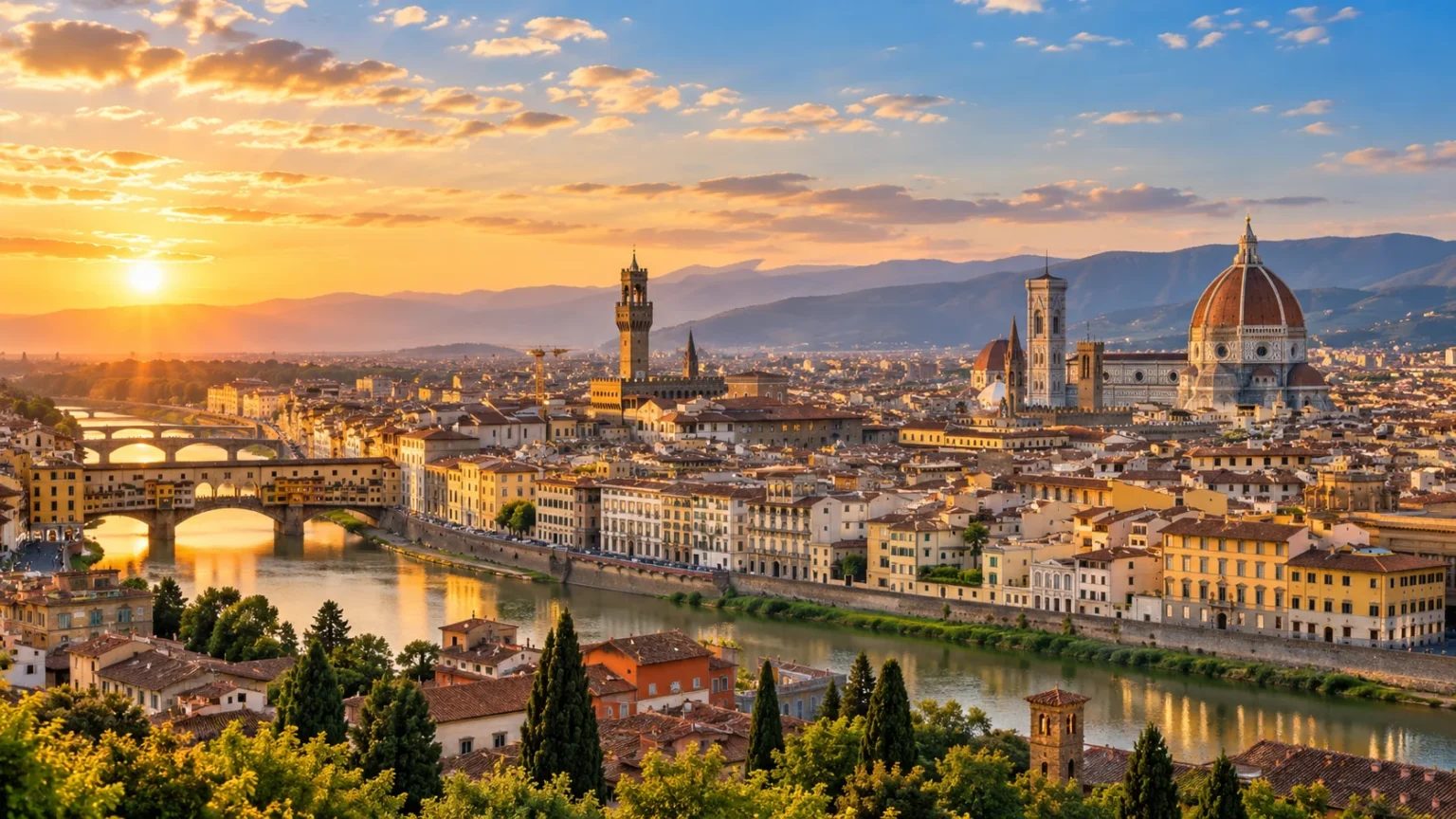
Piazzale Michelangelo provides a broad view across Florence, with the cathedral dome and other major landmarks visible above the city. It offers a useful moment to connect places you have already explored at street level. Looking across the rooftops can make the geography of your visit clearer and reveal how the river shapes the historic landscape.
The journey uphill is part of the experience if walking suits your mobility and energy. Choose a route and timing that account for the climb, weather, and return journey rather than focusing only on reaching the viewpoint. If you prefer another way up, check suitable transport arrangements in advance instead of assuming the walk will be comfortable for everyone.
Sunset is an appealing time, but the setting can attract plenty of other visitors. Consider arriving earlier or choosing daylight if your priority is a less crowded experience. Nearby San Miniato al Monte can add another stop when visiting arrangements allow, though it is better to leave room for the area than to rush away immediately after taking a photograph.
Enjoy Florentine Food and Neighborhood Markets
Food is an important part of a Florence trip, and meals provide welcome breaks between sightseeing sessions. Traditional options include ribollita, a hearty bread-and-vegetable soup, and bistecca alla fiorentina, a substantial steak associated with the city. Choose dishes according to your preferences and ask about ingredients when dietary requirements affect what you can comfortably order.
Markets around San Lorenzo and Sant’Ambrogio can offer opportunities to explore produce, food counters, and the rhythm of local shopping. Different parts of a market may serve different purposes, so look around before deciding where to eat. Confirm opening arrangements for your intended visit, particularly if you are planning breakfast, lunch, or shopping around a specific market.
Allow yourself some flexibility with restaurants rather than selecting every meal solely for proximity to a famous monument. Read menus, check prices, and understand what is included before ordering. A relaxed meal on a less crowded street can provide a better break than squeezing into the first available table when everyone in your group is already tired.
Choose the Right Pace, Season, and Place to Stay
A two- or three-day stay can provide room for Florence’s main highlights, while a longer visit allows more museums and neighborhood exploration. One day requires sharper choices, especially when timed admissions are involved. Build your itinerary around the experiences most important to you and leave enough space between them for queues, meals, and walking.
Weather and crowd levels should influence how you organize each day. Warm conditions can make long climbs and garden visits tiring, while rain may change the appeal of outdoor wandering. Plan a combination of indoor and outdoor activities so you can adjust without losing the structure of the trip or relying on perfect conditions throughout your stay.
Choose accommodation according to your transport needs, walking tolerance, and preferred evening atmosphere. A central address can simplify sightseeing, but consider noise, stairs, luggage access, and the route from your arrival point. If staying farther out, check the practical connection to your planned activities rather than assuming that distance alone reveals how convenient the location will be.
Plan Tickets, Walking Routes, and Optional Day Trips
Reserve the experiences you would be disappointed to miss, then organize other activities around those commitments. Keep booking details accessible and read the instructions for entrances, bags, and arrival times. Current rules can differ between attractions, so one museum’s arrangements should not become your assumption for every other ticketed place in Florence.
Walking works well for many central visits, but surfaces, crowds, and long museum sessions can increase fatigue. Group nearby sights to reduce unnecessary crossings and include deliberate breaks in your route. If you have mobility requirements, check entrances and available assistance before booking, since historic buildings and climbs do not all offer the same access.
Florence can also serve as a base for places such as Fiesole, Siena, or Lucca when your stay allows. Treat a day trip as a separate experience requiring its own transport research and realistic schedule. For a short first visit, spending that time in Florence may be more rewarding than reducing the city to hurried stops between journeys elsewhere.
Conclusion
Florence offers an unusually rich combination of art, architecture, public spaces, and everyday neighborhood life. The Duomo, Uffizi, Accademia, and Ponte Vecchio provide memorable starting points, while the Oltrarno and riverside walks add variety. A satisfying visit gives each experience enough time rather than measuring success by the number of attractions completed.
Prepare the practical details that could disrupt your day, including tickets, entry instructions, walking demands, and accommodation access. Then keep the rest of your schedule flexible enough to respond to weather, energy, and unexpected interests. This balance allows you to enjoy the city’s major sights without losing the pleasure of exploring between them.
Use this Florence travel guide to choose a route that reflects what you most want from the trip. Art lovers, food enthusiasts, and travelers drawn to architecture can all build a different but rewarding itinerary. Leave space to pause, look carefully, and enjoy the surroundings, because Florence’s character often becomes clearest when you slow down.
FAQs
How Many Days Do You Need in Florence?
Two or three days allow a balanced introduction to Florence’s main sights and neighborhoods.
Stay longer if you want several major museums, slower exploration, or day trips without compressing the city visit.
What Should First-Time Visitors See in Florence?
Start with Piazza del Duomo, Piazza della Signoria, Ponte Vecchio, and the Oltrarno.
Add the Uffizi or Accademia according to your interests, then consider Piazzale Michelangelo for a panoramic view.
Should You Book Florence Attractions in Advance?
Advance booking is sensible for popular attractions, especially when your schedule is limited.
Check current ticket options and entry instructions, and prioritize experiences you would be disappointed to miss rather than booking every hour.
Can You Explore Florence on Foot?
Many central sights can be linked on foot, but crowds, uneven surfaces, and uphill routes may affect comfort.
Plan breaks and check access carefully if stairs, long distances, or limited mobility influence your choices.
What Traditional Food Should You Try in Florence?
Consider ribollita, bistecca alla fiorentina, and other regional dishes that suit your preferences.
Explore menus and food markets, ask about ingredients when needed, and allow time to enjoy meals between sightseeing activities.