




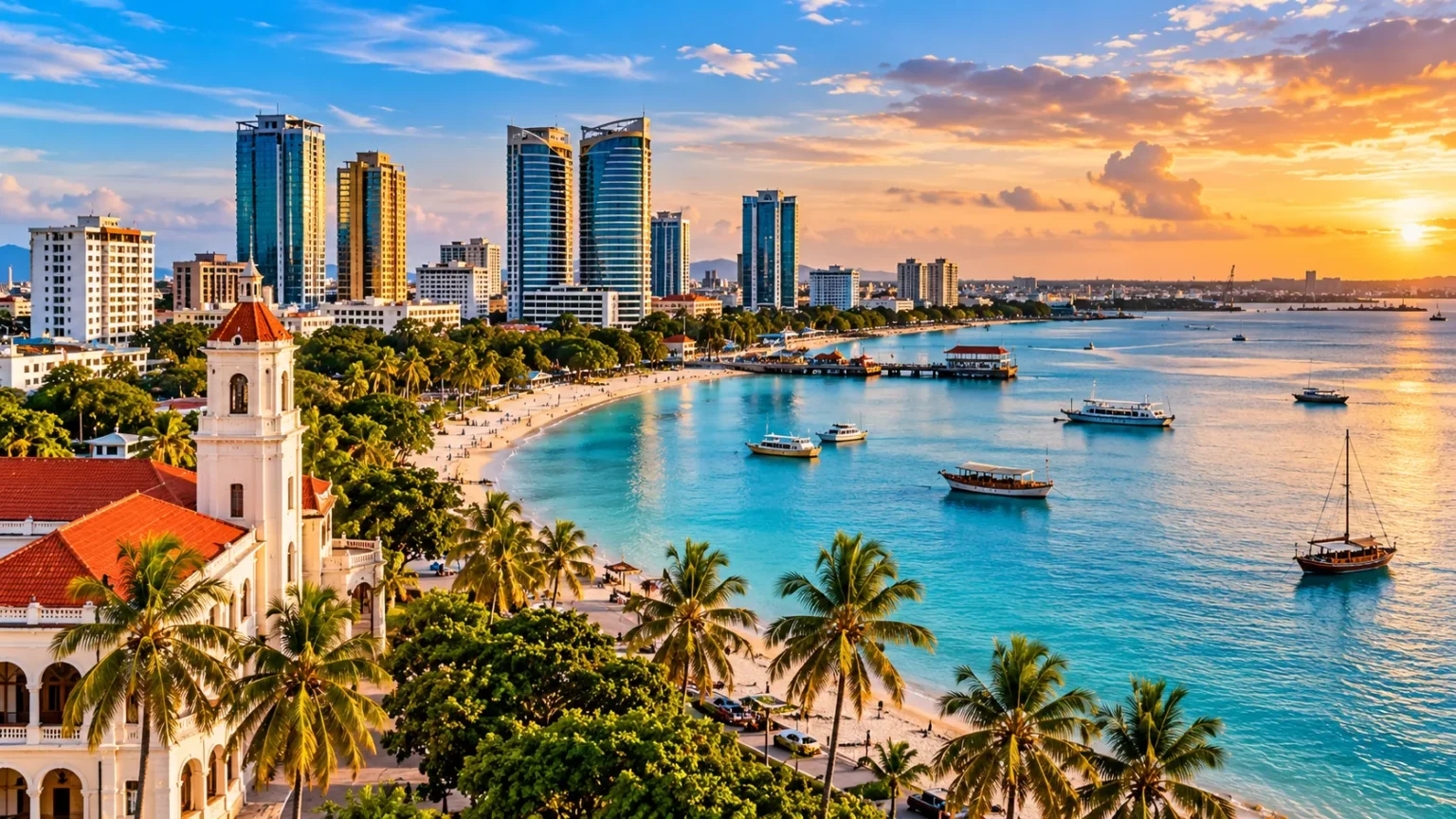
Dar es Salaam is Tanzania’s largest city and one of East Africa’s most energetic coastal destinations. Set along the Indian Ocean, the city combines busy markets, historic architecture, museums, seafood, modern neighborhoods, and easy access to offshore islands. Many travelers use Dar es Salaam as a gateway to other parts of Tanzania, but spending time in the city itself can be highly rewarding.
From exploring Tanzanian history and shopping in colorful local markets to relaxing beside the ocean or taking a boat to a protected marine reserve, there is plenty to fill a short stay. This Dar es Salaam travel guide covers some of the best things to do and see while also offering practical ideas for planning a comfortable visit.
Why Visit Dar es Salaam?
Dar es Salaam offers a different experience from Tanzania’s famous safari parks and Zanzibar’s resort areas. It is a working coastal city where modern offices, residential neighborhoods, traditional markets, ports, and historic buildings exist side by side. Visitors can experience everyday urban Tanzanian life while remaining close to the warm waters of the Indian Ocean.
The city also works well for travelers interested in culture and history. The National Museum of Tanzania operates both the Museum and House of Culture and the Village Museum in Dar es Salaam, providing opportunities to explore national heritage, traditional architecture, archaeology, history, and cultural traditions.
Another reason to stay is the coastline. Dar es Salaam has urban beaches and access to protected offshore islands where visitors can enjoy swimming, snorkeling, and coastal scenery. Bongoyo and Mbudya are part of the Dar es Salaam Marine Reserves System, which protects important coral reefs, marine life, and coastal ecosystems.
Explore the Museum and House of Culture
The Museum and House of Culture is one of the best places to begin understanding Tanzania’s past. Located in central Dar es Salaam on Shaaban Robert Street, the museum contains collections covering archaeology, paleontology, biology, ethnography, history, and contemporary art. It provides useful background before traveling farther through the country.
Visitors can explore galleries dealing with human evolution, Tanzanian history, traditional culture, art, and natural heritage. The museum’s collections include important archaeological and paleontological material, while outdoor exhibits add variety to the visit. It is particularly worthwhile for travelers interested in understanding Tanzania beyond its beaches and wildlife.
Plan enough time to explore without rushing from room to room. Combining the museum with other central Dar attractions can create an easy half-day sightseeing route. Because opening arrangements and admission details can change, checking the National Museum of Tanzania’s current information before visiting is a sensible part of trip planning.
Discover Traditional Culture at the Village Museum
The Village Museum offers another perspective on Tanzanian culture and is located in the Kijitonyama area of Dar es Salaam. Unlike a conventional indoor museum, it is known for presenting traditional architectural styles and cultural traditions from different communities around Tanzania. The National Museum identifies it as one of its major museum centers in the city.
Walking around the grounds gives visitors a chance to see how traditional homes differ across regions and communities. This makes the museum particularly interesting if your trip will also include rural areas, historical sites, or cultural tourism elsewhere in Tanzania. It provides visual context that is difficult to gain only by reading about the country.
Try not to treat the Village Museum as simply a place for photographs. Take time to understand the building styles, objects, and traditions being represented. If cultural demonstrations or activities are available during your visit, they can add another dimension to the experience, though schedules should be confirmed locally.
Experience Kariakoo and Dar es Salaam’s Markets
Kariakoo is one of the city’s best-known commercial districts and offers a completely different atmosphere from museums and beaches. Streets and market areas are filled with traders, shoppers, clothing, household goods, produce, spices, and countless everyday products. For visitors, the attraction is as much the energy and movement as the shopping itself.
Markets can be busy and intense, so visit with patience and keep personal belongings secure. Walking with a knowledgeable local guide can make the experience easier if it is your first time navigating a large East African market. Ask before photographing individual vendors, and remember that this is primarily a working marketplace rather than a tourist attraction.
Kivukoni Fish Market provides another memorable local experience, particularly for travelers interested in food and daily coastal life. Fishing boats bring catches into an energetic waterfront setting where seafood is traded and prepared. Visiting earlier in the day can offer a livelier glimpse of market activity, although conditions and routines naturally vary.
Relax at Coco Beach and the Msasani Peninsula
Coco Beach in Oyster Bay is one of the city’s familiar seaside gathering places. Rather than feeling like an isolated resort beach, it offers an urban coastal atmosphere where residents come to socialize, walk, eat, and enjoy views of the Indian Ocean. It can be a refreshing break after spending time in the busier central districts.
The wider Msasani Peninsula is a useful area for restaurants, cafés, nightlife, and waterfront views. Spending an afternoon or evening here gives visitors a look at a more relaxed side of Dar es Salaam. The area is particularly appealing when you want to combine sightseeing with a slower meal or sunset near the coast.
Keep expectations realistic when comparing an urban beach with remote tropical islands. Coco Beach is best appreciated as part of city life rather than as a secluded beach escape. For clearer water, snorkeling, and a quieter island setting, consider adding Bongoyo or Mbudya to your itinerary.
Take a Day Trip to Bongoyo Island
Bongoyo Island offers an easy way to exchange the busy city for beaches and marine scenery. It forms part of the protected Dar es Salaam Marine Reserves System, together with other islands and marine areas around the city. The reserve protects coral reefs, seagrass habitats, fish, and other coastal biodiversity.
A visit is typically centered on swimming, relaxing near the beach, and enjoying the surrounding water. Snorkeling can also be appealing when sea and weather conditions are suitable. Because facilities on small islands can be more limited than in the city, carry practical essentials such as sun protection and enough time for return transport.
Boat departure arrangements, fees, and schedules can change, so confirm the latest details locally before setting out. Weather and sea conditions may also affect departures. Treat the island as a protected natural area by avoiding litter, respecting marine life, and following instructions from reserve staff or boat operators.
Spend a Beach Day on Mbudya Island
Mbudya is another popular island escape within the Dar es Salaam Marine Reserves System. Official marine reserve information identifies it as one of the protected islands around the city and highlights the system’s coral reefs, marine fish, birds, and other wildlife.
The appeal of Mbudya is its slower pace. Travelers can spend several hours relaxing near the shore, swimming, exploring the coastal environment, or snorkeling when conditions permit. It can be a particularly enjoyable addition after several days of city sightseeing, traffic, and busy markets.
As with Bongoyo, check boat arrangements before traveling and avoid building a schedule that depends on exact return times without confirmation. Bring suitable footwear, sun protection, drinking water as needed, and basic beach essentials. Responsible behavior is important because the island is part of a protected marine environment rather than simply a recreational beach.
Explore Central Dar es Salaam
Central Dar es Salaam rewards travelers who enjoy observing architecture and everyday street life. The city center contains a mixture of modern towers, older commercial buildings, places of worship, government areas, and busy transport routes. Walking selected areas can reveal how different historical periods have shaped the modern city.
Notable landmarks around central Dar include historic churches and monuments as well as the waterfront areas near Kivukoni. Rather than rushing between individual sights, consider exploring them as part of a broader walk or guided city tour. This gives you more time to notice smaller architectural details and understand how the central districts connect.
Traffic can make moving short distances slower than expected, particularly during busy periods. Plan sightseeing geographically instead of repeatedly crossing the city. Combining the Museum and House of Culture, waterfront areas, central landmarks, and a nearby restaurant into one outing can make your day more comfortable and efficient.
Try Tanzanian and Swahili Food
Food is an important part of experiencing Dar es Salaam. The city’s coastal location and cultural diversity influence a cuisine that includes seafood, grilled meat, rice dishes, coconut-based flavors, spices, beans, plantains, and fresh tropical fruit. Trying local meals can often be just as memorable as visiting a formal tourist attraction.
Look for dishes such as grilled fish, nyama choma, pilau, biryani, chapati, beans, and different preparations of rice and vegetables. Coastal cooking often shows strong Swahili influences, and seafood can be especially appealing near the ocean. Street snacks and fresh fruit can provide additional opportunities to experience everyday flavors.
Choose busy, clean-looking places where food appears fresh and properly handled. Travelers with dietary restrictions should explain them clearly, especially when sauces or mixed dishes may contain ingredients that are not immediately obvious. Bottled or otherwise safely treated drinking water is also a sensible choice while traveling.
Shop for Crafts and Local Souvenirs
Shopping in Dar es Salaam can range from busy traditional markets to more relaxed craft centers and modern retail areas. Travelers often look for textiles, carvings, jewelry, baskets, paintings, and other locally produced items. Taking time to compare quality and craftsmanship can make souvenir shopping more enjoyable.
Colorful fabrics are particularly eye-catching and can be used as clothing, decorative pieces, or practical gifts. Carved wooden objects and artwork are also widely associated with Tanzanian craft traditions. When buying handmade pieces, ask about their origin and materials rather than choosing solely according to price.
Bargaining may be expected in some market settings, but it should remain friendly and respectful. Prices in formal stores may be fixed. If you plan to purchase wooden, wildlife-related, or other natural-material products, make sure they can be legally exported and brought into your destination country.
Plan Your Dar es Salaam Visit Wisely
Dar es Salaam is large, and traffic can significantly affect how much you can comfortably see in one day. Instead of creating an overly ambitious itinerary, group nearby attractions together. Spend one day exploring museums and central areas, another enjoying markets and neighborhoods, and reserve a separate day for an island trip if your schedule allows.
Transportation choices include taxis, ride-hailing services where available, local public transport, and arranged transfers. First-time visitors may find prearranged transport useful for airport journeys or time-sensitive activities. Leave additional time when traveling during morning and evening congestion because relatively short distances can sometimes take longer than expected.
Weather should also influence your plans, particularly for island and beach activities. Coastal conditions can be hot and humid, so lightweight clothing, sun protection, and regular hydration are useful. For boat trips, confirm local conditions and schedules rather than assuming that services will operate exactly as planned every day.
Conclusion
Dar es Salaam offers much more than a quick arrival point before a safari or trip to Zanzibar. Its combination of museums, traditional culture, energetic markets, coastal neighborhoods, local food, and Indian Ocean scenery makes the city worth exploring in its own right.
Some of the most rewarding experiences include visiting the Museum and House of Culture, exploring the Village Museum, seeing local market life, spending time around Coco Beach, and taking a boat trip to Bongoyo or Mbudya. Mixing city sightseeing with a relaxed coastal day creates a more varied itinerary.
Plan your days around location and travel time rather than trying to see everything at once. Leave room for meals, unexpected discoveries, and slower moments near the ocean. With a little preparation, Dar es Salaam can provide an engaging introduction to Tanzania’s history, culture, food, and coastal lifestyle.
FAQs
How many days do you need in Dar es Salaam?
Two to three days can cover major museums, markets, central sights, and coastal neighborhoods. Add another day if you want a relaxed trip to Bongoyo or Mbudya Island without rushing your city sightseeing.
What are the best things to do in Dar es Salaam?
Popular experiences include the Museum and House of Culture, Village Museum, Kariakoo and Kivukoni markets, Coco Beach, local food, and day trips to the protected Bongoyo and Mbudya marine reserves.
Is Dar es Salaam worth visiting?
Yes, especially if you enjoy urban culture, markets, museums, Swahili-influenced food, and coastal scenery. It offers a very different experience from Tanzania’s safari destinations and resort islands.
Which island is best to visit from Dar es Salaam?
Bongoyo and Mbudya are both popular options within the Dar es Salaam Marine Reserves System. Your choice can depend on boat availability, weather, desired activities, and the departure point most convenient for you.
What should I wear in Dar es Salaam?
Lightweight, breathable clothing is practical for the coastal climate. Modest clothing is appropriate when visiting cultural or religious places, while sun protection, comfortable walking shoes, and suitable beachwear are useful for outdoor activities.