





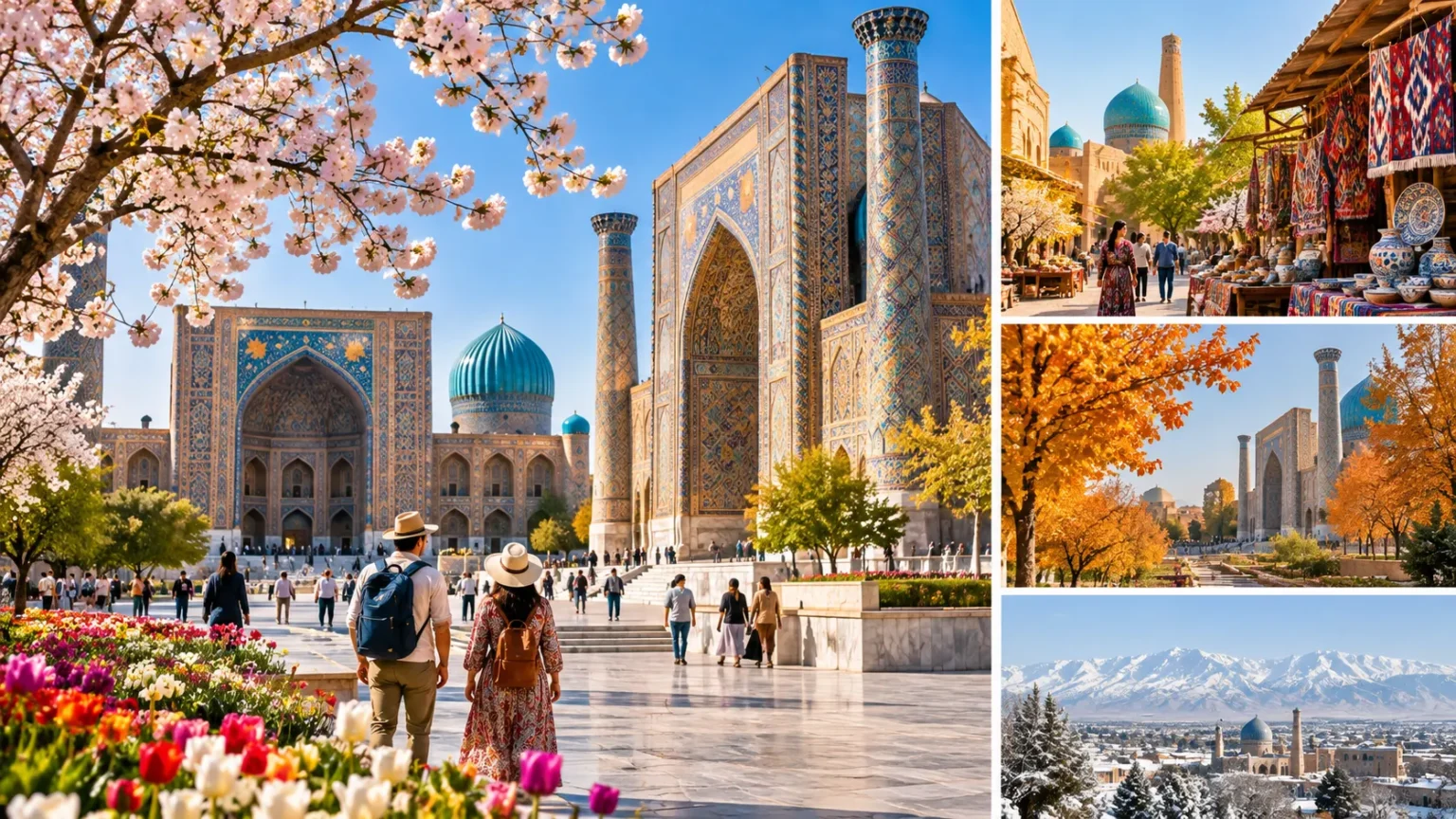
What Is the Best Time to Visit Uzbekistan?
The best time to visit Uzbekistan is generally during spring and autumn, when temperatures are comfortable for sightseeing and long days outdoors. April and May are especially pleasant for exploring historic cities, while September and October bring comfortable conditions after the intense summer heat. These periods work particularly well for travelers planning to visit Samarkand, Bukhara, Khiva, and Tashkent.
Spring brings fresh landscapes, longer daylight hours, and pleasant temperatures across much of the country. Autumn offers similarly comfortable weather with clearer skies and a warm, golden atmosphere around Uzbekistan’s historic architecture. Both seasons make walking through old towns, markets, courtyards, and Silk Road monuments much easier than during the hottest summer afternoons.
That said, Uzbekistan can be visited throughout the year if you match the season to your interests. Summer works for travelers who tolerate high temperatures or plan mountain escapes, while winter offers fewer crowds and a quieter cultural experience. Understanding Uzbekistan’s seasonal weather helps you choose travel dates that match your itinerary, budget, and preferred activities.
Uzbekistan Weather and Climate Explained
Uzbekistan has a largely continental climate, which means temperatures can vary significantly between summer and winter. Summers are typically hot, sunny, and dry across the lowlands, while winters can become cold, especially at night. Spring and autumn sit between these extremes and usually provide the most comfortable conditions for general sightseeing.
The country’s geography also creates regional differences. Desert areas can experience very hot days and cooler nights, while mountainous regions remain noticeably fresher during summer. Cities such as Tashkent, Samarkand, Bukhara, and Khiva share the broader continental pattern, but individual conditions can vary depending on elevation and location.
Rainfall is generally more noticeable during parts of spring than during the driest summer months. Travelers should therefore prepare for occasional showers even during an otherwise comfortable sightseeing season. Layered clothing works particularly well because mornings and evenings may feel cool while afternoons become warm enough for lighter clothes.
Visiting Uzbekistan in Spring
Spring is one of the strongest seasons for a first trip to Uzbekistan. March begins the transition from winter, while April and May generally provide increasingly warm and pleasant conditions. Historic cities become more comfortable to explore on foot, gardens regain color, and outdoor sightseeing is easier without the intense heat associated with midsummer.
April is particularly attractive for travelers interested in a classic Silk Road itinerary. You can spend long periods walking through Samarkand’s architectural sites, Bukhara’s old center, or Khiva’s historic streets without constantly searching for shade. Evenings can still feel cooler, making a light jacket or sweater useful after sunset.
By late May, temperatures begin rising and the approach of summer becomes more noticeable. Morning sightseeing becomes increasingly important, especially in lower and drier areas. Travelers visiting toward the end of spring can still enjoy excellent conditions but should plan strenuous outdoor activities earlier in the day whenever temperatures become warmer.
Visiting Uzbekistan in Summer
Summer in Uzbekistan can be extremely hot, particularly across desert cities and lowland regions. June begins the hotter period, while July and early August can bring the most demanding daytime conditions. Travelers who visit during these months should organize sightseeing carefully and avoid assuming they can comfortably walk outside for hours during the hottest part of the afternoon.
Early mornings and evenings become especially valuable in summer. Visit major monuments shortly after opening, rest during the hottest hours, then return outside later in the day. Hotels with air conditioning, shaded restaurants, museums, and slower midday schedules can make a summer trip considerably more comfortable without sacrificing the main attractions.
Summer can still be appealing for travelers interested in mountain areas around eastern Uzbekistan. Higher elevations provide opportunities for hiking, cooler air, and a different landscape from the famous Silk Road cities. Packing sun protection, breathable clothing, a reusable water bottle, and comfortable footwear becomes particularly important when traveling during this season.
Visiting Uzbekistan in Autumn
Autumn is another excellent time to visit Uzbekistan because the strongest summer heat gradually disappears. September often remains warm, while October usually offers increasingly mild conditions ideal for walking and cultural sightseeing. Travelers who want pleasant weather without springtime showers may find autumn particularly attractive for a multi-city journey.
The season also creates beautiful light around Uzbekistan’s blue domes, tiled madrasas, minarets, and historic courtyards. Markets can feel especially lively during harvest periods, with fresh fruit and local produce adding another dimension to the travel experience. Comfortable afternoons make it easier to explore neighborhoods rather than rushing between major attractions.
By November, conditions become noticeably cooler and winter begins approaching. Early November can still work well for sightseeing, particularly for travelers who prefer cooler temperatures and lighter crowds. Packing layers becomes increasingly important because daytime weather may remain comfortable while mornings and evenings feel considerably colder.
Visiting Uzbekistan in Winter
Winter offers a very different side of Uzbekistan. December through February can bring cold conditions, particularly at night, and occasional snow can transform historic architecture and mountain landscapes. Travelers willing to dress warmly may enjoy quieter streets, fewer tour groups, and a more relaxed atmosphere in major cultural destinations.
Cities remain worthwhile because museums, markets, restaurants, mosques, and historic buildings can still be explored between periods outdoors. Accommodation may also be easier to find outside major holiday periods. The shorter daylight hours mean itineraries should be organized efficiently, with outdoor sightseeing concentrated during the brightest and warmest part of the day.
Winter can also appeal to travelers interested in mountain scenery and seasonal activities. Areas near Tashkent provide access to higher terrain where snow and winter recreation may be available. Warm layers, waterproof footwear, gloves, and proper outerwear are essential if your itinerary combines urban sightseeing with colder mountain environments.
Best Time to Visit Samarkand
Samarkand is enjoyable throughout much of the year, but spring and autumn provide the most comfortable balance for sightseeing. The city’s famous architectural complexes require considerable walking, and mild weather makes it easier to explore slowly. April, May, September, and October are particularly convenient for spending extended periods around courtyards, mausoleums, markets, and monumental squares.
Summer visits are still possible, but timing becomes important. Begin sightseeing early and prioritize indoor attractions or long meals during the hottest afternoon hours. Returning to major squares near sunset can be rewarding because temperatures become more comfortable and illuminated architecture creates a completely different atmosphere after dark.
Winter brings fewer visitors and a quieter experience around many major attractions. Cold mornings can be challenging, but travelers interested in photography may appreciate softer seasonal light and less crowded viewpoints. Samarkand therefore works year-round, although travelers wanting consistently comfortable walking conditions should favor the spring or autumn shoulder seasons.
Best Time to Visit Bukhara and Khiva
Bukhara and Khiva are best enjoyed when temperatures allow plenty of walking because both cities reward slow exploration. Their old centers contain historic buildings, courtyards, markets, narrow lanes, and architectural details that are easy to miss when rushing. Spring and autumn provide the most comfortable conditions for spending much of the day outside.
Summer can feel especially intense in these western and desert-influenced destinations. If visiting from June through August, schedule outdoor attractions for early morning and late afternoon. Midday is better suited to lunch, rest, museums, covered bazaars, or time inside your accommodation before temperatures become easier later.
Winter conditions can be cold, especially after sunset, but low visitor numbers create a peaceful atmosphere. Travelers who prioritize architecture and culture over warm weather may enjoy having more space around major sights. Layers are essential because sunlit courtyards can feel pleasant during the day while temperatures drop quickly in the evening.
Best Time for Mountains and Outdoor Adventures
Travelers interested in mountains, hiking, lakes, and nature may prefer slightly different travel dates from visitors focused only on historic cities. Late spring through early autumn generally provides the broadest range of outdoor possibilities at higher elevations. Mountain conditions remain cooler than Uzbekistan’s lowland cities, making them attractive during warmer months.
Spring can bring greener landscapes and fresh mountain scenery, although conditions at higher elevations may remain variable. Summer is often useful for escaping extreme city temperatures and spending time in cooler valleys or mountain areas. Hiking plans should still account for strong sunshine, changing weather, and differences between daytime and nighttime temperatures.
Early autumn can be another rewarding time for outdoor activities because temperatures are comfortable and landscapes begin changing color. As winter approaches, hiking opportunities become more limited while snow-based activities become more relevant. Always match footwear and clothing to elevation rather than assuming conditions will be the same as in Tashkent or Samarkand.
Crowds, Costs, and Seasonal Travel Tips
Spring and autumn are popular because they offer the most comfortable sightseeing weather. That means well-located hotels, preferred train times, and popular guided tours can fill earlier than during more extreme seasons. Booking key accommodation and intercity transport in advance can make a multi-city itinerary much easier to manage during busy periods.
Summer and winter may offer a quieter experience in some destinations, although lower demand does not guarantee that every service will be cheaper. Travelers who are flexible with weather can sometimes benefit from greater accommodation choice. The trade-off is accepting either strong summer heat or colder winter conditions while planning daily activities around the season.
National holidays, festivals, and major events can also influence demand regardless of normal seasonal patterns. If your travel dates overlap with a celebration, expect additional local activity and possibly increased competition for transport or accommodation. Confirm major bookings before departure rather than depending entirely on last-minute arrangements during high-demand periods.
What to Pack for Uzbekistan by Season
Spring travelers should pack layers because temperatures can shift between cool mornings and warm afternoons. Comfortable walking shoes are essential for stone streets, historic complexes, and long sightseeing days. A lightweight waterproof layer can also be useful when occasional rain appears, especially earlier in the season.
For summer, prioritize loose and breathable clothing, sun protection, sunglasses, and a hat. Lightweight long sleeves can provide useful protection from intense sunlight while also being suitable when visiting religious or culturally significant places. Staying hydrated is important, particularly when sightseeing in Bukhara, Khiva, or other hot and dry destinations.
Autumn again calls for layers, while winter requires a significantly warmer wardrobe. A proper coat, warm socks, gloves, and comfortable closed shoes become useful as temperatures fall. Whatever the season, pack respectfully for cultural attractions and carry clothing that covers shoulders and knees when visiting mosques, mausoleums, or other religious locations.
How to Plan the Perfect Uzbekistan Itinerary
For a first trip, combining Tashkent, Samarkand, Bukhara, and Khiva creates a strong introduction to Uzbekistan. Seven to ten days allows travelers to see the major cities, while ten to fourteen days provides a slower experience with additional time for markets, food, museums, and nearby excursions. Longer trips can add mountains, desert landscapes, or the Fergana Valley.
Spring and autumn allow greater flexibility because comfortable temperatures make full sightseeing days easier. During summer, reduce the number of outdoor attractions planned for midday and allow additional rest. Winter itineraries should account for shorter daylight hours and leave some flexibility for weather changes, especially when traveling beyond the main cities.
Avoid turning the trip into a race between landmarks. Uzbekistan’s appeal includes tea houses, bazaars, traditional food, local neighborhoods, architecture, and conversations encountered between major attractions. Spending an extra night in a historic city can often create a richer experience than adding another destination simply to increase the number of places visited.
Conclusion
For most travelers, the best time to visit Uzbekistan is during spring or autumn. April and May offer comfortable temperatures and fresh seasonal scenery, while September and October combine warm days with conditions well suited to exploring historic Silk Road cities. These periods are particularly attractive for first-time visitors planning a classic cultural itinerary.
Summer and winter should not automatically be avoided. Summer can work with early sightseeing, midday breaks, and mountain escapes, while winter offers quieter cities and distinctive seasonal scenery. Choosing the right time depends on whether you prioritize ideal walking weather, smaller crowds, outdoor adventures, or a particular seasonal atmosphere.
Whatever month you choose, build flexibility into your Uzbekistan itinerary and pack for changing conditions. Plan outdoor activities around the temperature, allow enough time for each historic city, and avoid overcrowding your schedule. Matching your travel style to the season will make the country’s architecture, landscapes, food, and cultural experiences much easier to enjoy.
FAQs
What month is best to visit Uzbekistan?
April, May, September, and October are excellent choices for most travelers. These months generally provide comfortable conditions for walking, sightseeing, and traveling between Uzbekistan’s major historic cities.
Is Uzbekistan too hot in summer?
Summer can become extremely hot, particularly in desert and lowland destinations. Travel is still possible if you explore early, rest during the hottest afternoon hours, stay hydrated, and plan outdoor activities carefully.
Is Uzbekistan worth visiting in winter?
Yes. Winter offers fewer crowds and a quieter cultural experience, although temperatures can become cold. It is a good option for travelers comfortable with winter clothing and shorter sightseeing days.
How many days are enough for Uzbekistan?
Seven to ten days can cover several major destinations, while ten to fourteen days allows a more relaxed itinerary. Additional time is useful if you want mountains, desert experiences, or less-visited regions.
Is spring or autumn better for Uzbekistan?
Both seasons are excellent. Spring offers fresh landscapes and comfortable weather, while autumn often provides warm days and pleasant sightseeing conditions after the summer heat. The better choice depends mostly on your preferred travel dates.