




Sarajevo is one of Europe’s most fascinating travel destinations, offering an unforgettable combination of history, cultural diversity, beautiful architecture, and mountain scenery. As the capital of Bosnia and Herzegovina, the city attracts travelers interested in exploring historic landmarks, traditional markets, and unique local experiences. From the charming streets of Baščaršija to the impressive views from the Yellow Fortress, Sarajevo offers attractions that reflect its extraordinary past and vibrant present.
Planning a trip to Sarajevo provides an opportunity to experience a destination where Ottoman, Austro-Hungarian, and modern European influences exist side by side. Visitors can walk through historic neighborhoods, explore fascinating museums, enjoy traditional Bosnian cuisine, and discover beautiful surrounding mountains. The city is also known for its hospitality, welcoming atmosphere, and important role in European history.
Whether you are planning a weekend city break, a cultural vacation, or a longer journey through Bosnia and Herzegovina, Sarajevo offers plenty of memorable experiences. Understanding its main attractions, transportation options, local customs, and seasonal weather can help you prepare for a rewarding trip. This Sarajevo travel guide explores the best things to do and see, popular landmarks, nearby destinations, and essential travel tips.
Where Is Sarajevo Located?
Sarajevo is the capital and largest city of Bosnia and Herzegovina, located in southeastern Europe on the Balkan Peninsula. The city sits in a valley surrounded by mountains, creating beautiful scenery and a distinctive urban landscape. Its geographical setting has influenced local history, architecture, transportation, and seasonal weather patterns.
The Miljacka River flows through central Sarajevo, passing several important bridges and historical attractions. The city is surrounded by mountains including Trebević, Bjelašnica, Igman, and Jahorina. These natural landscapes provide opportunities for outdoor sightseeing and make Sarajevo appealing to travelers who enjoy both urban exploration and nature.
Sarajevo International Airport connects the city with various European destinations, although available routes depend on the season and airline schedules. Visitors can also arrive by road from other parts of Bosnia and Herzegovina and neighboring countries. Its location makes Sarajevo a useful starting point for exploring the wider region.
Why Is Sarajevo Worth Visiting?
Sarajevo is worth visiting because it offers a remarkable combination of cultural heritage, historical importance, and beautiful surroundings. Few European cities display such visible influences from different civilizations within a relatively compact area. Visitors can discover mosques, churches, synagogues, historic marketplaces, and impressive architectural landmarks.
The city’s history includes centuries of Ottoman and Austro-Hungarian rule, events connected to the beginning of World War I, and the difficult experiences of the 1990s. Museums and memorials help visitors understand these periods through educational exhibitions and historical interpretation. Exploring Sarajevo offers opportunities to learn about both cultural achievements and challenging historical events.
Another reason to visit Sarajevo is its distinctive everyday atmosphere. Traditional coffee houses, local bakeries, pedestrian streets, and lively public spaces create opportunities to experience local culture. The surrounding mountains provide an additional contrast, allowing travelers to combine historical sightseeing with peaceful natural scenery.
Explore Baščaršija Old Town
Baščaršija is Sarajevo’s historic Ottoman-era marketplace and one of the city’s most recognizable attractions. Established during the fifteenth century, the district contains narrow streets, traditional shops, religious landmarks, and beautiful historic buildings. Its atmosphere makes it an excellent starting point for exploring Sarajevo on foot.
Visitors can walk through cobblestone streets lined with workshops, souvenir shops, cafés, and restaurants. Traditional crafts remain an important part of the area’s identity, particularly metalworking and handmade decorative items. The neighborhood also offers opportunities to experience Bosnian cuisine and observe everyday activity in a historic setting.
Baščaršija is particularly enjoyable when explored without an overly strict schedule. Travelers can discover small courtyards, historic fountains, and architectural details that are easy to overlook during rushed sightseeing. Comfortable walking shoes are useful because some streets feature uneven stone surfaces.
Visit the Famous Sebilj Fountain
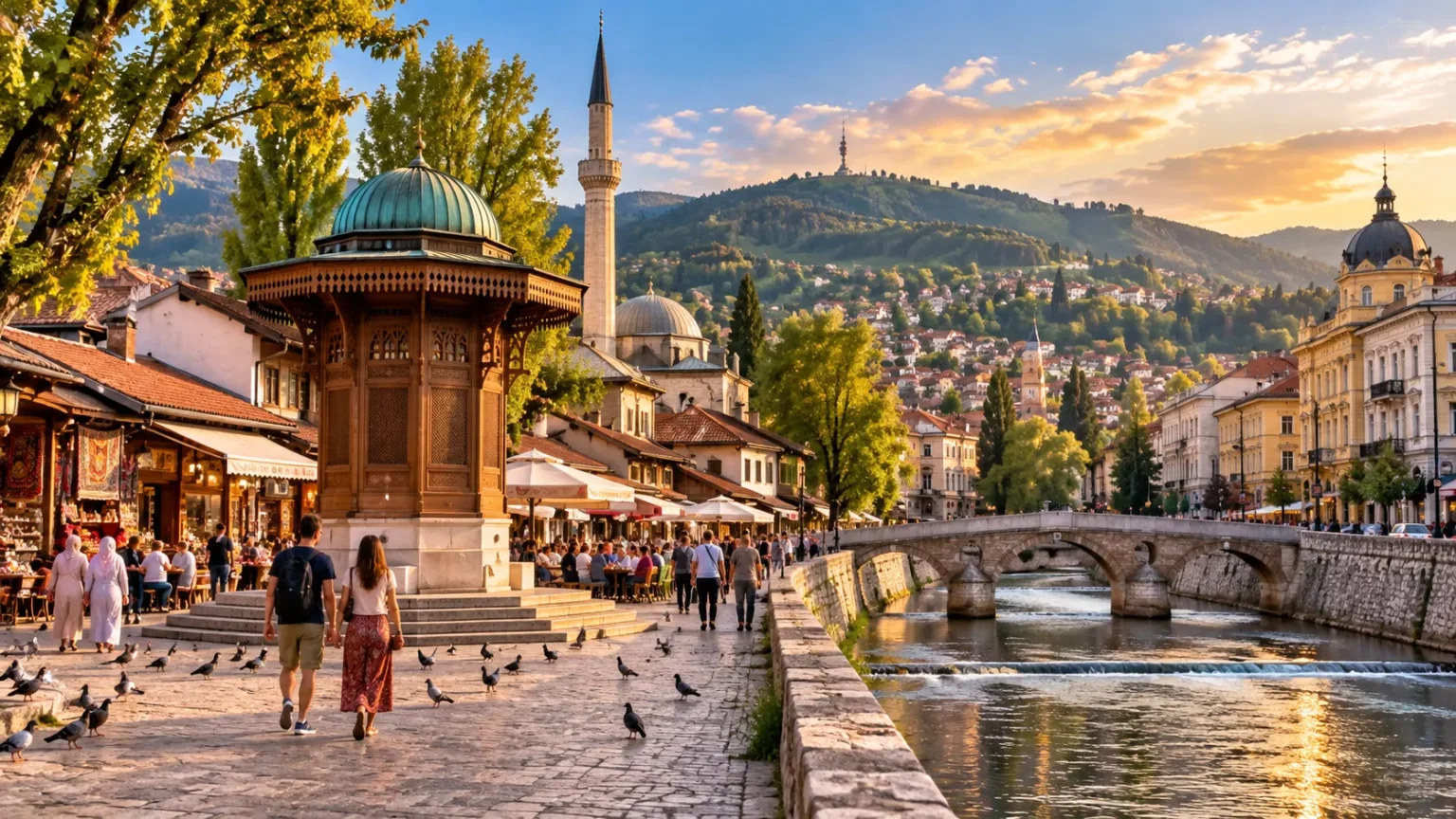
The Sebilj Fountain is one of Sarajevo’s most recognizable landmarks and stands in the heart of Baščaršija. Its distinctive wooden design reflects the city’s Ottoman heritage and makes it a popular gathering place. The fountain is frequently featured in photographs and travel images representing Sarajevo.
Visitors can admire the structure, explore the surrounding square, and watch daily activity around the marketplace. Pigeons are commonly found in the area, contributing to its familiar atmosphere. Nearby cafés and traditional shops provide convenient opportunities to relax while appreciating the historic surroundings.
The Sebilj Fountain is particularly attractive during early morning or evening when the square has a different atmosphere from its busiest hours. It is also a practical meeting point for exploring the Old Town. Combining the fountain with nearby cultural attractions creates an enjoyable walking route through central Sarajevo.
Discover the Historic Latin Bridge
The Latin Bridge is one of Sarajevo’s most historically significant landmarks, crossing the Miljacka River near the Old Town. The bridge is closely associated with the assassination of Archduke Franz Ferdinand in June 1914. This event contributed to the international crisis that preceded World War I.
The bridge itself is a relatively modest structure, but its historical importance makes it a major attraction for visitors interested in European history. The surrounding streets contain buildings and information that help explain the events of 1914. Travelers can explore the location while learning about the broader political circumstances of the period.
The nearby Museum of Sarajevo 1878–1918 offers additional historical context through exhibitions about the Austro-Hungarian period. Visiting the bridge and museum together provides a more complete understanding of the location’s significance. The area is accessible on foot from several central attractions.
Admire Sarajevo City Hall
Sarajevo City Hall, also known as Vijećnica, is one of the city’s most impressive architectural landmarks. The building was completed during the Austro-Hungarian period and features a distinctive architectural style influenced by Moorish design. Its colorful exterior and decorative interior make it a memorable destination.
The building suffered major destruction during the siege of Sarajevo in the 1990s and was subsequently restored. Today, it represents both the city’s architectural heritage and its efforts to preserve important cultural landmarks. Visitors can appreciate the restoration and learn about the building’s historical significance.
Sarajevo City Hall is located near the Miljacka River and within walking distance of Baščaršija. Depending on visitor access and exhibition schedules, travelers may be able to explore interior spaces. Checking current opening arrangements before visiting helps ensure a smoother sightseeing experience.
Explore Gazi Husrev-beg Mosque
Gazi Husrev-beg Mosque is one of Sarajevo’s most important religious and architectural landmarks. Built during the sixteenth century, it reflects the influence of Ottoman architecture and Islamic cultural heritage. The mosque remains an active place of worship and holds significant importance for the local community.
Visitors can appreciate its elegant architectural features, courtyard, and surrounding historic buildings. The complex is associated with a wider group of cultural and educational institutions established during the Ottoman period. These landmarks provide valuable insights into the development of Sarajevo as an important regional center.
Respectful behavior is essential when visiting religious sites. Travelers should follow clothing requirements, observe visitor rules, and avoid interrupting worshippers. Visiting during appropriate hours allows tourists to appreciate the mosque’s historical and architectural importance while respecting its continuing religious role.
Enjoy Panoramic Views From the Yellow Fortress
The Yellow Fortress, locally known as Žuta tabija, is a popular viewpoint overlooking Sarajevo. Located above the historic neighborhoods of Vratnik, it provides expansive views of the city’s rooftops, valley, and surrounding mountains. The viewpoint is especially appealing to photography enthusiasts.
Visitors often come to the Yellow Fortress during the late afternoon to watch changing light across Sarajevo. The elevated setting provides a different perspective on the city’s geography and urban development. Historic defensive structures in the surrounding area also contribute to the location’s cultural interest.
Reaching the viewpoint involves traveling uphill through residential streets, so comfortable footwear is recommended. The route may feel demanding during very hot weather or icy winter conditions. Allow sufficient time for the journey and follow local guidance regarding accessibility and safety.
Ride the Trebević Cable Car
The Trebević Cable Car is one of Sarajevo’s most enjoyable attractions for visitors interested in mountain scenery. It connects the city with the slopes of Mount Trebević, providing views of surrounding neighborhoods and forested landscapes. The journey offers a memorable contrast between urban Sarajevo and its natural environment.
At the upper station, visitors can enjoy mountain views and explore suitable nearby areas. The location is appealing for photography, fresh air, and relaxed outdoor experiences. Conditions and available facilities can vary according to the season and weather.
Travelers should check cable car operating schedules before planning their visit. Mountain temperatures may be cooler than those in the city center, making additional clothing useful. Combining the cable car with other Trebević attractions can create an enjoyable half-day excursion.
Discover the Abandoned Olympic Bobsleigh Track
The former Olympic bobsleigh and luge track on Mount Trebević is an unusual attraction connected to Sarajevo’s sporting history. The facility was built for the 1984 Winter Olympics, when Sarajevo hosted athletes and visitors from around the world. Its remains provide a visible connection to that major international event.
The track is no longer used for its original Olympic purpose and has become known for its concrete structure and urban artwork. Visitors interested in photography and historical infrastructure may find the location fascinating. The surrounding forest creates an unusual contrast with the former sporting facility.
Because parts of the site are aging and conditions may vary, visitors should remain on safe, publicly accessible routes and avoid unstable structures. Guided sightseeing can provide additional historical context. The attraction is best appreciated as a reminder of Sarajevo’s Olympic heritage rather than as an active sports facility.
Visit the Sarajevo Tunnel of Hope Museum
The Sarajevo Tunnel of Hope Museum is an important historical attraction explaining a significant aspect of the city’s experiences during the 1990s siege. The original tunnel provided a vital connection between parts of Sarajevo and areas beyond the surrounding blockade. Today, the museum presents historical information and preserved elements of the site.
Visitors can explore exhibitions that explain the tunnel’s construction, purpose, and historical significance. Photographs, artifacts, and interpretive materials provide context about civilian life during the conflict. The museum encourages reflection on the challenges experienced by the people of Sarajevo.
The museum is located outside the main historic center, near the airport area. Transportation may involve a taxi, organized tour, or a combination of public transit and walking. Allow adequate travel time and approach the exhibitions respectfully because they address sensitive historical experiences.
Explore Sarajevo’s Museums and Cultural Heritage
Sarajevo contains several museums that help visitors understand its diverse cultural and historical identity. Institutions cover subjects ranging from archaeology and ethnography to modern history and contemporary art. Including museums in your itinerary can provide additional context for the landmarks explored around the city.
The National Museum of Bosnia and Herzegovina is particularly important for its collections related to regional heritage and natural history. Other institutions focus on Sarajevo’s historical development and the experiences of its communities. Exhibitions offer opportunities to discover perspectives that may not be immediately visible through architecture alone.
Museum opening hours and ticket arrangements can change, especially during holidays or maintenance periods. Check visitor information before traveling and allow enough time to explore exhibitions thoughtfully. Combining cultural institutions with nearby attractions creates a balanced sightseeing experience.
Walk Along Ferhadija Street
Ferhadija Street is one of central Sarajevo’s most popular pedestrian areas, connecting the historic Ottoman section with neighborhoods influenced by Austro-Hungarian architecture. It provides an enjoyable opportunity to observe how different historical periods shaped the city. Shops, cafés, and impressive buildings line the route.
Walking along Ferhadija reveals changes in architectural style and urban design within a relatively short distance. Visitors can discover religious landmarks, public squares, and cultural attractions nearby. The area is also popular for shopping and relaxed city exploration.
Ferhadija is particularly convenient for travelers staying in central Sarajevo because several attractions are within walking distance. It can be explored during the day or evening, depending on personal preferences. Taking time to observe architectural details makes the walk more rewarding.
See the Eternal Flame Memorial
The Eternal Flame is a significant memorial located in central Sarajevo. It commemorates those associated with the liberation of the city during World War II. The monument stands near important streets and public spaces, making it accessible during a walking tour.
Visitors can observe the memorial and learn about its historical meaning within the context of Sarajevo’s twentieth-century history. Its presence reflects the city’s layered past and the different events that shaped local identity. The surrounding area also provides access to shopping streets and architectural landmarks.
The Eternal Flame is a place for respectful reflection rather than recreational entertainment. Travelers should treat the memorial and its surroundings with consideration. Including it in a walking itinerary offers an opportunity to understand another important chapter of Sarajevo’s history.
Discover the Religious Diversity of Sarajevo
Sarajevo is often described as a meeting place of different cultures and religious traditions. Its historic neighborhoods contain mosques, Catholic churches, Orthodox churches, and synagogues within relatively close distances. This concentration of religious landmarks reflects centuries of interaction between different communities.
Visitors can explore notable buildings such as the Sacred Heart Cathedral, the Orthodox Cathedral, and important Islamic heritage sites. Each offers insights into different architectural influences and historical experiences. Religious diversity is an essential part of understanding Sarajevo’s cultural character.
When visiting places of worship, follow entry requirements and behave respectfully toward religious activities. Photography rules and visitor access may differ between buildings. Learning about these traditions can help travelers appreciate the city’s history beyond its most famous tourist attractions.
Relax at Vrelo Bosne Nature Park
Vrelo Bosne is a beautiful natural area near Sarajevo, known for its springs, trees, waterways, and peaceful scenery. Located near Ilidža, it provides a refreshing alternative to busy city streets. The park is particularly appealing to families and travelers interested in relaxed outdoor experiences.
Visitors can enjoy walking paths, bridges, and views of the surrounding natural landscape. The area provides opportunities for photography and quiet exploration throughout suitable weather conditions. Its greenery is especially attractive during spring and summer, when plants and trees create a vibrant environment.
Vrelo Bosne can be reached through local transportation connections and additional travel arrangements from central Sarajevo. Allow enough time to enjoy the surroundings without rushing. Following park rules and protecting the natural environment helps preserve the area for future visitors.
Experience Sarajevo’s Beautiful Surrounding Mountains
Sarajevo’s surrounding mountains are among its most distinctive geographical features. Trebević, Bjelašnica, Igman, and Jahorina provide varied scenery and seasonal tourism opportunities. Their proximity to the capital makes it possible to combine urban attractions with mountain experiences during one trip.
In winter, some mountain areas become popular destinations for skiing and other seasonal recreation. During warmer months, visitors may enjoy scenic viewpoints and designated nature areas. Available activities depend on weather, local facilities, and individual experience levels.
Mountain conditions can change quickly, so visitors should prepare carefully and follow appropriate local guidance. Choose established routes and activities suited to your abilities. The natural landscapes surrounding Sarajevo provide memorable scenery without requiring demanding outdoor adventures.
Discover Traditional Bosnian Food
Traditional Bosnian cuisine is one of the highlights of visiting Sarajevo. The city’s food culture reflects influences from different historical periods and communities. Restaurants, bakeries, and traditional eateries provide opportunities to experience local ingredients, cooking methods, and regional specialties.
Ćevapi, small grilled portions of seasoned minced meat commonly served with bread, are among Sarajevo’s best-known dishes. Visitors may also enjoy burek, other savory pies, soups, and traditional desserts. Different establishments prepare these foods according to their own recipes and family traditions.
Exploring local cuisine can be an enjoyable way to connect with Sarajevo’s cultural identity. Travelers with dietary restrictions should ask about ingredients and preparation methods when necessary. Choosing reputable food establishments and trying different regional dishes can add variety to the travel experience.
Experience Traditional Bosnian Coffee Culture
Bosnian coffee is an important part of Sarajevo’s social traditions and everyday hospitality. It is commonly prepared and served using distinctive equipment and presentation methods. Coffee houses throughout the city provide places where people gather, talk, and spend time together.
Visitors can discover traditional coffee settings in Baščaršija and other central neighborhoods. The experience often emphasizes taking time to enjoy conversation and the surrounding atmosphere. Learning about local serving customs can provide a more meaningful cultural experience than simply ordering a familiar drink.
Coffee culture is only one aspect of Sarajevo’s broader social life, but it remains a recognizable local tradition. Travelers who prefer other beverages can still enjoy the atmosphere of traditional cafés. The experience provides a pleasant opportunity to rest between sightseeing activities.
What Is the Best Time to Visit Sarajevo?
The best time to visit Sarajevo depends on your preferred weather and activities. Spring and early autumn are often appealing because temperatures are generally comfortable for exploring historic streets and outdoor attractions. April, May, September, and October can provide pleasant conditions, although rainfall remains possible.
Summer is popular for cultural events, city sightseeing, and visiting the surrounding mountains. Temperatures can become warm during the day, particularly in central urban areas. Travelers may prefer exploring major attractions earlier in the morning or later in the afternoon during hotter periods.
Winter brings colder temperatures and the possibility of snow, creating a different atmosphere across Sarajevo and nearby mountain destinations. Seasonal conditions may affect transportation and outdoor activities. Checking current weather forecasts helps visitors prepare suitable clothing and realistic sightseeing plans.
How Many Days Do You Need in Sarajevo?
Two to three days can provide a useful introduction to Sarajevo’s most famous attractions. Travelers can explore Baščaršija, the Latin Bridge, Sarajevo City Hall, and several cultural landmarks without needing an overly complicated itinerary. Additional time allows for a more relaxed experience.
A longer stay of four or five days can include the Tunnel of Hope Museum, Vrelo Bosne, and Mount Trebević. Visitors may also explore nearby communities or enjoy additional museums and local restaurants. The ideal duration depends on sightseeing interests and transportation preferences.
Avoid scheduling too many attractions within a single day, particularly when some require travel outside the city center. Sarajevo is rewarding when explored at a comfortable pace. Allowing time for unplanned discoveries can make the trip more enjoyable and memorable.
How to Get Around Sarajevo
Sarajevo offers several transportation options, including trams, buses, taxis, and walking routes. Much of the historic center can be explored on foot because important attractions are located relatively close together. Public transportation provides connections to other neighborhoods and surrounding areas.
The city’s tram network is a recognizable part of local transportation and can be useful for reaching selected destinations. Bus connections and other services extend access beyond central streets. Travelers should verify current routes, schedules, and ticket arrangements because operational details can change.
Taxis and authorized transportation services may be convenient for reaching destinations that are less accessible by public transit. Use reputable providers and confirm expected fares when appropriate. Planning attractions by area helps reduce unnecessary travel time and makes sightseeing easier.
Where to Stay in Sarajevo
Sarajevo offers accommodation options ranging from traditional guesthouses to modern hotels and apartments. Baščaršija and the surrounding central neighborhoods are popular with travelers who want convenient access to historic attractions. Staying nearby can make walking tours and evening sightseeing easier.
Other central districts may provide quieter accommodation while maintaining access to restaurants, transportation, and cultural landmarks. Visitors who prefer modern facilities can compare hotels in different parts of the city. Accommodation prices vary according to location, season, and available services.
Before booking, review transportation connections, accessibility, guest feedback, and cancellation policies. Some historic neighborhoods contain sloping streets or older buildings without modern accessibility features. Selecting accommodation according to your needs helps create a more comfortable travel experience.
How Much Does a Trip to Sarajevo Cost?
Sarajevo can offer good value compared with several other European capitals, although actual expenses depend on travel preferences and seasonal demand. Accommodation, dining, transportation, and attraction fees influence the overall budget. Travelers can choose different levels of comfort according to available resources.
Local restaurants, bakeries, and public transportation may provide affordable options for everyday activities. Guided tours, specialized excursions, and more luxurious accommodation can increase costs. Comparing prices before booking helps travelers identify choices that match their intended spending.
Bosnia and Herzegovina uses the convertible mark, commonly abbreviated BAM or KM. Cash can be useful for smaller purchases, while card acceptance varies by business. A realistic travel budget should include transportation, meals, admission fees, and an allowance for unexpected expenses.
Plan a Three-Day Sarajevo Travel Itinerary
A three-day itinerary provides enough time to explore several important attractions while enjoying Sarajevo’s local atmosphere. On the first day, begin with Baščaršija, Sebilj Fountain, and the nearby historic streets. Continue toward the Latin Bridge and Sarajevo City Hall to discover important cultural landmarks.
The second day can focus on museums and Sarajevo’s more recent history. Consider visiting the Tunnel of Hope Museum and selected central cultural institutions. In the afternoon, explore Ferhadija Street, discover religious landmarks, or enjoy traditional Bosnian food.
On the third day, visit Mount Trebević using available transportation or enjoy the natural scenery around Vrelo Bosne. Travelers who prefer city attractions can explore additional museums or historic neighborhoods. Keeping the schedule flexible provides room for changing weather and personal interests.
Practical Travel Tips for First-Time Visitors
First-time visitors should prepare for Sarajevo’s mixture of historic streets, hills, and changing seasonal weather. Comfortable footwear is useful because several attractions involve walking on uneven surfaces. Carry suitable clothing for the season and check forecasts before planning outdoor excursions.
English is commonly used in many tourism-related settings, although learning basic greetings in the local language can support friendly interactions. Visitors should also respect cultural customs and follow rules at religious sites. Understanding local history before visiting museums and memorials can make the experience more meaningful.
Check passport and visa requirements based on your nationality before traveling to Bosnia and Herzegovina. Keep essential documents accessible and choose reputable transportation providers. Thoughtful preparation helps reduce unnecessary complications while allowing more time to appreciate Sarajevo’s attractions.
Conclusion
Sarajevo is an extraordinary European destination where fascinating history, cultural diversity, and beautiful mountain scenery come together. From the historic streets of Baščaršija to the Latin Bridge, Sarajevo City Hall, and Mount Trebević, the city offers experiences for travelers with different interests. Its museums, religious landmarks, and traditional neighborhoods provide valuable insights into Bosnia and Herzegovina’s heritage.
The best things to do in Sarajevo extend beyond visiting major tourist attractions. Exploring local cuisine, experiencing traditional coffee culture, and enjoying the surrounding natural landscapes can make the journey more memorable. Visitors can also learn about the city’s complex history through thoughtful visits to museums and memorials.
Whether you are planning a short city break or a longer trip through the Balkans, Sarajevo deserves a place on your travel itinerary. Choose suitable travel dates, explore the historic center at a comfortable pace, and allow time for nearby natural attractions. With its distinctive atmosphere and remarkable cultural heritage, Sarajevo offers a rewarding travel experience.
FAQs
Is Sarajevo worth visiting for tourists?
Yes, Sarajevo offers fascinating history, beautiful architecture, traditional food, museums, and mountain scenery. Its combination of Ottoman and European cultural influences makes it one of the Balkans’ most distinctive destinations.
What is Sarajevo most famous for?
Sarajevo is famous for Baščaršija Old Town, the Latin Bridge, religious diversity, the 1984 Winter Olympics, and its important European history. Traditional Bosnian food is another major attraction.
How many days are enough to visit Sarajevo?
Two to three days are enough to explore many central attractions. Four or five days provide additional time for museums, Mount Trebević, Vrelo Bosne, and nearby destinations.
What is the best month to visit Sarajevo?
May, June, September, and early October are appealing for many visitors because temperatures are generally suitable for sightseeing. Winter is also attractive for snowy scenery and nearby mountain recreation.
Is Sarajevo an expensive city to visit?
Sarajevo can be relatively affordable compared with many European capitals. Actual costs depend on accommodation, transportation, dining, and activities, but travelers can find options for different budgets.