




This Macau travel guide explores the best things to do in Macau, including famous tourist attractions, UNESCO World Heritage sites, traditional food, and family-friendly places. From the historic Ruins of St. Paul’s to the colorful streets of Taipa Village, visitors can discover many different sides of the city. With thoughtful planning, even a short Macau vacation can provide a rewarding combination of sightseeing, culture, and relaxation.
Why Macau Is Worth Visiting
Macau is a special administrative region of China where Chinese traditions and Portuguese influences remain visible in everyday life. Its streets bring together tiled squares, traditional temples, pastel-colored buildings, and busy food stalls. Travelers who enjoy history, architecture, and culinary discoveries can experience remarkably different atmospheres within a relatively small destination.
One of the most interesting things about Macau is how traditional landmarks exist alongside contemporary architecture and modern entertainment districts. Visitors can explore centuries-old religious sites in the morning and admire illuminated buildings during the evening. This contrast creates a distinctive atmosphere that separates Macau from many other popular destinations in Asia.
Macau is also convenient for travelers planning a short trip from Hong Kong or exploring several destinations in southern China. Its relatively compact geography allows visitors to experience multiple neighborhoods without spending entire days traveling between attractions. A balanced itinerary can include historical sightseeing, local food, outdoor spaces, and cultural experiences.
Explore Senado Square and Macau’s Historic Centre
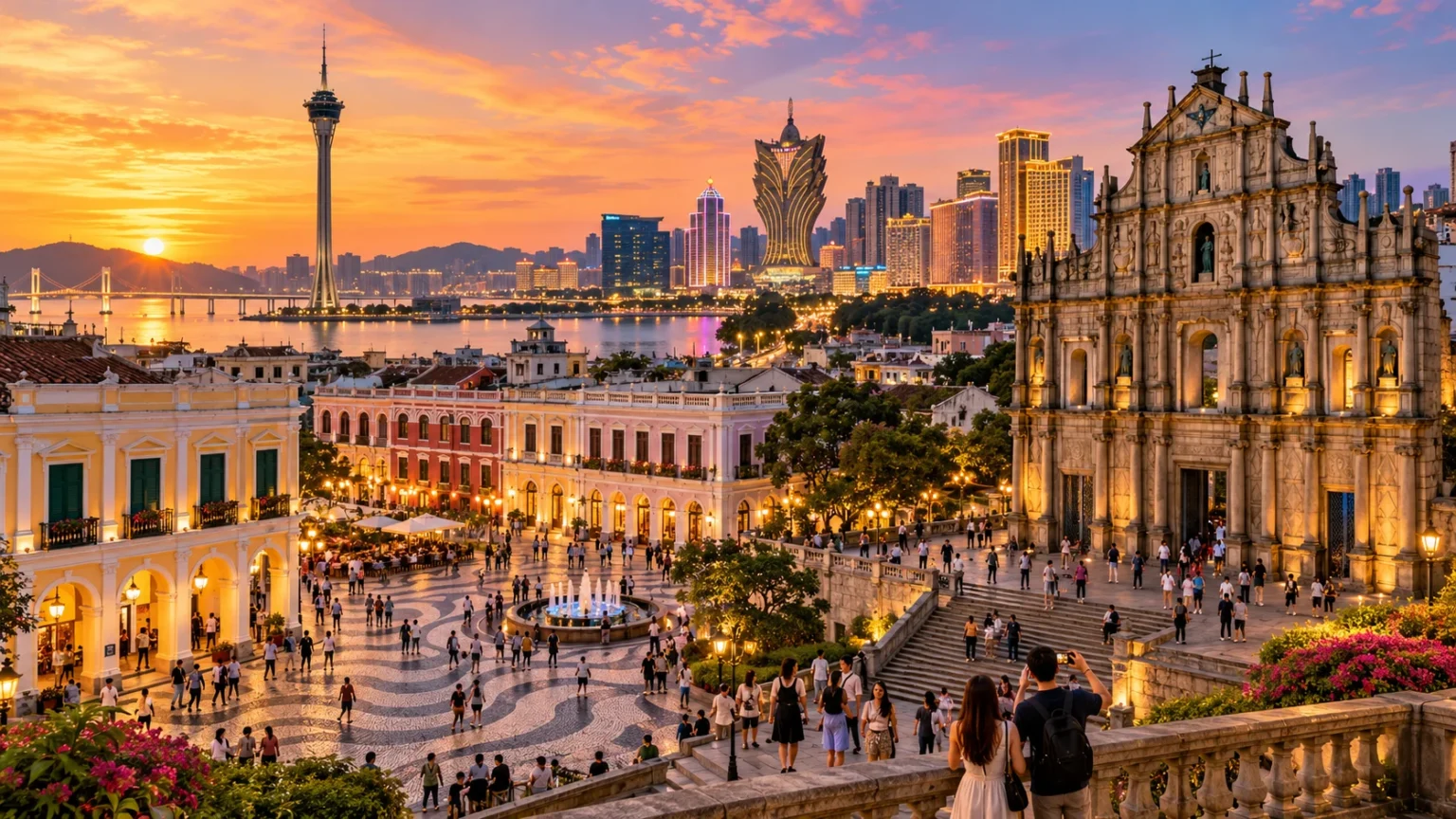
Senado Square is one of the most recognizable Macau tourist attractions and an excellent starting point for exploring the historic city center. This beautiful public square features wave-patterned pavement, colorful buildings, and attractive architectural details influenced by Portuguese design. Its lively surroundings create a memorable setting for photography, shopping, and discovering Macau’s cultural heritage.
The square forms part of the Historic Centre of Macao, a UNESCO World Heritage Site recognized for its significant architectural and cultural history. Walking through the surrounding streets reveals traditional shops, historical buildings, and interesting examples of Chinese and European influences. The pedestrian-friendly environment makes this area particularly enjoyable for first-time visitors.
Nearby St. Dominic’s Church adds another interesting architectural highlight to a walking tour of central Macau. Its distinctive yellow facade and historic character reflect the city’s religious and cultural heritage. Allow enough time to explore the surrounding streets instead of visiting only the major landmarks, because smaller discoveries often make the experience more rewarding.
Visit the Famous Ruins of St. Paul’s and Monte Fort
The Ruins of St. Paul’s are among the most famous places to visit in Macau and represent an important part of the city’s history. The surviving stone facade once belonged to a seventeenth-century church that was largely destroyed by fire in 1835. Today, its impressive carvings and grand staircase attract visitors interested in architecture and historical photography.
Walking toward the ruins through the surrounding streets provides opportunities to discover traditional bakeries, souvenir shops, and historic architectural details. The monument looks especially striking when viewed from the steps below its magnificent stone facade. Visiting earlier in the day can provide a more comfortable experience before larger sightseeing crowds arrive.
Monte Fort, also known as Fortaleza do Monte, is another important historical attraction located near the ruins. Built during the seventeenth century, this former defensive structure offers impressive views across the surrounding urban landscape. Visitors can explore its outdoor areas, observe historical features, and appreciate how Macau developed around its elevated defensive position.
Discover A-Ma Temple and Mandarin’s House
A-Ma Temple is one of Macau’s oldest and most culturally significant religious landmarks. Dedicated to the sea goddess Mazu, the temple reflects the maritime traditions and spiritual beliefs that shaped the region’s history. Its traditional architecture, decorative carvings, and peaceful atmosphere provide a fascinating contrast to the city’s modern commercial areas.
The temple complex contains several interconnected spaces where visitors can observe traditional architectural features and learn about local religious customs. Incense, stone pathways, and decorative details contribute to its distinctive atmosphere. Travelers should explore respectfully, follow posted guidance, and avoid disturbing people who are participating in religious activities.
Mandarin’s House is another fascinating heritage attraction that demonstrates the architectural connections between Chinese traditions and Western influences. This historic residential complex features courtyards, decorative details, and thoughtfully arranged interior spaces. Visiting both landmarks provides valuable insight into Macau’s cultural history while introducing travelers to a quieter side of the city.
Enjoy Panoramic Views at Guia Fortress and Macau Tower
Guia Fortress offers visitors an opportunity to experience Macau’s historical defenses while enjoying elevated views of the surrounding city. The complex includes a chapel and a historic lighthouse that became important landmarks in the region’s maritime history. Its hilltop setting makes it appealing to travelers who appreciate architecture, outdoor exploration, and scenic viewpoints.
The surrounding area provides opportunities for relaxed walking and observing Macau from a different perspective. Visitors can admire the contrast between older neighborhoods and contemporary buildings across the skyline. Comfortable footwear is useful because reaching elevated attractions may involve slopes, steps, or longer walks than some visitors expect.
Macau Tower provides another memorable sightseeing experience through its observation facilities and panoramic urban views. From its elevated viewing areas, visitors can appreciate the waterfront, surrounding islands, and distinctive city landscape. It is particularly attractive for photography enthusiasts who want to capture Macau’s combination of natural surroundings and modern architecture.
Wander Through Taipa Village and Taipa Houses
Taipa Village is one of the most charming areas to explore during a Macau vacation because it combines traditional streets with colorful architecture. The neighborhood features narrow pedestrian lanes, local restaurants, small shops, and historical buildings. Walking through Taipa allows visitors to experience a more intimate neighborhood atmosphere away from some of the busiest modern districts.
Rua do Cunha is a particularly popular pedestrian street known for its traditional snacks and local specialty shops. Visitors can explore bakeries, discover regional treats, and enjoy the lively atmosphere surrounding the neighborhood. Its compact setting makes it easy to combine food discoveries with a relaxed walking tour of nearby streets.
The Taipa Houses provide another worthwhile sightseeing stop, featuring beautifully preserved Portuguese-style residences painted in attractive pastel colors. These buildings reflect aspects of Macau’s architectural heritage and changing residential history. The surrounding landscaped spaces create a pleasant environment for photographs, cultural exploration, and enjoying a quieter moment during a busy sightseeing day.
Experience Macau’s Modern Architecture and Entertainment Districts
Modern Macau is known for its impressive architecture, large shopping complexes, and distinctive illuminated buildings. The Cotai district showcases a contemporary side of the destination, with expansive public areas and elaborate architectural designs. Visitors can explore shopping spaces, admire decorative interiors, and discover cultural displays or family-friendly entertainment where available.
Large developments in this area feature attractive indoor environments inspired by different architectural traditions. Travelers interested in photography may enjoy the detailed facades, spacious corridors, and colorful decorative features. Visiting during the evening also reveals a different atmosphere as exterior lighting transforms many of the district’s recognizable buildings.
Macau’s modern attractions can provide a useful contrast to the historical landmarks found on the peninsula. Families may prefer exploring public shopping areas, exhibitions, and suitable indoor activities during particularly hot or rainy weather. Checking attraction schedules and age requirements in advance helps visitors choose experiences appropriate for everyone traveling together.
Relax in Coloane Village and Hac Sa Beach
Coloane Village offers a quieter atmosphere that feels noticeably different from Macau’s busy historic streets and commercial districts. This traditional coastal community features narrow lanes, local shops, historic buildings, and views toward the nearby waterfront. Its relaxed setting makes it particularly appealing to travelers who enjoy exploring neighborhoods at a comfortable pace.
The Chapel of St. Francis Xavier is one of Coloane Village’s recognizable landmarks, featuring an attractive cream-colored exterior and peaceful surroundings. Visitors can admire the architecture while exploring nearby streets and traditional food shops. The village provides a rewarding opportunity to observe a different aspect of Macau’s history and community life.
Hac Sa Beach is another popular outdoor destination on Coloane, known for its broad shoreline and distinctive darker sand. The surrounding area offers space for coastal walks, photography, and enjoying the natural landscape. Visitors should follow local safety notices and check weather conditions before planning beach activities, especially during periods of heavy rain or strong winds.
Try Traditional Macanese Food and Local Street Snacks
Exploring Macau’s food culture is one of the most enjoyable parts of visiting the destination. Macanese cuisine reflects a fascinating combination of Chinese and Portuguese influences, shaped by centuries of cultural exchange. Visitors can discover traditional dishes, regional desserts, and familiar comfort foods prepared with distinctive local ingredients and cooking techniques.
Portuguese-style egg tarts are among Macau’s best-known sweet treats, featuring flaky pastry and a creamy baked custard filling. Almond cookies, egg rolls, and other traditional bakery products are also popular among travelers exploring local food shops. Taipa Village and the historic center provide convenient opportunities to discover these specialties while sightseeing.
Travelers interested in savory dishes can explore options such as African chicken, minchi, and Portuguese-influenced seafood preparations. Local menus offer opportunities to understand how different culinary traditions developed into Macau’s distinctive food identity. Trying a selection of regional dishes can make the journey more memorable while supporting businesses that preserve traditional cooking practices.
Visit Macau’s Museums and Cultural Attractions
Macau has several museums that offer opportunities to learn about the region’s history, traditions, and creative achievements. The Macao Museum introduces visitors to the city’s cultural development through historical displays and educational exhibits. Its location within Monte Fort makes it convenient to include during a visit to the surrounding heritage attractions.
The Macao Grand Prix Museum presents the history of the city’s well-known international motorsport event through vehicles, displays, and interactive exhibitions. Visitors can learn about the event’s development and its connection to Macau’s cultural identity. The museum offers an educational experience that may appeal to families and travelers interested in automotive history.
The Macao Science Center is another worthwhile destination for visitors who enjoy interactive learning and science-related exhibits. Its distinctive modern architecture also makes it an interesting subject for photography. Including one or two museums in your itinerary provides a useful indoor alternative when the weather makes extended outdoor sightseeing uncomfortable.
Best Time to Visit Macau and What to Pack
October and November are generally among the best months to visit Macau because the weather is often milder and less humid. These conditions can make walking tours, outdoor photography, and exploring historical landmarks more comfortable. Autumn is particularly appealing for travelers planning to spend significant time visiting outdoor attractions.
Spring can also be enjoyable, although humidity and rainfall may gradually increase as the warmer months approach. Summer typically brings hot, humid conditions and more frequent rainfall, which can make long outdoor sightseeing sessions tiring. Tropical cyclones can affect Macau, particularly during the warmer months, so checking weather warnings is important before traveling.
Pack lightweight clothing suitable for the season, comfortable walking shoes, and a compact umbrella or waterproof jacket. A reusable water bottle and suitable sun protection can make exploring outdoor attractions more convenient. During cooler months, carrying a light jacket or additional layers is helpful because temperatures may vary throughout the day.
How to Get Around Macau and Plan Your Travel Itinerary
Macau has public buses, taxis, and a light rapid transit system connecting several important districts and transportation hubs. Walking is especially convenient within the historic center, where major attractions are relatively close together. Visitors traveling between the peninsula, Taipa, Cotai, and Coloane should allow additional time and confirm suitable transport connections.
Travelers arriving from Hong Kong can consider ferry services or road connections through the Hong Kong–Zhuhai–Macao Bridge. Macau International Airport also provides access for visitors arriving by air. Before departure, check entry requirements for your nationality, transportation schedules, and current border procedures because these details can change.
A two-day Macau itinerary can begin with Senado Square, the Ruins of St. Paul’s, Monte Fort, and nearby historical attractions. On the second day, explore Taipa Village, visit the Taipa Houses, and continue toward Coloane or modern Cotai attractions. Travelers with an additional day can enjoy museums, waterfront sightseeing, and local food experiences at a more relaxed pace.
Conclusion
Macau is an exciting travel destination that brings together rich cultural heritage, fascinating architecture, traditional cuisine, and modern urban experiences. From the historic streets surrounding Senado Square to the beautiful temples and coastal landscapes of Coloane, visitors can discover many sides of this remarkable destination. Its distinctive combination of Chinese and Portuguese influences makes the city particularly memorable.
Planning a successful Macau trip involves balancing major tourist attractions with quieter neighborhoods and meaningful cultural experiences. Exploring historical landmarks, trying traditional Macanese food, and visiting local museums provide a deeper appreciation of the destination. Convenient transportation and a thoughtfully organized itinerary can make even a relatively short visit enjoyable.
Whether you’re planning a weekend getaway or including Macau in a longer Asian vacation, the city offers rewarding experiences for different travel interests. Take time to explore its history, appreciate its architecture, and discover the local food culture. With the right planning, Macau can become a memorable highlight of your journey through southern China.
Frequently Asked Questions (FAQs)
What is Macau best known for?
Macau is famous for its Portuguese-influenced architecture, UNESCO-listed historic center, the Ruins of St. Paul’s, traditional Chinese temples, modern entertainment districts, and Macanese cuisine. Its cultural diversity makes it a distinctive Asian destination.
How many days are enough to visit Macau?
Two to three days are generally enough to explore Macau’s major tourist attractions, historic neighborhoods, and traditional food culture. Additional time allows for museums, coastal areas, and more relaxed sightseeing.
What are the best free things to do in Macau?
Popular free activities include exploring Senado Square, admiring the Ruins of St. Paul’s, walking through Taipa Village, visiting public temple areas, and enjoying the coastal scenery around Coloane and Hac Sa Beach.
What is the best month to visit Macau?
October and November are often excellent months for visiting Macau because temperatures are generally more comfortable and humidity is lower. Travelers should still monitor weather forecasts and any seasonal storm warnings.
Is Macau worth visiting for a day trip?
Yes, Macau can be an enjoyable day trip, particularly from Hong Kong. Visitors can explore the historic center, admire famous landmarks, and sample traditional local food, although an overnight stay allows more time for sightseeing.