




Japan can feel both exciting and overwhelming on a first visit because the country offers futuristic cities, centuries-old temples, peaceful gardens, mountain scenery, coastal landscapes, and some of the world’s most distinctive food culture. Fortunately, many of its most rewarding destinations connect easily, making it possible to experience several different sides of Japan in one trip.
For most first-time visitors, a balanced itinerary combines major cities such as Tokyo, Kyoto, and Osaka with at least one smaller historic or scenic destination. The best places to visit in Japan depend on whether you prefer culture, food, nature, shopping, or history, but the destinations below provide an excellent starting point for discovering the country without making your itinerary unnecessarily complicated.
Why Japan Is Ideal for First-Time Visitors
Japan offers an unusual combination of modern convenience and deeply preserved tradition. You can spend the morning exploring a historic temple district and the evening surrounded by illuminated skyscrapers, department stores, and entertainment areas. This contrast gives first-time travelers a broad experience even when they only have one or two weeks available.
Public transportation also makes it practical to connect several major destinations without renting a car. Trains link large cities, while local rail and bus networks reach many nearby attractions. Once you understand basic station signs and ticketing, moving between destinations becomes part of the travel experience rather than an obstacle.
Japan is also rewarding for different travel styles. Food lovers can build entire days around markets and neighborhood restaurants, while history enthusiasts can explore castles, temples, shrines, and preserved districts. Nature lovers can add mountain towns, lakes, forests, and coastal scenery without abandoning the classic first-time route.
Tokyo for Modern Japan and Endless Neighborhoods
Tokyo is the best introduction to modern Japan for many first-time visitors. The city feels enormous, but it becomes easier to understand when you treat it as a collection of distinct neighborhoods. Shibuya, Shinjuku, Asakusa, Ginza, Akihabara, and Harajuku each offer different atmospheres, attractions, restaurants, and shopping experiences.
Asakusa provides a more traditional side of Tokyo with temples, older streets, small shops, and riverside walks. Shibuya and Shinjuku deliver the fast-paced city experience many travelers imagine before arriving in Japan. Moving between these areas shows how easily modern architecture, historic religious sites, quiet residential streets, and entertainment districts coexist.
Give Tokyo enough time rather than treating it only as an arrival point. Three or four full days allow you to explore several neighborhoods without spending the entire trip rushing between train stations. Food markets, observation decks, museums, gardens, shopping districts, and nightlife can easily fill additional days if your schedule allows.
Kyoto for Temples, Shrines, and Traditional Culture
Kyoto is essential for travelers who want to experience Japan’s traditional architecture and cultural heritage. The city is known for temples, shrines, gardens, old neighborhoods, tea houses, and preserved streets. Unlike Tokyo, many of Kyoto’s most memorable experiences involve slower walks through historic areas rather than large-scale urban attractions.
Popular areas include Fushimi Inari, Arashiyama, Gion, Higashiyama, and the districts surrounding the city’s famous temples. Early mornings can be especially rewarding because the atmosphere feels quieter before popular areas become busy. Rather than attempting to see every temple, choose several that offer different architecture, gardens, or surrounding scenery.
Kyoto deserves at least two or three full days on a first trip. Group nearby attractions together so you spend more time exploring and less time crossing the city. Leaving some unscheduled time for narrow streets, small cafés, gardens, and local neighborhoods can create some of the most memorable moments of the entire journey.
Osaka for Food, Nightlife, and a Livelier Atmosphere
Osaka provides a more relaxed and energetic contrast to Kyoto. The city is particularly famous for food, nightlife, shopping, and entertainment, making it a good choice after several days of temples and cultural sightseeing. Areas such as Dotonbori and Namba come alive after dark with illuminated signs, restaurants, and crowds.
Osaka Castle provides a historical element, while markets and shopping streets give visitors another look at everyday urban life. Food should be an important part of your time here, whether you try street snacks, casual restaurants, or regional specialties. The atmosphere often feels more informal than Tokyo, which many visitors find refreshing.
You can stay in Osaka for several nights or visit as a day trip from Kyoto, depending on your itinerary. Staying overnight makes more sense if you want to experience the city’s evening energy. Osaka can also serve as a practical base for exploring other destinations in the Kansai region without constantly changing hotels.
Nara for Temples, History, and an Easy Day Trip
Nara is one of the easiest historic destinations to add to a first Japan itinerary. Once an important ancient capital, it offers impressive temples, shrines, traditional gardens, and a large park area. The city feels calmer than Tokyo or Osaka and provides a welcome change of pace during a busy multi-city trip.
Nara Park is famous for its freely roaming deer, but the historical attractions deserve equal attention. Large temple complexes, lantern-lined paths, and wooded areas create an atmosphere that feels completely different from Japan’s major cities. Many important sights are close enough together to explore comfortably on foot.
Most first-time travelers can experience Nara as a day trip from Kyoto or Osaka. Arrive earlier in the day so you have enough time to explore beyond the most crowded areas near the station. A slower walk through the park and temple districts makes the visit feel far more rewarding than rushing between a few famous photo spots.
Mount Fuji and Hakone for Scenic Japan
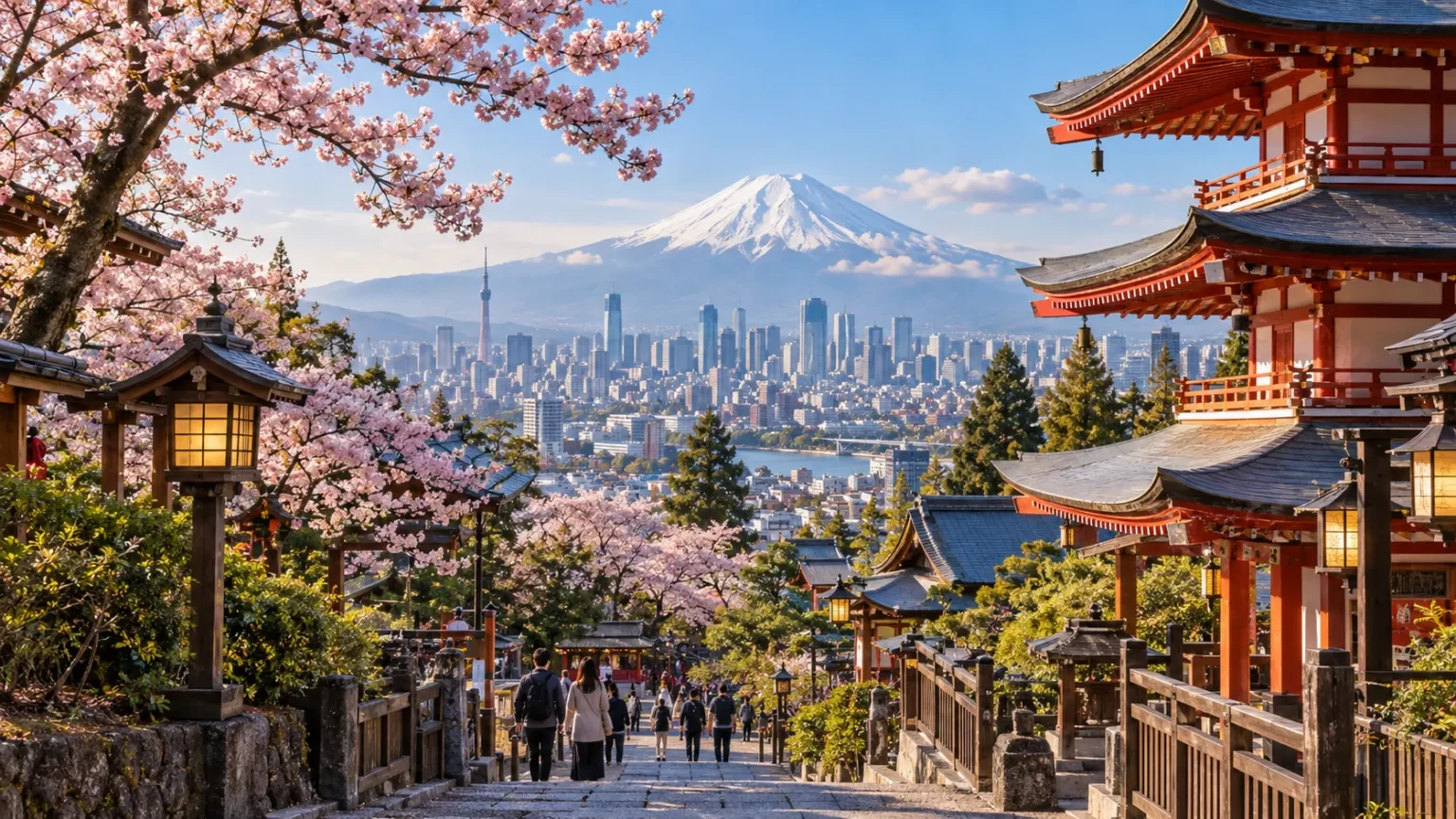
Adding Mount Fuji or the surrounding region gives first-time visitors a break from dense urban sightseeing. The mountain is one of Japan’s most recognizable landmarks, but weather conditions determine whether you will actually see it clearly. Building some flexibility into your itinerary can improve your chances of enjoying the surrounding scenery.
Hakone is a popular option because it combines mountain views, lake scenery, hot-spring culture, museums, and transportation connections between Tokyo and western Japan. Staying overnight allows you to experience a slower atmosphere and potentially enjoy a traditional-style inn. It can feel especially relaxing after several demanding days exploring Tokyo.
Another option is the Fuji Five Lakes region, where the mountain dominates the landscape when visibility is good. This area appeals particularly to photographers and travelers who want outdoor scenery. Whether you choose Hakone or a Fuji-focused stay, one or two nights can add valuable variety to a first-time itinerary.
Hiroshima and Miyajima for History and Island Scenery
Hiroshima offers an important historical experience that adds depth to a Japan trip. The city’s memorial sites provide opportunities to reflect on its wartime history, while modern Hiroshima demonstrates how completely the city has developed since then. Allow enough time to explore thoughtfully rather than treating the city as a quick sightseeing stop.
Nearby Miyajima creates a completely different atmosphere. The island is known for its waterfront shrine, forested hills, traditional streets, and coastal views. Spending several hours there allows you to combine cultural sightseeing with quieter natural scenery, making Hiroshima and Miyajima work particularly well as a two-part destination.
Travelers with roughly two weeks in Japan can add Hiroshima more comfortably than those on a very short itinerary. Staying overnight can make the experience less rushed and gives you flexibility for Miyajima. The combination provides history, food, urban exploration, religious sites, and island scenery within a relatively compact portion of the trip.
Kanazawa for Traditional Districts Without the Same Pace
Kanazawa is an excellent addition for travelers who want traditional architecture and cultural attractions beyond Kyoto. The city is known for preserved districts, gardens, markets, crafts, and historic residences. It feels substantial enough to offer plenty to explore while remaining easier to navigate than Japan’s largest metropolitan areas.
One of Kanazawa’s strengths is variety. You can explore landscaped gardens, traditional neighborhoods, museums, old merchant areas, and a lively food market without traveling huge distances. The city is especially appealing to visitors interested in Japanese craftsmanship, design, seafood, and historic urban architecture.
Kanazawa usually fits better into longer first-time itineraries because Tokyo and Kyoto remain higher priorities when time is limited. With ten days to two weeks or more, however, it can add a valuable quieter stop. Staying one or two nights gives you enough time to enjoy the city’s atmosphere without rushing.
Nikko for Shrines, Forests, and a Tokyo Escape
Nikko is a strong choice for travelers who want history and nature without traveling far into a completely different region. The area combines elaborate shrines and temples with forested surroundings, mountain landscapes, and a cooler atmosphere. It feels noticeably removed from Tokyo despite being practical to visit from the capital.
The historic religious sites are the main attraction for most first-time visitors. Intricate architecture, gates, stone paths, and towering trees create a setting that feels more immersive than a typical city temple visit. Travelers who have extra time can continue farther into the surrounding region for waterfalls, lakes, and scenic viewpoints.
Nikko works as either a day trip or an overnight stay. A day trip is convenient if your itinerary is tight, while staying overnight allows you to explore at a slower pace and enjoy the quieter surroundings. It is an especially useful addition if you want nature without removing Kyoto or Osaka from your first trip.
Best Time to Visit Japan for Your First Trip
Spring is one of the most popular seasons because temperatures are often comfortable and seasonal blossoms transform parks, temples, and riversides. The exact timing of flowering varies by location and year, so avoid building the entire trip around seeing one specific landscape. Popular destinations can also become extremely busy during peak periods.
Autumn is another excellent option because cooler weather makes long sightseeing days more comfortable. Changing leaves can add dramatic color to temples, gardens, mountains, and traditional districts. Travelers who enjoy walking and photography often find the combination of pleasant temperatures and seasonal scenery particularly attractive.
Summer can be hot and humid in many major cities, while winter offers fewer crowds in some areas and beautiful seasonal landscapes. There is no single perfect month for every traveler. Your ideal timing depends on whether you prioritize blossoms, fall colors, outdoor activities, lower crowds, winter scenery, or warm-weather events.
How to Plan a First-Time Japan Itinerary
For a trip of around one week, focus primarily on Tokyo and Kyoto rather than trying to cross the entire country. Add a day trip such as Nara if your schedule allows. Fewer bases mean less time packing bags, finding hotels, and navigating stations, leaving more hours for actual sightseeing and food experiences.
With ten to fourteen days, you can comfortably add Osaka, Hakone or the Mount Fuji region, and possibly Hiroshima. A longer trip can include Kanazawa, Nikko, or another regional destination without making every day a transportation day. The best itinerary balances famous attractions with enough unscheduled time to experience neighborhoods naturally.
If you are comparing international destinations before deciding where to travel, you may also enjoy exploring the best places to visit in Greece. Japan offers a very different experience, with high-speed urban travel, temple culture, mountain landscapes, and distinctive regional food making it particularly rewarding for first-time visitors.
Conclusion
The best places to visit in Japan for first-time visitors include Tokyo, Kyoto, Osaka, Nara, Mount Fuji or Hakone, Hiroshima, Miyajima, Kanazawa, and Nikko. You do not need to visit every destination in one trip. Choosing a smaller number usually creates a more enjoyable experience than constantly moving between cities.
Tokyo and Kyoto form the strongest foundation because they show dramatically different sides of Japan. Osaka and Nara are easy additions, while Hakone brings scenery and relaxation into the itinerary. Hiroshima, Kanazawa, and Nikko become especially valuable when you have enough time to travel beyond the classic city route.
Give yourself room to experience Japan between major attractions. Convenience stores, train journeys, small restaurants, neighborhood walks, gardens, markets, and unexpected streets can become just as memorable as famous landmarks. A carefully paced first trip provides enough variety to understand the country while leaving plenty of reasons to return.
FAQs
Which cities should I visit on my first trip to Japan?
Tokyo and Kyoto should be the main priorities for most first-time visitors. Osaka and Nara are easy additions, while Hakone, Hiroshima, Kanazawa, or Nikko work well when you have additional days.
How many days do you need for a first trip to Japan?
Around 10 to 14 days provides a comfortable first visit with several destinations. One week can still work well if you focus mainly on Tokyo and Kyoto rather than trying to cover too much.
Is Tokyo or Kyoto better for first-time visitors?
Both offer very different experiences. Tokyo is best for modern city life, shopping, food, and entertainment, while Kyoto is stronger for temples, gardens, traditional architecture, and historic neighborhoods.
Is Osaka worth visiting on a first trip to Japan?
Yes, especially if you enjoy food, nightlife, and lively neighborhoods. Osaka is also conveniently positioned near Kyoto and Nara, making it easy to include in a broader Kansai itinerary.
Should first-time visitors get out of the major cities?
Yes, if time allows. Adding Hakone, Nikko, Miyajima, or another smaller destination provides nature and a slower pace, helping balance the intensity of Tokyo, Kyoto, and Osaka.