





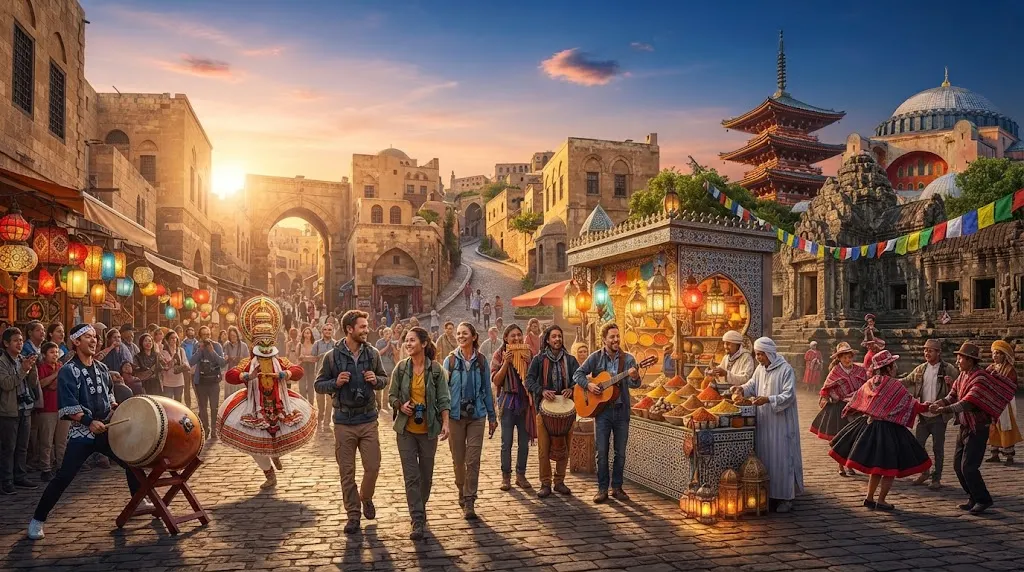
What Makes a Great Cultural Travel Destination?
The best cultural travel destinations allow you to experience more than famous landmarks. They combine history, architecture, food, traditions, local neighborhoods, museums, religious sites, art, and everyday life in a way that helps you understand a place more deeply. A strong cultural trip feels less like checking attractions off a list and more like discovering how people have shaped a destination over generations.
Culture can appear in obvious places such as temples, palaces, archaeological sites, and historic districts, but it also exists in markets, cafés, workshops, festivals, and family-run restaurants. Spending time in ordinary neighborhoods often provides a different perspective from visiting major tourist attractions alone. The strongest itineraries leave enough time for both celebrated landmarks and spontaneous local experiences.
Cultural travel also rewards slower exploration. Walking through historic streets, trying regional dishes, visiting museums, and learning basic local customs can reveal details that rushed travelers often miss. Whether you are interested in ancient civilizations, traditional crafts, religious heritage, architecture, or contemporary creative scenes, the right destination can turn a vacation into a genuinely memorable learning experience.
Kyoto, Japan
Kyoto is one of Japan’s strongest destinations for travelers interested in traditional architecture, temples, gardens, craftsmanship, and historic neighborhoods. The city offers a striking contrast to the modern energy of places such as Tokyo. Quiet lanes, wooden buildings, landscaped gardens, shrines, and seasonal scenery create an atmosphere that encourages slower, more observant exploration.
Temple visits are an important part of the Kyoto experience, but the city’s culture extends well beyond religious landmarks. Traditional shopping streets, tea houses, craft workshops, markets, and local cuisine provide different ways to understand the region. Early mornings can be especially rewarding because popular districts feel calmer and architectural details become easier to appreciate without large crowds.
Respectful behavior matters when exploring temples and residential neighborhoods. Follow photography restrictions, keep noise low, and remember that some famous streets are also places where people live and work. Allowing several days rather than rushing through Kyoto can help you experience its gardens, food, streets, and traditions as connected parts of the city rather than isolated attractions.
Istanbul, Türkiye
Istanbul is an extraordinary cultural destination because its history reflects influences from different empires, religions, and continents. Mosques, churches, palaces, historic markets, waterways, and traditional neighborhoods exist alongside a busy modern city. Travelers can move between monumental architecture and everyday street life within a relatively compact area, making the city especially rewarding for walking and exploration.
Historic areas contain some of Istanbul’s best-known architectural landmarks, while bazaars and food districts provide a more sensory experience. Spices, tea, sweets, textiles, ceramics, and street food all contribute to the city’s cultural character. A ferry ride can also reveal a different perspective, connecting neighborhoods across the water while offering views of the skyline.
Do not treat Istanbul only as a collection of famous monuments. Spend time in neighborhood cafés, markets, waterfront areas, and smaller streets where daily routines continue around you. Learning a few local phrases and understanding basic etiquette in religious spaces can make interactions smoother and help you experience the city with greater awareness and respect.
Marrakech, Morocco
Marrakech offers a rich combination of historic architecture, markets, traditional crafts, courtyards, gardens, food, and energetic public spaces. The medina is especially distinctive, with narrow lanes leading between shops, workshops, homes, religious buildings, and hidden courtyards. Exploring slowly can reveal textures, colors, and details that are easy to miss when following only major sightseeing routes.
The souks provide opportunities to see artisans working with leather, metal, wood, textiles, and ceramics. Food also plays a central role in the experience, from tagines and breads to spices and sweets. Rather than treating the markets simply as shopping areas, observe how different trades and products connect with long-standing traditions and everyday local life.
Marrakech can feel intense for first-time visitors because the medina is busy and navigation is not always straightforward. Comfortable walking shoes, patience, and a flexible schedule can make exploration more enjoyable. Ask before photographing people closely, respect religious spaces, and remember that meaningful cultural travel depends as much on your behavior as on the places you visit.
Rome, Italy
Rome combines ancient history, religious heritage, Renaissance art, neighborhood culture, and food traditions within one walkable urban environment. Ruins, churches, fountains, museums, and public squares appear throughout the city, often surrounded by cafés and modern traffic. This layering of different historical periods makes Rome particularly interesting for travelers who enjoy seeing how a city evolves over centuries.
Major archaeological sites provide essential context, but smaller churches and neighborhoods can be equally memorable. Walking away from the busiest attractions may lead to local markets, family-run restaurants, workshops, and quiet streets where the city feels less staged for visitors. Italian food culture also provides an accessible way to understand regional traditions and everyday social life.
Give yourself time to walk rather than relying entirely on transport between attractions. Many of Rome’s strongest cultural moments happen between planned stops, when you notice a courtyard, neighborhood bakery, old fountain, or street performance. Visiting popular landmarks early or later in the day can also create a calmer experience and leave midday hours for museums or relaxed meals.
Mexico City, Mexico
Mexico City offers an impressive mix of Indigenous heritage, colonial history, modern art, architecture, food, music, and neighborhood life. Museums and archaeological collections provide important historical context, while streets, markets, murals, and public spaces show how those traditions continue to influence contemporary culture. The city’s scale means different districts can feel like completely different destinations.
Food is one of the most enjoyable ways to explore the city. Markets, street stands, bakeries, neighborhood restaurants, and contemporary dining spaces reveal regional ingredients and techniques from across Mexico. Travelers interested in art can also explore murals, museums, galleries, and creative neighborhoods that connect historic identity with modern expression.
Because Mexico City is large, organize each day geographically rather than crossing the entire city repeatedly. Choose a few neighborhoods and spend enough time walking through them instead of visiting only isolated attractions. This slower approach makes it easier to notice local businesses, architecture, parks, and daily routines that give each area its own cultural personality.
Cairo, Egypt
Cairo is a compelling destination for travelers interested in ancient history, Islamic architecture, religious heritage, markets, and the energy of a major modern city. Historic districts contain mosques, traditional streets, old buildings, and commercial areas that reflect centuries of cultural development. The wider region also provides access to some of the world’s most recognizable ancient Egyptian sites.
Museums can help visitors understand the historical context behind temples, tombs, sculpture, and everyday objects from ancient civilizations. Historic Cairo provides a different experience, with religious architecture, traditional crafts, markets, and dense street life. Combining these perspectives creates a fuller cultural trip than focusing entirely on ancient monuments.
Cairo can be busy, noisy, and intense, so realistic planning helps. Choose fewer major activities each day and leave time for traffic, meals, and unexpected delays. Guided experiences can be valuable when historical explanation matters, while independent neighborhood exploration can provide a more immediate sense of contemporary life when approached respectfully and with awareness.
Jaipur, India
Jaipur is known for its distinctive architecture, palaces, forts, markets, textiles, jewelry, crafts, and regional food. The city provides a strong introduction to the cultural heritage of Rajasthan, where design, color, craftsmanship, and royal history remain highly visible. Historic buildings and busy commercial areas create a contrast that makes the city visually and culturally engaging.
Markets are especially valuable for understanding local craft traditions. Textiles, block printing, jewelry, pottery, and decorative objects reflect skills that have been developed and adapted over generations. Visiting workshops or buying directly from skilled makers can provide more context than shopping only in large tourist-oriented stores.
Allow time for both major architectural sites and ordinary street life. Early mornings are often more comfortable for outdoor exploration, while afternoons can be used for museums, workshops, or relaxed meals. Dress respectfully when visiting religious sites and ask before photographing people closely, particularly when you are inside workplaces or residential areas.
Athens, Greece
Athens is one of the world’s most recognizable destinations for travelers interested in ancient history, archaeology, philosophy, and classical architecture. Famous monuments provide an immediate connection to the ancient city, while museums help explain the art, politics, religion, and daily life associated with those sites. Seeing objects and architecture together can make the historical experience much more meaningful.
Modern Athens is equally important to the cultural experience. Neighborhoods, food markets, cafés, street art, music, and contemporary galleries show a city that continues to evolve rather than existing only as an archaeological destination. Traditional Greek dishes and local dining customs add another dimension to exploring the city.
Plan archaeological visits for cooler parts of the day, especially during warmer seasons, and leave time to wander through surrounding neighborhoods afterward. Viewing Athens only through ancient ruins misses much of its character. Combining historic sites with modern food, art, and public life creates a more balanced understanding of how past and present connect.
How to Plan a Cultural Travel Itinerary
Start by identifying the cultural experiences that interest you most, whether that means architecture, archaeology, religious heritage, food, traditional crafts, museums, music, or local neighborhoods. Building the itinerary around a clear interest helps you avoid collecting unrelated attractions simply because they appear on popular travel lists. A focused trip often feels more memorable than an overloaded schedule.
Leave enough time to experience destinations beyond their most famous landmarks. Two or three major activities per day can be more rewarding than rushing between seven attractions without understanding any of them. Travelers who enjoy mixing heritage with outdoor experiences can also explore these adventure travel destinations when designing a trip that combines culture with more active experiences.
Research local holidays, opening days, dress expectations, and photography rules before traveling. Some religious or historic sites require modest clothing, advance reservations, or restrictions on certain areas. Small amounts of preparation can prevent avoidable problems while showing respect for the places and communities you have traveled to experience.
How to Travel More Respectfully
Respectful cultural travel begins with remembering that destinations are homes rather than outdoor museums created for visitors. Follow local customs, dress appropriately where required, and avoid disrupting religious ceremonies or everyday activities for photographs. Observing before acting is often one of the easiest ways to understand what behavior is appropriate in an unfamiliar setting.
Support local businesses when practical by choosing independent restaurants, guides, craft workshops, and locally owned accommodations. Buying directly from artisans can create a stronger connection to local traditions while helping you understand how products are made. Avoid treating every interaction purely as a photo opportunity or bargaining exercise.
Learning a few words in the local language can also make everyday interactions warmer and easier. Simple greetings, thanks, and polite phrases show effort even when your pronunciation is imperfect. Cultural travel becomes more meaningful when curiosity is balanced with humility, giving local people space to define their own culture rather than expecting everything to match visitor assumptions.
Conclusion
The best cultural travel destinations around the world offer experiences that connect history with everyday life. Kyoto, Istanbul, Marrakech, Rome, Mexico City, Cairo, Jaipur, and Athens each provide distinctive combinations of architecture, food, religious heritage, markets, museums, art, and local traditions. Each destination rewards travelers who take time to look beyond its most famous landmarks.
A strong cultural trip does not need to include every attraction. Choosing fewer experiences and exploring them more deeply creates space for conversations, neighborhood walks, local meals, and unexpected discoveries. Researching customs and historical context before arrival can also help landmarks feel more meaningful once you actually see them.
Travel respectfully by observing local expectations, supporting community businesses, and treating historic and religious spaces with care. The best cultural journeys are not simply about collecting photographs or visiting famous sites. They help you understand how people, traditions, history, and modern life come together to give each destination its unique identity.
FAQs
What is the best country for cultural tourism?
There is no single best country because cultural interests differ. Japan, Italy, Türkiye, Morocco, India, Egypt, Greece, and Mexico all offer rich experiences involving history, architecture, food, traditions, and local life.
What are the best cities for cultural travel?
Kyoto, Istanbul, Marrakech, Rome, Mexico City, Cairo, Jaipur, and Athens are excellent options. Each city offers a distinctive mix of historical sites, architecture, food, museums, markets, and living traditions.
How many days should I spend in a cultural destination?
Three to five days works well for many cities, while larger destinations may deserve longer. Slower itineraries provide more time for neighborhoods, food, museums, and cultural experiences beyond major attractions.
How can I experience local culture while traveling?
Explore local markets, eat regional food, walk through residential neighborhoods respectfully, visit museums, attend appropriate cultural events, and support local guides or artisans. Learning basic customs can also improve the experience.
What should I avoid when visiting cultural sites?
Avoid ignoring dress rules, photographing people without permission, interrupting ceremonies, damaging historic spaces, or treating local traditions as entertainment. Following posted guidance and observing local behavior are good starting points.