





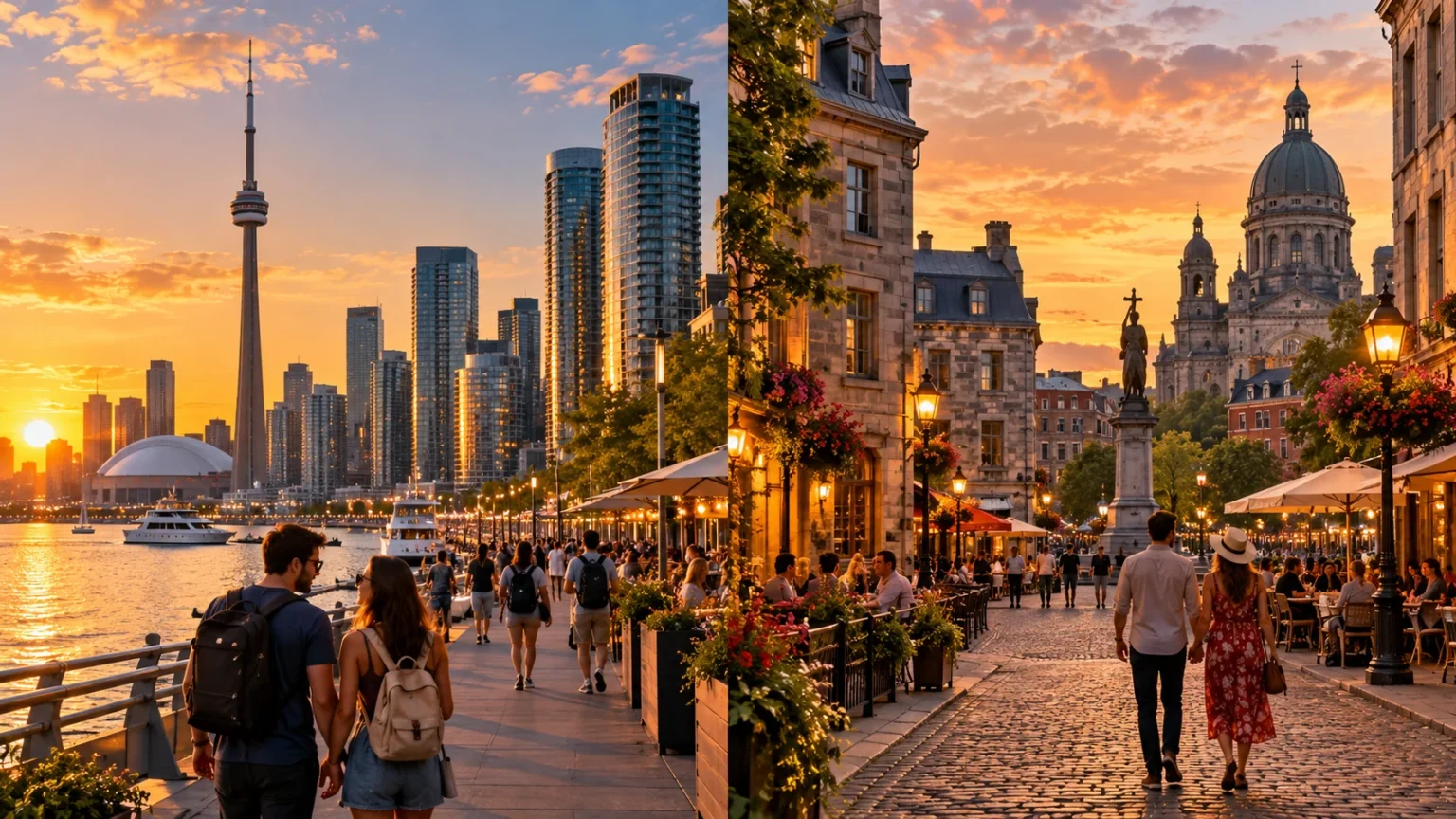
Choosing between Toronto and Montréal can be challenging because both cities offer incredible attractions, diverse food scenes, and memorable Canadian travel experiences. However, they have distinct personalities that appeal to different types of travelers. Understanding Toronto vs Montréal: key differences for travelers can help you choose the destination that best matches your interests, budget, and preferred travel style.
Toronto is famous for its modern skyline, multicultural neighborhoods, major attractions, and energetic urban atmosphere. Montréal offers a different experience through its French-speaking culture, historic architecture, artistic neighborhoods, and lively festivals. Whether you’re planning a weekend getaway, family vacation, or longer Canadian adventure, comparing these destinations will help you make a more informed decision.
Toronto vs Montréal: Understanding the Overall City Experience
Toronto is Canada’s largest city and the capital of Ontario, offering a fast-paced urban experience shaped by international cultures. Its downtown skyline features modern skyscrapers, major entertainment venues, and busy commercial districts. Visitors can explore waterfront attractions, shopping neighborhoods, and cultural institutions while enjoying the energy of a large North American metropolitan destination.
Montréal, located in the province of Québec, offers a distinctive atmosphere influenced by French language, history, and contemporary creative culture. Historic streets, neighborhood cafés, public squares, and colorful residential buildings give many areas a recognizable character. Although Montréal is also a major Canadian city, its walkable districts often encourage visitors to explore more slowly.
The biggest difference between Toronto and Montréal is not simply their size or number of attractions. Toronto often appeals to travelers seeking modern landmarks, international dining, and big-city entertainment, while Montréal attracts visitors interested in architecture, festivals, and French-Canadian traditions. Both cities provide diverse experiences, so the better choice depends on your personal travel priorities.
Language Differences: English in Toronto vs French in Montréal
Language is one of the most noticeable differences between these two popular Canadian destinations. English is the dominant language used in Toronto, making everyday communication straightforward for most English-speaking international visitors. Travelers generally encounter English on public transportation, restaurant menus, road signs, and tourist information throughout the city.
Montréal is primarily French-speaking, reflecting Québec’s official language and distinct cultural identity. Visitors will notice French on street signs, advertisements, public notices, and many business displays. However, English is widely understood in major tourist areas, hotels, restaurants, and popular attractions, making the city accessible to travelers who do not speak French.
Learning a few basic French expressions can make visiting Montréal more enjoyable and demonstrate respect for local culture. Simple greetings such as bonjour and merci are useful when entering shops or interacting with residents. Toronto is generally easier for English-only communication, while Montréal offers opportunities to experience a different linguistic environment without requiring fluency.
Architecture and Famous Tourist Attractions
Toronto is recognized for its modern architecture and internationally famous landmarks, particularly the CN Tower overlooking the downtown skyline. Visitors can also explore the Royal Ontario Museum, Ripley’s Aquarium of Canada, and the scenic Lake Ontario waterfront. These attractions provide opportunities to enjoy city views, cultural exhibitions, and activities suitable for different interests.
Montréal offers a noticeably different architectural experience, particularly in Old Montréal, where historic stone buildings and cobblestone streets create a distinctive atmosphere. Notre-Dame Basilica is among the city’s most recognizable landmarks, while the Old Port provides waterfront scenery and recreational activities. Mount Royal offers another memorable experience through panoramic city views and accessible green spaces.
Toronto’s attractions often emphasize modern urban development, international culture, and contemporary entertainment, although historic neighborhoods also form an important part of the city. Montréal places greater visual emphasis on preserved architecture and historic public spaces alongside modern developments. Travelers interested in skyline photography may prefer Toronto, while those who enjoy wandering through historic streets may favor Montréal.
Neighborhoods and Local Culture: Which City Has More Character?
Toronto’s neighborhoods reflect its multicultural population and diverse cultural influences. Kensington Market is known for independent businesses, colorful streets, and international food, while the Distillery Historic District features preserved industrial architecture and pedestrian-friendly spaces. Queen Street West offers shopping, creative businesses, and a lively atmosphere that attracts residents and visitors.
Montréal’s neighborhoods showcase French-Canadian traditions alongside international communities and contemporary artistic influences. Plateau-Mont-Royal features colorful houses, exterior staircases, cafés, and local boutiques, while Mile End is associated with independent shops and creative culture. Old Montréal provides a more historic environment with galleries, public squares, and beautifully preserved buildings.
Exploring neighborhoods reveals that both cities offer far more than their famous tourist attractions. Toronto often feels like a collection of multicultural communities connected by a major metropolitan center, while Montréal combines historic character with a strong neighborhood café culture. Spending time beyond the busiest tourist districts can help travelers appreciate the everyday personalities of both destinations.
Toronto vs Montréal Food: Which City Is Better for Food Lovers?
Toronto offers an exceptionally varied dining scene shaped by communities from around the world. Travelers can enjoy Chinese, Indian, Korean, Caribbean, Middle Eastern, Italian, and many other cuisines across different neighborhoods. Food markets, casual restaurants, and international dining establishments make Toronto especially appealing to visitors who enjoy exploring global flavors.
Montréal is celebrated for its distinctive food traditions, including Montréal-style bagels, smoked meat sandwiches, and Québec’s famous poutine. The city also features French-inspired restaurants, neighborhood bakeries, public markets, and contemporary dining experiences. Jean-Talon Market provides an opportunity to discover local produce and specialty foods while experiencing Montréal’s everyday culinary culture.
Choosing the better food destination depends on whether you prioritize international variety or recognizable regional specialties. Toronto is particularly attractive for exploring different global cuisines, while Montréal offers memorable local dishes alongside diverse international options. Both cities have excellent casual and upscale restaurants, allowing travelers to enjoy rewarding food experiences across different budgets.
Travel Costs: Is Toronto or Montréal More Affordable?
Travel expenses are an important consideration when comparing Toronto and Montréal for a Canadian vacation. Toronto can be expensive, especially when booking centrally located hotels, visiting major paid attractions, or dining in popular entertainment districts. Accommodation prices vary according to season, location, and major events, so advance planning can make a noticeable difference.
Montréal can sometimes offer better value for accommodation and casual dining, particularly outside peak festival periods. However, popular neighborhoods, special events, and busy travel dates can increase hotel rates substantially. Neither city is automatically inexpensive, and the actual difference depends on the type of accommodation and experiences you select.
Budget-conscious travelers should compare hotel prices for their exact travel dates rather than relying on general assumptions about affordability. Using public transportation, exploring free attractions, and choosing restaurants outside heavily visited areas can help control expenses in both destinations. Montréal may suit some lower-budget itineraries, but careful planning can make Toronto reasonably manageable as well.
Public Transportation and Getting Around the Cities
Toronto has an extensive public transportation system operated primarily by the Toronto Transit Commission, commonly called the TTC. Its subway lines, streetcars, and buses connect downtown districts with residential neighborhoods and attractions across the city. Visitors can explore central areas using public transit, although traveling between distant neighborhoods may require additional time.
Montréal’s public transportation network includes the STM metro and bus services, supported by other regional transit connections. The metro connects many popular central districts, making it convenient to travel between downtown, Old Montréal, and surrounding neighborhoods. Several areas are also pleasant to explore on foot, especially when the weather encourages outdoor sightseeing.
Both cities provide practical alternatives to renting a car during typical urban sightseeing trips. Montréal can feel particularly convenient when exploring compact central neighborhoods, while Toronto requires more route planning for attractions spread across its larger metropolitan area. Travelers should check current transit schedules and service updates before visiting, particularly during holidays or major events.
Nightlife, Festivals, and Entertainment Experiences
Toronto offers a varied entertainment scene that includes concerts, theater performances, major sporting events, comedy shows, and live music venues. Its Entertainment District attracts visitors looking for evening activities, while different neighborhoods host smaller cultural spaces and performances. Sports enthusiasts may particularly appreciate opportunities to experience professional basketball, baseball, hockey, or other major events.
Montréal is widely recognized for its festival culture, with music, art, comedy, and cultural celebrations taking place throughout the year. The Montréal International Jazz Festival is especially well known, while numerous other events bring performances into public spaces. Neighborhood theaters, music venues, and cultural institutions contribute to the city’s strong artistic identity.
Toronto may appeal more to travelers interested in major sporting experiences, large entertainment venues, and international performances. Montréal offers a particularly memorable atmosphere during festival season, when outdoor events bring additional activity to its streets and public squares. Both cities have lively evening cultures, but their entertainment experiences often emphasize different aspects of urban life.
Weather and the Best Time to Visit Toronto or Montréal
Toronto experiences four distinct seasons, with warm summers, colorful autumns, and cold winters. Its location beside Lake Ontario influences local weather conditions and can moderate temperatures compared with some inland areas. Late spring through early autumn is especially appealing for waterfront walks, outdoor markets, parks, and sightseeing activities across the city.
Montréal also has four seasons but generally experiences colder winters and more persistent snow cover than Toronto. Summer brings warm temperatures, outdoor festivals, pedestrian-friendly streets, and busy public spaces. Autumn is another attractive period, particularly when colorful foliage transforms Mount Royal and surrounding neighborhoods into scenic destinations for walking and photography.
The best time to visit either city depends on your preferred activities and comfort with seasonal weather. Summer is ideal for outdoor events and extended sightseeing, while spring and autumn may offer more comfortable walking conditions. Winter travelers can enjoy seasonal markets, skating, museums, and cultural activities, although warm clothing and flexible plans are important.
Parks, Nature, and Family-Friendly Activities1
Toronto offers several outdoor attractions that provide a welcome break from busy city streets. The Toronto Islands feature green spaces, walking paths, and views of the downtown skyline across Lake Ontario. High Park, the waterfront, and other public parks offer opportunities for relaxing walks, recreational activities, and family-friendly sightseeing.
Montréal also provides accessible urban nature, particularly through Mount Royal Park and Parc Jean-Drapeau. Visitors can enjoy walking trails, scenic viewpoints, picnic areas, and seasonal activities without traveling far from the city center. The Botanical Garden and other outdoor spaces add variety for families interested in nature, plants, and educational experiences.
Families can enjoy both destinations through museums, public parks, interactive attractions, and outdoor exploration. Toronto offers a broad range of large-scale attractions, while Montréal combines cultural experiences with accessible neighborhood parks and historic sightseeing. The most suitable destination depends on children’s interests, travel dates, and whether the family prefers structured attractions or relaxed outdoor activities.
Day Trips and Traveling Between Toronto and Montréal
Toronto offers several rewarding excursions beyond its downtown attractions, including Niagara Falls and communities around Lake Ontario. Niagara Falls is a popular choice for travelers interested in dramatic natural scenery, although travel time depends on traffic and transportation arrangements. Visitors with additional days can also explore nearby towns, parks, and waterfront destinations.
Montréal provides opportunities to explore more of Québec, including the Laurentian region and scenic communities outside the metropolitan area. Mont-Tremblant is a popular destination for outdoor scenery and seasonal recreation, while Québec City offers extensive historic architecture farther away. These excursions are better planned with sufficient travel time rather than squeezed into an already busy itinerary.
Traveling between Toronto and Montréal is possible by train, plane, bus, or car, making a combined Canadian trip practical. Direct VIA Rail journeys commonly take approximately five to six hours, depending on the scheduled service. Travelers should compare total journey times and transportation costs before deciding whether to visit both cities during the same vacation.
Which Is Better: Toronto or Montréal for First-Time Visitors?
Toronto is an excellent choice for travelers who enjoy modern skylines, diverse neighborhoods, international dining, and major urban attractions. English-speaking visitors may also find everyday communication particularly straightforward. The city works well for people seeking a metropolitan experience with museums, sports, entertainment, shopping, and waterfront scenery in one destination.
Montréal may be more appealing to travelers interested in French-Canadian culture, historic architecture, neighborhood exploration, and distinctive culinary traditions. Its charming streets and creative atmosphere make walking between cafés, galleries, and local shops especially enjoyable. Visitors who enjoy European-influenced urban environments within North America may find Montréal particularly memorable.
For a short weekend, choose the city that best matches your preferred experiences rather than attempting to see everything. Toronto is well suited to a busy schedule of landmarks and entertainment, while Montréal is excellent for combining historic sightseeing with leisurely neighborhood exploration. If your travel schedule allows, visiting both destinations provides a broader introduction to Canada’s cultural diversity.
Conclusion
The Toronto vs Montréal comparison reveals two exciting Canadian destinations with distinct attractions, cultures, and travel experiences. Toronto offers modern architecture, multicultural dining, major entertainment venues, and beautiful Lake Ontario scenery. Montréal provides French-speaking culture, historic streets, remarkable food traditions, and a creative festival atmosphere that makes it equally rewarding to explore.
The best destination depends on your budget, interests, travel season, and preferred vacation style. Travelers seeking modern landmarks and international big-city experiences may prefer Toronto, while those who appreciate historic architecture and neighborhood café culture may favor Montréal. Both cities offer convenient public transportation, varied attractions, and opportunities for memorable outdoor activities.
Ultimately, neither Toronto nor Montréal is universally better for every traveler. Each city represents a different side of Canadian culture and provides experiences that deserve attention. Whether you choose Toronto’s energetic skyline or Montréal’s historic streets, planning around your interests will help you enjoy a more rewarding Canadian city break.
Frequently Asked Questions (FAQs)
Is Toronto or Montréal Better for Tourists?
Toronto is ideal for modern attractions, international dining, and major entertainment experiences. Montréal is particularly appealing for historic architecture, French-Canadian culture, festivals, and neighborhood exploration. Both are excellent tourist destinations.
Is Montréal Cheaper Than Toronto for Travelers?
Montréal can sometimes be more affordable for accommodation and casual dining, but prices vary significantly. Travel dates, hotel locations, festivals, and personal spending habits determine which city offers better overall value.
Can You Visit Montréal Without Speaking French?
Yes, English is commonly understood in Montréal’s main tourist areas, hotels, restaurants, and attractions. Learning basic French greetings is helpful and respectful, but fluency is not necessary for most typical sightseeing activities.
Which City Has Better Weather, Toronto or Montréal?
Toronto generally has somewhat milder winters, while Montréal usually experiences colder temperatures and more snow. Both cities have warm summers and beautiful autumn seasons, making the ideal travel period dependent on personal preferences.
How Many Days Do You Need in Toronto or Montréal?
Three to four days is a useful starting point for exploring the main attractions and neighborhoods of either city. Longer visits provide time for museums, local food experiences, and nearby excursions.