




Croatia is one of Europe’s most appealing destinations for travelers who want historic cities, clear Adriatic waters, beautiful islands, national parks, and Mediterranean-style coastal scenery in one trip. From Dubrovnik’s ancient streets to Split’s waterfront and the waterfalls of Plitvice Lakes, the country offers enough variety for relaxing holidays, romantic escapes, family vacations, and adventurous road trips.
Planning flights to Croatia is relatively straightforward because several cities provide convenient arrival points for different parts of the country. Zagreb works well for inland destinations, while Dubrovnik and Split are useful gateways to the southern coast and nearby islands. Choosing the right airport can reduce unnecessary travel time and make a multi-city Croatia itinerary considerably easier to organize.
Once you arrive, you can combine old towns, beaches, boat trips, national parks, local food, and scenic drives according to your interests. Croatia is compact enough for several destinations to fit comfortably into one vacation, but there is still plenty to explore. This guide covers some of the best things to do and see when planning a memorable trip to Croatia.
Plan Your Flights to Croatia Around Your Itinerary
Choosing where to fly into Croatia should depend on the places you want to visit first. Zagreb is a convenient entry point for the capital and northern regions, while Split provides excellent access to central Dalmatia and popular islands. Dubrovnik is ideal when your trip focuses on southern Croatia, historic coastal scenery, and destinations around the country’s famous walled city.
For a longer vacation, consider flying into one Croatian city and departing from another rather than returning to your starting point. For example, you could arrive in Zagreb, travel toward Plitvice Lakes and Split, continue along the coast, and fly home from Dubrovnik. This type of route can reduce backtracking while allowing you to experience more destinations naturally.
Flight availability can vary considerably by season and departure city, so compare several travel dates before booking. Travelers coming from destinations without direct connections may need to change planes at another European airport. Allow enough connection time, especially during busy summer periods, and consider how airport transportation will fit into your accommodation and overall itinerary.
Explore Dubrovnik’s Historic Old Town
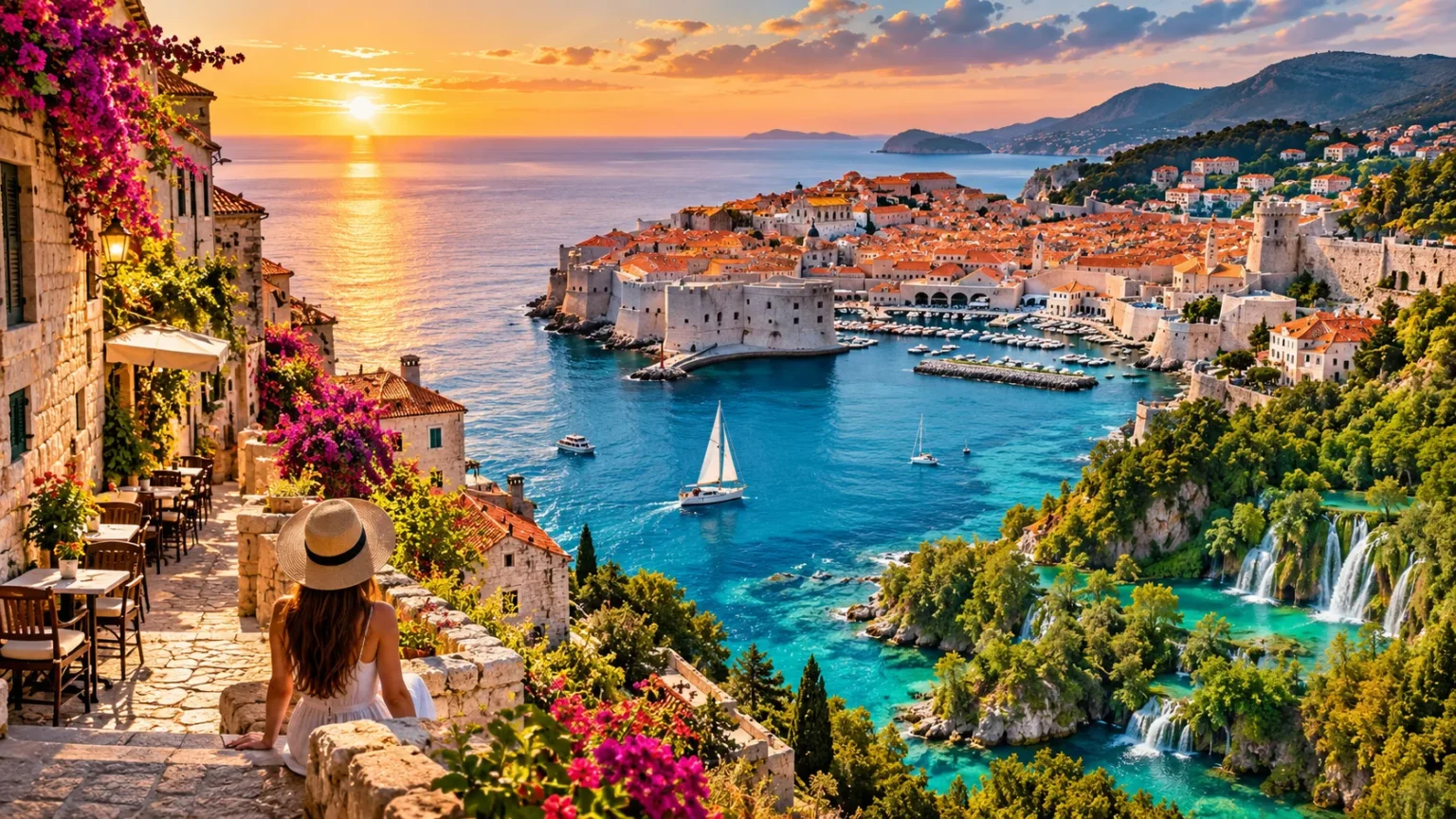
Dubrovnik is one of Croatia’s most recognizable destinations, famous for its stone walls, terracotta rooftops, historic buildings, and beautiful setting beside the Adriatic Sea. Walking through the Old Town reveals narrow streets, elegant squares, churches, cafés, and centuries-old architecture. The compact historic center makes it possible to see many important sights comfortably on foot.
Walking along Dubrovnik’s city walls is one of the best ways to appreciate the destination. Elevated sections provide views across the rooftops, old fortifications, harbor, surrounding hills, and bright blue coastline. Visiting earlier in the morning or later in the afternoon can make the experience more comfortable, particularly during warmer months when temperatures and visitor numbers are higher.
Beyond the Old Town, travelers can relax beside the sea, take a boat trip, enjoy viewpoints above the city, or visit nearby islands. Dubrovnik also becomes especially attractive around sunset when the warm light reaches its stone buildings. Spending at least two nights allows enough time to experience the historic center without rushing between its main attractions.
Discover Split and Diocletian’s Palace
Split combines an energetic modern coastal city with one of Croatia’s most fascinating historic centers. At its heart is Diocletian’s Palace, an ancient Roman complex that has gradually become integrated into everyday city life. Restaurants, apartments, shops, passages, and public spaces now occupy structures that have evolved over many centuries.
Walking through the palace area is the easiest way to experience central Split. Explore stone streets, underground spaces, historic squares, and architectural details before reaching the lively waterfront promenade. The city feels particularly enjoyable in the evening when restaurants become busier and people gather around outdoor seating areas and public spaces near the water.
Split is also a practical base for exploring central Dalmatia. Travelers can take excursions toward nearby islands, coastal towns, beaches, and natural attractions while returning to the same accommodation each evening. Combining history with convenient transportation links makes Split particularly suitable for visitors who want variety without changing hotels constantly throughout their Croatian vacation.
Go Island Hopping Along the Croatian Coast
Croatia’s islands are among the biggest reasons to spend additional time along the Adriatic coast. Each island offers a somewhat different atmosphere, from energetic harbor towns and beach clubs to quiet villages, hidden coves, vineyards, and traditional stone houses. Ferries and passenger boats make it possible to include one or several islands within a coastal itinerary.
Hvar is popular for its attractive harbor, historic center, restaurants, nightlife, and surrounding beaches. Brač offers beautiful coastal landscapes and is particularly known for Zlatni Rat, while Korčula combines beaches with an atmospheric old town. Travelers looking for something quieter can explore smaller communities or less-developed islands away from the busiest tourist routes.
You can visit certain islands as day trips, but staying overnight often provides a more relaxed experience. Once daytime visitors leave, harbor towns become calmer and evenings feel more local. If island hopping is an important part of your trip, avoid creating an overly complicated schedule because ferry travel and accommodation changes can consume more time than expected.
See the Waterfalls of Plitvice Lakes National Park
Plitvice Lakes National Park provides a completely different landscape from Croatia’s coastal cities and islands. The park is famous for interconnected lakes, forest scenery, wooden walking paths, and waterfalls flowing through a naturally beautiful environment. Its changing shades of blue and green make it one of the country’s most memorable destinations for nature lovers and photographers.
Visitors explore the park using combinations of walking trails and available internal transportation options. Different routes make it possible to choose a shorter visit or spend much of the day exploring the lakes. Comfortable walking shoes are important because even easier itineraries involve considerable time on pathways, steps, and natural terrain throughout the park.
Plitvice can become busy during popular travel periods, so arriving early can improve the experience. Consider staying nearby if you want to begin exploring before many day-trip groups arrive. The park fits particularly well into an itinerary connecting Zagreb with the Dalmatian coast, allowing travelers to experience Croatia’s inland scenery while moving between major destinations.
Spend Time in Zagreb
Zagreb sometimes receives less attention than Croatia’s coastline, but the capital offers museums, cafés, parks, architecture, markets, and attractive neighborhoods worth exploring. It provides a more urban perspective on the country and can be an excellent beginning or ending point for a Croatian trip, particularly when your international flights arrive through the capital.
The historic upper sections of Zagreb contain churches, traditional streets, viewpoints, and recognizable city landmarks. Lower areas offer broad streets, green spaces, cultural institutions, shops, and plenty of places for coffee or meals. Exploring both sides provides a better understanding of the city’s combination of historic character and contemporary everyday life.
Zagreb works especially well for travelers who enjoy slower city exploration rather than moving between famous attractions continuously. Spend time at local markets, stop at cafés, explore museums, and walk through central parks. Adding one or two days in Zagreb can create a pleasant contrast before heading toward national parks, islands, and Mediterranean coastal destinations.
Enjoy Zadar’s Waterfront and Historic Center
Zadar is an appealing coastal city for travelers looking for history, sea views, and a slightly more relaxed alternative to Croatia’s most famous southern destinations. Its historic peninsula contains Roman remains, churches, stone streets, cafés, and waterfront spaces that can easily be explored during a day of walking.
The city’s waterfront is particularly enjoyable around sunset. Visitors gather near the Sea Organ, where movement from the water contributes to an unusual sound installation, and the nearby public spaces create an energetic evening atmosphere. Watching the sun disappear across the Adriatic can become one of the simplest and most memorable experiences during a Croatian coastal trip.
Zadar is also well positioned for exploring nearby islands, beaches, and national parks. It can serve as a useful stopping point when traveling between northern and southern sections of the coast. Spending one or two nights allows enough time to enjoy its historic center while adding surrounding natural attractions to your itinerary.
Explore Rovinj and the Istrian Peninsula
Northern Croatia offers another distinctive travel experience in the Istrian Peninsula. Rovinj is one of the region’s most attractive coastal towns, with colorful buildings, narrow stone streets, a hilltop church, and an old harbor filled with small boats. Its compact center is ideal for relaxed walking, photography, dining, and evening waterfront views.
Istria is especially appealing to travelers interested in food, countryside, and road trips. Beyond the coastline, visitors can discover vineyards, olive-growing areas, hill towns, forests, and rural communities. Spending time inland provides a slower travel experience that feels noticeably different from the busier tourist centers of Dalmatia farther south.
Rovinj can be combined with other Istrian destinations to create several days of varied exploration. Renting a car can be particularly useful in this region because smaller towns and countryside attractions are spread across the peninsula. Travelers who enjoy Mediterranean landscapes, local cuisine, and relaxed coastal towns may find Istria one of Croatia’s most rewarding areas.
Relax on Croatia’s Beaches and Clear Adriatic Coast
Croatia’s coastline is famous for clear water, rocky coves, islands, and scenic beaches surrounded by Mediterranean landscapes. Many beaches are made from pebbles or stones rather than soft sand, which contributes to the remarkable clarity of the water. Water shoes can therefore be useful for travelers who plan to spend significant time swimming.
Beach experiences vary considerably depending on the destination. Some areas provide organized facilities, restaurants, loungers, and water activities, while others consist of quieter natural coves reached on foot or by boat. Exploring beyond the main urban beaches can reward travelers with less crowded surroundings and more dramatic coastal scenery.
Swimming, snorkeling, kayaking, sailing, and paddleboarding are popular ways to experience the Adriatic during warmer months. Boat trips can also provide access to smaller islands and hidden sections of coastline that are difficult to reach by road. Leave some unplanned time in your schedule so you can enjoy the sea without constantly rushing toward the next sightseeing stop.
Choose the Best Time and Transportation for Croatia
Late spring through early autumn is popular for coastal travel because warmer temperatures support swimming, island trips, dining outdoors, and other seaside activities. The hottest summer months can also bring larger crowds and greater demand for popular accommodation. Shoulder periods may provide comfortable sightseeing conditions with a somewhat calmer atmosphere in many destinations.
Transportation depends on the route you choose. Buses connect many mainland cities, while ferries are essential for most island itineraries. Renting a car can provide greater freedom for destinations such as Plitvice Lakes, Istria, small coastal communities, and rural attractions, although parking can be inconvenient inside historic city centers.
Avoid trying to cover the entire country too quickly. A seven-day trip may work better when focused on one region, while ten days or two weeks allow more comfortable combinations of Zagreb, national parks, coastal cities, and islands. Building your route geographically reduces unnecessary travel and leaves more time for the attractions you came to experience.
Conclusion
Croatia combines historic cities, beautiful islands, national parks, beaches, and Mediterranean scenery within a relatively manageable travel route. Dubrovnik and Split provide famous historic attractions, while Zagreb, Zadar, and Rovinj offer additional cultural experiences and distinctive regional atmospheres worth adding to a longer vacation.
Nature lovers can explore the waterfalls and lakes of Plitvice before heading toward the Adriatic for swimming, boating, and island hopping. Hvar, Brač, Korčula, and Croatia’s many other islands can add slower coastal days between sightseeing stops. The variety makes it easy to design a trip around history, relaxation, food, outdoor adventure, or several interests together.
Plan your flights to match the direction of your itinerary whenever possible, and leave enough time to enjoy each destination rather than collecting stops. With thoughtful planning, Croatia can provide everything from ancient streets and mountain lakes to waterfront sunsets and quiet island coves within one unforgettable European vacation.
FAQs
Which airport is best to fly into for Croatia?
The best airport depends on your itinerary. Zagreb suits inland and northern trips, Split is convenient for central Dalmatia and islands, while Dubrovnik works particularly well for travelers concentrating on southern Croatia.
How many days should I spend in Croatia?
Seven days can cover one region comfortably, while ten to fourteen days allows a more varied trip including cities, national parks, and islands. Slower itineraries usually provide a more enjoyable experience.
What are the best places to visit in Croatia for first-time travelers?
Dubrovnik, Split, Plitvice Lakes, Zagreb, Zadar, and at least one Adriatic island provide an excellent introduction. Travelers with extra time can also explore Rovinj and other destinations around Istria.
Is Croatia good for a beach vacation?
Yes. Croatia has an extensive Adriatic coastline with clear water, scenic coves, islands, and numerous swimming areas. Many beaches are pebbly or rocky, so water shoes can make swimming more comfortable.
Do I need a car when traveling around Croatia?
Not necessarily. Cities and islands can often be connected by buses and ferries, but a rental car provides additional flexibility for national parks, Istria, rural areas, and smaller coastal destinations.