




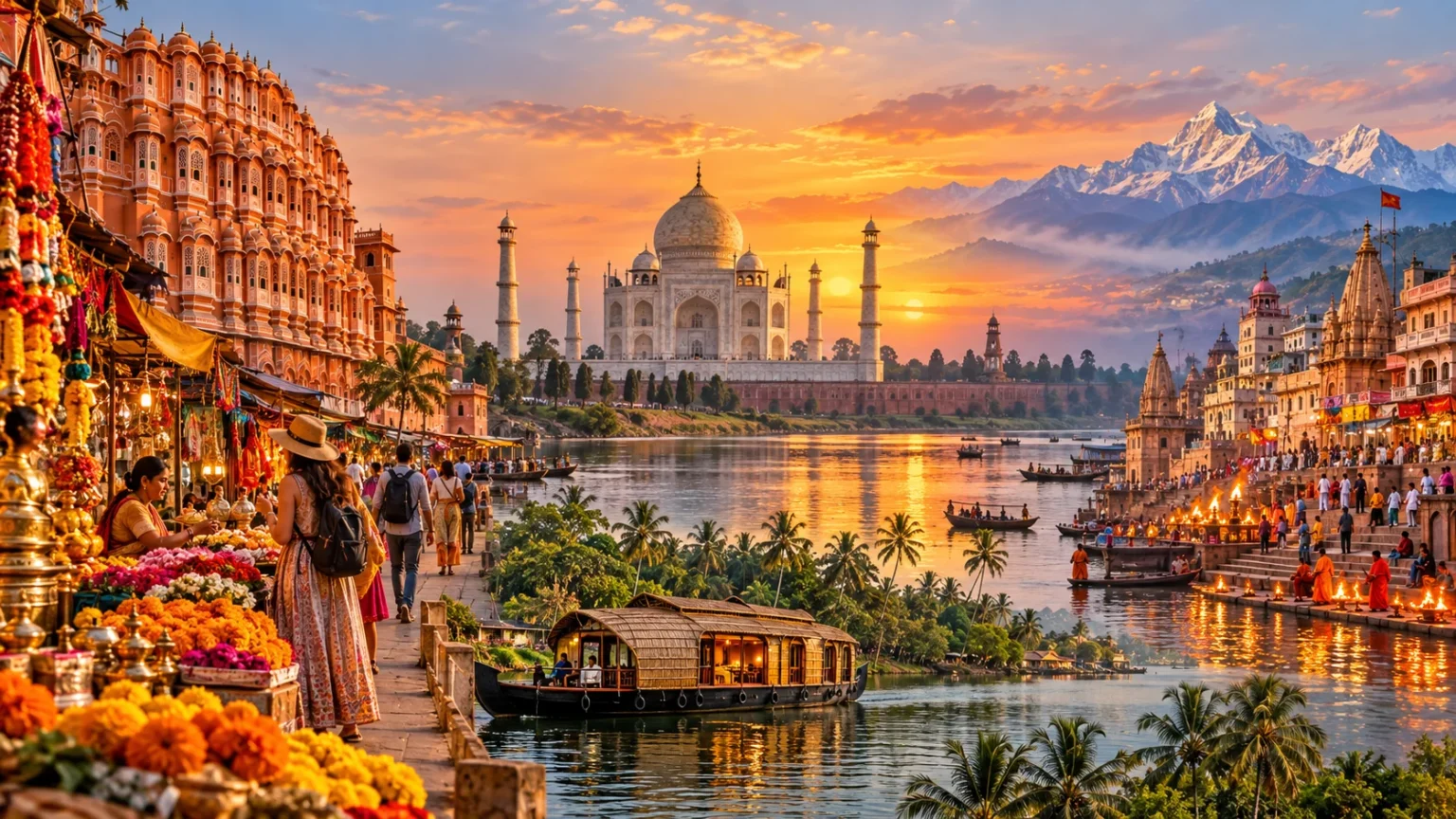
India is a destination where ancient monuments, mountain landscapes, tropical beaches, colorful cities, spiritual traditions, and distinctive regional cuisines can all become part of the same journey. The country is enormous, so the best things to do in India vary dramatically depending on where you travel. One trip might involve royal forts and busy markets, while another focuses on backwaters, wildlife, or Himalayan scenery.
For first-time visitors, choosing a few regions rather than trying to see everything usually creates a more enjoyable experience. Iconic landmarks such as the Taj Mahal deserve attention, but India also rewards travelers who explore markets, local food, historic neighborhoods, natural landscapes, and everyday cultural life. This guide highlights memorable attractions and experiences that can help you plan a varied India itinerary.
Why India Is Worth Exploring
India offers an extraordinary range of travel experiences within one country. You can explore centuries-old forts in Rajasthan, walk through historical neighborhoods in Delhi, experience spiritual traditions along the riverfront in Varanasi, and relax among palm-lined waterways in Kerala. This variety makes it possible to build a trip around history, nature, food, adventure, culture, or a combination of everything.
Regional differences are a major part of the experience. Architecture, languages, landscapes, clothing, food, festivals, and traditions can change considerably as you move between different states. Instead of treating India as one uniform destination, travelers often have a better experience when they appreciate each region for its own character, heritage, and pace of life.
India can also reward slower travel. Famous attractions deserve time, but some memorable moments happen while drinking chai, exploring a neighborhood market, riding a train, discovering a family-run restaurant, or watching a city wake up in the morning. Leaving room for everyday experiences can make a trip feel more personal rather than simply becoming a checklist of major landmarks.
See the Taj Mahal in Agra
Visiting the Taj Mahal is one of the most recognizable travel experiences in India. Located in Agra, the white marble monument is admired for its symmetry, detailed craftsmanship, gardens, and distinctive domed architecture. Seeing it in person allows visitors to notice smaller decorative details that are difficult to appreciate fully through photographs and videos.
Many travelers prefer visiting earlier in the day when temperatures may feel more comfortable and the changing light creates different views across the marble. Give yourself enough time to walk through the complex rather than rushing directly to the most famous viewpoint. Exploring slowly allows you to appreciate the gardens, surrounding structures, architectural details, and different perspectives of the monument.
Agra has more to offer than the Taj Mahal alone. Historic forts, traditional neighborhoods, local crafts, and regional food can make an overnight stay more rewarding than a rushed visit. Combining Agra with Delhi and Jaipur creates a popular northern India route that introduces travelers to Mughal architecture, royal heritage, markets, and several major historical attractions.
Explore Delhi’s History, Markets, and Neighborhoods
Delhi provides an energetic introduction to India’s combination of old and modern life. Historical monuments, religious sites, government districts, markets, contemporary shopping areas, and residential neighborhoods exist across a vast urban landscape. Instead of trying to cover the entire city quickly, choose several areas and give yourself enough time to understand their different personalities.
Old Delhi offers narrow streets, lively markets, street food, places of worship, and architectural reminders of the city’s long history. Walking through busy commercial areas can feel intense for first-time visitors, so exploring with patience can make the experience more enjoyable. Historic structures throughout Delhi also reveal layers of different dynasties and periods that shaped the city.
Newer areas of Delhi provide a contrasting experience with broad avenues, modern cafés, galleries, parks, shopping districts, and contemporary neighborhoods. Spending time in both older and newer sections creates a more balanced picture of the capital. Food lovers should also leave room for local dishes because Delhi’s restaurant and street-food culture reflects influences from many parts of India.
Experience Rajasthan’s Forts and Palaces
Rajasthan is one of the most visually distinctive regions to explore in India. Grand forts, ornate palaces, desert landscapes, historic cities, colorful markets, and traditional craftsmanship make the state particularly attractive to travelers interested in architecture and culture. Jaipur, Jodhpur, Udaipur, and Jaisalmer each provide different interpretations of Rajasthan’s royal and desert heritage.
Jaipur offers impressive palace architecture, historic forts, bazaars, textiles, jewelry, and distinctive pink-toned buildings. Jodhpur is known for its imposing fort and blue-colored sections of the old city, while Udaipur provides lakeside scenery and elegant architecture. Travelers interested in desert landscapes can continue toward Jaisalmer for sandstone buildings and experiences connected with the Thar Desert.
Avoid trying to visit every major Rajasthani city within only a few days. Travel distances can be substantial, and the most interesting experiences often involve wandering through old neighborhoods, watching craftspeople work, exploring markets, or enjoying regional food. Choosing two or three destinations can provide more time to appreciate individual cities instead of spending most of the trip in transit.
Experience the Spiritual Atmosphere of Varanasi
Varanasi offers one of India’s most distinctive cultural and spiritual experiences. Life along the riverfront is deeply connected with religious traditions, ceremonies, pilgrimage, and everyday routines. Walking beside the ghats reveals temples, boats, worshippers, residents, visitors, and centuries-old buildings clustered along narrow lanes leading toward the water.
An early morning boat ride can provide a quieter perspective on the riverfront as the city begins its day. Evening ceremonies create a very different atmosphere, attracting crowds to sections of the ghats for devotional rituals involving lights, music, and prayer. Travelers should observe respectfully because these areas are active religious spaces rather than attractions created only for tourism.
Varanasi can feel intense because spiritual practices, ordinary daily life, celebrations, and rituals surrounding death exist close together. Approaching the city with sensitivity and curiosity is important. Avoid photographing people during personal or religious moments without permission, and remember that observing respectfully often creates a more meaningful experience than treating every scene as a photo opportunity.
Cruise Through Kerala’s Backwaters
Kerala provides a completely different side of India, with tropical greenery, waterways, beaches, plantations, and a slower coastal atmosphere. One of its most memorable experiences is exploring the backwaters, where interconnected canals, lakes, and rivers pass villages, palm trees, farmland, and local communities. The scenery encourages travelers to slow down and enjoy the journey rather than constantly moving between attractions.
Houseboat trips are a popular way to experience these waterways, ranging from daytime cruises to overnight journeys. Smaller boats can also provide closer access to narrow canals and quieter local areas. Watching daily life along the water, including fishing, transportation, farming, and village routines, can be just as interesting as the surrounding natural landscape.
Kerala offers more than backwater experiences. Travelers can explore hill areas, tea-growing landscapes, beaches, historic coastal towns, wildlife areas, and a distinctive regional food culture. Combining inland scenery with the coast can create a balanced itinerary, particularly for visitors wanting a quieter contrast after exploring busier northern Indian cities.
Relax on the Beaches of Goa
Goa is often associated with beaches, but the region offers much more than days spent beside the sea. Different stretches of coastline have different personalities, ranging from energetic areas with restaurants and nightlife to quieter beaches surrounded by greenery. Choosing the right location can significantly influence what kind of Goa experience you have.
Away from the sand, visitors can explore historic churches, Portuguese-influenced architecture, markets, inland villages, spice-growing areas, and local restaurants. Renting appropriate transportation or arranging local rides makes it easier to experience areas beyond your immediate beach. Food is also an important part of a Goa trip, particularly dishes combining coastal ingredients with distinctive regional flavors.
Goa works well as a relaxing break during a longer journey through India. After several days of sightseeing in busy cities, spending time swimming, walking along the coast, eating slowly, and watching sunsets can provide welcome downtime. Avoid filling every day with organized excursions because part of Goa’s appeal comes from allowing yourself a less structured travel schedule.
Discover the Indian Himalayas
Northern India offers spectacular mountain scenery for travelers looking beyond cities and historical monuments. Himalayan destinations provide opportunities for trekking, scenic road journeys, monasteries, valleys, mountain villages, and outdoor adventures. Experiences can range from comfortable stays in hill towns to challenging multi-day treks through remote landscapes at significantly higher elevations.
Different Himalayan regions offer very different environments. Some destinations are surrounded by forests and green valleys, while others feature dramatic high-altitude landscapes, rocky mountains, and Buddhist cultural influences. Choosing a region based on the season, your fitness level, available travel time, and experience with altitude is more sensible than simply selecting the most famous destination.
Mountain travel requires flexibility because road conditions, weather, altitude, and long travel times can affect itineraries. Build extra time into your plans rather than creating tight connections between destinations. Travelers attempting demanding hikes or visiting high elevations should also allow time to adjust gradually and choose activities suited to their physical abilities and experience.
See India’s Wildlife and Natural Landscapes
India’s natural attractions extend far beyond the Himalayas and beaches. National parks, forests, wetlands, deserts, grasslands, and tropical environments support diverse wildlife and provide a completely different travel experience from city sightseeing. Wildlife trips can be especially rewarding for travelers interested in photography, birds, conservation, landscapes, and quiet time away from major urban areas.
Tiger reserves are among the best-known wildlife experiences, but seeing a tiger is never guaranteed. A safari can still be rewarding because forests support deer, monkeys, birds, reptiles, and many other animals. Entering with realistic expectations allows you to appreciate the complete ecosystem instead of judging the experience solely by whether one famous species appears.
Responsible behavior matters when visiting wildlife areas. Follow park regulations, maintain appropriate distances from animals, avoid creating unnecessary noise, and never encourage guides or drivers to disturb wildlife for photographs. Choosing responsible operators and treating national parks as protected natural environments rather than amusement attractions helps make wildlife tourism more respectful and sustainable.
Taste Regional Indian Food
Eating regional food is easily one of the best things to do in India because cuisine changes considerably from one part of the country to another. Northern dishes may differ dramatically from southern coastal food, while Rajasthan, Gujarat, Bengal, Punjab, Kerala, Goa, and other regions each have recognizable ingredients, techniques, breads, rice dishes, snacks, and sweets.
Street food can provide memorable flavors, particularly in cities with established food traditions. Choose busy vendors where ingredients are being prepared fresh and where local customers regularly eat. If your stomach is not accustomed to local food, start gradually and balance adventurous meals with simpler options instead of trying every rich or spicy dish during your first day.
Food tours and cooking experiences can provide additional context beyond simply ordering meals at restaurants. Learning how spices are combined, visiting markets, or preparing regional dishes helps explain connections between food, climate, agriculture, history, and family traditions. Ask questions about ingredients and spice levels because Indian food is extremely diverse and does not follow one universal level of heat.
Enjoy Markets, Crafts, and Cultural Experiences
Markets provide an energetic way to experience Indian cities beyond major landmarks. Depending on the region, you may find textiles, jewelry, spices, leather goods, pottery, handicrafts, artwork, clothing, antiques, flowers, and everyday household products. Exploring markets can also reveal how neighborhoods function and what residents actually buy rather than only showing products designed for tourists.
Traditional crafts differ widely between regions, making locally produced items more meaningful souvenirs than generic products. Look for workshops, cooperatives, or reputable stores where you can learn how an item was created. Textiles, embroidery, block printing, metalwork, woodcraft, carpets, and pottery all reflect regional artistic traditions, although quality and authenticity can vary considerably.
Music, dance, festivals, religious traditions, and performances can add another dimension to your trip. When attending cultural or religious events, understand basic etiquette beforehand and respect spaces reserved for worshippers or participants. Experiences become more meaningful when travelers approach traditions as part of living communities rather than simply viewing them as entertainment.
Plan Your India Trip Around Regions and Seasons
India is too large to treat as a single destination with one ideal travel season. Climate varies considerably between the mountains, deserts, plains, tropical south, and coastal areas. Research the specific regions you plan to visit and build your itinerary around conditions there rather than assuming that weather will be similar throughout the country.
International travelers planning several future destinations may also find our Europe travel guide useful when comparing different styles of cultural and multi-country travel. India generally benefits from a more focused regional approach because covering huge distances can consume valuable sightseeing time. Concentrating on fewer places usually creates a smoother experience.
Transport options include domestic flights, trains, buses, private vehicles, metro systems, taxis, and local ride services depending on the destination. Avoid scheduling important connections too tightly, particularly when traveling long distances. Building some flexibility into the itinerary gives you room to handle delays, rest when needed, or spend additional time somewhere you unexpectedly enjoy.
Conclusion
The best things to do in India range from seeing the Taj Mahal and exploring Rajasthan’s palaces to experiencing Varanasi, cruising Kerala’s backwaters, relaxing in Goa, hiking in Himalayan landscapes, and visiting wildlife reserves. India’s enormous geographic and cultural variety means there is no single correct itinerary. Your ideal trip depends on your interests, time, preferred pace, and chosen regions.
Food, markets, neighborhood walks, local transportation, crafts, and cultural experiences can be just as memorable as famous attractions. Give yourself time to explore beyond headline landmarks rather than rushing between cities purely to add more places to your itinerary. Slower travel often creates more opportunities to notice the regional differences that make India such a distinctive destination.
Plan realistically, remain flexible, and approach unfamiliar traditions with respect and curiosity. Instead of trying to experience the entire country during one journey, choose a manageable route and experience it properly. India rewards travelers who allow enough time for both major attractions and the unexpected everyday moments that happen between them.
FAQs
What are the best things to do in India for first-time visitors?
Popular first-time experiences include visiting the Taj Mahal, exploring Delhi and Rajasthan, experiencing Varanasi, tasting regional cuisine, and adding Kerala or Goa if time allows. Choose destinations according to your available travel days.
How many days do you need to visit India?
Around 10 to 14 days can provide a useful introduction to one or two regions without excessive rushing. Longer trips allow travelers to combine northern destinations with southern India, beaches, mountains, or wildlife experiences.
What are the most famous attractions in India?
The Taj Mahal is among India’s best-known landmarks, while Rajasthan’s forts, Delhi’s historical sites, Varanasi’s ghats, Kerala’s backwaters, Himalayan landscapes, temples, beaches, and national parks are also popular attractions.
What is the best experience to have in India?
There is no single best experience for every traveler. Cultural exploration, regional food, historic architecture, riverfront ceremonies, mountain adventures, wildlife safaris, local markets, and backwater journeys offer very different but memorable experiences.
Is India good for cultural tourism?
Yes. India’s architecture, religions, regional cuisines, festivals, crafts, historical cities, markets, music, and traditions provide extensive opportunities for cultural travel. Respectful interaction with local communities can make these experiences especially rewarding.