




Uzbekistan is one of Central Asia’s most rewarding destinations for travelers interested in history, architecture, traditional culture, and memorable food. Ancient Silk Road cities sit alongside modern neighborhoods, bustling bazaars, desert landscapes, and mountain scenery. The country offers enough variety for history lovers, photographers, food enthusiasts, and travelers who simply want somewhere different from the usual tourist routes.
Many visitors come specifically for Samarkand, Bukhara, and Khiva, where elaborate mosques, madrassas, mausoleums, and historic streets reveal centuries of cultural exchange. Blue-tiled domes and enormous gateways create some of Uzbekistan’s most recognizable views. Yet the experience goes beyond individual monuments, because traditional crafts, local markets, neighborhoods, and everyday hospitality add another dimension to the journey.
Uzbekistan is also relatively straightforward to explore when you plan the main route in advance. Major destinations can be combined into a practical itinerary, allowing you to experience several completely different cities during one trip. Whether you have one week or two, carefully choosing your stops can provide an excellent introduction to the country without making the itinerary unnecessarily rushed.
Why Visit Uzbekistan?
Uzbekistan offers a fascinating mix of ancient history and modern life. Its cities once played important roles along the Silk Road, and many of the country’s best-known landmarks still reflect that heritage. Travelers can explore historic religious schools, mosques, palaces, markets, and traditional neighborhoods in several different regions.
The country is also attractive because each major destination has a distinct character. Samarkand feels grand and monumental, Bukhara feels intimate and atmospheric, while Khiva feels almost like an open-air museum. Tashkent, meanwhile, introduces visitors to contemporary Uzbekistan with its broad streets, parks, markets, and urban culture.
Food, crafts, and hospitality add even more depth to the experience. Traditional meals, handmade textiles, ceramics, woodwork, and local bazaars help travelers connect with the culture beyond major tourist attractions. This balance of architecture, history, and everyday life makes Uzbekistan especially rewarding for curious visitors.
Explore Tashkent
Tashkent is Uzbekistan’s capital and often the starting point for an international trip. The city feels noticeably different from the historic Silk Road destinations, combining broad avenues, landscaped public spaces, Soviet-era architecture, contemporary developments, traditional neighborhoods, and lively commercial districts. Spending at least a day here helps you see the modern side of Uzbekistan before exploring older cities.
One enjoyable experience is visiting Chorsu Bazaar, where vendors sell fresh produce, spices, bread, dried fruits, nuts, meat, and household goods. The market provides a colorful introduction to everyday food culture and is especially interesting when visited without rushing. Nearby neighborhoods and religious sites can add historical context while providing a contrast with the capital’s wider modern streets.
Tashkent’s metro is another interesting part of exploring the city because many stations feature distinctive decorative designs. Museums, parks, cafés, restaurants, and public squares can easily fill the rest of your visit. Rather than treating Tashkent only as a transport stop, consider giving yourself enough time to walk around and understand its different character.
See Registan Square in Samarkand
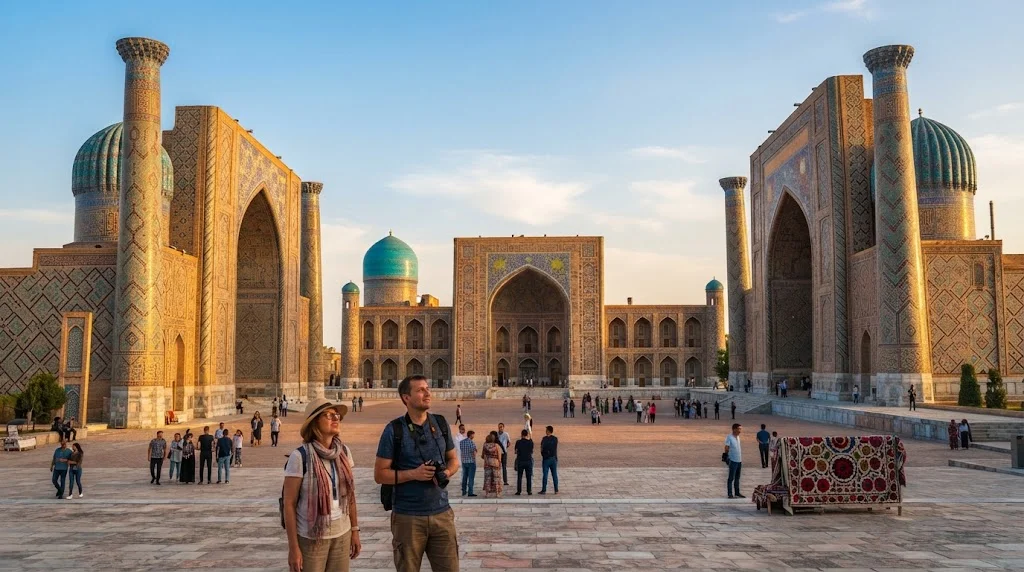
Samarkand is often the city travelers picture when they think about Uzbekistan, and Registan Square is its signature attraction. Three monumental madrassas frame the square with patterned tilework, towering portals, domes, and detailed decorative elements. Seeing the complex in person helps explain why Samarkand became such an important stop on many Central Asian travel itineraries.
Visit at different times of day if your schedule allows. Morning can provide a calmer atmosphere, while late afternoon light brings out different shades in the tiled façades. Evening illumination can create another experience entirely, especially after the daytime crowds have begun to thin and the buildings become dramatically lit against the darker sky.
Take time to examine details instead of only photographing the entire square. Decorative geometry, calligraphy, arches, courtyards, and interior spaces reveal craftsmanship that can easily be missed when moving quickly. Samarkand rewards slower sightseeing, so avoid packing every attraction into a tight schedule if you want the city to feel memorable rather than exhausting.
Discover More of Samarkand
Registan may receive most of the attention, but Samarkand contains several other attractions worth adding to your itinerary. Shah-i-Zinda is particularly memorable for its narrow avenue of richly decorated mausoleums. The combination of blue tilework, intimate spaces, and layered history makes the complex feel very different from the broad openness of Registan Square.
Gur-e-Amir, associated with Amir Timur, is another major landmark, while Bibi-Khanym Mosque offers a sense of the monumental scale associated with historic Samarkand. Nearby markets give travelers an opportunity to move from formal sightseeing into everyday city life. Combining monuments and ordinary neighborhoods makes the visit feel more complete.
Do not underestimate how much walking a full sightseeing day can involve. Comfortable shoes, water, sun protection, and regular breaks can make exploring far more enjoyable, particularly during warmer months. Two full days in Samarkand generally feel more relaxed than trying to see every major attraction during a single fast-paced stop.
Wander Through Historic Bukhara
Bukhara offers a different atmosphere from Samarkand. Instead of moving between several large monuments spread across a broader city, travelers can spend long periods walking through compact historic streets, courtyards, old trading areas, mosques, madrassas, and traditional buildings. This makes Bukhara particularly enjoyable for travelers who prefer exploring slowly on foot.
The Poi Kalyan complex is one of the city’s most impressive areas, with its mosque, madrassa, and towering minaret creating a striking architectural setting. The Ark fortress, historic trading domes, and several smaller religious structures can also be incorporated into a walking route. Allow yourself time to stop rather than simply checking attractions off a list.
Evenings in Bukhara can be especially pleasant when temperatures cool and the historic center becomes more atmospheric. Cafés, courtyards, craft stalls, and illuminated monuments encourage slower exploration. Staying within or close to the old town can make it easier to enjoy early mornings and evenings without constantly arranging transportation from another part of the city.
Step Inside the Walled City of Khiva
Khiva feels almost like an open-air historical complex, particularly within the old walled area of Itchan Kala. Narrow lanes connect minarets, mosques, madrassas, residences, courtyards, and museums, creating one of Uzbekistan’s most distinctive urban experiences. Because attractions are concentrated closely together, Khiva is ideal for travelers who enjoy wandering without following a rigid route.
The unfinished Kalta Minor minaret immediately stands out because of its broad shape and colorful tilework. Other important sights include the Kunya-Ark fortress, Islam Khoja complex, Juma Mosque, traditional residences, and numerous smaller structures hidden along the old streets. Rooftop or elevated viewpoints can also provide memorable perspectives over the historic skyline.
Khiva becomes particularly atmospheric around sunrise and sunset, when softer light changes the color of its walls and monuments. Spending at least one night allows you to experience the city after many day visitors have left. Walking through quieter streets in the evening can become one of the most memorable parts of an Uzbekistan trip.
Experience Uzbekistan’s Silk Road Heritage
Uzbekistan occupied an important position along historical trade routes connecting different parts of Asia, the Middle East, and Europe. Merchants, scholars, craftspeople, and travelers moved through cities such as Samarkand and Bukhara, helping create centers of trade and learning. This heritage remains visible in caravanserais, marketplaces, religious schools, architecture, and traditional crafts.
Exploring Uzbekistan becomes more meaningful when you understand that these cities were not isolated monuments. They were active meeting points where goods, languages, ideas, scientific knowledge, artistic traditions, and religious influences crossed paths. Visiting markets and workshops alongside palaces and mosques can therefore provide a richer understanding of the region’s historical importance.
Traditional textiles, ceramics, woodwork, metalwork, carpets, embroidery, and other crafts remain part of the travel experience today. Rather than buying the first souvenir you see, spend time comparing workshops and asking about production methods. Purchasing directly from craftspeople can also turn an ordinary shopping stop into a more personal cultural interaction.
Taste Traditional Uzbek Food
Food is an essential part of traveling through Uzbekistan, and plov is the dish most visitors encounter repeatedly. Typically prepared with rice, meat, carrots, onions, and seasonings, it can vary in style depending on the region and cook. Trying plov in different cities gives travelers an opportunity to notice how one national favorite develops distinct local characteristics.
Other dishes worth trying include samsa, lagman noodles, shashlik, dumplings, soups, and freshly baked bread. Markets can also introduce you to dried fruit, nuts, seasonal produce, spices, and sweets. Rather than limiting yourself to hotel restaurants, look for busy local establishments where food turnover is high and residents regularly eat.
Tea accompanies many meals and social interactions, so allow meals to unfold at a comfortable pace. Uzbek dining can be as much about conversation and hospitality as the food itself. Travelers with dietary restrictions should learn a few useful phrases or prepare translated explanations because ingredients may not always be obvious from menus.
Visit the Mountains Near Tashkent
Uzbekistan is best known for historic cities, but its landscapes offer another side of the country. Mountain areas east of Tashkent provide opportunities for scenic drives, hiking, outdoor recreation, and cooler air away from the capital. Adding a nature-focused day can create useful contrast after several days of museums, mosques, and architectural sightseeing.
Chimgan and surrounding mountain areas are popular choices for travelers seeking outdoor scenery without traveling across the entire country. Depending on the season and your interests, you can plan viewpoints, easy walks, longer hikes, or relaxing stops near mountain resorts. Conditions can change quickly, so clothing and footwear should match the activity.
If exploring overland destinations appeals to you, planning a scenic driving route can create greater flexibility. Build in enough time for rest stops, meals, photography, and changing road conditions. Avoid creating an itinerary where most of each day is spent inside a vehicle instead of enjoying the destinations themselves.
Explore the Fergana Valley
The Fergana Valley provides another perspective on Uzbekistan, particularly for travelers interested in traditional craftsmanship, agriculture, and regional culture. Cities and towns throughout the valley have distinctive identities, and the area feels different from the monumental architecture of Samarkand, Bukhara, and Khiva. It works particularly well for travelers with extra time beyond the classic route.
Craft traditions are a major reason to visit. Depending on your route, you may encounter workshops producing ceramics, silk, textiles, knives, and other handmade goods. Watching artisans work can offer a stronger connection to local traditions than purchasing mass-produced souvenirs from a standard tourist shop.
Traveling through the valley generally makes more sense on a longer itinerary because adding too many regions to a short trip can create unnecessary transit. If you have ten days or more, consider whether the Fergana Valley matches your interests. Travelers focused mainly on architecture may prefer spending extra time in the principal Silk Road cities.
Visit Local Bazaars
Uzbekistan’s bazaars provide an easy way to experience everyday culture between major sightseeing stops. Markets are filled with vegetables, fruit, nuts, spices, breads, clothing, household products, and conversations between local shoppers and vendors. Visiting earlier in the day can provide a particularly energetic atmosphere when produce sections are active.
Markets are also useful places to try local foods and purchase edible souvenirs. Dried apricots, raisins, nuts, spices, tea, and sweets are relatively easy to pack compared with fragile decorative objects. Always consider customs regulations at your destination before buying agricultural or food products to carry internationally.
Take time to observe before photographing people closely. Asking permission creates a more respectful interaction, especially in smaller markets where visitors may attract attention. Basic greetings can make these encounters warmer and more natural, even when you cannot hold a full conversation in Uzbek or Russian.
Choose the Best Time to Visit Uzbekistan
Spring and autumn are generally attractive periods for sightseeing because temperatures tend to be more comfortable than during the hottest part of summer. These seasons work particularly well when your itinerary includes extensive walking through historic districts. Comfortable weather can make a significant difference when several hours each day are spent outdoors.
Summer can become very hot, especially in historic western cities, so sightseeing may be easier early in the morning and later in the afternoon. Midday breaks can be used for meals, museums, or rest. Lightweight clothing, sunscreen, water, sunglasses, and head protection become especially important during hotter conditions.
Winter offers fewer crowds and a very different atmosphere, but temperatures can become cold, particularly at night. Some travelers enjoy seeing famous monuments in quieter conditions and are comfortable dressing appropriately for the season. Your ideal travel period therefore depends on whether you prioritize moderate weather, smaller crowds, pricing, photography, or particular activities.
Getting Around Uzbekistan
Rail travel is one of the most practical ways to connect several major tourist cities. Trains allow visitors to move between important destinations without repeatedly arranging long private drives. Booking popular journeys ahead of time can be useful, particularly when traveling during busy periods or when your itinerary depends on reaching another city on a specific day.
Within cities, walking works especially well in historic centers such as Bukhara and Khiva. Taxis or ride-hailing services can cover longer distances, while Tashkent also has public transport options. Keeping accommodation reasonably close to the attractions you plan to visit can reduce unnecessary transportation and give you more flexibility.
Khiva requires additional travel planning because of its western location compared with Tashkent, Samarkand, and Bukhara. Domestic transport combinations may include trains, flights, or road transfers depending on your itinerary. Planning the route geographically can save significant time and prevent yourself from repeatedly traveling back across the country.
Plan a Practical Uzbekistan Itinerary
For a shorter seven-day visit, focus on Tashkent, Samarkand, and Bukhara rather than trying to see the entire country. This provides a combination of modern city life and major Silk Road heritage without creating excessive travel days. Allow enough time in each destination to experience evenings and quieter mornings instead of arriving and departing immediately.
With approximately ten days, adding Khiva becomes much easier. A route connecting Tashkent, Samarkand, Bukhara, and Khiva covers many of Uzbekistan’s most celebrated destinations while still leaving reasonable sightseeing time. The exact order may depend on international flights and the transport connections available during your travel dates.
Two weeks allows much greater flexibility. You can slow down the classic route, visit mountain areas, explore the Fergana Valley, or include additional regional destinations. Build at least some free time into the itinerary because unexpected discoveries, longer meals, markets, and conversations are often what transform an organized trip into a memorable one.
Respect Local Culture and Religious Sites
Uzbekistan is welcoming to visitors, but respectful behavior improves the travel experience. When entering mosques, mausoleums, or other religious sites, choose clothing that appropriately covers the body and follow any local instructions. Shoes may need to be removed in certain spaces, so observe what other visitors are doing or follow staff guidance.
Photography is generally part of sightseeing, but not every person or religious setting should automatically be treated as a photo opportunity. Ask before taking close photographs of individuals and pay attention to restrictions inside monuments. A respectful approach usually creates better interactions and helps preserve the dignity of culturally important spaces.
Learning simple greetings and polite expressions can also make everyday exchanges warmer. Even when conversations continue through gestures, translation apps, or a shared second language, making an effort is usually appreciated. Cultural curiosity works best when paired with patience rather than expecting every destination to operate exactly as it does at home.
Essential Uzbekistan Travel Tips
Carry a combination of payment methods and keep some local cash available for markets, small purchases, transportation, and businesses that may not accept your preferred card. Avoid carrying all money and important documents in one place. Keeping digital copies of essential travel documents can also provide additional reassurance while moving between cities.
Pack according to both the season and your itinerary. Comfortable walking shoes are essential because historic areas often involve long days on foot, while modest clothing is useful for religious attractions. A reusable water bottle, basic medication, sun protection, charging accessories, and an offline map can also make everyday sightseeing easier.
Leave enough flexibility for spontaneous experiences. An Uzbekistan itinerary filled from morning until night may allow you to photograph more monuments, but it can also prevent you from enjoying markets, cafés, craftspeople, and quiet streets. Building slower periods into the journey often leads to the experiences you remember most after returning home.
Conclusion
Uzbekistan combines spectacular Silk Road architecture, living traditions, flavorful food, welcoming cities, and varied landscapes into a destination that rewards curious travelers. Samarkand provides monumental landmarks, Bukhara offers atmospheric historic streets, Khiva creates an immersive old-city experience, and Tashkent introduces the country’s contemporary side.
A successful Uzbekistan trip does not require visiting every destination. Choose locations according to your available time and interests, then give each city enough room to be experienced properly. Adding markets, food, crafts, neighborhoods, and occasional nature stops can create a more balanced journey than focusing exclusively on famous monuments.
Plan transportation and accommodation ahead for the major sections of your route while leaving some flexibility in each day. Comfortable walking, respectful cultural behavior, realistic travel times, and a willingness to explore beyond the headline attractions can make Uzbekistan an exceptionally memorable Central Asian adventure.
FAQs
How many days do you need in Uzbekistan?
Seven days can cover Tashkent, Samarkand, and Bukhara at a reasonable pace. Around ten to fourteen days gives you more time for Khiva, mountains, the Fergana Valley, or slower exploration.
What are the best places to visit in Uzbekistan?
Samarkand, Bukhara, Khiva, and Tashkent form the classic first-time route. Travelers with additional time can consider mountain areas, the Fergana Valley, and other regional destinations based on their interests.
What is Uzbekistan most famous for?
Uzbekistan is particularly famous for its Silk Road heritage, blue-tiled Islamic architecture, historic cities, traditional crafts, bazaars, and dishes such as plov, samsa, noodles, and freshly baked bread.
What is the best time to travel to Uzbekistan?
Spring and autumn are popular because sightseeing temperatures are generally more comfortable. Summer can be very hot, while winter offers a quieter experience but requires warmer clothing, particularly during mornings and evenings.
Is Uzbekistan good for first-time Central Asia travelers?
Yes. Uzbekistan offers several major attractions along a relatively logical tourist route, with a mixture of historic cities, food, culture, and transport options that can make it approachable for first-time regional visitors.