





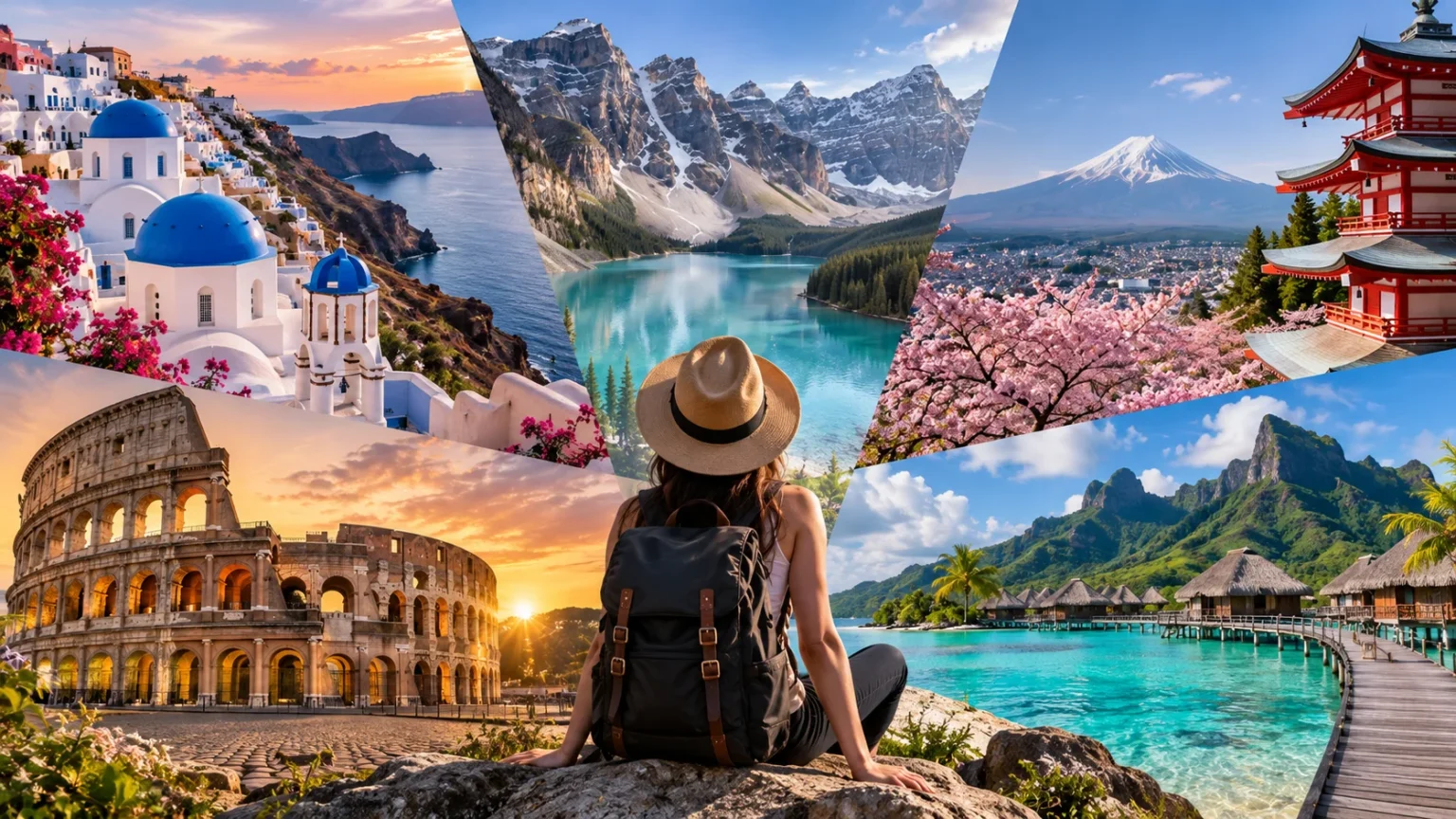
Some places are more than ordinary vacation spots. They combine extraordinary scenery, history, culture, food, wildlife, or adventure in ways that can make a journey feel genuinely memorable. From ancient cities and tropical islands to glacier-covered landscapes, the world offers countless destinations worthy of a place on your travel bucket list.
Choosing where to go first depends on your travel style, budget, available time, and the experiences you value most. Some travelers dream about historic streets and famous landmarks, while others want remote wilderness or warm beaches. These 20 bucket list travel destinations offer a diverse starting point for planning unforgettable journeys around the world.
Iconic European Destinations Worth Experiencing
Paris remains a classic bucket list destination for travelers interested in architecture, art, food, and city life. Walking beside the Seine, exploring historic neighborhoods, visiting world-famous museums, and seeing the Eiffel Tower in person can fill several days easily. The city also rewards slower travel, whether you are sitting at a neighborhood café or wandering through quieter streets away from major attractions.
Rome offers a completely different experience by surrounding visitors with layers of ancient and modern history. The Colosseum, Roman Forum, fountains, churches, piazzas, and narrow streets make ordinary walks feel like sightseeing. Italian food adds another reason to stay longer, especially when you leave heavily visited areas and explore neighborhood restaurants, markets, and smaller historic sites.
Santorini combines dramatic landscapes with the recognizable whitewashed architecture of the Greek islands. Oia and Fira sit around the island’s volcanic caldera, while visitors can also discover volcanic beaches, traditional settlements, and sweeping sea views. Greece’s official tourism site highlights the caldera, black and red beaches, Oia, and Fira among the island’s defining experiences.
Unforgettable Bucket List Destinations in Asia
Kyoto is ideal for travelers who want to experience historic Japan through temples, gardens, traditional neighborhoods, and seasonal landscapes. The city served as Japan’s capital for more than a millennium, and 17 historic monuments in Kyoto, Uji, and Otsu are registered as UNESCO World Heritage sites. Exploring areas such as Gion and Higashiyama reveals old streets alongside significant temples and cultural landmarks.
Bali attracts travelers with a combination of tropical landscapes, beaches, temples, rice terraces, wellness retreats, and lively coastal communities. Ubud appeals to visitors interested in culture, crafts, and inland scenery, while areas near the coast provide surfing, restaurants, and sunsets. The island works particularly well for travelers who want relaxation and exploration within the same trip.
The Maldives belongs on the list for travelers dreaming about clear water, coral reefs, white-sand beaches, and quiet island stays. Many visitors come for snorkeling, diving, romantic trips, or simply spending several days surrounded by the Indian Ocean. The experience can range from luxurious private resorts to locally based island stays, depending on budget and travel preferences.
Spectacular Nature Destinations for Outdoor Travelers
Iceland feels dramatically different from many traditional holiday destinations because volcanic landscapes, glaciers, hot springs, waterfalls, and black-sand beaches can all appear within one journey. Road trips allow travelers to experience changing scenery quickly, while Reykjavík provides a convenient cultural base. Iceland’s official tourism organization also highlights glaciers, northern lights, hot springs, geysers, volcanic landscapes, and black-sand beaches among its defining natural attractions.
Banff National Park in Canada is an unforgettable choice for mountain lovers. Turquoise lakes, dramatic peaks, hiking routes, wildlife, and scenic drives make the Canadian Rockies especially appealing to outdoor travelers and photographers. Lake Louise and the surrounding mountain landscapes may receive much of the attention, but spending additional time exploring the broader region can make the trip feel far more complete.
The Swiss Alps combine spectacular mountain scenery with charming towns, efficient transportation, hiking routes, and unforgettable train journeys. Places such as Zermatt, Interlaken, and the Jungfrau region offer different ways to experience alpine landscapes. Winter attracts skiers and snow lovers, while warmer months create opportunities for hiking, mountain railways, lakeside trips, and peaceful village stays.
Bucket List Experiences Across the Americas
New York City deserves consideration because few destinations offer so many recognizable attractions, neighborhoods, museums, restaurants, and cultural experiences in one place. Visitors can combine Central Park, Manhattan viewpoints, Broadway, museums, and landmark sightseeing with time exploring Brooklyn or other neighborhoods. The extensive public transportation system also makes it possible to experience much of the city without renting a vehicle.
The Grand Canyon delivers the kind of scale that photographs struggle to communicate. Standing at a viewpoint and seeing layers of rock stretching across an enormous landscape is very different from viewing the canyon on a screen. Visitors can enjoy scenic overlooks, hiking, photography, or longer adventures depending on fitness, weather, and how deeply they want to explore.
Machu Picchu is one of South America’s defining travel experiences, combining spectacular Andean scenery with extraordinary archaeological history. Many travelers connect the site with time in Cusco and the Sacred Valley rather than treating it as a single isolated stop. Peru’s official tourism organization presents Machu Picchu as one of the country’s major historic attractions alongside its wider collection of archaeological and cultural destinations.
Extraordinary Destinations in Africa and the Middle East
A Serengeti safari can become one of the most memorable trips of a lifetime for travelers interested in wildlife. Seeing animals in open landscapes creates an experience that feels completely different from visiting a traditional attraction. The wider Serengeti ecosystem is particularly famous for large-scale wildlife movement, but every safari varies because animals, weather, seasons, and natural conditions are constantly changing.
Cape Town combines ocean scenery, mountains, food, beaches, culture, and nearby nature within one destination. Table Mountain forms the city’s dramatic backdrop, while the surrounding coastline creates opportunities for scenic drives and outdoor activities. Travelers can also use Cape Town as a starting point for exploring vineyards, coastal communities, and other parts of South Africa’s Western Cape.
Petra in Jordan delivers one of the world’s most distinctive archaeological experiences. Walking through the narrow Siq before reaching the famous Treasury creates a memorable introduction, but Petra extends much farther than this single landmark. Exploring additional trails and ruins reveals the scale of the ancient city, making it worthwhile to allow enough time rather than treating the visit as a quick photo stop.
Dream Destinations in Oceania and the Pacific
Australia’s Great Barrier Reef appeals to travelers interested in marine life, snorkeling, diving, and tropical scenery. Different gateway locations offer access to sections of the reef, so choosing where to stay can shape the experience significantly. Responsible operators and respectful wildlife practices matter when visiting fragile marine environments, making thoughtful planning an important part of the journey.
Queenstown in New Zealand is an excellent destination for travelers who want dramatic scenery combined with outdoor adventure. Mountains and Lake Wakatipu surround the town, creating a striking setting for hiking, scenic drives, boat trips, and adrenaline-focused activities. Queenstown can also serve as a convenient starting point for exploring more of New Zealand’s South Island landscapes.
Bora Bora is the kind of destination many people picture when imagining a once-in-a-lifetime tropical escape. Its lagoon, mountainous interior, and overwater accommodation create a distinctive setting for swimming, snorkeling, relaxation, and romantic travel. Costs can be high, so travelers who want to visit may benefit from planning far ahead and treating the journey as a major special-occasion trip.
Remote Adventures for the Ultimate Travel Bucket List
The Galápagos Islands offer an extraordinary opportunity to experience wildlife and volcanic landscapes in an environment unlike most other destinations. Visitors often come specifically for close encounters with unusual species, snorkeling, island landscapes, and nature-focused exploration. Because conservation is central to protecting the islands, following local regulations and choosing responsible travel experiences is especially important.
Antarctica sits at the extreme end of bucket list travel because reaching it requires considerably more planning, time, and money than an ordinary holiday. The appeal comes from enormous ice landscapes, remote wildlife, dramatic weather, and the feeling of visiting one of Earth’s least accessible regions. Expedition-style travel makes the journey an adventure rather than a conventional resort vacation.
These two destinations particularly suit travelers who value wilderness over shopping, nightlife, or traditional city sightseeing. They also demonstrate that a bucket list does not need to contain only famous monuments and capitals. Sometimes the most meaningful journeys involve reaching environments that feel genuinely different from anything encountered during everyday travel.
How to Choose Your First Bucket List Destination
Start by thinking about the experience you actually want rather than choosing a destination only because it is famous online. Someone who loves history may enjoy Rome, Kyoto, Petra, or Machu Picchu more than a beach resort. A traveler focused on outdoor scenery might find Iceland, Banff, New Zealand, or the Swiss Alps more rewarding.
Budget should also influence the order in which you tackle your travel bucket list. Long-haul flights, expensive accommodation, tours, visas, and local transportation can make certain destinations significantly more demanding financially. Instead of abandoning an expensive dream trip, consider saving it for later while visiting more accessible destinations first.
Available travel time matters just as much as money. A long weekend may work for a compact city trip, while destinations such as Antarctica, the Galápagos, or multi-region trips require considerably more planning. Matching the destination to your schedule allows you to explore at a comfortable pace instead of spending most of the journey moving between airports and hotels.
Planning Transportation for a Bucket List Trip
Transportation can dramatically affect the cost and convenience of a major trip. Some destinations are easiest with rental cars, organized tours, or private transfers, while others have strong rail, metro, bus, or ferry networks. Researching how you will move around before booking accommodation can prevent unnecessary expenses and help you choose a more convenient location.
Travelers who prefer public transportation can prioritize destinations where major attractions are easy to reach without driving. Cities such as Paris, Rome, Kyoto, and New York can work particularly well for this style of travel. Exploring more places to travel without a car can also help you plan a trip around walkable neighborhoods and public transportation.
For remote destinations, transportation often becomes part of the experience itself. Scenic trains, ferries, expedition ships, mountain roads, and regional flights can provide access to places that would otherwise be difficult to reach. Building extra time into your itinerary also helps when weather, distances, or limited transportation schedules create unexpected delays.
How to Make a Bucket List Trip More Memorable
Avoid trying to see every attraction simply because it appears on a popular itinerary. Packing too many activities into each day can make an expensive dream vacation feel rushed and exhausting. Choose several experiences that genuinely matter to you, then leave enough flexibility for spontaneous meals, walks, conversations, and unexpected discoveries.
Spend some time learning about local customs, etiquette, food, and basic practical information before arriving. Understanding how people behave, dress, eat, and interact can make travel smoother while helping you experience the destination beyond its most famous attractions. Respectful travel also matters increasingly in places dealing with overcrowding or pressure on local communities.
Finally, document your journey without experiencing the entire trip through your phone or camera. Photographs are valuable, but memorable travel also comes from paying attention to sounds, food, landscapes, people, and small everyday moments. A bucket list trip becomes meaningful because of what you experience personally, not simply because you checked a famous destination off a list.
Conclusion
The world’s best bucket list travel destinations offer very different experiences, which is exactly what makes building a personal list exciting. Paris and Rome provide history and culture, Bali and Bora Bora deliver tropical escapes, while Iceland, Banff, and Antarctica appeal to travelers who want dramatic natural environments. There is no single destination that suits everyone.
Rather than trying to visit all 20 places quickly, choose trips that match your current interests, budget, and stage of life. Some destinations are perfect for independent city breaks, while others require months of saving and careful planning. Treating each journey as an experience rather than another item to complete can make travel much more rewarding.
Your ultimate bucket list will probably change as you travel more and discover new interests. Start with the destination that excites you enough to begin planning today, then build future journeys from there. Whether your dream involves ancient ruins, wildlife, mountains, beaches, or famous cities, there is always another extraordinary part of the world waiting to be explored.
FAQs
What is the best bucket list travel destination?
There is no single best destination for everyone. Choose according to your interests: Rome or Kyoto for culture, Iceland or Banff for nature, the Maldives for beaches, or the Serengeti for wildlife.
How many destinations should be on a travel bucket list?
There is no ideal number. Some travelers maintain a short list of five dream trips, while others collect dozens of destinations and gradually prioritize them according to budget, time, and changing interests.
What is a good first bucket list trip?
A city with straightforward transportation and plenty of attractions can make a practical first major trip. Paris, Rome, Kyoto, or New York can work well for travelers who enjoy structured sightseeing and independent exploration.
Which bucket list destinations are best for nature lovers?
Iceland, Banff, the Swiss Alps, the Galápagos Islands, Antarctica, New Zealand, and the Great Barrier Reef all provide memorable nature-focused experiences ranging from mountains and glaciers to marine life and wildlife.
How can I make bucket list travel more affordable?
Book early when appropriate, travel outside the busiest periods, compare accommodation options, use public transportation, and prioritize experiences that matter most. Saving specifically for one major trip can also make expensive destinations more achievable.