





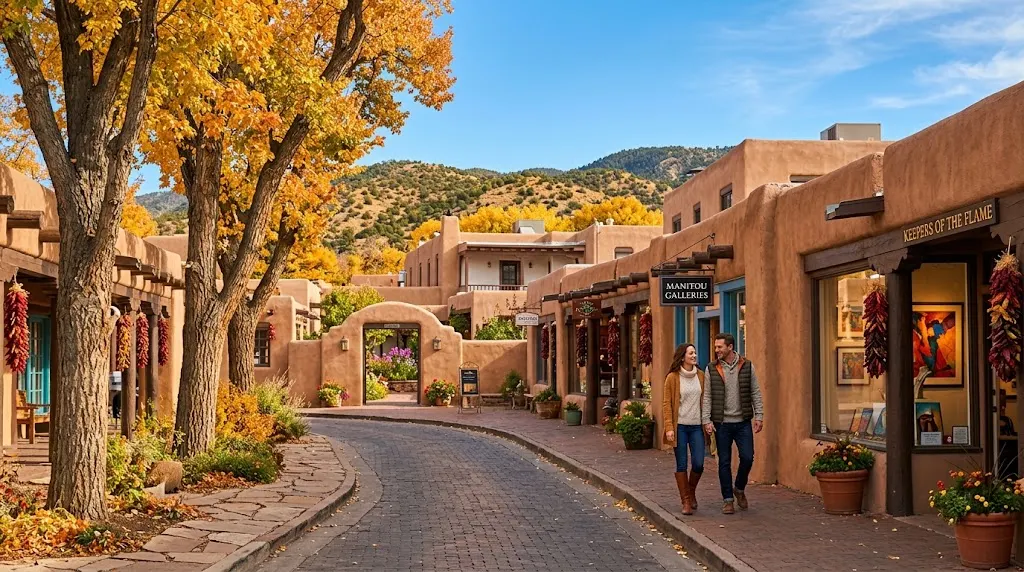
Choosing the best time to visit Santa Fe depends on what you want from your trip. New Mexico’s capital combines adobe architecture, galleries, museums, mountain scenery, distinctive regional food, hiking, festivals, and winter recreation. Because the city sits at roughly 7,000 feet above sea level, its high-desert climate can feel quite different from lower-elevation destinations.
For many travelers, spring and fall provide the most comfortable balance of pleasant daytime temperatures, outdoor activities, and manageable sightseeing conditions. Summer brings a lively cultural calendar and warm days, while winter appeals to travelers interested in snow, skiing, holiday atmosphere, and quieter city exploration. Each season offers a noticeably different version of Santa Fe.
Understanding seasonal temperatures, crowds, outdoor conditions, and what to pack can help you choose dates that match your interests. Whether you want to explore the historic Plaza, hike in the Sangre de Cristo Mountains, browse Canyon Road galleries, or enjoy Southwestern cuisine, this guide explains when Santa Fe may suit your trip best.
What Is the Best Time to Visit Santa Fe?
For comfortable sightseeing, late spring and early fall are excellent periods to consider. May often brings mild days and cool evenings, while September and early October combine pleasant temperatures with changing mountain scenery. These months can work particularly well for travelers who want a mix of walking, cultural attractions, dining, and outdoor adventures.
Santa Fe experiences four distinct seasons and large day-to-night temperature changes. Official tourism information lists average highs around 72°F in May, 78°F in September, and 67°F in October, while nighttime temperatures are considerably cooler. Layers are therefore useful even when daytime weather feels warm.
There is no single perfect month for everyone. Summer may be better if festivals and long sightseeing days matter most, while winter suits skiing and quieter cultural trips. Your ideal timing depends on whether you prioritize weather, outdoor recreation, seasonal scenery, events, lower crowds, or accommodation availability.
Visiting Santa Fe in Spring
Spring brings gradually warming temperatures, blooming landscapes, and increasingly comfortable conditions for exploring Santa Fe on foot. March can still feel cool and unpredictable, while April and May generally become milder. Tourism Santa Fe notes that late-season snow can still occur, so travelers should not assume that spring automatically means consistently warm weather.
This season is particularly appealing for exploring the historic Plaza, Canyon Road, museums, local shops, and nearby trails without peak summer heat. Morning and evening temperatures can still be chilly, which makes layered clothing useful. A light jacket, comfortable walking shoes, sunglasses, and sun protection should cover many typical sightseeing days.
Spring can also suit travelers looking for a somewhat calmer atmosphere before the busiest summer period. Tourism Santa Fe describes spring as quieter than summer and notes that lodging and spa specials may sometimes be available. Availability and prices still vary around weekends and special events, so checking your exact dates before booking remains important.
Visiting Santa Fe in Summer
Summer is one of Santa Fe’s busiest and most energetic seasons. Daytime temperatures are warm, but the city’s elevation helps keep nights noticeably cooler. Tourism Santa Fe reports summer highs generally in the 80s, with July averaging around 86°F, although occasional hotter days can occur.
June, July, and August are well suited to travelers who want long days, cultural activities, outdoor dining, galleries, and easy access to mountain recreation. However, strong high-elevation sunshine can feel intense even when temperatures seem moderate. Sunscreen, a brimmed hat, water, and lightweight clothing are useful throughout the season.
Summer is also associated with the regional monsoon pattern, which can bring afternoon thunderstorms and sudden cooling. Tourism Santa Fe advises visitors to carry rain protection, while its visitor information notes that summer weekends can approach lodging capacity. Reserving accommodation early is sensible if your dates overlap with major events or popular weekends.
Visiting Santa Fe in Fall
Fall is one of the most visually striking periods to experience Santa Fe. Late September and October bring cooler air and changing foliage, particularly in the nearby mountains where aspens can create brilliant golden landscapes. The combination of comfortable city weather and seasonal scenery makes autumn attractive for both cultural sightseeing and outdoor exploration.
September remains relatively warm, with an average high around 78°F, while October averages closer to 67°F. Nights cool considerably, so a sunny afternoon can be followed by a chilly evening. Packing a light sweater, jacket, or fleece makes it easier to stay comfortable when temperatures shift after sunset.
Autumn is particularly appealing for hiking, scenic drives, photography, gallery visits, and relaxed walks through historic neighborhoods. Travelers interested in mountain foliage should remember that peak color timing varies with elevation and weather. Building flexibility into your schedule gives you more options for exploring both downtown Santa Fe and the surrounding high country.
Visiting Santa Fe in Winter
Winter gives Santa Fe a completely different character. Snow can transform adobe buildings and mountain landscapes, while colder temperatures create an appealing atmosphere for museums, restaurants, galleries, and seasonal celebrations. Average winter temperatures remain cold enough that warm clothing is essential, particularly during mornings and evenings.
Tourism Santa Fe reports roughly 32 inches of average annual snowfall in town, while significantly more snow falls at Ski Santa Fe in the mountains. The ski area is about 16 miles from the historic downtown area, making it possible to combine winter sports with restaurants, art, and cultural sightseeing in a single trip.
Winter can work especially well for travelers who enjoy snow but do not want their entire trip centered around a ski resort. Roads and mountain conditions can change after storms, however, so flexibility is important. Pack warm layers, appropriate footwear, gloves, and a proper jacket, and check local conditions before heading into higher elevations.
Understanding Santa Fe Weather and Elevation
Santa Fe’s elevation is one of the most important factors visitors should consider. The city sits around 7,000 feet above sea level, making it the highest state capital in the United States. People arriving from much lower elevations may notice the thinner air, particularly during strenuous walks, hikes, or their first day in the city.
Official visitor guidance recommends allowing time to adjust and staying well hydrated. Santa Fe also has a dry climate, so visitors may notice dry skin, thirst, and stronger sun exposure than expected. Taking the first day at a comfortable pace can make sightseeing more enjoyable, especially if you plan mountain activities later in the trip.
Large temperature swings are another feature of the high-desert climate. A warm afternoon does not guarantee a warm evening, and changing clouds or storms can quickly alter conditions. Packing layers is therefore useful throughout the year rather than only during winter, particularly if your itinerary includes both downtown sightseeing and higher mountain elevations.
Best Time for Hiking and Outdoor Activities
Late spring and early fall are strong choices for hiking around Santa Fe because daytime conditions are often comfortable without the strongest summer heat. Trails near the city range from relatively gentle walks to more demanding mountain routes. Elevation can make exercise feel harder than expected, so start conservatively if you have recently arrived.
Summer hiking can also be rewarding, but early starts are often preferable. Morning temperatures are cooler, sun exposure is lower, and you may reduce the chance of being caught on exposed terrain during afternoon thunderstorms. Carry more water than you think you will need and use sun protection even when the air feels cool.
Fall adds the attraction of changing foliage, while winter creates opportunities for skiing, snowboarding, and other snow-based recreation. Ski Santa Fe reaches elevations above 12,000 feet and typically operates from late fall into early spring when conditions allow. Outdoor plans should always reflect current weather, trail, and mountain conditions.
Best Time for Art, Culture, and City Sightseeing
Santa Fe works as a cultural destination throughout the year. The historic Plaza, museums, adobe architecture, galleries, restaurants, and shops provide plenty to do even when weather limits hiking. Downtown is especially convenient for travelers who prefer to spend much of their trip exploring on foot rather than driving between distant attractions.
Summer brings particularly high visitor activity, while spring and fall can offer comfortable conditions for moving between galleries and cultural sites. Canyon Road is a major area for art lovers, while Museum Hill and downtown institutions provide additional options. Indoor attractions also make winter a viable time for travelers who are less interested in outdoor recreation.
If your trip revolves around a specific festival, exhibition, performance, or market, choose dates around that event rather than weather alone. Popular periods can increase accommodation demand significantly. Tourism Santa Fe specifically advises making summer reservations well in advance, particularly around major August events.
Best Time for Fewer Crowds and Better Value
Travelers who prefer quieter streets may want to consider late winter or parts of spring rather than peak summer. Visitor numbers generally rise from spring into summer, with Tourism Santa Fe identifying April through October as the most popular period and July and August as the peak months.
Visiting outside the busiest periods can make restaurants, museums, and central sightseeing areas feel less pressured. Accommodation may also offer more flexibility, although rates depend heavily on weekends, holidays, conferences, and special events. Comparing several date combinations is often more useful than assuming one entire season will always be inexpensive.
A shoulder-season trip can provide a useful compromise between weather and crowds. April, May, late September, and portions of October may allow comfortable sightseeing while avoiding the height of midsummer demand. Travelers should still book ahead when plans are fixed because Santa Fe remains a popular year-round cultural destination.
What to Pack for Santa Fe by Season
Spring travelers should prioritize layers. Bring comfortable walking shoes, trousers or jeans, lighter daytime clothing, a sweater, and a jacket for cooler mornings or unexpected weather. Because the city receives abundant sunshine and has a dry climate, sunglasses, sunscreen, lip balm, and a reusable water bottle are useful regardless of temperature.
Summer packing should include breathable clothing, sun protection, comfortable footwear, and lightweight rain protection for afternoon storms. Even in July or August, include at least one layer for cool evenings or higher elevations. If hiking, bring suitable footwear and enough water rather than relying on city conditions to predict what the mountains will feel like.
Fall requires another mix of warm-day and cool-night clothing, while winter calls for a heavier coat, warm layers, gloves, and shoes suitable for snow or icy surfaces when needed. Santa Fe’s changing temperatures reward flexible packing. Dressing in layers is usually more practical than relying on one heavy outfit throughout the day.
Tips for Planning Your Santa Fe Trip
Give yourself enough time to adjust to the altitude before scheduling your most demanding hike. Spending the first day around the Plaza, museums, galleries, restaurants, and nearby neighborhoods can create a relaxed introduction. Save higher-elevation activities for later once you have a better sense of how your body responds.
Two or three days can provide a useful introduction to Santa Fe, while four or five days allow more time for mountain activities, museums, galleries, scenic drives, and leisurely meals. If you are planning several trips and comparing very different destinations, this Thailand travel guide offers another perspective on matching weather and activities to your travel dates.
Finally, check weather forecasts shortly before departure rather than relying entirely on seasonal averages. High-elevation conditions can change quickly, and mountain weather may differ significantly from downtown Santa Fe. Keep at least part of your itinerary flexible so an unexpected storm or temperature change does not disrupt the entire trip.
Choosing the Right Santa Fe Season for Your Travel Style
Choose spring if you want comfortable sightseeing, emerging outdoor opportunities, and a somewhat quieter atmosphere before summer. It works especially well for museum visits, galleries, restaurants, scenic walks, and moderate outdoor plans. Just remember that early spring can still bring cold mornings and occasional late snow.
Choose summer if events, long days, and a lively city atmosphere matter more than avoiding crowds. Fall is particularly attractive for cooler outdoor adventures, foliage, and comfortable sightseeing. Winter is the natural choice for travelers who want snow, skiing, cozy dining, and a different perspective on Santa Fe’s adobe architecture.
Rather than looking for one universally perfect month, match the season to the experiences you care about most. Santa Fe’s four distinct seasons are part of its appeal, and each creates different reasons to visit. With appropriate clothing and realistic expectations about elevation, the city can be rewarding at almost any time of year.
Conclusion
For many travelers, May and September through early October provide an appealing combination of comfortable weather, outdoor access, and enjoyable city sightseeing. Spring brings gradually warmer days, while fall adds cooler evenings and mountain color. These periods work especially well for visitors hoping to experience both Santa Fe’s cultural and natural attractions.
Summer is ideal for a lively atmosphere and a busy calendar, although accommodation demand and afternoon thunderstorms require additional planning. Winter trades warm-weather sightseeing for snow, skiing, quieter exploration, and a distinctive high-desert atmosphere. There is something worthwhile in Santa Fe during every season.
The best time to visit Santa Fe ultimately depends on your priorities. Consider weather, crowds, mountain activities, cultural events, and your tolerance for heat or cold before selecting dates. Pack layers, stay hydrated, respect the altitude, and leave some flexibility in your schedule for changing high-desert conditions.
FAQs
What month is best to visit Santa Fe?
May, September, and early October are excellent choices for many travelers because temperatures are generally comfortable for sightseeing and outdoor activities. Your ideal month still depends on events, crowds, and preferred activities.
Is Santa Fe too hot in summer?
Santa Fe is warm in summer, with average highs generally in the 80s. Its elevation produces cooler nights, but strong sunshine and occasional hotter days make hydration and sun protection important.
Does Santa Fe get snow in winter?
Yes. Santa Fe receives snow in winter, and considerably heavier snowfall occurs in the surrounding mountains. This allows visitors to combine cultural sightseeing in town with skiing and other winter activities.
Is fall a good time to visit Santa Fe?
Yes. Fall offers cooler temperatures, golden aspen scenery in the nearby mountains, comfortable walking conditions, and plenty of opportunities for hiking, galleries, museums, dining, and scenic drives.
How many days should I spend in Santa Fe?
Three days provides a good introduction to the historic center, museums, galleries, food, and nearby scenery. Four or five days gives you more flexibility for hiking, mountain activities, and slower exploration.