




Marseille is one of France’s most distinctive Mediterranean destinations, combining an ancient port, colorful neighborhoods, dramatic limestone coastline, lively markets, and a strong local food culture. Unlike polished resort towns, Marseille feels energetic and lived-in, giving travelers a mix of historic attractions, seaside scenery, cultural landmarks, and everyday southern French life.
A Marseille travel guide can easily include everything from wandering around the Vieux-Port and climbing to Notre-Dame de la Garde to exploring Le Panier or hiking through the Calanques. The city rewards travelers who allow enough time to experience both its urban character and the natural landscapes surrounding the Mediterranean coast.
Whether you are planning a weekend break or adding Marseille to a longer trip through southern France, a little preparation makes the experience easier. Comfortable walking shoes, flexible sightseeing plans, and awareness of seasonal conditions are especially useful. Here are the best things to do and see in Marseille, along with practical tips for planning your visit.
Explore the Vieux-Port
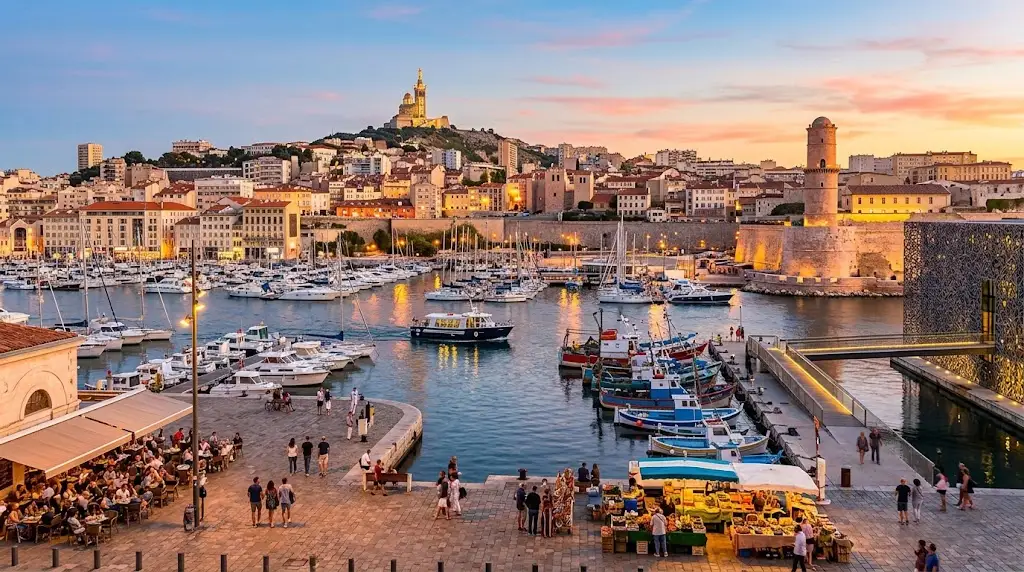
The Vieux-Port, or Old Port, is one of the best places to begin exploring Marseille. Boats fill the harbor while cafés, restaurants, historic streets, and busy pedestrian areas surround the waterfront. Marseille developed around this natural harbor more than 2,600 years ago, and it remains one of the city’s most recognizable gathering places today.
Walking around the harbor gives you excellent views toward Notre-Dame de la Garde, which rises above the city from its hilltop position. Early mornings offer a quieter atmosphere and a chance to see the traditional fish market, while evenings bring more activity to the waterfront. Boat excursions toward the islands and Calanques also depart from the Old Port.
Allow time simply to wander rather than treating the Vieux-Port as a quick photo stop. Explore both sides of the harbor, watch the boats, and continue toward nearby attractions such as Fort Saint-Jean or Le Panier. Its central location also makes the port a convenient reference point when organizing a day of Marseille sightseeing.
Wander Through Le Panier
Le Panier is one of Marseille’s most atmospheric historic neighborhoods. Its narrow streets, stairways, small squares, colorful facades, independent shops, and street art create a completely different experience from the wide waterfront around the Old Port. It is an ideal area to explore slowly without trying to follow an overly strict route.
Look for small artisan stores, local cafés, murals, hidden passages, and attractive viewpoints as you walk through the neighborhood. The area has an informal charm, and some of its most memorable corners appear when you leave the busiest streets. Comfortable shoes are helpful because the district includes slopes, steps, and uneven surfaces.
Le Panier is close enough to combine with the Vieux-Port, Cathedral of La Major, Mucem, and Fort Saint-Jean in the same day. Marseille Tourism includes the neighborhood among the city’s major visitor highlights, making it an easy addition to a first-time itinerary.
Visit Notre-Dame de la Garde
Notre-Dame de la Garde is one of the most recognizable landmarks in Marseille. Sitting on a hill above the city, the basilica provides sweeping views over rooftops, the Old Port, surrounding islands, and the Mediterranean. Locals often call it “La Bonne Mère,” reflecting its longstanding cultural connection with sailors and the people of Marseille.
The interior is worth visiting as well as the panoramic terraces outside. Architectural details, decorative surfaces, maritime references, and the elevated setting make the basilica different from an ordinary viewpoint. Try to visit when visibility is good because clear weather makes the extensive city and sea views particularly impressive.
You can reach Notre-Dame de la Garde by walking, public transport, or tourist transport. The official tourism walking route from the Vieux-Port is around two kilometers and includes a substantial uphill climb, so visitors who prefer an easier journey may want to use public transport for at least one direction.
Discover Mucem and Fort Saint-Jean
Mucem, the Museum of European and Mediterranean Civilisations, is a major cultural attraction near the entrance to the Old Port. Its modern architecture contrasts dramatically with Marseille’s older waterfront structures. Even travelers who do not spend hours inside the museum may enjoy walking around the surrounding waterfront and architectural spaces.
Fort Saint-Jean stands beside Mucem and adds another layer of history to the area. Bridges and walkways connect modern museum architecture with older defensive structures, creating excellent perspectives over the sea and harbor. This combination makes the area especially appealing to travelers interested in architecture, history, photography, and coastal views.
Because Mucem, Fort Saint-Jean, Le Panier, Cathedral of La Major, and the Vieux-Port sit relatively close together, they can form the core of a convenient sightseeing route. Marseille Tourism lists Mucem among the city’s essential attractions, so it is particularly worthwhile for first-time visitors who want cultural context alongside outdoor exploration.
Experience Calanques National Park
Calanques National Park is one of the biggest reasons to spend extra time in Marseille. Dramatic limestone cliffs meet intensely blue Mediterranean water, creating coves and hiking landscapes that feel completely different from the city center. Visitors can experience the Calanques on foot, by authorized boat excursion, or through other permitted activities depending on conditions.
Hiking requires more preparation than ordinary city sightseeing. Trails can be rocky, steep, hot, and exposed, so suitable shoes, plenty of water, sun protection, and realistic route planning are important. During the warmer months, access can also be restricted because of wildfire risk, with official conditions determining whether some areas can be entered.
Sugiton requires particular attention because access is reservation-controlled on designated summer dates, and reservations are free but limited. Road access to several Calanques is also restricted at different times, so public transport and walking are often more practical than arriving by car. Always check official conditions shortly before your planned visit.
Enjoy Marseille’s Beaches and Coastal Areas
Marseille is a major city, but the Mediterranean is never far away. Travelers who want a relaxed afternoon can explore beaches and coastal areas instead of filling every day with museums and historic landmarks. Plage des Catalans is relatively close to the center, while locations farther south offer a different seaside atmosphere.
The coastline toward Vallon des Auffes, Prado, Pointe Rouge, Les Goudes, and Callelongue provides opportunities for scenic walks, swimming, waterfront meals, and sunset views. Conditions vary by location, and some rocky coastal areas are better suited to sightseeing than casual swimming. Giving yourself time to explore beyond the central harbor reveals another side of Marseille.
The Frioul archipelago is another appealing option when weather and transport conditions are suitable. Marseille Tourism identifies the islands, beaches, and coastal landscapes as important parts of the city’s visitor experience. Combining an urban morning with an afternoon beside the sea can create a balanced Marseille itinerary.
Taste Marseille’s Local Food
Food is an important part of experiencing Marseille because the city combines Provençal traditions with strong Mediterranean influences. Seafood naturally plays a major role, and bouillabaisse is the dish most closely associated with Marseille. Authentic versions can be relatively expensive because they involve several types of fish and a carefully prepared broth.
Other foods worth looking for include panisse, navettes, seafood dishes, Provençal vegetables, local cheeses, and Mediterranean-inspired street food. Marseille’s diverse communities also contribute North African, Armenian, Italian, and Middle Eastern influences to the local dining scene. Exploring different neighborhoods can therefore be as rewarding for food lovers as choosing famous restaurants.
Avoid choosing every meal solely around the most heavily visited waterfront streets. Walk a little farther into surrounding neighborhoods and look at menus before sitting down. Markets, bakeries, casual lunch spots, and neighborhood restaurants can provide a more varied picture of Marseille’s food culture than relying exclusively on one signature dish.
Plan the Best Time to Visit Marseille
Spring and early autumn are particularly appealing for many travelers because temperatures are usually more comfortable for walking and outdoor sightseeing than during peak summer heat. These seasons can also make exploring neighborhoods, viewpoints, and coastal paths more pleasant. Summer remains popular for beaches and Mediterranean activities but requires greater attention to heat and crowds.
If the Calanques are central to your trip, seasonal access rules deserve special consideration. From June through September, wildfire risk can lead to restrictions or complete closures of certain natural areas, and official access information is updated according to conditions. Planning alternative city activities gives you flexibility if hiking becomes unavailable.
Winter can offer a quieter experience for travelers more interested in culture, food, and city exploration than swimming. Marseille remains a year-round destination, although wind and changing Mediterranean weather can affect outdoor plans. If you are comparing Marseille with other travel destinations, consider whether beaches, hiking, culture, or food are your main priorities before choosing your dates.
Getting Around Marseille
Central Marseille is enjoyable on foot, particularly around the Vieux-Port, Le Panier, Mucem, and nearby historic areas. However, the city spreads across a large area and includes significant hills, so trying to walk everywhere can waste valuable sightseeing time. Combining walking with buses, metro services, and other public transport is usually more practical.
Public transport is particularly useful for reaching Notre-Dame de la Garde, southern neighborhoods, beaches, and trail access points around the Calanques. The official tourism office recommends public transport for several natural areas where road access can be limited. In warmer months, maritime shuttle options may also connect parts of the coastline from the Vieux-Port.
A rental car is not essential for a city-focused Marseille trip and can create challenges with parking and restricted natural-area roads. It becomes more useful if Marseille is part of a wider Provence road trip. Within the city, planning attractions by neighborhood can minimize unnecessary transport and make each sightseeing day feel more relaxed.
Build a Simple Marseille Itinerary
For a first day, start around the Vieux-Port and walk toward Le Panier, Cathedral of La Major, Mucem, and Fort Saint-Jean. Later, head toward Notre-Dame de la Garde for panoramic views before returning to the waterfront for dinner. This route covers many of Marseille’s most recognizable urban attractions without requiring constant transportation.
Dedicate a second day to Marseille’s natural side. Depending on weather and seasonal restrictions, explore the Calanques through a suitable hike or boat trip, then spend the later afternoon along the coast. Boat tours from the Old Port can provide an alternative perspective when hiking conditions or personal mobility make land-based exploration less suitable.
With a third day, slow the pace and choose experiences based on your interests. You might visit Palais Longchamp, explore Cours Julien, take a trip to the Frioul Islands, spend time at a beach, or simply revisit neighborhoods that caught your attention. Marseille works particularly well when some unscheduled time is left for wandering and discovering local streets.
Conclusion
Marseille combines historic neighborhoods, Mediterranean scenery, cultural attractions, beaches, distinctive food, and some of southern France’s most dramatic natural landscapes. The Vieux-Port, Le Panier, Notre-Dame de la Garde, Mucem, and Calanques National Park provide enough variety to make even a short visit feel diverse.
Two or three days gives most first-time visitors a useful introduction, while a longer stay allows more time for beaches, islands, hiking, museums, and surrounding destinations. Organizing sightseeing by area reduces unnecessary travel and gives you more opportunities to experience the city rather than rushing between attractions.
The best Marseille travel experience balances famous sights with relaxed exploration. Walk through old neighborhoods, spend time by the sea, try local food, and leave room for plans to change according to weather and seasonal conditions. Marseille’s appeal comes from the combination of a busy port city and the Mediterranean landscape surrounding it.
FAQs
How many days do you need in Marseille?
Two days are enough for major city highlights and a brief coastal experience. Three or four days provide more flexibility for the Calanques, beaches, museums, islands, and slower neighborhood exploration.
Is Marseille worth visiting for tourists?
Yes. Marseille offers historic districts, Mediterranean coastline, major cultural attractions, diverse food, and access to the Calanques, giving travelers a combination of urban sightseeing and outdoor experiences.
What is Marseille most famous for?
Marseille is known for the Vieux-Port, Notre-Dame de la Garde, bouillabaisse, its Mediterranean identity, historic neighborhoods, and the spectacular limestone coves of Calanques National Park.
Can you visit the Calanques from Marseille?
Yes. The Calanques can be reached from Marseille by public transport and hiking routes or experienced through authorized boat excursions. Seasonal wildfire restrictions can affect land access, especially in summer.
What is the best area to explore first in Marseille?
The Vieux-Port is an excellent starting point because it places you close to Le Panier, Mucem, Fort Saint-Jean, transport connections, restaurants, and several important Marseille attractions.