




Why the World’s Most Beautiful Coastal Towns Feel So Special
Coastal towns have a way of turning an ordinary trip into something memorable. The combination of sea views, historic streets, colorful houses, fishing harbors, and dramatic cliffs creates scenery that feels almost unreal. Unlike large resort cities, many seaside towns also offer a slower pace that encourages travelers to explore on foot and appreciate everyday local life.
The most beautiful coastal towns around the world are not defined by beaches alone. Their charm often comes from centuries-old architecture, waterfront cafés, local seafood, mountain backdrops, and communities shaped by life beside the sea. Some sit above turquoise bays, while others spread across islands, rocky peninsulas, or quiet stretches of the Atlantic and Mediterranean coasts.
Each destination on this list offers something different, from Italian cliffside villages and Greek island architecture to Swahili heritage and tropical Brazilian landscapes. Whether you prefer romantic streets, cultural attractions, scenic hiking, or peaceful ocean views, these towns can inspire a completely different kind of vacation. Here are some coastal places worth adding to your travel wish list.
Positano, Italy
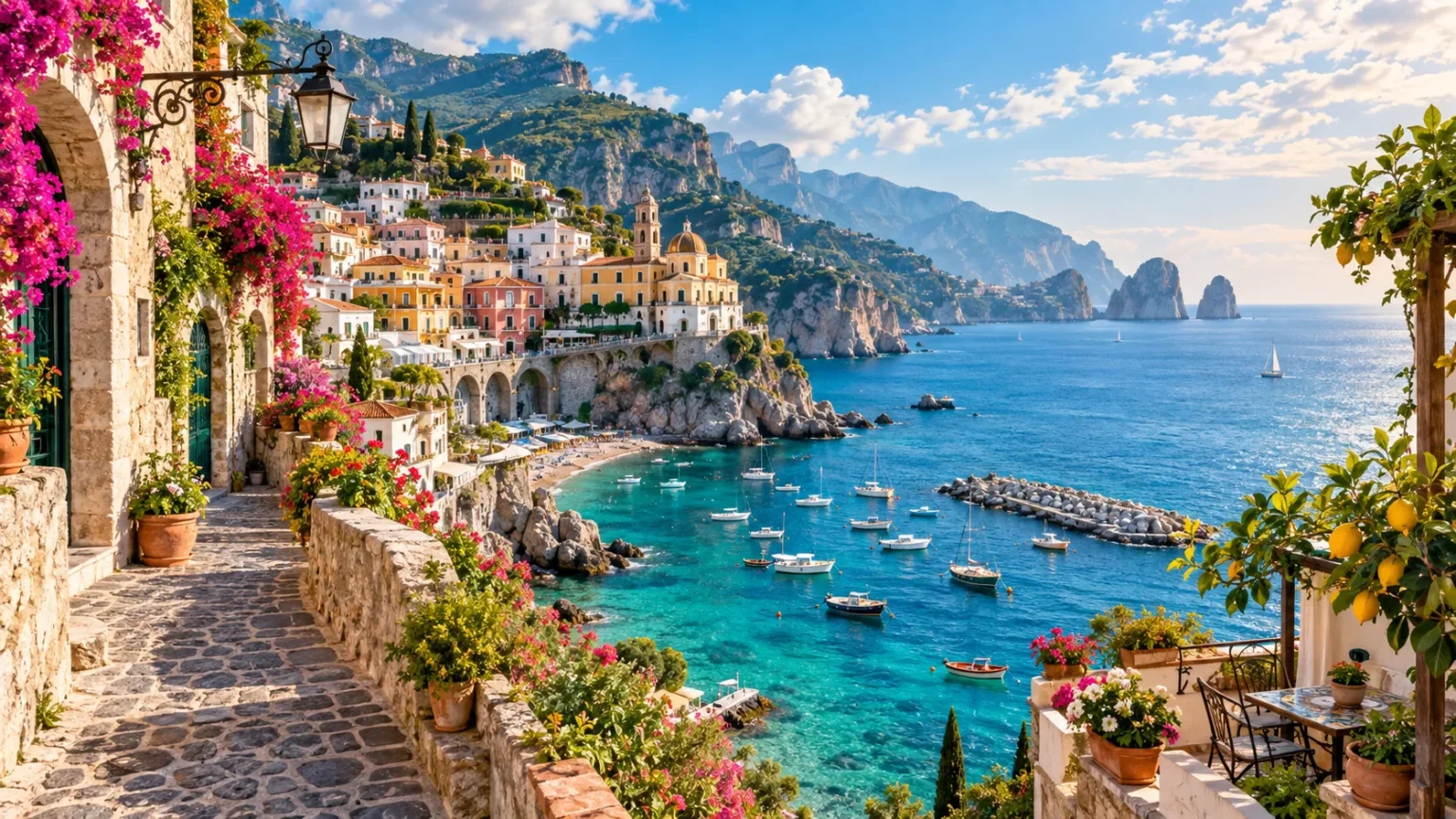
Positano rises dramatically above the Mediterranean on Italy’s famous Amalfi Coast, creating one of Europe’s most recognizable seaside views. Pastel-colored buildings appear stacked along steep hillsides, while narrow stairways wind toward beaches and a lively waterfront. Mountains behind the town make the landscape feel even more dramatic, especially when viewed from the sea or higher hillside paths.
Walking through Positano is part of the experience because many streets are narrow, steep, and filled with small boutiques, cafés, restaurants, and viewpoints. The town has an elegant atmosphere without losing its traditional coastal character. Visitors can spend the day swimming, taking boat trips, enjoying fresh Italian food, or simply finding a terrace overlooking the blue water.
Positano becomes especially photogenic around sunrise and late afternoon when soft light falls across the colorful buildings. Summer brings warmer water and a lively atmosphere, while the shoulder seasons can feel calmer for travelers interested in sightseeing. Its combination of dramatic geography, Mediterranean architecture, and sea views easily places Positano among the world’s most beautiful coastal towns.
Oia, Santorini, Greece
Oia sits high above the Aegean Sea on the island of Santorini, where whitewashed buildings spread across volcanic cliffs. Blue-domed churches, cave-style homes, stone pathways, and bright terraces create the classic Greek island scenery many travelers dream about. The contrast between the brilliant white architecture and deep blue water gives the town its instantly recognizable appearance.
The narrow pedestrian lanes are ideal for slow exploration, with small shops, galleries, restaurants, and hidden viewpoints appearing around almost every corner. Because the town is built along the edge of the caldera, visitors can see dramatic cliffs and open sea from many locations. Traditional architectural details also make simply walking through residential areas feel like part of the sightseeing experience.
Oia is particularly famous for evenings when visitors gather around viewpoints to watch the sky change color over the Aegean. Staying overnight can provide quieter moments before day visitors arrive and after busy sunset periods end. For couples, photographers, and travelers who appreciate architecture, Oia remains one of the most visually striking coastal destinations in the Mediterranean.
Vernazza, Italy
Vernazza is one of the five celebrated villages of Cinque Terre on Italy’s Ligurian coast. Colorful houses gather around a small natural harbor, while vineyards and steep green hills rise behind the settlement. Its compact waterfront, historic buildings, rocky shoreline, and surrounding walking trails create a setting that feels both traditionally Italian and closely connected to the sea.
The village is best explored slowly because its narrow streets reveal cafés, small restaurants, stone buildings, and unexpected coastal viewpoints. Travelers can relax beside the harbor or climb higher into the surrounding landscape for views across the rooftops and coastline. Hiking routes connecting nearby Cinque Terre villages also make Vernazza appealing to visitors who want outdoor activity alongside cultural sightseeing.
Despite its small size, Vernazza can feel lively during popular travel months, so early mornings and evenings often provide a more peaceful atmosphere. Visiting outside peak summer can also make its lanes and viewpoints easier to appreciate. The balance of rugged nature, traditional architecture, and harbor life makes Vernazza one of Italy’s most charming small coastal towns.
Kotor, Montenegro
Kotor occupies a spectacular position beside the Bay of Kotor, surrounded by steep mountains that seem to rise directly from the water. Its historic old town features stone lanes, medieval walls, churches, squares, and centuries of architectural character. The combination of calm bay scenery and dramatic mountain slopes makes Kotor look very different from more typical beach-focused European coastal destinations.
Inside the old town, travelers can wander through narrow streets where small courtyards, cafés, historic buildings, and local shops appear behind stone archways. One of the most memorable experiences is climbing toward the hillside fortifications, where higher viewpoints reveal the bay and orange-roofed town below. Even without the climb, the waterfront provides beautiful scenery for slow walks and photography.
Kotor works particularly well for travelers who want history and natural scenery in the same destination. Boat trips around the bay can introduce visitors to surrounding villages and waterfront landmarks, while evenings inside the old town have a relaxed atmosphere. With mountains, medieval architecture, and shimmering water meeting in one compact setting, Kotor offers remarkable visual variety.
Rovinj, Croatia
Rovinj sits on Croatia’s Istrian Peninsula and is known for a historic center that rises from the Adriatic coastline. Tightly packed buildings, colorful facades, cobblestone lanes, and small waterfront areas give the town a warm Mediterranean atmosphere. From a distance, the old town appears almost to float above the water, making its skyline especially impressive from boats and nearby coastal viewpoints.
The historic streets lead upward through narrow passages toward the higher parts of town, while the waterfront is filled with restaurants and places to watch fishing boats come and go. Travelers interested in relaxed European destinations may also enjoy exploring other small towns in Europe where local character matters more than crowded city attractions. Rovinj fits that slower travel style naturally.
Beyond the historic center, visitors can explore nearby beaches, forested areas, cycling routes, and quiet sections of coastline. Sunset is particularly appealing when warm light reflects across the harbor and colorful buildings. Rovinj combines architecture, seafood, Adriatic scenery, and an easygoing atmosphere, making it a strong choice for travelers looking beyond Europe’s more famous seaside destinations.
Piran, Slovenia
Piran is a small coastal town on Slovenia’s short but beautiful Adriatic shoreline. Venetian-influenced architecture, pastel buildings, red rooftops, and a waterfront promenade create an atmosphere that feels distinctly Mediterranean. Because the historic center occupies a compact peninsula, water remains visible from many viewpoints, helping the town maintain a strong connection with its seaside location.
Tartini Square forms the heart of Piran, surrounded by elegant buildings and narrow lanes leading deeper into the old town. Visitors can walk uphill to higher viewpoints where rooftops, the Adriatic, and neighboring coastline become visible together. The lack of overwhelming scale makes Piran enjoyable for travelers who prefer wandering without needing a complicated sightseeing itinerary or constant transportation.
Days here can revolve around simple experiences such as seafood meals, waterfront walks, swimming, and watching boats cross the horizon. Nearby sections of the Slovenian coast can also be explored during a longer stay. Piran may be smaller than many famous Mediterranean destinations, but its architecture and peaceful coastal scenery give it a beauty that feels intimate rather than extravagant.
Lamu, Kenya
Lamu offers a very different coastal experience from the Mediterranean towns commonly found on travel lists. Located on Kenya’s Indian Ocean coast, the historic settlement reflects centuries of Swahili culture through coral-stone buildings, shaded courtyards, narrow lanes, and beautifully crafted wooden doors. Its architectural character and deep cultural heritage make the destination fascinating beyond its tropical seaside surroundings.
Exploring Lamu on foot allows travelers to experience streets shaped by generations of local life rather than modern urban planning. Traditional boats along the waterfront, markets, local cuisine, and distinctive architecture create a strong sense of place. Nearby beaches and ocean excursions add another layer to the experience without replacing the cultural identity that makes the town so distinctive.
Lamu suits travelers interested in places where history, community, and coastal scenery exist together. Rather than relying on large resorts or modern attractions, much of its appeal comes from atmosphere and cultural detail. For visitors willing to travel beyond familiar European seaside towns, Lamu presents an unforgettable combination of Indian Ocean landscapes and enduring Swahili traditions.
Paraty, Brazil
Paraty sits between forest-covered mountains and the Atlantic Ocean along Brazil’s southeastern coastline. Its historic center is filled with white colonial buildings, colorful doorways, stone streets, and traditional churches that contrast beautifully with the surrounding tropical environment. Boats resting along the waterfront add another layer of color, while lush green hills create a dramatic natural backdrop behind the town.
Visitors can spend time exploring the historic streets before taking boat trips to nearby bays, islands, and beaches. The surrounding landscape provides opportunities for nature experiences, while the town itself offers restaurants, cultural spaces, local shops, and atmospheric evening walks. This balance makes Paraty particularly appealing to travelers who want both historical character and access to beautiful coastal scenery.
Rainforest surroundings give Paraty a completely different appearance from dry Mediterranean coastal villages. Green mountains seem to meet the water, creating landscapes that look especially impressive from boats offshore. For travelers exploring South America, Paraty offers an attractive combination of Brazilian culture, colonial architecture, tropical vegetation, and calm coastal views that rewards more than a brief visit.
Kaikōura, New Zealand
Kaikōura lies on New Zealand’s South Island where rugged coastline meets dramatic mountain scenery. Few coastal towns offer such a striking visual contrast between the Pacific Ocean and high peaks rising behind the settlement. Rocky shores, open beaches, changing weather, and surrounding landscapes create an atmosphere that feels wild and expansive rather than polished or resort-like.
The town is particularly appealing to travelers who enjoy outdoor experiences and wildlife-focused activities. Coastal walking routes provide opportunities to admire cliffs, ocean views, and surrounding mountains from different perspectives. Even a simple drive through the region can be memorable because the geography changes quickly between shoreline, farmland, rocky headlands, and towering ranges in the distance.
Kaikōura is a strong choice for travelers who find natural scenery more appealing than colorful architecture or busy promenades. Cool ocean air, dramatic horizons, and the surrounding landscape create a peaceful environment for photography and exploration. Its distinctive meeting of mountains and sea helps Kaikōura stand apart from many other beautiful coastal towns around the world.
Azenhas do Mar, Portugal
Azenhas do Mar is a small Portuguese village built dramatically along cliffs overlooking the Atlantic Ocean. White houses with red roofs appear to cascade toward the water, forming one of the most striking coastal scenes near Lisbon. The rugged cliffs and powerful Atlantic waves give the village a more dramatic character than the calmer waterfront towns found around Mediterranean coastlines.
The village itself is relatively compact, making its scenery the main attraction rather than a long checklist of landmarks. Visitors can admire the cliffside buildings from nearby viewpoints, enjoy coastal meals, or explore other beaches and villages in the surrounding Sintra region. The combination of traditional Portuguese architecture and raw Atlantic scenery makes even a short stop visually memorable.
Azenhas do Mar is particularly appealing to travelers taking scenic road trips through Portugal. Changing light throughout the day can completely alter the appearance of the cliffs, ocean, and whitewashed houses. Although smaller and quieter than famous destinations such as Positano or Santorini, its dramatic position above the Atlantic gives it a beauty that feels wonderfully distinctive.
Conclusion
The most beautiful coastal towns around the world prove that seaside travel can offer far more than sandy beaches. From the colorful cliffs of Positano and whitewashed buildings of Oia to the mountains surrounding Kotor and Kaikōura, every destination creates its appeal differently. Architecture, culture, history, local food, and natural surroundings often become just as memorable as the sea itself.
Choosing the right coastal destination depends on the type of experience you want. Mediterranean towns are ideal for travelers drawn to historic streets, warm weather, and waterfront dining, while destinations such as Lamu and Paraty offer deeper cultural and tropical experiences. Places like Kaikōura attract visitors who would rather spend their time surrounded by dramatic landscapes and outdoor adventure.
Whichever town you choose, consider staying long enough to experience more than its famous viewpoints. Early mornings, quiet side streets, local meals, harbor walks, and conversations with residents often become the moments travelers remember most. Beautiful coastal towns are best appreciated slowly, giving you time to understand both the landscape and the communities that developed beside it.
FAQs
What are the most beautiful coastal towns in the world?
Popular choices include Positano, Oia, Vernazza, Kotor, Rovinj, Piran, Lamu, Paraty, Kaikōura, and Azenhas do Mar. Each combines distinctive architecture, culture, and memorable seaside scenery.
Which coastal towns are best for a romantic vacation?
Positano, Oia, Rovinj, and Piran are especially popular for romantic trips because of their waterfront restaurants, scenic sunsets, historic streets, and intimate accommodations overlooking the sea.
What is the best time to visit coastal towns in Europe?
Late spring and early autumn are often excellent choices because temperatures can remain pleasant while major destinations may feel less crowded than during the busiest summer weeks.
Which coastal town is best for nature lovers?
Kaikōura offers an impressive combination of mountains, rugged coastline, walking opportunities, and wildlife experiences. Paraty is another attractive option for travelers wanting tropical forests, islands, beaches, and coastal scenery.
Are small coastal towns worth visiting instead of major beach cities?
Yes. Smaller coastal towns often provide walkable historic areas, traditional architecture, local restaurants, peaceful viewpoints, and a stronger sense of place, making them appealing for travelers who prefer slower, more immersive trips.