




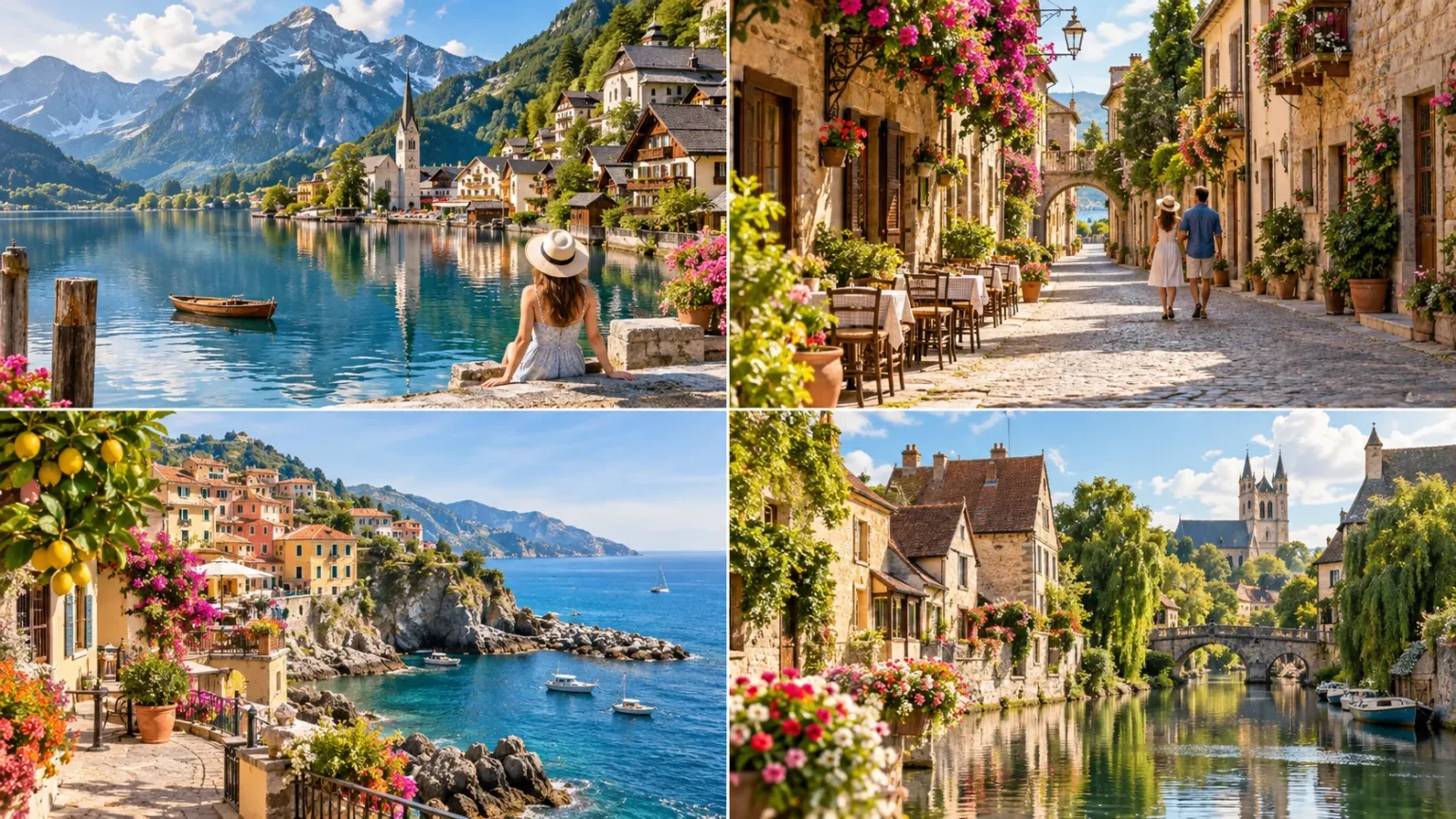
Europe’s famous capitals are exciting, but sometimes the best vacation is one where you can slow down rather than race between crowded landmarks. Small European towns offer cobbled streets, mountain views, quiet lakes, historic architecture, local cafés, and a more relaxed daily rhythm. They can be ideal for couples, solo travelers, families, and anyone looking for a peaceful European escape.
A peaceful vacation does not necessarily mean traveling somewhere with nothing to do. The best small towns combine beautiful surroundings with enough restaurants, walking routes, historic sights, and day trips to keep your stay interesting. Instead of spending hours navigating transportation networks, you can often explore these destinations comfortably on foot and leave more time for simply enjoying where you are.
From Alpine villages and canal-side communities to medieval towns and coastal settlements, Europe has countless places suited to slow travel. Some are already famous but become noticeably calmer when day-trippers leave, while others remain outside the busiest tourism routes. The following destinations offer different ways to enjoy a quieter European vacation without giving up scenery, culture, or memorable experiences.
What Makes a European Small Town Perfect for a Peaceful Vacation?
The best peaceful towns usually have enough attractions to fill a few relaxed days without creating pressure to follow an exhausting sightseeing schedule. Walkable historic centers, scenic viewpoints, local restaurants, waterfront paths, and nearby nature make it easy to explore gradually. You can enjoy the destination without feeling that every hour needs to be planned around reservations, transportation, or major tourist attractions.
Location also matters because a quiet town becomes easier to enjoy when reaching it does not require complicated logistics. Many European villages and small towns can be combined with larger cities through trains, buses, or short drives. Staying overnight often gives travelers a different experience from visiting for only a few hours, especially in places popular with daytime excursion groups.
Timing can make even well-known destinations considerably more relaxing. Traveling in spring, autumn, or outside major holiday periods generally creates a slower atmosphere than visiting during peak summer weeks. If you enjoy discovering places beyond the obvious city breaks, exploring more underrated European destinations can help you build a quieter and more varied itinerary.
Hallstatt, Austria
Hallstatt sits between a dramatic Alpine landscape and the calm waters of Lake Hallstatt, creating one of Europe’s most recognizable village settings. Traditional houses climb the slopes behind the waterfront, while mountains frame almost every direction. The compact center encourages slow exploration, with lakeside walks, viewpoints, cafés, and historic corners close enough to discover without complicated transportation.
The village is famous and can receive significant daytime tourism, so timing matters if peace is your priority. Staying overnight allows you to experience the waterfront during quieter mornings and evenings after many visitors have departed. Traveling outside the busiest summer and holiday periods can also make the atmosphere feel much more relaxed than a rushed midday visit.
Hallstatt works especially well for travelers who enjoy scenery more than nightlife. You can spend time walking beside the lake, exploring surrounding mountain areas, or simply sitting with a coffee while watching the landscape change throughout the day. Combining Hallstatt with nearby Austrian destinations can also create a slower Alpine itinerary rather than treating the village as a quick photo stop.
Giethoorn, Netherlands
Giethoorn offers a very different atmosphere from the busy streets commonly associated with European city breaks. The village is known for waterways, small bridges, traditional homes, and green gardens that create an unusually calm setting. Exploring on foot or moving slowly along the canals makes the destination feel naturally suited to travelers who prefer gentle sightseeing instead of crowded urban attractions.
Boating is one of the most popular ways to experience Giethoorn, but you do not need to spend the entire day on the water. Walking routes allow you to cross bridges, explore quieter sections, and stop at waterside restaurants or cafés. The village becomes particularly enjoyable when you leave the busiest central stretches and allow yourself time to wander without following a strict route.
Like several beautiful European villages, Giethoorn can become busier during peak daytime hours. An early start, later afternoon visit, or overnight stay can provide a calmer experience. Spring and early autumn can also be appealing for travelers who want pleasant scenery while avoiding some of the heavy demand associated with popular European summer vacations.
Kaysersberg, France
Kaysersberg in France’s Alsace region combines colorful half-timbered houses, stone streets, surrounding vineyards, and a compact historic center. The town feels picturesque without requiring a long list of major attractions to justify the visit. Walking through its old streets, stopping at bakeries, and exploring the surrounding countryside can easily become the main experience rather than simply filling time between famous landmarks.
The surrounding Alsace landscape makes Kaysersberg particularly suitable for slow travel. Vineyards and other small communities create opportunities for relaxed drives, cycling, and short regional excursions. Instead of changing hotels every night, travelers can use one village as a base and explore nearby towns at an easier pace before returning for a quiet evening.
Different seasons create noticeably different experiences. Warmer months bring flowers and countryside walks, autumn adds vineyard colors, while the winter holiday season creates a more festive atmosphere. Travelers seeking maximum peace should consider dates outside major regional events, when the narrow lanes and traditional architecture can be enjoyed without the larger crowds attracted by seasonal celebrations.
Český Krumlov, Czechia
Český Krumlov has a beautifully preserved historic center shaped around curves of the Vltava River. Its castle, red-roofed buildings, narrow lanes, and river views create the feeling of a destination much larger in character than its compact size. Most highlights can be reached on foot, making it easy to explore without dealing with complicated urban transportation.
The town is a popular day-trip destination, particularly for travelers coming from Prague and other Central European cities. That means the quietest experience often comes before tour groups arrive or after they leave. Spending one or two nights allows you to walk through the old center in the evening and enjoy restaurants or river views after the busiest sightseeing hours.
Beyond the historic streets, the surrounding countryside adds another reason to stay longer. Walking, cycling, and relaxed river activities can provide a break from architecture and museums. Rather than trying to complete a checklist of attractions, give yourself time to sit at a café, wander without a map, and enjoy the slower rhythm that makes smaller European destinations rewarding.
Bled, Slovenia
Bled is set beside an Alpine lake surrounded by mountains and forested slopes, giving travelers an easy combination of scenery and small-town convenience. Lake Bled is the natural center of the destination, and walking around the shoreline can become one of the most enjoyable parts of a stay. Views change constantly as you move between wooded sections, open water, and mountain backdrops.
The town offers enough accommodation and dining options for a comfortable short vacation without feeling like a major metropolitan destination. Travelers can combine lake walks with viewpoints, nearby hiking, and excursions into Slovenia’s wider natural landscapes. Spending several nights also reduces the temptation to turn Bled into another hurried stop on a packed Central European itinerary.
Early mornings and evenings are especially pleasant around the lake because the atmosphere becomes quieter and the light changes across the surrounding mountains. Visiting outside peak summer can create an even more peaceful experience. Slovenia’s relatively compact geography also means Bled can fit naturally into a trip that includes Ljubljana, mountain areas, and other scenic destinations.
Albarracín, Spain
Albarracín offers a completely different side of Spain from the country’s famous coastal resorts and large cities. The historic town rises across a rocky landscape, with narrow lanes, warm-colored buildings, defensive walls, and surrounding hills creating a distinctive setting. Its compact scale encourages travelers to explore slowly rather than rushing between widely separated attractions.
Walking is the best way to appreciate the town, although some streets and paths can be steep. Taking your time gives you opportunities to notice balconies, stone details, hidden corners, and viewpoints that could easily be missed on a hurried visit. The surrounding countryside also adds hiking and outdoor possibilities for travelers who want more than a purely historic experience.
Albarracín is particularly appealing for people building a slower road trip through inland Spain. Instead of focusing only on Madrid, Barcelona, and beach destinations, you can include smaller towns where everyday life feels more visible. Staying overnight provides extra time to enjoy the historic center when day visitors have left and the streets become noticeably calmer.
Ribe, Denmark
Ribe is one of those destinations where historic character can be enjoyed without the scale or intensity of a large capital. Traditional streets, old architecture, quiet squares, and a walkable center create an inviting atmosphere for travelers interested in Scandinavian culture. The town can be explored gradually, leaving plenty of time for cafés, local food, and unplanned walks.
Its manageable size is part of the appeal. You do not need to create a detailed transportation plan or spend large portions of the day moving between distant neighborhoods. Instead, sightseeing can naturally blend into everyday activities such as stopping for lunch, browsing small shops, or taking a longer walk beyond the historic center.
Ribe can work well as part of a broader Denmark itinerary for travelers who want a break from larger urban destinations. Spending a night or two provides a more relaxed experience than simply arriving, taking photographs, and immediately moving on. Cooler shoulder-season weather can also suit travelers who prefer quiet streets over crowded summer attractions.
Reine, Norway
Reine offers one of the most dramatic settings on this list, with steep mountains rising around fishing villages and coastal waters in Norway’s Lofoten Islands. The scenery makes it particularly attractive to photographers, hikers, and travelers who would rather spend their vacation outdoors than visiting museums and shopping districts. The surrounding landscape becomes the destination itself.
A peaceful stay here requires a different style of planning because Lofoten is more remote than many European town destinations. Weather can change quickly, distances require attention, and transportation may be less frequent than in major cities. Travelers who plan carefully are rewarded with scenic roads, quiet coastal walks, mountain views, and long stretches of natural beauty.
Reine works best when you resist the urge to race between every viewpoint on the islands. Choose a few walks or scenic stops and leave time for changing weather and spontaneous discoveries. Staying several nights can make the trip feel considerably more relaxing, especially when compared with trying to cover the entire Lofoten region within a very short schedule.
Castelmezzano, Italy
Castelmezzano sits among the dramatic peaks of southern Italy’s Lucanian Dolomites, creating a mountain setting that feels very different from Italy’s famous art cities and coastal resorts. Stone houses rise along steep slopes beneath rugged rock formations. The compact village offers an atmospheric place to slow down while exploring a less familiar part of the country.
Walking through the village is an experience in itself because narrow streets, stairways, and viewpoints reveal the mountain landscape from different angles. Outdoor travelers can use the area as a starting point for hiking and exploring nearby communities. Even without an ambitious activity schedule, the combination of mountain scenery and village life creates plenty to enjoy during a short stay.
This is the kind of destination that works particularly well for travelers who have already experienced Italy’s major cities and want something quieter. A rental car can make regional exploration easier, although careful route planning is useful in mountainous areas. Spending more time in fewer places allows southern Italy’s slower pace to become part of the vacation rather than an obstacle.
How to Plan a Peaceful Small-Town European Vacation
Avoid building an itinerary that moves to another town every morning. Constant packing, hotel check-ins, and transportation can make even beautiful destinations feel exhausting. Staying two or three nights in selected places gives you time to explore without rushing and creates space for leisurely breakfasts, evening walks, spontaneous meals, and weather changes that would otherwise disrupt a tightly scheduled trip.
Choose accommodation within walking distance of the historic center or main area whenever your budget allows. Being able to leave the car parked or avoid repeated bus journeys makes small-town travel considerably easier. At the same time, staying one street away from the busiest central square may provide quieter nights while keeping restaurants and attractions within comfortable walking distance.
Finally, think carefully about season and arrival time. Famous small towns can feel completely different at 8 a.m. than they do during a busy afternoon. Shoulder seasons, weekday stays, longer visits, and early or late exploration can transform a popular destination into the relaxed European experience you were hoping to find.
Conclusion
The best small towns in Europe for a peaceful vacation offer more than attractive buildings and postcard views. Places such as Hallstatt, Giethoorn, Kaysersberg, Český Krumlov, Bled, Albarracín, Ribe, Reine, and Castelmezzano give travelers opportunities to slow down, walk more, spend time outdoors, and experience destinations without the constant intensity of major capitals.
Peaceful travel depends just as much on how you travel as where you go. Staying overnight, avoiding peak periods, reducing the number of destinations, and leaving gaps in your itinerary can make a significant difference. Even a famous town can feel surprisingly calm when you experience it early in the morning, after day-trippers leave, or during a quieter season.
Choose your destination based on the atmosphere you want rather than trying to visit every beautiful town on one trip. Alpine lakes, medieval streets, quiet canals, mountain villages, and Scandinavian towns each offer a different kind of escape. Give yourself enough time to enjoy one place properly, and a small-town European vacation can become far more memorable than a rushed tour of famous cities.
FAQs
What is the most peaceful small town to visit in Europe?
There is no single best choice, but towns such as Ribe, Kaysersberg, Reine, and Castelmezzano can suit slower vacations. Your experience will also depend heavily on season, weekday, and accommodation location.
Are European small towns cheaper than major cities?
Some can be less expensive, particularly for dining and accommodation, but popular villages may still command high prices. Compare transportation and lodging costs because remote destinations can sometimes cost more to reach.
How many days should I spend in a small European town?
Two or three nights work well for many small towns because they allow you to explore without rushing. Larger surrounding regions or destinations with hiking opportunities may justify a longer stay.
What is the best season for a quiet European vacation?
Spring and autumn are often excellent for slower travel because temperatures can remain comfortable while visitor numbers are lower than peak summer. Weather and seasonal closures vary considerably by region.
Is it better to rent a car for small-town travel in Europe?
It depends on the destination. Some towns have convenient train or bus connections, while remote mountain and countryside locations are easier by car. Check local transportation before designing your route.