





Europe is filled with extraordinary landscapes, historic cities, colorful villages, dramatic coastlines, and architectural treasures that seem almost unreal. From peaceful Alpine lakes to Mediterranean islands and fairy-tale towns, every region offers something completely different. Whether you enjoy nature, photography, culture, beaches, or historic streets, Europe provides countless destinations capable of turning an ordinary vacation into an unforgettable experience.
Choosing where to go can be difficult because so many European destinations deserve attention. Some places impress visitors with natural beauty, while others stand out because of their architecture, atmosphere, or unique cultural character. To make planning easier, this guide highlights ten of the most beautiful places in Europe that deserve a spot on your travel bucket list.
1. Santorini, Greece
Santorini is instantly recognizable because of its whitewashed buildings, blue-domed churches, volcanic cliffs, and breathtaking views across the Aegean Sea. Towns such as Oia and Fira sit dramatically above the water, creating some of Europe’s most photographed landscapes. Wandering through narrow lanes reveals boutique hotels, hidden terraces, traditional restaurants, and viewpoints that seem designed specifically for unforgettable sunsets.
The island offers much more than beautiful architecture. Visitors can explore volcanic beaches, take boat trips around the caldera, visit traditional villages, and discover archaeological sites that reveal Santorini’s fascinating history. Red Beach and Perissa provide distinctive coastal scenery, while wineries across the island introduce travelers to local varieties produced in volcanic soil and shaped by Santorini’s unusual climate.
Santorini can be romantic, but it is equally enjoyable for friends, families, and independent travelers. Anyone planning their first journey alone can also explore other beginner-friendly solo travel destinations before deciding where to begin. Visiting Santorini outside the busiest summer weeks can provide a calmer atmosphere, better opportunities for photography, and more enjoyable walks through its iconic villages.
2. Swiss Alps, Switzerland
Few landscapes in Europe feel as dramatic as the Swiss Alps. Snow-covered peaks rise above turquoise lakes, green valleys, wooden chalets, and peaceful villages, creating scenery that changes beautifully throughout the seasons. Destinations such as Zermatt, Interlaken, Grindelwald, and Lauterbrunnen give travelers easy access to mountain views, hiking trails, waterfalls, scenic trains, and charming Alpine communities.
Summer brings green meadows, wildflowers, hiking opportunities, and crystal-clear mountain lakes. Travelers can ride cable cars to panoramic viewpoints, walk through picturesque valleys, or simply relax in a village café surrounded by enormous peaks. Lauterbrunnen Valley is especially memorable because towering cliffs and waterfalls create a landscape that feels almost too dramatic to belong to the real world.
Winter transforms the same region into one of Europe’s most magical snowy destinations. Ski resorts become lively, mountain villages glow beneath fresh snow, and scenic railway journeys reveal incredible winter landscapes from the comfort of heated carriages. Even visitors who do not ski can enjoy cable cars, winter walks, local cuisine, and panoramic viewpoints that showcase the remarkable beauty of Switzerland’s mountains.
3. Amalfi Coast, Italy
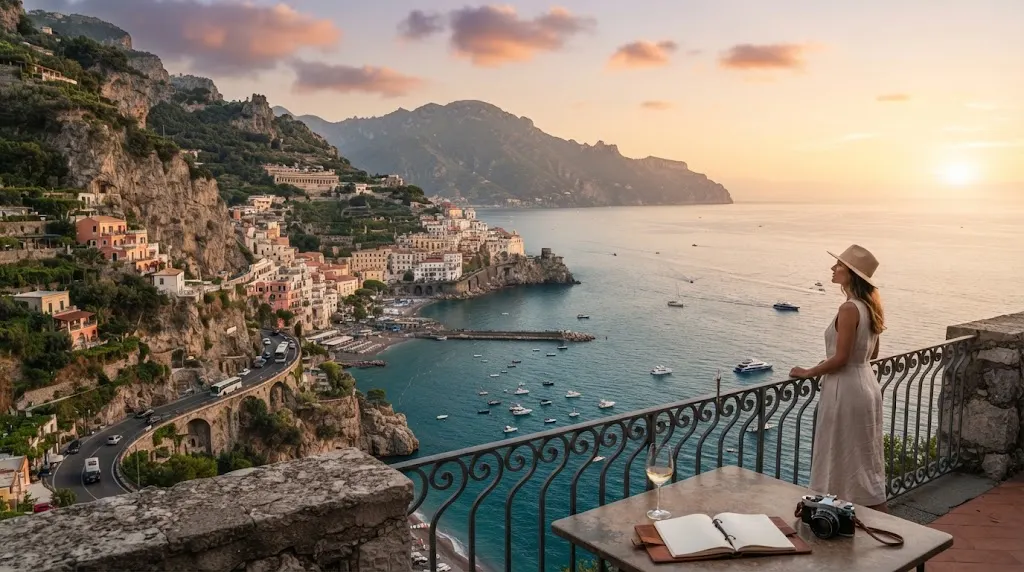
The Amalfi Coast stretches along southern Italy with colorful towns dramatically positioned between mountains and the Mediterranean Sea. Winding roads reveal spectacular coastal views, while communities such as Positano, Amalfi, and Ravello appear to cascade down steep hillsides toward brilliant blue water. Lemon groves, historic churches, elegant villas, and small beaches add even more character to the region.
Positano is perhaps the coast’s most recognizable town, known for pastel-colored buildings stacked along the hillside. Amalfi combines maritime history with attractive streets and an impressive cathedral, while Ravello sits higher above the sea and offers peaceful gardens with panoramic views. Traveling between these destinations by ferry can provide some of the most memorable perspectives of the coastline.
The Amalfi Coast is particularly beautiful during spring and early autumn, when temperatures remain comfortable and visitor numbers can be more manageable. Travelers can hike scenic routes, enjoy fresh seafood, explore historic towns, or spend slow afternoons beside the water. The region rewards visitors who avoid rushing because much of its appeal comes from simply appreciating the atmosphere and spectacular surroundings.
4. Hallstatt, Austria
Hallstatt looks like a village imagined for a fairy tale. Traditional Alpine houses sit between a calm lake and towering mountains, while a historic church and steep surrounding slopes create one of Austria’s most recognizable views. The village is compact enough to explore on foot, allowing visitors to admire charming streets, waterfront scenery, old buildings, and mountain reflections at a relaxed pace.
Beyond the village center, travelers can take advantage of several memorable outdoor experiences. Boat rides provide beautiful views from Lake Hallstatt, while nearby viewpoints reveal the entire landscape from above. The surrounding Salzkammergut region contains additional lakes, mountain trails, caves, and small communities, making Hallstatt a convenient starting point for discovering more of Austria’s impressive natural scenery.
Hallstatt can become very busy during peak visiting hours, so staying overnight can completely change the experience. Early mornings and evenings are often quieter, allowing travelers to enjoy the waterfront before many day visitors arrive. Watching the light change across the mountains and lake can be one of the most peaceful moments of a journey through central Europe.
5. Paris, France
Paris earns its place among Europe’s most beautiful destinations through a combination of architecture, history, gardens, monuments, and everyday street scenes. The Eiffel Tower may be the city’s best-known landmark, but much of Parisian beauty appears while walking beside the Seine or through neighborhoods filled with balconies, cafés, bookshops, elegant buildings, and small squares.
Visitors can admire artistic masterpieces inside famous museums, explore the historic streets of Montmartre, or relax in gardens such as Luxembourg and Tuileries. Walking between neighborhoods reveals how dramatically the atmosphere changes across the city. Grand boulevards, medieval lanes, fashionable districts, riverside paths, and quiet residential corners all contribute to the distinctive visual character that keeps travelers returning.
Paris becomes especially memorable when visitors leave enough time for unplanned exploration. Sitting at a sidewalk café, browsing a local market, crossing historic bridges, or watching the city light up after sunset can feel just as rewarding as visiting major attractions. Spring and autumn are particularly attractive seasons for walking, photography, gardens, and discovering Paris at a more comfortable pace.
6. Lake Bled, Slovenia
Lake Bled is one of Europe’s most picture-perfect natural destinations. Surrounded by forested hills and mountains, the emerald-blue lake contains a tiny island topped by a beautiful church. Bled Castle stands high on a cliff overlooking the water, creating another striking feature that makes nearly every viewpoint around the shoreline feel suitable for a postcard.
Walking around the lake is one of the simplest and most enjoyable ways to experience Bled. The route offers constantly changing perspectives of the island, castle, mountains, and surrounding countryside. Visitors can also take a traditional wooden boat to Bled Island, climb to scenic viewpoints, explore the castle, or enjoy Slovenia’s famous cream cake at a lakeside café.
Lake Bled is beautiful throughout the year, although every season creates a different atmosphere. Summer is ideal for outdoor activities, autumn adds warm colors to surrounding forests, and winter can cover nearby mountains and buildings with snow. Travelers with additional time can combine Bled with nearby Lake Bohinj and Triglav National Park for an even deeper experience of Slovenia’s landscapes.
7. Prague, Czech Republic
Prague feels like an open-air architectural museum filled with Gothic towers, Baroque churches, colorful buildings, cobbled lanes, historic bridges, and impressive squares. The Vltava River divides the city while connecting some of its most famous views. Prague Castle rising above the rooftops creates a dramatic skyline that becomes particularly beautiful during early morning and sunset.
Walking across Charles Bridge is one of the classic Prague experiences, but the city rewards visitors who explore beyond its busiest landmarks. Old Town Square, the Jewish Quarter, Malá Strana, and the streets surrounding Prague Castle reveal centuries of architecture and history. Small gardens, hidden courtyards, cafés, and elevated viewpoints provide quieter alternatives to the most crowded tourist areas.
Prague is especially atmospheric after dark when illuminated landmarks reflect across the river. Evening walks reveal another side of the city as church towers, bridges, castles, and historic façades glow beneath warm lights. Travelers interested in photography may find sunrise particularly rewarding because famous locations become calmer, providing clearer views and a peaceful atmosphere before the city fully wakes.
8. Norwegian Fjords, Norway
Norway’s fjords provide some of the most powerful natural scenery anywhere in Europe. Deep blue waterways cut between towering mountains, cliffs, waterfalls, farms, and small villages, producing landscapes shaped by glaciers over thousands of years. Geirangerfjord, Nærøyfjord, and Sognefjord are among the best-known examples, although spectacular scenery stretches across much of western Norway.
Cruises and ferries allow travelers to experience the fjords directly from the water. Watching waterfalls descend from enormous cliffs while sailing through narrow valleys creates a completely different perspective from viewing the landscape by road. Scenic train journeys, mountain viewpoints, hiking trails, and quiet villages provide additional ways to explore the region without limiting the experience to a single cruise.
Summer offers long daylight hours that make exploring particularly convenient, while spring brings powerful waterfalls created by melting snow. Autumn can provide fewer visitors and dramatic colors, although weather becomes less predictable. Regardless of the season, Norway’s fjords are best appreciated slowly because their scale, silence, fresh air, and constantly changing scenery are central to what makes them unforgettable.
9. Dubrovnik, Croatia
Dubrovnik stands dramatically beside the Adriatic Sea with medieval walls surrounding a beautiful historic center. Terracotta rooftops, pale stone buildings, narrow streets, church towers, and brilliant blue water combine to create one of Europe’s most distinctive coastal cityscapes. Walking through the Old Town feels like stepping into another era, particularly during quieter early morning hours.
One of the best ways to appreciate Dubrovnik is by walking along the ancient city walls. Elevated pathways provide sweeping views across rooftops, fortifications, islands, mountains, and the Adriatic coastline. Visitors can also explore historic churches, peaceful side streets, beaches, museums, and waterfront restaurants before taking a cable car above the city for another impressive panoramic view.
The surrounding coastline adds even more variety to a Dubrovnik trip. Boat journeys can take visitors toward nearby islands, quiet swimming spots, and attractive coastal communities. Traveling during late spring or early autumn often provides pleasant weather with fewer crowds than midsummer, making it easier to explore the historic center and appreciate the city’s architectural details at a comfortable pace.
10. Madeira, Portugal
Madeira offers a spectacular mixture of dramatic cliffs, green mountains, ocean views, waterfalls, forests, and colorful towns. Located in the Atlantic Ocean, this Portuguese island feels completely different from mainland European destinations. Its volcanic landscape creates steep valleys and rugged coastlines, while mild temperatures support lush vegetation that gives parts of the island an almost subtropical appearance.
Hiking is one of the best ways to discover Madeira’s natural beauty. Traditional levada trails follow historic irrigation channels through forests, mountains, valleys, and countryside, providing options for different fitness levels. Travelers can also visit Cabo Girão, explore the capital Funchal, swim in natural volcanic pools, or drive through mountain roads connecting small villages and remarkable viewpoints.
Madeira works well for travelers who prefer active holidays but still want comfortable towns and good tourism infrastructure. A single day might include sunrise above the mountains, a forest walk, lunch in a coastal village, and sunset beside the Atlantic. That remarkable variety makes Madeira one of Europe’s most rewarding destinations for nature lovers, photographers, hikers, and adventurous travelers.
Conclusion
The most beautiful places in Europe offer far more than attractive photographs. Santorini’s white villages, Switzerland’s Alpine peaks, Italy’s dramatic coast, Norway’s fjords, and Slovenia’s peaceful lakes all provide completely different experiences. Historic destinations such as Paris, Prague, Dubrovnik, and Hallstatt add architecture and culture, while Madeira brings extraordinary natural diversity to the list.
Choosing between these destinations depends on the type of trip you want. Travelers interested in mountains may prefer Switzerland or Norway, while Mediterranean scenery makes Santorini and the Amalfi Coast strong choices. Anyone fascinated by historic architecture may feel more drawn toward Prague, Paris, or Dubrovnik, while Lake Bled and Madeira are ideal for combining outdoor activities with beautiful landscapes.
You do not need to visit all ten destinations during one journey to experience Europe’s beauty. Choosing one or two places and exploring them properly often creates a more memorable trip than rushing through multiple countries. Wherever you start, these remarkable destinations demonstrate why Europe remains one of the world’s most diverse and rewarding regions for travelers.
FAQs
What is considered the most beautiful place in Europe?
There is no single answer, but the Swiss Alps, Santorini, Norwegian fjords, Amalfi Coast, and Lake Bled are frequently admired for their exceptional scenery. Your ideal choice depends on whether you prefer mountains, cities, islands, or coastlines.
What is the best time to visit beautiful places in Europe?
Spring from April to June and early autumn from September to October are excellent for many European destinations. These periods often provide comfortable weather, attractive scenery, and fewer visitors than the busiest summer months.
Which European destination is best for nature lovers?
The Norwegian fjords, Swiss Alps, Madeira, and Lake Bled are excellent options for nature-focused trips. Each offers hiking, impressive landscapes, outdoor activities, and scenic viewpoints that extend far beyond traditional city sightseeing.
What are the most beautiful European destinations for couples?
Santorini, Paris, the Amalfi Coast, Lake Bled, and Hallstatt are especially popular with couples. Romantic scenery, sunset viewpoints, intimate restaurants, historic streets, and peaceful surroundings make them attractive choices for memorable trips together.
Can I visit several beautiful European places in one trip?
Yes, especially when destinations have convenient train or flight connections. However, allowing several days in each place usually creates a more enjoyable experience than trying to visit too many locations within a short itinerary.